








Bitget Research: Middle East | The Rising Star of the Crypto Market
TechFlow Selected TechFlow Selected
Bitget Research: Middle East | The Rising Star of the Crypto Market
As the cryptocurrency market experiences global growth, Middle Eastern countries are re-evaluating digital currencies with an open and embracing attitude, making the region the fastest-growing in terms of cryptocurrency adoption worldwide.
 Navigating Web3 tides with focused insights
Author: Research Institute
Executive Summary
- The Middle East is an emerging market for cryptocurrencies, with approximately 500,000 people participating in daily transactions in the region at present;
- Regulatory environment: The UAE has the most crypto-friendly policies in the region, while most other Middle Eastern countries are gradually improving their cryptocurrency regulations—from initial outright bans to gradual compliance;
- On-chain preferences: Users in the Middle East show interest in decentralized projects, are familiar with DEX on-chain tools, and actively participate in metaverse, gaming, and on-chain task platforms. The growth rate of on-chain users has significantly increased in recent years;
- Trading preferences: Institutional investors in the Middle East primarily invest in core crypto assets such as BTC, while retail investors have broader interests and are willing to speculate on meme coins;
- CeFi exchange preferences: Over the past year, traffic to centralized exchanges in the Middle East has shown a fluctuating upward trend, and demand among Middle Eastern users for centralized exchanges is clearly higher than for decentralized ones. For DEXs, users mainly use leading cross-chain platforms like Uniswap and Pancakeswap; The most commonly used wallets are TrustWallet, MetaMask, Phantom, Coinbase Wallet, and Bitget Wallet;
- Finally, based on the above analysis, Bitget Research has made five predictions about the future development of the Middle Eastern crypto market.
Introduction
The Middle East boasts a long and glorious history, once serving as one of the centers of civilization in the ancient world. Its unique cultural, scientific, and trading traditions have left a profound impact on human history. In the face of the rise of cryptocurrencies, Middle Eastern nations are not lagging behind—they are rapidly closing gaps in policy and industry development, emerging as rising stars in the crypto space.
Although cryptocurrency adoption rates in the Middle East are currently not high, the growth speed is astonishing. At present, most users in the region access the crypto market through centralized exchanges for direct investment in digital assets.
This report provides a panoramic overview of the current state of the Middle Eastern crypto market through in-depth research, helping local users find their ecological positioning and communities of shared interest, while also assisting Web3 project teams and crypto institutions in better understanding and expanding into this market.
I. Market Overview
1. Regional Overview
According to Wikipedia, there are 18 countries in the Middle East. Based on crypto activity levels, this report focuses on six: the UAE, Saudi Arabia, Egypt, Morocco, Algeria, and Jordan.
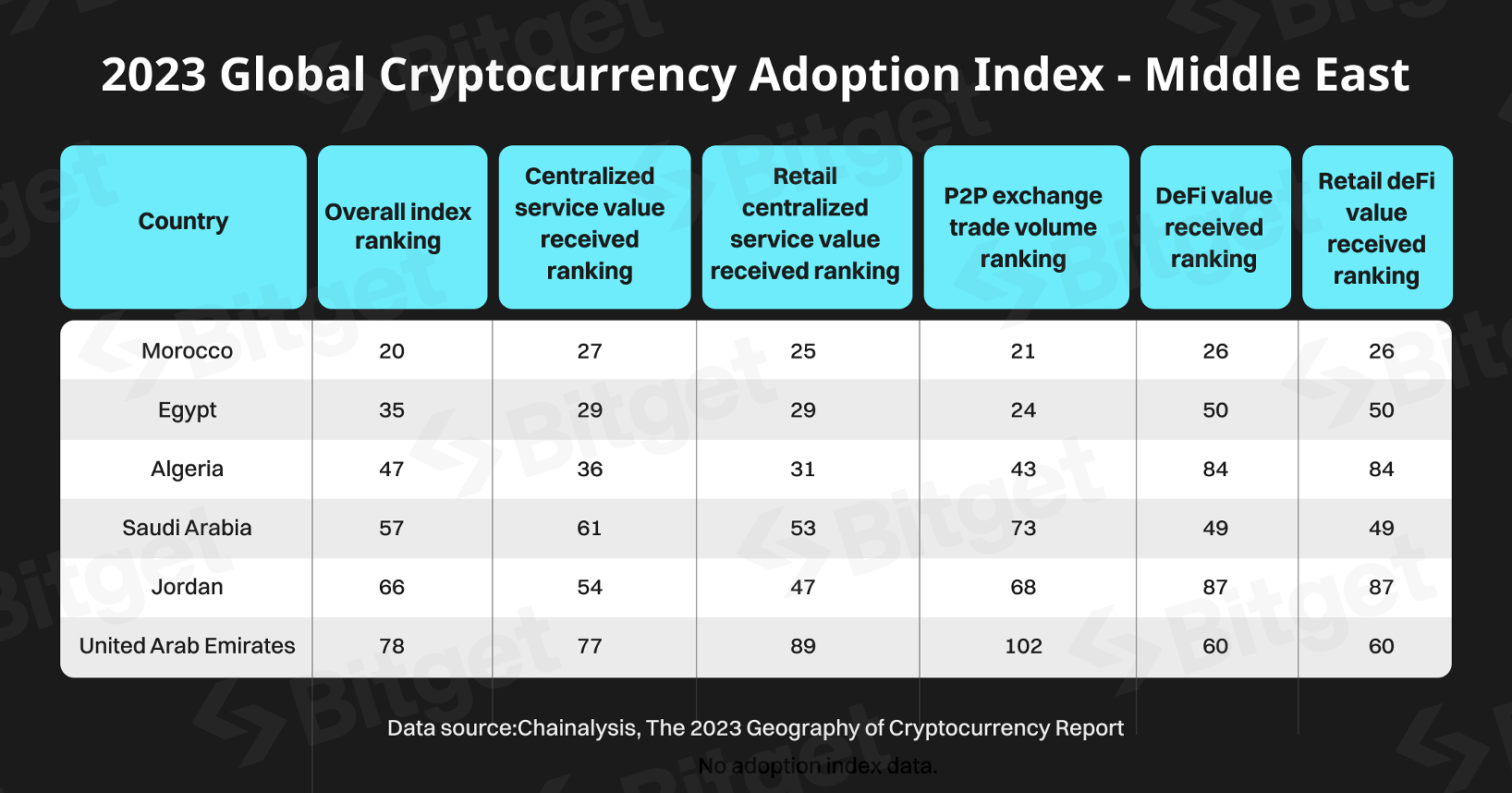
In terms of overall crypto volume and acceptance, the Middle East does not stand out globally—the combined amount of cryptocurrency received by the Middle East and North Africa accounted for approximately 7.2% of the global total in 2023. However, due to its open policies and rapid development, it remains an extremely important part of the crypto world. According to Chainalysis’ 2023 Adoption Index rankings, Morocco, Egypt, Algeria, Saudi Arabia, Jordan, and the UAE ranked 20th, 35th, 47th, 57th, 66th, and 78th respectively.
Notably, there are significant differences among Middle Eastern countries in their acceptance of centralized platforms versus decentralized applications (dApps). Egypt, Algeria, and Jordan rank much lower in DeFi metrics compared to their rankings in centralized platforms; whereas Saudi Arabia and the UAE perform significantly better in DeFi usage than in centralized platforms. Morocco’s data is relatively balanced, ranking within the top 20 globally across all five aspects measured in the Adoption Index.
Additionally, it's worth noting that the UAE ranks below 100th in P2P transaction volumes globally, suggesting less reliance on P2P for fiat on/off ramps, likely due to more convenient alternative methods available.
2. Crypto Regulation and Cultural Influences
2.1 Cryptocurrency Policies in Middle Eastern Countries
Due to differing economic development levels and crypto adoption rates, Middle Eastern countries hold varied regulatory attitudes toward cryptocurrencies. This section categorizes them into “regulation-friendly,” “policy-transitioning,” and “strictly regulated” types. Among the surveyed countries, the UAE represents the “regulation-friendly” category; Saudi Arabia, Jordan, Egypt, and Morocco fall under “policy-transitioning”; and Algeria is classified as “strictly regulated.”
[Regulation-Friendly]
The representative regulation-friendly country in the Middle East is the UAE. Its crypto policies include the following:
- UAE: The financial regulator is the Central Bank of the United Arab Emirates, responsible for overseeing and managing financial markets. On March 9, 2022, Dubai issued Law No. 4 on Virtual Asset Regulation, establishing a new regulatory body called the Virtual Assets Regulatory Authority (VARA). VARA oversees all virtual asset service providers operating in Dubai. Additionally, the UAE has created crypto-enterprise-friendly zones—such as free financial zones and RAK DAO—to attract crypto companies, talent, and capital.
[Policy-Transitioning]
Middle Eastern countries undergoing policy shifts include Saudi Arabia, Egypt, Jordan, and Morocco, reflected in the following developments:
- Saudi Arabia: In 2018, the Saudi government declared Bitcoin usage illegal, citing potential risks associated with other cryptocurrencies. Despite this, the country's crypto market continued growing. By September 2022, the Saudi Central Bank appointed tech entrepreneur Mohsen Al Zahrani as its so-called "Crypto Chief" to lead digital transformation efforts. Moreover, Saudi Arabia has expressed interest in diversifying its economy by fostering Web3 and blockchain gaming projects, including a collaboration with The Sandbox to explore virtual universes.
- Egypt: In 2018, Egypt’s main Islamic authority, Dar al-Ifta, issued a religious edict classifying Bitcoin commercial transactions as haram (forbidden). However, in 2019, the Central Bank of Egypt (CBE) announced it was drafting legislation that would only prohibit unlicensed creation, trading, or promotion of cryptocurrencies—a sign of evolving views toward digital currencies. In 2020, the Egyptian parliament passed laws supporting digital transformation in banking and finance.
- Jordan: The Central Bank of Jordan (CBJ) enacted legislation prohibiting banks, money changers, financial entities, and payment service providers from facilitating any crypto transactions. Recently, however, Jordan has expressed a positive stance toward blockchain technology and digital assets, viewing them as opportunities for innovation and development. The central bank has encouraged financial institutions to explore blockchain and digital asset applications within regulatory frameworks.
- Morocco: In 2017, the Moroccan government banned cryptocurrency trading. In June 2022, the central bank began preparing a draft regulatory framework for crypto assets. By January 2023, it had released details of the draft, including definitions related to cryptocurrencies.
[Strictly Regulated]
Algeria is the strictly regulated country in the Middle East, with the following crypto policies:
- Algeria: The 2018 Finance Law prohibits the use of any cryptocurrency, stating: “It is forbidden to buy, sell, use, or possess so-called virtual currencies,” defined as electronic products lacking physical backing.
2.2 Cultural and Religious Influences in the Middle East
Muslim-majority countries in the Middle East differ in their crypto policies and attitudes, but generally these are influenced by Islamic law (Sharia).
From a Sharia perspective, Islamic jurisprudence imposes strict rules on financial activities—prohibiting usury (riba), gambling (maysir), and involvement in unlawful or unethical transactions. Due to the historical volatility and uncertainty of crypto markets, traditional Islamic teachings have discouraged Muslims from engaging in highly speculative crypto trading. However, as cryptocurrencies—especially Bitcoin—have become increasingly institutionalized and compliant, attitudes in Muslim-majority nations are shifting.
Some Muslim countries are actively developing regulations adapted to modern financial technologies and are beginning to accept and support the development of cryptocurrencies. For example, Dubai in the UAE plans to become a hub for blockchain and crypto innovation, indicating openness to these emerging technologies.
3. Market Size
In February 2023, the daily active users (DAUs) trading on centralized crypto exchanges in the entire Middle East region were approximately 330,000. With the approval of BTC spot ETFs and continuous growth in total crypto market capitalization, by February 2024, DAUs in the Middle East reached about 500,000.
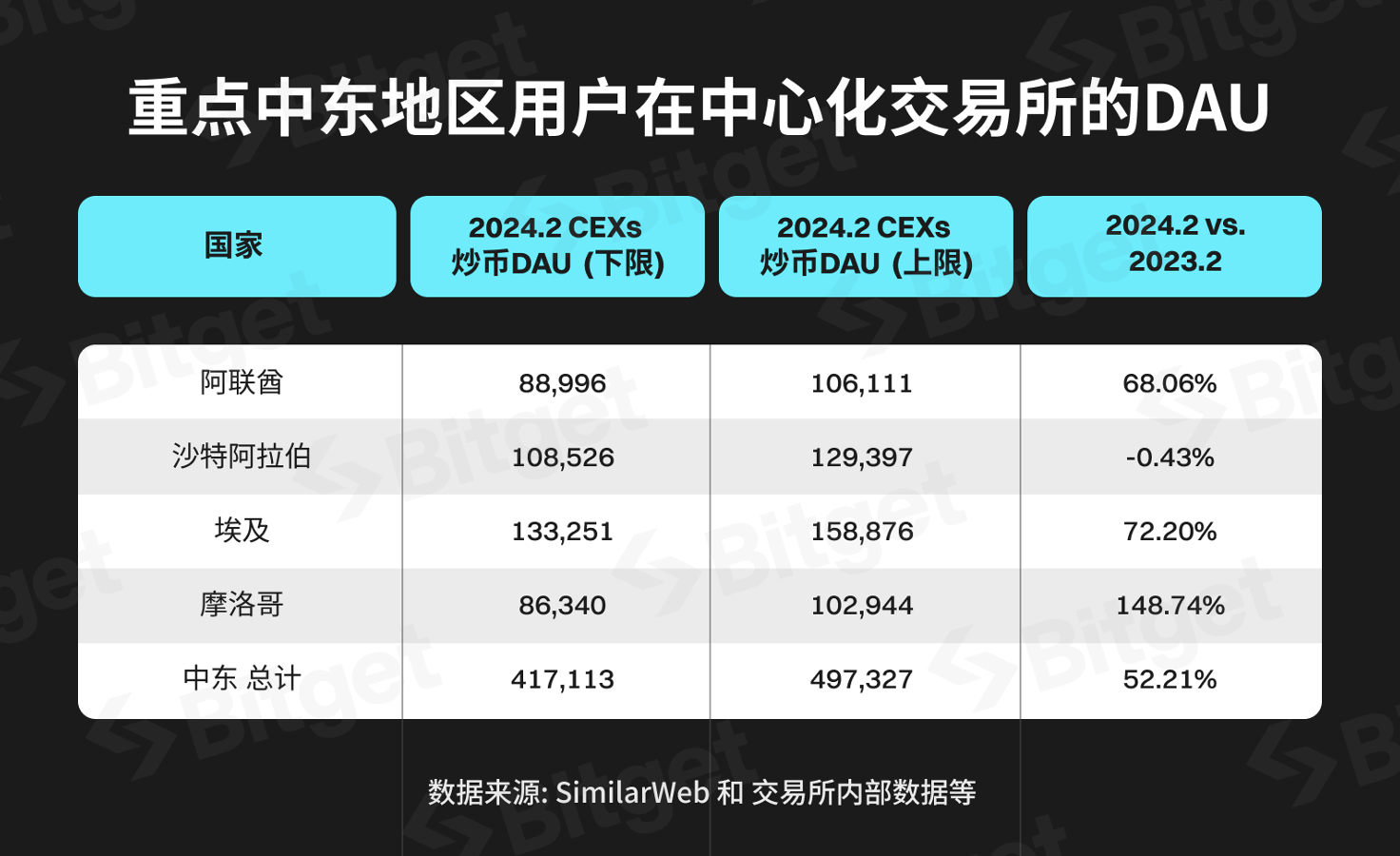
In February 2024, each of several key Middle Eastern countries had roughly 100,000–150,000 DAUs on centralized exchanges. Notably, despite having populations around one-third that of Saudi Arabia and Egypt, the UAE and Morocco achieved comparable DAU numbers. This indicates that the penetration and usage rates of centralized crypto exchanges are significantly higher in the UAE and Morocco than in Saudi Arabia and Egypt.
Over the past year, Morocco saw the fastest year-on-year growth in trading users, increasing by 148%, followed by the UAE and Egypt at around 70%. However, Saudi Arabia showed flat growth between February 2023 and February 2024, mainly due to declining traffic on three out of the top five largest centralized exchanges. This may reflect an earlier peak in user acquisition cycles. Multiple sources indicate Saudi Arabia recorded the highest year-on-year growth in global crypto trading volume from 2022 to 2023.
II. Characteristics of Local Crypto Users
1. User Trading Habits
1.1 General Profile of Middle Eastern Crypto Users
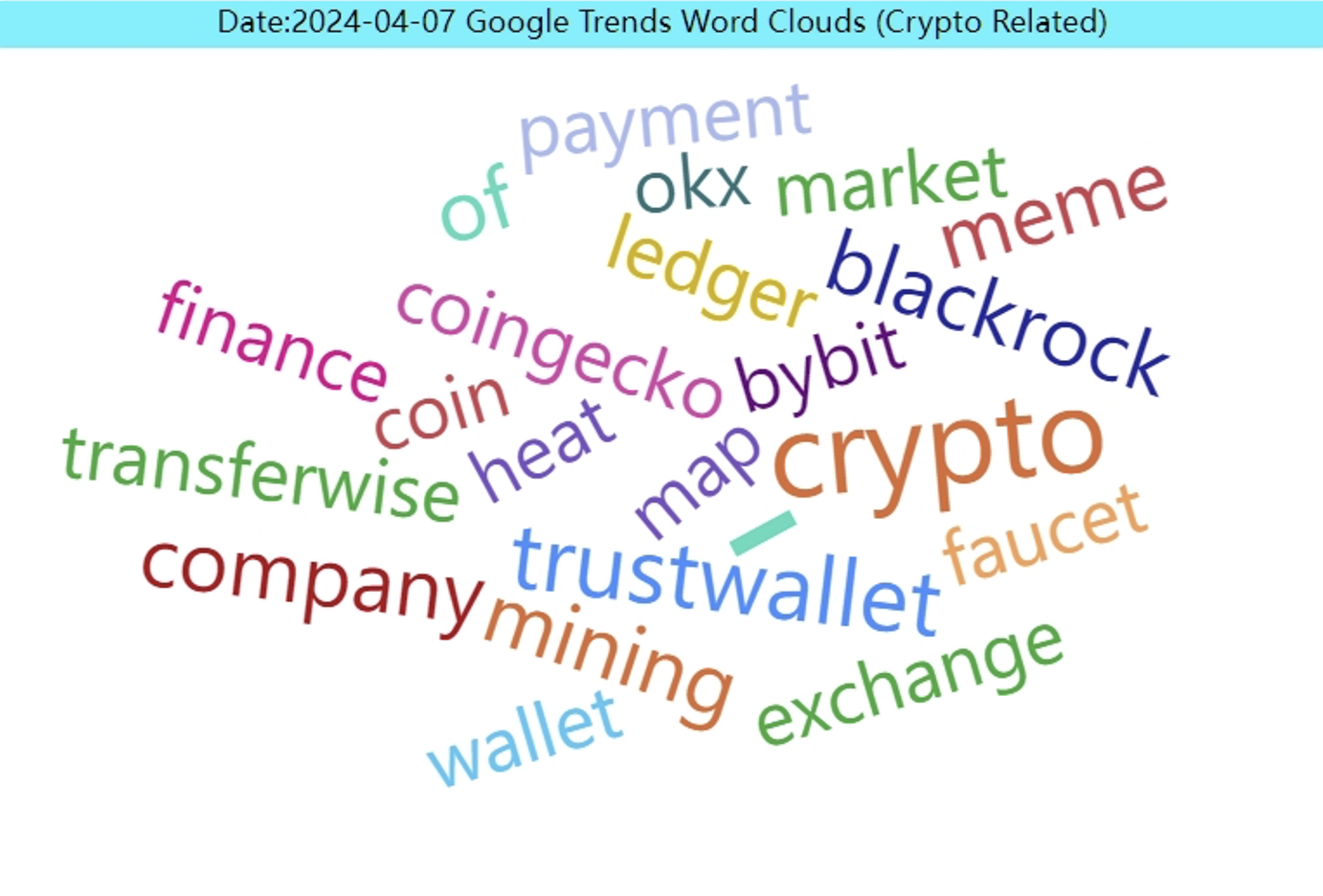
Image: Word Cloud of Middle Eastern Crypto User Behavior
Source: Google Trends
Middle Eastern users maintain an open attitude toward crypto trading and interacting with projects, characterized by the following traits:
- High reliance on CEXs: Middle Eastern users rely more on CEXs than DEXs, as indicated by frequent mentions of terms like "Exchange" in the word cloud;
- Using crypto for remittances: Cryptocurrency is widely used for money transfers in the region, primarily due to fast depreciation of local fiat currencies and low penetration of traditional banking systems;
- Interest in meme coins: There is strong enthusiasm for meme coin speculation, with users showing sensitivity to market heat maps and quick ability to identify trending assets;
- Attention to traditional finance: BlackRock appears as a popular search term, indicating users pay close attention to how actions by traditional financial institutions—like BTC ETF approvals—affect the crypto market.
1.2 Trading and Interaction Habits by Country
[UAE]
According to a study by financial services firm Holborn Assets, interest in using cryptocurrencies is rising among UAE residents. 29% view crypto as a more convenient way to hold assets, 34% are active traders, and 22% use it for daily payments. From an investment standpoint, UAE users prefer investing in BTC and ETH—BTC is referred to as “digital gold,” with 72% of users holding it.
In terms of interaction habits, UAE users are proficient in using DEX features such as trading and lending, and are generally familiar with on-chain operations. They also follow the latest trends closely, showing strong interest in RWA, metaverse, AI, and cross-chain bridge projects.
[Saudi Arabia]
According to Chainalysis reports, Saudi Arabia saw a 12% increase in regional crypto transaction volume between 2022 and 2023. Users primarily invest in spot BTC and ETH to diversify their portfolios. Additionally, institutional interest in crypto investments is growing steadily.
Regarding interaction habits, Saudi users engage with DEXs at a lower rate than the global average, but they show notable interest in metaverse applications and NFTs—for instance, Sandbox’s partnership with Saudi Arabia to launch a virtual universe.
[Egypt]
According to Triple-A survey data, cryptocurrency adoption in Egypt remains relatively low—with only 2.95% of the population having owned crypto as of 2022. In trading, Egyptians primarily hold BTC, largely as a hedge against the devaluation of the Egyptian pound. Additionally, two-thirds of Egyptians lack traditional bank accounts, and some use cryptocurrencies for domestic and international remittances.
[Algeria], [Morocco], and [Jordan] are not summarized in detail due to limited user sample sizes, which could lead to large analytical errors.
2. Popular Sectors and Projects
(1) Popular Projects & Sectors
Popular Project Traffic in the UAE (Q1 2024)
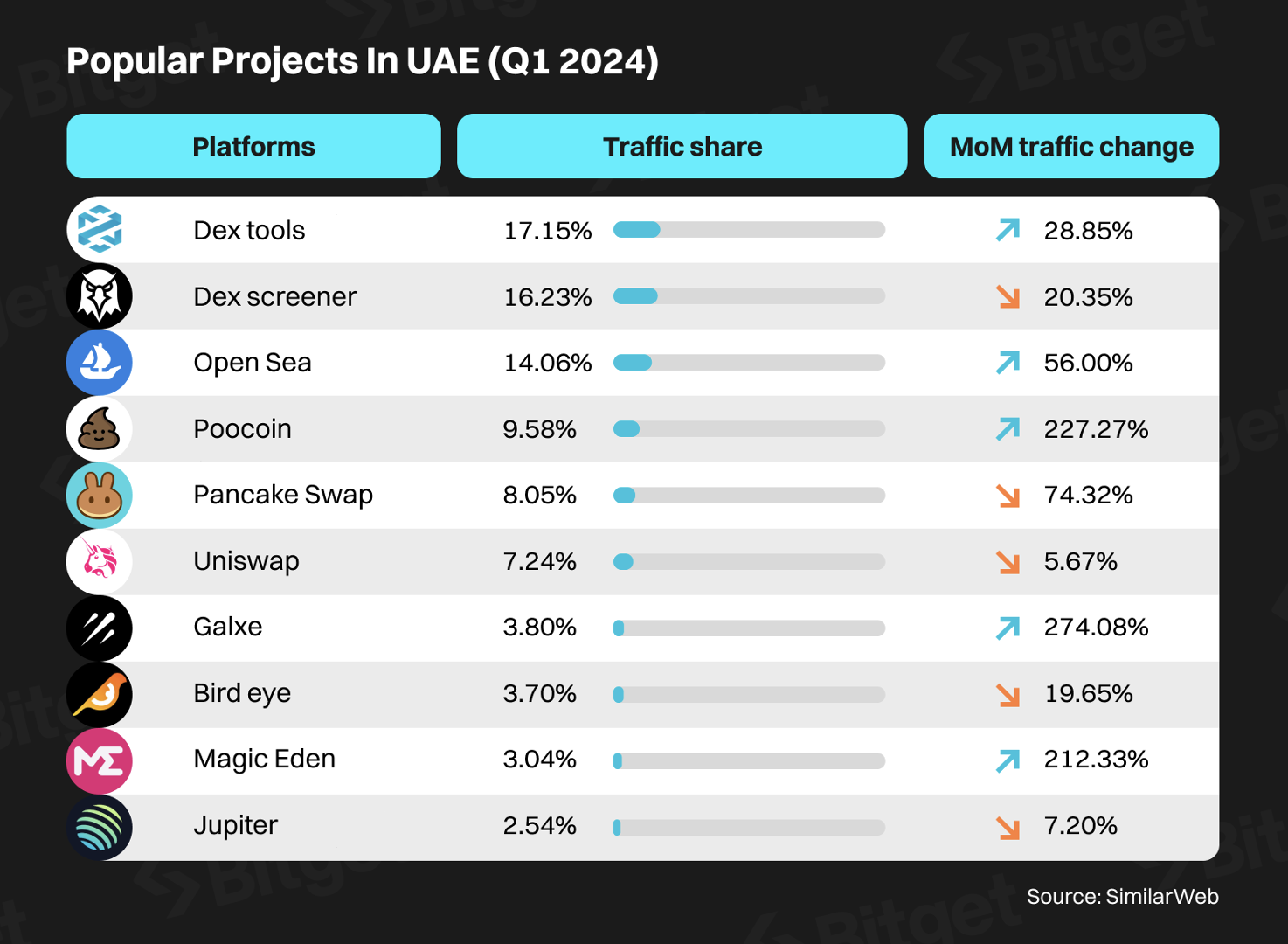
[UAE]: UAE users primarily engage with DEXs, Web3 quest platforms, and NFT marketplaces. Leading token analytics sites like Dextools, DexScreener, Poocoin, and Birdeye are particularly popular; PancakeSwap and Uniswap are favored DEXs; Opensea and MagicEden lead in NFT trading; Galxe is the most popular Web3 quest platform.
Popular Project Traffic in Saudi Arabia (Q1 2024)
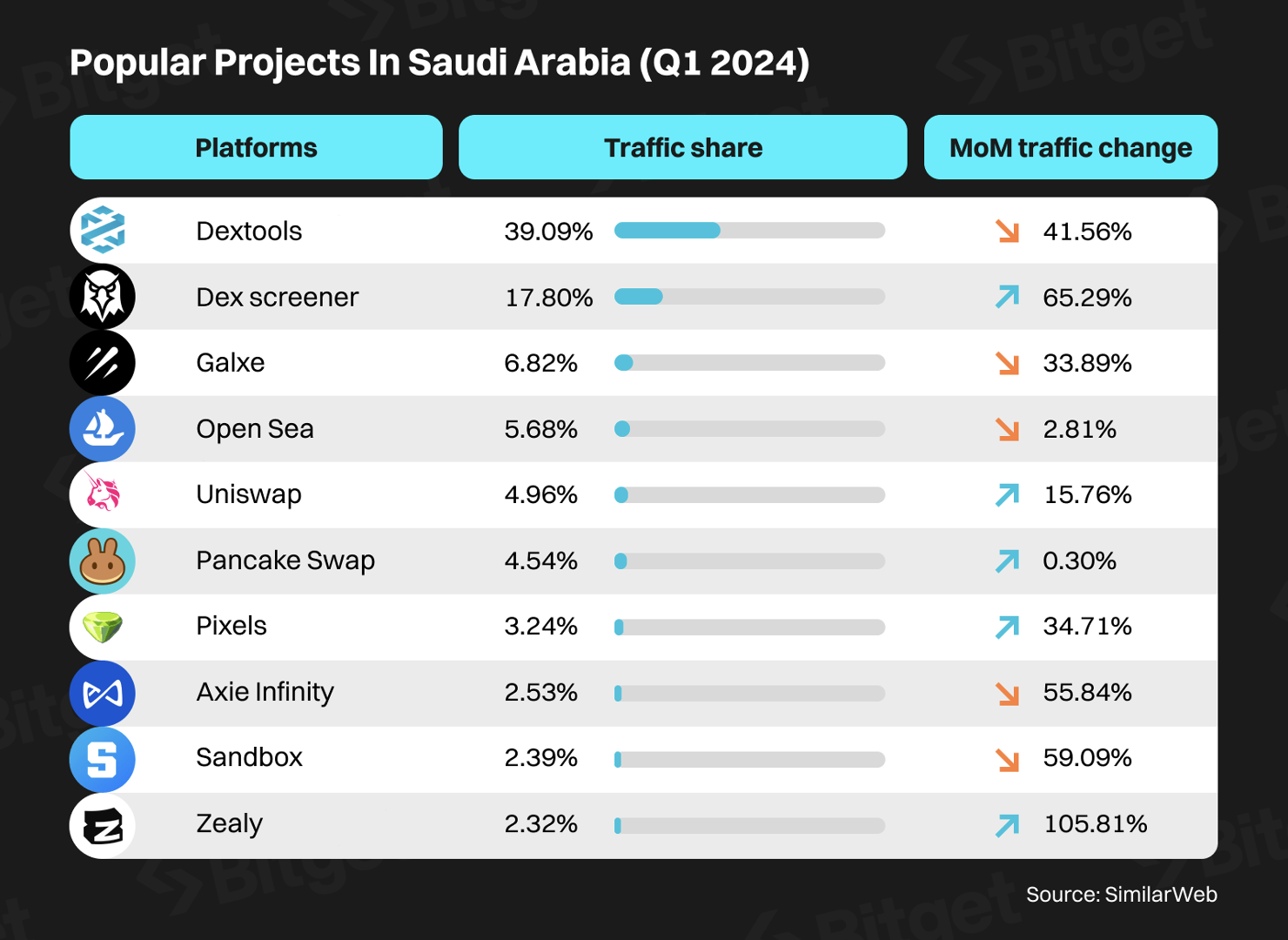
[Saudi Arabia]: Saudi users show high engagement in DEX trading, Web3 quest platforms, NFTs, and gaming. NFT trading occurs mainly on Opensea and MagicEden; a small number of users interact with Sandbox and Axie Infinity; Galxe and Zealy dominate the Web3 quest platform space.
Popular Project Traffic in Egypt (Q1 2024)
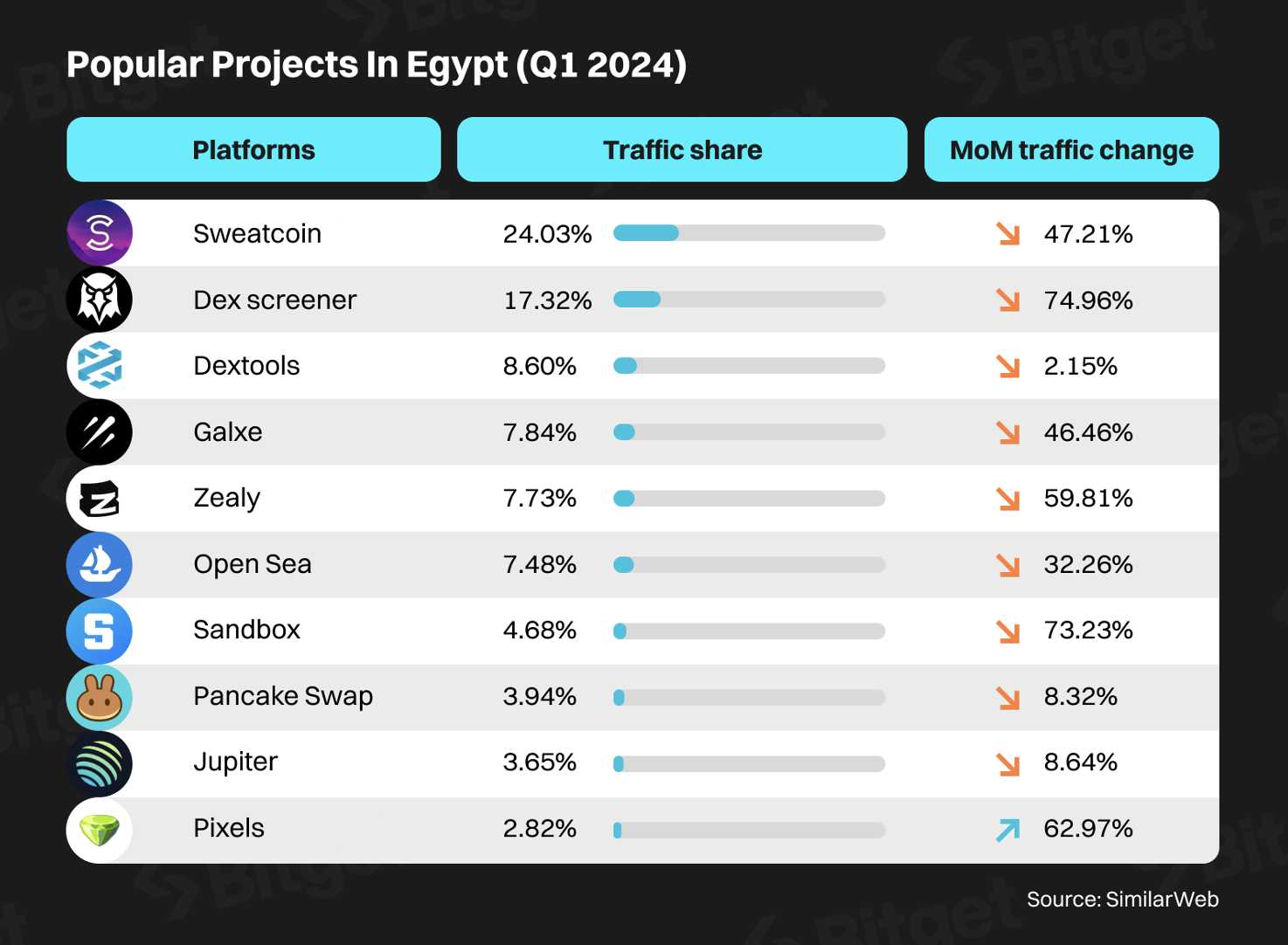
[Egypt]: Egyptian users are highly engaged in Web3 gaming, DEX trading, NFTs, and quest platforms. Sweat Economy is particularly popular, reflecting strong interest in Move-to-Earn (M2E) models; DEX activity centers around analytics platforms and PancakeSwap; besides Sandbox, the recently popular game Pixels has gained traction in Egypt.
Popular Project Traffic in Morocco (Q1 2024)
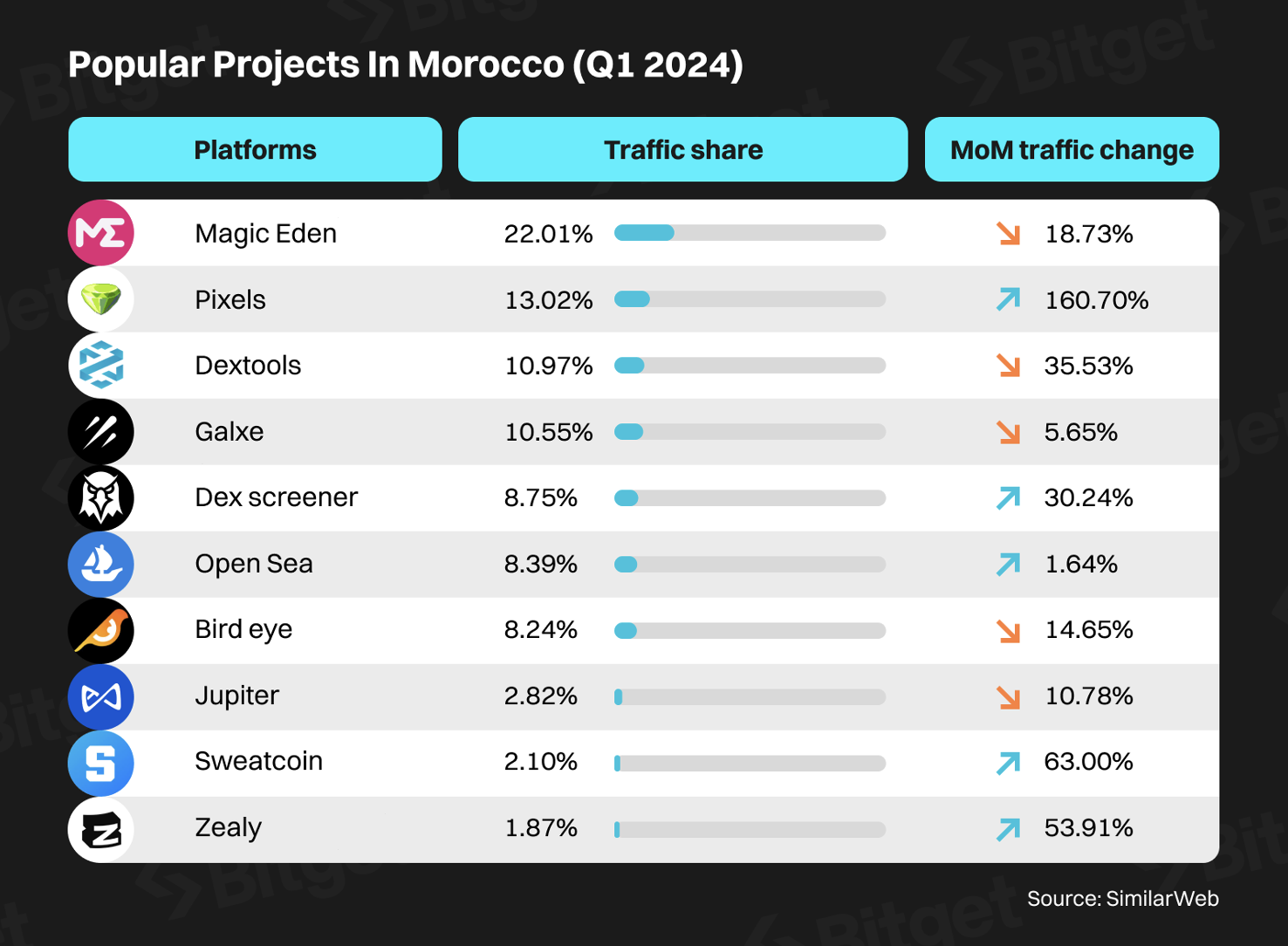
[Morocco]: Moroccan users show high participation in NFTs and DEX trading. Opensea and MagicEden are the primary NFT marketplaces; a smaller number of users engage with Sandbox and Sweat Economy.
(2) Top Crypto Topics of Interest in the Middle East Over the Past Three Months
Insights from Google Search trends reveal what Middle Eastern users are searching for:
Top Crypto Search Terms in the Middle East on Google
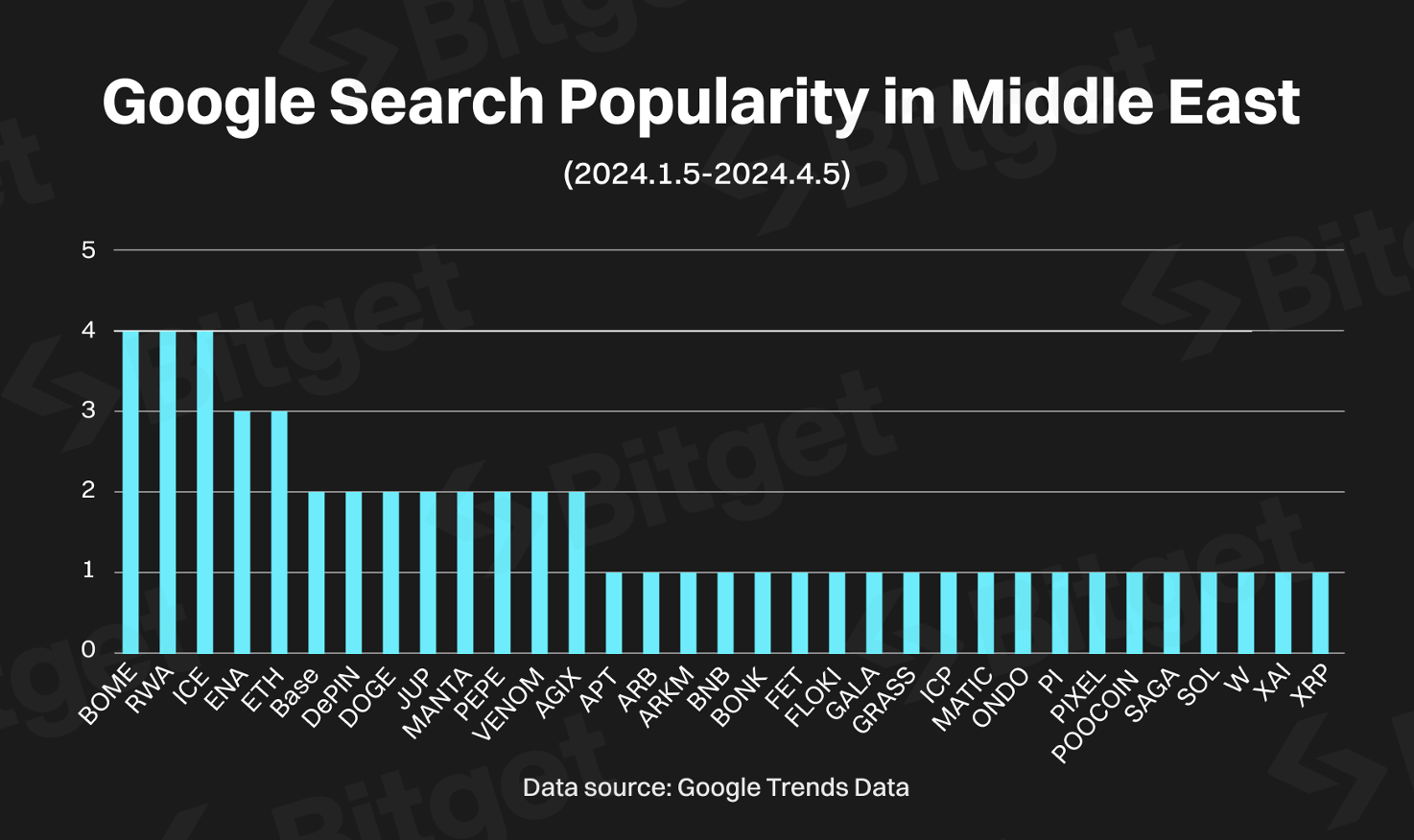
Based on Google search trends in the Middle East over the past three months (January 5 – April 5, 2024), user attention has focused on the following:
(1) BOME:
The hype around Solana meme coins carried through Q1, and the Middle East was no exception. BOOK OF MEME (BOME), launched by Pepe meme artist Darkfarm, flooded social media feeds. It achieved over $250 million in 24-hour trading volume post-launch and was quickly listed on major exchanges. However, SLERF, another highly discussed meme coin, did not appear in search rankings in any of the surveyed Middle Eastern countries—suggesting that most trading activity still occurs on top-tier centralized exchanges, leaving room for further DEX adoption.
(2) RWA (ONDO):
BlackRock’s announcement of its first tokenized fund on a public blockchain reignited interest in the RWA sector. RWA is likely to remain one of the most compelling narratives in this bull cycle. While searches for the term “RWA” are high across Middle Eastern countries, only ONDO appears among listed tokens—GFI and MKR, for example, are absent. Given that ONDO also ranked 5th in Bitget Research’s Western Europe Crypto Search Trends report for early 2024, it may be emerging as a flagship token in the RWA narrative.
(3) Mining-related tokens (ICE, DePIN, Grass, PI):
Users in the Middle East appear highly interested in mining-related crypto projects, with three such projects appearing in search rankings:
(a) Grass, the flagship product of Wynd Network—an unbuilt project focused on cloud computing and network sharing;
(b) ICE, a recently launched mobile mining and Layer1 project;
(c) Pi Network (PI), an early mobile mining initiative launched back in 2018.
3. Local Communities and Social Media
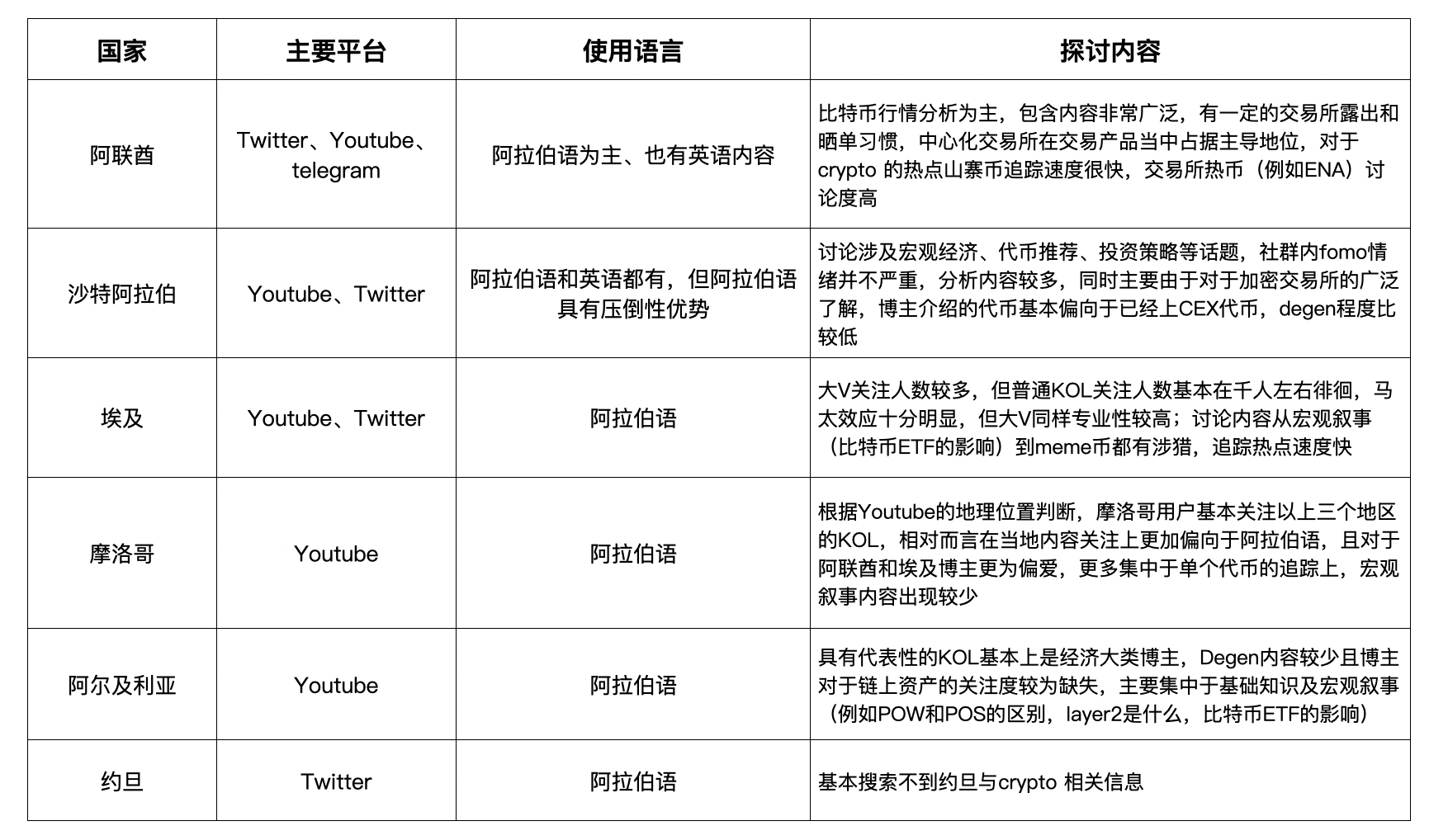
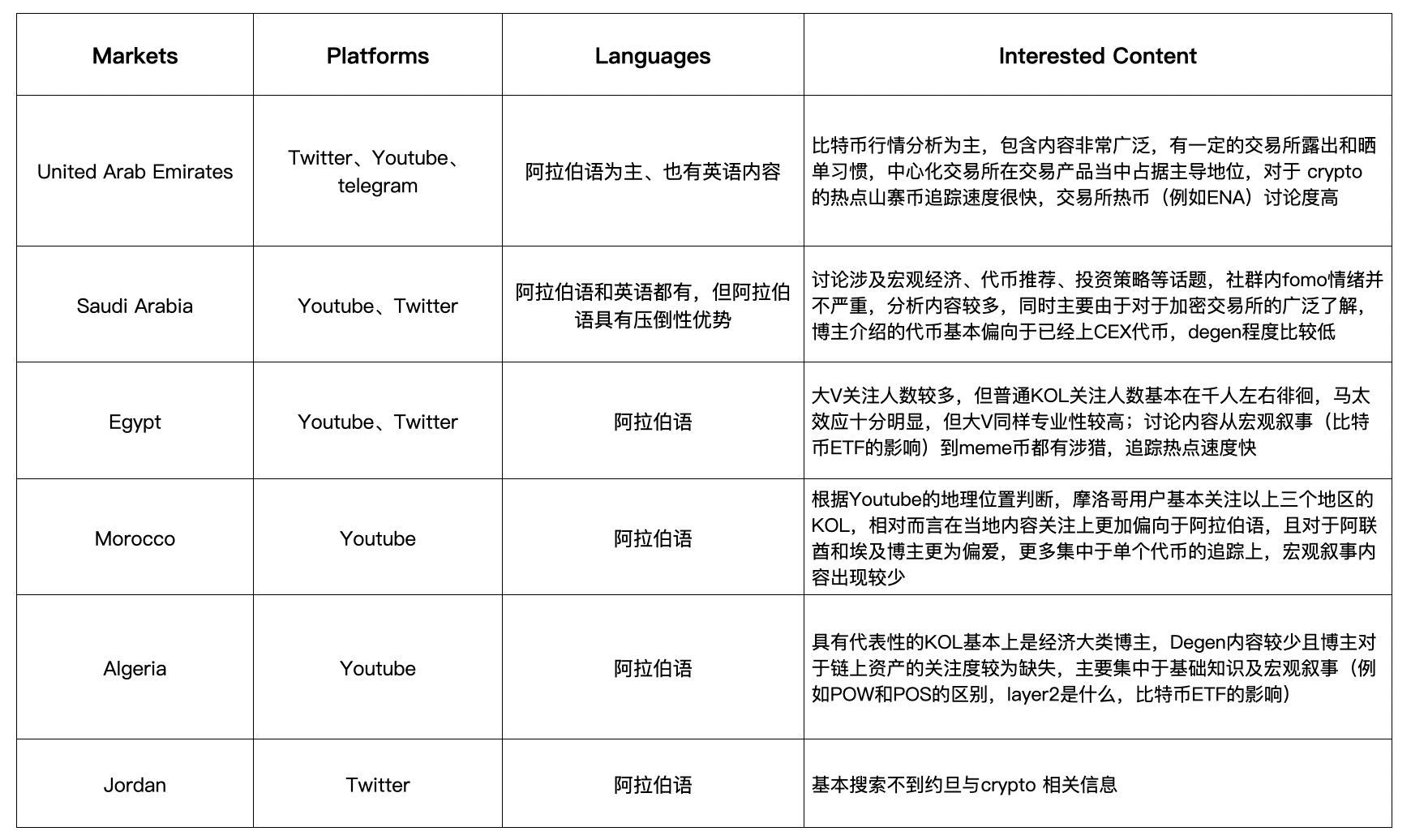
Local Arabic-speaking communities primarily operate on Twitter and YouTube, with minimal use of Telegram. Content is mostly in Arabic, though English-language content also circulates to some extent.
In terms of discussion topics, awareness and focus vary by country. Saudi Arabia, Egypt, and the UAE—having larger user bases—cover a wide range of topics, often featuring exchange promotions and trade sharing, with fast tracking of trending altcoins and high engagement around exchange-listed tokens (e.g., ENA). In contrast, Morocco, Algeria, and Jordan have smaller communities with few local influencers, relying heavily on content produced by the former three countries.
III. Competitive Landscape and Platform Advantages
1. Centralized Exchanges (CEXs)
Overall, traffic to centralized exchanges in Middle Eastern countries has shown a clear upward trend over the past year. The UAE and Morocco recorded UV growth of 60% and 71% respectively, while Egypt grew by 25% year-on-year. Saudi Arabia experienced a slight decline, possibly due to having already passed its peak growth phase earlier than others. (As previously noted, multiple sources confirm Saudi Arabia had the highest YoY crypto trading growth globally from 2022 to 2023.)
Traffic to CEXs across key Middle Eastern countries is relatively similar. Despite significant population differences, monthly unique visitors (UVs) to CEXs in the UAE, Morocco, Egypt, and Saudi Arabia all fall within the 700,000–1,000,000 range.
Middle Eastern countries show high dependence on global CEXs—local exchanges Rain and M2 do not rank in the top 10 by traffic. This may stem from limited asset variety and poor liquidity on local platforms, coupled with the availability of seamless local fiat on/off ramps on major global exchanges.
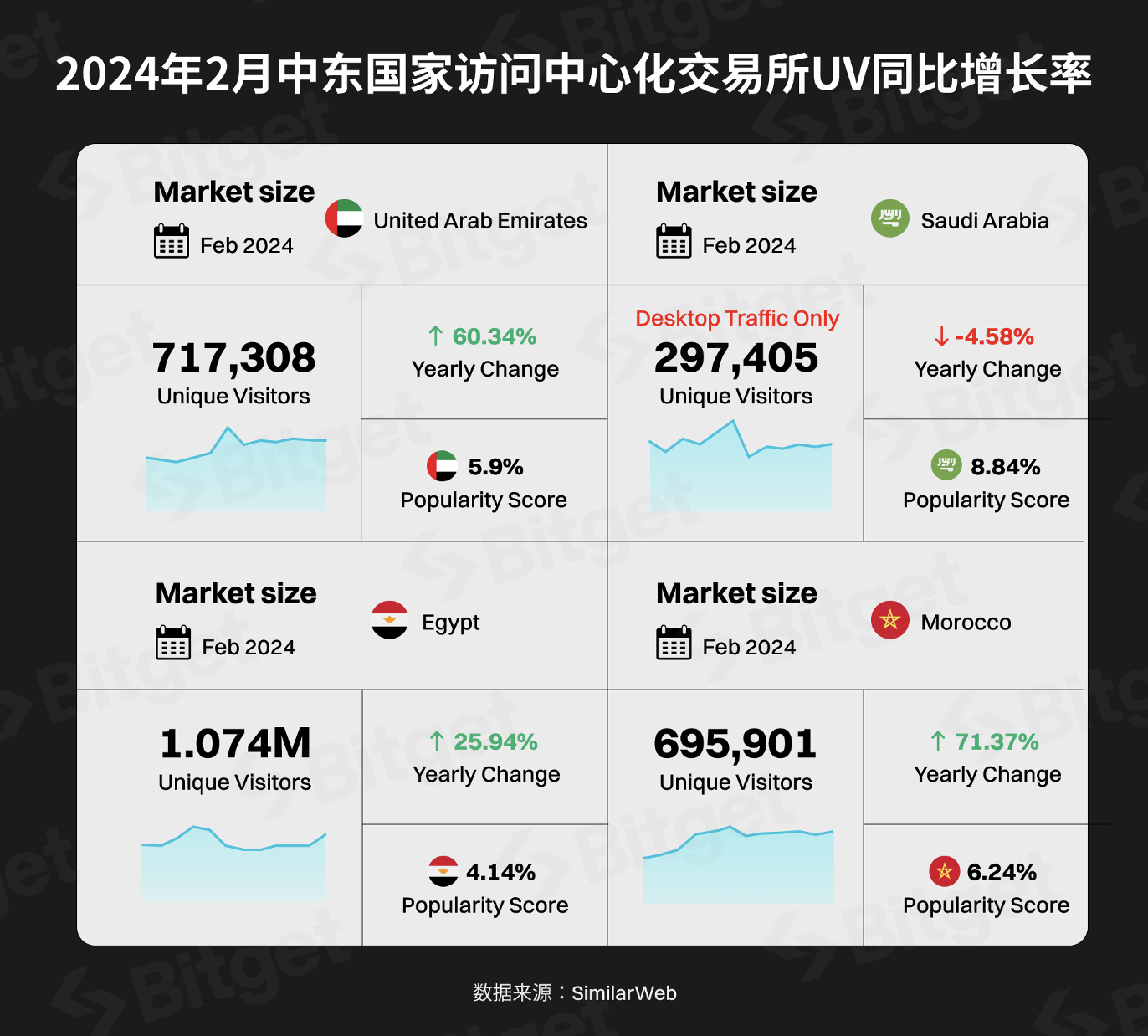
Note: (1) Due to missing mobile web data for Saudi Arabia in February 2024, only desktop data is shown. Assuming a similar traffic structure to the UAE, total desktop + mobile UV for Saudi Arabia would be approximately 874,721. (2) Data for Algeria and Jordan was unavailable and thus excluded.
2. Decentralized Exchanges (DEXs)
Middle Eastern users frequently use DEXs, primarily focusing on leading DEXs on major blockchains such as Solana, BSC, and Ethereum—including Uniswap, Pancakeswap, and Raydium. Some also use DEX aggregators like 1inch and Jupiter.
Most users access these DEXs directly, with others arriving via Google search, social media links, or referrals from market data sites. This suggests that once users form usage habits, they tend to develop brand loyalty, valuing familiarity and reputation.
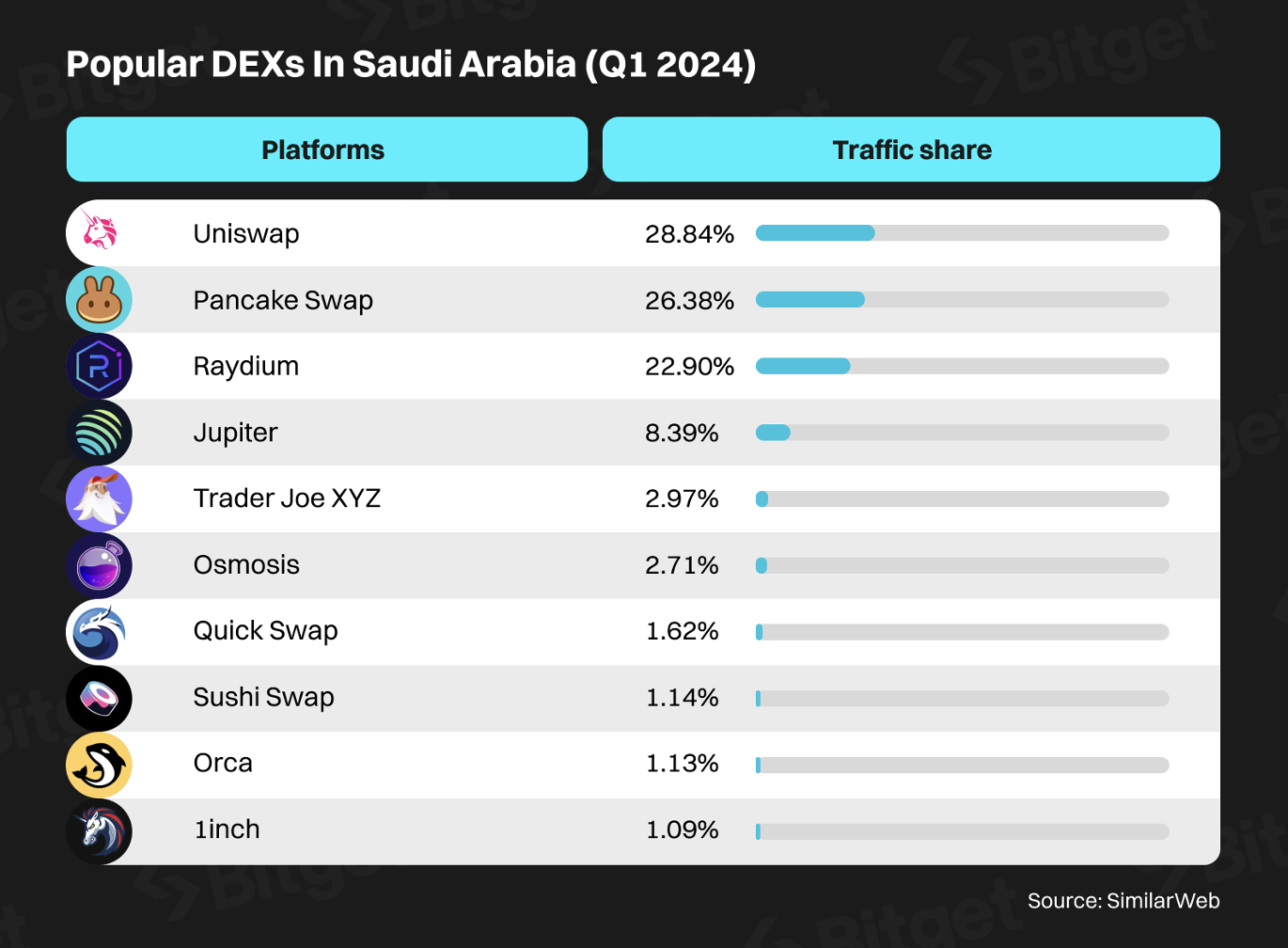
DEX Usage in the UAE and Saudi Arabia
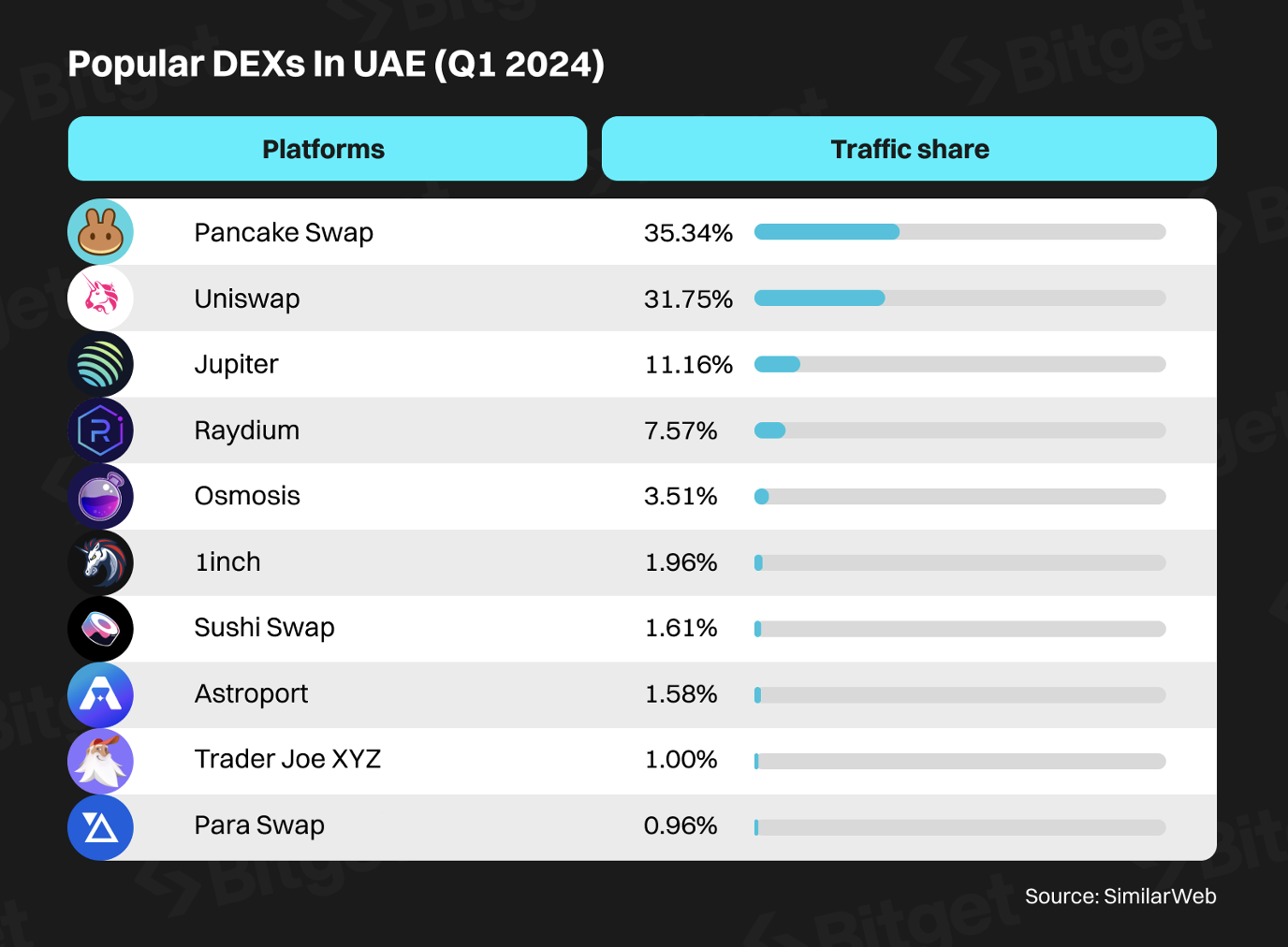
United Arab Emirates
DEX Competitive Landscape
Among Middle Eastern countries, the UAE has a relatively high DEX usage rate. Uniswap, PancakeSwap, and 1inch are among the most widely used DEX products. Across chains, top-tier DEXs see strong traffic, with active chains including BSC, ETH, Solana, and Cosmos. UAE trading habits are gradually shifting toward aggregator platforms.
DEX Traffic Sources
UAE users primarily access DEX websites directly. Notably, Google search is also a common entry point, and CoinMarketCap (CMC), as an information and news site, drives significant traffic and conversions.
Saudi Arabia
Summary of DEX Competitive Landscape
Usage shares of Uniswap, PancakeSwap, and Raydium among Saudi users are similar, indicating strong interest in assets across BSC, ETH, and Solana. On other chains, leading DEXs such as TraderJoe and Osmosis also perform well.
DEX Traffic Sources
In terms of discovery and conversion, Saudi users mainly access DEXs via direct visits, Google search, social media referrals, and crypto news sites. Twitter plays a relatively prominent role in user acquisition.
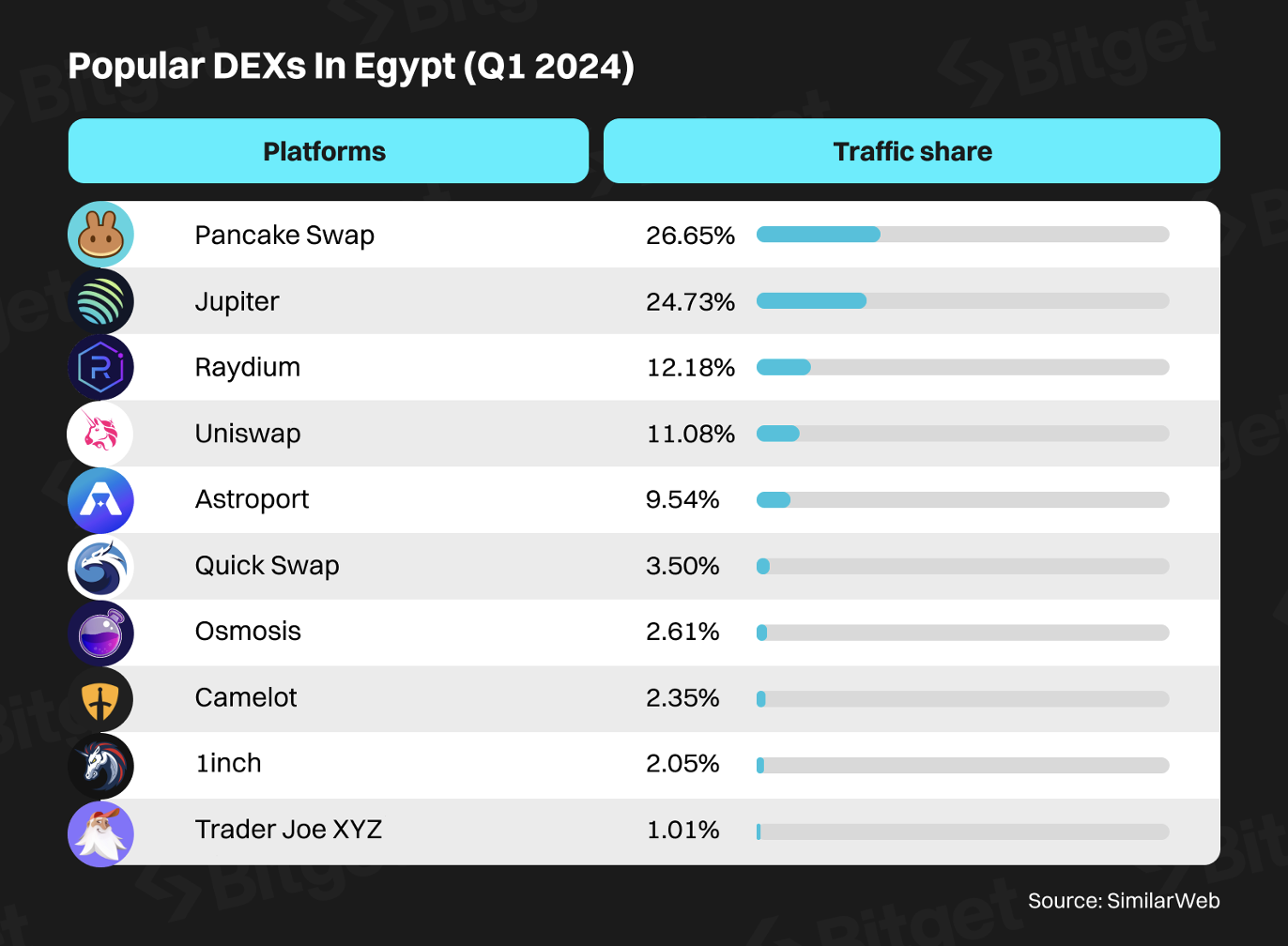
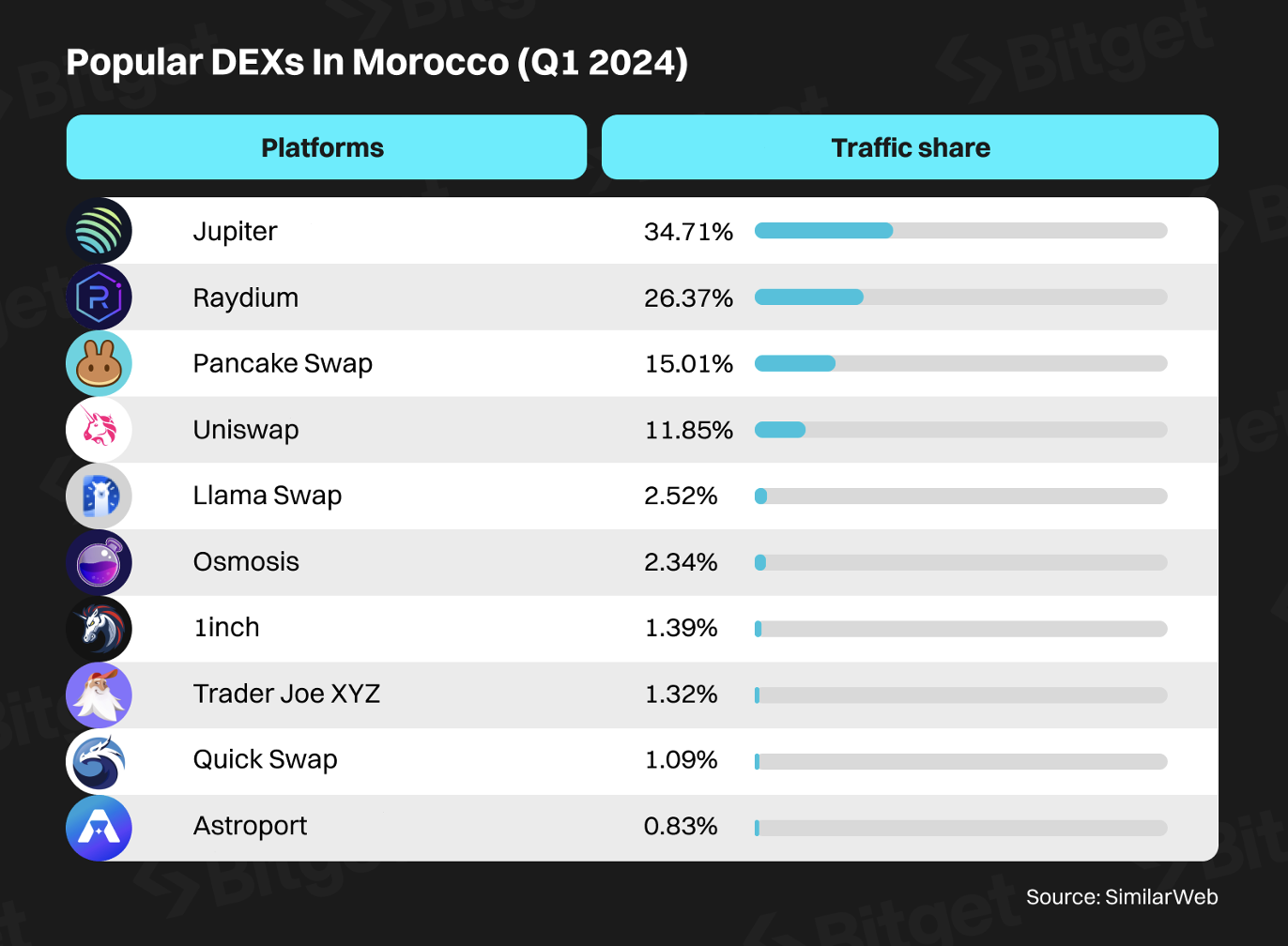
DEX Usage in Egypt and Morocco
Egypt and Morocco
Summary of DEX Competitive Landscape
Egyptian and Moroccan users differ significantly in trading preferences. Egyptians favor PancakeSwap, while Moroccans lean toward Jupiter. On other chains, top-tier DEXs dominate. Notably, higher Astroport usage among Egyptians suggests stronger interest in Cosmos ecosystem projects. Moroccan trading interest is concentrated on the Solana chain.
DEX Traffic Sources
In terms of search and conversion, Egyptian and Moroccan users resemble others—primarily accessing DEXs via direct visits, Google search, social media, and crypto data sites. CoinGecko is more popular among Moroccan users, while CoinMarketCap is preferred in Egypt.
Algeria and Jordan are not analyzed in depth due to small sample sizes. Their DEX usage patterns are generally consistent with neighboring countries.
3. Wallets
Web3 Wallet Downloads in the Middle East (2024.01.01–2024.03.31)
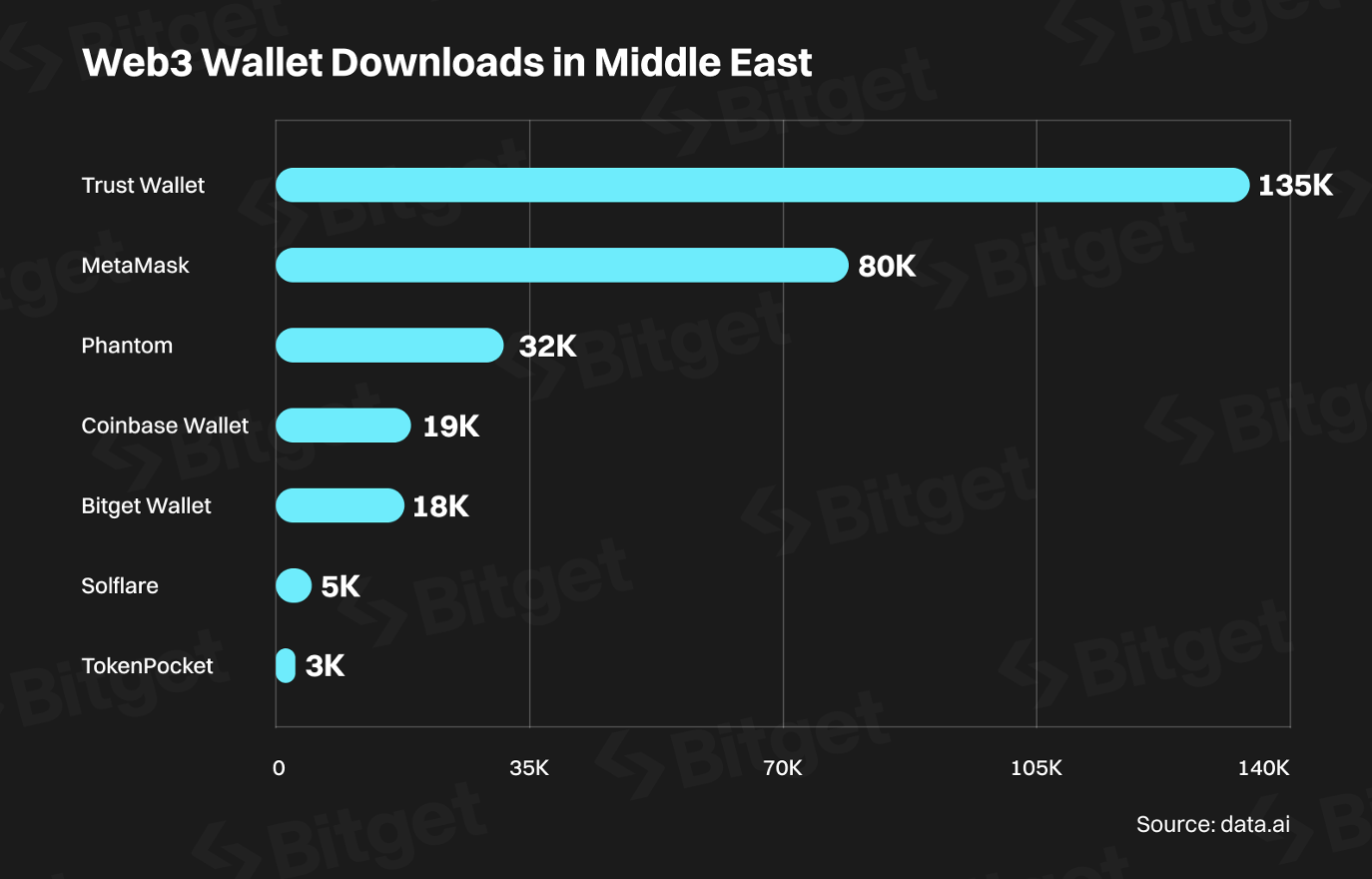
(Note: Some well-known wallets, such as Binance Wallet, share the same app as their centralized exchange and thus could not be separated for individual traffic analysis, hence not shown in the chart.)
In wallet usage, Trust Wallet, MetaMask, Phantom, Coinbase Wallet, and Bitget Wallet are the top five in the Middle East.
Like most other regions, Trust Wallet and MetaMask occupy the top two positions. Launched in 2017, Trust Wallet benefits from early-mover advantage and a simple, user-friendly design aligned with local preferences. Similarly, MetaMask enjoys strong early adoption and broad compatibility—nearly all EVM-compatible chains prioritize integration, making both wallets highly popular in the region.
Recently, due to the surge in Solana ecosystem activity, Phantom—the most popular native wallet on Solana—has seen significant download growth, rising to third place. Rumors of a potential Phantom token airdrop have further incentivized users to adopt the wallet for participating in Solana-based projects.
Ranked fourth, Coinbase Wallet leverages the reputation of Coinbase. Although Middle Eastern users cannot access the Coinbase exchange, they can use Coinbase Wallet. In May 2023, Coinbase CEO Brian Armstrong mentioned in a Bloomberg interview that the company might target the UAE as a bridge between Europe and Asia. Backed by Coinbase’s credibility and security, Coinbase Wallet has become a trusted choice for many users in the region.
Bitget Wallet stands out for its rapid iteration—supporting over 90 blockchains and offering innovative liquidity aggregation algorithms for smooth swaps. It also includes features like on-chain anomaly alerts and smart market recommendations to help users discover trending projects. Recently launching its BWB airdrop campaign and actively running points programs, Bitget Wallet has gained popularity among Middle Eastern users. Notably, its NFT marketplace is the first to allow purchases using any cryptocurrency. This deep understanding of user needs and agile response has propelled it to fifth place in downloads.
Conclusion
The Middle East, with its long and illustrious history as one of the cradles of ancient civilization, is re-engaging with the global crypto wave with openness and ambition. As a result, the region has become one of the fastest-growing in terms of cryptocurrency adoption. This report examines the crypto markets of six Middle Eastern countries as defined by the UN, focusing on three core areas: “market overview,” “user characteristics,” and “competitive landscape and platform advantages.”
From a macro perspective, the Middle East is experiencing rapid growth in both crypto adoption and transaction volume. The six countries covered in this report collectively have around 500,000 daily active users (DAUs) on centralized exchanges, with the UAE leading in crypto penetration.
From a regulatory and cultural standpoint, most surveyed countries are Muslim-majority and influenced by Sharia law. Early crypto policies were restrictive, aimed at protecting local investors. However, as core assets like Bitcoin gain legitimacy and recognition as alternative investments, attitudes are shifting. The UAE exemplifies this change, emerging as one of the most crypto-friendly jurisdictions globally.
Middle Eastern users are open to crypto trading and on-chain interactions, exhibiting several key traits:
- Strong reliance on CEXs;
- Use of crypto for remittances in areas with low traditional banking penetration;
- Active interest in meme coins and tracking market trends;
In terms of competitive dynamics and platform strengths, global centralized exchanges continue to dominate due to their comprehensive and diverse services. DEX usage patterns show little variance, with users concentrating on top-tier platforms across Solana, BSC, and Ethereum. In wallets, Trust Wallet, MetaMask, Phantom, Coinbase Wallet, and Bitget Wallet are the top five choices in the region.
Finally, based on extensive research by Bitget Research, we forecast the following developments in the Middle Eastern market in 2024 for readers’ reference:
- The UAE will remain a strategic hub for the Middle East—not only serving as a central node for crypto talent, capital, and enterprises in the region but also gaining increasing global influence;
- As market conditions improve and crypto awareness spreads, the number of DAUs in the Middle East is expected to grow from 330,000 in 2023 to around 700,000 by end-2024;
- Adoption of various on-chain applications will surge, with terms like “airdrops” and “on-chain mining” becoming social media buzzwords, and interest in the DePIN sector continuing to rise;
- Meme coin speculation will remain hot, with DEX ecosystems on major blockchains continuing to serve as primary venues for such activity;
- Wallets with built-in trading aggregation features will gain greater favor among Middle Eastern users.
Join TechFlow official community to stay tuned
Telegram:https://t.me/TechFlowDaily
X (Twitter):https://x.com/TechFlowPost
X (Twitter) EN:https://x.com/BlockFlow_News






