Bitcoin's Fourth Halving: Inflation Rate Drops to Half of Gold's, Bitcoin Ecosystem Rises
TechFlow Selected TechFlow Selected
Bitcoin's Fourth Halving: Inflation Rate Drops to Half of Gold's, Bitcoin Ecosystem Rises
For the booming Bitcoin ecosystem, this halving may have only just opened the curtain on its development, as we are still in the early stages, with dozens of Bitcoin L2s rapidly emerging—we are still early!
 Navigating Web3 tides with focused insights
Written by: TechFlow
On April 20, 2024, Bitcoin officially completed its fourth halving, reducing the block reward from 6.25 to 3.125 BTC.
Compared to previous halvings, this event seemed much quieter. Retail users appeared more focused on minting runes immediately and complaining about skyrocketing transaction fees.
In 2023, Bitcoin truly developed an ecosystem—the key milestone being the emergence and explosion of inscriptions. Thanks to inscriptions, Bitcoin achieved full capitalization, becoming a base currency linking other assets—just as Ethereum did during the 2017 ICO era.
After the fourth halving, Bitcoin’s inflation rate is expected to drop from approximately 1.75% to just 0.85%, less than half that of gold. While the direct impact of this halving is not as pronounced as earlier ones, within the crypto industry, halving remains a symbolic event signaling bullish expectations. The widespread belief that halvings lead to bull markets contributes to their self-fulfillment.
For the rapidly growing Bitcoin ecosystem, this halving may only mark the beginning. We are still in the early stages, with dozens of Bitcoin L2s emerging simultaneously—we are still early!

What Is Bitcoin Halving?
Every time 210,000 blocks are mined on the Bitcoin blockchain, the miner block reward is cut in half. This occurs roughly every four years, although the actual time between halvings may vary slightly.
Halving is a core feature of Bitcoin's design—a mechanism to limit Bitcoin’s total supply and increase scarcity, preventing unchecked issuance like that seen with traditional fiat currencies.
The last Bitcoin is projected to be mined around the year 2140, after which no new bitcoins will be issued.
Bitcoin halvings have instilled a cyclical expectation across the crypto market. It is widely believed that halvings trigger bull markets—and historically, multiple past halvings have indeed coincided with bull cycles.
Historical Bitcoin Halvings
Previously, Bitcoin has undergone three halvings: in 2012, the block reward dropped from 50 BTC to 25 BTC; in 2016, it fell to 12.5 BTC; in 2020, to 6.25 BTC; and now in 2024, it has been reduced to 3.125 BTC.
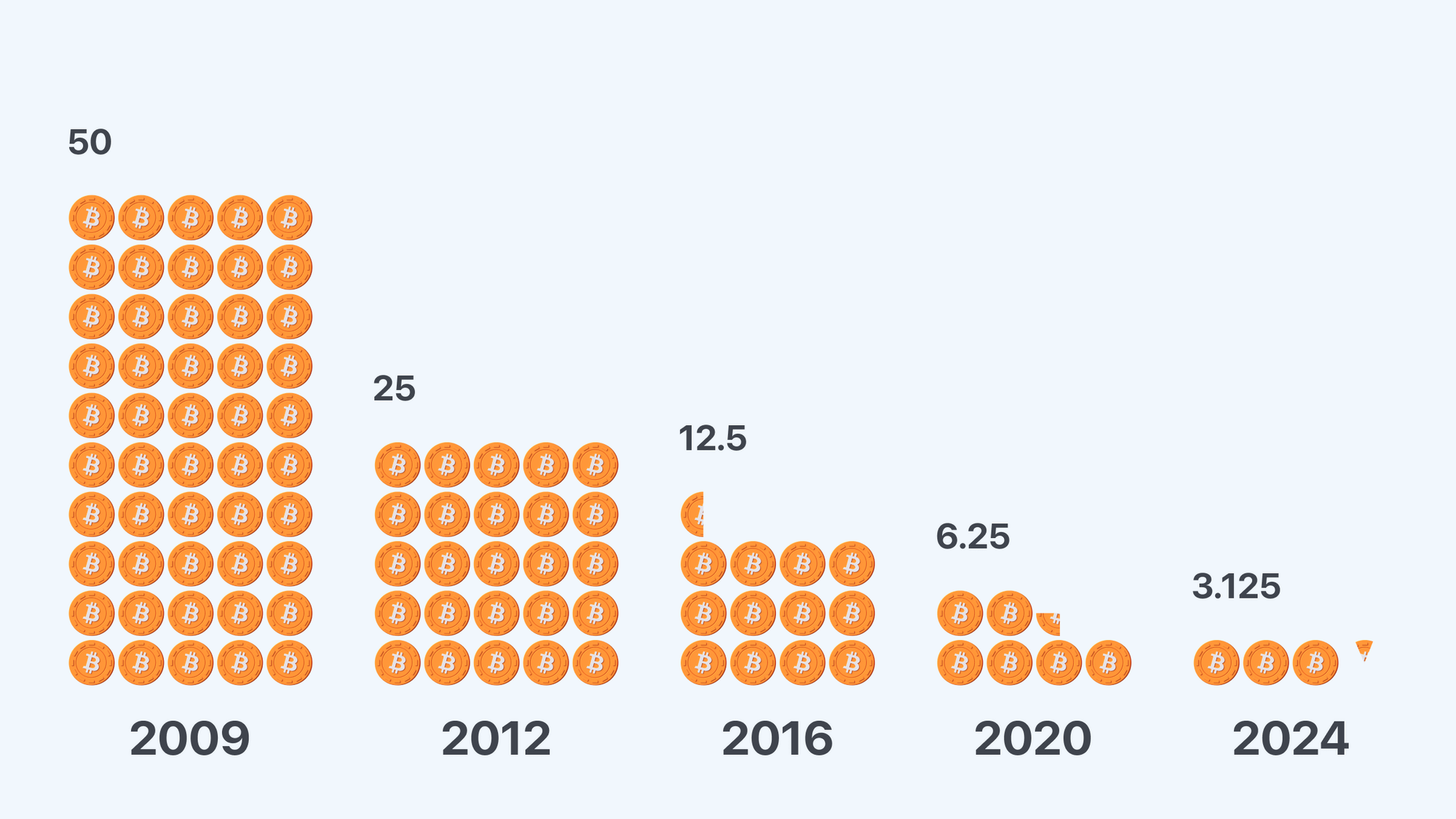
First Halving: November 28, 2012
-
Block number at halving: 210,000
-
Block reward: 50 BTC → 25 BTC
-
Bitcoin price on halving day: $12.3 per BTC
-
Peak price in cycle: $1,175 per BTC
-
Maximum price increase in cycle: 9,552.85%
Second Halving: July 9, 2016
-
Block number at halving: 420,000
-
Block reward: 25 BTC → 12.5 BTC
-
Bitcoin price on halving day: $648.1 per BTC
-
Peak price in cycle: $19,800 per BTC
-
Maximum price increase in cycle: 3,055.08%
Third Halving: May 2020
-
Block number at halving: 630,000
-
Block reward: 12.5 BTC → 6.25 BTC
-
Bitcoin price on halving day: $8,560.6 per BTC
-
Peak price in cycle: $67,775.3 per BTC
-
Maximum price increase in cycle: 791.71%
Changes in Bitcoin's Inflation Rate
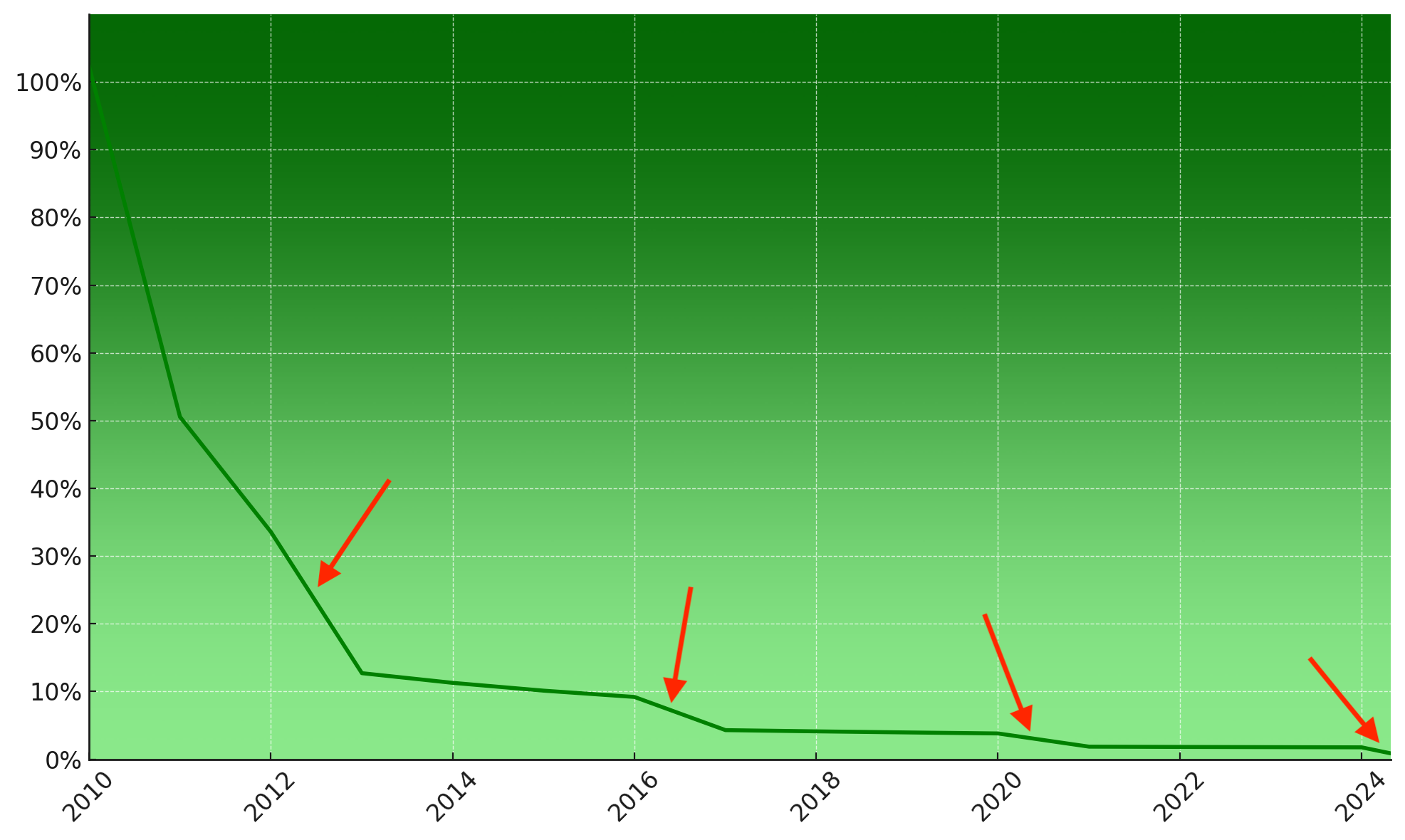
Bitcoin halving significantly impacts inflation rates.
After the first halving, inflation dropped from 25% to 11.78%.
After the second halving, it decreased from 8.34% to 4.09%.
After the third halving, it fell from 3.58% to 1.77%.
After the fourth halving, Bitcoin’s inflation rate is projected to decline from ~1.75% to just 0.85%.
According to a report by the World Gold Council in early 2024, the total above-ground gold supply in 2023 was 212,582 tons, with an annual growth rate of approximately 1.64%. This means after the fourth halving, Bitcoin’s supply growth rate will be roughly half that of gold. From a scarcity standpoint, Bitcoin will become scarcer than gold.
Impact of Bitcoin Halving
Bitcoin halving shapes Bitcoin economics, directly affecting its supply, mining rewards, and overall market sentiment.
The most significant impact is on miners—the reduction in block rewards cuts their income in half, potentially driving innovation and consolidation in the mining industry. Miners are incentivized to develop more efficient hardware and seek energy-efficient solutions. Only well-capitalized miners are likely to survive the initial phase following the halving.
Following the halving, mining geography is expected to shift continuously, with miners relocating to regions offering cheaper and more reliable electricity. Currently, the U.S. accounts for 40% of global mining activity, followed by Russia at 20%.
As inflation declines, the immediate effects of this halving are less dramatic than prior ones. Yet, for the crypto industry, halving remains a symbolic precursor to a bull market. The collective belief that halvings lead to bullish trends helps drive the self-fulfilling nature of these expectations.
What Happens When All Bitcoins Are Mined?
Due to Bitcoin’s fixed supply mechanism, all bitcoins are expected to be mined by 2140. Then what? Where will miners go? Who will secure the network?
In fact, Satoshi Nakamoto addressed this in the original whitepaper: "Once a predetermined number of bitcoins are in circulation, transaction fees can fully provide incentive. At that point, the Bitcoin network will be entirely immune to the chronic inflation plaguing traditional economies."
When all bitcoins are mined, miners will no longer receive block rewards. However, transactions will continue to occur and require validation. Miners will then earn solely from transaction fees—their only source of income.
But in 2023, the emergence of inscriptions changed everything—moving Bitcoin’s ecosystem beyond theory. During the peak of inscription activity in May 2023, transaction fees briefly accounted for over 40% of miner revenue.
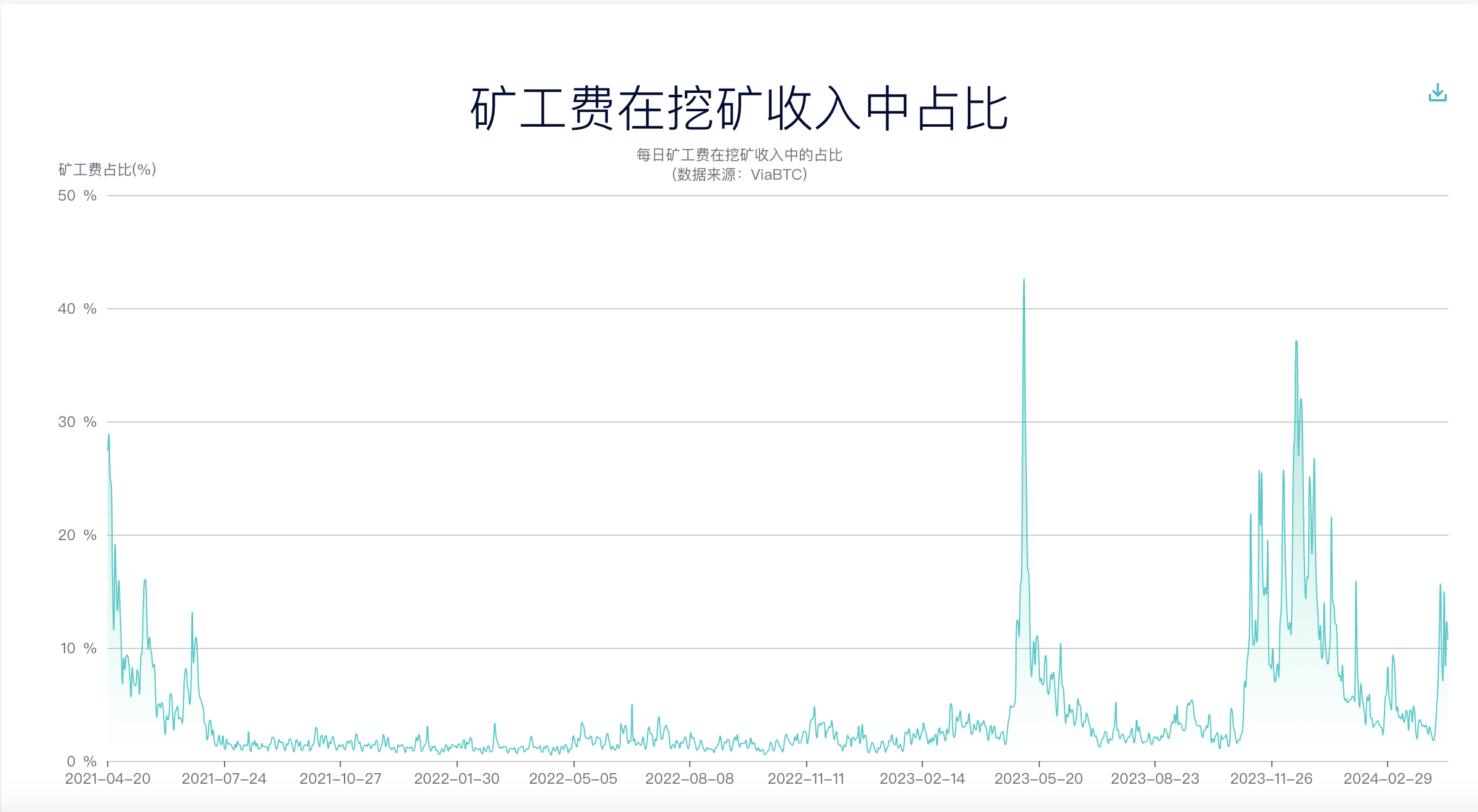
Now, with the rise of various Bitcoin Layer 2 solutions, the Bitcoin ecosystem is steadily expanding—its future looks bright. That said, realistically, none of us reading this article will likely live until 2140, so maybe we don’t need to worry too much about it.
The Rise of the Bitcoin Ecosystem
In 2023, Bitcoin truly gained an ecosystem—the defining moment being the emergence and explosion of inscriptions. Thanks to inscriptions, Bitcoin became fully capitalized, evolving into a base currency connecting other assets—just as Ethereum did during the 2017 ICO era.
A simple data point: according to OKLINK, roughly half of Bitcoin’s daily transactions are now related to Ordinals. To date, Ordinals have generated over $300 million in transaction fees for miners. On November 20, 2023, Bitcoin’s network transaction fees even surpassed those of Ethereum for the first time, setting a new historical record.

With the Bitcoin halving, the most attention-grabbing development was the launch of the Runes protocol—an initiative by Ordinals founder Casey, launched at block height 840,000, coinciding with the halving.
Driven by Rune minting activity, Bitcoin transaction fees surged, with block fee rewards reaching 20 BTC—tripling miner earnings compared to pre-halving levels. Many joked this was a miners’ conspiracy.
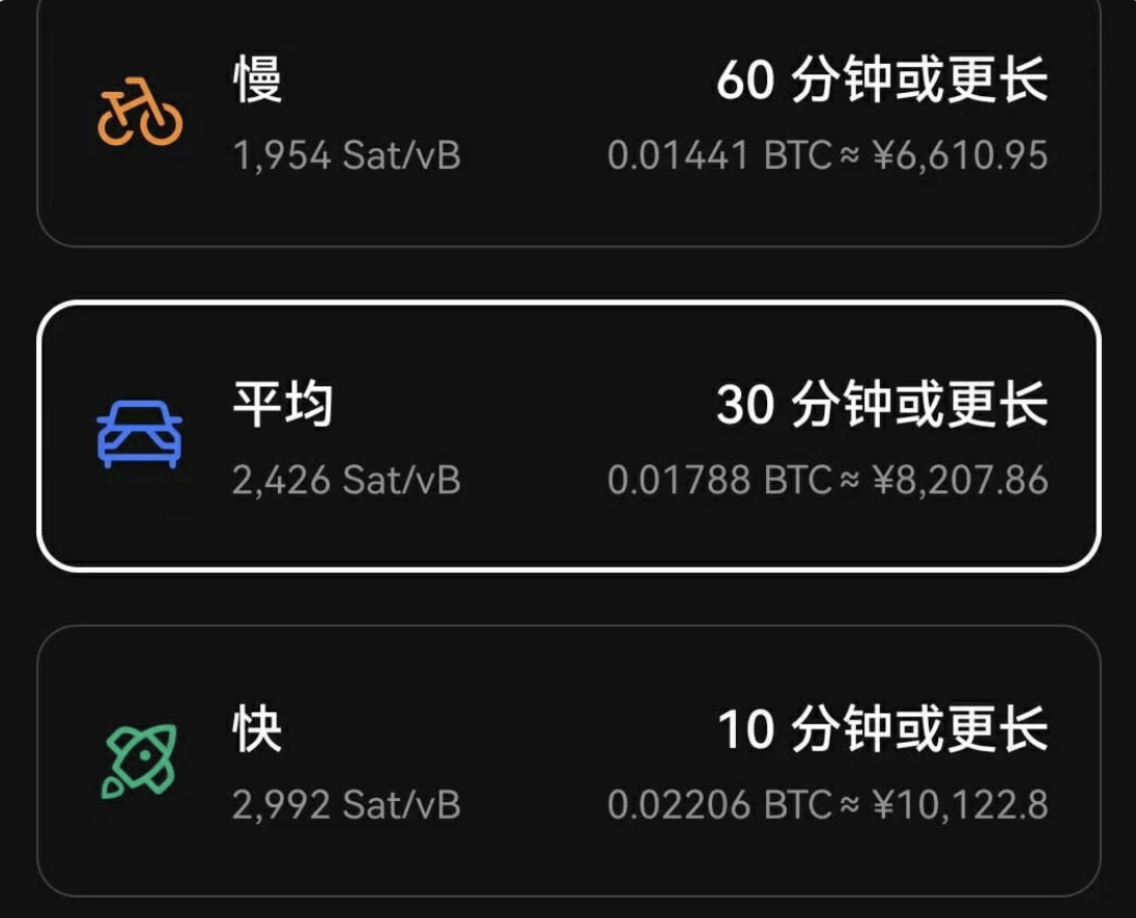
While on-chain activity increases, Bitcoin’s architecture limits programmability. In response, the community is exploring scalability solutions such as Layer 2 rollups, similar to those used by Ethereum, to enhance scalability and usability.
Dozens of Bitcoin L2 projects have since emerged, competing for Bitcoin TVL and further accelerating Bitcoin’s capitalization.
Additionally, Babylon represents a promising innovation—aimed at unlocking staking yield for 21 million Bitcoin, bringing Bitcoin’s security model to PoS chains. Bitcoin holders can earn staking rewards without moving assets out of their wallets, while smaller PoS chains benefit from enhanced security and reduced inflationary pressures during early stages. Miners can also use their Bitcoin to secure PoS economies and earn rewards for providing security.
Looking ahead, miners, VCs, project teams, and retail investors alike all have strong incentives to participate in and expand the Bitcoin ecosystem narrative—we are still early!
Join TechFlow official community to stay tuned
Telegram:https://t.me/TechFlowDaily
X (Twitter):https://x.com/TechFlowPost
X (Twitter) EN:https://x.com/BlockFlow_News
 深潮TechFlow