









What Dubai’s History Can Bring to Web3
TechFlow Selected TechFlow Selected
What Dubai’s History Can Bring to Web3
The Middle East is highly likely to become the third major cryptocurrency market after China and the US, and this time, Dubai still wants to take center stage.
 Navigating Web3 tides with focused insights
Author: Zuo Ye
Destruction and Construction: Nasser and the Ottomans
Modern Middle Eastern history is essentially the dismantling of the Ottoman Empire.
The Ottoman Empire resembled the Qing Dynasty—both were empires ruled by "barbarian" ethnic groups from the frontier over a dominant population. The Ottomans were Turks ruling over Arabs and other minor ethnicities such as Greeks and Balkan peoples.
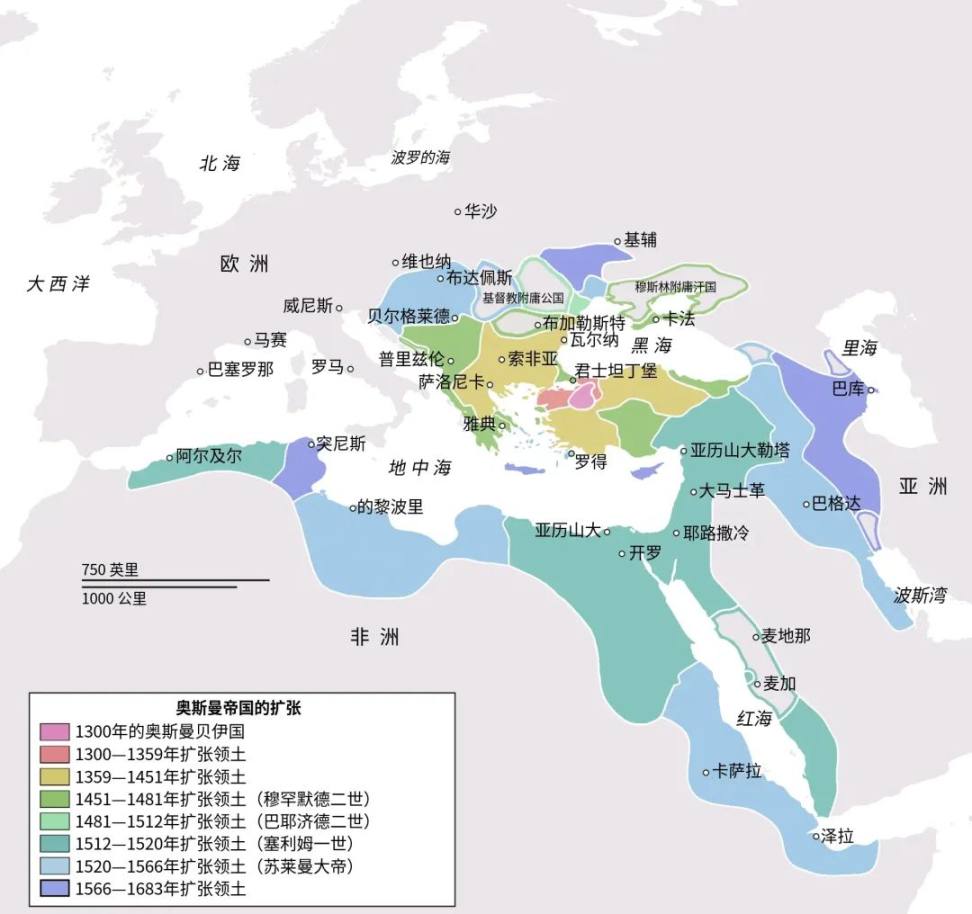
Ottoman Empire
After Britain and France entered the First Industrial Revolution, the Ottoman Empire gradually shifted from being a chess player to becoming the chessboard itself, losing all territories outside today's Turkey—including the two holy cities of Mecca and Medina, the birthplace of Islam.
During this process, Britain gradually won the support of most Arabs. Oppressed populations hoped to regain strength with British imperial power, leading countries like Saudi Arabia and the UAE to form alliances with Britain, effectively becoming protectorates and colonies.
Of course, Jews also received promises from the British and began migrating en masse to Jerusalem and the West Bank—the "Promised Land" mentioned in the Bible, described as a land flowing with milk and honey.
However, World War II changed everything. The era of European powers was definitively over. Both Jews and Arabs turned their attention to the two emerging superpowers: America, the new Western hegemon, and the Soviet Union in the East.
Given the religious and class composition of Arab societies, most monarchies aligned themselves with the United States—including Egypt and Libya at the time, as well as Jordan, Iraq, and Iran. These nations were then still absolute monarchies stuck in medieval political systems.
But the establishment of Israel after the war changed everything.
As anti-Israel alliances failed to deliver results, hundreds of millions of Arabs remained unable to defeat Israel. This led some countries to question the reliability of the U.S., prompting them to seek alternative patrons—turning toward the Soviets as a signal of allegiance.
Thus emerged the Lion of Arabia—Egypt’s Nasser—ushering in Arab nationalism.
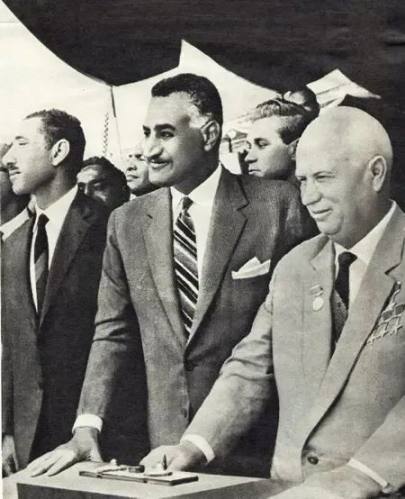
Nasser, the Lion of Africa
In the Third World of that era, national liberation and socialism were essentially two sides of the same coin. Nasser achieved much, but his legacy can be summarized in two key aspects: first, he sought to control religion rather than submit to it, though this left behind the enduring legacy of military rule; second, he inspired national liberation movements across Arab states—for example, Libya’s Gaddafi idolized Nasser for life. However, repeated failures against Israel ultimately marked the end of Arab nationalism.
Another consequence of Nasser’s legacy was that military figures across various countries followed suit, turning their weapons against their own monarchs. This provoked strong backlash from monarchies like Saudi Arabia, pushing them even closer to the United States. After all, while Americans only wanted your oil, the Soviets might actually take your life.
Still, some Gulf states maintained nostalgic ties to Britain—such as Bahrain and the UAE. The UAE did not formally gain independence until 1971 and has since maintained excellent political and military relations with Britain—one of the most graceful colonial withdrawals since Hong Kong.
Dubai’s Dream, the Middle East’s Academic Overachiever
Since its independence, the UAE has operated under a decentralized system where each emirate manages its own affairs. The ruler of Abu Dhabi holds the hereditary presidency, while Dubai’s ruler serves as vice president and prime minister. Most oil, industry, and territory belong to Abu Dhabi, whereas Dubai focuses primarily on finance, tourism, and other service sectors.
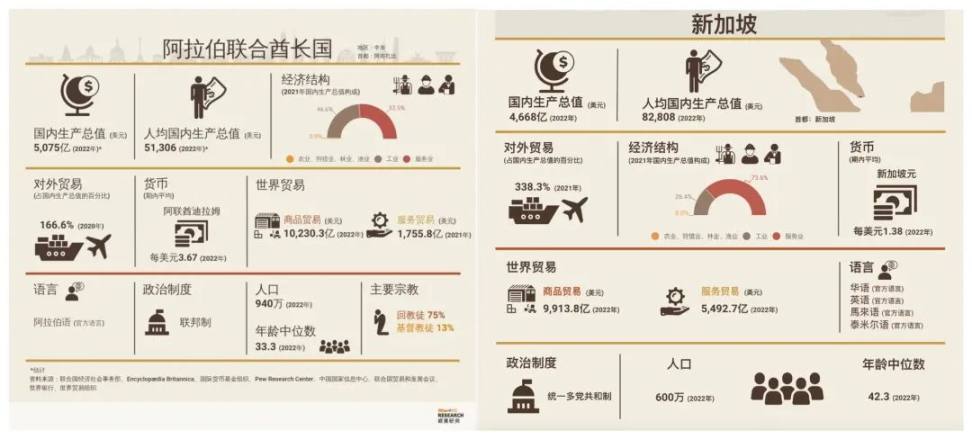
Dubai vs Singapore
Put differently, Dubai is what Singapore would have been had it stayed within Malaysia. In aggregate terms, the UAE still has nearly half its economy in industry, but if you look solely at Dubai, it is almost entirely financial services.
So things proceeded smoothly until 2008. By then, Dubai’s image of luxury was firmly established worldwide. Thanks to its strategic location, it attracted wealthy individuals from the Middle East, Eastern Europe, Russia, and across Africa. Even much of Iran’s foreign trade flows through Dubai—from watermelons to oil, everything passes through here.
If one truly understands Dubai’s mode of survival, then the models of Hong Kong, Singapore, Panama, and Switzerland become clear: safeguard wealth for regional elites, and serve as neutral grounds and covert channels for political rivals.
On one hand, Dubai complies with Western sanctions on Russia—closing down a Russian bank—but simultaneously welcomes all risk-averse capital since the Ukraine conflict began, fueling a real estate boom from late 2022 onward.
On the other hand, Dubai absorbs vast amounts of capital drifting in from northern Myanmar, Southeast Asia, India, and South Asia, while experimenting with bridge connections to China’s central bank digital currency (DCEP) alongside the Hong Kong Monetary Authority.
Additionally, Dubai actively collaborates with Western space programs, sending its astronauts to the International Space Station, while openly engaging in cooperation with the China National Space Administration—and there are even rumors of plans to purchase Chinese weapons.
Having no stance *is* the stance. Dubai’s Token2049 follows the same principle: as long as it involves money, there’s a place for it—while maintaining friendly relations politically with all external powers and regional strongholds.
Against the backdrop of the de facto end of the Yemen conflict and the reconciliation between Iran and Saudi Arabia, Dubai’s role as a crossroads has grown more secure. Whether Iran or Israel—they use Jordan as a battleground, but neither will harm Saudi Arabia or the UAE.
Oasis Amid Chaos, a Green Hope
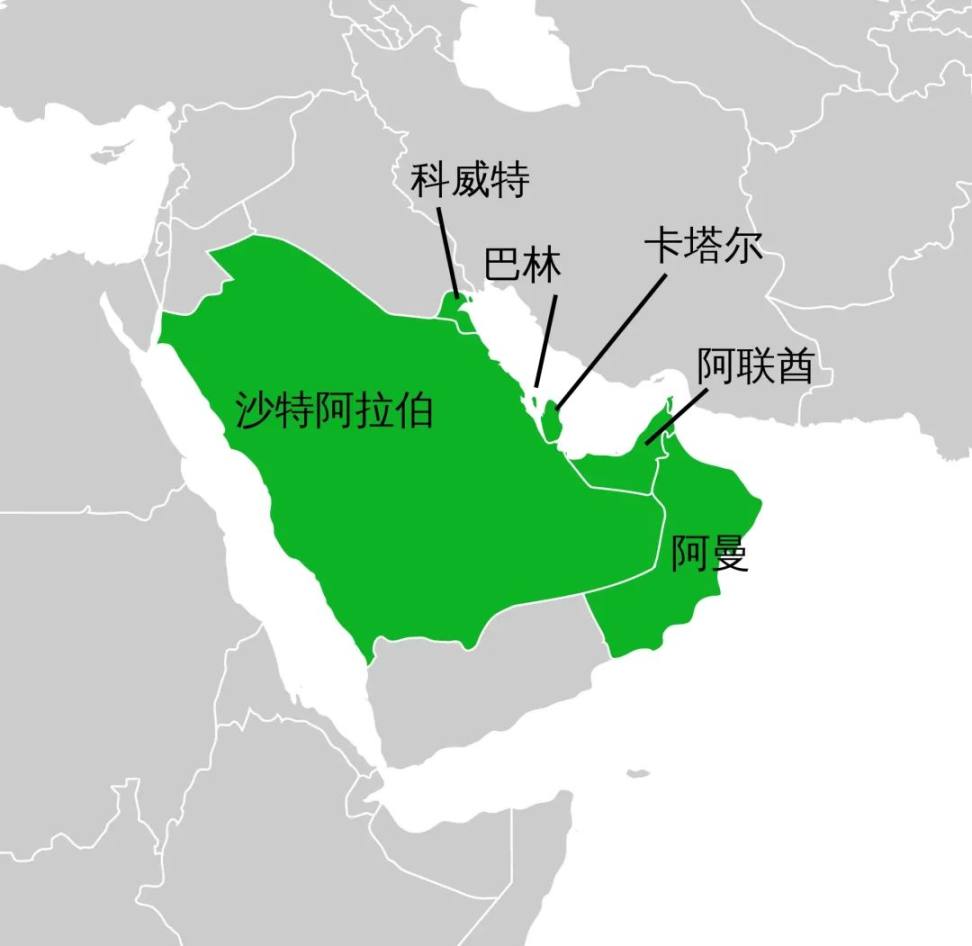
GCC Countries
In today’s turbulent Middle East, the Gulf Cooperation Council (GCC), led by the UAE and Saudi Arabia, stands as the last oasis of stability. Everywhere else is either embroiled in conflict or preparing for it. The chaotic Middle East we imagine lies north of the GCC—encompassing Iraq and Syria—to the east the Persian Gulf, to the west Israel and Africa, and to the south Yemen’s Houthi rebels.
All GCC member states are monarchies whose rulers predominantly follow Sunni Islam. In contrast, Iran is the heartland of Shia Islam. Though outwardly cooperative, deep divisions persist. To GCC leaders, Israel represents infidels, but Iran represents heresy—and heretics are often hated more than infidels.
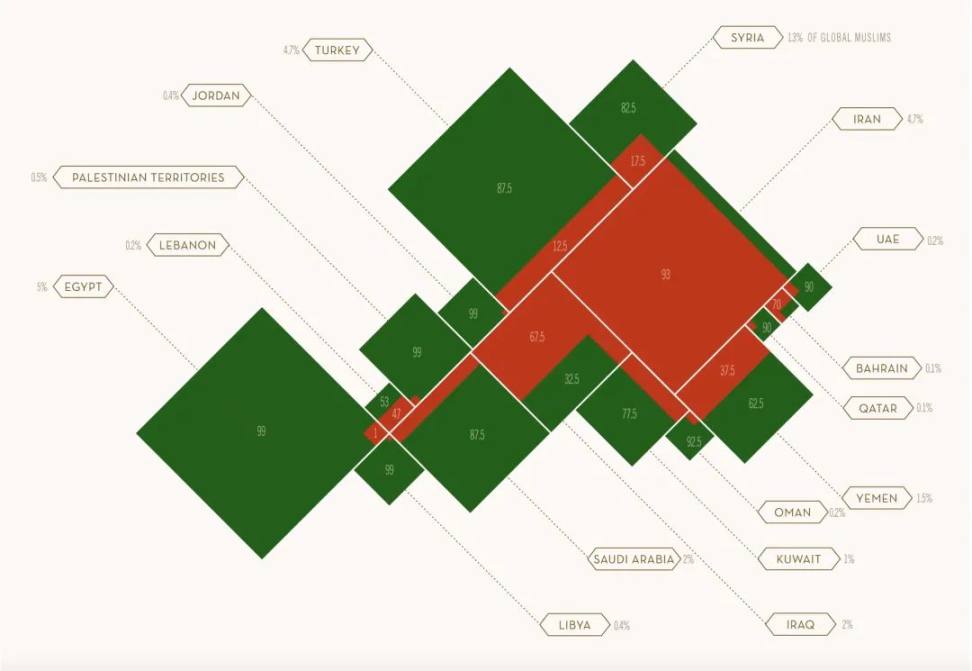
Sectarian Distribution in the Middle East
Moreover, the demographic structure of Dubai and other GCC countries is highly unusual—typically over 80% of the population consists of laborers from India and Pakistan. The remainder includes locals and expatriates from East Asia, Europe, and North America—non-Muslim “foreigners.” Only Saudi Arabia has a higher proportion of native citizens, though even there, locals tend to avoid work, preferring state welfare.
A notable feature is the strict naturalization and immigration policy: if you’re not Muslim, you have virtually zero chance of gaining citizenship. At best, you may obtain various visas—like a 10-year golden visa granted for property purchases—but the vast majority of South Asian laborers remain excluded from social benefits.
In short, Dubai wants your money and labor, but takes no responsibility for your future or life. It’s a clearly priced contract.
Broadening our view to the GCC and the wider Middle East, this region has always served as a conduit between East and West—from Assyria to Babylon, Persia to Alexander, Rome to the Mongols, the Arab Caliphate to the Ottomans, and now as a major transit hub where Europe, Asia, and Africa converge.
Yet beneath the fragile peace lie endless conflicts—religion and oil, secularism and warlords—all converging here. Transnational organizations like the Muslim Brotherhood and Ba’ath Party, along with today’s rising "Shia Crescent" or "Axis of Resistance," reflect a region where people don’t know how to stop fighting, yet everyone must participate.
-
The impossible triangle: secularism, religious rule, and military dictatorship. Borrowing Ethereum’s concept of an impossible triangle, the Middle East faces a similar trilemma—no country can achieve secular governance without falling into military dictatorship. After Nasser, Egypt saw only one elected government led by the Muslim Brotherhood. If democratic voting were applied consistently, Lebanon and Iraq would be clear examples. Iran created a theocratic republic, layering religious authority atop an elected government—an arrangement rare in the world.
-
An extended period of military preparedness: While attention remains focused on conflict and pre-conflict zones like Iran, Israel, Jordan, Syria, and Iraq, North Africa’s Libya remains unresolved. Morocco and Algeria are already arming themselves for confrontation over Western Sahara—both are major energy exporters and rank among the world’s top arms importers, with conventional military forces rivaling those of European powers.
Yet the monarchies of Dubai—or more broadly, the GCC—have managed to maintain relative prosperity and stability. Bahrain, Qatar, and Dubai have become hubs for finance and banking, anchoring the pulse of Islamic and Middle Eastern finance.
If there is to be a next financial market, it should not be the Middle East as a whole—a region too vast and diverse to define—but rather the GCC nations. Still, massive wealth inequality and a small local population mean the overall market will inevitably remain limited.
The Third Market: Sales Front for the Crypto Hub
China and the U.S. are the two largest cryptocurrency markets. Elsewhere, Africa and Latin America suffer political instability, Europe enforces strict regulation, and South and Southeast Asia lack sufficient wealth. The Middle East thus emerges as a dream destination—Turkey’s high inflation has driven dollarization, making crypto a hot topic in Istanbul.
Starting a few years ago, Hong Kong, Singapore, and Dubai have competed to become the world’s crypto capital—or at least Asia’s. Regardless of how decentralization reconciles with centralized gateways, Dubai has welcomed everyone with open arms. From business parks to Deira, from villas to mansions, everyone finds their place according to price.
Some move from here to Georgia and Ethiopia—there’s no turning back, living freely in the wild, born free, dying randomly.
Others return to Singapore, Hong Kong, New York, or Paris—ascending into legitimacy, representing crypto’s upward trajectory, with the West as the final殿堂 and destination.
But most become salespeople—former flight attendants, retail clerks—now BD (business development) reps. Backed by mainland resources, facing West and East, selling products—ultimately no different. Many still sell real estate. Perhaps everyone who comes to Dubai eventually becomes an agent.
Yet acting as middlemen and collecting tolls is traditional Middle Eastern expertise. Without the Ottomans blocking trade routes, there would have been no Age of Exploration. Without global regulatory storms, Dubai wouldn’t have become a Web3 haven. Almost every exchange is rushing into Dubai—including FTX before its collapse—alongside compliance, identity verification, visa, and other supporting services.
The recent rainstorm in Dubai dampened many people’s impressions. But Dubai indeed lacks proper drainage—everything runs openly on the surface, laid bare for all to see. Everything has a price—whether you can afford it is the only question.
The Middle East could very well become the third major crypto market after China and the U.S.—and this time, Dubai still aims to be the front desk.
Join TechFlow official community to stay tuned
Telegram:https://t.me/TechFlowDaily
X (Twitter):https://x.com/TechFlowPost
X (Twitter) EN:https://x.com/BlockFlow_News
 @zuoyeweb3











