Don't Forget to Focus on Alpha When Markets Dip: Top 9 Notable AI and Infrastructure Projects
TechFlow Selected TechFlow Selected
Don't Forget to Focus on Alpha When Markets Dip: Top 9 Notable AI and Infrastructure Projects
Infrastructure and artificial intelligence will be the focus in the coming months.
 Navigating Web3 tides with focused insights
Author: NAIROLF
Compiled by: TechFlow
2024 is the year of infrastructure and artificial intelligence.
While meme coins have seen massive rallies and brought significant profits to many crypto participants, the space has also witnessed several major innovations across other domains. Ethena has successfully reached a supply exceeding $2 billion, emerging as one of DeFi's most notable innovations. Solana and Sei have democratized parallel execution, enabling these L1s to achieve extremely high throughput in production environments. Eigenlayer, following its introduction of restaking, is preparing to launch its highly anticipated token.
The crypto market never stops, and neither does innovation. Infrastructure and AI will be the focal points over the coming months, so let’s take a quick look at nine promising projects in these two fields.
Artificial Intelligence
ZeroGravity
ZeroGravity, also known as 0G Labs, is defined as the first modular AI chain. Its goal is clear: elevate data availability to a new level. You may already know that training AI models requires vast amounts of data. If our objective is to truly integrate AI on-chain, then high-speed and highly scalable data availability solutions become crucial. ZeroGravity aims to achieve this scalability by splitting the data availability workflow into two channels: data publishing and data storage. According to one of 0G’s founders, this model enables ZeroGravity to achieve a data throughput of 50 Gbps—compared to competitors’ 1.5 MBps. This concept has drawn significant attention, allowing the project to raise $35 million from top-tier VCs such as GCR, Hack VC, and Delphi Digital in its Pre-seed round.
Nim Network
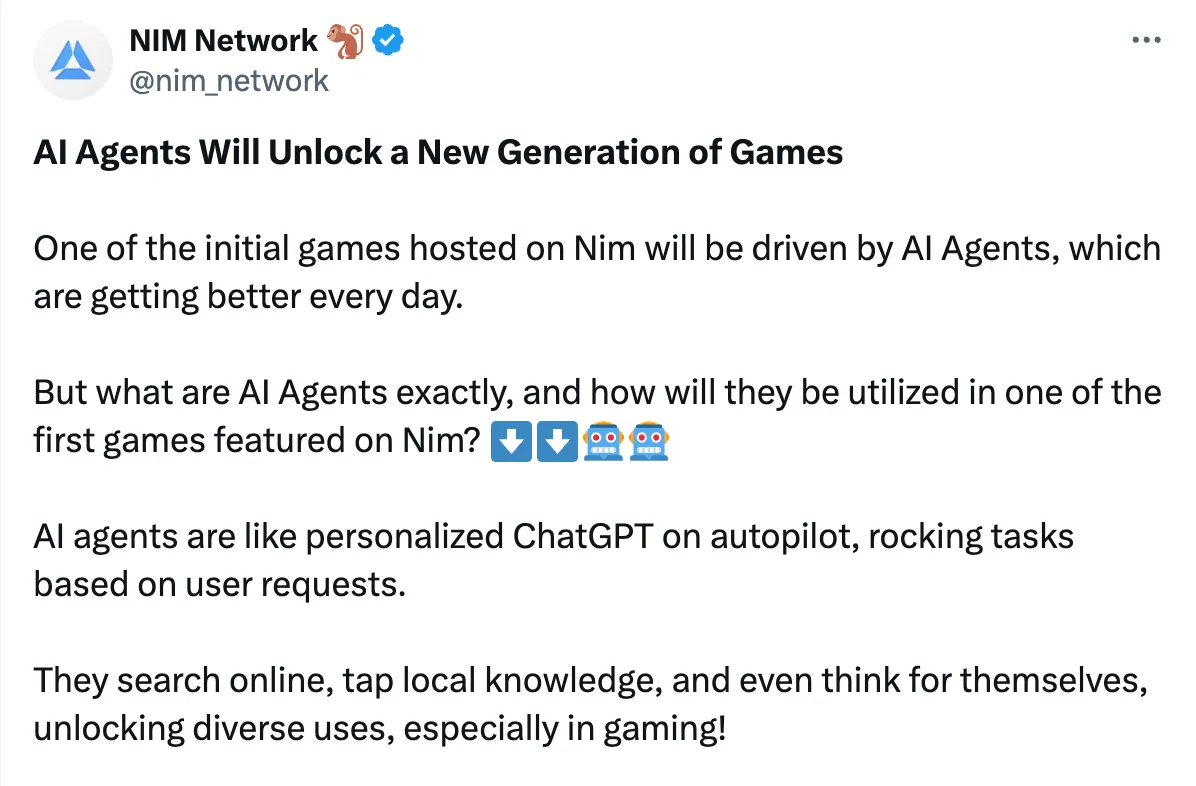
NIM Network is the first RollApp launched on Dymension’s mainnet. It’s safe to say their ambitions are enormous! NIM aims to become the ultimate environment for crypto-native and engaging AI-powered games. To achieve this ambitious vision, the project focuses on developing AI game agents. While the term might sound intimidating or broad, AI game agents are essentially virtual players that mimic human-controlled gameplay. Their primary purpose is to enhance immersion and experience for human players like you and me. With NIM, anyone can use, develop, or deploy AI agents permissionlessly, and later other network participants can leverage and improve these agents within their own applications. Eventually, these agents will be monetized, with owners collecting generated revenue. As Web3 gaming grows exponentially, AI agents could play a decisive role in making these games as entertaining as traditional ones like Fortnite or FIFA.
Talus
Talus is a high-performance, parallelized blockchain powered by Sui’s variant of the Move programming language. It integrates a native AI stack to facilitate the creation of AI smart agents—programs designed to operate autonomously, such as bots. Talus provides developers with an optimized environment to easily build and deploy distributed AI services with flexibility. Within Talus, there will be a marketplace where smart agents, resources, and services can be represented, utilized, and traded in a permissionless and verifiable manner. Additionally, Talus will interconnect with other blockchains via the Inter-Blockchain Communication (IBC) protocol, enabling smart agents built on Talus to interact with and leverage data or assets across multiple chains.
Infrastructure
Movement
Movement is building an Ethereum L2 using MoveVM—a virtual machine that uses Move as its programming language. Move was originally developed by Facebook for its Libra/Diem blockchain project but was abandoned due to regulatory issues. However, the language itself remains active and has gained increasing attention within the ecosystem, especially with multiple L1 blockchains adopting Move, including Aptos, Sui, and 0L Network. The core idea behind Movement is to bring this technology to Ethereum by building the first L2 with MoveVM. This L2 will use Celestia as its data availability layer and will be EVM-compatible. Projects like Thala and Echelon, already running on Aptos, have announced plans to deploy on Movement. Definitely one to watch!
Particle Network
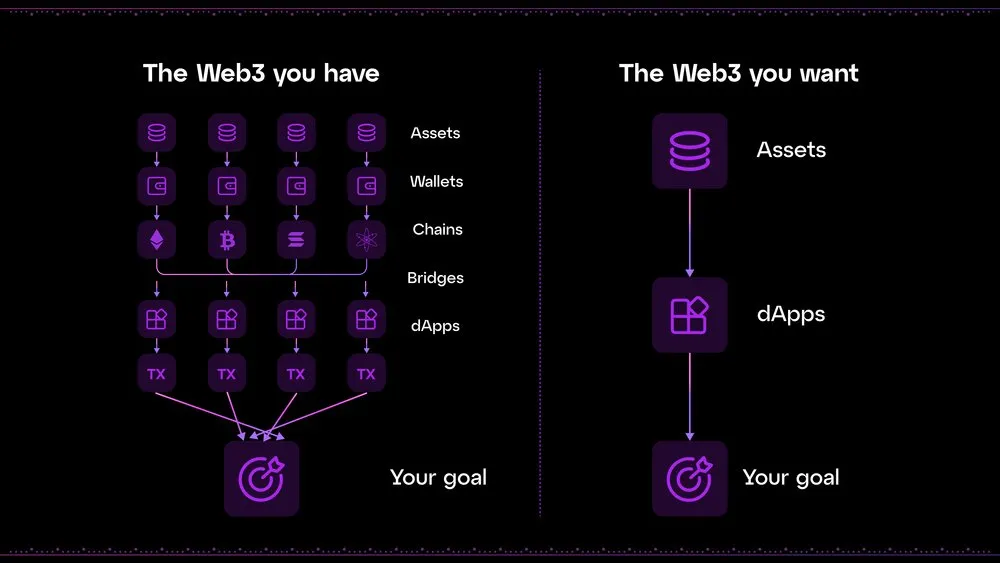
Particle Network is a modular L1-powered chain abstraction solution. With hundreds of rollups and chains emerging, managing different wallets, scattered assets across platforms, and holding gas tokens on each individual chain is becoming increasingly difficult. This issue is often referred to as fragmented ecosystems: each chain hosts different dApps and uses distinct gas tokens, making movement between chains cumbersome and inefficient—especially for newcomers. Chain abstraction aims to reduce this complexity by creating a user experience where it feels like interacting with a single, unified chain. Essentially, users won’t even know which specific chain they’re interacting with. No need to worry about bridging enough gas tokens to a new chain—Particle Network handles that for you. By acting as a universal settlement layer through universal accounts and shared liquidity, it aims to make most underlying infrastructure invisible to users. Personally, I believe chain abstraction is the next logical step from modularity to logic, and both concepts aim to work together to onboard the next billion users into crypto.
Espresso
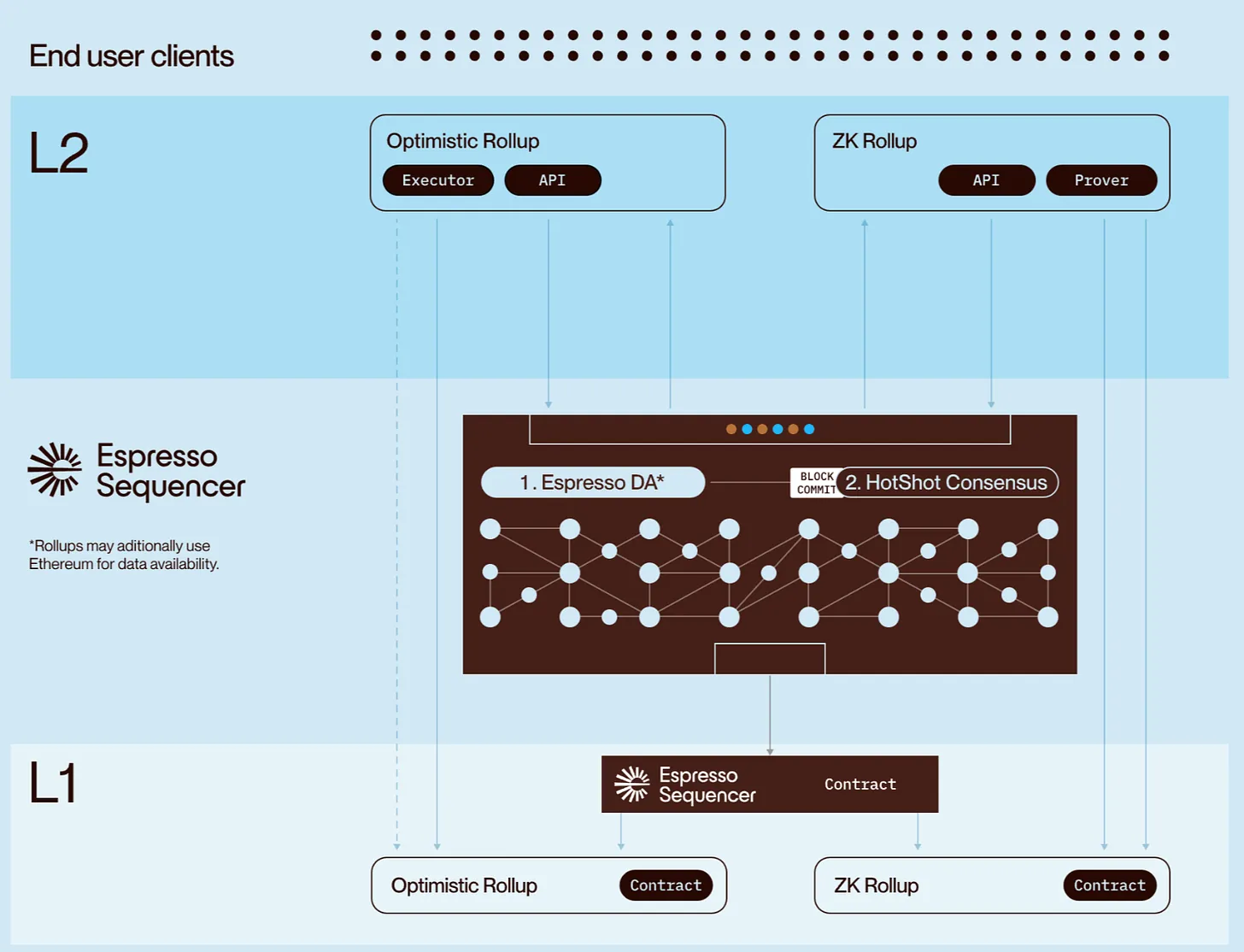
Espresso defines itself as a shared sequencing marketplace and finality gadget connecting L2s. Simply put, Espresso acts as a sequencer layer that multiple rollups can use simultaneously. This means the block sequencing process shifts from centralized sequencers typically operated by rollup teams to a permissionless network of nodes running the Espresso Sequencer. This model offers three key advantages: scalability, decentralization, and interoperability. Through its HotShot consensus, Espresso ensures fast transaction finality and high throughput. As sequencers are shared across different rollups, cross-chain messaging and bridging between L2s become cheaper, faster, and more secure. Last month, Espresso raised an additional $28 million in a Series B round led by a16z.
Lava Network
Lava Network delivers the first modular data access layer, designed to expand access to any blockchain. The problem Lava addresses is infrastructure fragmentation. Accessing data from other chains has quickly become a challenge for developers building cross-chain applications—especially beyond the EVM ecosystem. To overcome this pain point, Lava is building a robust, decentralized, and unified approach that allows developers to easily retrieve data from every supported chain. Currently, Lava offers an RPC service that routes requests to the best available provider. While RPC only allows apps to fetch basic blockchain data, Lava can also integrate specialized API modules to retrieve specific, more complex blockchain data. Lava is currently running an incentive program that could lead to some form of airdrop.
NodeKit
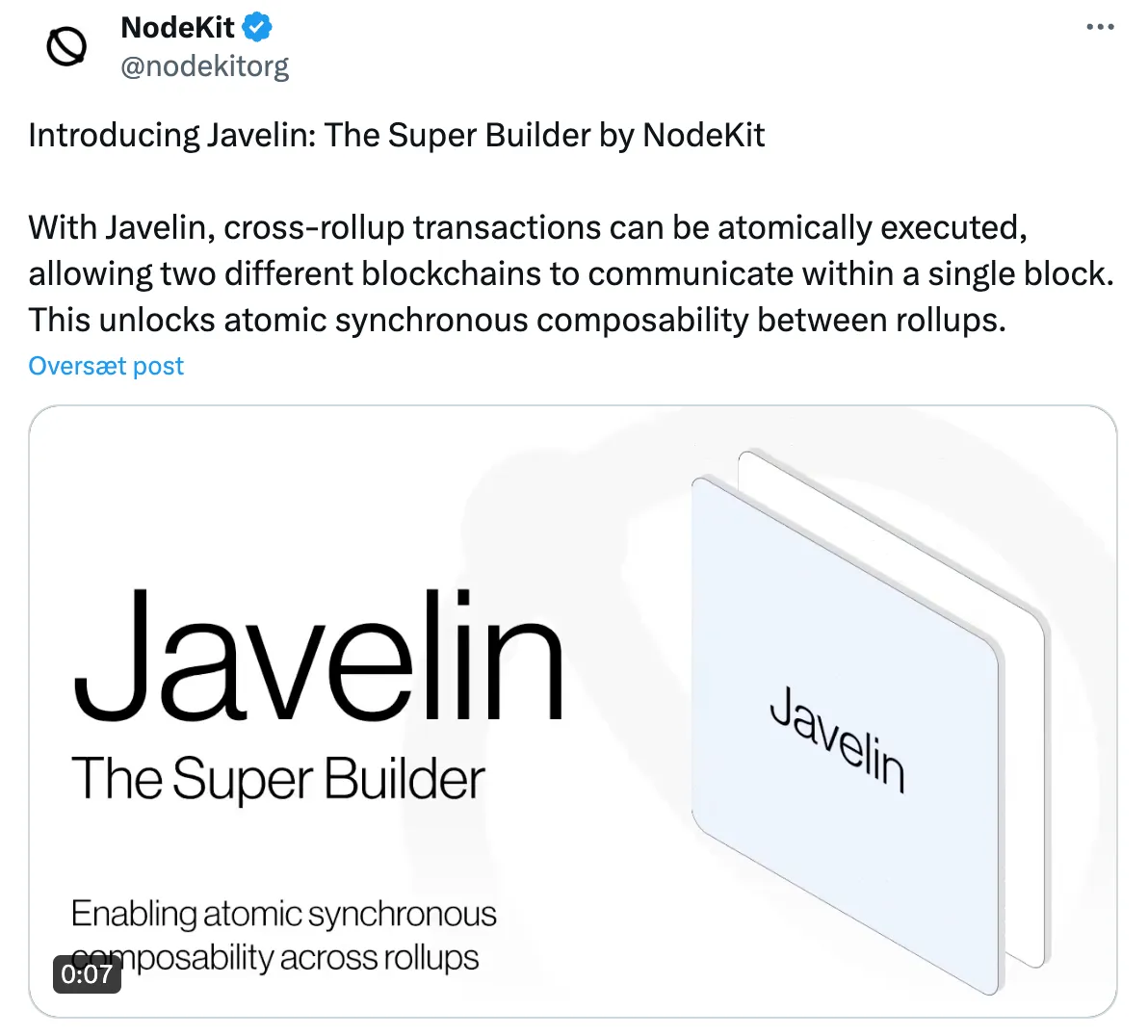
NodeKit is a composability layer that enables blockchains to unlock synchronous communication. The project recently launched Javelin, a block builder that facilitates atomic, synchronous composition across rollups. With Javelin, cross-rollup transactions can be executed atomically within a single block, enabling two different blockchains to communicate within the same block. This capability opens up numerous possibilities, such as instant bridging between L2s. Typically, bridging between rollups takes time due to separate confirmations required. However, with NodeKit, tokens can be burned on one L2 and minted on another within the same block. After its initial Pre-seed round led by Borderless in December 2023, NodeKit has since received additional funding from a16z Crypto Startup Accelerator.
Caldera
Caldera is a Rollup-as-a-Service (RaaS) project. Specifically, it allows users to deploy a rollup with just a few clicks. The process is simple: choose a stack, select a data availability layer and gas token, click deploy—and done! Personally, I’m convinced that once they find product-market fit, many dApps will transition to the appchain model. This allows applications to overcome limitations of the L1s they’re built on while immediately improving scalability and customizability. This is precisely RaaS’s value proposition: enabling easy and rapid deployment of project-specific chains. The best part? Caldera manages all the infrastructure for you—including blockchain nodes themselves and auxiliary infrastructure like indexers and block explorers. This business model has already attracted numerous projects, such as Manta Pacific, Treasure, and Animoca Brands, and is expected to continue growing in the coming months and years.
Conclusion
The crypto space never stops building—that’s exactly why we love it. These nine projects represent just a small fraction of what we believe are worth watching in the AI and infrastructure sectors.
Join TechFlow official community to stay tuned
Telegram:https://t.me/TechFlowDaily
X (Twitter):https://x.com/TechFlowPost
X (Twitter) EN:https://x.com/BlockFlow_News