When VCs Host Meme Hackathons, Is the Endgame of Crypto Investment Just Memes?
TechFlow Selected TechFlow Selected
When VCs Host Meme Hackathons, Is the Endgame of Crypto Investment Just Memes?
Users aren't afraid of extreme volatility; they're afraid that I don't have a better opportunity than you to benefit from such extreme volatility.
 Navigating Web3 tides with focused insights
By TechFlow
In the eyes of retail investors, VCs are often seen as enablers of收割 (scalping), while Memes are celebrated as the great banner against such practices.
Memes driven by culture and community typically lack heavy early-stage investments or backing from major VCs. Their relatively fair and random nature has turned "rugging on shitcoins" into a carnival for retail—since everyone gets cut anyway, why not bet on meme lotteries?
Yet this carnival hasn't belonged to VCs in quite some time.
With their top-tier foresight and vision, VCs naturally recognize these shifting tides within the crypto space. Whether out of anxiety or reflection, they must do something—to break through amid the massive wave of attention economics.
Recently, Li Jin, co-founder of Variant, took action and posted on X:
"Born too late to explore Earth; born too early to explore space; born at the right time to host a meme hackathon."
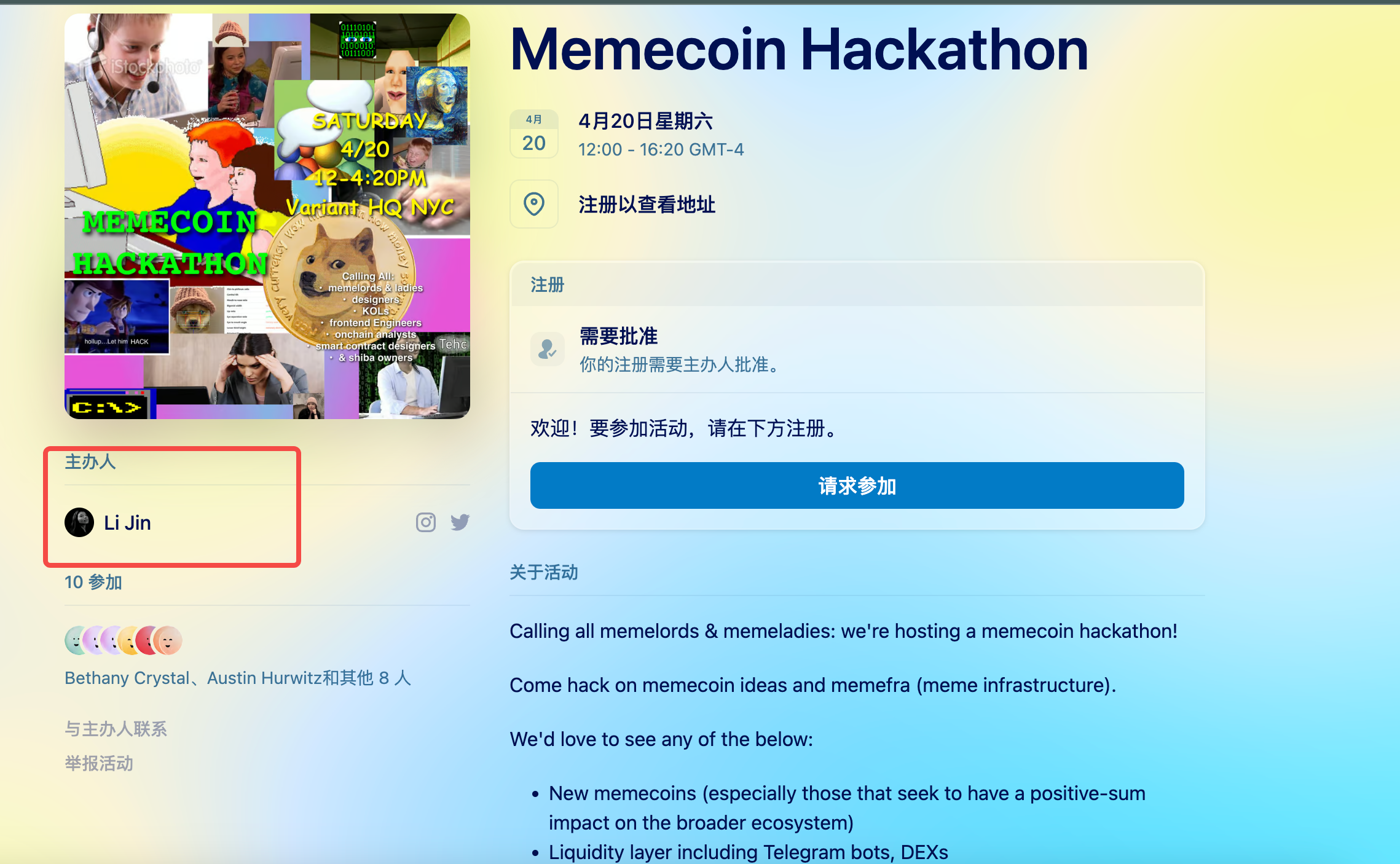
This event, called the Memecoin Hackathon, lists Li Jin as the organizer on its event page, scheduled for April 20 at the New York headquarters of Variant Fund. It calls on teams capable of building in the following areas to participate:
-
New memecoins, especially those seeking positive-sum impact on the broader ecosystem
-
Liquidity layers including Telegram bots and DEXs
-
Applications using memecoins as GTM (go-to-market) strategies
-
Applications building utility around memecoins
Notably, the event mentions a term called "Memefra"—meme infrastructure. By inviting visionary and skilled teams to build Memefra, it's clear that VCs welcome anything that enables the rise of memes.
Born at the right time—will VCs, long associated with high-end technical infrastructure, finally start chasing the grassroots, chaotic wave of memes?
Attention Economy: Crypto’s Perpetual Motion Machine
In fact, VCs launching a meme hackathon isn’t a whim—it’s riding the wave.
VC investing is about value return, and memes inherently possess "attention value."
In an earlier blog post, Li Jin敏锐ly observed that "Memecoins, NFTs, and tokens are new 'attention assets' that can measure the value of attention in real time."
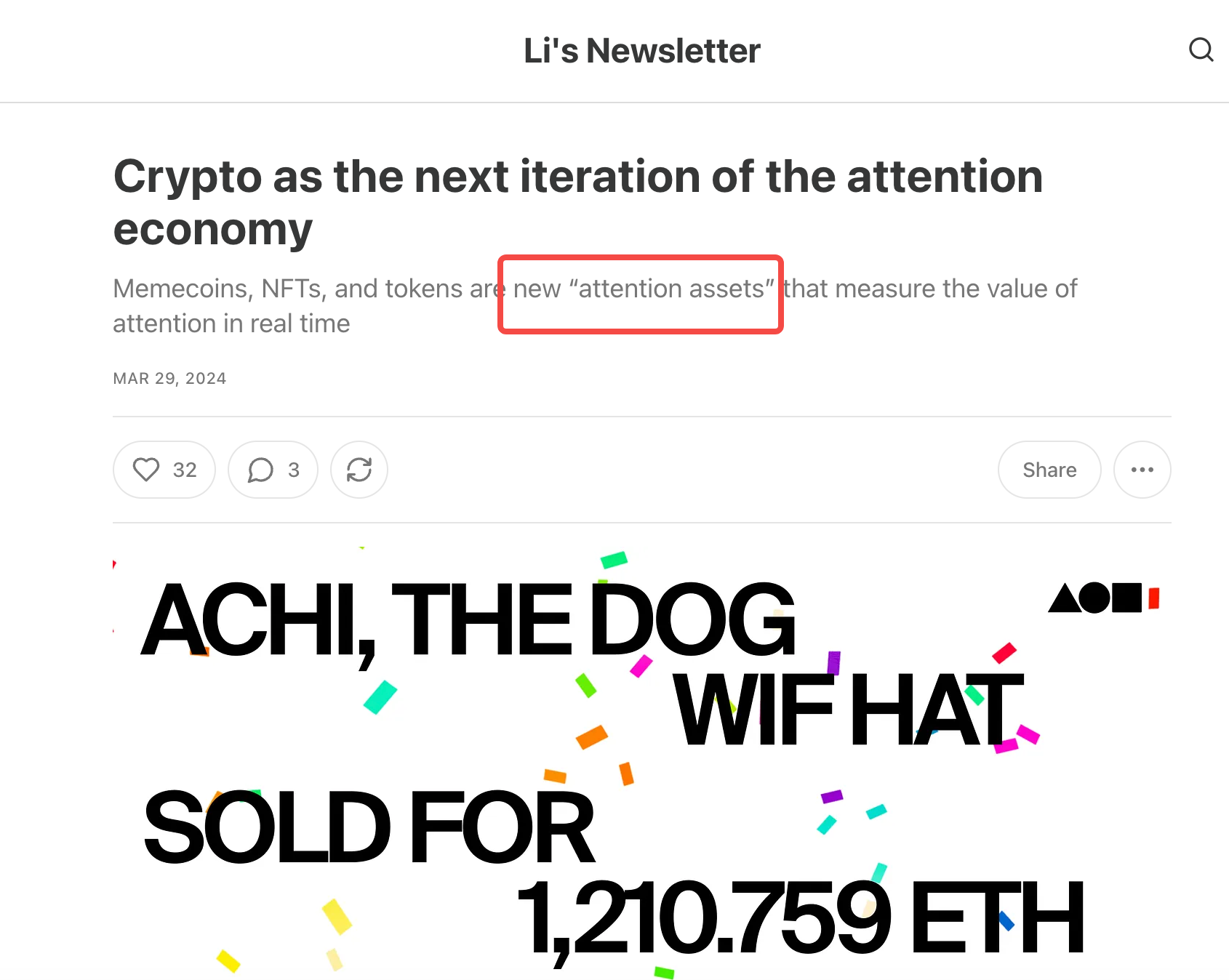
An abundance of information leads to scarcity of attention—making attention a rare resource. Yet under Web2's dominant advertising business model, the value generated by user attention flows to platforms, not users.
Thus, cryptocurrencies can be seen as the next evolution of the attention economy—a more efficient market.
Memecoins can capture and quantify attention value in real time. Users can invest in and own attention assets, expressing their belief in whether a particular meme, media, creator, or network will gain more attention and interest in the future.
From this perspective, it becomes entirely reasonable for VCs to embrace memecoins.
After all, successfully investing in products that capture mass attention—even if just memes—is highly compelling and persuasive.
While capturing user attention, memes have also taught many crypto projects a lesson in marketing strategy and launch timing:
Traditionally, crypto projects follow a “product first, then attention” path—building a product technically first, then marketing it to build a community, gain recognition, and grow gradually;
Under meme-driven attention economics, projects can flip this: “attention first, then product.” By launching a project natively integrated with a popular memecoin, new applications or infrastructure can mobilize the existing holder base, allowing them to derive greater utility from their tokens.
Of these two approaches, the era has clearly chosen the latter.
Regardless of type, all crypto projects fundamentally aim to attract attention—getting more people involved, using the product, and connecting with the token.
Driven by attention economics, the crypto space has evolved through many phases—from Bitcoin to Ethereum, from NFTs to Memes—each narrative shift representing a transfer of attention.
Therefore, it's no surprise that VCs pivot toward attention when needed.
Users Educated by VCs, and Users Who Educate VCs
But remember, the crypto market wasn’t always dominated by spontaneous meme mania. It once followed traditional, serious venture capital paths.
Back when Ethereum first launched, even Vitalik had to pitch his project to investors across East and West in 2014.
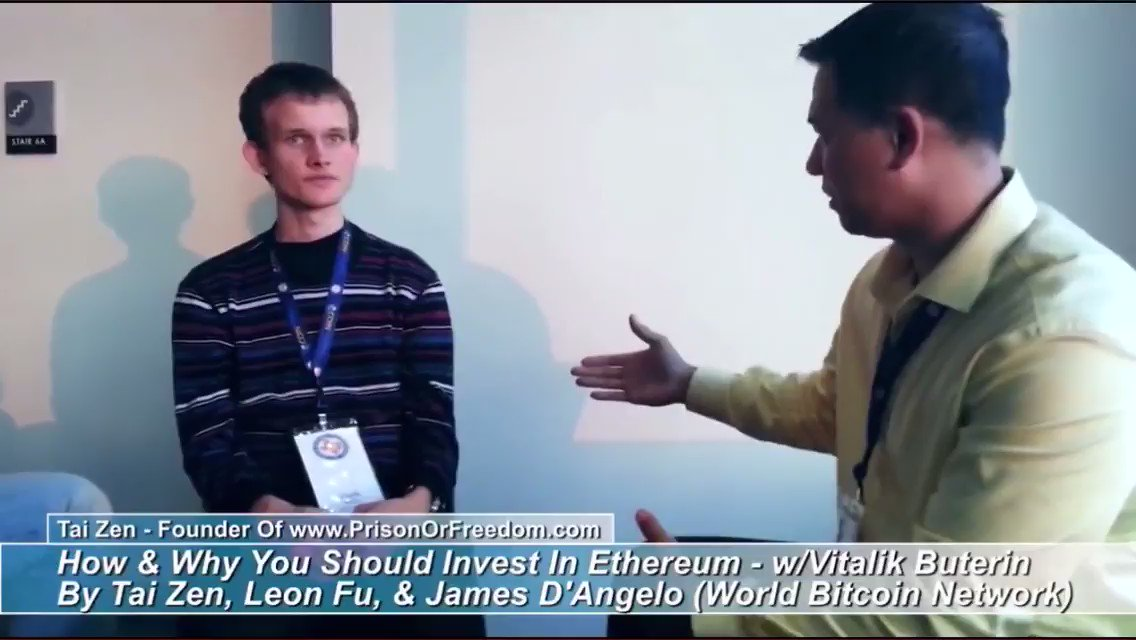
Though old-timers often lament, “No one understood Ethereum back then—we’d kick ourselves now for not investing,” even someone like Vitalik adhered to the same process:
First win over VC attention (through merit or hype), then enter the market to capture (or harvest) user attention.
In this path, whether ICO or IEO, VCs leveraged early investment rounds to secure large amounts of low-cost tokens, later selling them off according to different unlock schedules upon secondary market listing. Of course, some savvy retail investors profited alongside them—but many others ended up holding the bag.
Over time, people grew tired. After being educated through cycles, users began to see how things really worked.
That’s why we increasingly see inscriptions, runes, and memecoins in new cycles—projects VCs rarely participate in, don’t have time to join, or look down on. These break not only the established VC pipeline but also the traditional path of attention growth:
First grab user attention directly through explosive price surges, then leverage that user base for further developments.
Users aren’t afraid of volatility—they’re afraid of missing out on better opportunities to enjoy that volatility. Memes offer users a relatively accessible route. Even if they get rekt, it’s still better than knowingly becoming a bagholder for VCs.
In this sense, users are now educating VCs: “Sir, times have changed.”
It’s fascinating to witness a role reversal across the ecosystem—an intriguing dynamic that makes crypto so unique:
Cutting each other, growing together.
Join TechFlow official community to stay tuned
Telegram:https://t.me/TechFlowDaily
X (Twitter):https://x.com/TechFlowPost
X (Twitter) EN:https://x.com/BlockFlow_News
 深潮TechFlow