








DePIN Global Hardware Conference Full Review: From Preparation to Successful Conclusion, a Perfect Presentation of a Technological Feast
TechFlow Selected TechFlow Selected
DePIN Global Hardware Conference Full Review: From Preparation to Successful Conclusion, a Perfect Presentation of a Technological Feast
This roundtable brings together experts from the fields of payments, renewable energy, internet, and mobility to discuss the challenges and opportunities of DePIN technology.
 Navigating Web3 tides with focused insights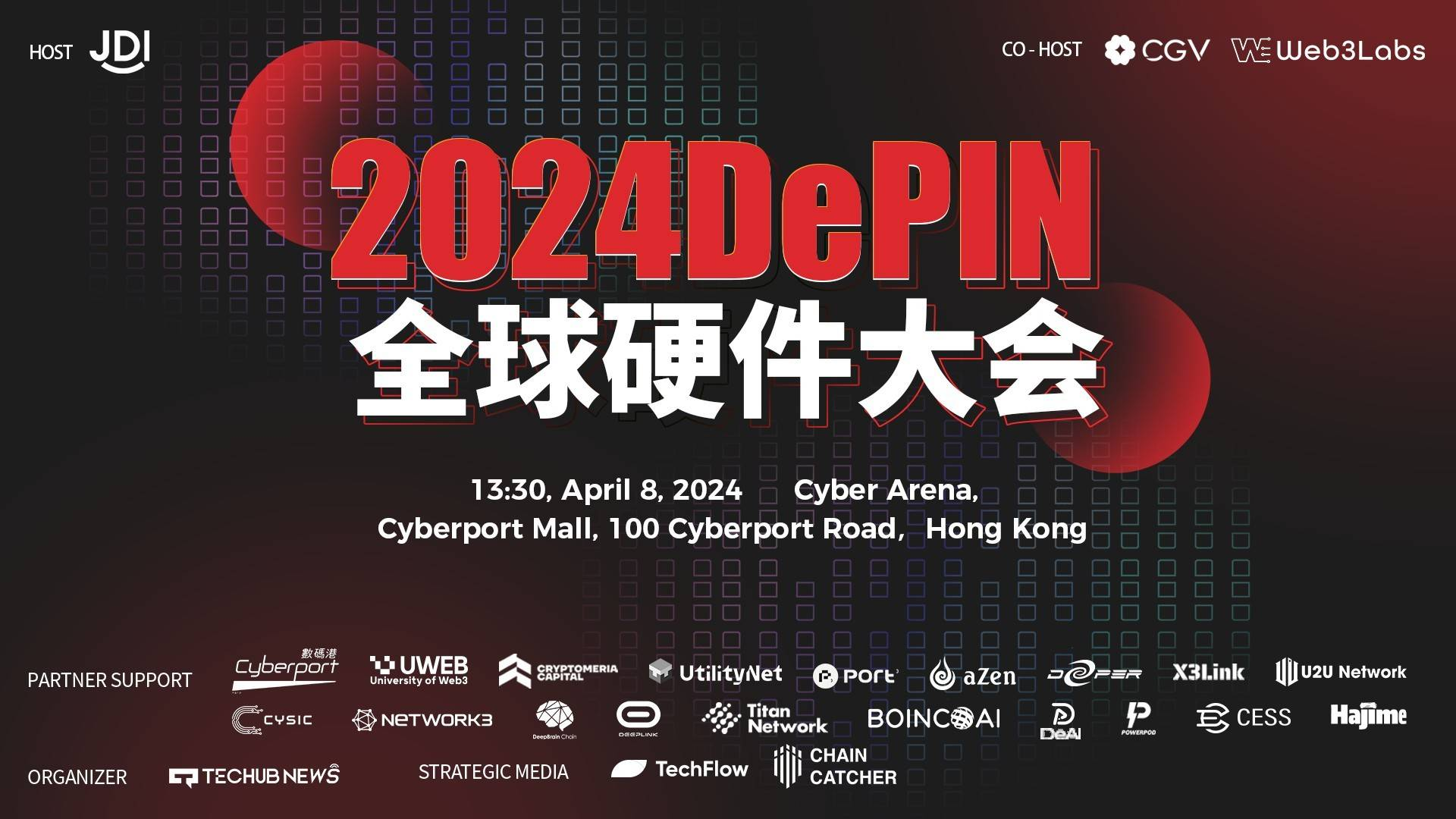
As the final round of applause faded on April 8, the 2024 DePIN Global Hardware Summit concluded triumphantly on the grand stage of Cyberport Hong Kong. Organized by Techub News and hosted by JDI Global, with co-organization from CGV and Web3Labs, and strong support from renowned institutions including Cyberport, UWEB, CRYPTOMERIA CAPITAL, UtilityNet, Port3 Network, Azen, Deeper, X3Link, U2U Network, CYSIC, Network3, DeepBrain Chain, DeepLInk, Titan Network, BOINC AI, DeAI, PowerPod, and CESS, this tech event successfully captured global attention. Through in-depth exchanges and inspiring presentations, the summit not only painted a hopeful and ambitious blueprint for the global hardware industry but also conveyed the power and potential of hardware innovation to the world. Now, standing at a new starting point, we look ahead with confidence to an even brighter future for the global hardware sector.
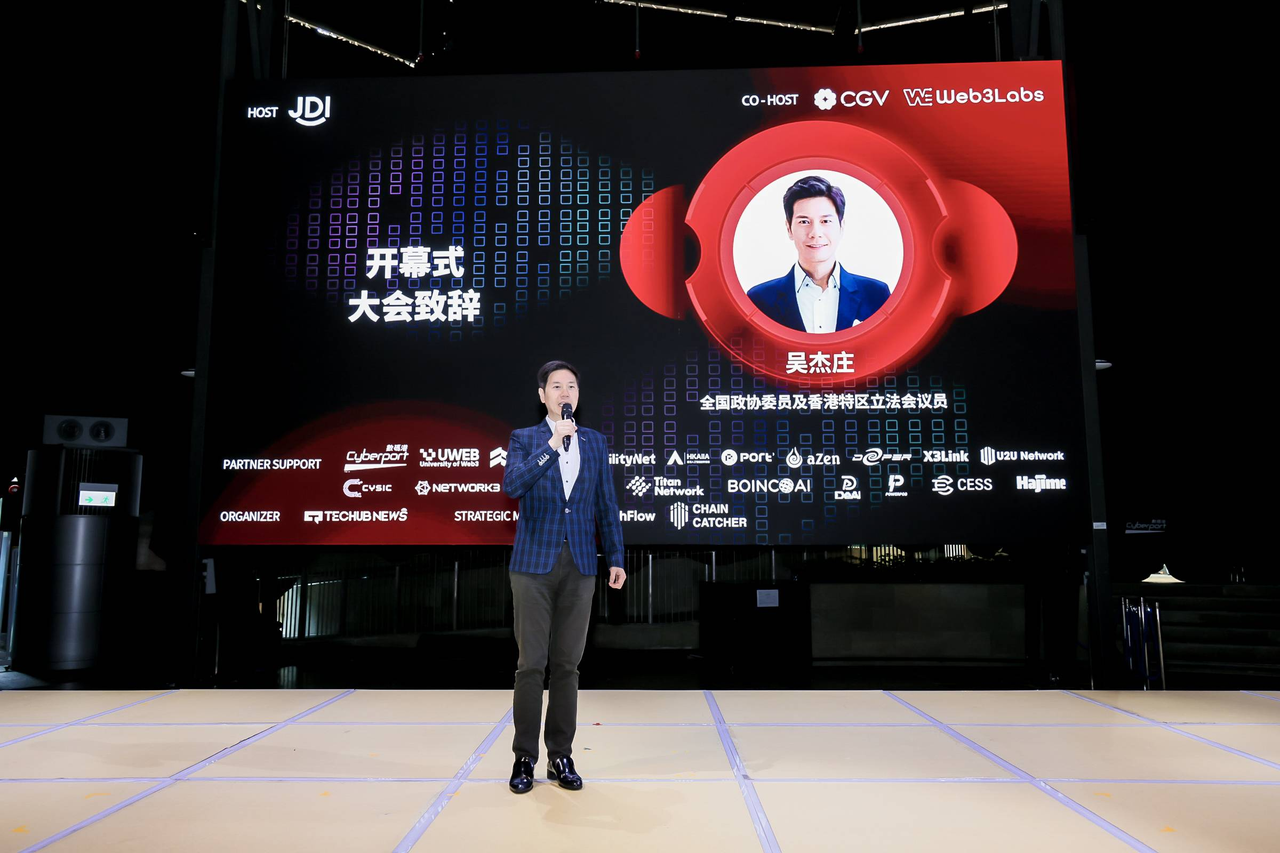
The summit opened with remarks from Hon. Wu Chieh-chuang, Legislative Councilor of Hong Kong. He emphasized Hong Kong’s unique advantages in developing decentralized physical infrastructure networks (DePIN). As a major economy and a “one country, two systems” city with an effective common law system, Hong Kong offers immense market potential and holds unparalleled strengths in financial innovation and geographical positioning. Using the example of a football match in Beijing last year, Councilor Wu vividly demonstrated how blockchain technology combined with physical infrastructure can enhance convenience, highlighting DePIN’s crucial role in transcending physical limitations and advancing technological development.

Next, Mr. Joseph Chiu, Project Advisor of the Customs and Excise Department’s Special Duties Division, explained the OTC policy of the customs authority. He stated that customs will continue introducing OTC services within regulatory boundaries and welcome valuable feedback and suggestions from all stakeholders. This policy aims to create a more flexible and supportive regulatory environment for emerging technologies such as DePIN.
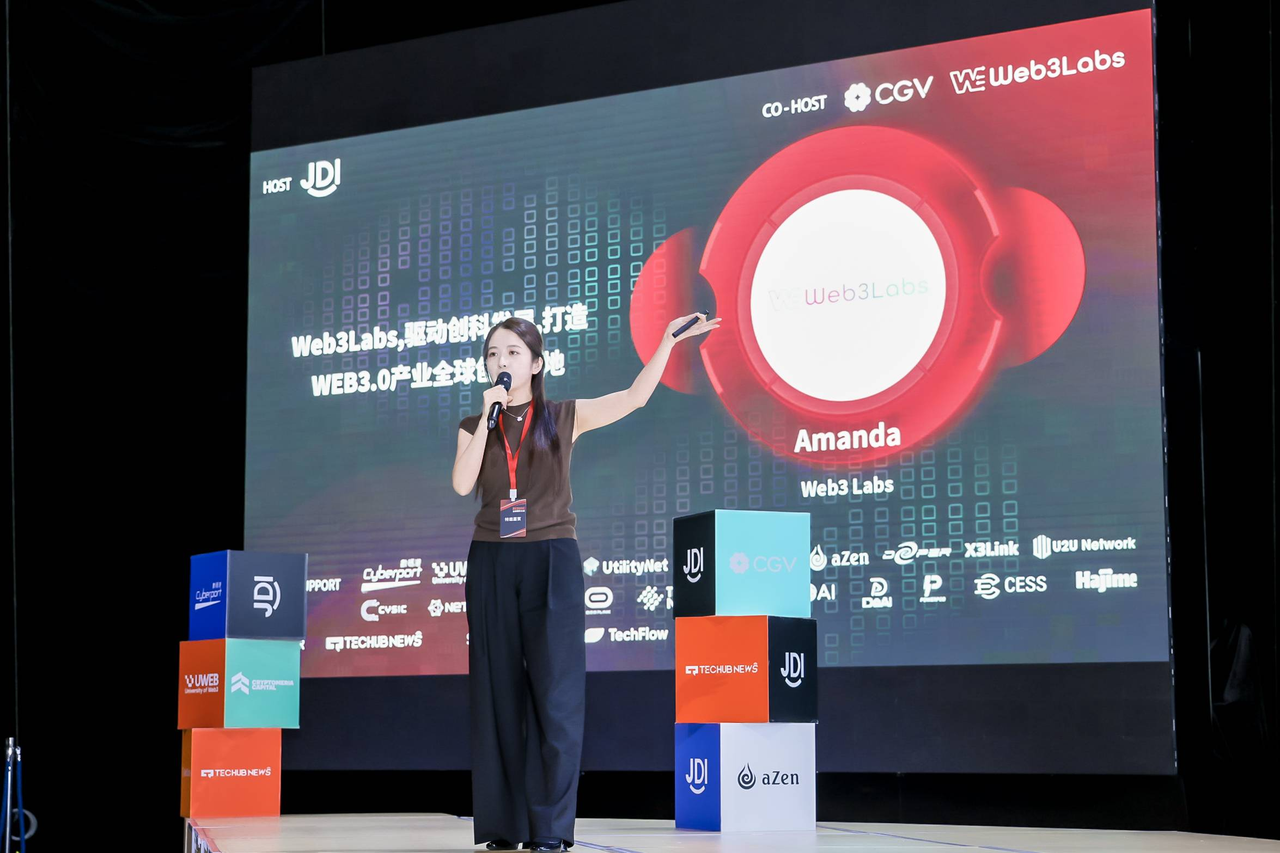
Amanda, Vice President of Web3 Labs, emphasized during her speech the organization’s mission: to assist global Web3 enterprises in establishing operations in Hong Kong and accelerate industry growth through its service ecosystem. She highlighted Hong Kong’s status as a financial hub with an open legal environment and multiple competitive advantages, making it an ideal location for the Web3 industry. Amanda also acknowledged the challenges facing Web3 companies and affirmed that Web3Labs would actively respond to policies set by the Hong Kong SAR government, offering落地 services and technical collaboration support to global Web3 firms.
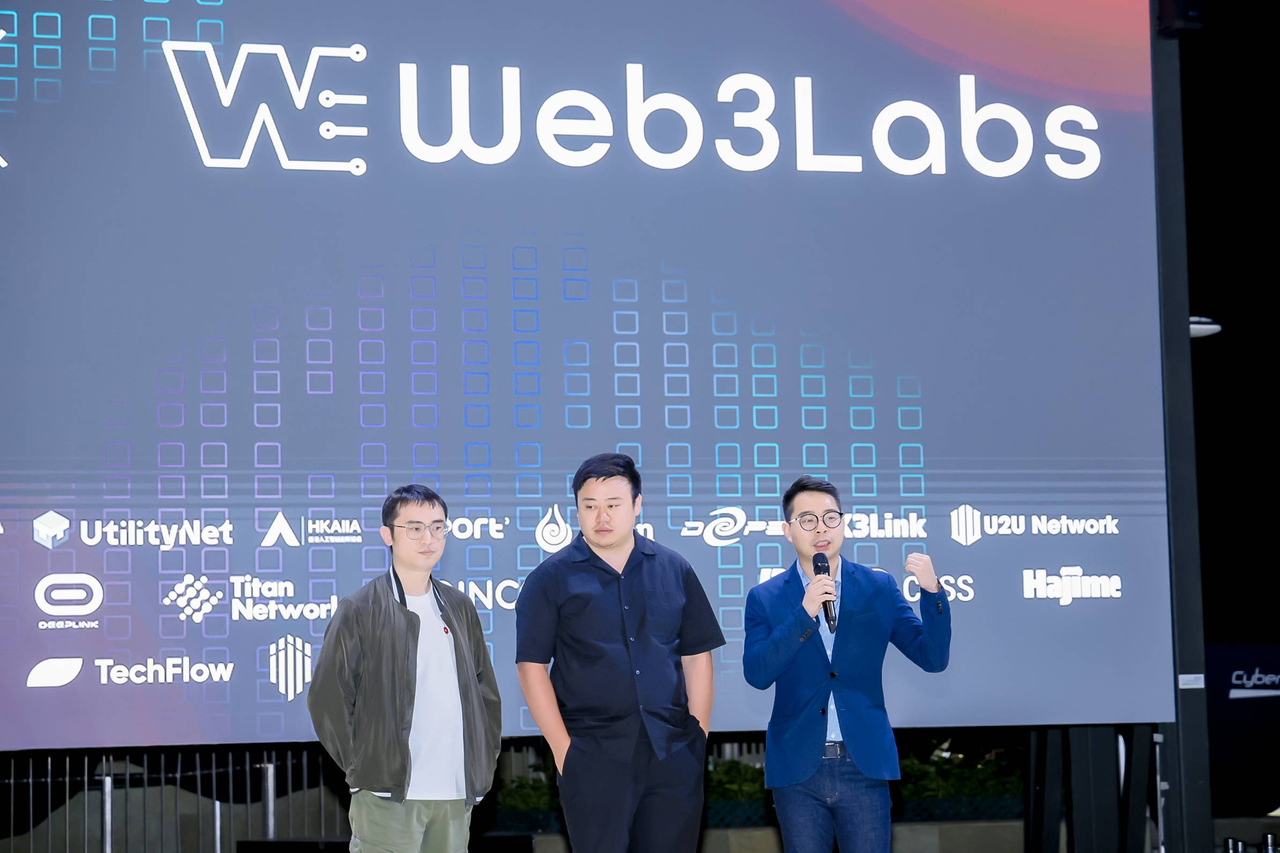
During the ceremony marking the launch of the DePIN Acceleration Program through the partnership between JDI Global and Web3 Labs, Mr. Wang Yiming, Chairman of JDI, Mr. Wong Chun-long, representative of Web3 Labs, and Kevin from CGV took the stage together. Mr. Wang emphasized three critical future directions: home space, mobile space, and human-centric applications. He suggested that many DePIN projects should be built around these specific domains to craft more compelling narratives and attract broader participation in the DePIN ecosystem. Both Mr. Kevin and Mr. Wong expressed agreement, looking forward to how this collaboration will drive progress in the Web3 field. This brief exchange reflected shared expectations and confidence in the DePIN acceleration initiative.
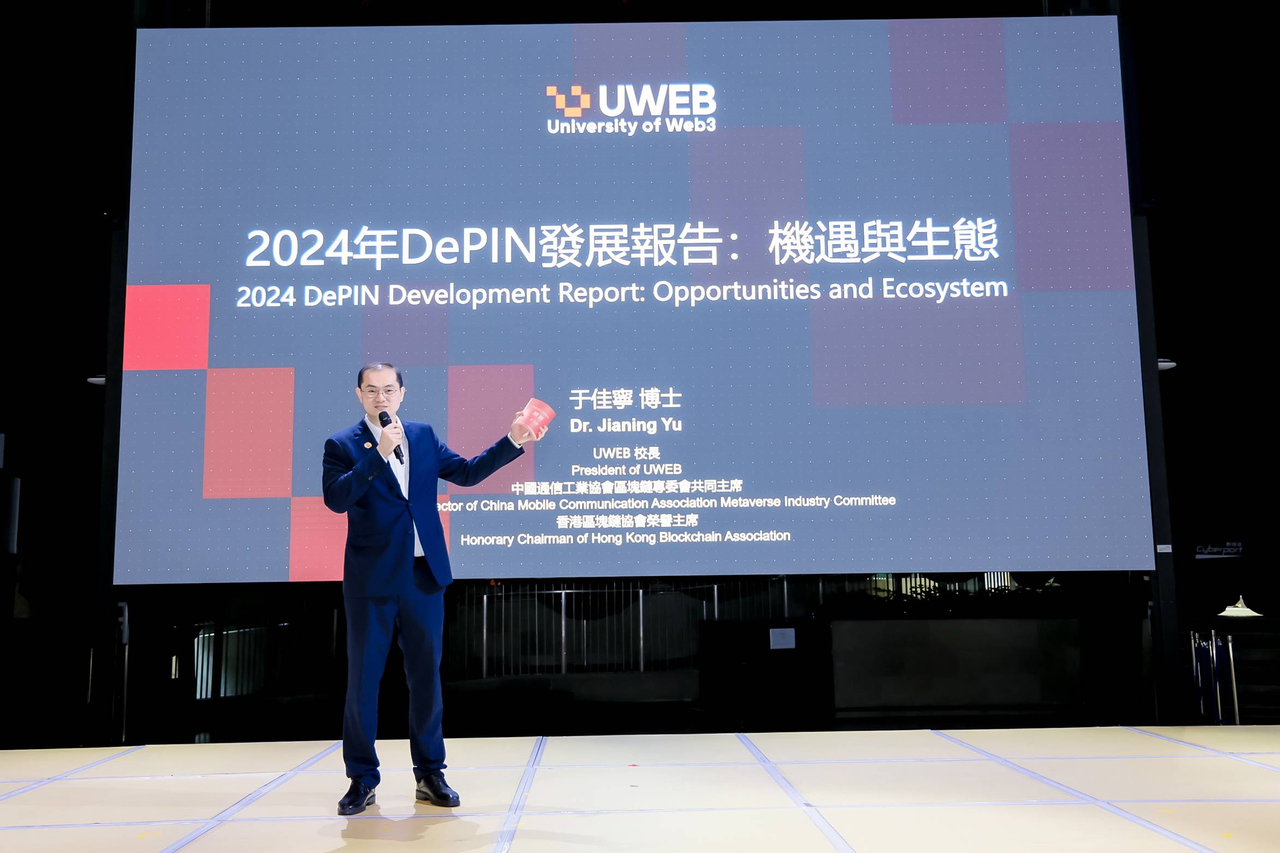
Subsequently, Dr. Yu Jianing, President of UWeb, released the DePIN Report. In his presentation, he underscored the transformative role of DePIN in future infrastructure development and clarified misconceptions about DePIN being merely hardware mining. He positioned DePIN as a vital method of mental productivity and infrastructure construction—integrating blockchain technology with real-world industries to empower physical economies and promote industrial advancement. Dr. Yu shared his passion and vision for DePIN, emphasizing its significance in the evolution of future technologies and the rise of digital wealth.
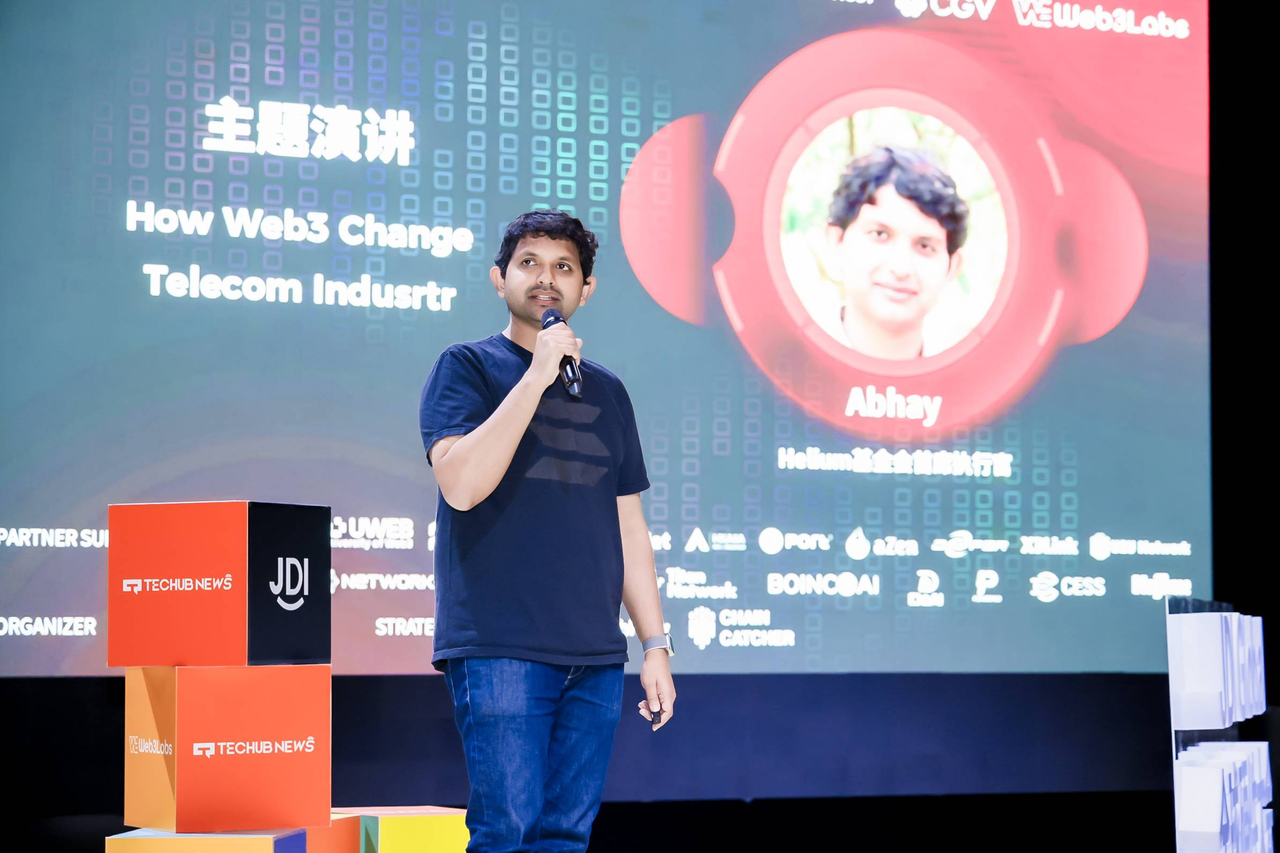
Abhay, CEO of the Helium Foundation, outlined Helium's history and its role within the DePIN ecosystem. He explained that DePIN refers to physical infrastructure networks that use token incentives to create markets. For network suppliers, DePIN involves coverage expansion guided by token incentives. On the demand side, tokens serve as utilities enabling users to access the network. Using urban internet access as an example, abhay illustrated how DePIN resolves traditional licensing issues and provides convenient connectivity for mobile devices. Overall, his talk highlighted the pivotal role of Helium and token incentives in building wireless infrastructure via DePIN.
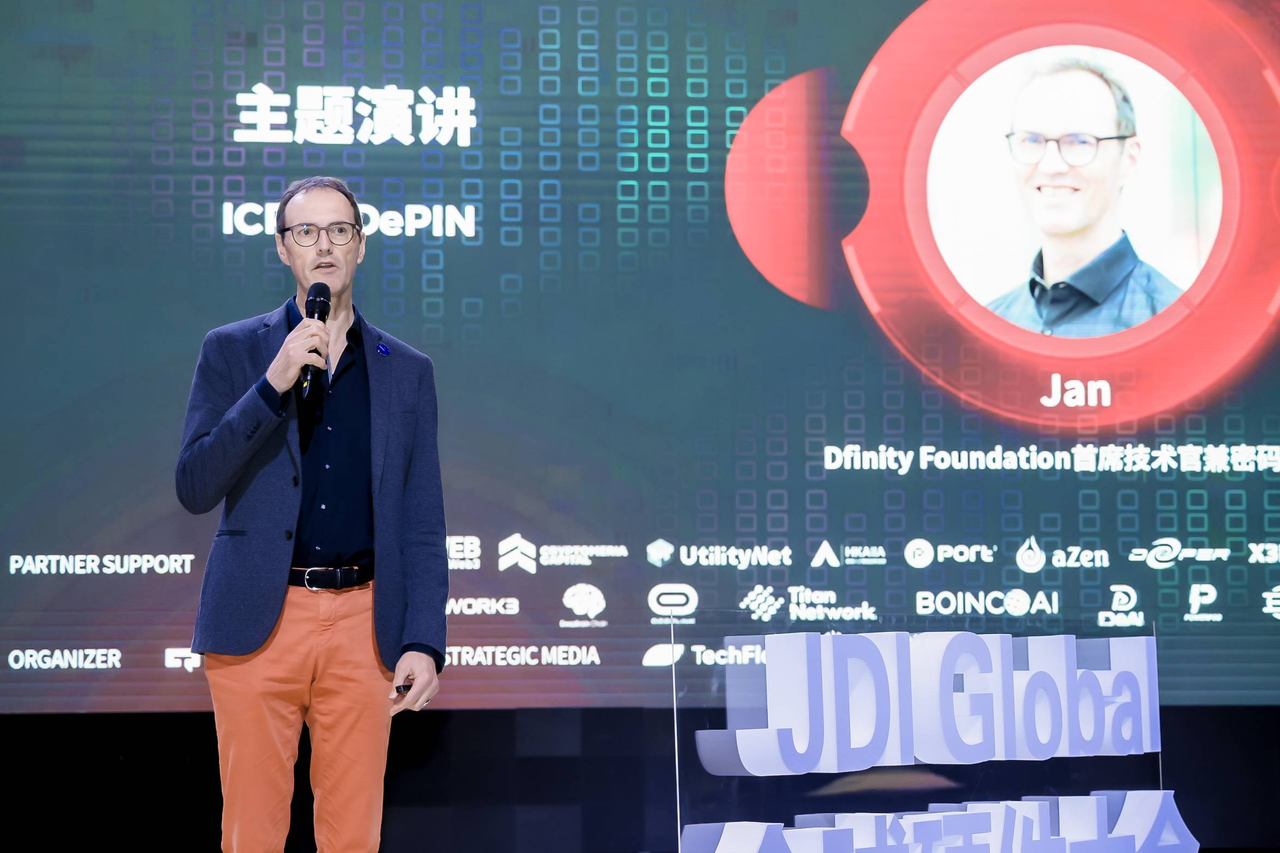
Jan, Chief Technology Officer and cryptographer at Dfinity Foundation, emphasized the importance of decentralization, calling it essential for building secure systems without single points of failure. He pointed out that decentralized systems like Bitcoin have existed for years without ever being hacked—a powerful testament to their security.
Jan noted that the goal of decentralization is to build secure, fault-tolerant systems. By citing Bitcoin’s long-standing resistance to attacks, he reinforced the robustness of decentralized architectures. He added that ICP is a bottom-up distributed network owned and governed by the community, supporting AI integration. Unlike traditional blockchains, ICP enables users to access blockchain services directly via smartphones without requiring tokens, thereby addressing real user needs.
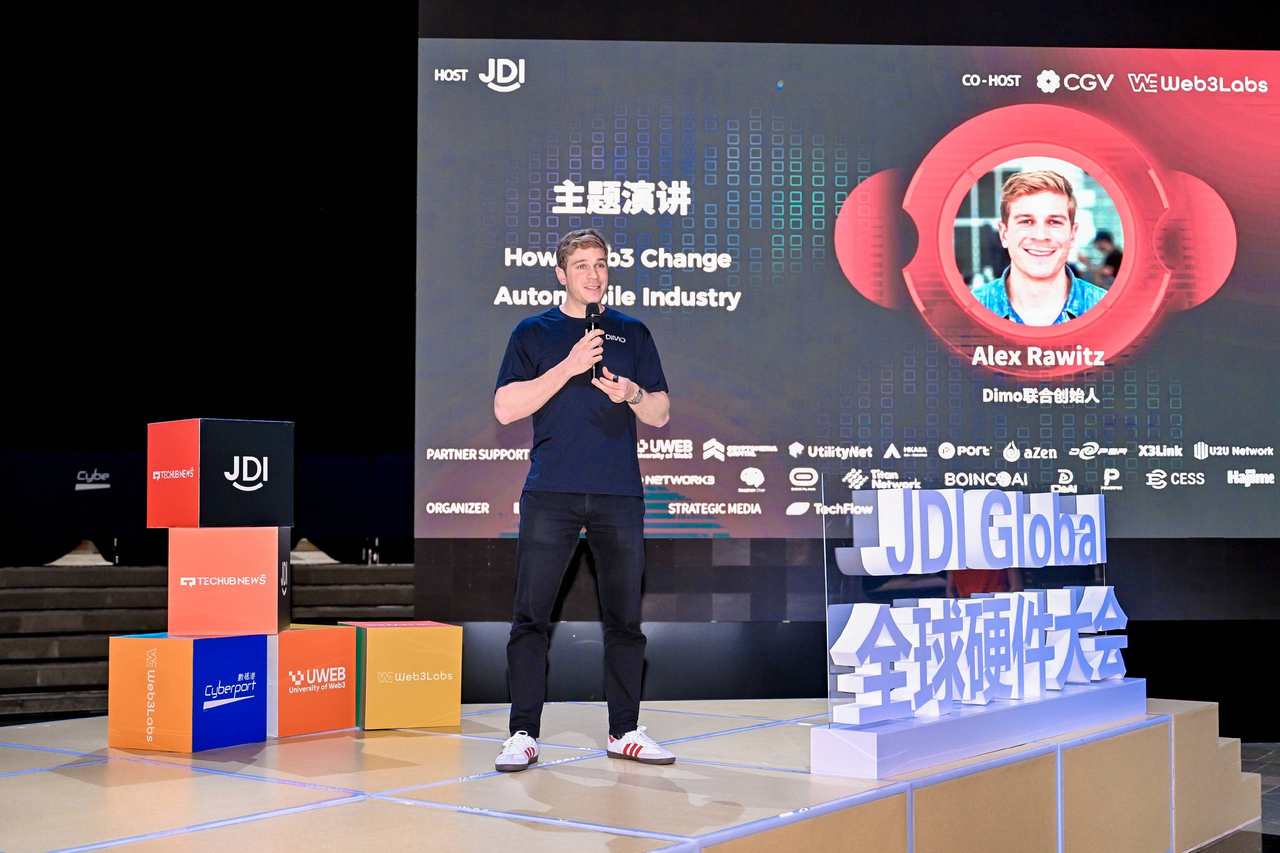
Alex, co-founder of Dimo, introduced the project—an open connected vehicle network designed to help people maximize the value of their vehicles and take control of their data. He stressed the significance of automobiles in IoT and blockchain, noting that cars are most people’s most expensive IoT device, and the automotive industry far surpasses other device sectors in scale. Alex highlighted current data silos in the auto industry and emphasized Dimo’s mission to break them down. He also mentioned that car-related transactions involve high costs—including insurance, maintenance, and more—and that data transparency can significantly improve efficiency. Dimo has begun establishing vehicle identity standards and plans to record and maintain data throughout each vehicle’s lifecycle, enhancing overall transparency and efficiency.
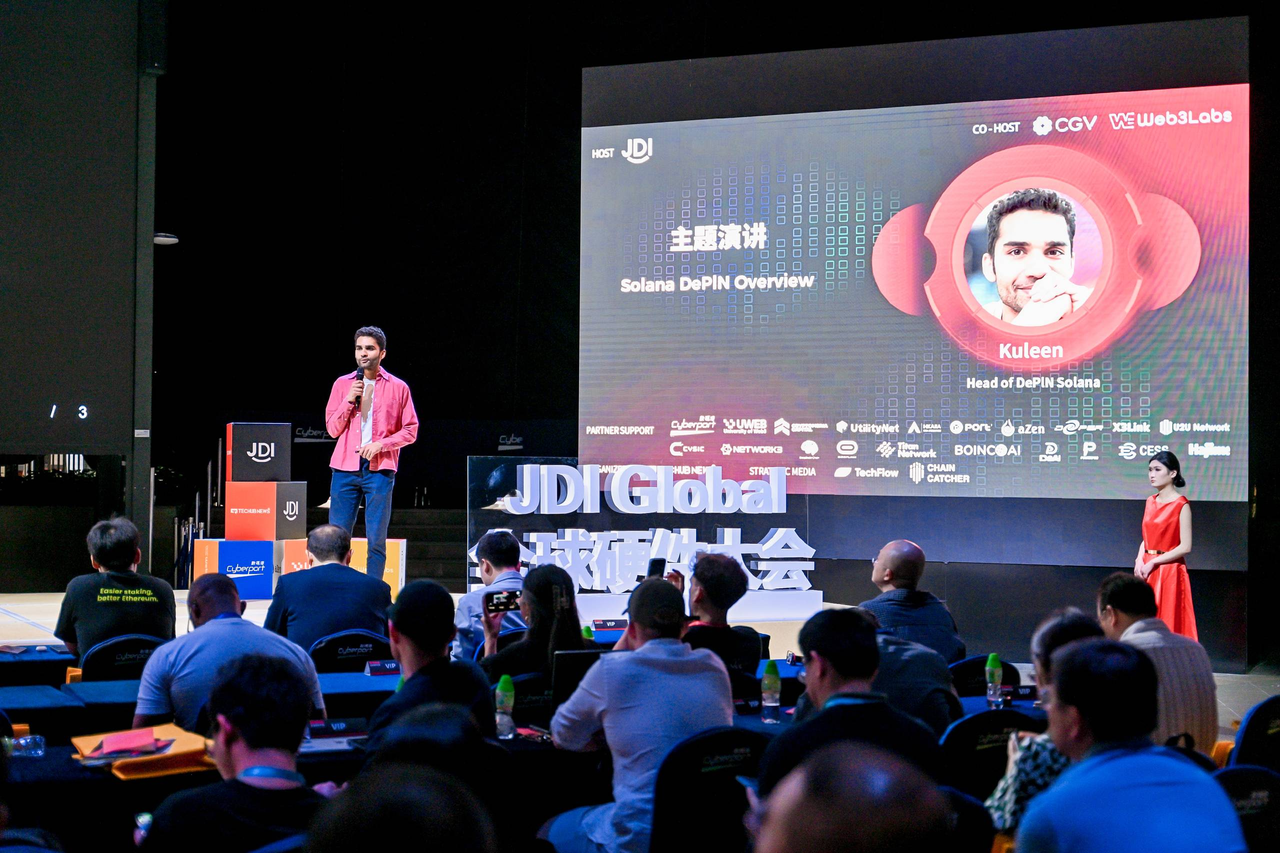
Kuleen, head of DePIN Solana, emphasized the importance of distributed infrastructure in modern society—such as the internet, power grids, and data storage—all of which operate on distributed networks. However, constructing these networks is costly and complex, often leading to excessive centralization and unfair outcomes.
He argued that DePIN is the key solution to these problems. The uniqueness of DePIN lies in its ability to effectively address various challenges associated with distributed infrastructure. With DePIN, we can build a fairer, more transparent, and decentralized world.
In closing, Kuleen called upon DePIN developers to build their projects on Solana, which offers an ideal environment for DePIN development. His speech deepened the audience’s understanding of both Solana and DePIN while inspiring enthusiasm for creating a more equitable and decentralized society.
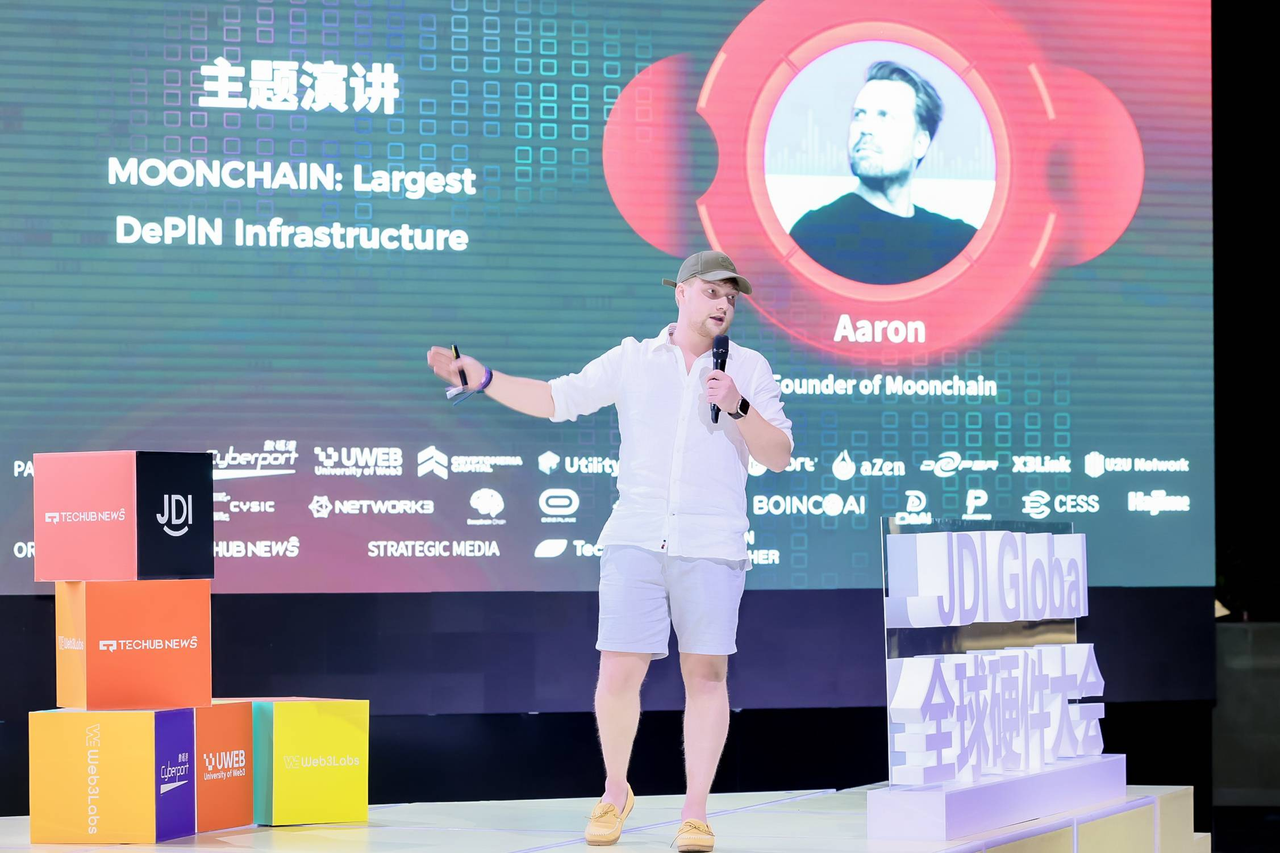
Aaron, founder of Monnchain, presented his company as a crypto-focused holding firm committed since 2018 to ambitious ventures. He emphasized Monnchain’s core focus on gaming, NFTs, and the open metaverse. Through community and DAO involvement, Monnchain strategically supports portfolio companies with high-conviction investments. Aaron clarified that Monnchain is not just a blockchain but a full-fledged ecosystem. He predicted that 2024 will witness the rise of DePIN. Among Monnchain’s key strengths, he cited the successful deployment of over 45,000 global IoT gateways and the establishment of a vast IoT network. Additionally, Monnchain’s robust blockchain allows wearables like smartwatches and glasses to connect seamlessly, expanding possibilities within its ecosystem.
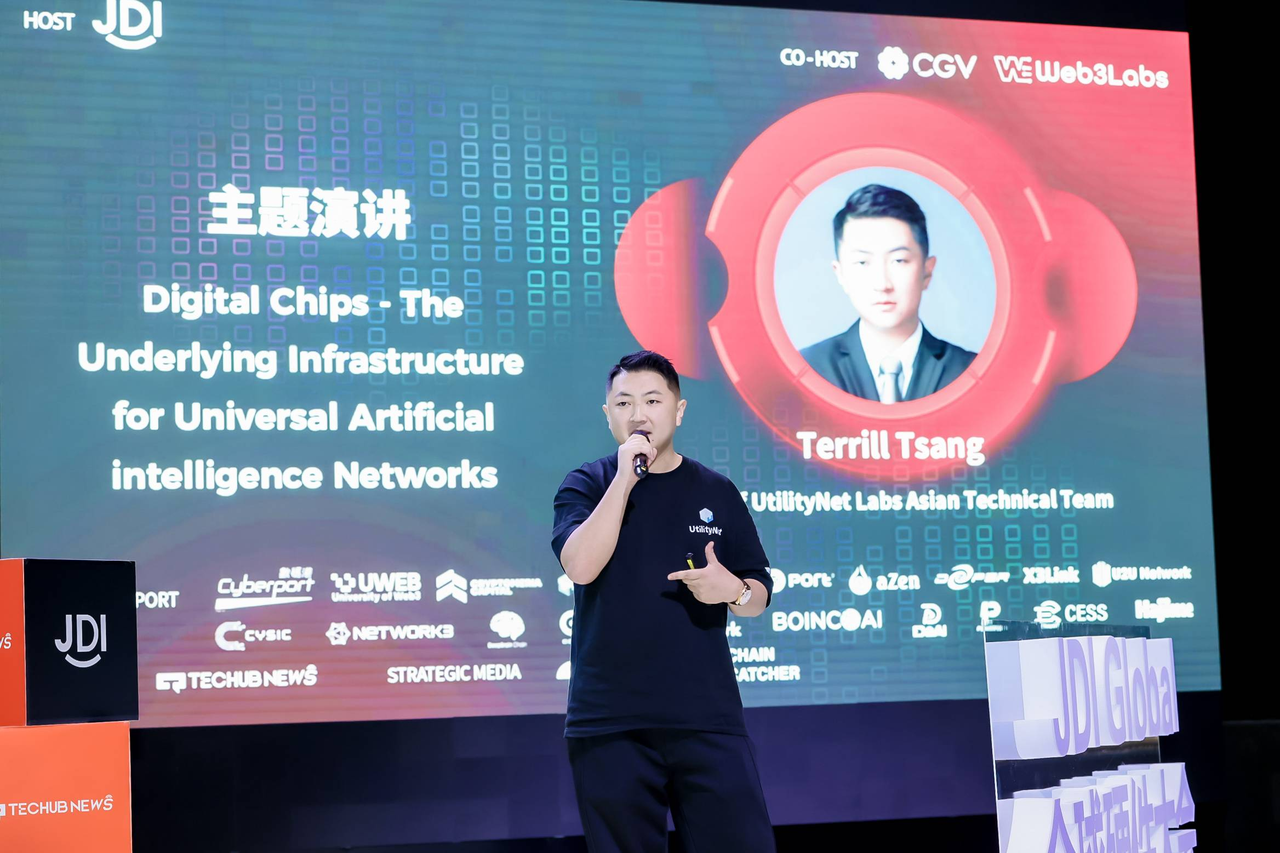
Tsang introduced Utility Net as a new Layer1 blockchain based on a decentralized digital chip network. Each physical chip corresponds to a unique RWA-mapped wallet on-chain. Through this innovative hybrid encryption protocol, participants receive rewards without wasting computational resources. The surplus computing power can then be rented at low cost to users who genuinely need it, potentially mobilizing substantial private capital into practical AI computing infrastructure development—aligning perfectly with the convergence of "AI+" and Hong Kong’s push toward next-generation productive capabilities.
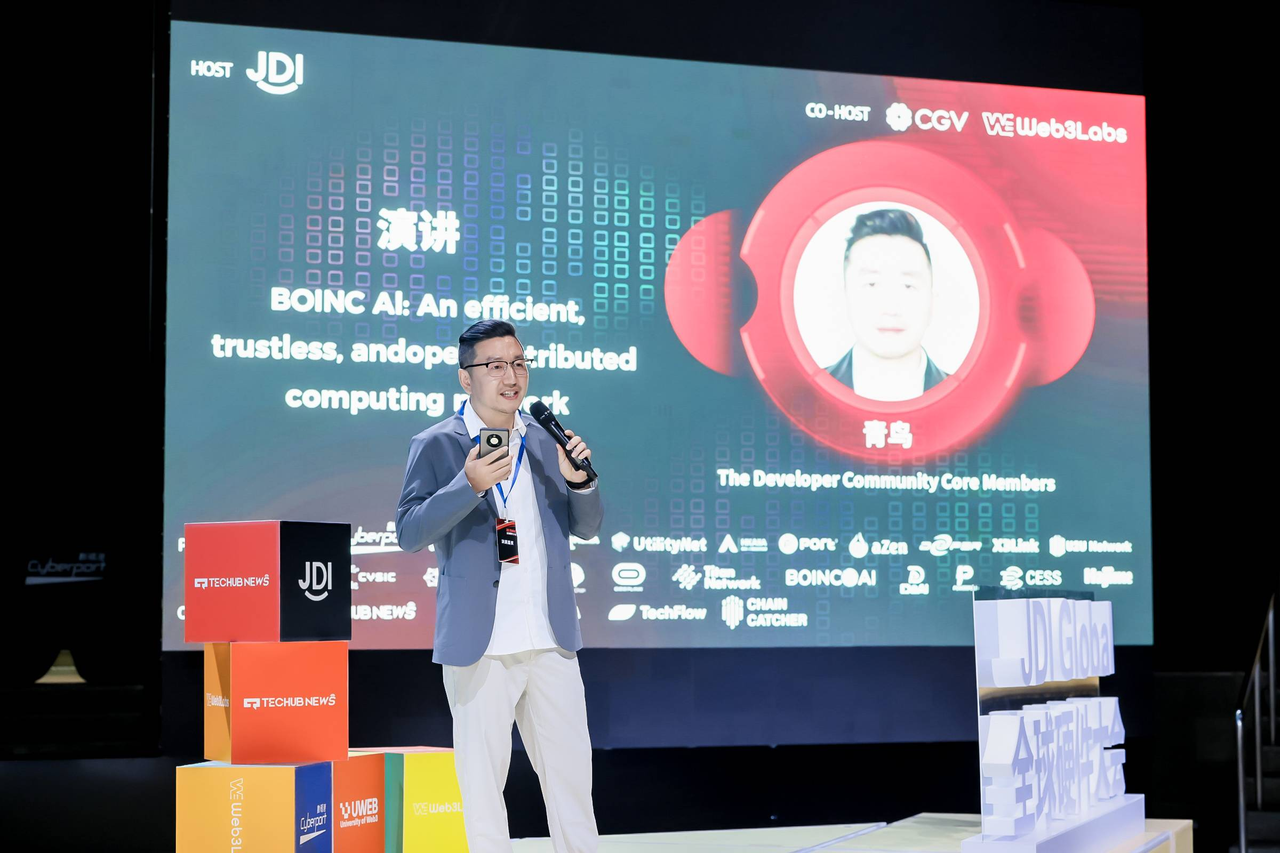
In his talk, Qingniao, developer of Boinc AI, emphasized the growing importance of artificial intelligence in work and education, identifying distributed computing networks as the future cornerstone. He pointed out existing monopolies in AI computing power and advocated for an open, decentralized platform to resolve this issue. He explained how DPN (Distributed Processing Network) delivers real-world physical data and redefines the relationship between computing power and people. He described computing power as the engine of AI, algorithms as the transmission, and data as the source. To enable AI commercialization, sufficient, open, and transparent computing power is essential. Finally, he introduced how Boinc AI leverages its original PUVC (Processing Unit Value Consensus) algorithm to decentralize computing power, algorithms, and data, thus driving AI innovation.
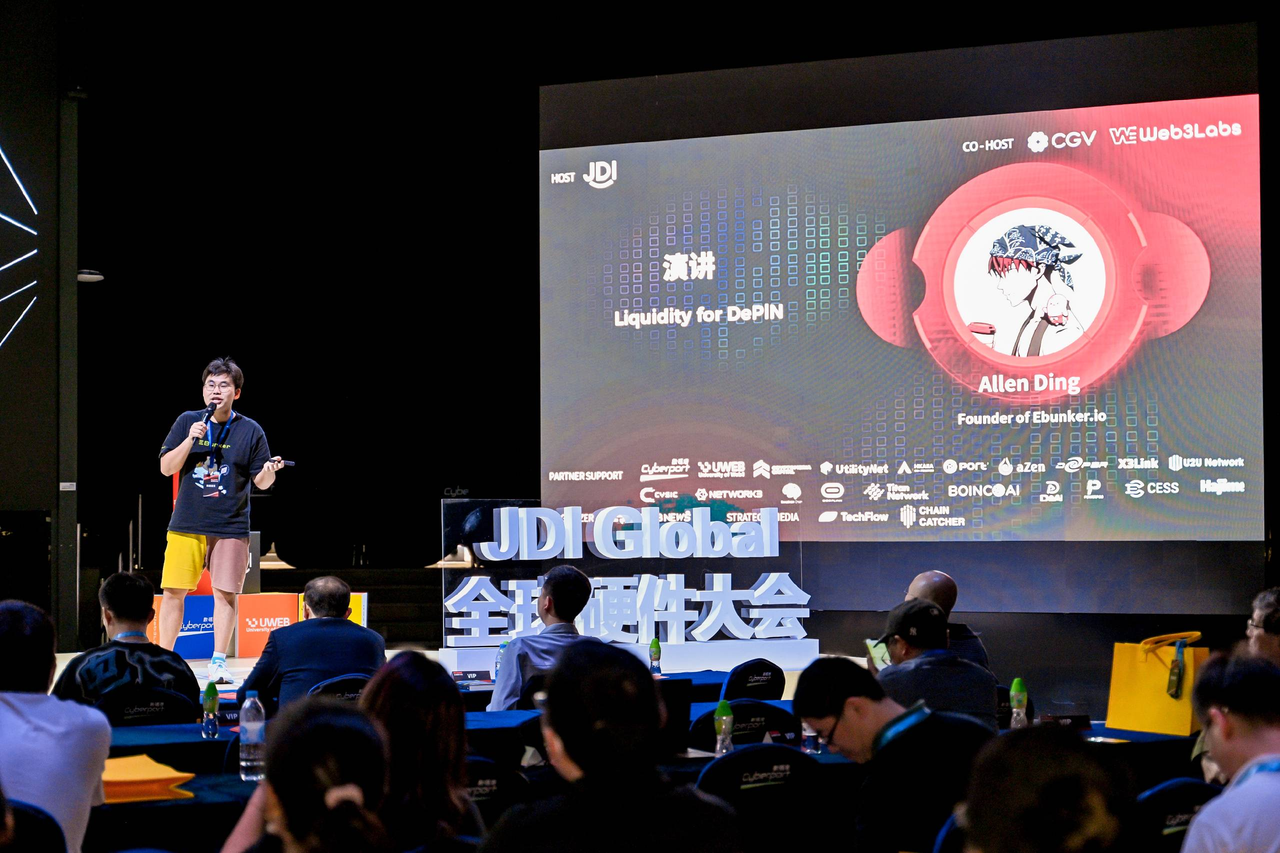
Allen Ding, founder of Ebunker.io, shared his extensive experience in Ethereum and DeFi and showcased eBonker’s achievements in blockchain infrastructure. He emphasized the importance of decentralizing Ethereum network validator nodes and unveiled a new product, Ebunker, designed to help users achieve higher returns. Ding also launched the debunker platform to provide liquidity for staking, resolving constraints and barriers in the staking process so more individuals can participate in the crypto space. Believing staking is key to blockchain adoption, he remains focused on this area. During his presentation, a live poll revealed limited public awareness of staking, underscoring the importance of debunker in improving accessibility. Ding concluded by thanking attendees and reaffirming his commitment to advancing blockchain technology.
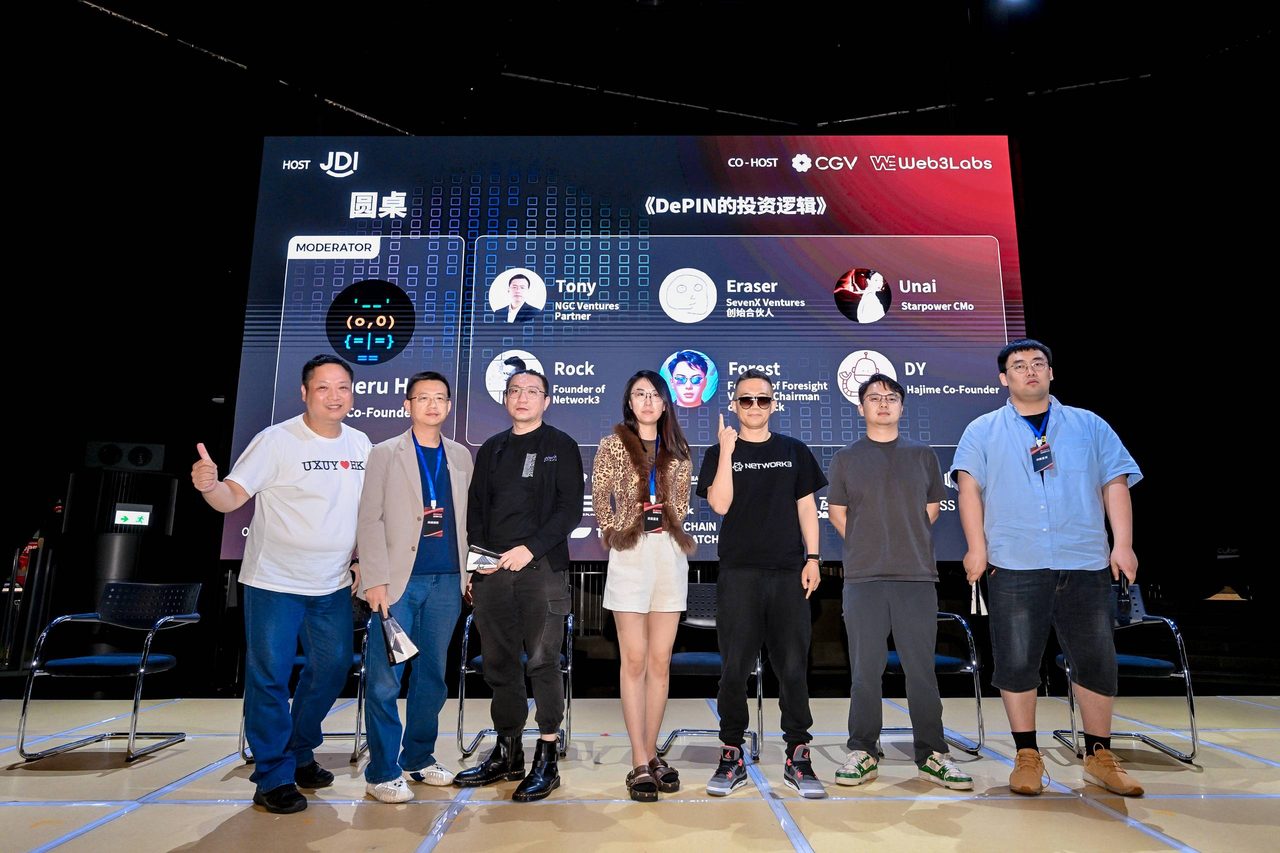
The day’s panel discussion, titled “The Investment Logic of DePIN,” brought together guests from diverse backgrounds—investment firms and project teams alike—to explore investment strategies in the DePIN space. Panelists introduced their organizations and projects, sharing insights and experiences in DePIN investing. Tony, Partner at NGC Ventures, discussed their DePIN investments and highlighted the significance of Web3 global funds in this domain. Eraser, Founding Partner of SevenX Ventures, shared his perspectives and revealed they are actively seeking promising DePIN projects. Unai, CMO of Starpower, explained how they assist DePIN projects with marketing and brand development. Rock, founder of Network3, remarked: “DePIN projects aren’t built overnight—they require time. Start with an incentive system, run on testnet for iteration, and only go live once the project is truly stable.” Forest added that beyond investment, they provide comprehensive industry coverage and analysis through media platforms. The lively forum featured dynamic interactions among panelists, delivering an engaging and insightful discussion.
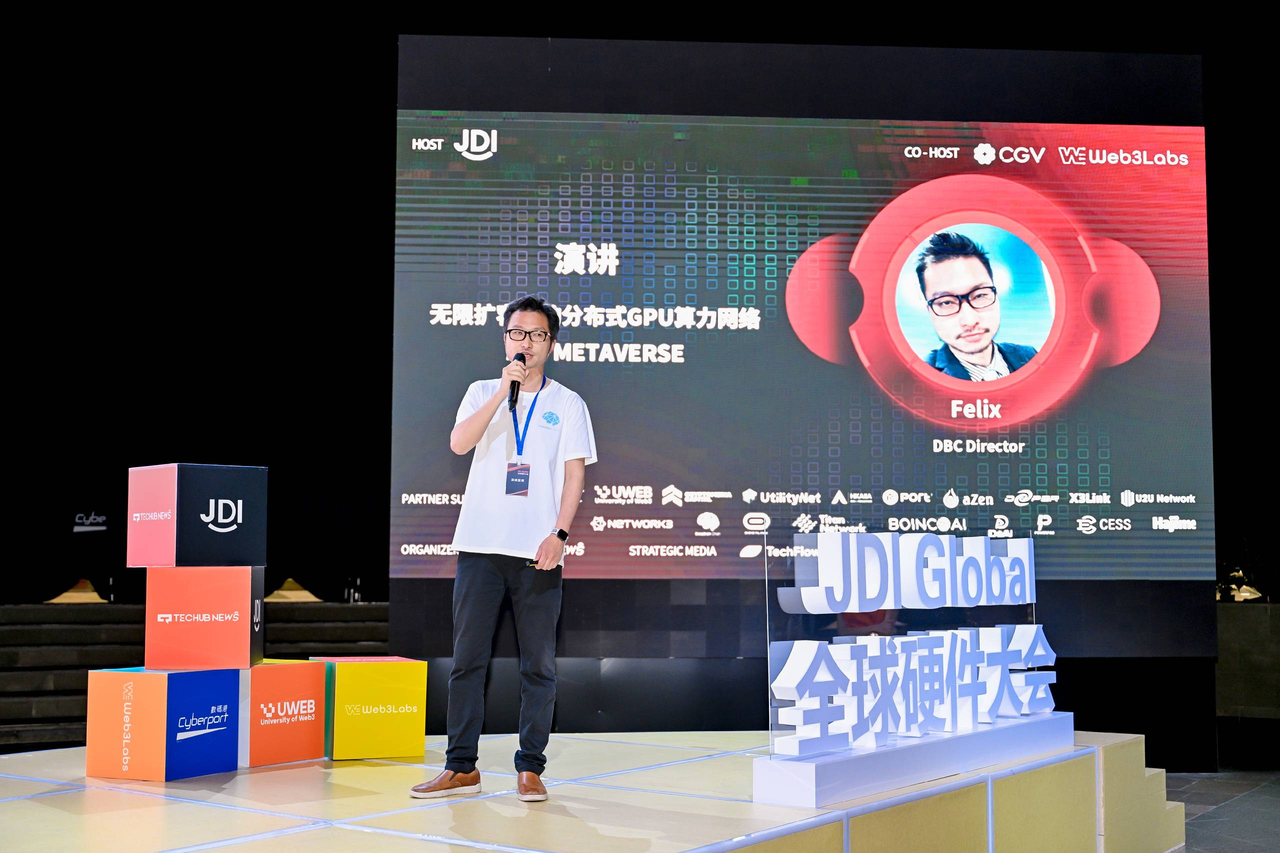
Felix, speaker for DBC, highlighted the uniqueness and foresight of the Deep Brain Chain project. Reflecting on the early days of isolation when combining AI and blockchain was still experimental, he expressed awe at the vibrant growth now seen in DePIN and AI blockchain fields. He presented DBC’s core: decentralized cloud computing power, showcasing rapid advancements in total network computing capacity and technology. He differentiated DBC from similar projects, stressing its open-source nature, global reach, and superior cost-performance ratio. Felix is optimistic about the future growth of AI computing power and believes DBC offers retail investors a rare opportunity to join the AI ecosystem. He envisioned applications in AI training and inference, cloud gaming, cloud internet cafes, and mining, underscoring the increasing importance of decentralized computing power amid rising AI hardware demands.

Ting Du of Powerpod emphasized energy’s critical role in artificial intelligence and the global energy revolution. Drawing from personal experience, he illustrated how vital energy is to daily life—particularly during the pandemic, when power shortages made him acutely aware of its importance. While everyone talks about AI today, he reminded the audience that AI cannot advance without energy. In the era of DePIN, he asserted, energy will become as fundamental and universal as AI itself. He also addressed challenges in electric vehicle charging, where insufficient infrastructure hinders EV adoption—one of many issues needing resolution in the global energy transition. He urged greater attention to energy matters and collective action to drive the global energy revolution forward.
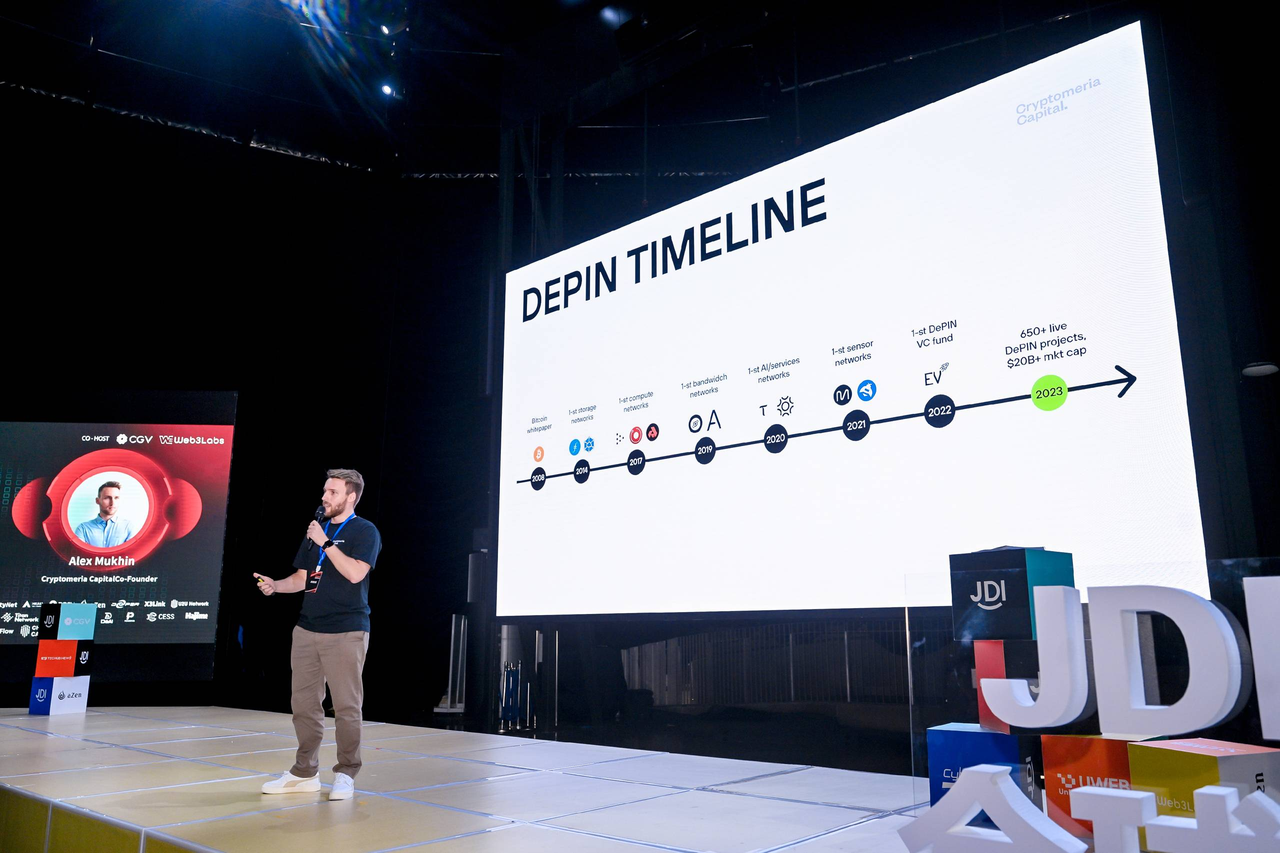
Alex Mukhin, co-founder of Cryptomeria Capital, delivered a compelling keynote. He began by introducing his background as co-founder of several companies spanning investment funds, media, and entertainment. Their fund, Cryptomeria Capital, is a global investment vehicle backed by Accent Partners, Europe’s largest traditional asset management firm. They also operate Ampost, a global tech media outlet, and Satoshi Universe, a blockchain-based entertainment project.
Alex emphasized their significant contributions to the industry, including publishing numerous institutional-grade reports across multiple domains. Then, he previewed their upcoming flagship publication—State of the Pin. Spanning 180 pages, this comprehensive report features deep analysis, insightful comparisons, and rich data, positioning it as a landmark study in the field.
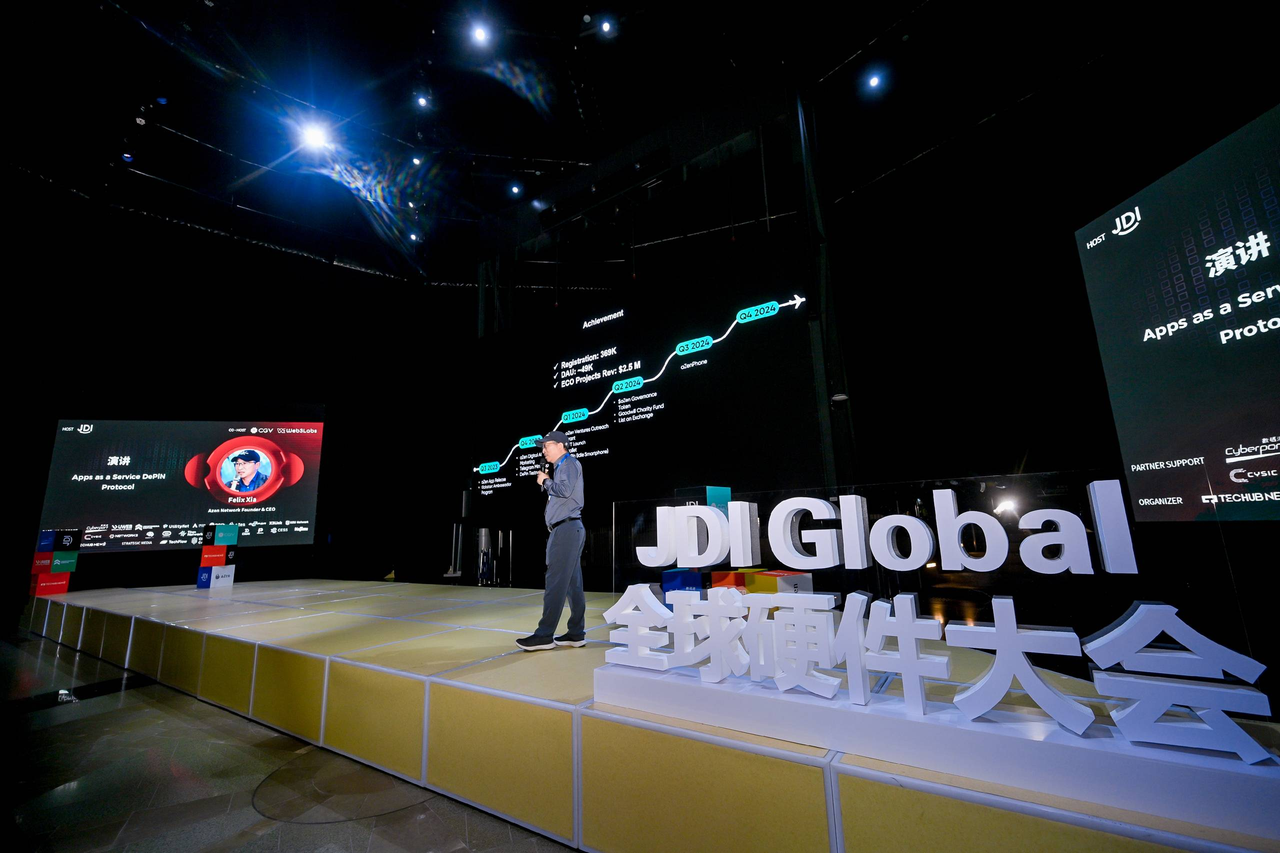
Felix Xia of Azen Network presented a vision of a decentralized, flexible, and user-friendly platform designed to support resource allocation for CDN, GPU, CPU, and more—providing developers with efficient and accessible tools. By sharing his research background and team accomplishments, he demonstrated expertise in distributed computing and low-frequency project development. His innovative idea of simplifying complex problems into easy app development using NFTs and smart contracts left a strong impression.
Moreover, Felix stressed the principle of creating wealth for the affluent while also offering opportunities for the less privileged. He proposed utilizing idle smartphones for meaningful “mining,” a concept rich in social impact and reflective of technology’s inclusive potential. His explorations in social media user acquisition and ecosystem building offered fresh perspectives and inspiration.
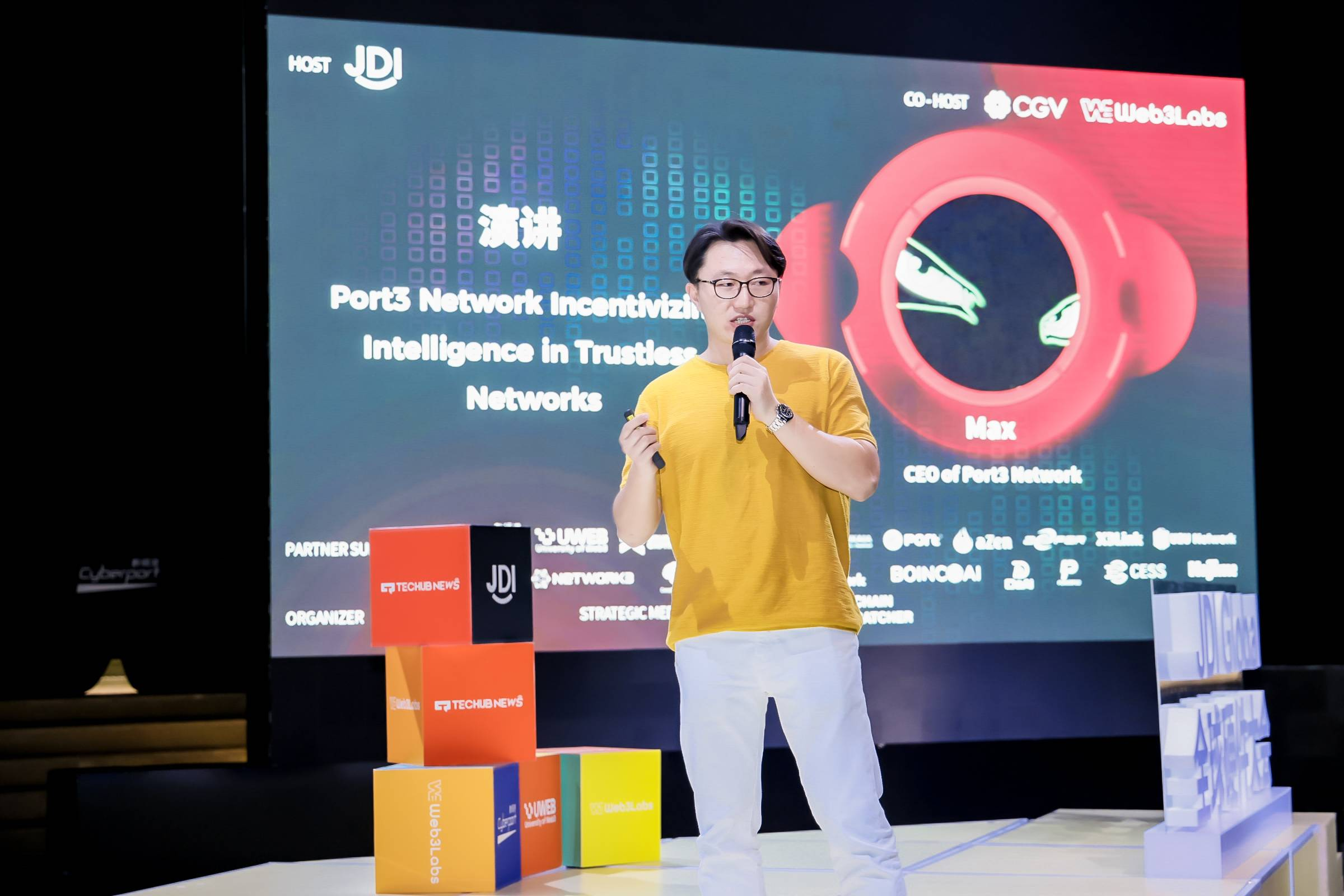
Max, CEO of Port3 Network, showcased the company’s robust capabilities in AI services. He highlighted how the team rapidly developed extensive infrastructure, middleware, and applications over just two years. He thanked partners for their support and revealed ongoing collaborations with Solana and Okis, along with plans to build their own chain. Max also shared metrics on user and partner growth, underscoring the company’s achievements and influence.
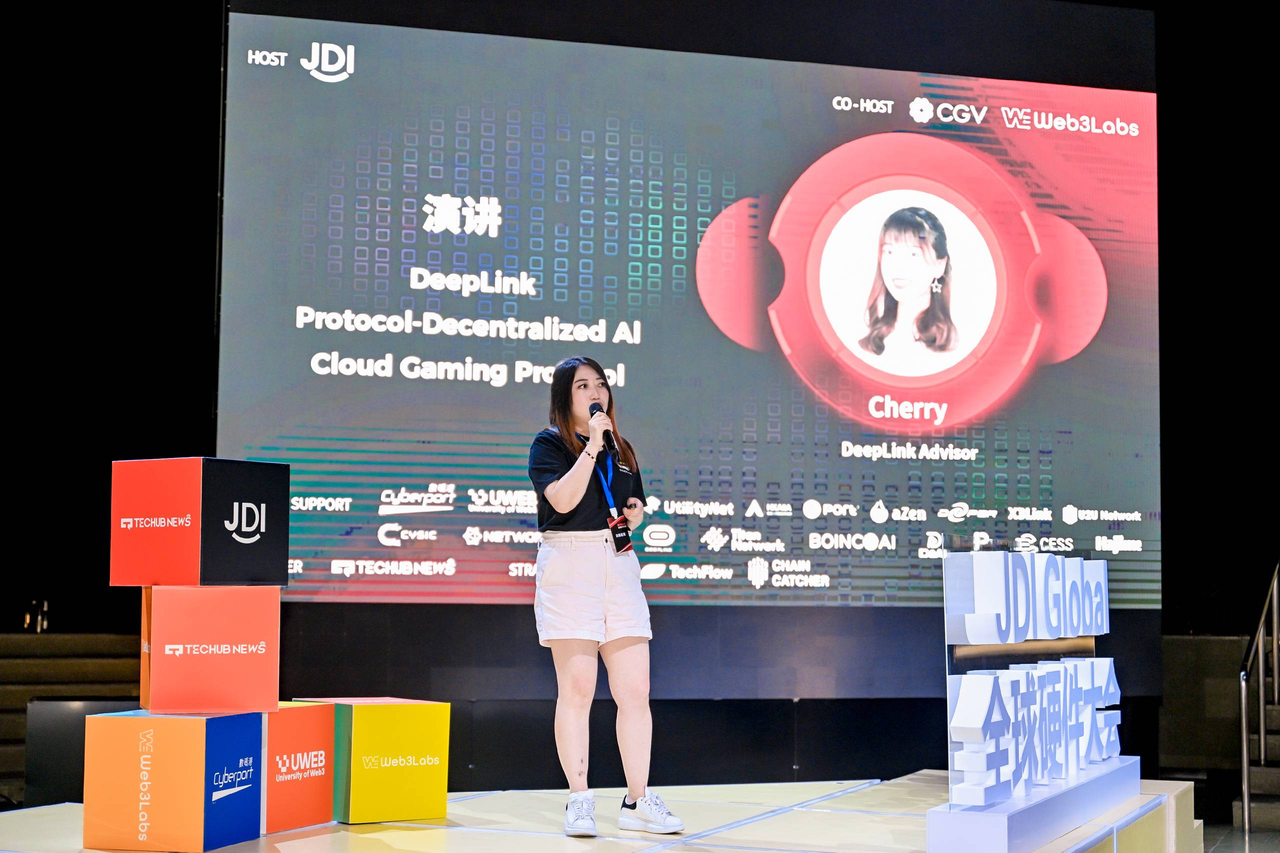
Cherry, Strategic Manager at DeepLink, clearly articulated the technical features and market potential of DeepLink—an AI-powered decentralized cloud gaming platform. She highlighted the rapid growth of the cloud gaming market and explained how DeepLink addresses two major industry challenges: achieving low-latency, high-resolution gameplay and reducing hardware investment costs. She detailed how blockchain incentivizes miners to deliver stable services, lowers operational expenses, and allows users to share in project growth through dividends. Finally, she showcased DeepLink’s applications across remote control tools, cloud gaming platforms, cloud internet cafes, and cloud XR, stating: “The cloud gaming market is projected to exceed $6.5 billion in 2024—it’s a fast-growing industry. As a DePIN project built on cloud gaming, DeepLink offers solutions that can help commercial game or yield-generating projects improve player retention and increase user numbers.”
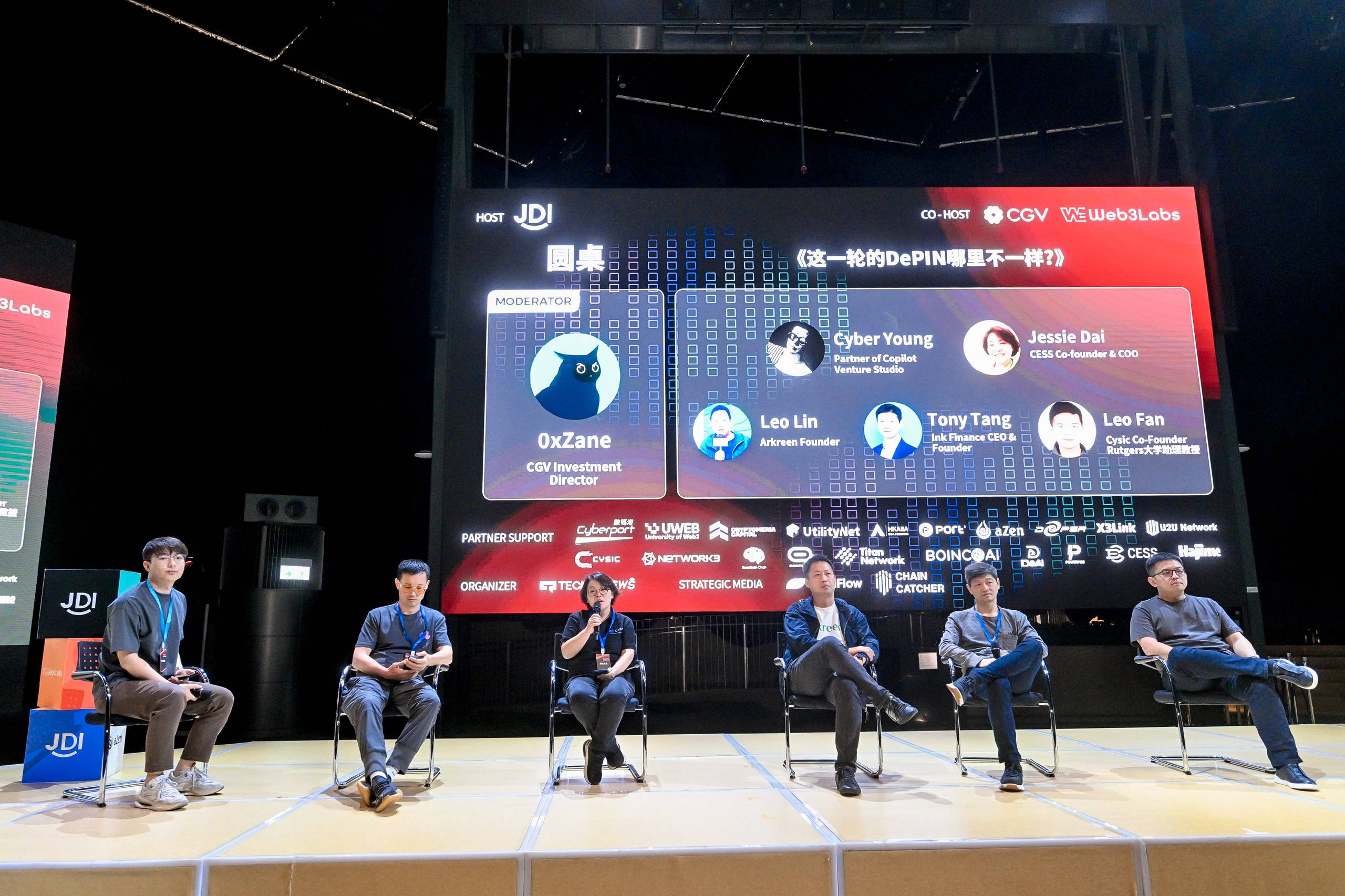
The second panel discussion, titled “What’s Different About This Wave of DePIN?”, gathered guests from various sectors, including investment firms, startups, and technical experts. Moderated by 0xZane, Investment Director at CGV, the session explored current trends in DePIN and how they differ from earlier iterations.
The discussion centered on whether today’s DePIN initiatives represent genuine innovation. Guests generally agreed that although the DePIN concept resembles earlier projects, improved market conditions and technological advances have created new opportunities. They emphasized blockchain’s growing role in the digital world, especially when integrated with AI and hardware, opening fresh avenues for DePIN growth.
Participants also noted that the success of current DePIN projects hinges on their ability to become novel traffic gateways and achieve widespread adoption. They discussed potential applications across Web3, AI, and hardware, as well as persistent challenges such as technical interoperability and market readiness.
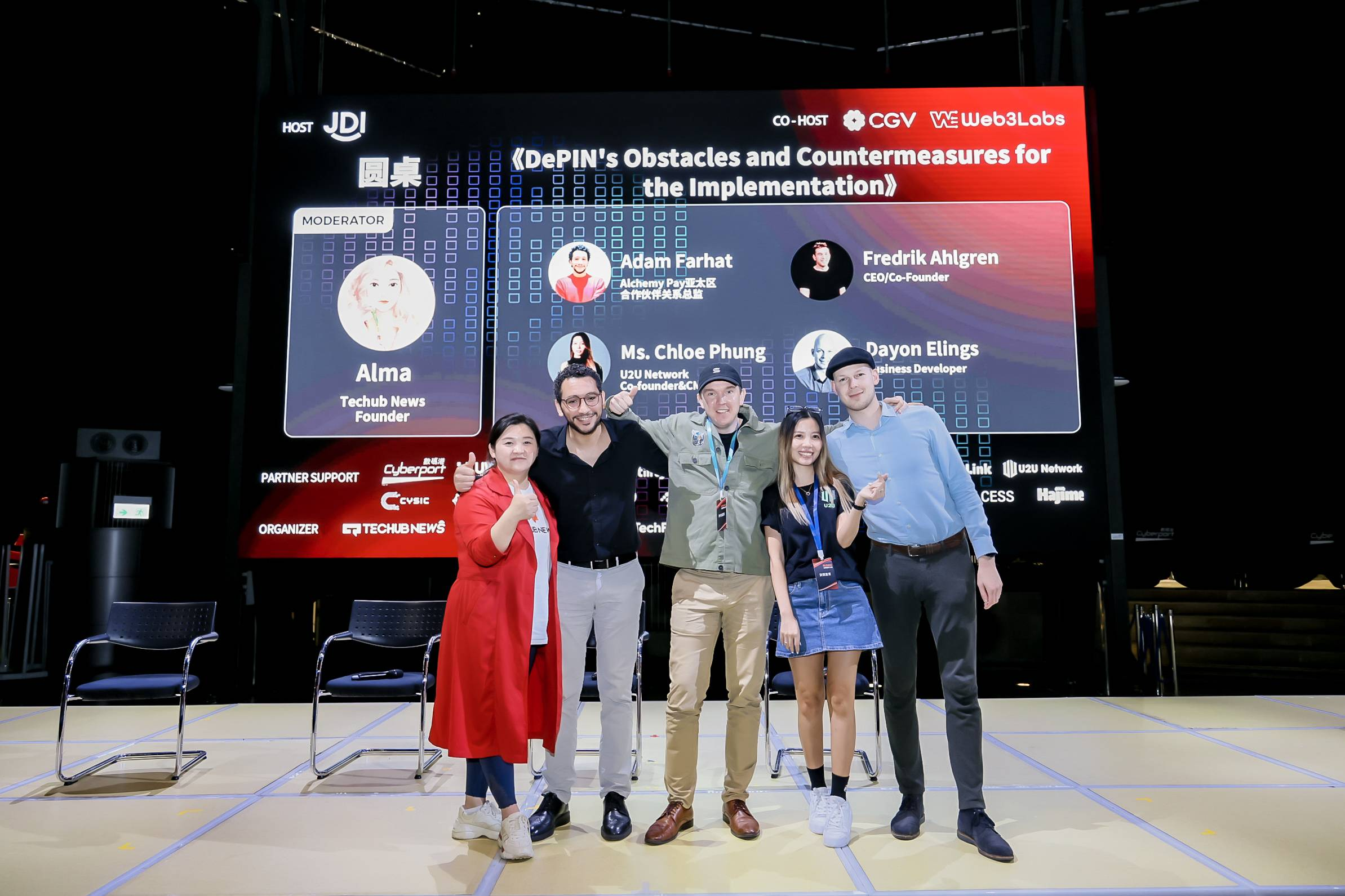
This panel convened experts from payments, renewable energy, internet, and mobility sectors to discuss the challenges and opportunities of DePIN technology. Hosted by Alma, the discussion delved into DePIN’s application prospects and obstacles across industries.
Adam Farhat highlighted how regulatory constraints hinder broad DePIN adoption, urging stronger engagement with regulators to foster compliance. Fredrik Ahlgren saw great promise for DePIN in renewable energy, identifying technological innovation and user education as key enablers.
Chloe Phung, speaking from an internet technology perspective, believed DePIN could enhance user experience and spark business innovation online, though adaptation to rapidly evolving market and tech trends remains essential. Dayon Elings envisioned transformative uses of DePIN in mobility, acknowledging technical hurdles and market acceptance as primary challenges.
Overall, the 2024 DePIN Global Hardware Summit served as a powerful convergence of technology and innovation. It united elite leaders from the global hardware industry and showcased the immense potential of emerging technologies like DePIN in transforming industries and reshaping lifestyles. As these innovations continue to evolve and gain real-world traction, we have every reason to believe that the future of technology will be more convenient, intelligent, and美好. We look forward to gathering again at the next DePIN Global Hardware Summit to explore the frontiers of science and unlock infinite possibilities for tomorrow!
Join TechFlow official community to stay tuned
Telegram:https://t.me/TechFlowDaily
X (Twitter):https://x.com/TechFlowPost
X (Twitter) EN:https://x.com/BlockFlow_News
 JDI Global


