On the Future Development Path of Web3 Gaming: Game Quality Escalation and Cash Flow as King
TechFlow Selected TechFlow Selected
On the Future Development Path of Web3 Gaming: Game Quality Escalation and Cash Flow as King
Unlike the previous Play2Earn cycle, the quality of games in this round is significantly better.
 Navigating Web3 tides with focused insights
Author: Sleeping Heavily in the Rain
Why am I bullish on the gaming sector in this cycle?
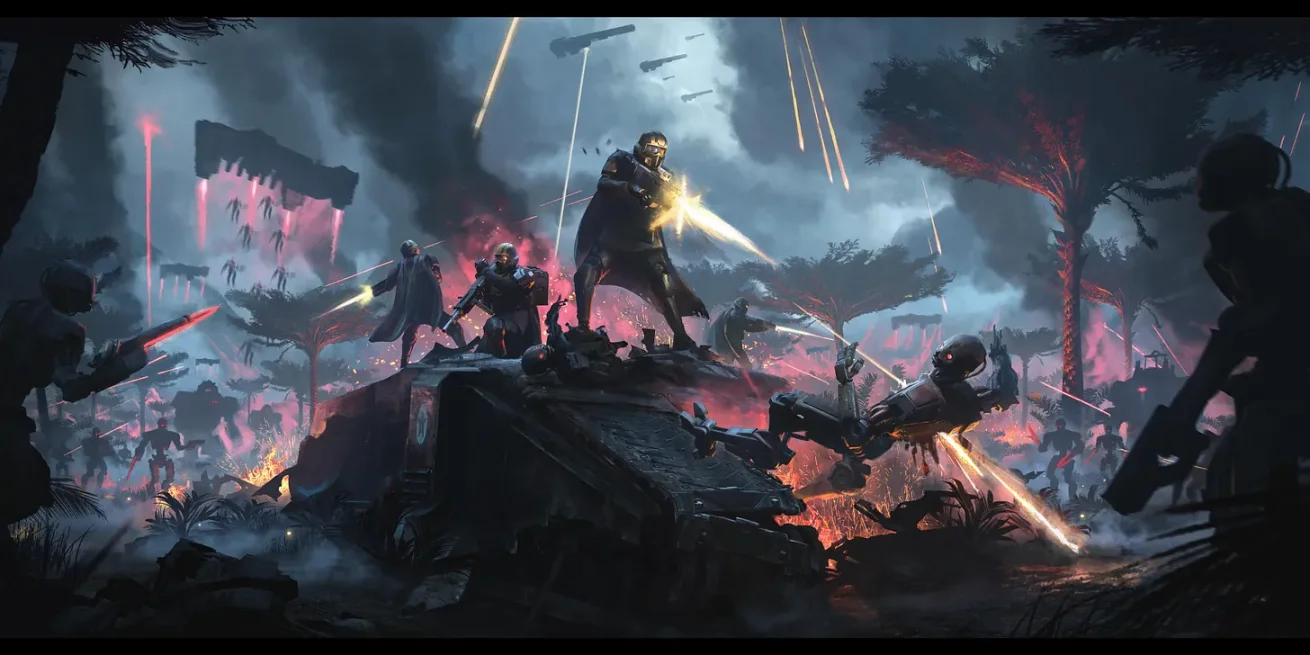
Unlike the previous Play2Earn cycle, games in this cycle are of significantly higher quality—titles like Parallel, Bigtime, Nyan, and Pixels Online, for example. The impact of high-quality games on users is evident: a clear shift from the earlier model where users simply bought NFT assets, staked them, clicked a few times, and earned money through a pure Ponzi mechanism, to a new model that requires active gameplay and time investment to earn rewards. This new model brings fresh opportunities. While older-model games might resist change, real wealth creation will emerge from games adopting the new paradigm—high-quality games requiring Proof of Work (PoW).
Smarter established projects are upgrading their existing games or launching new ones to align with the new narrative—Ronin (Axie Infinity) being a prime example. Projects unwilling to evolve continue relying on outdated models, gradually eroding their influence within the industry (I won’t name names here). I firmly believe that game projects choosing the premium-quality path will stand out in this cycle.
Take @GoGalaGames as an example. In the past, Gala Games offered decently playable titles based on a node-mining model. To adapt to the new cycle and narrative, Gala has launched Gala Chain, building a decentralized entertainment ecosystem encompassing music, film, and more. Going forward, Gala Chain also plans to expand into storage and DePIN. Meanwhile, Mirandus—the long-anticipated MMORPG from Gala Games—has begun NFT sales and extensive game testing. Its transition from small-scale games to a full-fledged MMORPG suggests an official launch is not far off.
Let’s briefly discuss Mirandus.
1/ Overview
-
A medieval fantasy adventure MMORPG
-
The world is governed by five player-elected monarchs. Players can choose different professions, go on adventures, fight, and manage resources. Think of it as a large virtual society. There are no maps or quest markers ("?"). Exploration is entirely open-ended. Player behavior is driven by incentives—specifically, the $MTRM Materium token, which is both earned and spent within the game.
-
The core mechanic revolves around "player ownership of in-game assets": for instance, players can claim ownership of uncharted wilderness and build upon it.
Overall, the game operates on incentivized player engagement. Similar to Gala’s earlier node-mining model, but with a crucial difference: players must invest actual gameplay time to earn tokens—making it a genuine “Play2Earn” experience akin to Bigtime.
This design gives the game stronger longevity compared to earlier GameFi models—real players will form communities, extending the game’s lifecycle significantly.
2/ NFTs: In-Game Assets
1. Exemplars
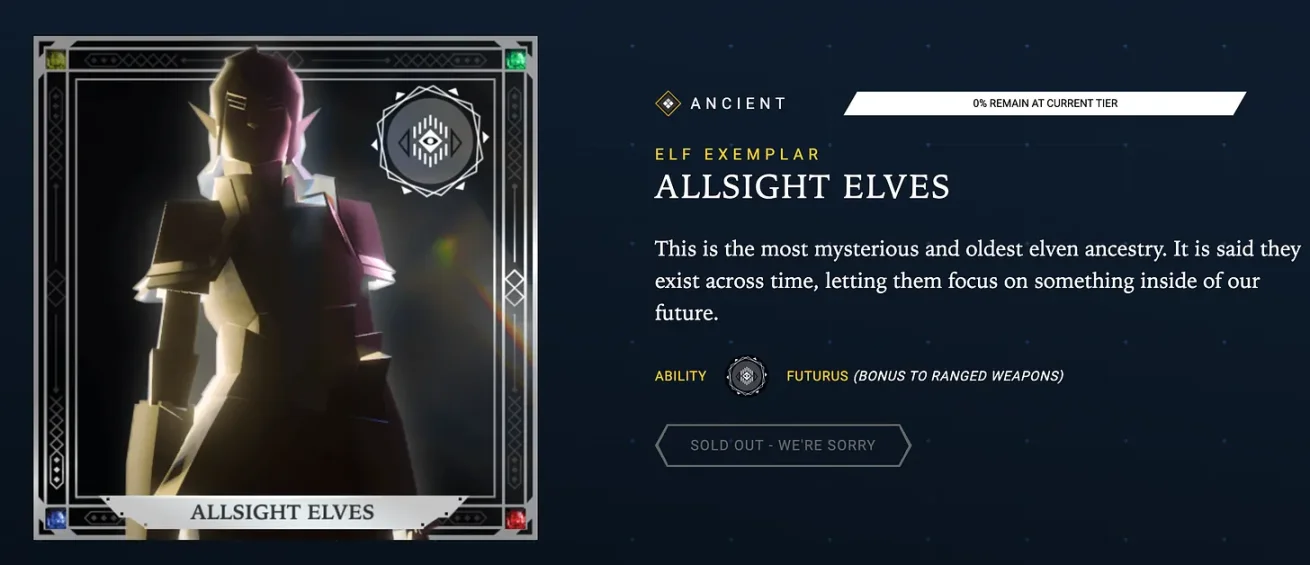
There are five types of Exemplars: ELF, HALFLING, ORC, DWARF, and HUMAN. Currently, ELF and HALFLING NFTs are sold out, and HUMAN NFTs are nearly sold out. Different sub-classes across races possess unique abilities—for example, Allsight ELFs receive bonuses with ranged weapons. Essentially, your race defines your role in the game’s society, giving you inherent advantages in certain gameplay aspects.
2. Deeds
Deeds represent various land rights (e.g., castles, towns, villages, outposts). Players use Deeds to claim ownership of in-game land assets.
3. Buildings
Once land ownership is secured via Deeds, players need Building NFTs to construct structures on their land.
4. Ships
Ships serve as exploration tools, enabling players to explore distant regions and transport goods.
5. Docks
Docks are used to dock Ships.
6. Items
Items come in many forms, mostly functional or buff-enhancing in-game道具. Currently available is the Lantern of The Sun, which provides illumination to help players explore dark wilderness areas.
Mirandus places almost all in-game items on-chain—a double-edged sword. On one hand, it reinforces true player ownership through NFTs; on the other, it introduces unnecessary transaction costs for players. If Mirandus can effectively address this issue post-launch, please disregard my concerns.
3/ Differences from Bigtime
Blockchain games currently rely on cash flow to sustain operations and content development (unlike traditional buy-to-play games). Bigtime generates revenue through a time-based payment model. However, Bigtime lacks intrinsic utility for its token (Bgtime could potentially implement token buybacks or other mechanisms for utility—but as long as there’s utility, it doesn't necessarily have to be tied directly to gameplay). This remains one of its main criticisms.
In contrast, Mirandus earns cash flow by selling in-game items. Its native token $MTRM has both production and consumption mechanics. The team can control overall inflation by adjusting the pace of new content releases (i.e., new asset drops). As long as they manage it responsibly without over-exploiting the economy, Mirandus may have greater long-term potential than Bigtime.
However, the fixed cap of 50,000 Exemplars inherently limits scalability. It remains to be seen how the team addresses this constraint moving forward.
In short, if Mirandus executes its operational strategy correctly—game asset rollout, community management, player retention—and delivers strong execution, backed by Gala Games’ infrastructure, this game has the potential to reach much greater heights.
Join TechFlow official community to stay tuned
Telegram:https://t.me/TechFlowDaily
X (Twitter):https://x.com/TechFlowPost
X (Twitter) EN:https://x.com/BlockFlow_News
 雨中狂睡Sleeping in the Rain