Interview with COZ CEO: How Can Physical Objects Become Immortal?
TechFlow Selected TechFlow Selected
Interview with COZ CEO: How Can Physical Objects Become Immortal?
"Blockchain exists as a software foundation in our modern ecosystem. As long as this ecosystem remains operational, our software will continue to exist."
 Navigating Web3 tides with focused insights
Author: Sunny, TechFlow
Guest: Tyler Adams, CEO of COZ
"Blockchain exists as a software base within our modern ecosystem. As long as this ecosystem remains operational, our software will continue to exist."
——Tyler Adams, CEO of COZ
Blockchains can die, but they are human-based; as long as humanity survives, code can persist and propagate on blockchains, enabling the immortality and reproduction of both software and hardware.
We have been deeply engaged in building blockchain technology for so long that we can now adopt a philosophical stance on how it is used.
Our modern ecosystem refers to the era defined by human activities on Earth (i.e., the Anthropocene). Like other organisms, humans possess reproductive capabilities—an inherently conservative trait across biological life. In contrast, non-living entities such as code, software, text, or rings cannot self-replicate...
Since 2008, Bitcoin has emerged as private money, connecting every individual on Earth with the concept of currency—a fractional space maintained through supply and demand flows, supporting essential economic activity required for civilization.
Unlike private currencies, public monies like national currencies are controlled by a few—mainly governments—and thus create single points of failure when human decisions lead to imbalances in supply and demand.
Underpinning Bitcoin is distributed ledger technology—blockchain—which enables everyone on Earth to contribute labor and resources toward maintaining the ledger’s operational state. Since Ethereum introduced smart contracts, its blockchain has become the "world computer," meaning the code running atop it is now tightly coupled with humanity.
For the first time, humans can now link their reproductive capacity to software (logic, language, code, memes, etc.), and this is made possible through blockchain.
As Tyler describes, "Blockchain exists as the software base of our era." Now, if we have a software base capable of reproduction, can we bind it to physical hardware objects like rings, keys, and artworks, making them more 'immortal' via blockchain-programmed software layers? (Absolute immortality would be an exaggeration, since physical items degrade over use.)
Now, physical objects can achieve regeneration… as long as humans consistently maintain the operation of the blockchain.
I found my conversation with Tyler particularly fascinating because we delved into how blockchain can serve as the software foundation for things on Earth, and how the humans operating this technology keep both software and hardware in a regenerative state—granting reproductive-like biological traits even to inanimate objects.
Tyler Adams’ background is deeply rooted at the intersection of medical technology and biological research. Initially focused on designing medical devices and centrifuges, his work centered around flow cytometry—a critical tool for high-speed cell sorting and analysis in major research areas such as HIV and cancer. Though not directly involved in diagnostics, his dedication to instrument development and broader biological research established a profound connection with the scientific field, offering him a unique perspective that later informed his transition into blockchain technology.
In the early days of his engagement with blockchain, Tyler joined the Neo ecosystem as a core contributor. Notably, the team he led was instrumental in introducing Neo technology to English-speaking audiences in the West for the first time.
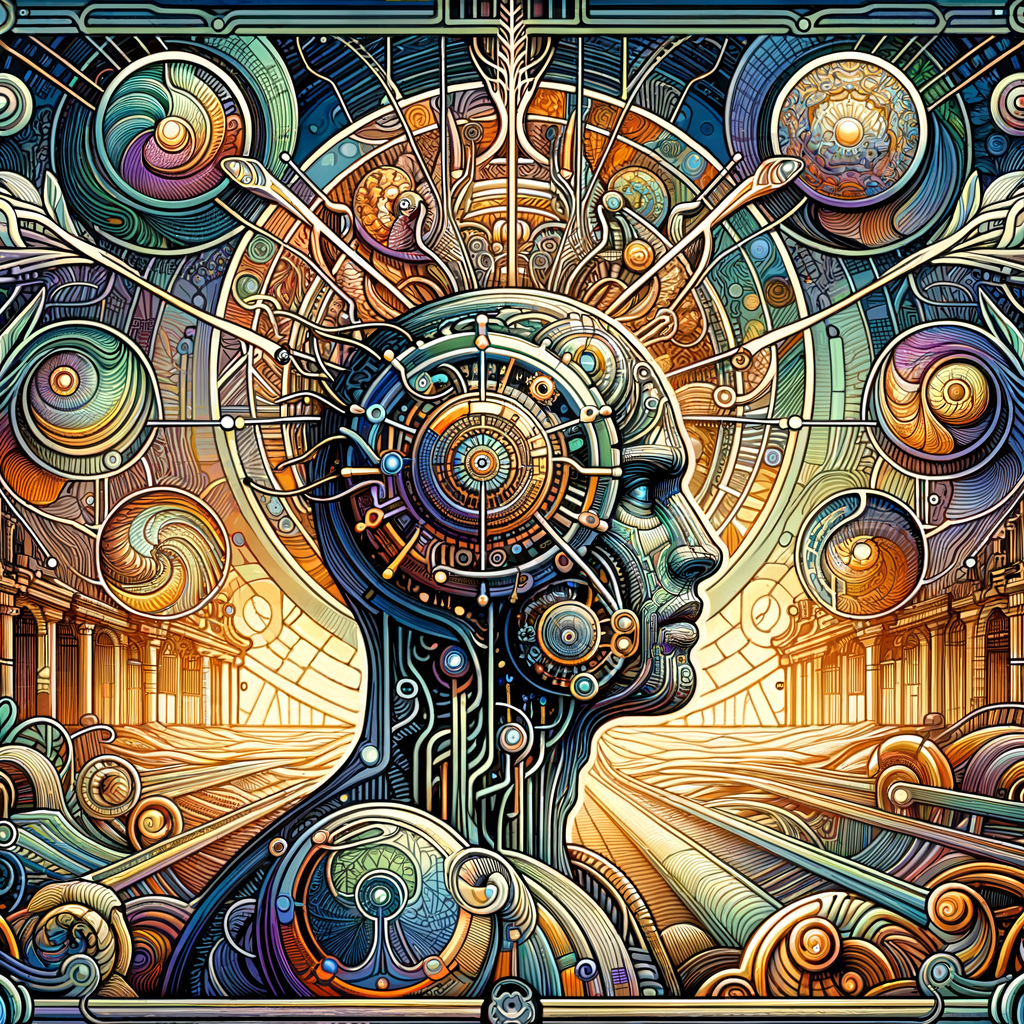
DALL-E3-generated impression of decentralized immortality
From Neo Ecosystem Contributor to Founding COZ
TechFlow: How did you transition from being an applied biomedical engineer to becoming a core contributor to Neo?
Tyler:
My journey into blockchain was a long one. It began with my work in high-speed cell sorting and ultra-high-resolution technologies, using techniques like seven-laser array sub-micron cell sorting. This technical pursuit led me to Seagate, a company specializing in big data storage solutions, where my focus shifted to numerical modeling of advanced technology reliability. My responsibilities expanded to reverse-engineering customer workflows and creating numerical models to simulate new hard drive technologies.
This experience steered me toward roles focused on global system testing infrastructure and analytics. It was here that I began exploring consensus algorithms, driven by the challenge of achieving global consistency of data states within large storage arrays. This exploration brought me to the forefront of blockchain research, starting with foundational technologies like Bitcoin and Ethereum.
Ultimately, this path led me to the Neo blockchain and its Delegated Byzantine Fault Tolerance (dBFT) algorithm, which resonated strongly with our architectural and industrial needs. Recognizing the limited exposure of Neo technology in the West, especially beyond Chinese-speaking communities, my team at COZ and I took the initiative to translate the Neo white paper into English. We developed tools and infrastructure to enhance its visibility in Western markets, marking the beginning of our seven-year contribution to the blockchain industry and the Neo platform.
When discussing dBFT or Delegated Byzantine Fault Tolerance, I emphasize how Neo pioneered this protocol, setting precedents for energy efficiency and computational performance in the blockchain space. This innovation attracted interest and adoption from other major players such as Binance Chain. The appeal of dBFT lies in its stark contrast to energy-intensive Proof-of-Work systems, positioning it as a more sustainable and efficient framework for Layer 1 blockchains.
TechFlow: How did you build this developer team during the Neo period, and how did it eventually evolve into COZ?
Tyler:
I didn’t start directly with Neo. About seven years ago, many individuals like myself independently discovered Neo and recognized its value as a protocol and project. As community members, we came together to communicate, organize, and collaborate. We launched various initiatives, such as translating documentation and developing software for the platform.
We initiated the creation of a wallet that evolved into a BIP39 multi-protocol wallet. Additionally, we developed contract compilers for writing smart contracts on the platform, along with software development kits (SDKs) to enable application development. These efforts allowed platforms like Binance and Kucoin to interface effectively with blockchain.
The Neo team provided significant support for our efforts, even funding our development work. This financial backing helped attract developers to the ecosystem. Essentially, this marked the beginning of COZ and outlined how our journey started.
Understanding Differences in Software Development Between Web2 and Web3
TechFlow: What do you see as the biggest differences for developers entering Web2 versus Web3 development?
Tyler:
There are several key aspects to consider—tools and support.
First, let's discuss the fundamental differences in software architecture.
In traditional software development, we often talk about front-end and back-end—the two static constructs defining an application’s structure.
However, when it comes to blockchain, we encounter a completely new architecture. While sometimes blockchain is merely used as a back-end, preserving the front-end/back-end model, in certain cases this approach falls short. This is especially evident in the domain of smart contracts, where cryptography and security considerations play a crucial role.
Understanding and navigating these security risks is one of the biggest challenges developers face when transitioning from Web2 to Web3.
For example, consider data storage in healthcare. In traditional healthcare software development, storing encrypted data in databases can meet regulatory standards, ensuring security and compliance.
However, if the same encrypted data is stored on a blockchain, regulatory issues arise due to the immutability of blockchain data.
Unlike traditional databases, where data can be deleted and re-encrypted to meet evolving cryptographic standards, blockchain data remains permanently unchanged.
This fundamental difference undermines many standard practices in software development and requires a complete re-evaluation of security protocols.
Moreover, COZ focuses on building contract compilers and software development kits, particularly in Python—a programming language widely regarded as dominant in information technology.
Since Python is commonly taught in schools, the programming language barrier is no longer a major concern. Instead, the primary challenge lies in understanding these architectural concepts. For instance, during hackathons, participants are encouraged to design their own architectures and seek feedback, as many traditional software architectures are incompatible with blockchain technology.
COZ’s Mission: Binding Real-World Assets Cryptographically to Blockchain
TechFlow: Looking ahead at COZ’s future trajectory, how do you envision its evolving role in Web3 architecture development, especially in relation to traditional Web2 companies and the broader Web3 landscape?
Tyler:
Currently, we offer custom services for Web2 businesses looking to transition into Web3. We position ourselves as partners, leveraging our extensive experience and deep understanding of the ecosystem to ensure our partners’ architectures and product concepts are seamlessly and securely implemented in a Web3 environment. Our expertise spans from core protocol development and consensus mechanism design to end-user activation, with products already deployed in live events involving thousands of users on mainnet.
Through these services, we address specific challenges associated with non-fintech blockchain use cases, using insights from proof-of-concept trials and activations to streamline processes and remove barriers.
Recently, we’ve focused on developing physical assets cryptographically linked to blockchain, delivering practical, utility-driven use cases without any financial components.
Nonetheless, they deliver unique value propositions by leveraging blockchain technology. As an organization, we believe our broad presence in the ecosystem allows us to pioneer novel use cases beyond financial applications.
This approach aligns with our vision of driving mass adoption by seamlessly integrating blockchain into everyday life, to the point where users may not even realize they’re interacting with blockchain technology.
Contrary to prevailing industry trends where many focus solely on blockchain-centric narratives, we take a customer-centric approach. Our philosophy is to meet customers where they are, prioritizing tangible value propositions over blockchain hype.
Drawing a parallel with cloud computing, we recognize that early cloud marketing often emphasized the technology itself rather than its practical benefits.
Similarly, in blockchain, there’s a tendency to promote the technology for its own sake. However, we believe the future lies in turning blockchain into an infrastructure layer—much like cloud computing—that integrates seamlessly into daily applications without drawing attention to its underlying technology.
Essentially, we foresee blockchain evolving into a foundational tool for building products, just like cloud infrastructure. At COZ, our goal is to align with this trajectory and position ourselves at the forefront of blockchain’s transformation into an indispensable part of the technological landscape.
TechFlow: Can you provide a real-world example where a physical object operates on top of your service, yet the user isn’t aware it’s powered by blockchain?
Tyler:
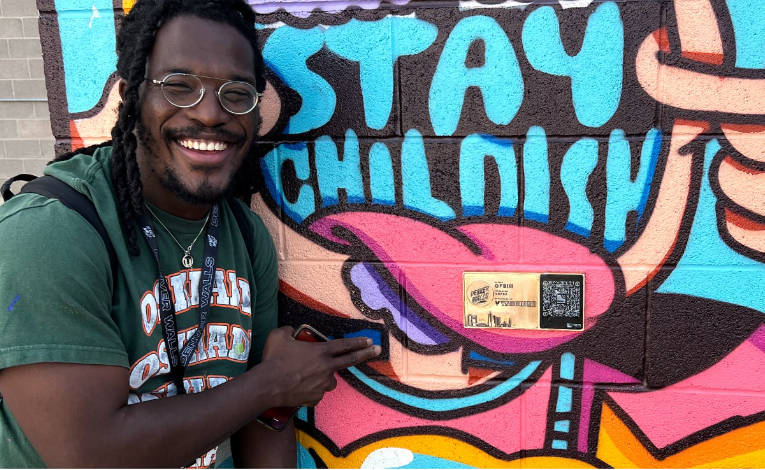
Last year in Denver, Colorado, the renowned mural festival Worldwide Walls brought together 17 international muralists who flew in to create stunning artworks—some spanning five stories tall, truly monumental in scale. Bronze plaques were then installed on these murals; I have an example here. These plaques contain a microcomputer allowing users to tap or scan them to collect unique signatures. These signatures can then be minted onto the blockchain to redeem rewards from local merchants in the area. We plan to repeat this initiative at ETHDenver in three weeks.
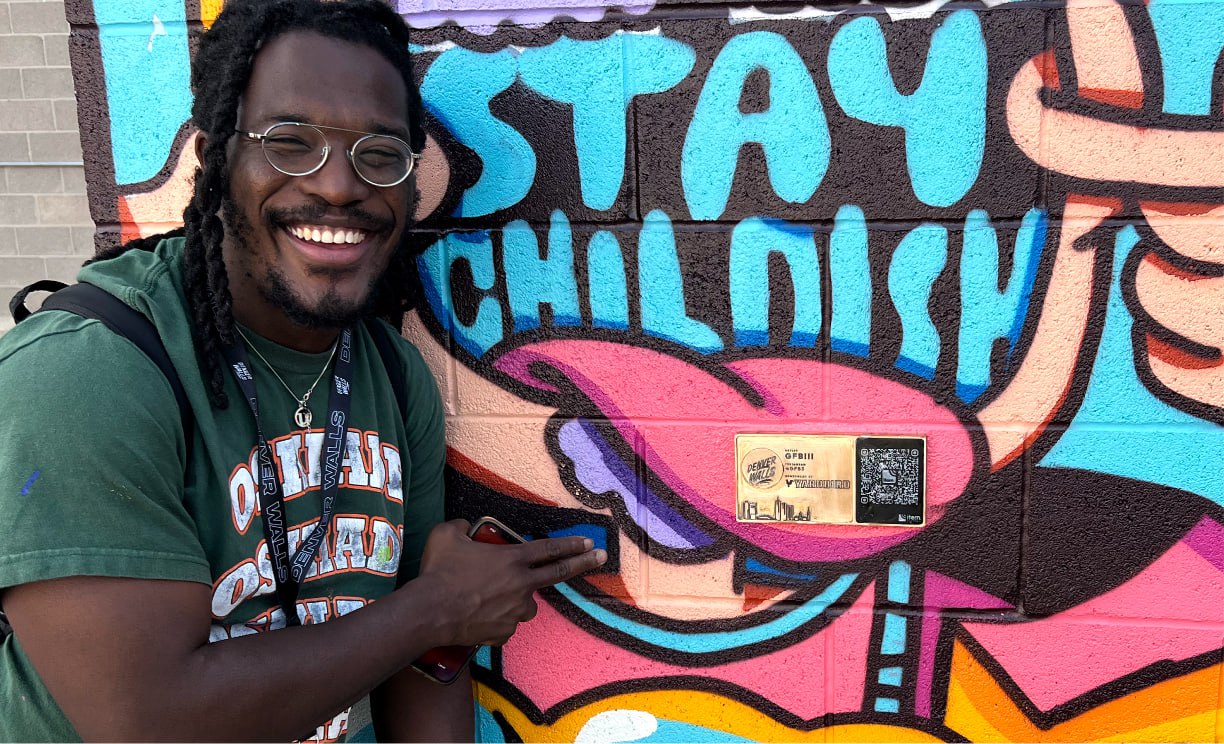
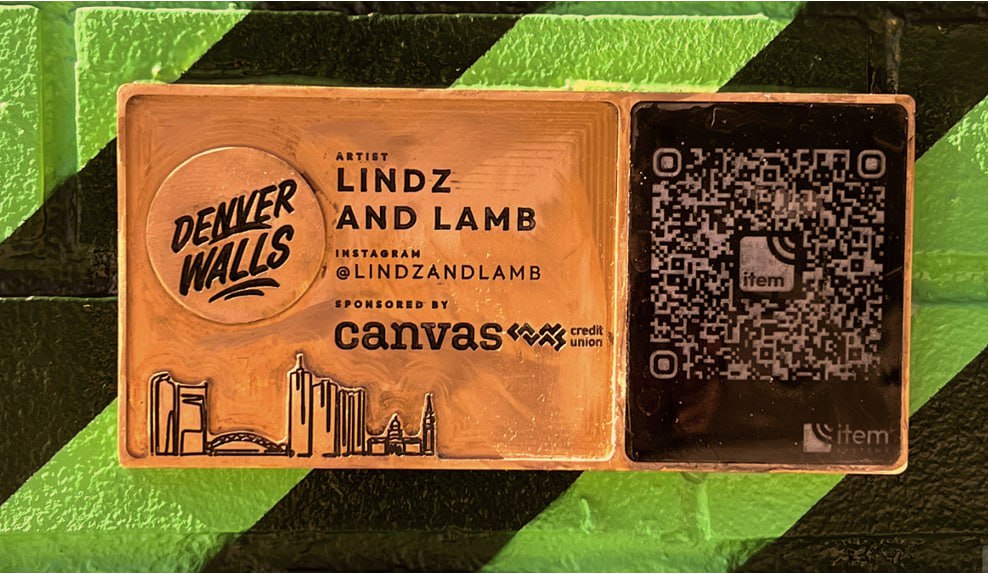
This is a great example showing how individuals don’t need to be aware of it. They don’t interact directly with blockchain, nor do they need to create wallets or perform any related actions. Yet, they are leveraging blockchain to enhance their experience.
TechFlow: Is this similar to POAP?
Tyler:
Somewhat, but it cannot be forged.
It’s peer-to-peer—with no super-users. It’s direct interaction between local merchants and the community. The walls themselves serve as navigation points.
Another good example is the activation we conducted at Token2049 in Singapore, where we distributed rings.
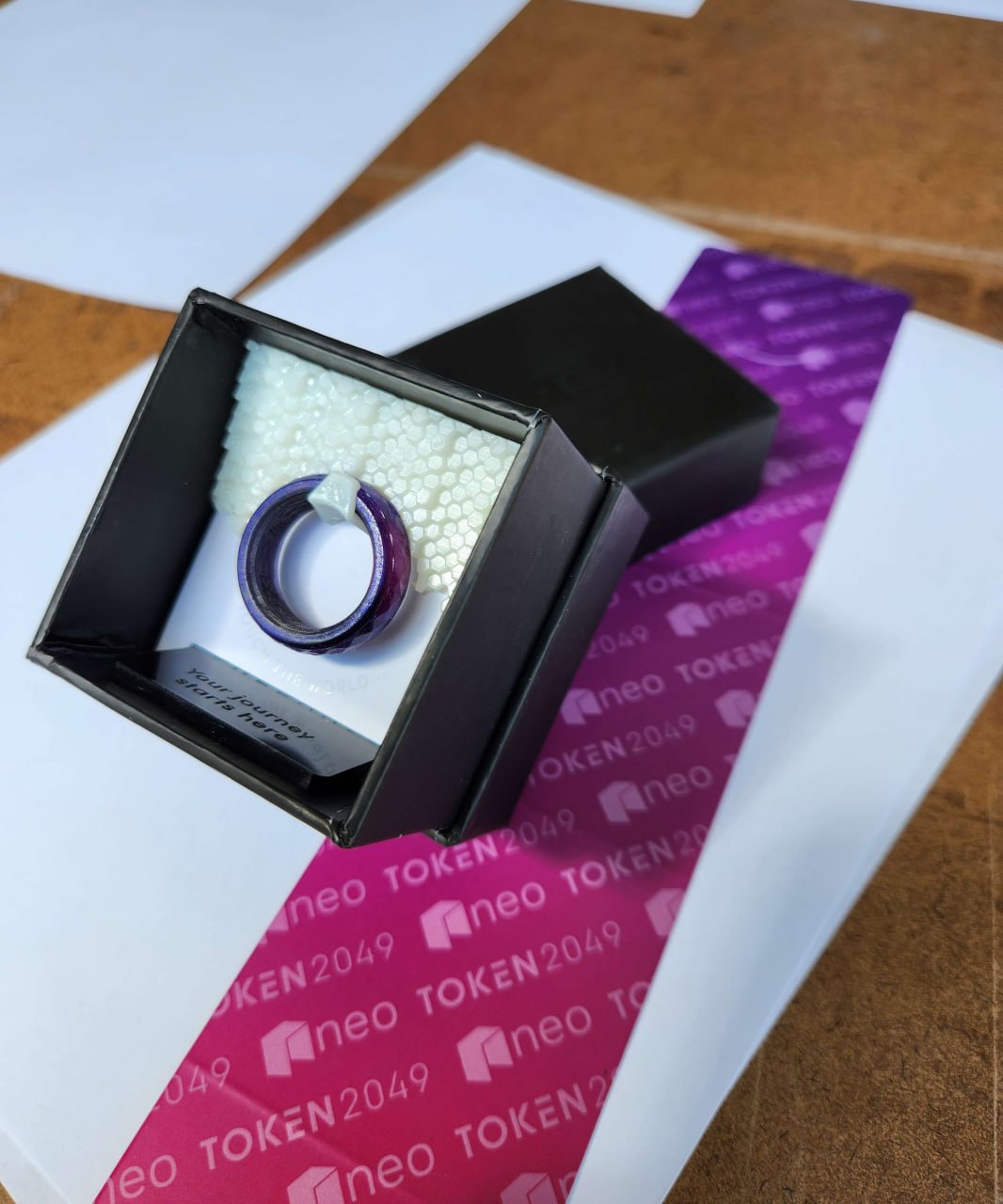
These rings are counterfeit-proof, making us the only manufacturer of this type of physical asset on Earth today. They leverage blockchain to provide provenance information and ownership data.
During our Token2049 activation, approximately 300 such rings were distributed. Participants experienced a curated museum exhibit where they could interact with displays by tapping or scanning their rings. This blockchain-enabled interaction required no communication, private keys, or registration process, delivering a clean user interface and experience. A similar setup was deployed last year at Consensus.
Additionally, we ran a similar campaign at the Tribeca Film Festival, showcasing artwork from actors in an Oscar-nominated film this year. These pieces were embedded in wax picture frames with chips attached at the back. By tapping or scanning these items, users interfaced with the blockchain to verify their cryptographic authenticity, transforming them into anti-counterfeit physical assets.

Particularly interesting is how this setup interfaces directly with the blockchain, enabling the creation of decentralized applications that use it as a key interaction component. For instance, imagine a smart contract wallet where the ring serves as a two-factor authentication device to verify transaction authenticity.
It could also be used to unlock doors and serve various other purposes. Beyond verifying authenticity and displaying provenance data for collectibles—a major concern in the art market—it also serves as a tool for the broader artistic community, which frequently faces piracy and forgery issues.
TechFlow: Why did you choose to use blockchain in these real-world physical applications?
Tyler:
It comes down to the value of cryptography. Also, because it’s decentralized.
We’ve been developing blockchain technology for a long time. Throughout this process, we’ve philosophically reflected on how blockchain should be used. In this case, blockchain exists as a software base within our modern ecosystem.
Consider a physical asset like your headphones. If you give them to someone, you can sell them. There’s no centralized infrastructure for that transaction—it’s peer-to-peer. Fundamentally, blockchain works the same way. It’s peer-to-peer. It’s permissionless. You can do whatever you want with your assets.
So for us, we see many similarities between physical assets and blockchain, and we believe this kind of product is an excellent interface. Our organization could disappear entirely from Earth, yet our physical assets would still exist. People could continue writing software that uses our physical assets. They could keep using them, proving their authenticity, and operating them—regardless of whether we, the producers, still exist. It’s just like your headphones. All physical assets are like this.
The person or company that made your physical asset—your headphones, your clothes—those assets remain regardless of whether the company exists. Blockchain is the perfect tool for building physical assets. We’ve seen other solutions, but that problem hasn’t gone away. If you ever bought a tech product and the company disappeared, leaving you unable to use it—that’s a terrible experience. So we’re pushing the idea that physical assets and blockchain are a perfect match.
TechFlow: Can you further explain how software deployed on physical assets can be modified without interacting with the producing organization?
Tyler:
As an organization, we deploy a series of smart contracts on the blockchain. We’ve discussed the difference between back-end and front-end, highlighting the architectural contrast between traditional software and Web3.
In traditional software, companies typically maintain back-end infrastructure. If the company ceases to exist, so does the back-end. But in our case, our code resides on the blockchain.
We don’t manage infrastructure, servers, or any related components. Instead, our code is embedded within the blockchain structure, maintained by the entire ecosystem.
As long as the ecosystem remains operational, our software will continue to exist.
This contrasts sharply with traditional software models, where a company shutting down means its services stop. For example, if Microsoft or Apple ceased operations, all services relying on their back-end infrastructure would halt.
In our scenario, physical assets may last decades, giving users confidence that software can continue to be developed for these assets, ensuring their continued functionality and authenticity verification. This is the unique value proposition offered by blockchain.
For us, blockchain presents a unique utility and value proposition that no other software solution can replicate. Without blockchain technology, this product simply couldn’t exist.
TechFlow: This truly makes physical or inorganic objects immortal or renewable.
Tyler:
We’ve spent years improving user experience and making blockchain more accessible, striving to identify genuine use cases and value propositions across industries. When we deconstruct distributed ledger technology, what is its core value proposition for enterprises?
To answer this, we’ve extensively field-tested our theories.
Over the past seven years, our team has traveled globally, attending countless events and meeting individuals and organizations launching blockchain projects. Our goal has been to deeply understand the essence of blockchain technology and its potential applications.
Looking ahead 50 years, where will blockchain stand? We expect discussions about “being on blockchain” to fade, much like conversations about “being on the cloud.” Instead, blockchain will be recognized as a value-adding tool for other products and processes. Our current efforts are focused on revealing this intrinsic value proposition.
Knowledge, Internet, Open Source, and Decentralized Science
TechFlow: How do you see the intersection of decentralized science (DeSci) and blockchain technology, especially in fields like medicine, which you’re deeply interested in? Currently, many DeSci projects serve as funding mechanisms for small to mid-sized labs. Looking forward, what potential do you see for blockchain integration with deeper scientific research, such as using DNA as a data storage medium?
Tyler:
Five years ago, a team within our ecosystem submitted a proposal at a hackathon centered on peer review of research on blockchain. Today, we’ve established a DAO (decentralized autonomous organization) within the Neo ecosystem, where individuals can submit funding proposals. These proposals are then fully voted on and discussed by a committee entirely on-chain.
Using a DAO to transparently allocate funding and facilitate academic peer review holds immense potential. This approach addresses common political and bureaucratic problems in academia. It also enables anonymity in the peer review process, using blockchain to ensure transparency and fairness.
With this model, peer review and voting for academic journals and conferences can be conducted publicly, eliminating the secrecy common in traditional processes.
Furthermore, extending these principles of transparency and collaboration to other industries holds tremendous potential, echoing the spirit of open source.
Scientific research, in particular, stands to benefit greatly, given its alignment with open collaboration and knowledge sharing.
At COZ, we are strong advocates of open-source principles. Many of our products and a significant portion of our infrastructure are open source.
We host public nodes for people to use, which works exceptionally well in software terms. Without open-source software, we wouldn’t even have this video chat right now. This is a direct rebuttal to anyone claiming open-source software doesn’t underpin Earth’s software infrastructure.
All of this stems from the open-source software movement. Blockchain opens up similar capabilities for many other fields. I entered technology from a mechanical engineering perspective, and a great example is the recent progress in the 3D printing movement—all built on open hardware and open-source principles.
One challenge with hardware is how to share design information while proving you’re the original creator. Blockchain helps here because we have ECDSA, an immutable ledger that allows you to publish to decentralized storage and record signatures on-chain.
Decentralized Science (DeSci) is another example. You can publish papers to decentralized storage or even store published papers—including algorithms—on-chain. This ensures access rights, proper attribution, and license compliance through programmable management.
Historically, private industries have mined academic research, restricting access once successful. With decentralized solutions, this becomes much harder, as data is permanently stored by authors in specific ways, unchangeable by anyone except the original author.
To me, this represents a significant value proposition. I may be biased, as our organization strongly supports open-source software and decentralized scientific discovery, but it presents a massive opportunity.
However, it’s an uphill battle, as traditional academic institutions resist this concept—it’s how they differentiate themselves and justify their existence. Verification is also complex. In the U.S., when you graduate, you get a degree, but to verify it, you must request confirmation from the institution through third parties, usually involving fees.
In Singapore, digital credentials are issued, allowing you to prove university attendance and degrees. Within academia, there are many infrastructure layers—from research and decentralized scientific advances to academic achievements—where verifiable credentials via decentralized identity (DID) retain value over time.
Tyler’s Advice to Young People: Go to Gemba
TechFlow: For young people trying to learn how to write smart contracts and enter this industry, what advice do you have?
Tyler:
It’s not just about software—it’s about communicating with people, listening to their frustrations, and finding possible solutions. You don’t necessarily need exceptional software development skills to succeed in this industry. What matters more is identifying pain points and having the ability to solve them. Software, whether blockchain-based or not, is a valuable tool toward that end. Understanding people’s needs and frustrations, and grasping the basic concepts of available tools and how to apply them, is crucial.
Blockchain and cloud computing are powerful tools, but they aren’t magical solutions. Understanding their high-level value propositions is essential. Do they actually add value and help solve the problem at hand? Over the past seven years, I’ve seen many projects fall into this common trap—they identify a problem and try to build an app to fix it, but force-fit blockchain or cloud solutions where they don’t belong. It’s like using a hammer on a screw—simply the wrong tool.
This is likely to happen again with AI. While AI is an incredibly powerful tool, it’s not suitable for every situation. Before applying these technologies, understanding their high-level value propositions is critical. Blindly hoping they’ll work without understanding this is unwise.
There’s a concept from Motorola and Toyota called going to Gemba—the actual place where things happen. This applies not just to blockchain, but to engineering as a whole. Engaging with your users and learning from them is invaluable.
More about COZ:
Join TechFlow official community to stay tuned
Telegram:https://t.me/TechFlowDaily
X (Twitter):https://x.com/TechFlowPost
X (Twitter) EN:https://x.com/BlockFlow_News
 深潮TechFlow