








Exploring DePIN Networks: Current Landscape, Growth Dynamics, and Potential Trajectory
TechFlow Selected TechFlow Selected
Exploring DePIN Networks: Current Landscape, Growth Dynamics, and Potential Trajectory
Against the backdrop of volatility across the broader crypto market, DePINs have demonstrated stable and sustained growth.
 Navigating Web3 tides with focused insights
Author: Greythorn

Opening Remarks
DePINs are quietly leading a revolution. This movement is based on a simple logic: shifting from traditional, centralized approaches to more open, collaborative, and innovative models; leveraging the appeal of crypto incentives to bring people together to collectively build and manage the infrastructure we all rely on.
This research explores the DePIN sector, which has demonstrated steady and sustained growth amid broader volatility in the crypto market. Notably, DePIN revenue models have proven to be utility-driven rather than speculative. While the overall crypto market experienced sharp declines of 70–90% over recent years, DePIN revenues declined only 20–60% from their peak.

Source: Messari
The concept of DePINs is broad, spanning six distinct sub-sectors—computing, artificial intelligence, wireless, sensors, energy, and services. This decentralized model is redefining how we develop and envision physical infrastructure in the future.
Specifically, DePIN encompasses over 650 projects, with a total market capitalization of liquid tokens exceeding $20 billion, along with approximately $15 million in annualized on-chain revenue, underscoring the sector’s viability and tangible value creation.
Currently, the future of DePINs is increasingly converging with promising frontiers such as ZK technology, on-chain AI, and on-chain gaming. These developments highlight the industry’s adaptability and its interest in using new technologies to create more efficient and collaborative infrastructure solutions.
Through this research, we aim to provide a comprehensive analysis of the DePIN ecosystem, exploring its current landscape, growth dynamics, and potential trajectory.
DePIN Overview
DePIN stands for Decentralized Physical Infrastructure Networks—a revolutionary approach that leverages blockchain technology and cryptoeconomics to incentivize individuals to contribute resources toward building transparent, decentralized, and verifiable infrastructure. These projects span diverse domains but are unified by a common model—one that prioritizes community ownership and distributed systems over centralized control.
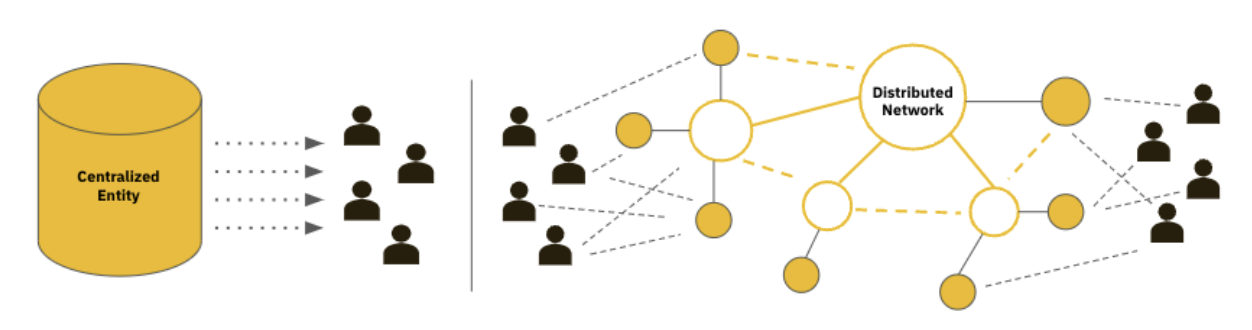
Source: Binance Research
The technical architecture behind DePIN projects adopts a layered, modular design aimed at simplifying development and encouraging innovation by bridging the real world with blockchains. This setup allows independent development or updates to parts of the system, enabling developers to contribute without needing to understand the entire stack.
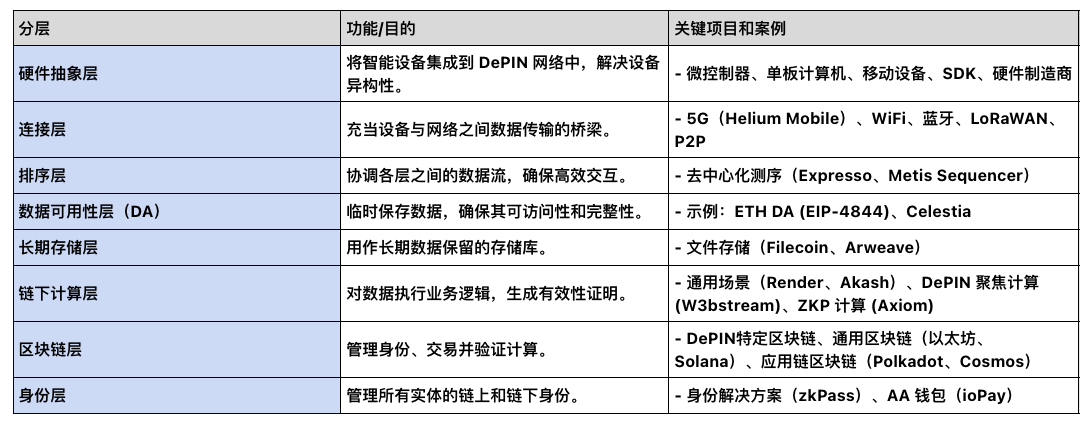
Source: Greythorn Internal
DePIN projects first define the resources they will offer—from storage and computing to bandwidth and hotspots. They use financial mechanisms to regulate behavior within the system, employing reward structures to encourage good behavior and penalize misconduct, while using tokens to incentivize rule-following participation.
Here, providers must stake collateral to guarantee service quality. Poor performance or malicious actions may result in loss of staked assets, token rewards, and network access. Meanwhile, customers in this decentralized system use the project’s native token to access services—for example, AR tokens for Arweave storage. These projects depend on suppliers who provide essential hardware or services for network functionality, such as Filecoin or Helium.
Ecosystem
Over time, DePIN projects have grown significantly, forming a diverse landscape where platforms like DePINscan identify around 160 projects. Classifications vary depending on definitions, but as illustrated by Binance, key examples include Hivemapper (decentralized sensor networks), Akash and Render (computing and digital resources), Bittensor (AI-focused), Helium (wireless networks), and Arweave and Filecoin (decentralized storage).
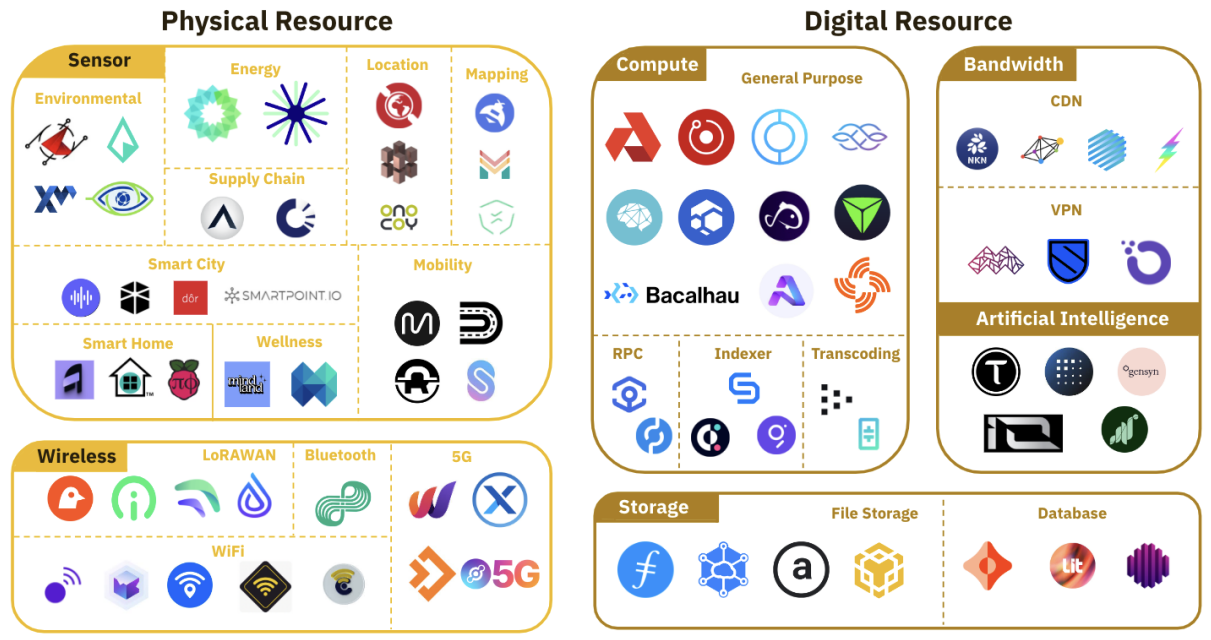
Source:Binance Research
Moreover, top DePINs are evolving into multi-application platforms over time. Bittensor exemplifies this trend, hosting an expanding number of subnets, each dedicated to specific domains.
With rapid expansion of the DePIN ecosystem, investor interest has intensified, resulting in multiple bets across the space. The top 10 DePIN projects have collectively raised about $1 billion. As the sector matures, we expect some of these projects to achieve widespread adoption.
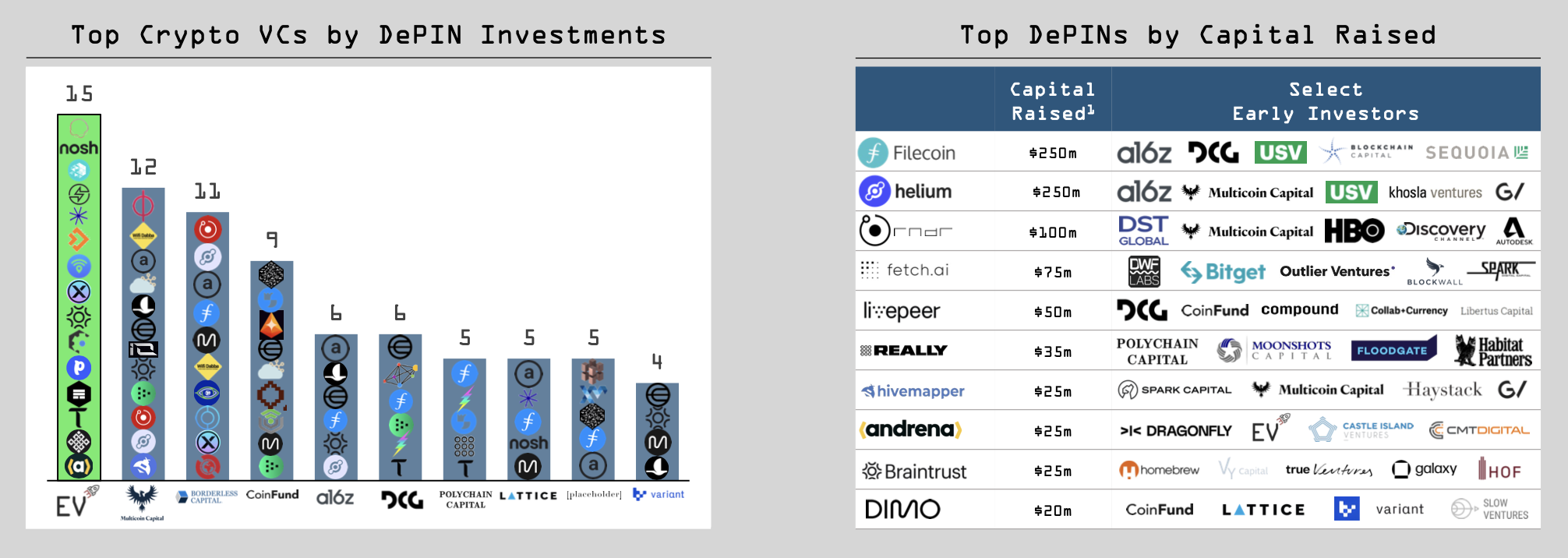
Source:Messari
In today’s research, we will examine several case studies to analyze their unique value propositions and understand how their economic models function.
Case Study 1: Exploring Decentralized Storage with Arweave
Value Proposition
Web3 is built on decentralized networks and represents the future of the internet. Yet significant challenges remain—storing large data files such as images on blockchains like Bitcoin or Ethereum is both expensive and inefficient. Blockchains are optimized for transactions, not data storage, making even simple tasks like storing Bored Ape Yacht Club images costly.
To avoid congestion and high costs, decentralized storage networks offer a solution with blockchain-like security and accessibility, but at lower cost. We observe that many NFT projects resort to centralized networks for storage, exposing them to risks of data tampering, loss, and censorship. NFT metadata storage and decentralization are crucial because an NFT's value and context are defined by its metadata. If metadata resides on centralized servers, it can be altered, potentially changing the NFT’s appearance or value.
CryptoPunks, known for early innovation, set a standard by storing all metadata and images directly on-chain, ensuring immutability and permanent access as long as Ethereum exists.
In contrast, MAYC stores NFT metadata on centralized servers and images on IPFS, leaving metadata vulnerable to changes that could affect authenticity across the collection.

dApps face similar issues, often perceived as fully decentralized. However, while some (e.g., Uniswap and Aave) offer access via both centralized and decentralized networks, others rely entirely on centralized servers. Still, their interaction with smart contracts on decentralized blockchains preserves their dApp status.
Arweave Overview
-
Arweave is an open-source platform for permanent data storage with a one-time fee. It consists of the blockweave (a blockchain-like layer for data storage) and the permaweb (a readable layer for permanent web content).
-
Supports smart contracts via SmartWeave, enabling local computation of contract states.
-
Uses its native AR token for transactions, including payments to miners for storage and bandwidth.
-
Employs a unique consensus mechanism—Proof of Access (PoA)—to promote long-term data storage and efficiency. PoA requires miners to access prior blocks, creating a graph-like structure instead of a linear chain.
-
Provides content moderation tools allowing node operators to filter unwanted data.
-
Charges a one-time fee for permanent storage, with expected cost reductions over time due to technological improvements.
-
Miners are rewarded through transaction fees, inflationary token emissions, and endowment payouts.
-
Started with 55 million AR tokens, plus 11 million from inflation, targeting a total supply of 66 million AR tokens without a burn mechanism.
Arweave’s design ensures data is stored permanently at predictable cost, leveraging decentralized technology for security and accessibility.
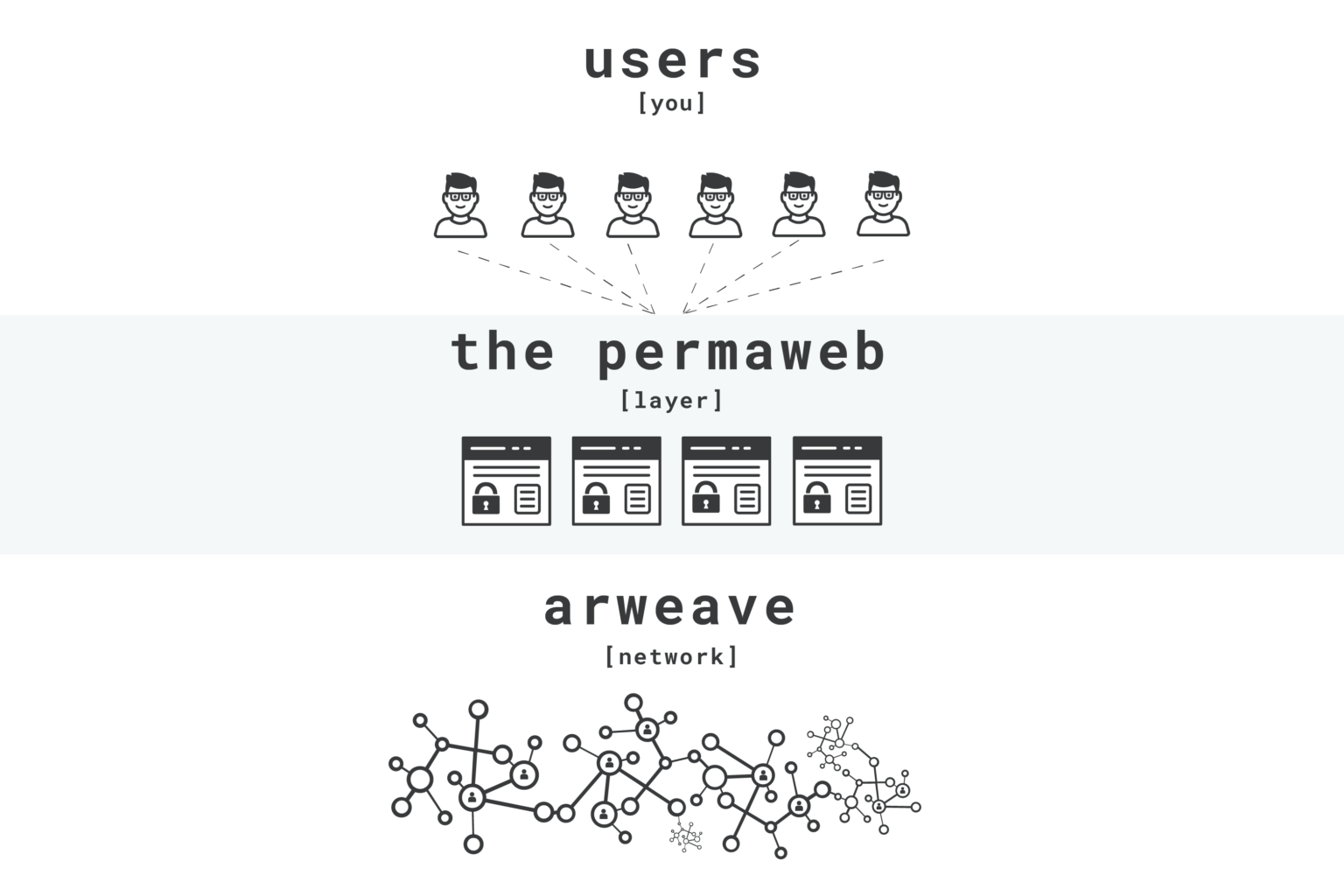
Source: Arweave
Competitors
Filecoin ($FIL), Crust ($CRU), Sia ($SC), Storj ($STORJ), and Swarm ($BZZ) represent a range of decentralized storage projects, though this list is not exhaustive. As Filecoin emerges as a major competitor, Greythorn’s research team compiled a comprehensive table comparing Arweave and Filecoin, highlighting their differences and features.
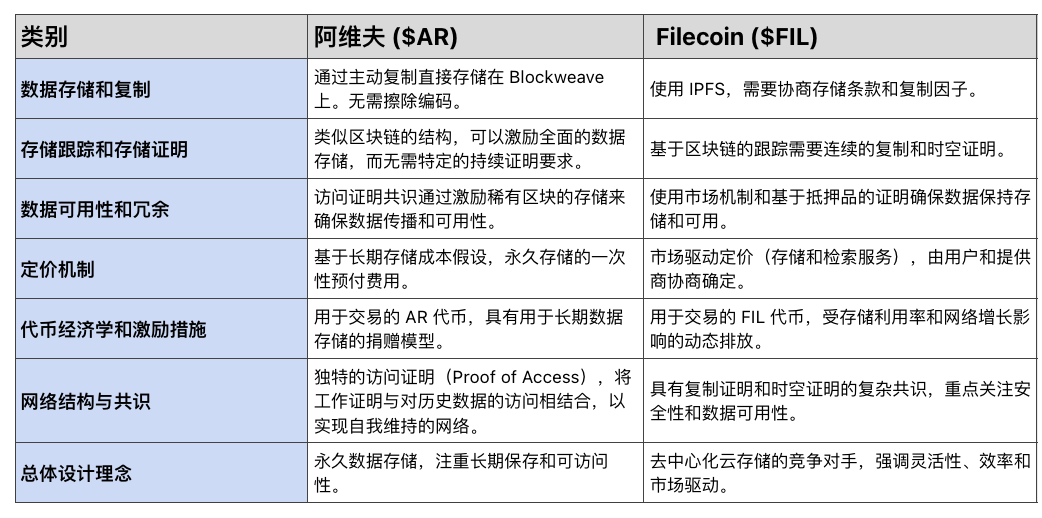
Source: Greythorn Internal
Another emerging competitor attracting attention is GenesysGo, which leverages Solana’s blockchain to innovate cloud storage by combining speed with decentralization. Unlike Filecoin and similar projects, GenesysGo introduced DAGGER, an innovative technology ensuring data integrity and fast access. Its unique positioning within the Web3 ecosystem addresses compute, AI, and data storage needs with high-throughput solutions, significantly reducing latency in data upload and retrieval—making it ideal for applications requiring rapid access. Further research and validation are needed to fully assess its capabilities and impact.
Case Study 2: Decentralized GPU Computing via Render Network
Value Proposition
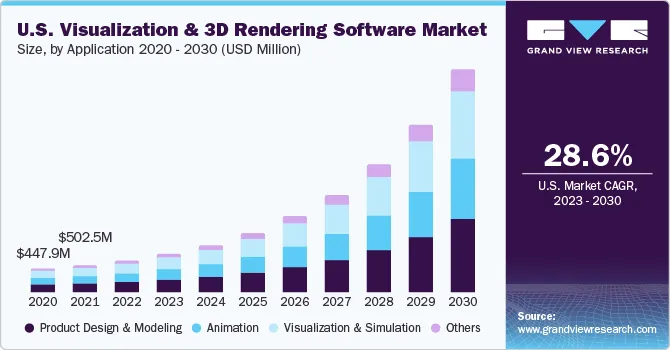
Render Network is transforming the GPU market, meeting growing demands from modern media, artificial intelligence, and cloud computing. As GPU value approaches that of top oil companies, GPU computing has clearly become critical in today’s digital world.
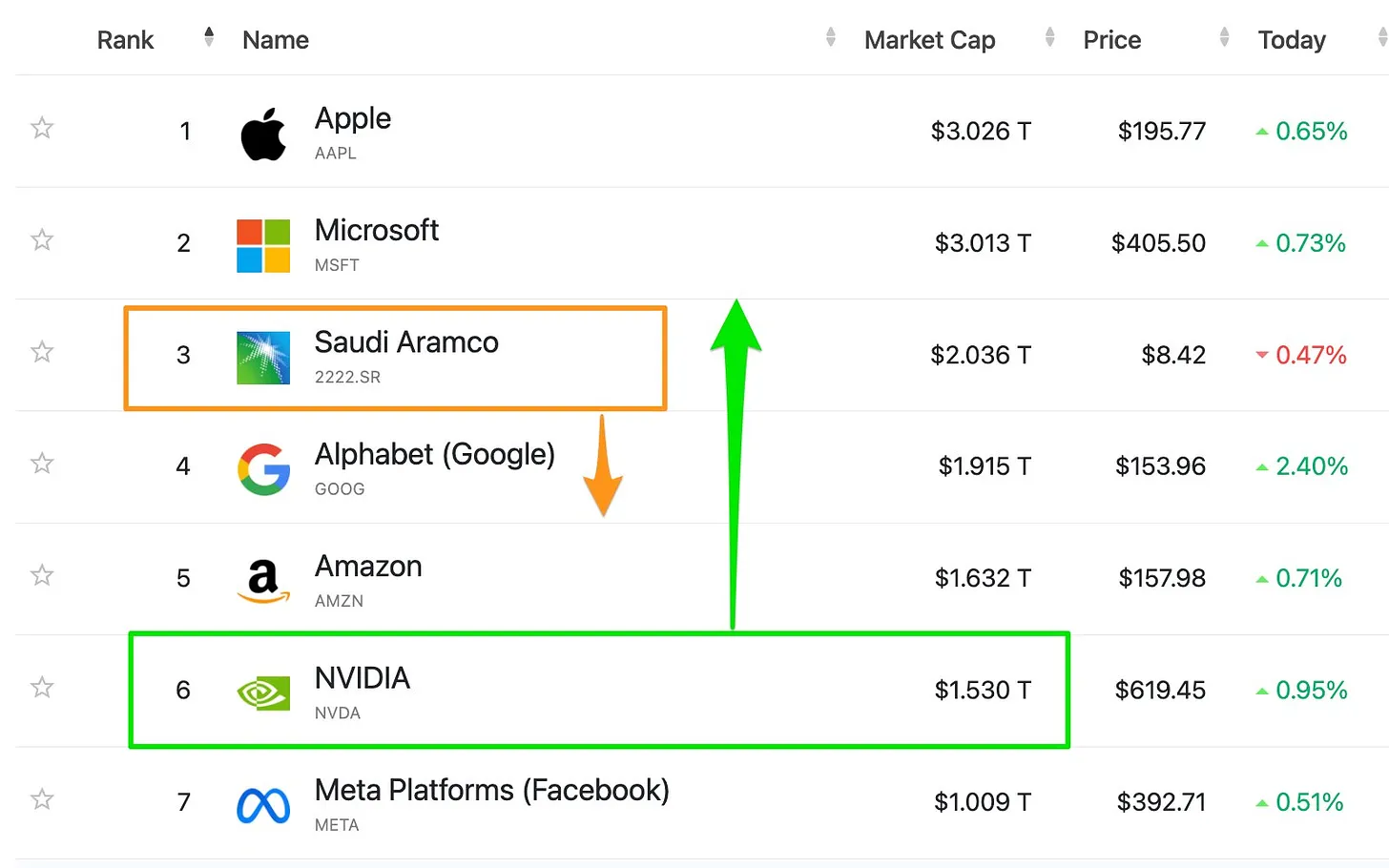
Source:Rentoshi Tokamoto
As the market expands rapidly, Render Network leads the way, offering decentralized GPU computing for uses ranging from media production to scientific research. By integrating AI, Render enhances digital creativity and efficiency, aligning closely with the evolving AI industry.
Source: Grand View Research
As a leader in decentralized computing markets, Render Network stands out with its extensive GPU network and strategic partnerships, securing a strong competitive position. It benefits from broad provider support by competing in an open marketplace, while simultaneously making cloud computing more accessible and efficient for developers—shifting centralized power away from giants like Amazon Web Services and Google Cloud. This approach not only diversifies access to computational resources but also positions Render Network as a key player in the era of digital and AI revolution.
Render Network Overview
-
Render functions as a decentralized marketplace connecting GPU owners with creators needing rendering power, facilitated securely by the RNDR token.
-
Enables GPU owners to earn income by contributing idle computing capacity, optimizing global GPU infrastructure.
-
Supports a wide array of projects including digital art, motion graphics, architectural visualization, and scientific simulations.
Two-layer structure:
-
Off-chain Rendering Network: Composed of creators, node operators, and providers, where node operators deliver necessary GPU capacity.
-
Blockchain Layer: Manages transactions using RENDER tokens and hosted smart contracts, ensuring transparency and integrity.
-
OctaneRender: Render’s flagship product, delivering advanced rendering technology with machine learning optimization and significant speed improvements.
-
Render services are vital for product design, architecture, and scientific research, becoming increasingly important with the expansion of the metaverse.
-
Collaborations with Io.net to enhance computing power and with FedML to advance decentralized machine learning demonstrate Render Network’s commitment to broadening its computational applications.
Tokenomics:
-
Utility Token: RNDR, an ERC-20-based token facilitating Render transactions, with a circulating supply of 376 million RNDR and a maximum supply of 536 million RNDR.
-
Migration to Solana: RNDR initially launched on Ethereum but transitioned to a new SPL token based on RNP-006, leveraging Solana’s low-cost, high-throughput capabilities to support broader application use cases.
-
Economic Model: Introduced Burn Mint Equilibrium (BME) for economic stability, balancing rendering costs and token supply through fiat-to-RENDER conversion and token burning mechanisms.
Competitors
Akash Network is a pioneer in decentralized cloud computing, primarily focused on AI applications. Operating as an open-source GPU network, it enables developers to deploy containerized applications by providing access to a global pool of spare compute resources. Akash’s model is often likened to “Airbnb for servers,” creating a marketplace for leasing surplus computing capacity—including CPU, GPU, memory, and storage.
As of early 2024, Akash holds substantial resources and has seen surging activity, particularly driven by AI advancements and rising demand for high-performance GPUs. Since early 2023, active leases have more than tripled.

Source:Binance Research
Akash vs. Render Network:
-
Model Difference: Unlike Akash’s decentralized cloud infrastructure model, Render operates on a Platform-as-a-Service (PaaS) model, focusing specifically on rendering. Render provides a managed platform that simplifies infrastructure management for developers.
-
Strategic Positioning: Akash targets broad computing needs with a focus on AI, whereas Render integrates AI and metaverse applications, giving it unique advantages in these areas.
In summary, Akash Network promotes a decentralized cloud computing approach, offering an alternative to traditional cloud services through its peer-to-peer marketplace. It contrasts sharply with Render’s specialized offerings, showcasing the diverse potential of decentralized networks in addressing different market demands and technological advances.
Case Study 3: Decentralized Wireless Networks via Helium
Value Proposition
Helium is a pioneering project in decentralized wireless infrastructure, focused on enhancing connectivity for IoT and mobile devices globally. Launched in 2019 with the Helium Hotspot, designed to provide wireless access for IoT devices, it marked just the beginning. Helium has since expanded into the 5G space to meet growing demand for higher bandwidth and lower-latency mobile connectivity.
Since then, the number of newly added Helium hotspots has continued to rise, especially in recent months.

Source: Binance Research
Helium’s primary value proposition stems from its decentralized wireless network approach, achieving broad coverage without the high site acquisition costs typical of traditional telecom infrastructure. By leveraging user-operated nodes, Helium democratizes wireless service provision, allowing participants to earn tokens in exchange for contributing to network expansion and efficiency. This model not only reduces operational expenses but also fosters a community-driven approach to improving wireless accessibility.
Helium Overview
Token Ecosystem:
-
HNT: Helium’s native token, essential for network operations including the creation of “Data Credits” for data transactions. Hotspot hosts can exchange HNT for network-specific tokens such as IOT or MOBILE.
-
IOT: Protocol token for the Helium IoT network, mined by LoRaWAN hotspots through data transmission and coverage proof.
-
MOBILE: Protocol token for the Helium 5G network, rewarding contributors who provide 5G wireless coverage and validate network operations.
Network Participants:
-
Devices: Send and receive data from the internet using WHIP-compatible hardware, with data recorded on the blockchain.
-
Miners: Provide network coverage via hotspots, participate in Proof of Coverage, and earn tokens based on contribution and service quality.
-
Routers: Purchase encrypted data from miners and ensure proper delivery, acting as endpoints for data decryption.
Key Technologies and Protocols:
-
Proof of Coverage (PoC): Economically verifies miners’ wireless network coverage.
-
Consensus Protocol: Combines asynchronous Byzantine Fault Tolerance with Proof of Coverage for network governance.
-
WHIP: An open-source, low-power wide-area networking protocol.
-
Proof-of-Location: Enables devices to verify location using network intelligence without satellite hardware.
Migration to Solana:
-
Last year, Helium migrated to Solana to leverage its scalability, low transaction costs, and high-performance features, enhancing network resilience and supporting more complex algorithms.
Tokenomics:
-
Halving cycle every two years, with a maximum supply cap of 223 million HNT; approximately 160.88 million tokens (72.14%) are currently in circulation.
-
Token Utilities: HNT is used for network participation rewards, data transmission, creating Data Credits (DC), and staking for network security.
Competitors
Although not blockchain-based, The Things Network (TTN) has emerged as a notable competitor to Helium, especially in densely populated urban environments. Launched in 2015, TTN distinguishes itself through open-source software, sharing conceptual similarities with Helium’s approach.
Unlike Helium’s model—which includes hardware provision—TTN focuses on delivering software solutions and comprehensive documentation to help individuals build their own LoRaWAN networks. The driving motivation behind TTN adoption is not economic gain, but rather the pursuit of practical solutions beneficial to users or their clients.
Conclusion
As we conclude our exploration of DePIN, we find a sector full of promise yet facing significant challenges. DePIN’s role in providing “last-mile connectivity” through shared economics, augmenting traditional infrastructure, signals a pivotal shift in digital infrastructure development. Efforts to integrate DePIN with Web2 interfaces hold great potential to improve accessibility, promoting broader adoption by making blockchain technology easier to use.
The evolution of DePIN token economies, especially when linked with the DeFi ecosystem, points to an exciting future where blockchain utility extends beyond simple transactions. However, challenges such as token price volatility, profit-driven user engagement, and weak consensus remain barriers to widespread adoption. Addressing these issues will require robust economic models and strong community engagement.
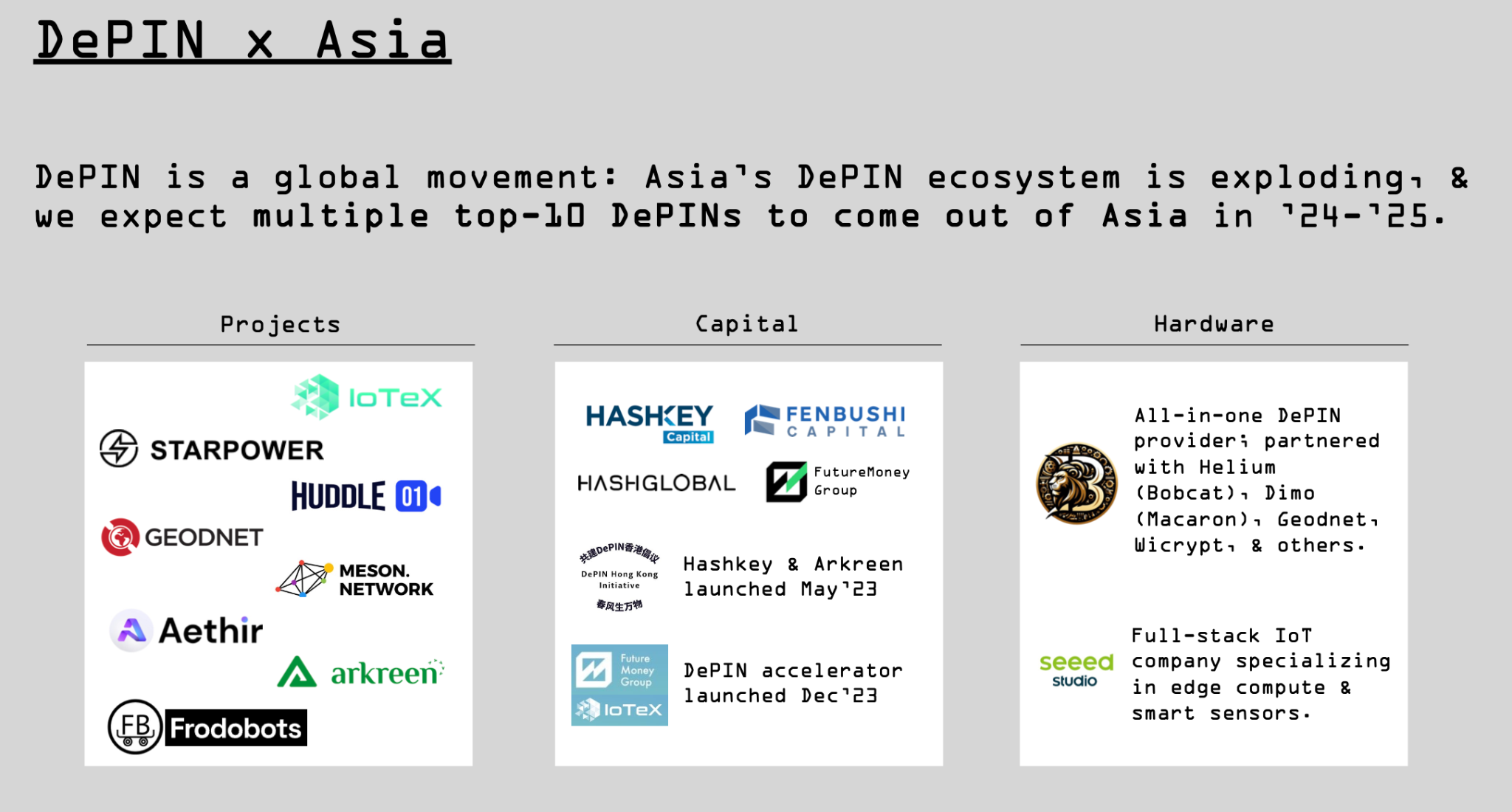
As the DePIN industry matures, significant growth is anticipated, particularly in Asia. Messari indicates that Asia is expected to be a primary catalyst for this growth, with several top-tier DePIN projects projected to emerge between 2024 and 2025. The success of DePIN initiatives will depend on their ability to deliver tangible benefits and navigate the complexities of the digital infrastructure landscape.
Source:Messari
Today’s article only scratches the surface of emerging projects in the DePIN space. With new opportunities arising, further exploration is encouraged. For those looking to familiarize themselves with the field, DePINscan may be an excellent starting point.
If you found this article interesting, Greythorn invites you to visit ourwebsite for more information. You can also explore our previous research here.
Disclaimer
This presentation was prepared by Greythorn Asset Management Pty Ltd (ABN 96 621 995 659) (Greythorn). The information contained herein should be regarded solely as general information and not as investment advice or financial advice. It is not an advertisement, nor a solicitation or offer to buy or sell any financial instrument or engage in any particular trading strategy. In preparing this document, Greythorn did not consider the investment objectives, financial situation, or particular needs of any recipient of this document. Before making any investment decision, recipients of this presentation should consider their personal circumstances and seek professional advice from their accountants, lawyers, or other advisors. This presentation contains statements, opinions, forecasts, projections, and other materials (forward-looking statements) based on various assumptions. Greythorn has no obligation to update this information. These assumptions may prove to be correct or incorrect. Neither Greythorn, its officers, employees, agents, advisors, nor any other person named in this presentation makes any representation or warranty regarding the accuracy or likelihood of realization of any forward-looking statement or the assumptions upon which they are based. Greythorn and its officers, employees, agents, and advisors make no guarantees, representations, or warranties as to the accuracy, completeness, or reliability of the information contained in this presentation. To the extent permitted by law, Greythorn and its officers, employees, agents, and advisors accept no liability for any loss, claim, damage, cost, or expense arising from or related to the information contained in this presentation. This presentation is the property of Greythorn. Receipt of this presentation constitutes agreement by the recipient to keep its contents confidential and not to copy, provide, disseminate, or disclose any information relating to its content without prior written consent.
Join TechFlow official community to stay tuned
Telegram:https://t.me/TechFlowDaily
X (Twitter):https://x.com/TechFlowPost
X (Twitter) EN:https://x.com/BlockFlow_News
 Greythorn






