








Analyzing MXC: How to Become the Largest DePIN Infrastructure in the Ethereum Ecosystem?
TechFlow Selected TechFlow Selected
Analyzing MXC: How to Become the Largest DePIN Infrastructure in the Ethereum Ecosystem?
Future MXC is committed to becoming the largest DePIN infrastructure within the Ethereum ecosystem, with its token economy and utility creating greater value for users, developers, and investors.
 Navigating Web3 tides with focused insights
Official Website: https://www.mxc.org/
Twitter: https://twitter.com/MXCfoundation
Recently, MXC (Meta X Connect) announced a strategic investment from JDI Ventures, the DePIN-focused fund under renowned blockchain hardware manufacturer JDI Global. The funding round reached a substantial $10 million, and the announcement was met with strong market performance.
Behind the MXC team is not only financial backing but also support in hardware R&D and market influence from JDI Global. Established in Berlin, Germany in 2017, the MXC team has built deep technical expertise in the decentralized Internet of Things (IoT) space.
The MXC team has now launched the first Layer3 zkEVM solution on Arbitrum, leveraging LPWAN technology and MXProtocol to overcome existing limitations in short-range communication and high power consumption—enabling large-scale data sharing while ensuring end-to-end encryption and privacy. Developed by former core members of zkSync, this solution aims to integrate Ethereum's diverse dApp ecosystem and serve as DePIN infrastructure within the Ethereum ecosystem.
With the DePIN narrative gaining momentum alongside the growth of the Ethereum ecosystem, can MXC successfully ride this wave and capture the dual benefits of both trends?
We believe MXC holds significant advantages across market positioning, technical architecture, and ecosystem development.
1. Market Positioning: DePIN + Layer3
DePIN is undoubtedly the most compelling narrative driving capital inflow in this bull market. However, various technical approaches exist for its implementation. From lightweight dApps to full-fledged dedicated blockchains, projects must build closed-loop business models from scratch—requiring exceptional capabilities and extensive resources, resulting in fierce competition.
MXC’s positioning sits between these extremes: building a Layer3 network on Ethereum specifically tailored for DePIN projects. This allows DePIN applications to achieve scalability without launching their own public chains, while directly benefiting from Ethereum’s thriving ecosystem.
While Layer3, like Layer2, includes an application layer in its technical stack, it offers several advantages over Layer2 that are particularly beneficial for DePIN. These include superior cross-chain interoperability—an essential feature for IoT integration, as IoT devices and applications often need to exchange data across multiple platforms and networks.
Additionally, Layer3 supports higher transaction throughput and further reduces network usage costs, effectively improving transaction efficiency and lowering operational expenses.
By constructing a Layer3 zkEVM on Arbitrum, MXC addresses key challenges faced when deploying blockchain solutions for IoT applications—especially in enhancing transaction throughput and reducing costs.
Industry estimates suggest that the DePIN sector could generate output worth $3.5 trillion by 2028. Over the next decade, DePIN may contribute $10 trillion to global GDP, accumulating up to $100 trillion in total value.
MXC’s solution is capable of handling the massive information flows generated by an ever-growing number of IoT devices continuously uploading data, transforming this data into real value within the Ethereum ecosystem.
2. Technical Architecture: LPWAN + Layer3 + MXProtocol
1. LPWAN Technology
With the explosive growth of IoT devices, vast amounts of data will be generated and services widely deployed—creating significant demands for data transmission and processing.
MXC employs LPWAN (Low-Power Wide-Area Network), a communication technology specifically designed for low-power devices. It provides wide geographic coverage, making it ideal for applications requiring long battery life and broad network reach—such as sensors for parking spaces, trash bins, streetlights, and other urban infrastructure—while ensuring this data remains permanently free and open to all users.
LPWAN bridges the historical gap between limited range and low power consumption in wireless communication, enabling both wide-area coverage and energy-efficient data transmission. This allows effective collection and transfer of sensor data from every corner of a city.
This data then circulates within the MXC platform, providing comprehensive operational services for governments, enterprises, and citizens, thereby advancing smart city, smart agriculture, asset tracking, and other application scenarios.
2. Layer3 zkEVM
Leveraging the innovative Arbitrum Orbit framework, MXC has built a Layer3 zkEVM on Arbitrum, offering robust technical support for large-scale IoT platforms entering the blockchain space.
Specifically, it integrates Ethereum’s rich dApp ecosystem and significantly enhances network scalability, security, and efficiency through zkEVM technology. It also strengthens user privacy protection, empowering developers to build specialized DePIN Layer3s and DePIN dApps.
Moreover, the MXC token serves as the gas token for network transactions, establishing fundamental utility and increasing the value and practicality of the MXC token.
3. MXProtocol
As mentioned earlier, the explosive growth of IoT devices will generate enormous data streams—and DePIN makes it possible to unlock real value from this data.
Using LPWAN technology, MXC generates massive volumes of IoT data and builds MXProtocol on top of its Layer3 zkEVM, enabling true monetization of device data.
MXProtocol operates on a "Proof of Participation" consensus mechanism, ensuring the sustainability and reliability of the LPWAN network. It also allows users to easily monitor miner health via the AXS App, further expanding MXProtocol’s use cases—including supporting M2 Pro miners in token mining and providing a data trading platform for various IoT devices and applications.
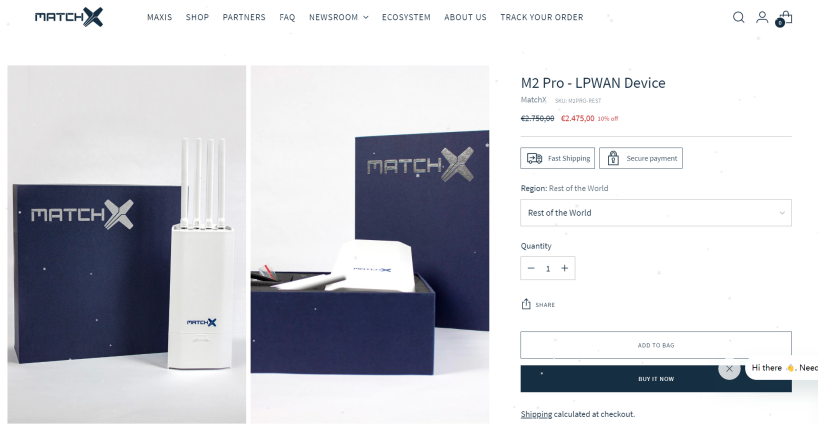
The M2 Pro miner, developed by the MXC Foundation as an LPWAN device, ultimately aims to provide everyone with access to a free, decentralized IoT network.
Equipped with a high-performance NXP Arm Cortex-A7 CPU, 256MB DDR3 RAM, 256MB NAND FLASH storage, dual SX1303 chipset LoRa radio supporting multi-regional frequencies, and various internal sensors, the M2 Pro miner delivers powerful performance.
Furthermore, the M2 Pro mining model has fully transitioned to an on-chain mining protocol, ensuring transparency and fairness. Users mine based on the fill level of their fuel tank (xMXC), with estimated daily earnings between $10 and $12. Through its Proof-of-Participation (PoP) model and on-chain mining protocol, MXC provides a decentralized and efficient mining platform for IoT devices and data communications.
In addition, MXC offers a fully customizable Web3 wallet via the AXS App, allowing users to manage data miners, monitor performance, mine, stake, and trade multiple cryptocurrencies and data tokens—even functional NFTs (F-NFTs).
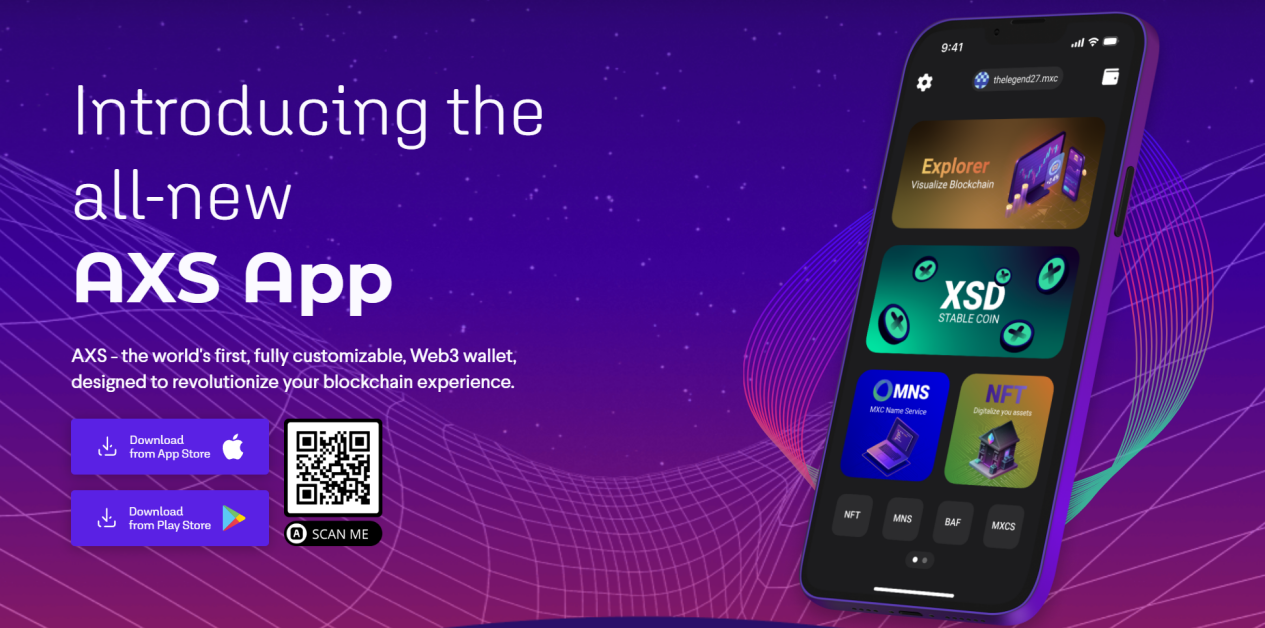
The AXS App also enables bridging MXC tokens from the Ethereum mainnet to the MXC zkEVM mainnet, delivering the fastest Layer1-to-Layer3 bridge experience in the Web3 ecosystem.
Summary
The LPWAN technology adopted by MXC supports the generation and transmission of massive data volumes.
MXC’s Layer3 zkEVM built on Arbitrum provides strong technical support for large-scale IoT applications and seamlessly integrates with Ethereum’s rich dApp ecosystem.
MXC has built MXProtocol on its Layer3 zkEVM, enabling true monetization of device data.
If the DePIN market remains a blue ocean, then MXC—with its mature technical architecture—has the potential to become the biggest dark horse in this growing market.
3. Ecosystem Development: Community + Network + Partnerships
1. Community
Through building a decentralized physical infrastructure network (DePIN), MXC enables effective connection and communication among devices worldwide. Community value is reflected in several aspects:
Market Potential: The IoT market is valued at over $1 trillion, indicating immense growth potential. By participating in this market, MXC offers community members opportunities to engage in global-scale businesses.
Global Coverage: The MXC network spans more than 170 countries. This extensive geographical distribution provides cross-border data connectivity services, fostering international collaboration and business expansion.
Device Connectivity: Over 63,000 connected devices demonstrate MXC’s practicality and widespread adoption. Increasing device numbers reflect actual network and community growth.
Data Accumulation: More than 60TB of accumulated data proves active network usage and community contributions to data generation and sharing. Data value grows as analytics and applications expand.
2. Network
MXC’s network growth can be measured by device count and data accumulation. The impacts of network growth include:
Technological Advancement: As technology evolves and new features emerge, the network can support more devices and complex applications.
User Base Expansion: Growing device numbers indicate increasing user adoption. A larger user base directly enhances network value and attractiveness.
Data Economy: Accumulated and utilized data drives the development of the data economy, creating opportunities for community members to innovate and commercialize data products and services.
Network Effects: Expanded coverage and increased connected devices reinforce each other, creating positive network effects. This makes the network increasingly attractive to new users and strengthens platform competitiveness.

At the time of writing, MXC zkEVM has accumulated 332,718 blocks, created 32,462 wallets, and burned a total of 33,198,498 MXC tokens... These metrics illustrate the healthy development of the MXC community and network.
As technology continues to advance and markets expand further, MXC has the potential to enhance community value and accelerate network growth. Notably, MXC’s economic model is deflationary—the more DePIN devices connected, the faster the deflation. The MXC network is currently in an early stage of rapid expansion.
3. Strategic Partnerships
MXC has established strategic partnerships with multiple industry leaders and key platforms across cryptocurrency exchanges, capital investment, technology development, and project incubation. The diversity of these partnerships reflects MXC’s global expansion strategy and influence within the crypto economy.
Key strategic partners of MXC include:

Cryptocurrency Exchanges: Including Coinbase, Binance.US, KuCoin, crypto.com, Huobi, Kraken, Gate.io, Bithumb, Uniswap, and Bitpanda. These exchanges provide liquidity for MXC tokens and ensure global accessibility and tradability.

Media Platforms: Such as Forbes, Cointelegraph, Yahoo Finance, The Daily Hodl, CoinMarketCap, CoinGecko, and LunarCrush. Coverage from these platforms increases MXC’s visibility and helps communicate project updates and milestones to the public.

Investment and Incubation Firms: Including Fenbushi Capital and DWF Labs, which provide capital and incubation support, helping early-stage MXC projects grow and develop.
Technology and IoT Partners: Including Digital Matter, Sensative, MOKO SMART, careband, ENLINK SUPER NODE, and IDENTYTEC. These companies collaborate with MXC on IoT technology and product development, jointly driving innovation in the IoT field.
These partners not only provide platforms for market expansion but also contribute expertise, technical support, and industry connections, collectively advancing the construction and growth of the MXC ecosystem. Through these strategic alliances, MXC can extend its technological boundaries, strengthen brand influence, and enhance competitiveness in the global crypto and IoT markets.
4. Conclusion
The above sections have outlined MXC’s capabilities in building data networks, offering more efficient connectivity and communication for devices, while introducing new business models and revenue streams for IoT and blockchain technologies.
After five years of深耕, MXC now collaborates with nearly 200 countries globally, covering 20% of the world’s landmass. Its coverage focuses primarily on regions with relatively low population density but high significance in technological advancement and market potential—such as Europe and the East and West coasts of the United States. In effect, MXC has established a powerful global Web3 network, laying the foundational infrastructure for future data-driven development.
Currently, MXC has formed strategic partnerships with numerous industry leaders and key platforms across cryptocurrency trading, capital investment, technology development, and project incubation—demonstrating its global expansion strategy and influence within the crypto economy.
Going forward, MXC aims to become the largest DePIN infrastructure on the Ethereum ecosystem, with its tokenomics and utility poised to create greater value for users, developers, and investors alike.
Notably, the MXC Foundation has introduced an innovative incubation model called ISO (Initial Sensor Offering) for Web3 IoT projects. This model provides infrastructure, services, and tools to create scarcity in data connectivity, attracting miners and stakeholders to drive ecosystem growth.
MXC’s deflationary token economic model ensures that as the number of connected DePIN devices grows, the rate of token deflation accelerates. We believe MXC will continue advancing its technology, expanding network coverage, and forming additional partnerships—further strengthening its market influence and economic value.
Join TechFlow official community to stay tuned
Telegram:https://t.me/TechFlowDaily
X (Twitter):https://x.com/TechFlowPost
X (Twitter) EN:https://x.com/BlockFlow_News


