








Interview with the "Father of Blockchain": Blockchain Was Created for NFTs, Not Cryptocurrencies
TechFlow Selected TechFlow Selected
Interview with the "Father of Blockchain": Blockchain Was Created for NFTs, Not Cryptocurrencies
Over thirty years ago, when the earliest blockchain was born, its inventor thought of something similar to NFTs.
 Navigating Web3 tides with focused insights
Interview: Jason Bailey
Guests: Scott Stornetta and Stuart Haber
Translation: Luffy, Foresight News
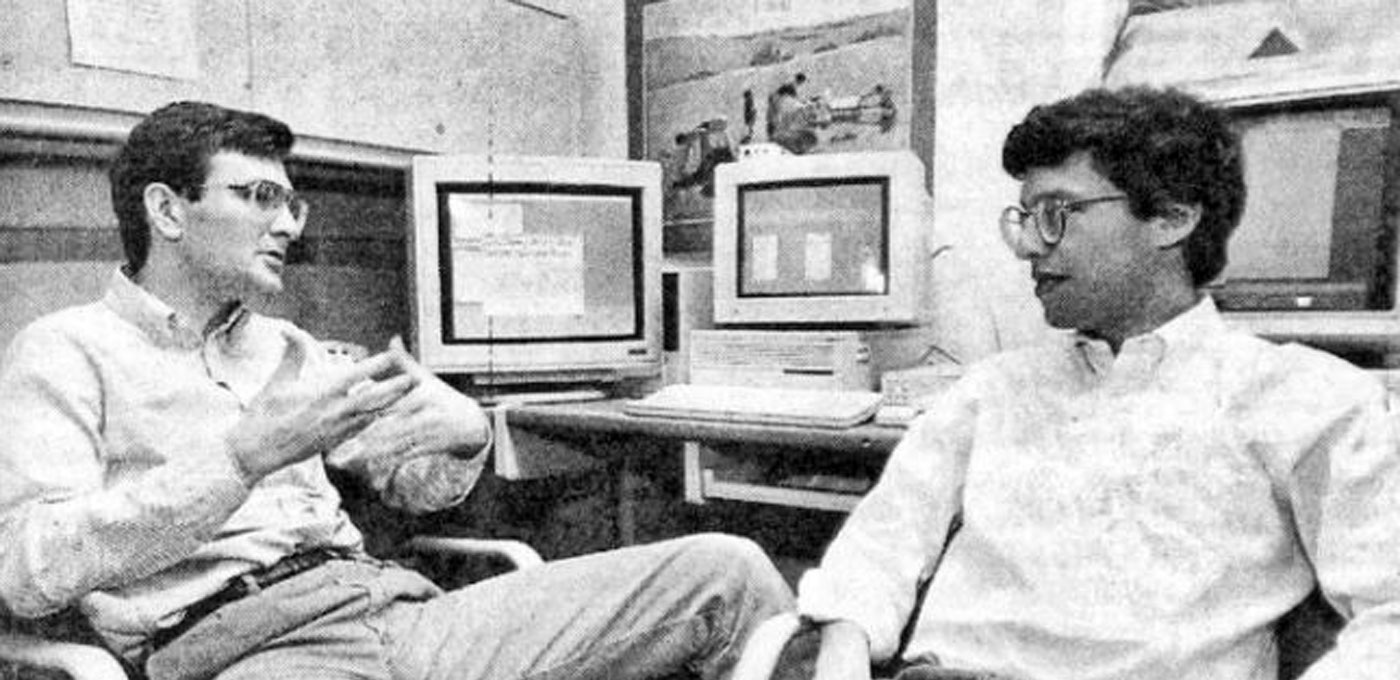
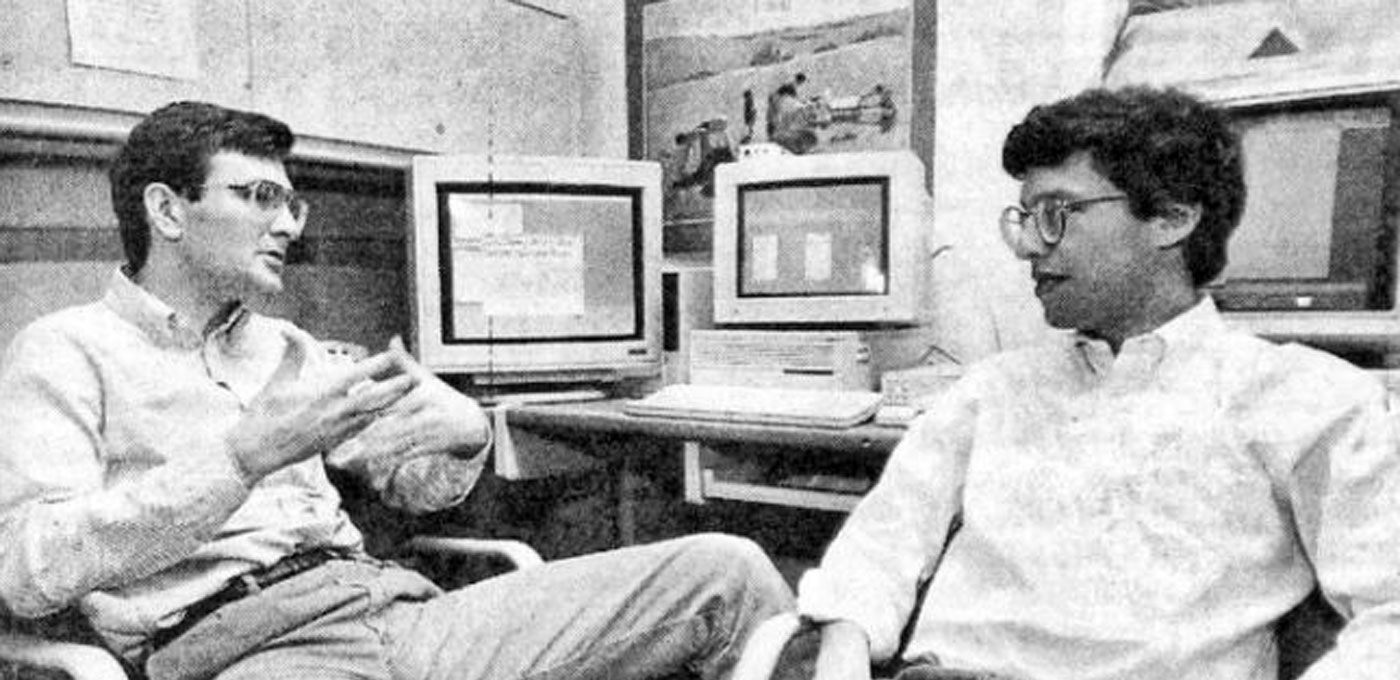
When Scott Stornetta and Stuart Haber invented the blockchain, they were thinking of something more like NFTs than digital currency. Jason Bailey (founder of Artnome.com, a blog on art and technology) had an in-depth conversation with Scott Stornetta and Stuart Haber about their original vision for blockchain over thirty years ago and how it has evolved since.
Translator’s note: Scott Stornetta and Stuart Haber implemented the blockchain architecture in code in 1991, and it went into commercial use in January 1995 and continues to run today.
Jason Bailey: I often introduce you two as my good friends—the people who "invented blockchain." Then I usually see looks of disbelief: "No, Satoshi Nakamoto invented blockchain," even from people who've studied Bitcoin and cryptocurrency for years. Could you help people better understand your contributions and how they became the foundation upon which Satoshi built the Bitcoin network?
Stuart Haber: Well, let me tell the story by looking back about thirty years—what I consider the beginning of blockchain from my perspective. It all started in 1989, when Scott Stornetta and I were young scientists at Bellcore (Bell Communications Research).
I was a cryptographer, and Scott had just joined Bellcore. He wanted to find a solution to ensure the integrity of digital records could be proven, guaranteed, and maintained through certain procedures or algorithmic means. Scott strongly suspected cryptography would play a role. So together with Dave Bayer, we wrote several papers and created an architecture to solve this problem.
Scott Stornetta: Stuart and I developed a unique collaborative style—a kind of yin-yang dynamic fueled by constant intellectual exchange. I tend to obsess deeply over such problems. The challenge was that I didn’t know the underlying math or cryptography needed to solve them. I had a problem but no idea how to find the solution. This knowledge gap has always been the driving force behind our productive partnership.
SH: For those familiar with these concepts, digital signatures and cryptographic hash functions were already proposed, implemented, and well understood by the fall of 1989. These tools offered a relatively simple solution involving a trusted entity—whether a person, software, or hardware—to ensure the integrity of records within a specific domain. For many, this was considered satisfactory. But Scott and I weren't satisfied, because the solution we sought required trusting no party at all—or as few individuals, entities, and mathematical assumptions as possible.
We eventually developed a solution, which can be explained through a metaphor: the "digital fingerprint." In fact, every blockchain project worldwide relies on cryptographic hash functions—mathematical algorithms with input and output processes that efficiently generate a digital fingerprint of a file. When you apply this process multiple times to the same file, you always get the same fingerprint output. It's an efficient process, even for large files—especially when we forget to turn it off and let it run indefinitely.
Now, another crucial property of cryptographic hash functions is that when you take two different files and compute their fingerprints, you get two distinct results. In fact, even a tiny change to a file—such as switching a 0 to a 1—will cause the final fingerprints of the two files to differ drastically and unpredictably. For example, in financial records, minor changes could profoundly alter the meaning of a document. Changing the leading digit from 0 to 1 might benefit one party over another. Thus, the fingerprint analogy fits perfectly: two different fingers have two different fingerprints.
Another important property is that my fingerprint doesn't reveal detailed information about me. You can't determine my height, hair color, or even whether I have more than one finger just by looking at my fingerprint. Similarly, the fingerprint in a cryptographic hash function is just a string—a sequence of numbers and letters—that reveals nothing about the original file. However, if you have both the fingerprint and a file claimed to match it, you can easily verify its authenticity by "re-fingerprinting" it. This capability of digital fingerprinting is known as a cryptographic hash function, and these concepts were already established even back then.
JB: Let me summarize to make sure I understand correctly. Hashes or fingerprints are a well-understood concept. Your team’s goal was to prove record integrity and prevent tampering. Are these hashes or fingerprints somewhat analogous to blocks in a blockchain? Did you find a way to link these fingerprints into a chain?
SS: You're absolutely right. As Stuart mentioned, we realized hashes could not only represent files more concisely and efficiently. The key innovation was combining them (and structuring each block as a Merkle tree), then linking these blocks together—all using the same hash function. With Dave Bayer’s involvement, we were able to link groups of records in such a way that each participant and their documents became holders of proof, acting as early nodes. This meant all records were uniquely connected and widely distributed, containing many fundamental elements later used by Satoshi to create Bitcoin. We don’t take anything away from Satoshi or his creation, but we view Bitcoin as an application built on top of the earlier blockchain. To his credit, Satoshi explicitly cited all publications related to our foundational work. Our research is referenced three times in the Bitcoin whitepaper, which cites eight external sources in total—so we account for 3 out of 8.
JB: So for all crypto enthusiasts who regard Satoshi as the founder of blockchain, how can we help bridge the gap between your work in the late '80s and early '90s and today’s Bitcoin?
SH: When you mention your contribution to blockchain to a general audience, they typically immediately associate it with Bitcoin or cryptocurrencies more broadly.
Scott and I weren’t trying to invent electronic money. In fact, the cryptography community had already been working on pure digital currencies since the 1980s. Our focus was broader: we cared about the integrity of all records—including digital ones.
SS: That includes financial records, but our scope extended to every significant record ever created. We believed all of them could be registered on a blockchain.
SH: Since it’s impossible to predict which records will become important years later, why not include every record ever created?
JB: Essentially, you align more closely with the concept of NFTs rather than cryptocurrency, correct? When we think of NFTs as tools to verify artworks, contracts, patents, and various applications, it seems consistent with your original goals.
SH: Exactly. When discussing algorithmic approaches to digital records, we used the term “provenance.” We focused on various types of records. However, when Satoshi aimed to build a digital currency system requiring a method to guarantee the integrity of financial transactions within the system, he directly adopted our solution. The data structure of Bitcoin transactions precisely mirrors our timestamping system, which began implementation in experimental code in October 1991 and entered commercial use in January 1995.
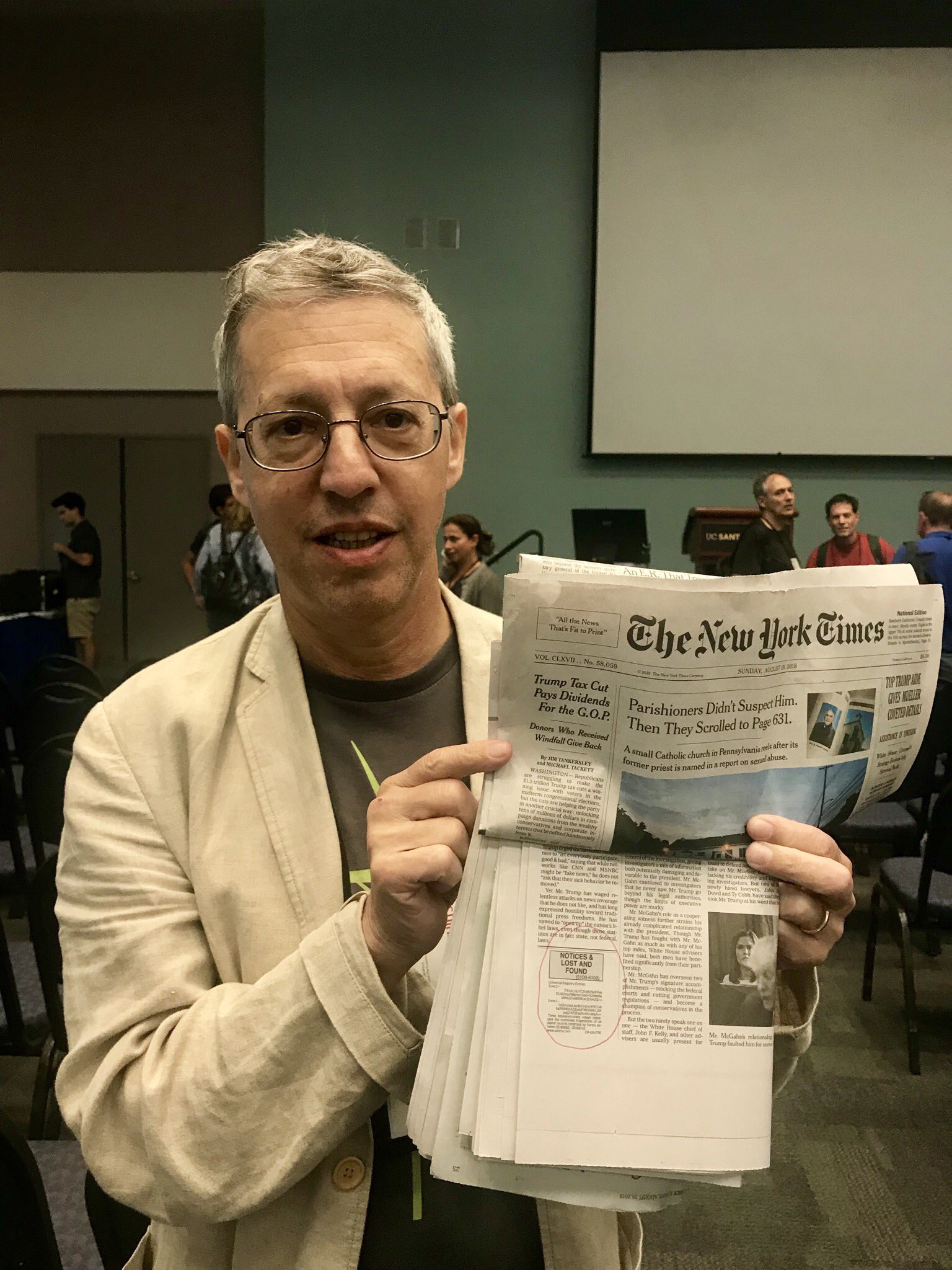
The longest-running blockchain started in 1995 and is still operating today; the red circles highlight timestamps
SS: I’d like to reiterate Stuart’s point. Fundamentally, our vision for blockchain differed from Satoshi’s. Satoshi introduced an innovation in the monetary domain, but he needed a robust record-keeping system. He seamlessly integrated this layer and built Bitcoin on top of it.
I want to emphasize that we don’t downplay Satoshi’s contribution. On the contrary, he built Bitcoin on a widely distributed blockchain composed of linked Merkle trees, and he openly acknowledged that this concept had already been invented. Then, he used the same cryptographic hash functions—or digital fingerprints—to directly create the mining mechanism.
An interesting aspect is the recent popularity of ordinal inscriptions in Bitcoin. If people dig into the footnotes of the Bitcoin whitepaper, they’ll find that in our third joint paper, we hinted at the idea of using blockchain inscriptions or ordinals to create unique, non-replaceable records. This is essentially what NFTs are today.
Your observation about cryptocurrency versus NFTs hits the nail on the head. In a way, we see NFTs as a more important long-term realization of our original goal.
It suggests that everything important—not limited to cartoonish primate poses—may eventually need to be uniquely registered on a blockchain as NFTs. Maybe we should dive deeper into our latest NFT series?
JB: I’d love to hear more, especially now that we’ve clarified your contributions and their continuity with Satoshi’s subsequent creation of Bitcoin. It’s fascinating that the blockchain you invented was geared more toward NFTs than cryptocurrency—that might surprise some people. How did you decide to collaborate with artists and use illustrated journalism as the art for your NFTs?
SS: One of the early main challenges was achieving broad consensus, made harder by the absence of the World Wide Web or similar technologies. Our solution was to periodically create snapshots (fingerprints) of the blockchain and widely distribute them to prevent manipulation.
To achieve this, we chose to publish these snapshots weekly in the national edition of *The New York Times*. Copies of this edition are preserved in libraries and archives around the world. Imagine the immense effort required to alter a single element in the chain—it would be like infiltrating every library globally and changing their copy of *The New York Times*.
This aligns with our approach to the NFT collection. We released the initial set of 12 NFTs, each representing one of our 12 consecutive weeks of publication in *The New York Times*. We collaborated with an artist to curate weekly events, selecting whimsical, historical, or noteworthy topics and illustrating them.
Moreover, our plan includes releasing follow-up collections across various chains and protocols to promote greater collaboration and unity within the blockchain community. We’ve already received inquiries from different blockchain networks and artists interested in preserving a set of 12 consecutive blocks. Our aim isn’t to centralize everything on widely used blockchains like Ethereum. Instead, our goal is to demonstrate that each community can own a piece of blockchain history.
Our objective is to gradually encourage greater interoperability and collaboration. We aim to provide opportunities for a broad range of artists, including graphic artists, to interpret the 12 value-related histories published in *The New York Times* during those weeks. This initiative is intended to invite creative artists and blockchain founders to join us in commemorating blockchain history—not merely to promote NFT sales.
JB: Fascinating! I think some people might be confused when they hear you used *The New York Times* as part of a blockchain, since they usually associate blockchain with computer technology, not traditional media like newspaper ads. Yet the newspaper served as a means to ensure wide distribution in a tamper-resistant way—no individual could maliciously alter it without infiltrating every library worldwide...
SH: You could deface our ad copy in *The New York Times* by scribbling on it or something. But the key point is, if something goes wrong, you can retrieve your own copy of the record and verify it against others’. This program began as experimental code at Bellcore but eventually evolved into a company called Surety, whose primary mission was protecting clients’ digital records.
JB: Did your personalities or political inclinations influence the invention of blockchain?
SS: Yes. We didn’t want any unpleasant central authority deciding what was true or false. We once humorously claimed our system was inherently distributed—even if the Mafia were overseeing it, it would still be trustworthy. But we quickly realized this description wasn’t appropriate, given we were based in New Jersey, so we stopped using it.
Personally, I deeply appreciate the decentralized nature inherent in blockchain. While I acknowledge the presence of centralized power, especially in Bitcoin, the fundamental premise remains: every participant collectively bears the responsibility of trust, making files credible to everyone. I find this concept profoundly important and believe it can serve as a foundation for many institutions with a similar spirit.
SH: In what is now called blockchain design, our philosophy was to ensure record integrity without relying on a central authority.
SH: It's worth noting that some blockchain maximalists claim blockchain—especially their own blockchain—will overthrow all forms of government and central entities. Personally, I find such claims overly simplistic and unrealistic. Regarding blockchain’s transformative potential, I may be more pessimistic than Scott. Under economic forces, seemingly decentralized systems—including Bitcoin and Ethereum—become centralized.
SS: Indeed, Stuart and I have discussed this topic many times. Whether we agree or not isn’t important. What matters is recognizing that blockchain technology represents a turning point—a form of creative destruction as described by Schumpeter. It introduces a healthy tension between the desire for decentralization in the name of credibility and the need for efficiency through centralization. This tension is preferable to pure decentralization because it enables greater balance and diversity.
JB: In the cryptocurrency community, people often display intense extremism toward specific blockchains, almost to a religious degree. Yet clearly you support a multi-chain future. Can you share more of your thoughts on this?
SH: Certainly. One aspect we haven’t discussed yet is that we chose to launch our original series of a dozen NFTs on the Kadena blockchain platform, whose design we admire for various reasons. However, as we expand our NFT offerings, we not only encourage but require interoperability for any other NFT products. Our goal is to promote interoperability between different blockchain networks, just as we practice it ourselves.
SS: I believe various blockchain networks can coexist in the future, differentiated by factors such as on-chain/off-chain functionality. This functional diversity is a positive indicator of a thriving ecosystem. Stuart and I, in our own way, aim to promote interoperability between these blockchain networks and foster a sense of community. So if you represent a blockchain network that wants to voice an opinion and collaborate, please reach out to us. Perhaps the next NFT collection—featuring 12 weeks of blockchain history—can be published on your blockchain platform.
Join TechFlow official community to stay tuned
Telegram:https://t.me/TechFlowDaily
X (Twitter):https://x.com/TechFlowPost
X (Twitter) EN:https://x.com/BlockFlow_News
 @RtClick_Save











