Parallel Open Beta Is Approaching: A Beginner's Guide for New Players
TechFlow Selected TechFlow Selected
Parallel Open Beta Is Approaching: A Beginner's Guide for New Players
This article will cover the game's main fundamentals, preparing you for duels and earning $PRIME.
 Navigating Web3 tides with focused insights
By WILLIAM M. PEASTER
Translation: TechFlow
The Parallel trading card game (TCG), also known as Parallel, is an early standout in the crypto gaming space, where players command unique factions in strategic sci-fi battles.
Thus, the game is set to launch its public beta this Thursday, February 29.
That means if you haven't played Parallel before, now is the perfect time to dive into the basics and start your first matches.
This article covers the core fundamentals of the game, preparing you for duels and earning $PRIME—recently hitting a new high above $15!
Getting Started with Parallel
Game Basics
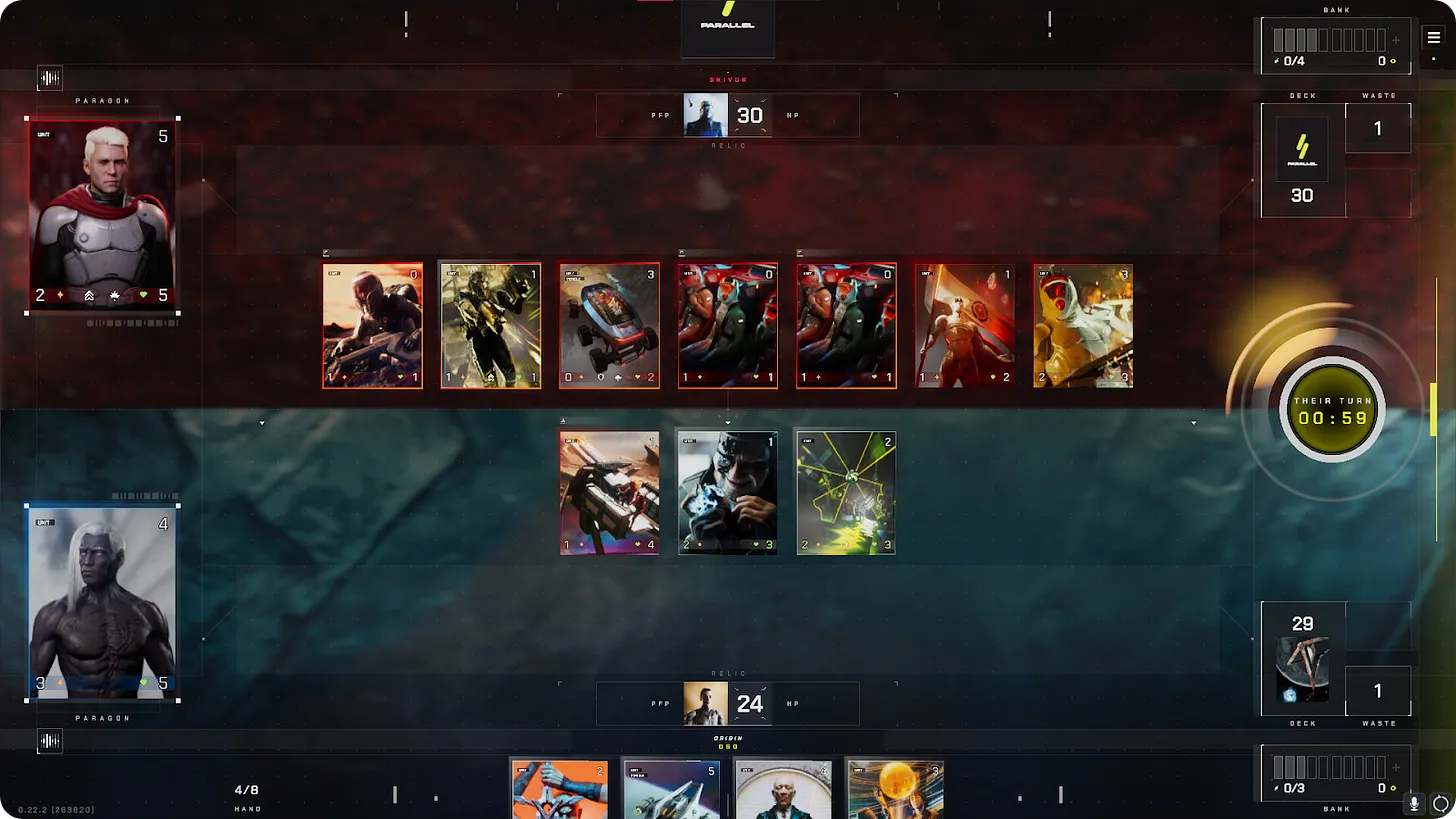
Parallel is a strategic trading card game where players race to reduce their opponent’s life total from 30 down to zero.
Games are played with a 40-card deck, starting hands consist of five cards, though through drawing, the maximum hand size at any moment can reach eight. Before a match begins, players have the option to take a “mulligan,” shuffling any number of cards from their initial hand back into the deck and drawing an equal number of replacement cards.
Different Game Modes
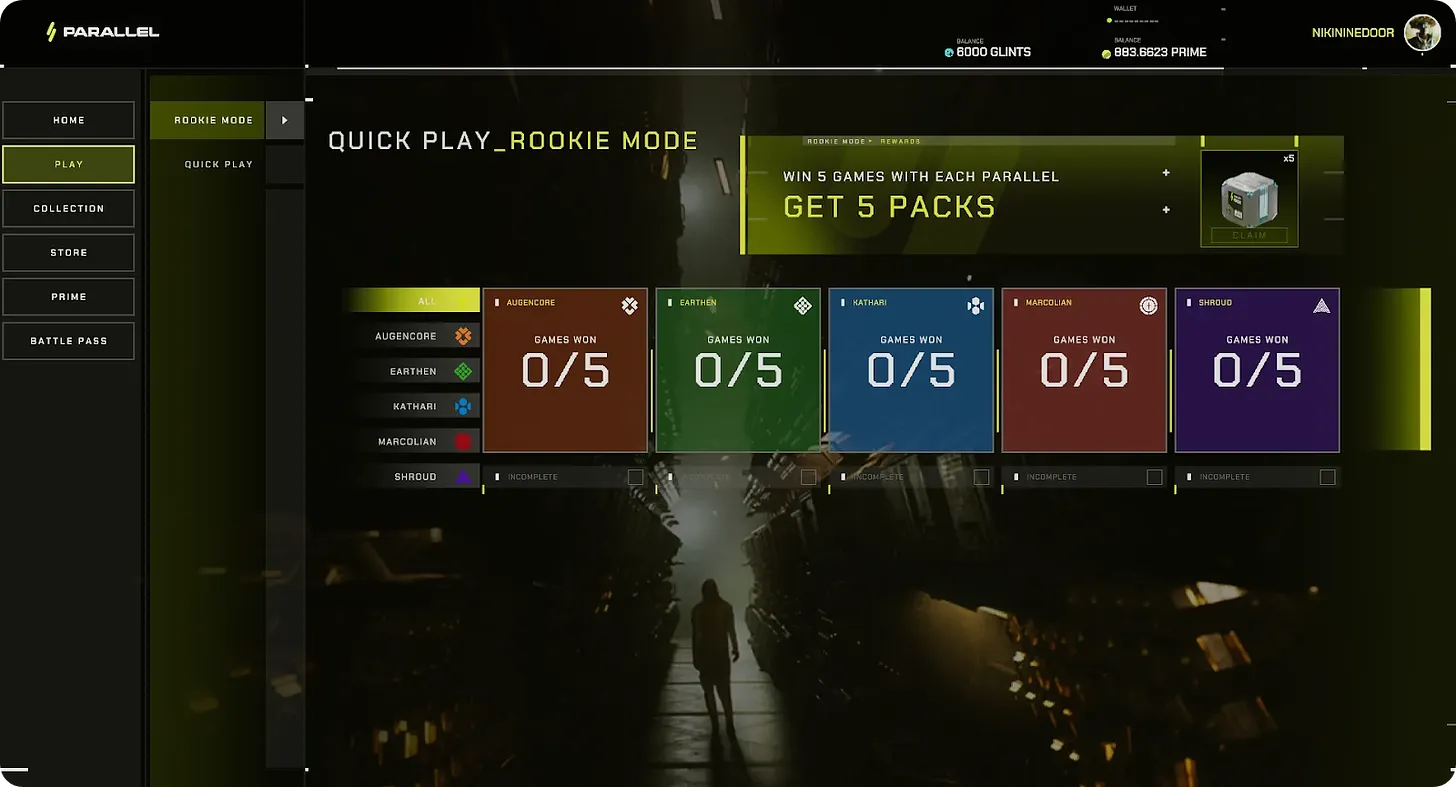
Parallel’s public beta offers various game modes designed to cater to players at different stages:
Novice Mode
Designed for new players, this mode begins after completing the tutorial. Players start with one of three Paragons—a leader unit with passive deck-wide effects—that unlocks one of five parallel factions: Augencore, Earden, Kathari, Marcolian, and The Shroud.
The goal here is to win with each Parallel, unlocking rewards along the way. The first five victories with each Parallel reward new Paragons, Common and Legendary Apparition (non-NFT) card packs, and an Apparition Starter Deck. Winning all 25 matches across every Parallel grants additional Apparition Packs, which can be used to supplement your base (NFT) cards.
AI Mode and Unranked Mode
These modes become available once you unlock your first starter deck. AI Mode is ideal for testing different cards and combos without affecting your rank or win ratio. Unranked Mode provides a similar non-competitive environment where players can freely experiment with their decks.
Ranked Mode
For players ready to compete and climb the ranks, Ranked Mode involves playing 10 placement matches to determine your starting rank. During this trial phase and beyond, this mode allows players to earn $PRIME—the core currency in Parallel—with each victory.
Note that the amount of $PRIME earned from ranked wins increases with higher rankings and is influenced by factors such as the number of NFT cards held during victories, win streaks, and owning a Parallel Avatar.
Core Gameplay Mechanics
In Parallel, each player’s turn consists of two main phases:
-
Draw Phase: At the beginning of the turn, the player draws one card from their deck
-
Main Phase: During this phase, players can play cards from their hand, attack with units, and use abilities. Players may perform any number of actions based on their available energy
Speaking of cards, there are four basic card types to know:
-
Unit Cards: Represent creatures or characters that fight for the player. They have attack and health stats
-
Effect Cards: Have immediate effects when played but do not remain on the field
-
Relic Cards: Provide ongoing effects or abilities that can influence the game in various ways
-
Upgrade Cards: Attach to Unit Cards to enhance their abilities

With the basics of cards and turns covered, it's important to understand key gameplay concepts you’ll encounter in battle. These include:
-
Energy: Used to play cards. Each card has an energy cost
-
Stockpile: A strategy where players hold onto cards for future turns
-
Convoke: Triggers specific effects when a card is played
-
Pacifist: Units with this trait cannot attack
-
Shield: An effect that protects against initial damage
-
Recycle: Allows players to retrieve cards from their discard pile
Together, these core mechanics inform several foundational strategies.
For example, balanced deck-building is crucial. To stay competitive, your deck should include a mix of units, relics, effects, and upgrades to handle various scenarios. Energy management is also vital—pay attention to your energy levels and plan your moves accordingly based on what you can afford.
Additionally, stockpiling cards and positioning your units precisely are key to success. Stockpiling prepares you for future turns, ensuring you have the right cards when needed, while deciding when to attack or defend based on your opponent’s board state can make or break your match.
As you gain more experience with Parallel’s gameplay, you'll find your sense of timing improves, and you’ll get better at anticipating your opponent’s moves and combining powerful card synergies—so keep practicing, and eventually, you’ll find your rhythm.
If you ever need to review any of the above concepts, be sure to check out the Parallel FAQ, the Parallel Cheat Sheet, or the Parallel Game Manual.
Building and Managing Parallel Decks

You don’t need to purchase any Parallel NFT cards to start playing, as you’ll receive a starter deck just by completing the game’s Novice Mode campaign.
However, beyond that, you’ll need to earn or acquire additional cards to strengthen your capabilities or build multiple decks.
Parallel cards are linked to OpenSea marketplaces on both Ethereum and Base Layer 2 (L2) scaling solutions, allowing cards from the former to be "echoed" to the latter. That said, buying cards via OpenSea is a straightforward way to obtain desired deck-building assets, although soon it will also be possible to rent cards through collectives like ParagonsDAO.

To begin, you might focus on one Parallel faction and try building a deck around it. Each of the five factions has distinct strengths. Here’s a brief summary:
-
Augencore: Excels at enhancing units, boosting their capabilities
-
Earthen: Focuses on board control and strategic use of defensive units
-
Kathari: Specializes in generating clones, enabling a control-oriented playstyle
-
Marcolian: Focused on aggressive play, aiming to quickly deal damage to the opponent’s life total
-
The Shroud: Aims to exile units, removing them from the game to prevent opponents from fully utilizing their resources
As you dive deeper, you can use tools like the Parallel Cards dashboard, ParagonsDAO’s Priming Explorer, or app.paralleldecks.xyz to identify, trade, and manage your cards. Parallel has also just launched boxes and folders to help organize your collection.
$PRIME Overview

$PRIME is the core utility token for Parallel, used across both the Parallel TCG and the upcoming AI-driven Parallel Colony game currently in development.
Players can earn $PRIME by winning ranked matches in the Parallel TCG. As noted earlier, the amount earned per win depends on several factors, including the player’s tier, win streak, and other performance metrics.
Note that there is currently a daily cap, allowing players to earn $PRIME from their best five wins each day. On average, winning five matches daily yields just over 10 $PRIME per month—worth around $150 at current rates. Not bad!
Once you’ve earned $PRIME, you can hold it, sell it for other assets like ETH, or spend it across various Sinks—products and services within the Parallel ecosystem. Some of these Sinks include Artigraphs (limited-edition, signed Parallel cards), Glints (in-game currency for non-NFT purchases), and Cosmetics (equippable skins and emotes).

When $PRIME is spent on Sinks, a portion is redistributed to various components within the ecosystem, such as gameplay pools and Sink creators. This process aims to drive $PRIME back into the in-game economy, fostering a sustainable player-earn model over time.
Final Thoughts
This Thursday, anyone will be able to download the Parallel game launcher and begin playing the open beta.
This release marks the beginning of a new era for Parallel, offering a glimpse into the future of digital collectibles and gaming economies. Indeed, while in my view Parallel’s gameplay itself is both deep and engaging, one of the most exciting aspects is how thoughtfully Parallel integrates NFTs and the $PRIME token into its ecosystem.
This dynamic transforms players from mere participants into true stakeholders. As Parallel continues to grow, these players will be well-positioned to benefit from the expanding in-game economy—including its unique market dynamics, trading strategies, and investment opportunities.
Looking further ahead, Parallel’s expansion—including Parallel Colony and other potential future games—also points toward a vibrant ecosystem where $PRIME acts as a lifeline connecting and enhancing diverse gameplay experiences. This interconnectedness could provide a blueprint for games that not only share a common currency but also contribute to a shared economy and narrative.
Ultimately, the real success of Parallel and its model will depend on community engagement, balance in its player-earn mechanics, and continued ecosystem development. If it can keep building on these fronts, breakthrough success may well be within reach!
Join TechFlow official community to stay tuned
Telegram:https://t.me/TechFlowDaily
X (Twitter):https://x.com/TechFlowPost
X (Twitter) EN:https://x.com/BlockFlow_News
 @WPeaster