








MIIX Capital: Starknet TVL Surpasses $1.4 Billion—Real Value or Just Hype?
TechFlow Selected TechFlow Selected
MIIX Capital: Starknet TVL Surpasses $1.4 Billion—Real Value or Just Hype?
With narrative and technology both in its favor, does Starknet live up to the hype?
 Navigating Web3 tides with focused insights
Author: MIIX Capital
Introduction
Recently, Starknet has consistently dominated market attention, receiving strong support and pursuit from numerous institutions and users. As of February 23, data from L2BEAT shows that Starknet's TVL surpassed $1.4 billion, setting a new record high at $1.48 billion, with a 7-day surge of 705.42%.
From Airdrop Claims to a 6x Surge in TVL
On February 14 (UTC+8), Starknet opened its eligibility verification portal and officially launched airdrop claims on February 20, marking the beginning of its explosive popularity. Despite issues such as duplicate address records and incorrect labeling, market enthusiasm remained undiminished.
According to Token Flow data, on the first day of claim availability alone, approximately 380,000 users claimed a total of 340 million Starknet tokens (STRK), accounting for 57.99% of the total airdrop allocation.
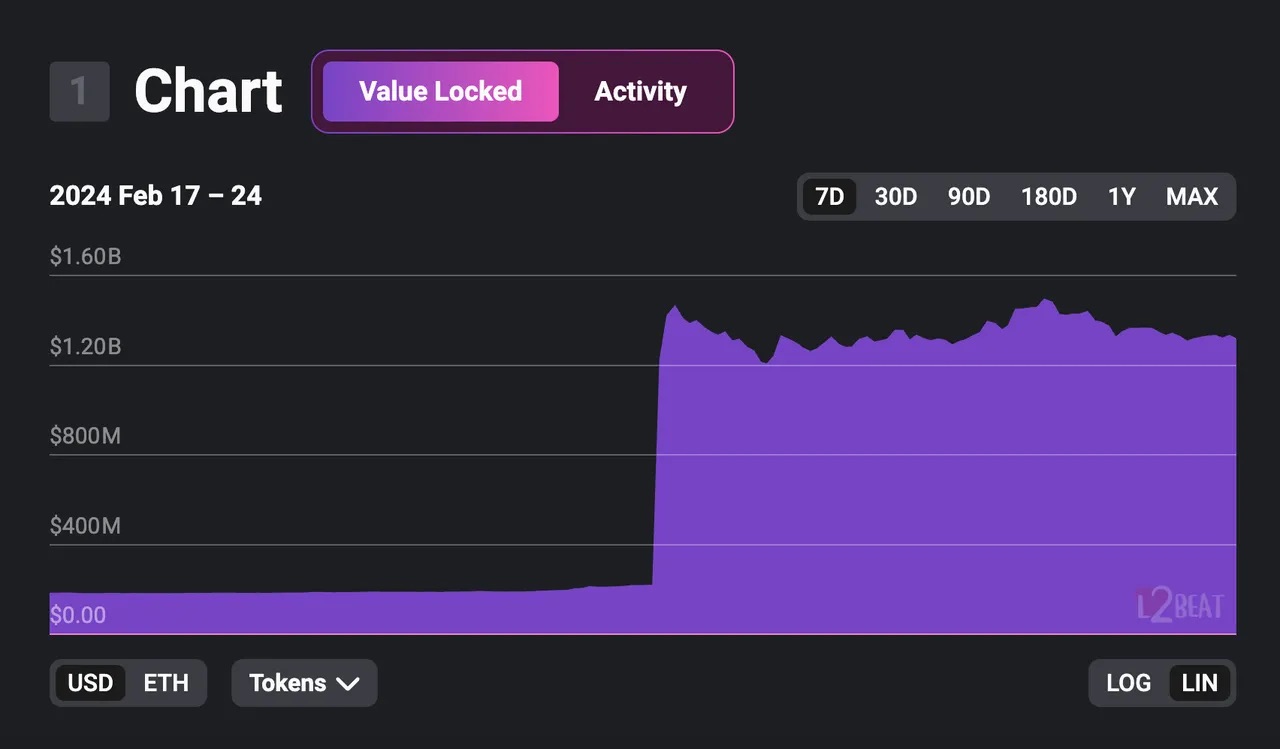
Additionally, on the second day after claims opened (February 21), Starknet’s TVL surged sixfold, peaking above $1.48 billion and remaining consistently over $1.2 billion. Meanwhile, STRK was listed on multiple leading exchanges, with its current price around $1.91. The total value of the airdrop closely matches the increase in TVL, suggesting nearly all tokens have been locked—seemingly reflecting strong market consensus on Starknet’s value at this stage.
Concentrated Hype: Starknet Gains Strong Backing from Major Platforms
Looking back, Starknet's surge in popularity occurred almost entirely within the past two weeks, especially around February 20 when major exchanges including Bitget, Binance, OKX, Bithumb, and Coinbase successively announced and launched spot trading for STRK. Binance further listed STRK perpetual contracts denominated in USDT on the 21st, offering up to 50x leverage.
Moreover, both Binance and OKX simultaneously unveiled distribution plans of STRK tokens for ETH stakers. OKX Web3 Wallet announced full support for the Starknet ecosystem on February 21. In no time, Starknet became the darling of markets and institutions alike. Based on our observations, Starknet’s prosperity—and the market momentum it brings—seems just around the corner.
Recent Key Developments
-
February 10: Starknet blockchain explorer Voyager launched a dashboard page displaying STRK airdrop data;
-
February 14: Starknet opened eligibility verification and announced the airdrop claim schedule;
-
February 17: JediSwap, an AMM protocol in the Starknet ecosystem, launched Jediswap v2, designed similarly to Uniswap v3;
-
February 19: Smart contract wallet Argent released Portfolio, an all-in-one solution for managing Starknet assets;
-
February 20: Pyth Network announced the launch of STRK/USD price feed data;
-
February 22: The Starknet Foundation tweeted that the DeFi Spring initiative had officially launched, featuring a month-long series of tasks across the Starknet network;
-
February 22: Polygon Labs and StarkWare collaborated to launch Circle STARK, a fast proof system planned for integration into Plonky3;
-
February 23: Starknet announced that StarkGate 2.0 mainnet is now live;
-
February 23: EthSign tweeted that it has integrated Starknet wallets, enabling users to seamlessly log in, send transactions, and sign contracts via Starknet wallet connections;
Narrative and Technology Combined: Does Starknet Live Up to the Hype?
Starknet is widely recognized for its technological strengths: quantum resistance, STARKs technology, and a highly capable engineering team. It also enjoys endorsements from prominent institutions and top-tier KOLs, including Vitalik Buterin, giving it a powerful narrative that fuels significant imagination regarding its market potential.
However, current market hype may be masking certain factors that could make Starknet appear mismatched with its valuation and popularity:
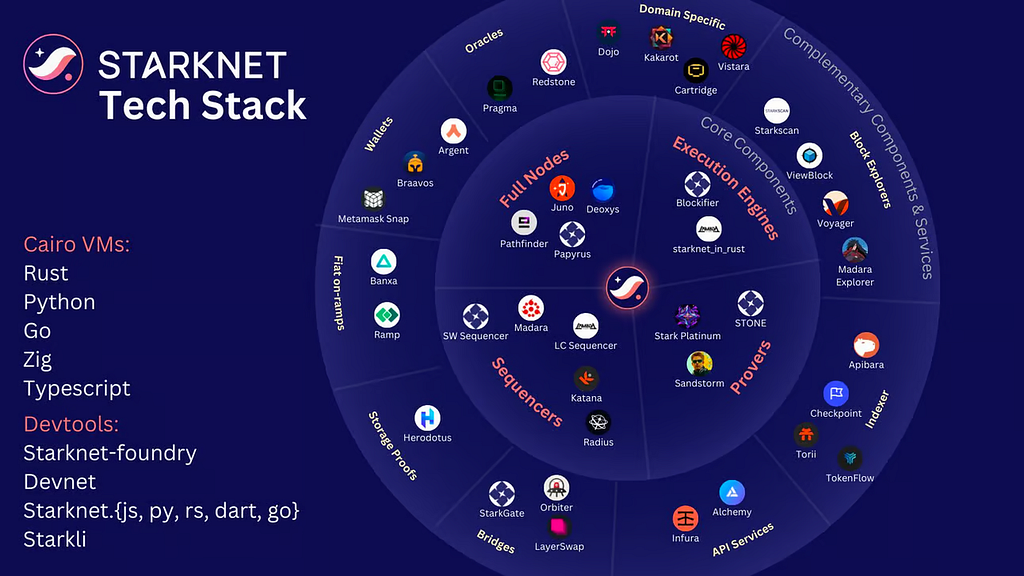
First, Starknet's ecosystem remains in early stages and lags behind others in development. Due to challenges in developer and user experience, its ecosystem still trails zkSync among Layer2 solutions and cannot compare with OP or ARB ecosystems, let alone replace or surpass them—at least not in the short term.
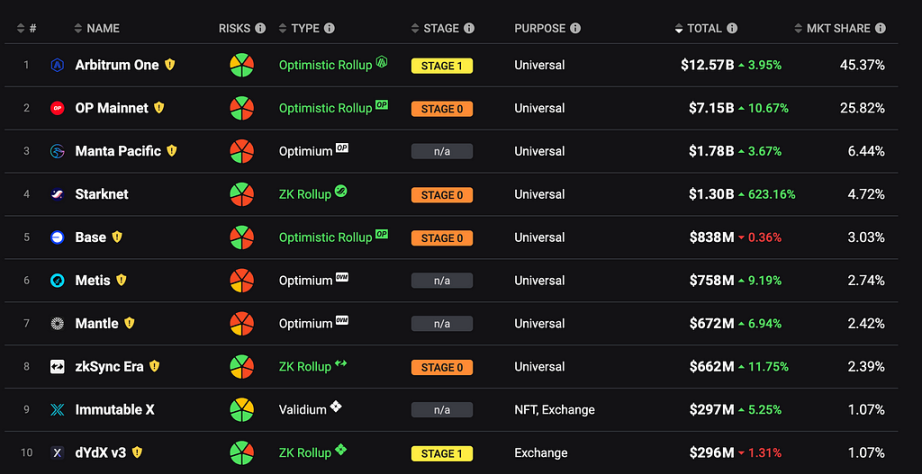
Second, at current prices, Starknet’s market cap approaches $20 billion, exceeding those of OP and ARB. When evaluated against institutional investment amounts and prior valuations, Starknet’s current market cap still appears inflated.
Considering these aspects, despite the surge in TVL and concentrated market hype, Starknet’s market cap appears significantly overstated. Even with strong narrative and technological backing, its valuation seems unjustified, raising concerns about whether its current price and market cap reflect only a temporary phase driven by market conditions.
Is Starknet’s Performance Genuine Growth or Market Inflation?
Starknet’s explosive performance stems both from energy accumulated over years of development and alignment with current market trends—all fueled by FOMO surrounding Starknet itself and broader market sentiment.
Objectively speaking, on one hand, Starknet’s market cap clearly appears inflated. Despite market enthusiasm and institutional/VC backing, its current ecosystem and applications do not justify its valuation, making a correction toward rationality highly likely. On the other hand, the overall market is currently in an upward cycle, with rising investor sentiment. When user expectations for both the market and Starknet converge, this apparent overvaluation might merely be superficial. As market momentum continues, Starknet’s value could transition from speculative to fundamental.
Alternatively, perhaps Starknet isn’t overvalued—rather, the entire market is expanding due to capital inflows and accumulating sentiment, with Starknet simply becoming the most visible symbol of this expansion. This may represent another test before a bull run, potentially delivering the long-awaited breakthrough. Only time will tell.
About Starknet
StarkNet is an Ethereum Rollup Layer2 based on ZK-STARKs technology. Its parent company is StarkWare, which operates StarkEX for enterprise services and StarkNet Layer2 for consumer-facing applications. StarkNet balances privacy and scalability, enabling DApps to achieve infinite scaling and technical extensibility without compromising Ethereum’s composability and security. It is considered an effective solution for high-throughput and security-critical applications.
Advantages of Starknet
-
Transaction bundling can be completed without knowing validators, eliminating the seven-day waiting period during cross-chain asset transfers;
-
Balances privacy and scalability, efficiently protecting user transaction privacy and data security;
-
Strengths in ensuring network stability, promoting V3 transactions, reducing L1 fees, and lowering transaction costs;
-
Native account abstraction components each serve unique roles, collectively enhancing overall user experience;
-
Hardware signing leverages built-in secure subsystems of devices, keeping user keys safe even if the application processor core is compromised
Challenges Facing Starknet
-
The official cross-chain bridge, StarkGate, has just launched and may face smart contract risks;
-
Reliance on the proprietary Cairo programming language may deter developers, potentially slowing ecosystem growth;
-
Currently lags significantly in ecosystem positioning, risking being overtaken technologically by competing projects;
Join TechFlow official community to stay tuned
Telegram:https://t.me/TechFlowDaily
X (Twitter):https://x.com/TechFlowPost
X (Twitter) EN:https://x.com/BlockFlow_News
 @MIIXCapital_CN











