








Why Staking Polygon Could Be the Next Big Airdrop Opportunity?
TechFlow Selected TechFlow Selected
Why Staking Polygon Could Be the Next Big Airdrop Opportunity?
Stake this token to get that airdrop, stake that airdrop to receive more airdrops!
 Navigating Web3 tides with focused insights
Author: HFA Research
Translation: TechFlow
Introduction
This article examines overlooked positive catalysts for Polygon and the MATIC token that could significantly impact the price of $MATIC. First, it introduces Polygon's new AggLayer, a technology addressing liquidity fragmentation in Ethereum’s scaling roadmap. Second, it discusses the rebranding of MATIC to POL and the new utility of the token. Additionally, it highlights the potential POL airdrop narrative, which could bring additional returns to existing MATIC holders while increasing token recognition and upward price potential.
Main Content
If you frequently browse crypto-related Twitter feeds, you may have noticed many negative posts about Polygon and the MATIC token. Critics argue that Polygon has spent millions on business development initiatives such as DeGods/y00ts, Starbucks’ Odyssey program, and Nike’s Swoosh project—yet these partnerships appear ineffective.


These criticisms are not baseless. However, when market sentiment is overwhelmingly negative, participants naturally overlook potentially transformative bullish catalysts for the native token $MATIC. In this article, I will highlight three major overlooked catalysts that could lead to a significant price revaluation:
-
Polygon's new AggLayer
-
Rebranding of MATIC to POL and new token utility
-
POL airdrop narrative
Polygon's New AggLayer
Ethereum’s scaling roadmap faces several challenges, one of which is fragmented liquidity. As we’ve seen with Blast, Manta, and Mode Network, it feels like a new L2 launches every other week. Since all these L2s use ETH as their settlement layer, each operates in isolation, resulting in siloed liquidity. This leads to poor user experience and is why we’re particularly bullish on Dymension—a RollApp settlement layer using IBC to connect different execution layers, forming a key part of the modular stack.
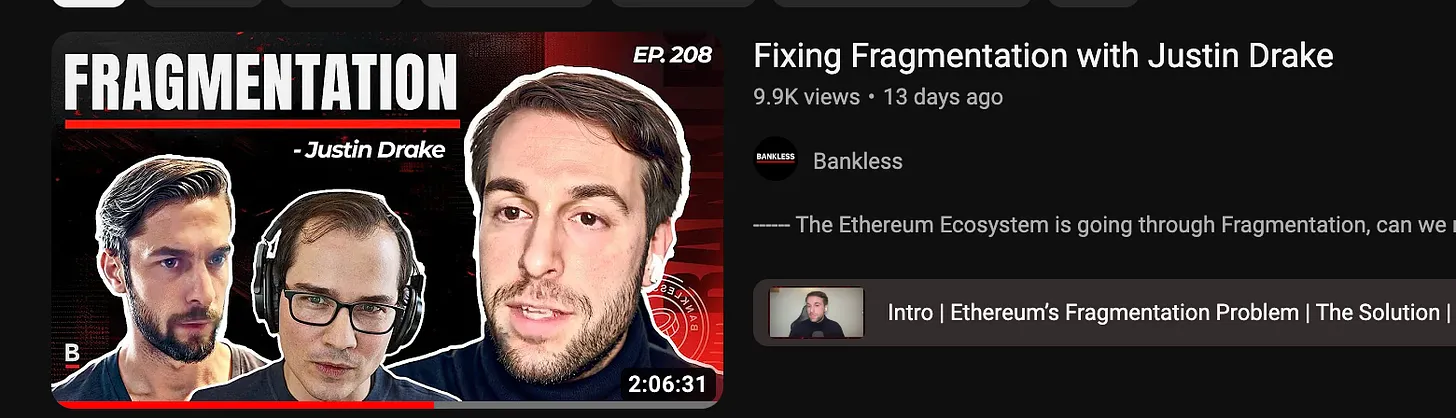
For social proof, Bankless recorded a two-hour podcast with Justin Drake discussing problems within the L2 ecosystem. Teams like Optimism are building a "Superchain," a vision similar to Dymension’s. However, we believe Polygon’s AggLayer will reach the market faster.
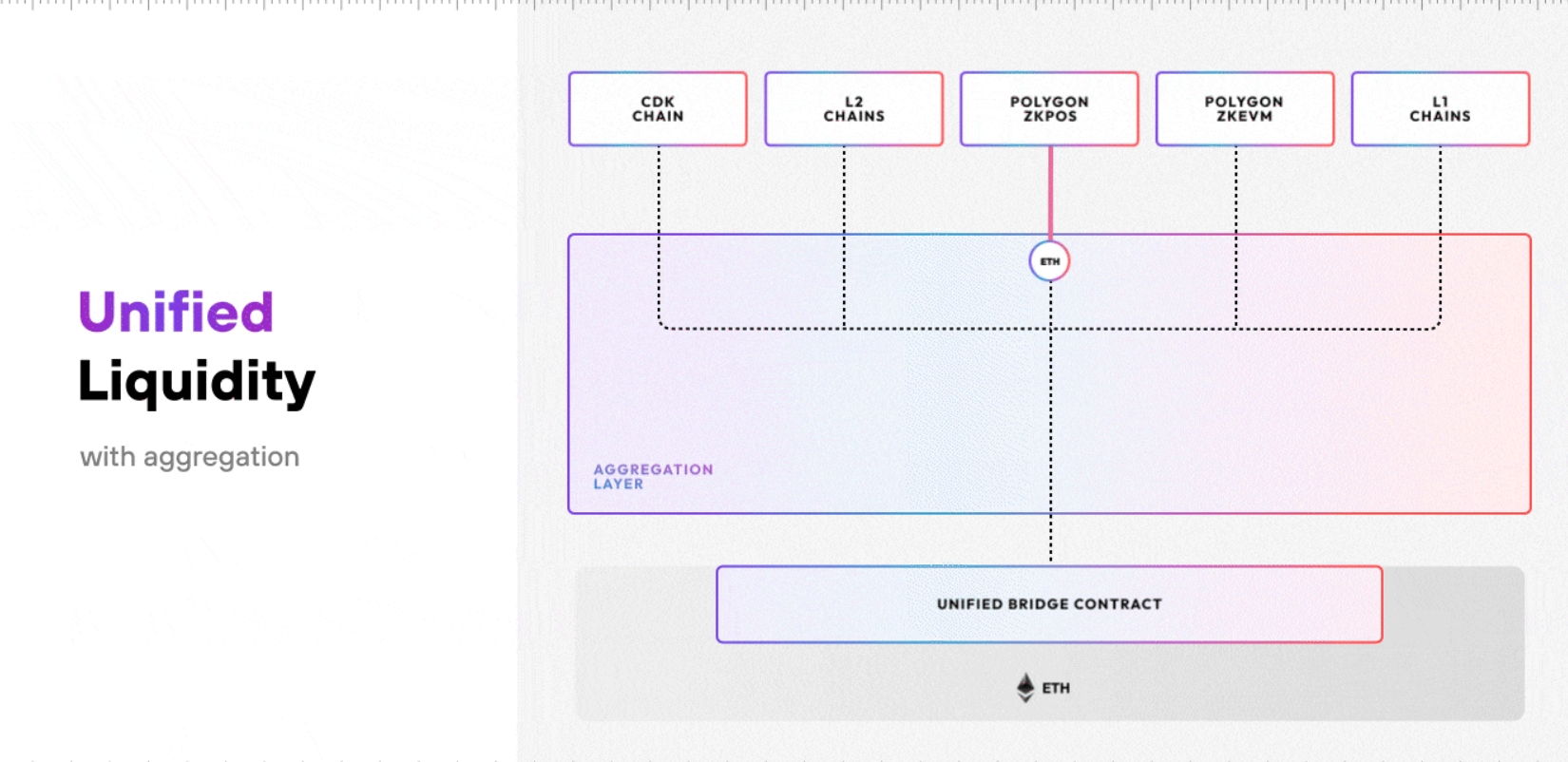
As shown in the image above, Polygon aims to create a new “Aggregation Layer” to solve this issue. Currently, every zk-rollup must submit proofs individually to Ethereum, making cross-chain bridging cumbersome. With AggLayer, all L2s can now submit their proofs to the AggLayer, which aggregates them into a single proof and submits it once to a unified bridge contract.

As a result, all L2s can integrate AggLayer to unify liquidity across chains. For example, Immutable X could share liquidity with Manta Network. This unification will undoubtedly enable greater value accrual at the application layer, as developers gain access to deeper liquidity pools to build better products.

No such solution currently exists in the market, and we can expect the following flywheel effect:
-
Polygon CDK simplifies zk-rollup deployment
-
Composability among L2s attracts more L2s
-
Potential airdrops
-
Increased security for AggLayer (positive flow to $POL)
Rebranding of MATIC to POL
How does value accrue to the token? What exactly does POL do? MATIC can be swapped 1:1 for POL. Currently, MATIC secures the Polygon PoS chain, but once AggLayer launches, POL will be used to secure AggLayer.
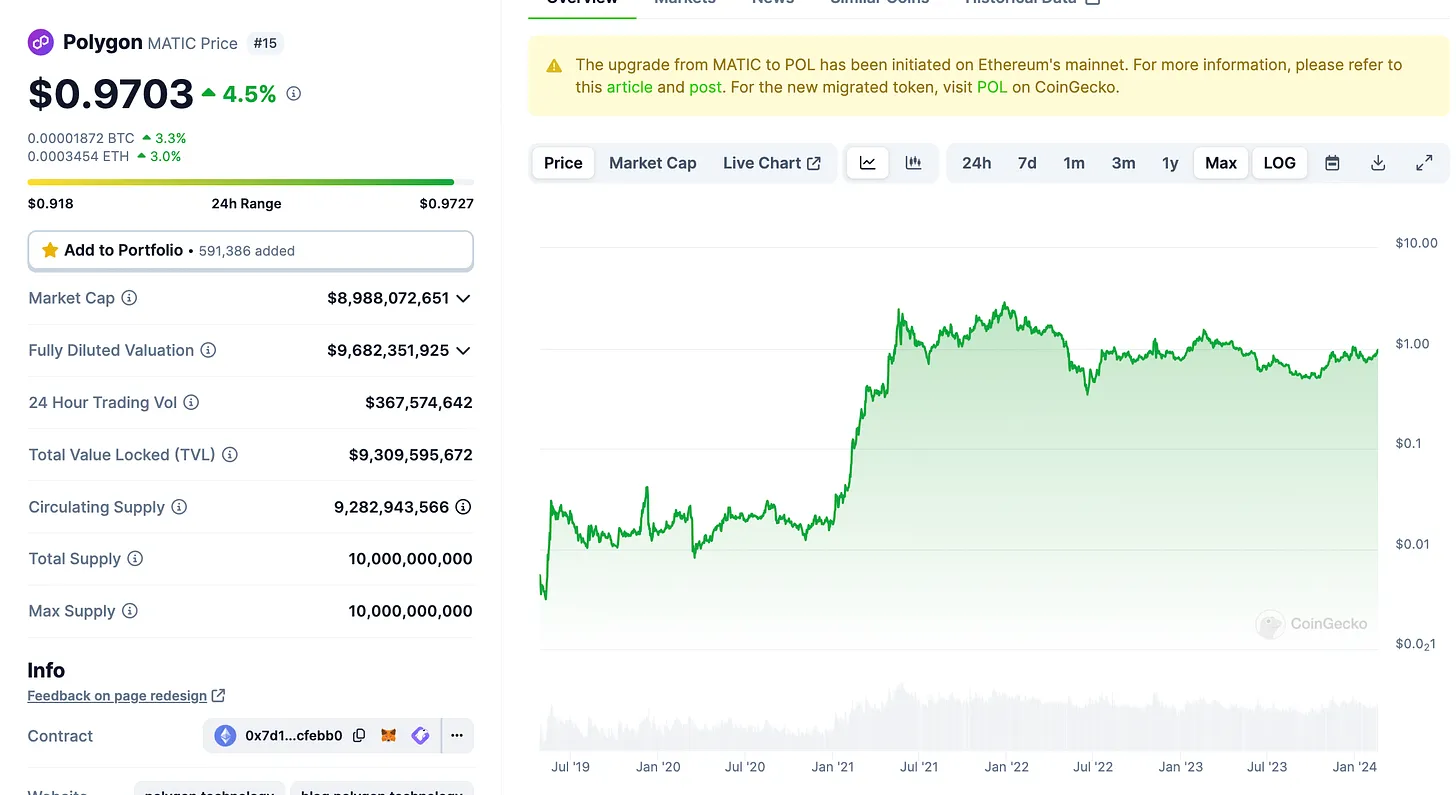
Although a $9 billion valuation for the token may not seem cheap, most lock-up periods have already ended, while other L2s trade at fully diluted valuations (FDV) between $10–20 billion. Below is an excerpt from a report by thiccythot:

As more teams leverage AggLayer, demand for POL should rise due to economic security requirements. MATIC could also benefit from the upcoming Dencun upgrade on March 13, which introduces EIP-4844. As AggLayer builds network effects, we should see increasing numbers of L2s launching on AggLayer, giving rise to another compelling bullish narrative.
POL Airdrop Narrative
In our previous articles, we love airdrop narratives. Our founder Taiki Maeda received a six-figure $DYM airdrop, and our analysts were fortunate enough to receive six-figure $JTO airdrops through active on-chain participation. Due to regulatory fears preventing teams from introducing direct revenue sharing, we’re seeing tokens adopt “indirect value accrual” via airdrop incentives: Stake this token to get that airdrop, stake that airdrop to get more airdrops!

AVAIL has teased an airdrop for $DYM holders. However, we believe AVAIL’s airdrop is more likely to go to MATIC holders, as Avail was spun out from the Polygon brand and is being developed by a co-founder of Polygon. There are rumors they will launch their mainnet on the 26th—just three days after Polygon’s AggLayer goes live on the 23rd.

Could a snapshot be taken on “Aggregation Day”? If Celestia’s FDV is around $20 billion, we wouldn’t be surprised if AVAIL’s FDV exceeds $10 billion. Indeed, this would be a fantastic airdrop for both $DYM and $MATIC holders.
Trade
We believe staking MATIC offers a favorable risk-reward profile. Compared to TIA/DYM, which have 2–3 week unbonding periods (not to mention higher inflation rates and VC lock-ups), staking MATIC via validators yields approximately 5% APY with a 3–4 week exit period, making it a more attractive vehicle for airdrop farming.
Polygon’s new AggLayer has a strong chance of solving the liquidity fragmentation problem in the L2 ecosystem. As more projects build on AggLayer, we expect additional airdrops targeting POL stakers beyond the inherent staking yield.
What’s the downside? You earn only 5% APY on MATIC.
What’s the upside? If the market begins to recognize the imminent launch of AggLayer, MATIC stakers stand to gain substantial airdrops and significant price appreciation.
Join TechFlow official community to stay tuned
Telegram:https://t.me/TechFlowDaily
X (Twitter):https://x.com/TechFlowPost
X (Twitter) EN:https://x.com/BlockFlow_News
 @HFAresearch






