








2024 U.S. Election: The Growing Crypto Voter Bloc Could Become the "Kingmaker"
TechFlow Selected TechFlow Selected
2024 U.S. Election: The Growing Crypto Voter Bloc Could Become the "Kingmaker"
Swing voters decide elections.
 Navigating Web3 tides with focused insights
Source: Forbes
Translation: BitpushNews Mary Liu
Economic trends, immigration policy, climate change, abortion rights… These hot-button issues always dominate the U.S. election.
But there’s a new wedge issue emerging in American politics—one that could mobilize millions of voters into a cohesive voting bloc, cutting across party and demographic lines, and potentially deciding the next presidential election.
That issue is cryptocurrency.
Compared to 2020, crypto holders are poised to emerge as a unified voting bloc in 2024. Millions of voters live in pivotal swing states—states where the last presidential election was decided by razor-thin margins. According to research by Morning Consult, millions see cryptocurrency as a make-or-break issue at the ballot box.
The Rise of the Crypto Voter
The rise of the crypto voter has paralleled the ascent of cryptocurrency as an asset class.
Remember, most of the last Bitcoin bull run occurred after the 2020 presidential election. A few months later, Michael Saylor changed his profile picture to laser eyes, corporate brands started tweeting "WAGMI," and Elon Musk promoted Dogecoin on a popular TV show.
After Biden took office, the industry entered its most explosive period of retail adoption in history. The previous bull market created a new wave of millionaires—and many more crypto voters.
Today, one in five Americans owns digital assets—that’s 52 million people. Perhaps most striking is this group’s political makeup: according to survey data from Coinbase and Morning Consult, among respondents who hold crypto, 22% identify as Democrats, 18% as Republicans, and 22% as independents. Additionally, 60% are Gen Z or Millennials, and 41% are from minority backgrounds.
Young, diverse, bipartisan. These are the three defining characteristics of the crypto electorate. While this voting bloc wasn’t a major factor in 2020, it is now positioned to play a significant role this November.
Winning the Crypto Vote: The Key to the White House?
Swing voters decide elections. That’s why campaigns set up shop in battleground states like New Hampshire, Nevada, Ohio, and Pennsylvania. Morning Consult conducted a poll to assess cryptocurrency sentiment in these four swing states. In doing so, they found that millions of Americans view digital assets as a top-tier issue.
What’s the key finding? Roughly 18% of voters in these states—about 3.4 million people—own digital assets. Surprisingly, 55% of them say they are less likely to vote for candidates who oppose crypto values. These values include the belief that the current economic system is unfair and favors big corporations, along with a corresponding desire for a decentralized web3 economy.
In other words, in just these four swing states, cryptocurrency could influence the votes of up to 1.9 million people—enough to swing the election.
These swing states are often decided by the slimmest of margins. For example, in 2020, Biden led Trump by only 82,000 votes in Pennsylvania and 34,000 votes in Nevada.
Given the rapid growth of this voting bloc, candidates can reshape the 2024 electoral map simply by adopting pro-crypto positions. The numbers paint a clear picture: whichever presidential candidate wins the crypto vote will almost certainly hold the key to the White House.
The crypto vote is inherently up for grabs, and the sheer size of this bloc presents a massive opportunity for political candidates. To better understand this opportunity, I spoke with Faryar Shirzad, Coinbase’s head of policy.
"Tens of millions of Americans are participating in the crypto economy," said Faryar Shirzad. "When I talk to innovators across the country, their passion for blockchain is incredible. Any politician who ignores this enthusiastic community is missing a crucial and active segment of the American electorate."
Biden, Bitcoin, and Young Voters
Ironically, despite the political advantages of embracing Bitcoin and cryptocurrency, both major party contenders—Joe Biden and Donald Trump—have largely avoided the topic.

As for President Biden, he appears uninterested in engaging this voter group. In fact, many of his policies have alienated digital asset holders.
For instance, last year, President Biden blamed "wealthy cryptocurrency investors" for exploiting tax loopholes supported by "MAGA Republicans." Meanwhile, SEC Chair Gary Gensler has attempted to suppress crypto exchanges and protocols through enforcement-heavy regulation—a strategy criticized by multiple members of Congress. His strongest ally in the Senate, Senator Elizabeth Warren, has assembled an "anti-crypto army" and declared "war" on the industry.
Will the administration’s hostile stance toward cryptocurrency come back to haunt Biden in November?
Gemini co-founder and president Cameron Winklevoss seems to think so. In a post on X, Winklevoss argued that Senator Warren and the SEC chair’s "war on crypto will alienate an entire generation of future Democrats." In Winklevoss’s view, the two may become liabilities for the Biden campaign, reminding voters of his administration’s crackdowns on crypto firms and investors.
Given Biden’s aggressive approach to digital asset regulation, will Trump take the opposite tack to differentiate himself from his rival?
Does Trump Have a Chance?
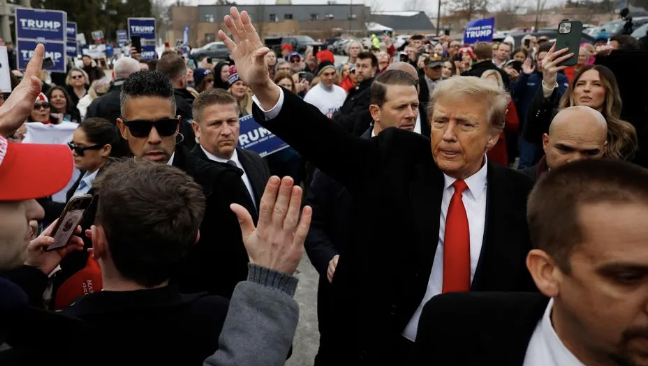
By simply embracing Bitcoin and decentralized values, Trump could peel away pro-crypto Democrats and independents who would otherwise vote for Biden. He could sway the 1.9 million people in swing states like New Hampshire, Nevada, Ohio, and Pennsylvania for whom cryptocurrency is a top concern. In 2020, Trump narrowly lost three of these four states. But he could win them back by appealing to crypto voters.
There’s just one problem: Trump has previously expressed skepticism about digital assets. In a June 2021 interview with Fox Business, Trump said, "Bitcoin—it looks like a scam to me. I don't like it because it's another currency competing with the dollar."
So is Trump set in his ways? Is he destined to remain anti-Bitcoin forever?
Despite Trump’s earlier hardline stance on crypto, growing evidence suggests his position has softened over the past two years. For example, in December 2022, he launched a series of NFT trading cards to rally support. Riding that momentum, he recently released a new set of "Mugshot" NFTs. According to financial disclosure filings, this new NFT fundraising effort came shortly after a report revealed Trump had held $2.8 million in cryptocurrency in an Ethereum wallet.
Having dipped his toes into cryptocurrency via NFTs, will Trump continue attacking Bitcoin? His words and actions on crypto will not only reshape his financial portfolio but could also alter the outcome of the 2024 election.
Join TechFlow official community to stay tuned
Telegram:https://t.me/TechFlowDaily
X (Twitter):https://x.com/TechFlowPost
X (Twitter) EN:https://x.com/BlockFlow_News
 Forbes











