What is the real value behind ZetaChain's innovative architecture?
TechFlow Selected TechFlow Selected
What is the real value behind ZetaChain's innovative architecture?
Just as the market had come to view LayerZero as the definitive solution for omnichain, the emergence of ZetaChain has added fresh imagination to the omnichain space.
 Navigating Web3 tides with focused insights
Author: Gou, Foresight News
In "How to Add Omnichain Interoperability to Bitcoin? ZetaChain Offers a New Answer," I introduced ZetaChain's Omnichain operating mechanism and its clever security design within the often-risky cross-chain space.
However, understanding only the mechanisms may not fully capture the project’s scope. Through an interview with ZetaChain’s core team, we gain deeper insights into how the founding team views ZetaChain and the existing Omnichain market.
"We Want to Build the Passport for the Web3 World"
"Many teams are building cross-chain bridges, but most face security issues early on. We aim to solve these while offering developers a great experience," the ZetaChain team told me. "For multi-chain applications, developers might need to deploy contracts across 10 different chains, and users would need wallet addresses on each of those 10 chains. That’s why we came together to explore how a public blockchain could solve these problems."
Indeed, early projects in the cross-chain space had many shortcomings as the team noted. While conditions have gradually improved over time, by the time ZetaChain launches, real-world developer and user experiences may not be as bad as imagined. On the other hand, the proliferation of wrapped tokens from numerous bridges—and differing token support across apps—does create confusion for both developers and users. What’s most surprising about ZetaChain is that from day one, they aimed to solve "cross-chain" problems using a dedicated "chain."
The team notes that ZetaChain’s core members come from well-known companies and projects such as Brave, Coinbase, ConsenSys, THORChain, Cosmos, and 0x Labs. They’ve leveraged their Web3 experience and market insights to shape ZetaChain’s core technology and strategic direction. Their shared vision is to build a blockchain that serves as a passport for the Web3 world, simplifying and accelerating dApp development and improving user experience.
When ZetaChain first emerged, there was significant misunderstanding in the market, with many seeing it merely as another "new Layer 1." Skepticism also arose around ZetaChain’s goal of connecting to blockchains that don’t support smart contracts.
In response, the team explained they initially focused entirely on product development, investing little in market communication, leading to limited awareness. Moreover, ZetaChain has always been an Omnichain project, but due to insufficient understanding, some misconceptions spread. Its support for non-EVM chains—and even non-smart-contract chains like Bitcoin and Dogecoin—along with its chain-centric architecture, diverges from conventional solutions, contributing to market confusion.
As ZetaChain continues evolving—with ongoing development and a growing ecosystem—the market is beginning to re-evaluate this ambitious challenger aiming to transform Web3 experiences.
What Value Does a "Chain-Centric" Approach Offer?
A More Convenient Alternative to Wrapped Assets
Simply put, current cross-chain and Omnichain solutions act as "message relays," passing messages between chains and executing them via on-chain smart contracts. Simpler cross-chain methods involve locking assets on one chain and minting equivalent wrapped tokens on another.
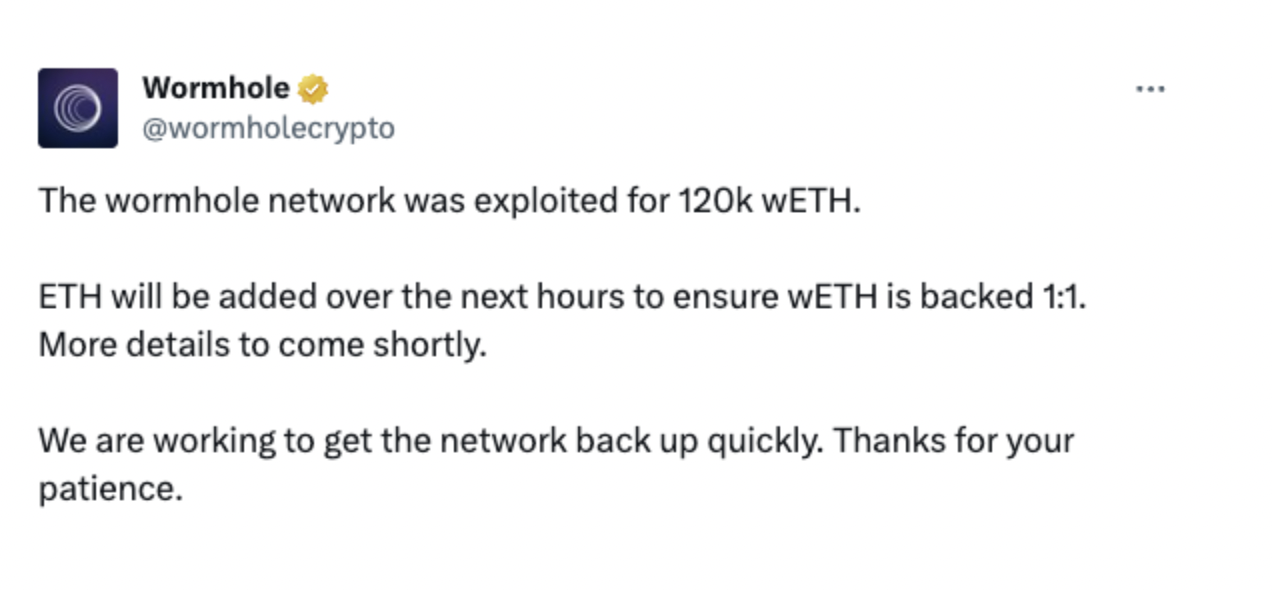
Omnichain has become a key narrative in cross-chain because it eliminates the need for additional wrapped assets. For example, Wormhole suffered a hack resulting in over $600 million stolen when attackers exploited a protocol vulnerability to mint large amounts of wrapped assets (WETH in that case). Furthermore, since each protocol maintains its own wrapped assets—which aren’t interoperable and vary in app support—users must spend time and gas fees figuring out which version to use.
Clearly, compared to wrapped asset models, Omnichain requires establishing liquidity pools across chains or leveraging existing ones. However, it allows users to bypass choosing among multiple wrapped tokens and instead obtain native assets directly on the target chain through ZetaChain.
Connecting Blockchains Without Smart Contract Support
One of ZetaChain’s defining features—planned from the outset—is its ability to support blockchains without smart contract functionality, such as Bitcoin and Dogecoin. Previously, various attempts have been made to bring Bitcoin into smart contract ecosystems, but all required converting BTC into tokens usable on smart contract platforms.
Among these, THORChain stands out slightly—it enables direct Bitcoin swaps into tokens like Ethereum—but it’s limited to trading functionality with low extensibility. Additionally, trades require RUNE, its native token, as an intermediary in liquidity pools, limiting scalability.
ZetaChain shines by enabling users to interact with Omnichain applications supported by ZetaChain simply through basic Bitcoin transfers. In essence, a transfer on the Bitcoin network can trigger smart contract calls on ZetaChain, allowing actions like trading or collateralized lending.
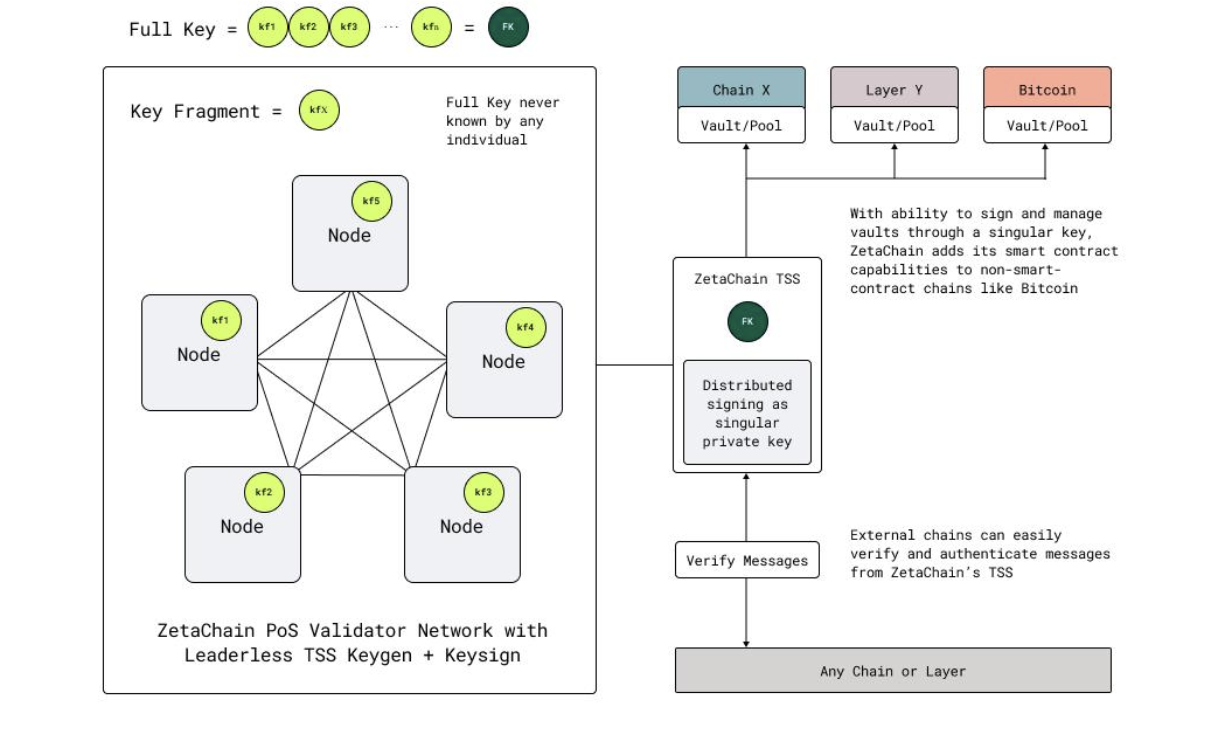
In truth, programmability potential for native Bitcoin remains largely untapped. Since adding smart contracts directly to Bitcoin is nearly impossible, unlocking value from this trillion-dollar asset requires alternative approaches to programmability. ZetaChain offers one such path: via its cross-chain mechanism, Bitcoin users can access ZetaChain-based applications directly from the Bitcoin network—without needing wallets on other chains. This greatly enhances cross-chain asset liquidity and opens doors for native Bitcoin participation in DeFi and beyond.
Both a Cross-Chain Solution and a Blockchain
Notably, ZetaChain itself is a blockchain built using the Cosmos SDK. The team chose Cosmos SDK because it’s mature and well-suited as a foundation for cross-chain interoperability.
Compared to generic "solutions," being a standalone blockchain is a unique advantage for ZetaChain. Combined with EVM compatibility, developers can build apps directly on ZetaChain and easily integrate its Omnichain capabilities via simple code changes to connect with supported chains.
When users interact with dApps, they don’t necessarily need a ZetaChain address—they can use any supported chain’s address and assets, making the underlying chain invisible to them. This aligns with the "cross-chain hub" concept I previously discussed: positioning the chain as a central relay for messages and assets across networks, significantly elevating its value beyond typical cross-chain tools.
In a sense, ZetaChain functions as an "Omnichain layer," granting any blockchain the ability to transfer assets and execute trades across chains, while delivering chain-level security—a clear advantage over solutions like LayerZero.
Ecosystem Growth Will Be a Future Priority
Regarding developer concerns I gathered—such as weak EVM compatibility for Cosmos SDK-based chains and TSS security—the team responded: ZetaChain now offers full EVM compatibility, allowing Ethereum developers to copy-paste code directly; regarding TSS security, they acknowledged no technology is perfect, but security improves continuously with advancement.
Developer-friendliness is a major driver for ecosystem growth. The team reports hundreds of ecosystem partners already, growing by 8–10 new additions weekly. Moreover, every ZetaChain blog post is available in over ten languages—all human-translated, not machine-generated—showing strong preparation for global ecosystem expansion from day one.
The ZetaChain team says it currently has over 150 contributors actively advancing development and ecosystem outreach. Going forward, ZetaChain will continue incentivizing broader participation to build a thriving, chain-centric omnichain ecosystem.
At a time when many consider LayerZero the definitive solution for Omnichain, ZetaChain brings fresh imagination to the space. Connecting blockchains has long been a critical challenge in Web3, and integrating Bitcoin into this framework could unlock unprecedented innovation—what emerges next is worth watching closely.
Join TechFlow official community to stay tuned
Telegram:https://t.me/TechFlowDaily
X (Twitter):https://x.com/TechFlowPost
X (Twitter) EN:https://x.com/BlockFlow_News
 Foresight News