Can SAGE Labs, Solana's fully on-chain game, breathe new life into Star Atlas?
TechFlow Selected TechFlow Selected
Can SAGE Labs, Solana's fully on-chain game, breathe new life into Star Atlas?
This article will delve into the relationship between SAGE Labs and Star Atlas, the in-game economy, gameplay mechanics, and how to get started with the game.
 Navigating Web3 tides with focused insights
Compiled by: TechFlow
Author: 0xAkina
Introduction
Although the current market narrative centers on Ethereum, the Solana ecosystem continues to present abundant opportunities.
In gaming, Star Atlas—a AAA blockchain game from the previous cycle—has recently launched its fully on-chain game, SAGE Labs, which is equally worth watching. While the project does not explicitly mention potential airdrops or benefits, getting involved early with low barriers to entry remains a smart move.
This article dives deep into the relationship between SAGE Labs and Star Atlas, in-game economics, gameplay mechanics, and how to join. Despite its steep learning curve, SAGE Labs offers a unique and immersive experience that deserves exploration by gaming enthusiasts and Web3 participants alike.
Introduction
A few weeks ago, we explored Solana’s on-chain gaming ecosystem. In that piece, I mentioned a game many have heard of but few have actually played: SAGE Labs. SAGE Labs is part of Star Atlas, one of the largest Web3 games and ecosystems. While Star Atlas itself isn’t a fully on-chain game, SAGE Labs is!
Today, we’ll dive into various aspects of SAGE, including:
-
Its role within the Star Atlas ecosystem
-
The in-game economic model
-
How to get started playing
The Relationship Between Star Atlas and SAGE
First, let’s understand where SAGE Labs fits into the Star Atlas ecosystem.
Star Atlas is a space exploration game built on Solana, founded in 2020.
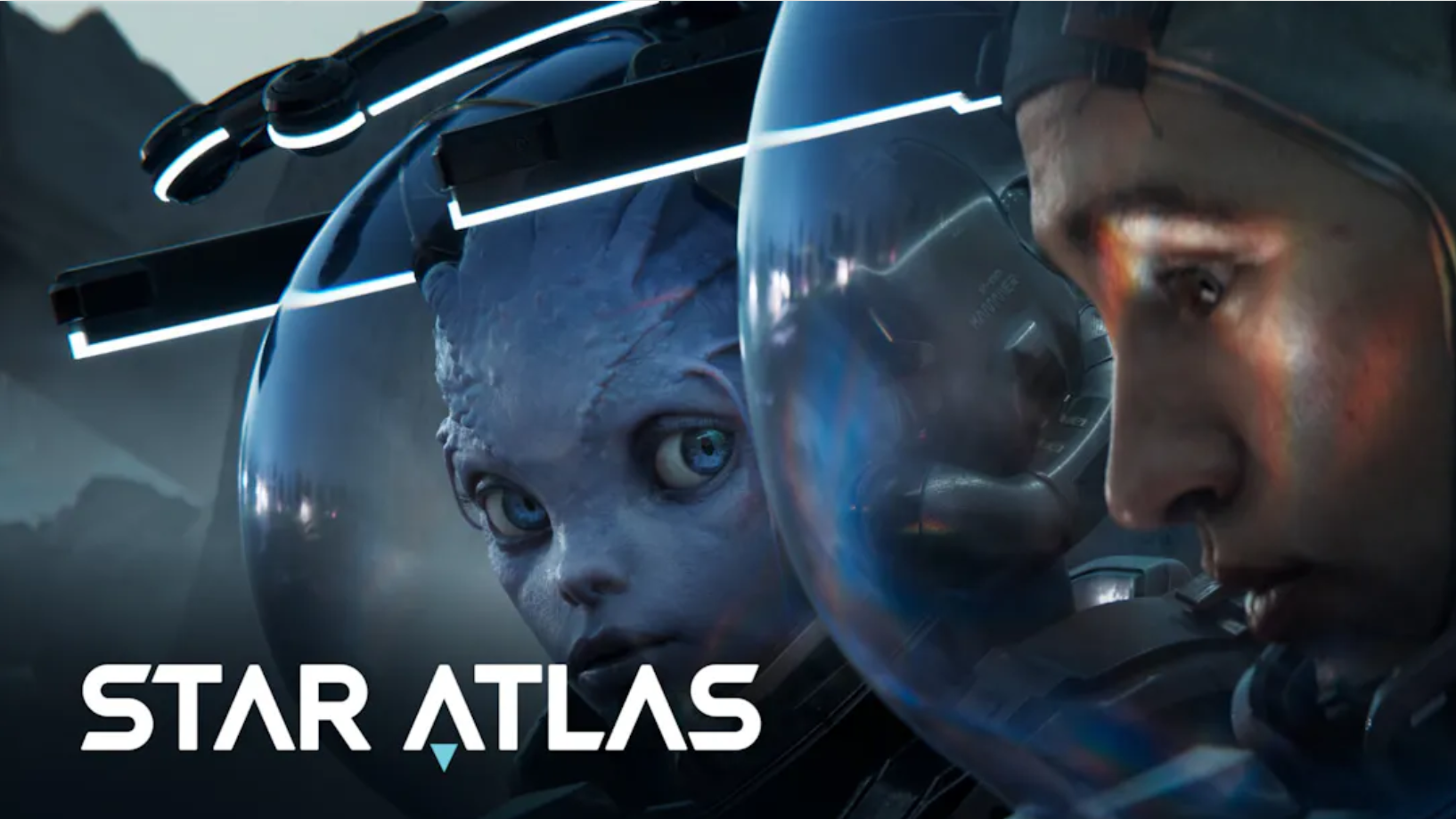
Set in an open universe, the game allows players to explore, navigate a complex economy, and engage in battles to secure dominance across the galaxy. Star Atlas is an ambitious project backed by millions in funding and has been under continuous development for several years.
While the full game is not yet live, several test versions have already been released. For example, in the latest release, players can battle AI in space combat, test third-person shooter modes, participate in time trials, view spaceships, and even try VR gameplay.
Beyond the main Star Atlas game, the team has also developed a companion game called SAGE Labs. SAGE is a 2D, fully on-chain browser game where you can explore, mine resources, craft items, and more. You can think of it as a V0 version of Star Atlas, since it shares the same economic system and assets.

SAGE Economy System
SAGE features a complex economy. To understand its gameplay, you must first grasp how this economy works. I’ll do my best to simplify it.
ATLAS and POLIS
Two primary tokens drive the ecosystem: ATLAS and POLIS. ATLAS is the in-game payment token, serving as a medium of exchange. It is inflationary, with its supply growth rate designed to reflect the expansion of the in-game economy.
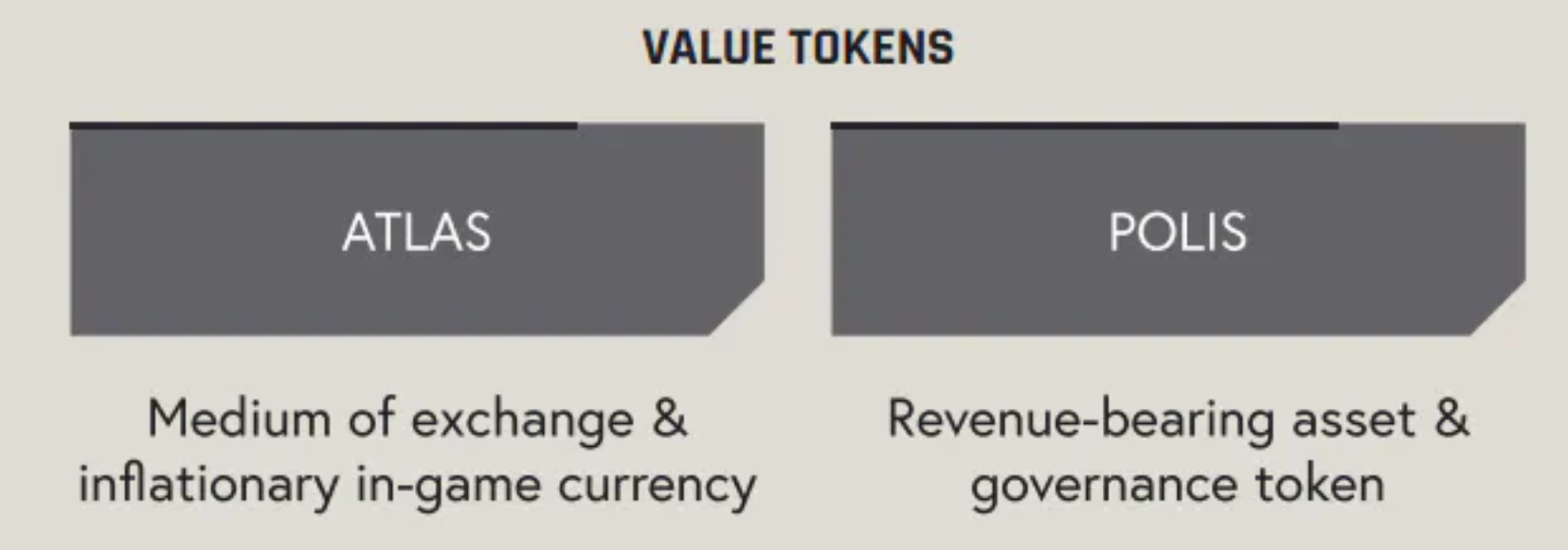
On the other hand, POLIS is the governance token of the game. Holders who stake POLIS gain control over the Star Atlas DAO and its treasury. Unlike ATLAS, POLIS has a fixed total supply.
Resources
Beyond tokens, numerous resources play critical roles in the game.
One type of resource is consumables, essential for in-game exploration. There are four types: food, ammunition, fuel, and toolkits.
Each serves a distinct purpose—for example, food and ammo support survival, fuel powers transportation, and toolkits aid in discovering mining resources.
Another category is raw materials, which can be mined and used to craft other items (discussed below).
For more detailed information about resources, visit this website, which provides comprehensive data on each resource.
Ships
Another major component of the SAGE economy is ships. Ships are crucial for in-game activities such as SDU scanning and mining.

Each ship comes in different sizes, which determine travel distance and speed, cargo capacity, mining speed, and more.
Additionally, ships can be equipped with modules and components, giving them advantages over similar vessels.
To view up-to-date stats for every ship, check this Google Sheet.
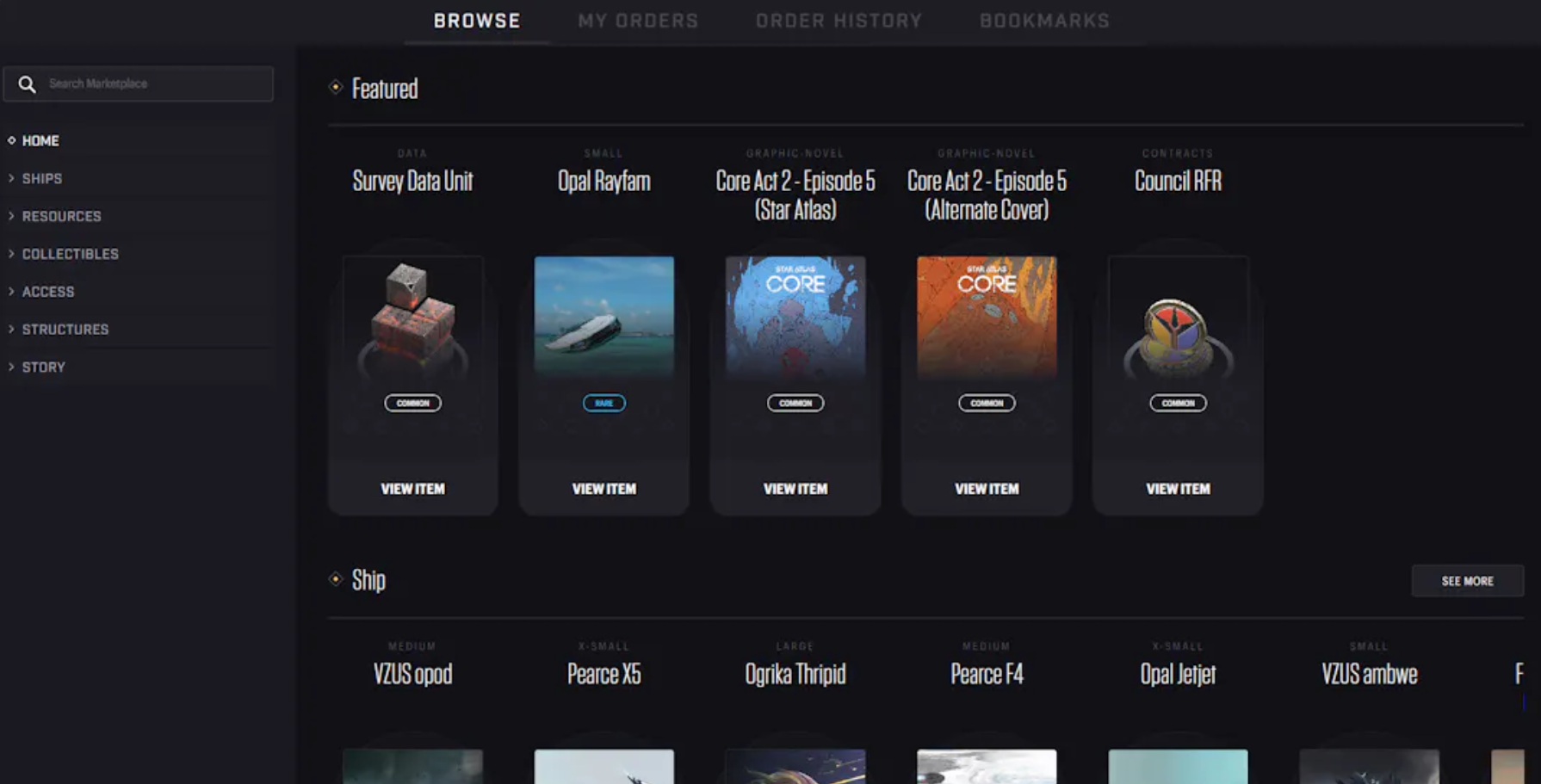
Ships and other in-game assets can be purchased on the Star Atlas Universal Marketplace. Players can also use the marketplace to post bounties, paying others to complete tasks for them.
Gameplay
Now that we’ve covered the SAGE economy, let’s dive into gameplay.
As previously mentioned, there are three core gameplay pillars in SAGE Labs: SDU scanning, mining, and crafting. Let’s break them down.
SDU Scanning
A core element of SAGE Labs is scanning Survey Data Units (SDUs). In this part of the game, you use your ship to scan sections of the map to discover these units.
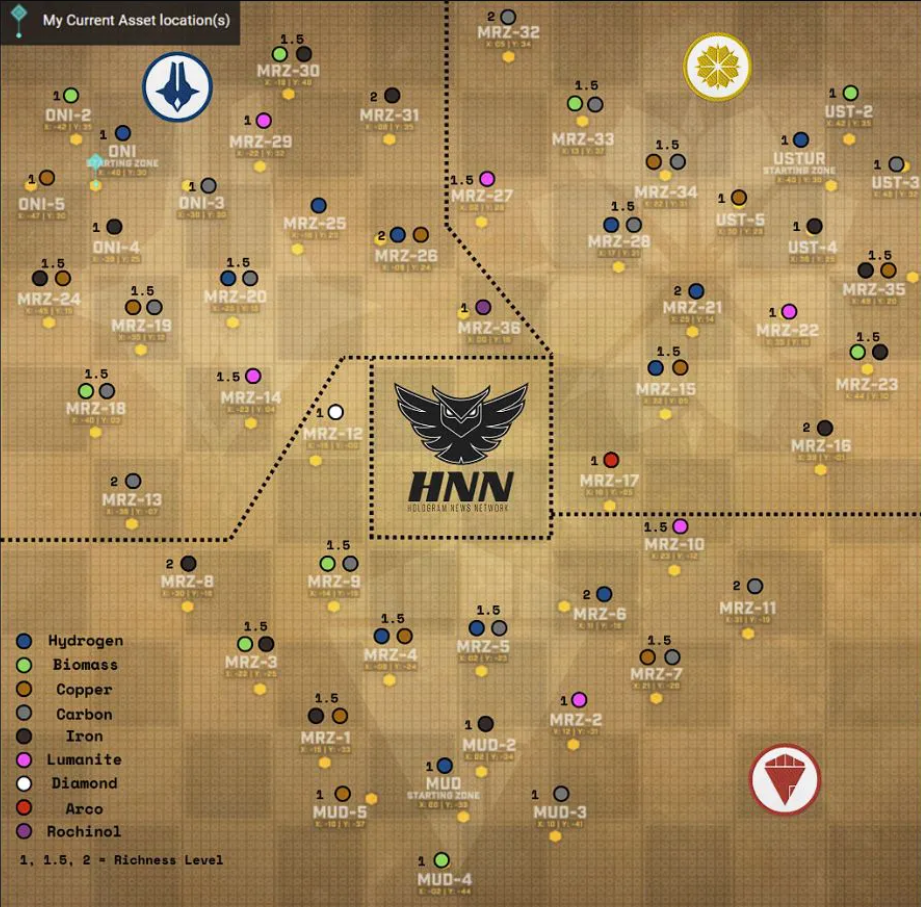
SDU locations and quantities change over time, with only up to 25% of the map containing them at any given moment.
When you find an SDU, you can sell it on the marketplace or redeem it for in-game assets such as items, ships, or Gold Ticket NFTs. If you plan to focus on finding SDUs, owning at least 10 ships is advisable to increase your chances.
Given that the smallest ship costs around $10, SDU hunting is one of the most capital-efficient ways to enter the game.
To maximize your SDU discovery odds, I recommend using this tool, which calculates SDU spawn rates based on your region of the map.
Mining
Another key aspect of SAGE Labs is mining, which involves using your ship to extract various in-game resources.
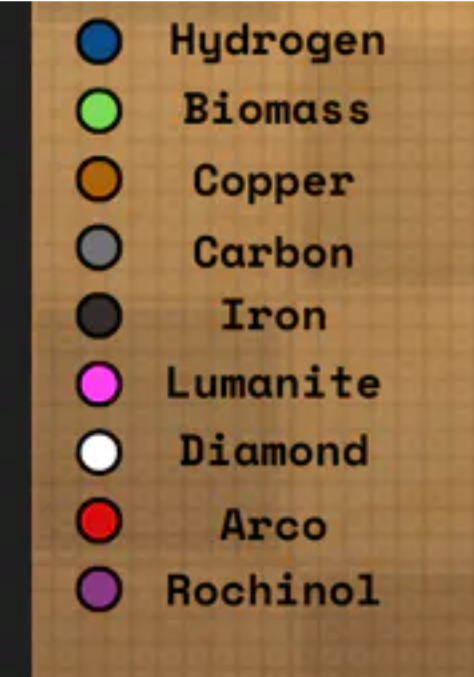
Types of mineable resources
Once mined, these resources can be used to craft components for personal use or sold on the open market.
Your mining speed depends on your ship, the planet you're mining on, and the rarity of the target resource.
Rather than setting artificial fixed supplies, SAGE uses a “size of the straw” approach—meaning resource availability is limited only by how quickly they can be extracted from a specific location (much like a straw limits liquid flow).
Crafting
Crafting is the third core gameplay pillar in SAGE Labs.
As mentioned earlier, crafting involves using your resources to create items that can help build your fleet or be sold on the in-game market.
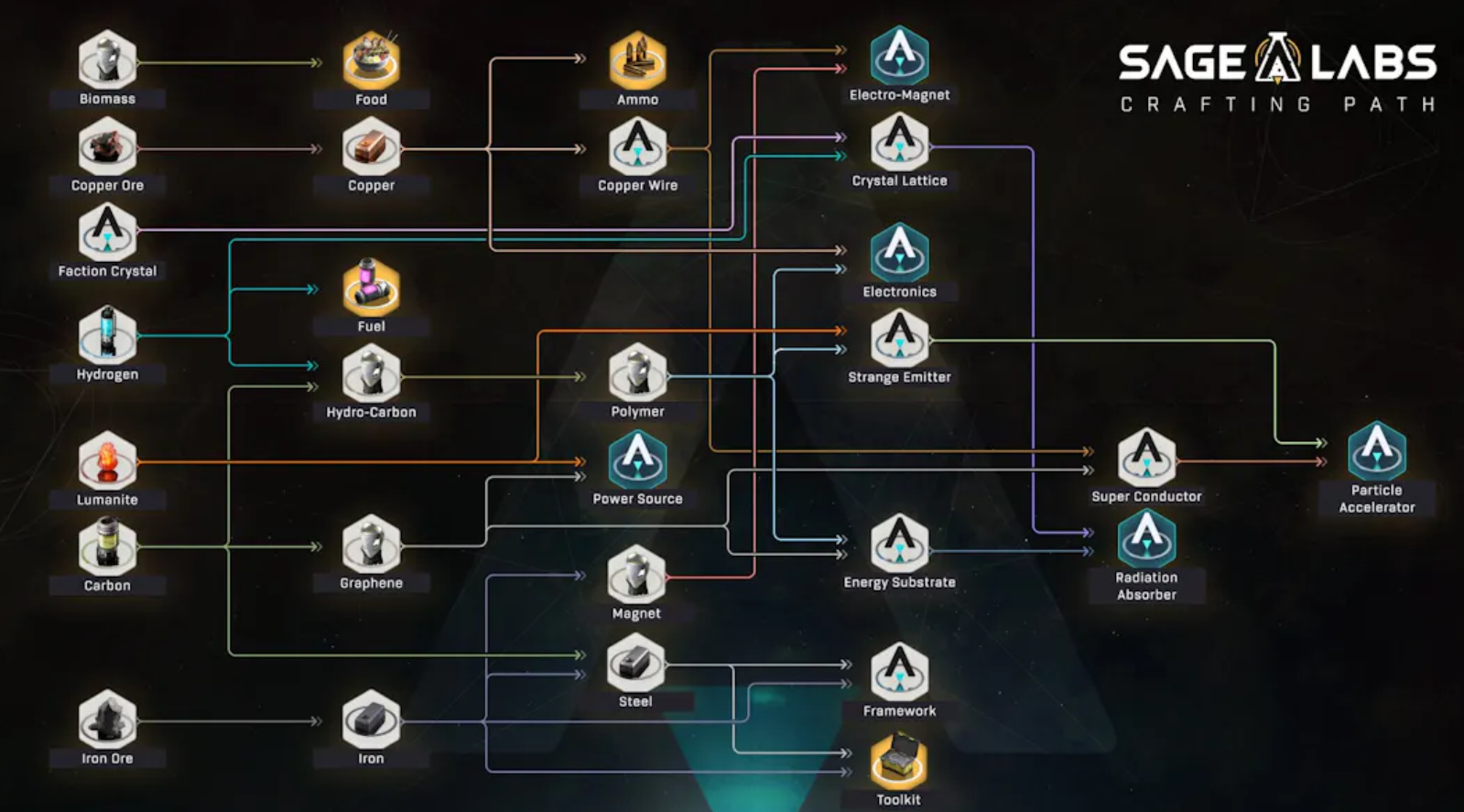
Items available for crafting
Before crafting, calculate the cost of raw materials versus the market price of finished goods, as handmade items aren't always profitable.
Onboarding and User Experience
Now that we've covered SAGE Labs’ economy and gameplay, let's examine onboarding and user experience.
I found getting started quite challenging.
As noted earlier, the in-game economy is complex, requiring extensive calculations and the use of tools linked throughout this article.
The game doesn’t use session keys or one-time wallets, so you must manually confirm every transaction for each action taken.
But don’t worry—I’ll walk you through the initial steps to get started.
The first steps are simple:
-
Connect your Solana wallet
-
Create your character
Then things get more complex, as you’ll need to:
-
Choose a faction
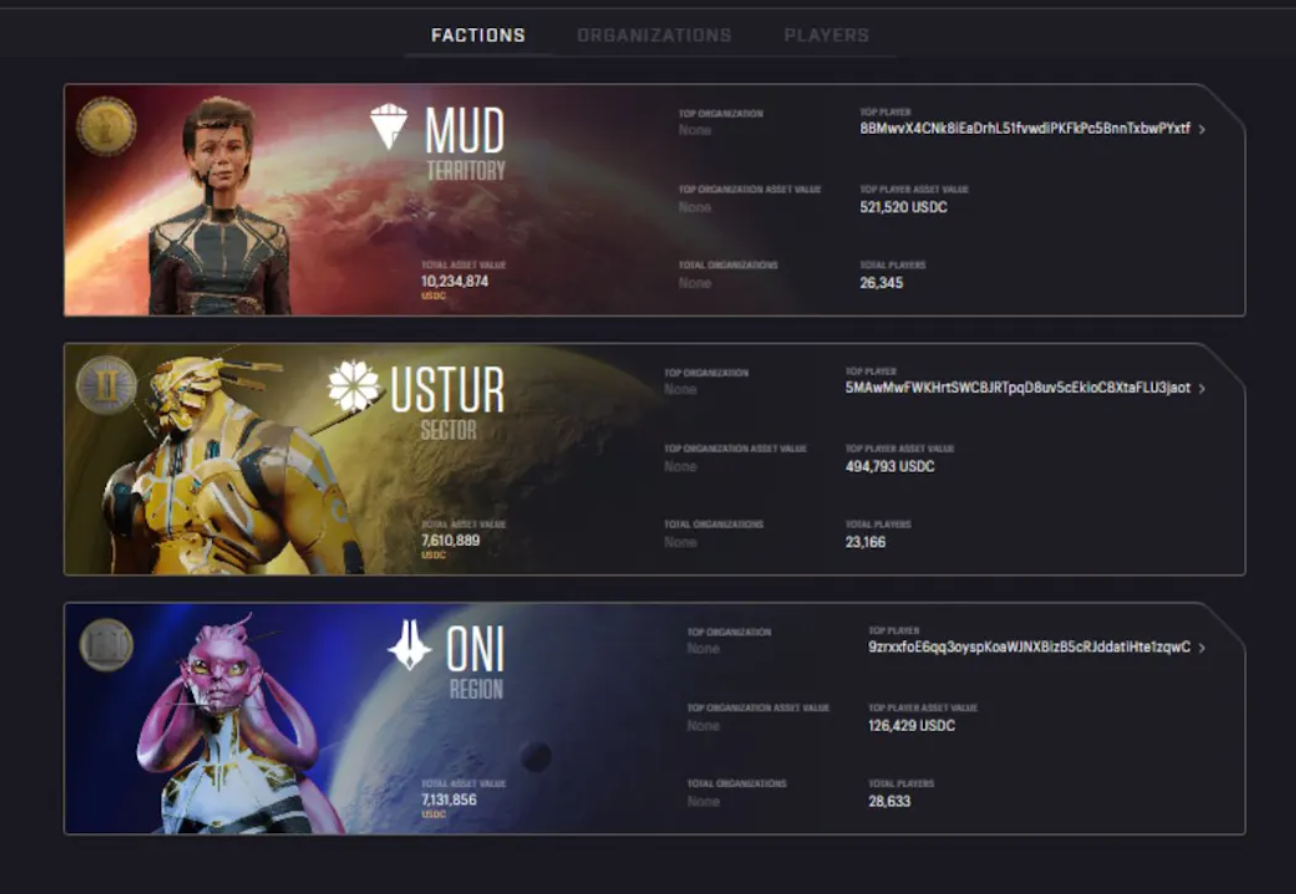
Three different factions
You can choose from three factions: MUD, representing humanity; ONI, a coalition of alien species; and Ustur, a collective of intelligent robots.
Although most players choose MUD, differences between factions are currently minimal.
However, choosing MUD offers some advantages, such as access to MUD infrastructure and support from fellow players.
After selecting your faction, you’ll need to:
-
Pick a name
-
Buy a ship
You’ll need at least one ship purchased from the marketplace to begin playing—the cheapest costing around $10. Additionally, you must own all four consumables to start SDU scanning.
The game’s complexity can feel overwhelming, so I recommend gathering information from Star Atlas’ Discord channel, where you might also be recruited by in-game guilds.
I also suggest playing SAGE 2D V1, as it runs more smoothly, has fewer bugs, and offers more video tutorials.
Conclusion
Overall, I really enjoy SAGE Labs.
Despite its complexity, once you grasp the economy and mechanics, the game becomes deeply engaging.
The developers are continuously building, releasing updates, and teasing new features.
It’s also a great way to get familiar with Star Atlas, so you’ll be ready when the 3D version launches.
Join TechFlow official community to stay tuned
Telegram:https://t.me/TechFlowDaily
X (Twitter):https://x.com/TechFlowPost
X (Twitter) EN:https://x.com/BlockFlow_News
 @WASD_0x