Conversation with Frens.Capital Partner: A Former Web2 Product Manager's Crypto Manifesto
TechFlow Selected TechFlow Selected
Conversation with Frens.Capital Partner: A Former Web2 Product Manager's Crypto Manifesto
A product's architecture and its ability to foster network effects are critical to sustained success.
 Navigating Web3 tides with focused insights
Author: Sunny, TechFlow
Guest: Chris Abiaad, Frens.Capital
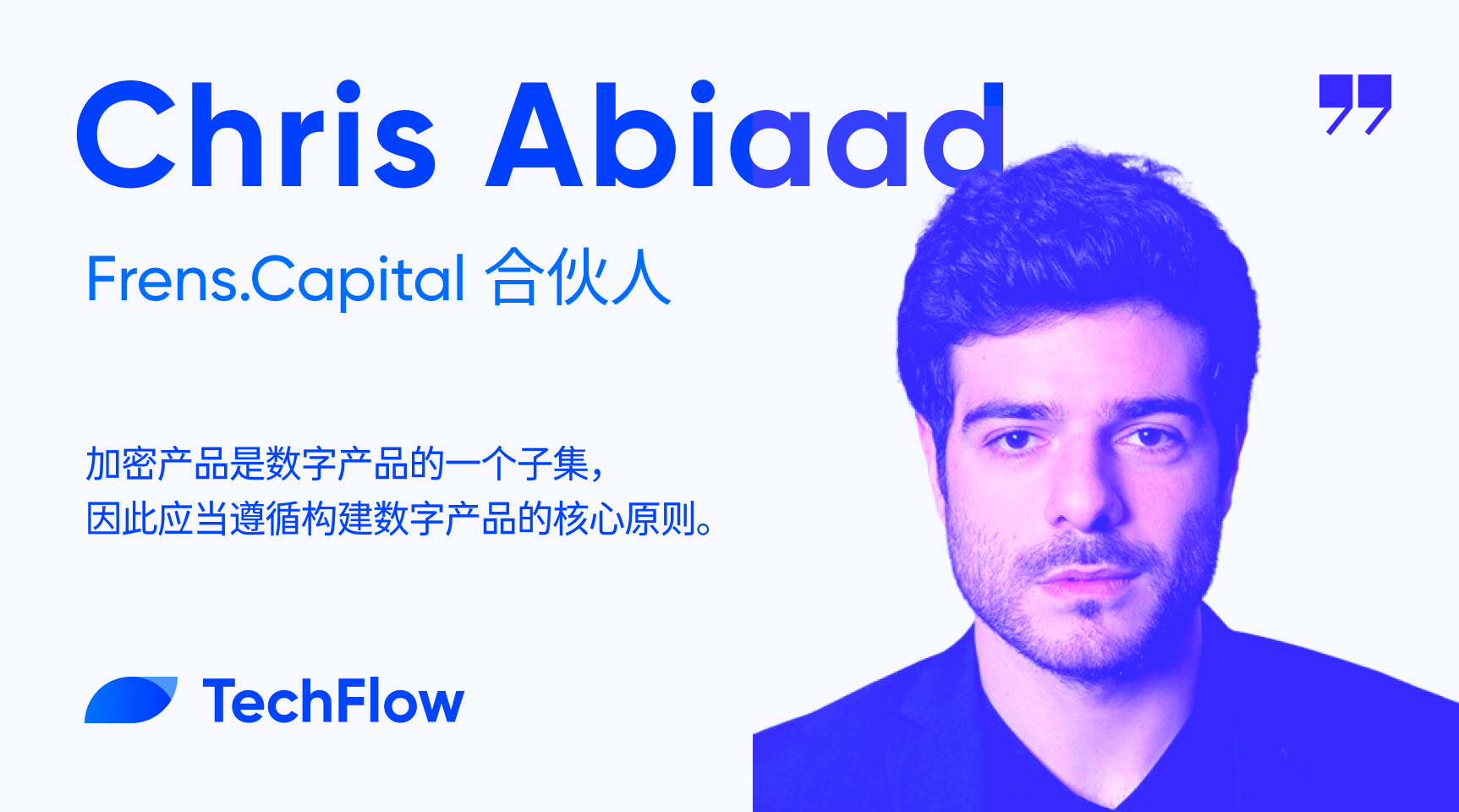
"Crypto products are a subset of digital products, so they should follow the core principles of building digital products."
-- Chris Abiaad, Partner at Frens.Capital
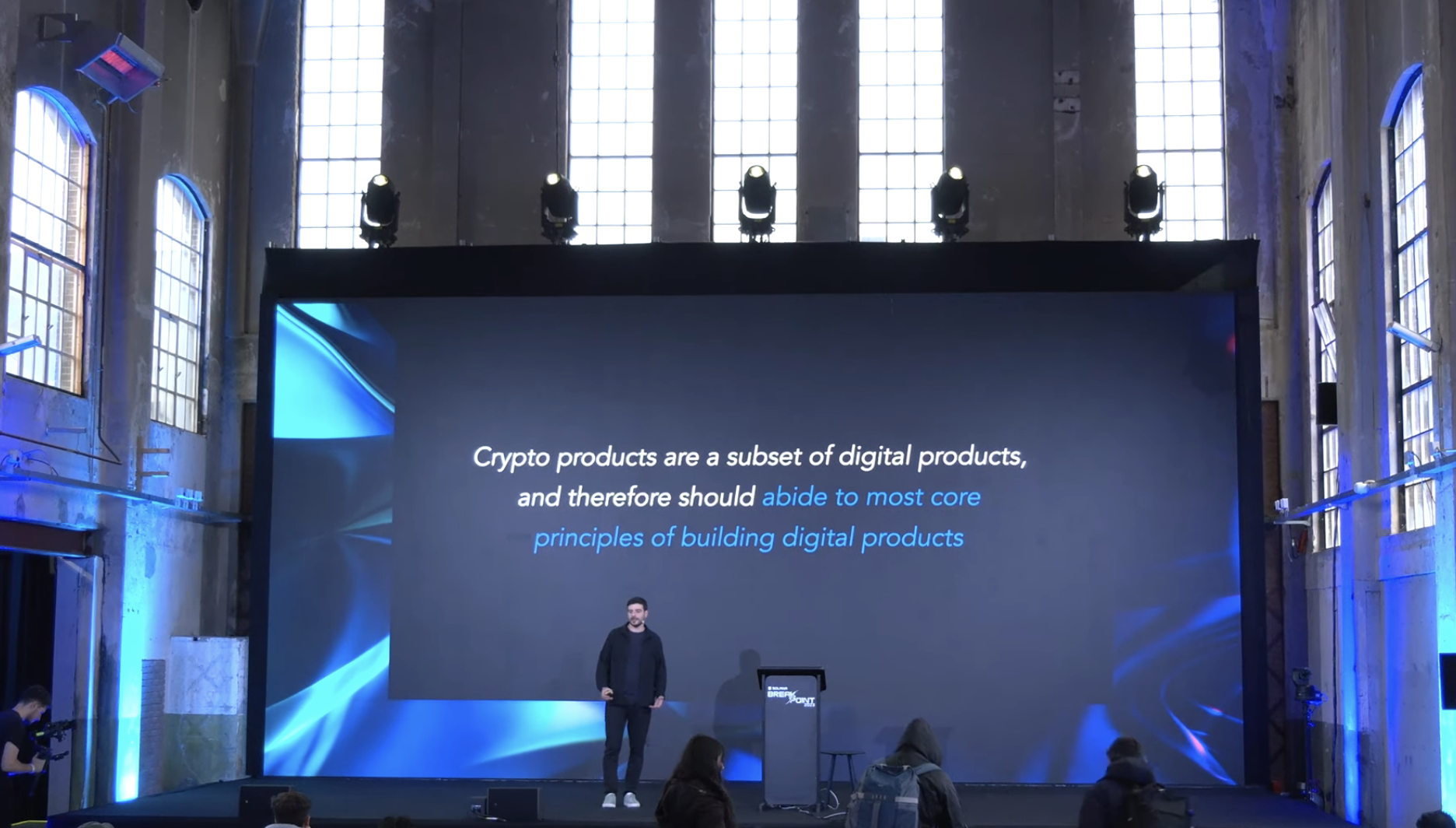
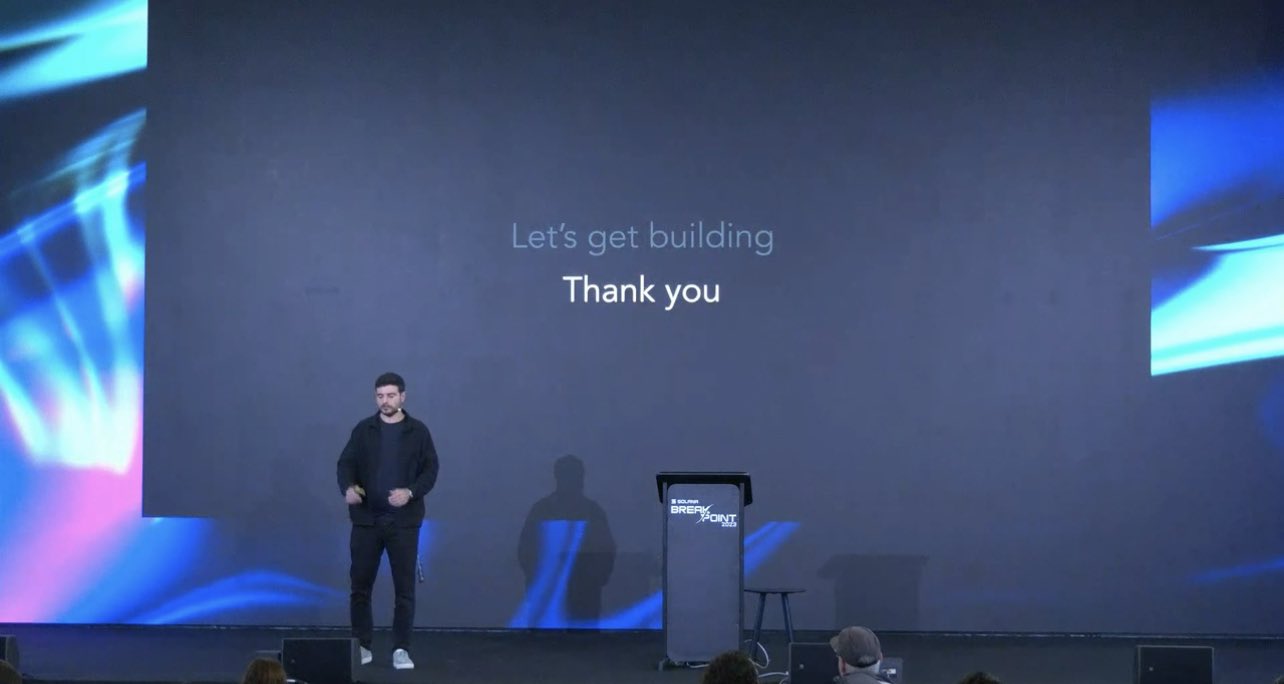
At the annual Solana Developer Conference in Amsterdam in November 2023, Chris Abiaad delivered a keynote speech exploring how to build Web3 products.
The crypto product landscape shows a clear polarization: on one end, there are grassroots initiatives such as airdrops, community formation, and meme coins; on the other, ambitious engineering efforts and consumer-facing products like wallets, payment systems, zero-knowledge proofs, and decentralized exchanges (DEXs).
This dichotomy between engineering and marketing—either extreme technical breakthroughs or shallow, marketing-driven trends—has left product-first projects behind.
So why should we care about Web3 products?
By current statistics, Web2 has 530 million users, while the crypto space has 420 million holders—but only around 3.5 million daily active users truly participate in Web3. Chris offers a simple comparison: traditional internet chess platform Chess.com already boasts 20 million daily active users!
Web3 is still in its early stages. If we believe Web3 represents the future of the internet—the convergence of information, value, and security—we should encourage more people to explore this untapped frontier.
Like the traditional internet industry, Web3 spans multiple verticals. Creating a coherent framework for the Web3 product landscape is no easy task. Chris, founder and partner at Frens.Capital, previously worked as a product manager in the U.S. internet sector before diving deep into crypto. In his keynote, he shared sharp insights from his experience in product design.
In this conversation, we delve into product design, especially the currently hot topic of decentralized physical infrastructure (DePIN). If your goal is to build meaningful products in Web3, this dialogue is tailor-made for you! We hope you find it valuable.
Three Company Cultures: Engineering, Sales, and Product
TechFlow: You previously worked as a product manager in Web2, focusing on building knowledge graphs and data products. How do you view the challenges of designing products in Crypto?
Chris:
In the software industry, companies typically adopt an engineering-led, sales-led, or product-led approach. The difference lies in whether they prioritize core engineering, effective sales strategies, or compelling products. Successful examples include Google (engineering-led), Facebook (sales-led), and Amazon (product-led).
However, the challenge in crypto is that many projects focus solely on user acquisition without considering long-term sustainability or product differentiation.
The analogy between Web2 and Web3 underscores the necessity of creating lifetime value for customers.
Engineering-heavy projects excel at solving complex technical problems, while consumer-facing applications (such as games, DEXes, and NFT projects) require strong product thinking to stand out in a crowded market.
A solid product framework and its ability to foster network effects are critical for sustained success. Unlike engineering challenges that take time to resolve, a product's appeal must be immediately captivating to gain and maintain momentum in the fast-moving crypto market.
TechFlow: What prompted your transition from being a Web2 product manager into the crypto industry, eventually leading you to launch your own crypto liquidity fund?
Chris:
Back in 2016, during my studies at Cornell Tech, I took a blockchain course that sparked my initial interest in the technology. As I learned more about blockchain fundamentals, the 2017 ICO boom further drew my attention. At first, I struggled to navigate the crypto space and pick viable projects among countless random ICOs. Although I didn't formally enter crypto yet, I began consulting for companies, applying my Web2 knowledge to Web3 contexts.
This informal involvement proved valuable. As the last bull market unfolded, I observed a significant increase in substantial products and a growing number of projects adopting genuinely sustainable models.
Recognizing the rising potential, I decided to make a formal move into crypto beyond just consulting and investing. This led me to found Frens.Capital, leveraging my understanding of new projects, their business models, and potential for success.
Frens.Capital and Its Current Liquidity Strategy
TechFlow: In your own words, how would you define a liquidity fund?
Chris:
A fund invests in liquid assets across different maturity stages. In early-stage company investments, it’s similar to venture capital, but because tokens can be freely traded, the liquidity profile differs. This allows the fund to scale positions up or down based on project milestone achievements. It’s a powerful tool that makes investing more dynamic, enabling investors to stay engaged throughout the investment lifecycle.
As a fund, we adhere to a long-only strategy, avoiding shorting or leverage in the current market. Our approach aligns with value investors—emphasizing deep understanding of assets, gradual accumulation, continuous tracking of metrics, and a commitment to hold for at least two years.
DePIN as a Global, Permissionless Infrastructure System
TechFlow: Based on your tweets, you’re a strong believer in decentralized physical infrastructure (DePIN). How would you explain DePIN?
Chris:
I see the decentralization of physical infrastructure—exemplified by projects like Helium, Akash Network, and Hivemapper—as a powerful force toward democratizing large-scale physical networks.
What’s particularly interesting is how the crypto space addresses the challenges associated with these efforts, which often involve significant capital expenditures (capex).
Building cellular networks or mapping global mobile hotspots and Wi-Fi requires massive funding and coordination across vast geographies and diverse hardware devices.
The DePIN approach stands out because it enables crypto projects to crowdsource capex, promoting decentralized resource coordination and transparency.
This provides clear visibility into network growth, allowing people to strategically organize resources and address coverage gaps. For example, when building a cellular network, if a specific area lacks coverage, increasing incentives in that region becomes a viable strategy to improve overall coverage.
We are witnessing groundbreaking innovation in crypto, especially in building large-scale physical infrastructure networks.
This marks a unique era, as it’s now possible to build global ecosystems at scale without permission or massive capital—something previously unattainable.
Advice for Young Entrepreneurs in Crypto
TechFlow: Regarding DePIN products, what advice would you give to someone planning to launch their own project in this space? With your extensive experience in Web2 and an industrial engineering background that provides a solid foundation in product thinking, what guidance would you offer aspiring young entrepreneurs looking to launch their own Web3 projects?
Chris:
DePIN offers a unique opportunity in crypto by enabling business models that were previously unfeasible.
My advice is aimed at individuals with experience across industries such as energy, telecommunications, computing, IoT, AI, and services. Domain experts can leverage the DePIN model to build their own networks.
In the DePIN space, a deep understanding of hardware is crucial. Precise execution is paramount—projects like Helium demonstrate both the difficulty and the potential rewards.
For young professionals entering crypto, my first piece of advice is to identify a real problem within your own domain of expertise.
Crypto spans numerous industries, so choose one where passion meets expertise. Clearly define the problem and formulate a clear hypothesis for solving it.
This approach helps navigate through the noise of crypto Twitter and the broader crypto space. As a developer, avoid rushing to launch a token or obsessing over tokenomics.
Substance is key—developers should prioritize medium- to long-term thinking over short-term hype.
How to Navigate Beyond Noisy Crypto Twitter
TechFlow: If not crypto Twitter, where else should people go to truly learn substantive content?
Chris:
While publishing threads on crypto Twitter can be beneficial, developers must avoid focusing solely on building a strong presence there. Constant engagement can lead to getting lost in the noise.
It’s crucial to seek high-signal information through channels like specialized research groups, dedicated data providers, and research publications.
Conferences offer face-to-face interactions, fostering a well-rounded information-gathering approach. A developer’s journey is often influenced by short-term sentiment, especially when projects become symbolic.
TechFlow: I think what you said resonates with my own experience. Once, during a visit to Singapore, I attended a crypto discussion and met mostly people from TradeFi backgrounds. I found it challenging to engage because my understanding of TradeFi was limited.
They were trying to translate the complexities of TradeFi into protocols within the DeFi space. Also, I recently listened to a Lightspeed podcast discussing Solana’s ecosystem.
One line stood out to me: 'Crypto favors mature individuals who can build better solutions.' This seems to contradict the prevailing narrative in the crypto industry, where stories of young people getting rich overnight without deep knowledge are abundant.
Chris:
You're absolutely right.
I believe certain traits make great founders regardless of industry, and institutions like Y Combinator have done excellent work studying brilliant tech founders.
Determination is a key trait, and maturity is often cultivated through experience. However, experience isn’t a prerequisite for building successful companies—countless successful founders have proven that.
While there’s no one-size-fits-all rule, there are strong guidelines on what not to do. In crypto, a key point is: don’t launch a token unless absolutely necessary.
Many overnight success stories have since faded, highlighting the importance of crypto companies building solid foundations—companies whose true aim is to change the world, much like Facebook, Amazon, and Google did. Some promising crypto projects are already on track to become such transformative entities.
How to Avoid Zero-Sum Product Design in Crypto?
TechFlow: In the crypto company space, there’s a polarization: one side resembles zero-sum games, the other non-zero-sum games. In product development, various industries share common techniques, whether inside or outside crypto.
From your perspective, how can one avoid zero-sum game dynamics in product design? What factors contribute to creating crypto products with lasting impact?
Chris:
That’s a great question. First, I want to emphasize that all good products take time to build.
Take Bitcoin—it’s been around for 15 years. Building a great product in crypto requires adhering to the same principles that apply to digital and Web2 products. A key factor that makes a product great is its ability to solve real problems for users.
Depending on the industry, some products benefit from network effects, while others leverage economies of scale. Understanding your product category is crucial.
Rather than pushing crypto to the forefront, compare your product against existing alternatives and show how users gain more from your solution.
Start by asking whether your solution is ten times better than the existing product. While "ten times" isn’t literal, it means aiming to deliver a significantly better solution. Consider frameworks that assess your product’s applicability to many users, frequency of use, and the value users derive.
While not every answer needs to be a perfect "yes," most should clearly align positively with these considerations.
Decentralized GPU Market: Akash Network
TechFlow: What’s your favorite crypto product? Can you explain it technically?
Chris:
I’m a big fan of Akash Network.
Decentralized computing extends the advantages of DePIN discussed earlier into the computing market. It allows individuals or small companies to contribute their GPUs and CPUs, democratizing access to computing power and enabling them to contribute excess capacity to the network for others to use—instead of relying on large corporations to build massive data centers and pay high capex for GPUs and CPUs.
TechFlow: How efficient is using decentralized computing infrastructure like Akash Network? Many people are skeptical about the efficiency of decentralized products...
Chris:
Of course, it depends on the GPU used. Take Akash, for example—its Foundry is a well-known entity in crypto, offering high-end GPUs like Nvidia A1HUNDREDS and H1HUNDREDS. There are two key factors here.
First, due to the AI boom, high-end GPUs are extremely scarce resources.
Second, Akash, as a decentralized marketplace, enables dynamic pricing based on market conditions. When supply is abundant, prices can be more affordable than those on platforms like Amazon, Google, or Microsoft.
Conversely, during shortages, prices rise—similar to Uber’s surge pricing model, adjusting according to demand.
On the demand side, potential users include AI startups training foundational models and game developers seeking GPU resources for their projects.
The token has performed exceptionally well. What particularly impresses me are Akash’s remarkable statistics—especially its strong, non-incentivized, natural, and organic demand. I consider this highly significant.
TechFlow: How did you first hear about Akash Network?
Chris:
I’ve been interested in DePIN, and notably, Akash has existed for quite some time—that’s a positive sign. Unlike many new projects jumping on the AI bandwagon, Akash has already established itself as a decentralized cloud marketplace. What sets them apart is building a compute marketplace on top of their existing cloud infrastructure.
TechFlow: Now we have Gensyn, CUDOs (decentralized cloud services), and others—how do you view competition in the decentralized computing market?
Chris:
In this market, I believe we’ll see multiple players thrive rather than a single dominant winner.
Similar to the cloud computing market with AWS, Google Cloud, and Microsoft Azure, competition may result in a few dominant players sharing market share. This diversified landscape benefits both the market and consumers by fostering healthy competition. While I’m not very familiar with CUDOs, generally speaking, the existence of alternatives is a positive development.
Miami’s Crypto Community
TechFlow: You work in Miami—what’s your take on Miami’s crypto community?
Chris:
I love Miami—it offers a great balance for crypto enthusiasts, bringing together developers, investors, and local crypto natives. The environment is highly conducive to crypto development, fostering rich conversations and exchanges.
Here, people are eager to expand their market knowledge, showing less interest in trading and more desire to dive deep into the technological aspects of the crypto revolution.
Miami draws heavily from innovations in New York, San Francisco, and globally, making it an ideal gathering place for crypto enthusiasts. Personally, I find living and building within Miami’s crypto community deeply enjoyable.
Crypto Outlook for 2024
TechFlow: What’s your outlook for the crypto market in 2024?
Chris:
Absolutely, I believe we’ll continue to see progress. On crypto Twitter, people tend to focus on one thing at a time and then move on—in contrast, I foresee continuous advancements across multiple verticals.
Whether in DePIN, ordinals, or modular narratives, many storylines will unfold. The key point is that progress remains progress, regardless of prevailing narratives.
The next few years will be huge for crypto. Certain products will truly reach escape velocity, ripple beyond crypto, and potentially bring 100 million users on-chain. Now is an exciting time to be working in this space.
Closing Words:
Chris is also a co-founder of a high-quality research DAO. If you're passionate about products and have strong research output, feel free to DM him on Twitter.
More readings:
Join TechFlow official community to stay tuned
Telegram:https://t.me/TechFlowDaily
X (Twitter):https://x.com/TechFlowPost
X (Twitter) EN:https://x.com/BlockFlow_News
 深潮TechFlow