95-Year-Old Buffett Shares 7 Insights: Now Is Not Yet the Time to Buy the Dip; Nuclear Weapons Will Eventually Be Used
TechFlow Selected TechFlow Selected
95-Year-Old Buffett Shares 7 Insights: Now Is Not Yet the Time to Buy the Dip; Nuclear Weapons Will Eventually Be Used
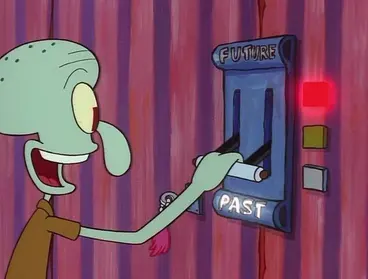
A person who relinquishes power remains more interested in the future than in the past.
 Navigating Web3 tides with focused insights
Author: Curry, TechFlow
Yesterday, Warren Buffett granted an exclusive interview to CNBC in the U.S.
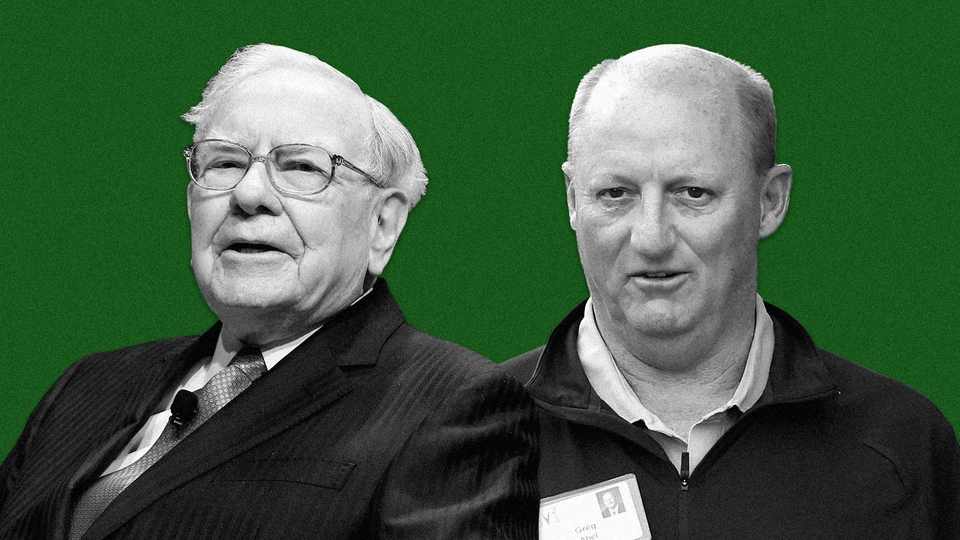
This marks his first extended interview since stepping down as CEO of Berkshire Hathaway on January 1, 2026—after six decades at the helm and at age 95. With the reins now handed over to Greg Abel, he could have easily opted out of public commentary altogether.
Yet he spoke—about Apple, the Federal Reserve, Bill Gates and Jeffrey Epstein, Iran’s nuclear program—and even announced the return of his charitable lunch auction, which had been suspended for four years.
The information density was immense; let’s unpack it point by point.
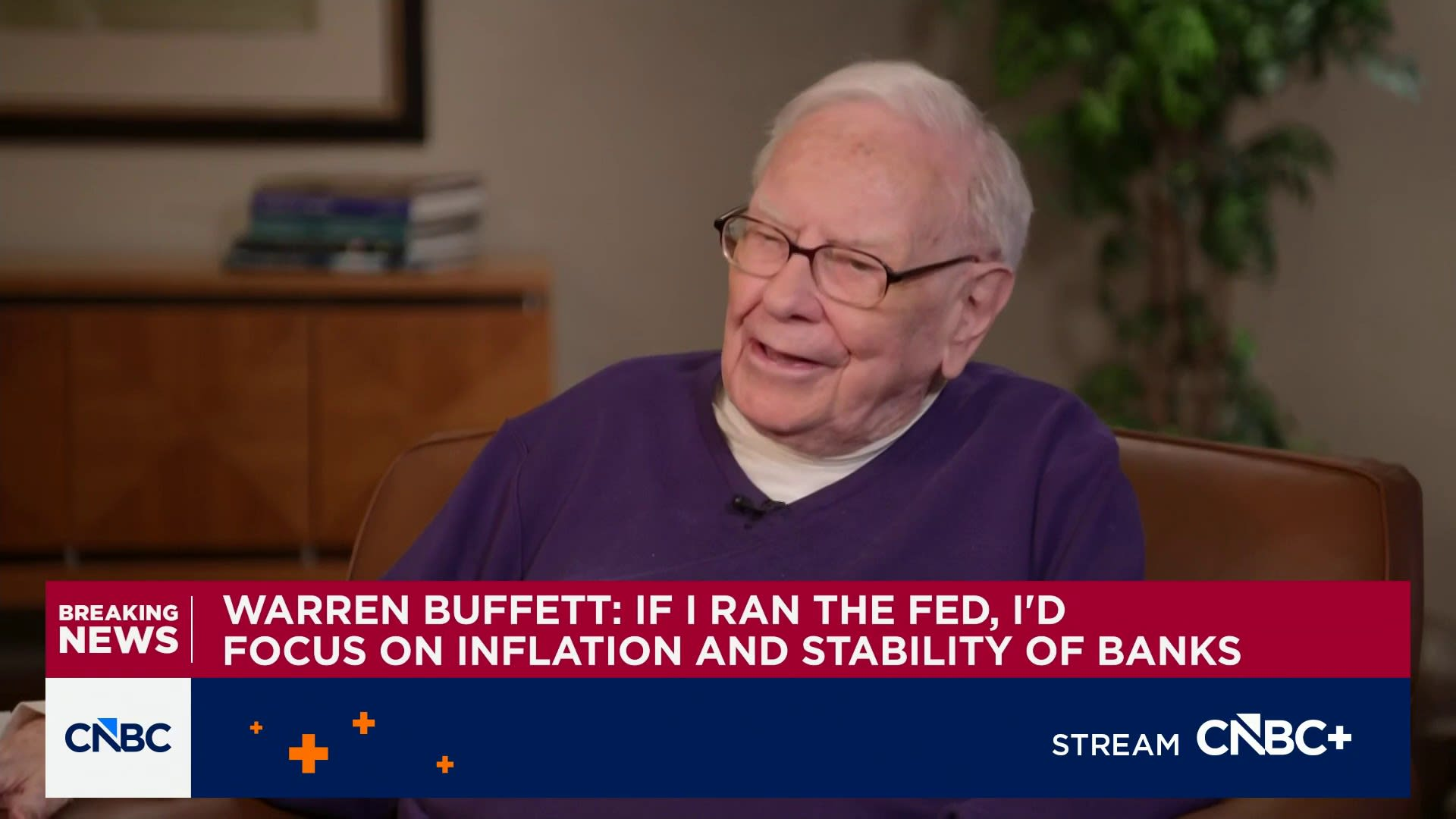
I. He Went Back to Work on Day One of Retirement
Buffett said he still goes into the office every day.
Each morning before market open, he calls Mark Millard, Berkshire’s head of financial assets, to discuss market developments and potential trades. Millard’s office is roughly six meters away—so once the call ends, Buffett walks over to execute decisions. When asked whether he’d made any new moves recently, Buffett confirmed he had placed a “tiny” trade—but declined to disclose what it was.
He also drew a clear line: he will not make any investment without Abel’s approval, and Abel receives a daily summary of all investment activity.
This arrangement sounds like a formal handover of final decision-making authority to the new CEO. Yet another way to interpret it is that the 95-year-old predecessor remains physically present every day, participates actively every day, executes trades every day—and his successor works just six meters away.
In the interview, Buffett lavished praise on Abel, saying Abel accomplishes more in one day than Buffett did at his peak in a full week—and that he’d rather entrust Abel with managing his personal wealth than any top-tier investment advisor in America.
Nominally, he has retired. But this “retirement” feels more like a transition from CEO to someone sitting right beside the CEO.
II. He Sold Apple Too Early—But Won’t Buy It Now Either
In this interview, Buffett acknowledged one thing outright: Berkshire sold its Apple stake too early.
His exact words: “I sold it too soon. But, I bought it even sooner, so…”
In other words: yes, he sold early—but he bought earlier, so he still profited handsomely. He revealed that Berkshire’s pre-tax profit on its Apple investment exceeded $100 billion.
The timeline: Berkshire began accumulating Apple shares around 2016. Its position swelled to over $170 billion at its peak—the largest single holding in Berkshire’s history.
Between 2023 and 2024, Berkshire cut its Apple stake by roughly two-thirds. As of year-end last year, SEC filings show Berkshire held approximately 22.79 million Apple shares, valued at roughly $62 billion—still accounting for 22.6% of its entire investment portfolio and remaining its top holding.
Buffett stated Apple is better than any wholly owned subsidiary of Berkshire.
Berkshire’s railroad subsidiary BNSF has a higher market capitalization than Berkshire’s Apple position—but Apple remains the top holding by portfolio weight. He also praised Apple CEO Tim Cook as a “fantastic manager,” marveling at how Cook manages to get along with everyone worldwide.
When asked whether Berkshire would re-enter the position, Buffett gave a conditional answer: “Not impossible—if Apple’s price falls to a certain level, Berkshire would buy heavily. But not now—‘not in this market.’”
Apple has already fallen more than 14% from its yearly high—but in Buffett’s view, it hasn’t yet reached a price where he’d act.
III. The Market Has Dropped 50% Three Times—This Is Nothing
U.S. equities haven’t looked great this year. As of the day of the interview, the Dow Jones Industrial Average was down roughly 5% year-to-date, the S&P 500 down about 6%, and the Nasdaq down nearly 9%. Apple itself had retreated more than 14% from its yearly high.
Buffett’s reaction? “Nothing to get excited about.”
He noted that since taking over Berkshire, the company’s stock has plunged more than 50% on at least three occasions. Compared with those episodes, the current pullback is trivial.
He also showed no inclination to deploy large sums now. To him, today’s market is nowhere near those historic moments that “create massive opportunities.”
In just a few sentences, he both calmed nerves—and signaled he won’t be rushing to “buy the dip.”
IV. Inflation Target Should Be Zero
Asked whether the Fed is currently more concerned about inflation or employment, Buffett declined to pick sides—and instead offered a broader view: he believes the Fed’s inflation target should be zero.
His reasoning: once you accept a 2% tolerance, the long-term compounding effect is staggering. And for ordinary people, earning 2% interest on savings while paying tax on that 2% means their real purchasing power is actually eroding.
Buffett added that, compared to employment data, he cares more about the U.S. dollar’s status as the world’s reserve currency—and about the stability of the banking system.
He praised Fed Chair Jerome Powell’s decisive action in March 2020 at the onset of the pandemic, saying a delay of just two or three weeks would have been catastrophic: “Once dominoes start falling, they topple faster than anyone imagines.” In Buffett’s estimation, Powell and Paul Volcker—the Fed chair who tamed inflation through aggressive rate hikes in the 1980s—are the two most respected figures in Fed history.
That said, Buffett isn’t without criticism. He considers the 2% inflation target a fundamental error—one that effectively tells people, “It’s better to spend than save.”
V. The Charitable Lunch Is Back
What changed Buffett’s mind was the death of one person.
Cecil Williams, founder of Glide Foundation, passed away in 2024. Glide is a San Francisco-based charity serving unhoused individuals. Buffett’s late wife, Susan, volunteered there for many years. Starting in 2000, Buffett annually auctioned off a lunch with himself—the proceeds going entirely to Glide. The event ran for 22 years, with the last edition held in 2022—after which Buffett announced he would discontinue it.
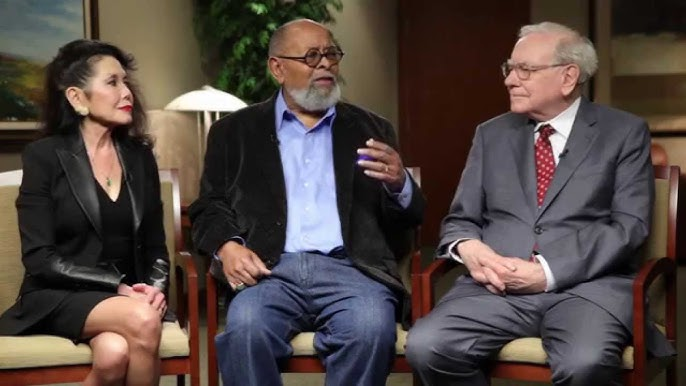
Photo: Cecil Williams (center)
But Williams’ passing prompted Buffett to reverse course. He said Williams believed Glide must never cease to exist.
This year’s new lunch format has changed.
Buffett will no longer attend solo. His co-host will be four-time NBA champion Stephen Curry and his wife Ayesha Curry. The auction opens May 7 on eBay, with a starting bid of $50,000. The winner may bring up to seven guests to join the three of them for lunch in Omaha on June 24. Proceeds will be split evenly—50% to Glide and 50% to the Eat. Learn. Play. Foundation, a nonprofit founded by the Currys to support youth in Oakland.
The last time cryptocurrency entered the picture was in 2019, when TRON founder Justin Sun paid $4.57 million for the lunch. Afterward, Buffett donated the Bitcoin Sun gifted him.
VI. No Longer in Touch with Gates
This is Buffett’s first public comment on Bill Gates since stepping down.
He stated he has not spoken to Gates since documents related to Jeffrey Epstein became public. His exact words: “I don’t want to be in a position where I know things … to be called as a witness.” He doesn’t want to know too much—and doesn’t want to be subpoenaed to testify.
Buffett and Gates enjoyed a decades-long friendship. In 2010, they jointly launched The Giving Pledge—a campaign urging the world’s wealthiest individuals to commit the majority of their wealth to philanthropy. Since 2006, Buffett has donated over $43 billion to the Gates Foundation.
Gates’ association with Epstein began in 2011—three years after Epstein pleaded guilty in Florida to sex crimes. Since late last year, the U.S. Department of Justice and Congress have released numerous related documents—including emails and photos linking Gates and Epstein.
According to a prior Wall Street Journal report, Gates apologized to Gates Foundation staff in February this year, acknowledging his relationship with Epstein—and admitting to extramarital affairs. Gates has accepted an invitation from the House Oversight Committee to testify on the matter, though a date has not yet been set.
When asked whether he still considers Gates a close friend, Buffett responded with notable restraint. He referenced their shared history launching The Giving Pledge—but then added:
“I think it’s unnecessary to say much before things are clarified.”
VII. Nuclear Weapons Will Be Used—Eventually
Toward the end of the interview, the conversation turned to Iran.
Buffett observed that there are currently nine nuclear-armed states—compared with only two during the Cold War (the U.S. and USSR), when tensions were already extremely high. Back then, however, decision-makers on both sides were at least rational. Today, the situation is entirely different.
He specifically cited Iran and North Korea. The most dangerous scenario, he said, arises when someone holding nuclear launch authority is either dying—or facing profound humiliation. Under such circumstances, no one can predict what decisions that person might make.
When asked what advice he’d give the U.S. president on handling Iran’s uranium enrichment program, Buffett declined to offer specifics—and instead delivered a statement sounding almost fatalistic: “Within the next hundred years—or perhaps two hundred—nuclear weapons will be used. I don’t know exactly how it will happen, but I see it as a probability problem: the more countries that possess nuclear weapons, the higher the probability.”
On whether Iran should acquire nuclear weapons, he simply said: “If Iran gets the bomb, things will become harder—not easier.”
A 95-year-old man who witnessed the end of WWII, the entirety of the Cold War, the Cuban Missile Crisis, and the Soviet Union’s collapse… left this sobering judgment at the close of the interview.
The interview lasted just over an hour—and covered nearly everything.
Yet the detail that struck this writer most was this: At age 95, three months into retirement, Buffett uttered not a single word about “looking back” or “summarizing his life” on camera.
Every sentence looked forward.
Should Berkshire buy Apple again? How should the Fed set its inflation target? How will the Iran situation evolve? How will the new charitable lunch unfold?… Becky Quick, the interviewer seated across from him, offered him multiple openings to reflect sentimentally—he declined every one.
It’s rare to encounter someone who has formally relinquished power yet remains more curious about the future than nostalgic for the past.
The Oracle may be aging—but he remains the Oracle. Only now, instead of voting with money, he votes with judgment.
Join TechFlow official community to stay tuned
Telegram:https://t.me/TechFlowDaily
X (Twitter):https://x.com/TechFlowPost
X (Twitter) EN:https://x.com/BlockFlow_News
 深潮TechFlow