








New public blockchain with steady progress: A comprehensive overview of Sui's recent developments
TechFlow Selected TechFlow Selected
New public blockchain with steady progress: A comprehensive overview of Sui's recent developments
The token price has recently returned to the listing price level of 2023, with active spot and futures trading volume, currently in a consolidation phase or on the verge of a further upward breakout.
 Navigating Web3 tides with focused insights
Author: Alfred, LD Capital
I. Fundamental Overview
In June 2019, Facebook (now Meta) announced plans to build a permissioned blockchain and a digital wallet to support a global payment network. The Libra Association (later renamed Diem) was established to develop the blockchain, while its subsidiary Calibra (later renamed Novi Finance) focused on developing the digital wallet. However, neither project was fully realized, and both Diem and Novi were terminated in 2022. Based on research from Diem and Novi, two independent blockchains emerged: Aptos and Sui. Aptos inherited Diem's legacy and iterated upon its technology, while Mysten Labs built an entirely new blockchain—Sui.
Sui is a brand-new public blockchain—an innovative Layer 1 blockchain and smart contract platform designed from the ground up to make digital asset ownership fast, private, secure, and accessible to everyone. The name "Sui" draws inspiration from the Japanese philosophical concept of water, symbolizing strength through fluidity—the ability to easily adapt and transform across any environment.
1. Features and Advantages of Sui
(1) High scalability, speed, and potential for large-scale Web3 adoption:
Sui Move Programming Language: In mainstream Solidity-based designs, assets are represented as numerical values that are increased or decreased within wallets during transfers, rather than being truly moved. Move treats assets as resources stored in modules—similar to smart contracts—where these resources cannot be copied or deleted, only moved or stored. These resources are transparent within their owning contract but opaque to external calls. Simply put, Move isolates assets and changes ownership through movement, which is how it gets its name.
Building on Move, Sui introduces improvements forming the Sui Move language, with key differences such as object-centric global storage, address representation via object IDs, and globally unique IDs for objects—forming the foundational layer for Sui’s broader technological innovations.
(2) Object-Centric Data Model:
On Sui, assets are modeled as type objects, each possessing a stable, globally unique ID. Every object can be transferred to another without interacting directly with a smart contract and can even interact with different smart contracts operating on your assets. All transactions on Sui take objects as inputs and produce new or modified objects as outputs. By observing all active objects, the global state can be determined.
Objects are mutable assets capable of owning other objects. Developers can modify, combine, and create hierarchical structures, giving Sui strong composability. Asset composability is crucial for scalability—for example, in gaming, you may own assets like stone, wood, and cement, which a contract allows combining into a house. Most blockchain data models poorly represent asset ownership, imposing limitations that make stateful applications (e.g., games, social apps) difficult to build. Sui’s object-centric model solves these usability and programmability challenges.
(3) Dual Consensus Mechanism:
Sui’s system design overcomes a critical bottleneck present in many blockchains: the need to reach global consensus on a totally ordered list of transactions. Since many transactions do not compete for the same resources, this sequential computation is inefficient. Sui breaks through scalability barriers by enabling parallel processing via dual consensus mechanisms, classifying transactions into complex and simple types.
Complex Transactions: Complex transactions involving shared objects are ordered and finalized using Sui’s Narwhal and Bullshark protocols. The Narwhal mempool ensures availability of submitted transaction data and provides a directed acyclic graph (DAG)-structured path for traversing (ordering) this data. Bullshark consensus achieves agreement on a specific DAG traversal (a DAG-based ordering), selecting a definitive sequence for these structured data points.
Five steps are required before final confirmation of a complex transaction:
1. Transactions are broadcast from individual users/clients to nodes.
2. Upon receiving messages, validator nodes vote on message validity based on their stake size.
3. Once users/clients collect Byzantine-resistant majority votes, they generate a certificate record and rebroadcast it back to validators.
4. Transaction certificates are ordered via Narwhal and Bullshark so that a Byzantine-resistant majority of validators agree on the data sequence.
5. Validators send a final response, allowing users to collect an “effect” certificate—a proof of state change—that ensures transaction finality.
Simple Transactions: Simple transactions involving non-shared objects do not require ordering via Narwhal and Bullshark. That is, they skip step 4 above. They are governed by a lightweight Byzantine fault-tolerant broadcast algorithm, which has lower security guarantees than full Byzantine consensus but offers higher scalability. Broadcast ensures all nodes receive identical messages from users/clients but does not require nodes to agree on network state. Therefore, if multiple transactions are unrelated (not accessing the same object), they can be processed in parallel in any order—all simple transactions bypass complex consensus.
2. Team Background
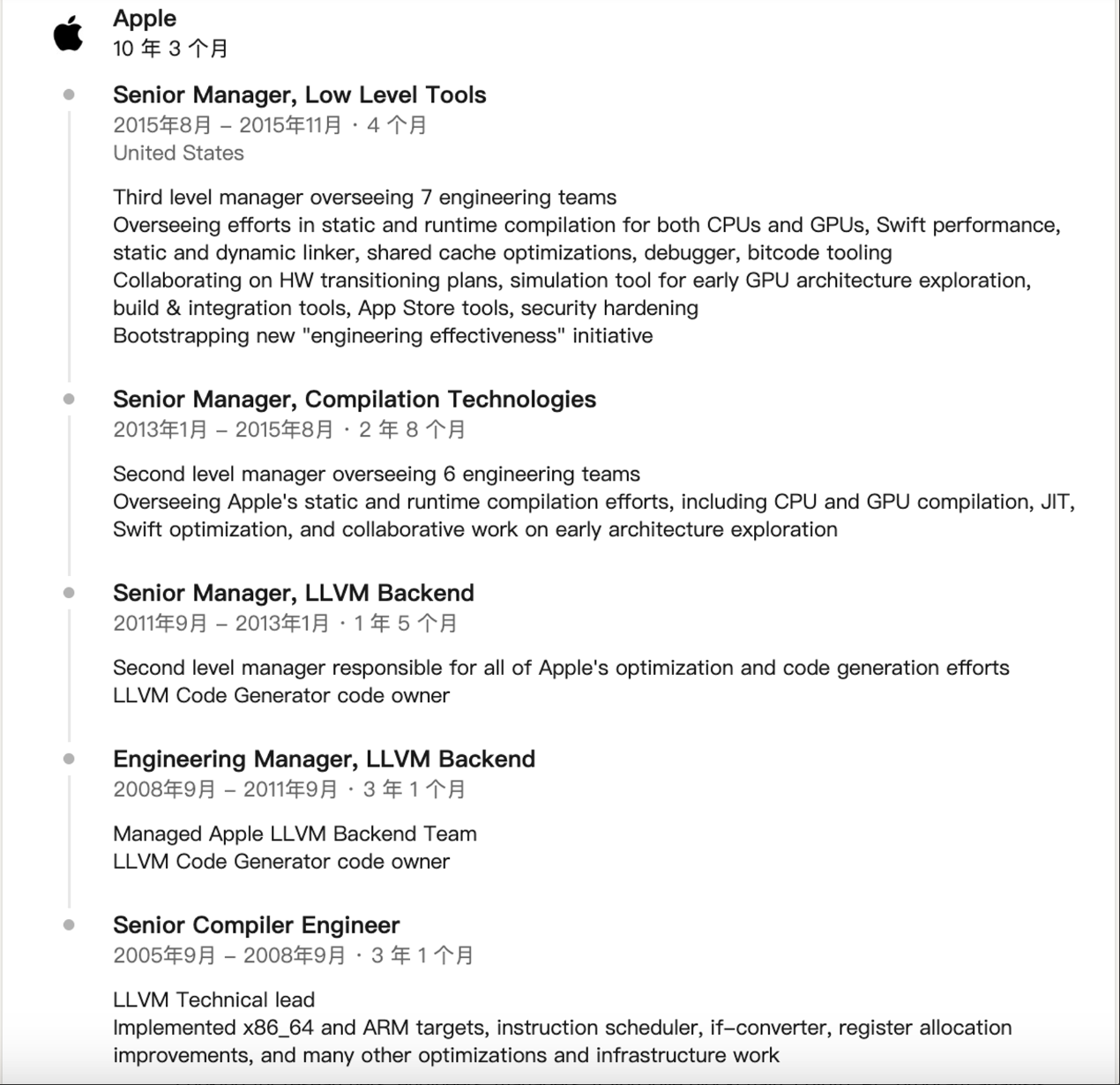
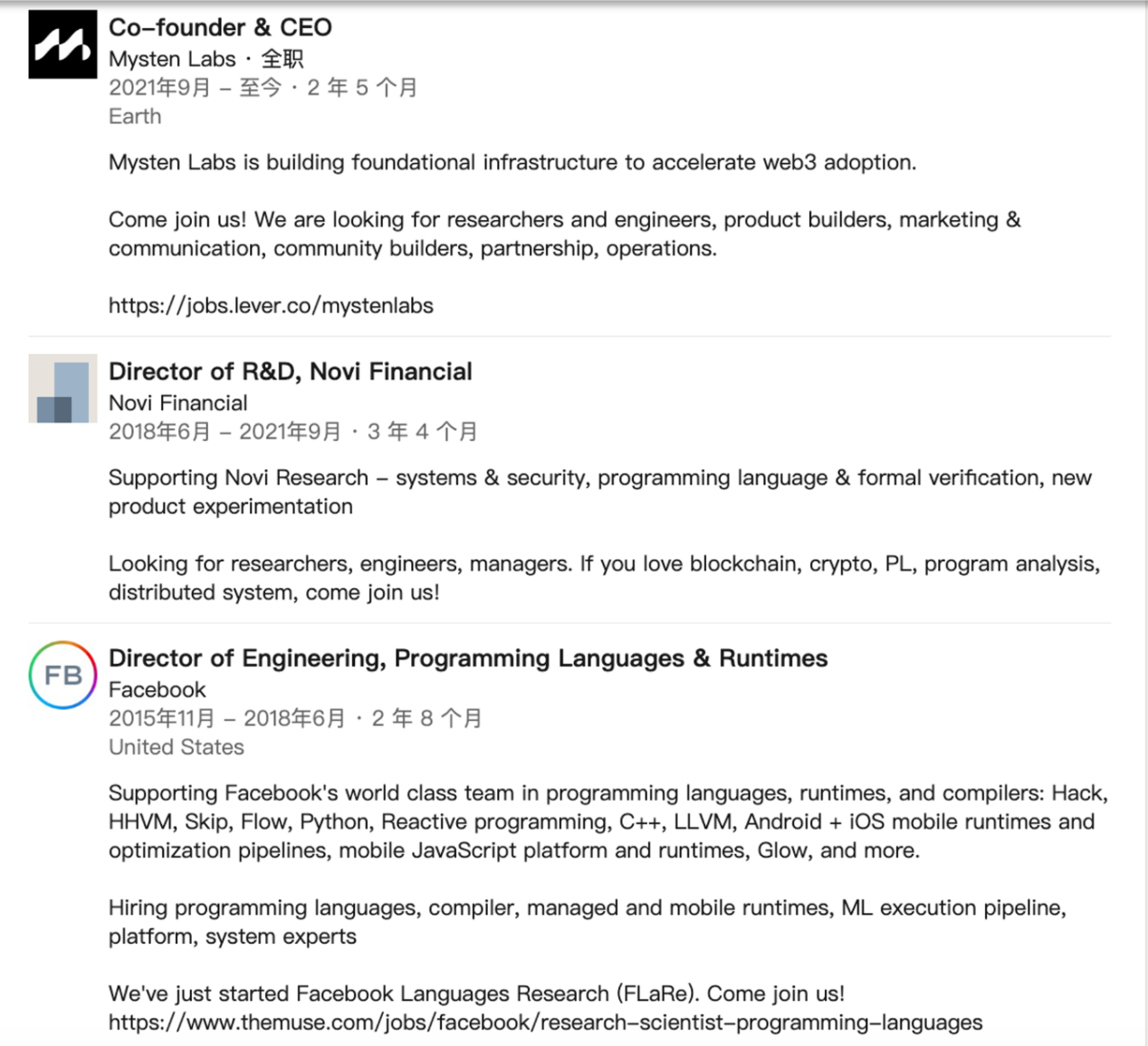
The Sui team boasts extensive industry experience and strong technical expertise. Evan Cheng, co-founder and CEO of Sui/Mysten Labs, previously served as Head of Engineering at Novi Financial. He spent 10 years in development at Apple, followed by 2–3 years each at Facebook and Novi Financial, before founding Mysten Labs in September 2021.
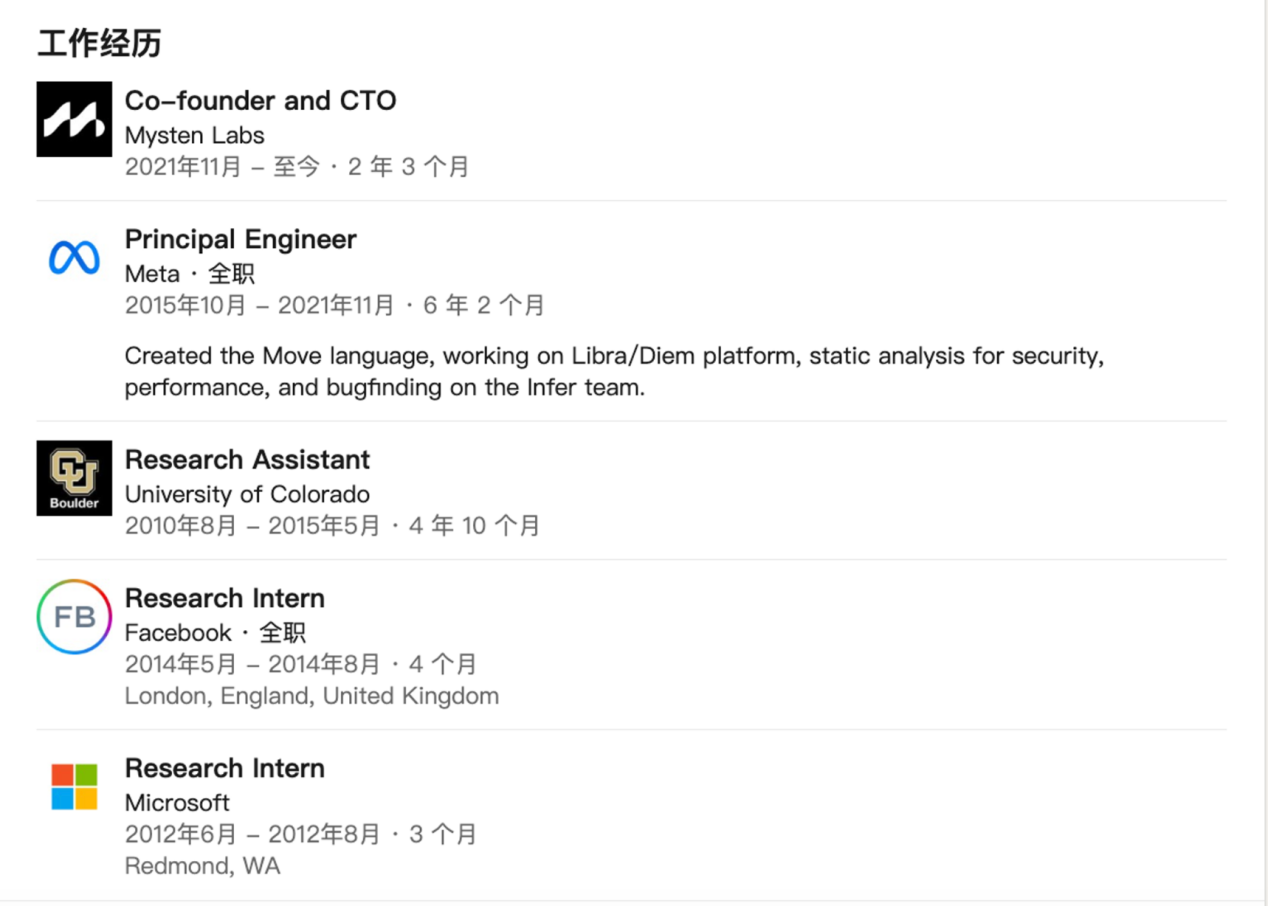
Sam Blackshear, co-founder and CTO of Sui/Mysten Labs, was formerly Chief Engineer at Novi Financial. He worked on Meta’s Libra/Diem project for six years and played a central role in creating the MOVE programming language.
3. Funding History
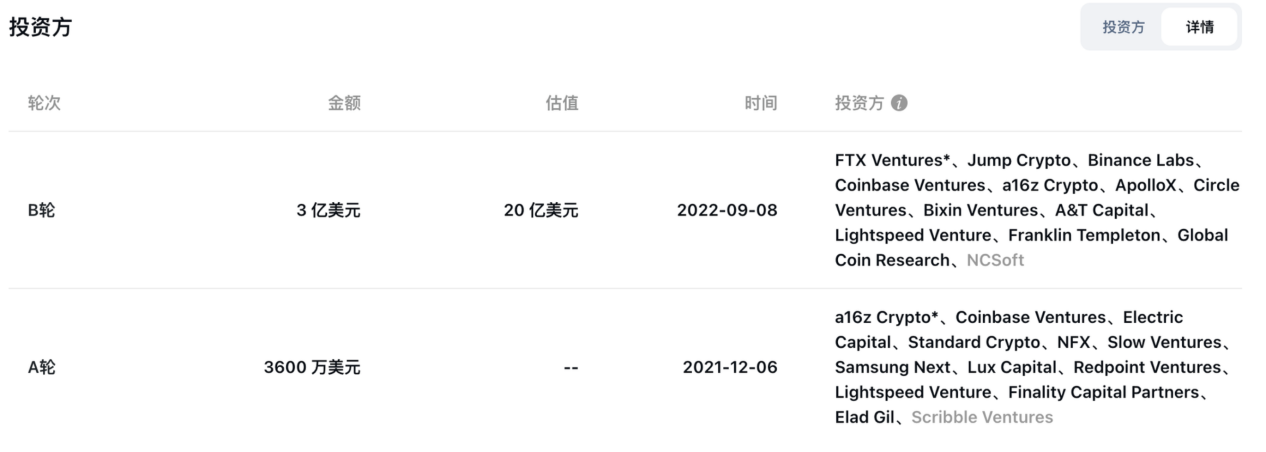
Sui enjoys exceptional investor backing. In its Series A round on December 6, 2021, it raised $36 million from top-tier investors including a16z and Coinbase Ventures. On September 8, 2022, it secured $300 million in its Series B round from institutions such as Jump Crypto, Binance Labs, and Circle Ventures.
II. Recent Ecosystem Development
Sui ranks among the fastest-growing blockchains in terms of Total Value Locked (TVL). Over the past month, TVL nearly doubled: according to DefiLlama data, it surpassed $175 million on December 7, exceeded $200 million on December 26, reached $300 million on January 14, and now approaches $350 million.
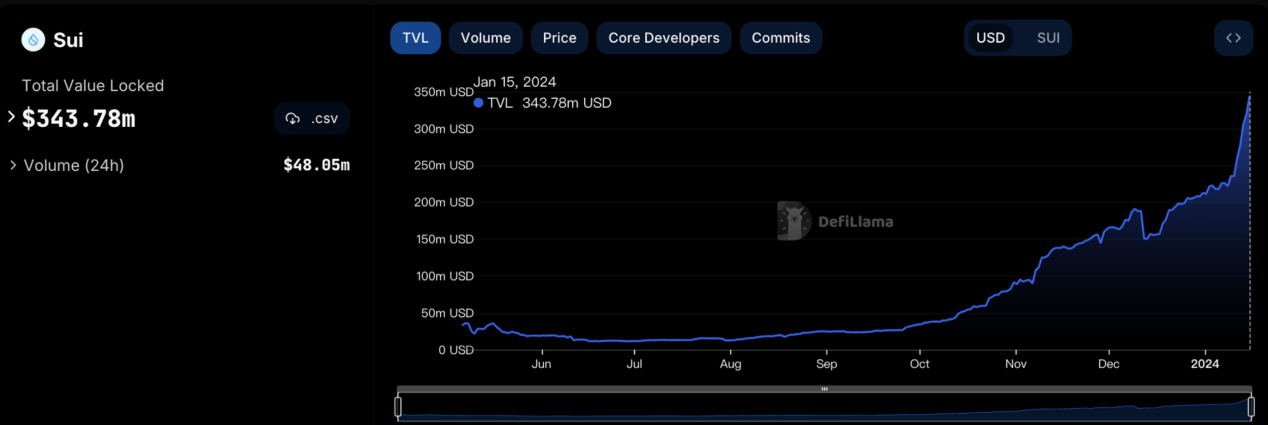
From initially lacking notable projects, Sui’s ecosystem has rapidly flourished, consistently spawning trending sectors and high-profile initiatives—with strong potential for continued growth:
(1) Karrier One (DePIN): On January 11, 2024, the Sui Foundation formed a strategic partnership and invested in Karrier One. Karrier One is a DePIN project aiming to build a decentralized mobile network and telecom service, targeting a community-owned carrier-grade 5G network offering greater accessibility, speed, cost efficiency, and security. It is currently conducting NFT minting.
(2) E4C (GameFi): On January 4, 2024, E4C announced its launch on Sui, bringing a mobile-native MOBA game, sustainable in-game asset ownership, and seamless asset trading experiences. E4C’s founder, Johnson Yeh—known as the "godfather of esports in Asia"—served as Riot Games’ head of esports operations in China starting in 2015, transforming League of Legends into China’s largest sports event. Later, he became General Manager for Riot Games in China, Japan, and Southeast Asia, and incubated titles including *League of Legends: Wild Rift*, *Tactical Tactics*, and *LPL Esports Manager*. His transition of MOBA gaming into Web3 led to the creation of E4C: Final Salvation.
(3) MRC20-MOVE (Smart Inscriptions): Amid rising interest in the inscriptions market, MRC20-MOVE launched on January 1, 2024. This concept of extensible, composable, burnable, and refundable smart inscriptions quickly went viral—within three days, all 10 billion $MOVE tokens were minted, locking over 1 million SUI, with nearly 50,000 minting addresses.
(4) Solend Protocol → Suilend Protocol (Lending): A few weeks ago, Sui announced that Solend Protocol—the largest lending protocol on Solana—would launch on Sui (supporting both Solana and Sui) under the name Suilend Protocol. The founder of Solend stated that Sui’s technical foundation is highly developer-friendly, and the developer experience around Move is ten times better than on Solana.
III. Token Information
1. Distribution and Unlock Schedule
Sui has a total supply of 10 billion tokens: 48% allocated to ecosystem reserves, 20% to private investors, 20% to the team, 9% to the foundation, and 3% to Binance Launchpool. Current circulation primarily comes from ecosystem, foundation, and Launchpool allocations, resulting in an 11% circulating supply.
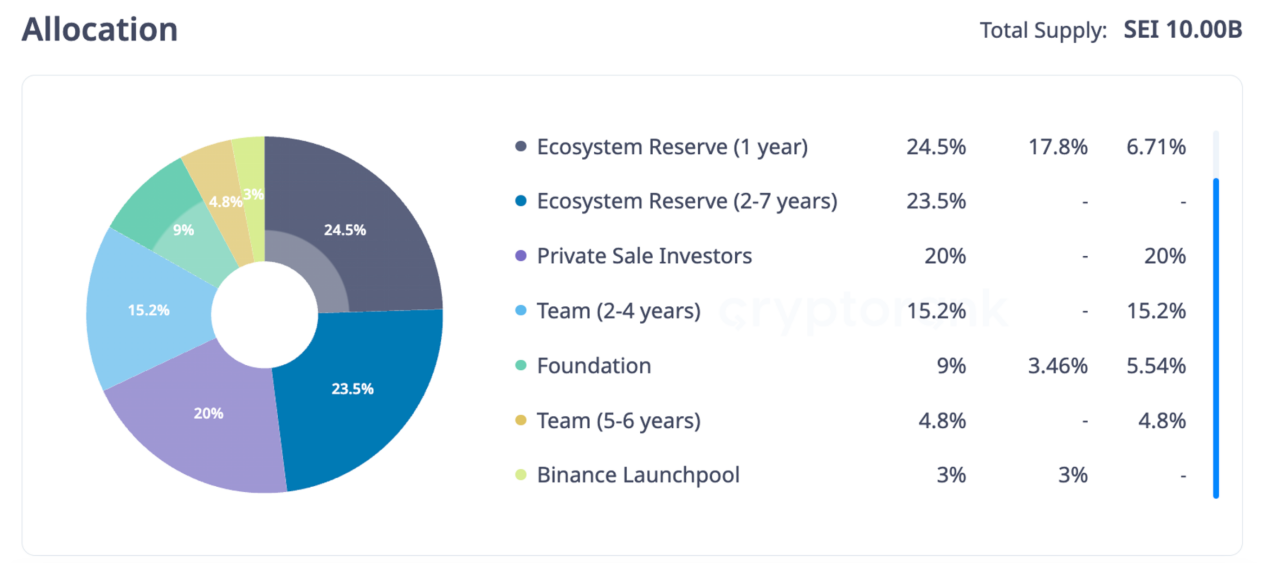
Current market cap stands at $1.515 billion, FDV at $13.759 billion, and 24-hour trading volume at $745 million. Primary trading venues include Binance (25.72%), Upbit (20.68%), and OKX (12.41%). In LD Capital Research’s January 12 report titled *Sei’s Accelerated Growth: A New Parallel EVM Narrative with Positive Operations*, comparative data among new blockchains showed Sui’s market cap below that of Aptos and Sei, yet its DeFi TVL surpasses Aptos and far exceeds Sei.
SUI unlocks approximately 66 million tokens monthly (~$92.17 million). The first major unlock for large investors occurs on May 3, 2024, releasing over 800 million tokens. Starting in June, regular monthly unlocks of about 100 million tokens will begin.
SUI token use cases fall into five main categories:
(1) Native asset of the Sui platform
(2) Gas fees: Charged for all network operations to reward Proof-of-Stake participants and prevent spam and denial-of-service attacks
(3) Storage Fund: The Sui Storage Fund enables intertemporal transfer of staking rewards and compensates future validators for the storage costs of previously stored on-chain data.
(4) Proof-of-Stake: Delegated Proof-of-Stake selects, incentivizes, and rewards honest behavior by Sui validators and SUI holders who delegate their stake.
(5) Voting: On-chain voting for governance and protocol upgrades.
2. Spot and Futures Data
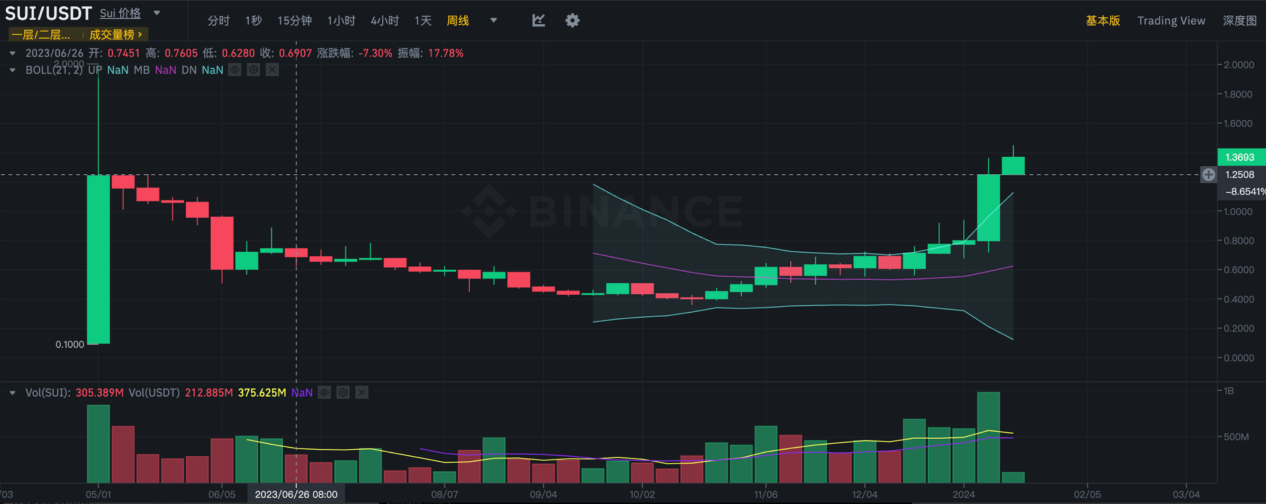
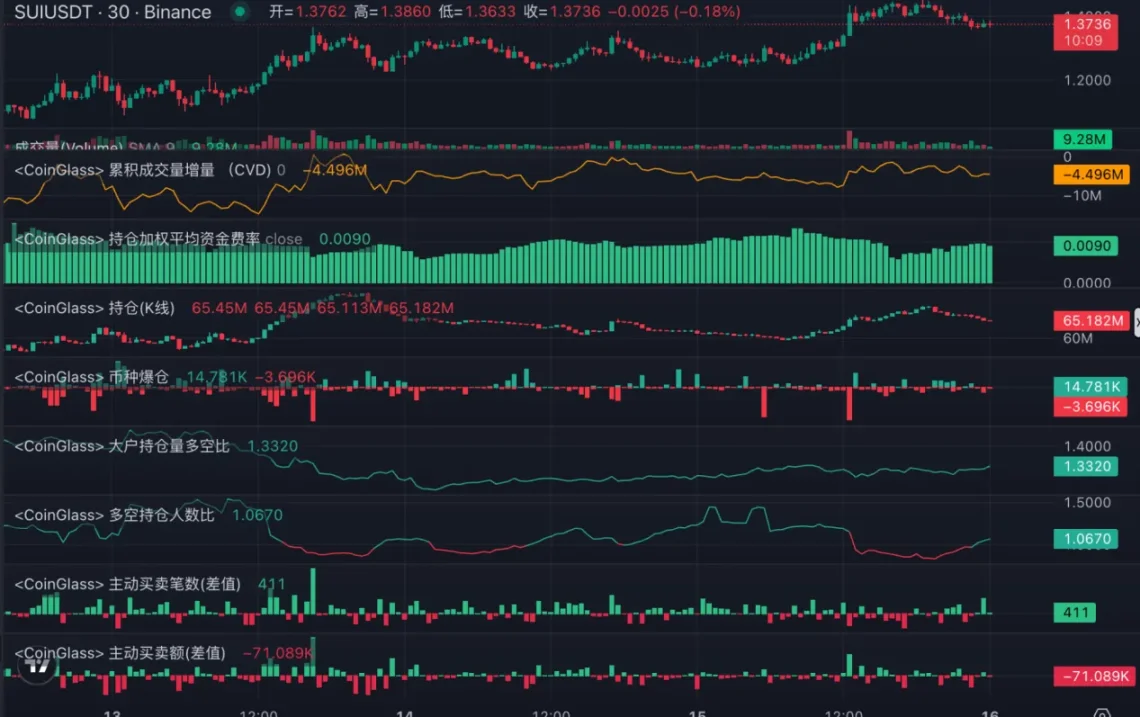
SUI’s price declined steadily from its listing on May 1, 2023 (closing at $1.2431) until October. From November onward, prices began slowly rising, accelerating from January 8, 2024, climbing from $0.8 to $1.2506—reaching its 2023 listing price. Recent 15-minute charts show price consolidating between $1.35 and $1.45, supported by the 30-day EMA, with favorable technical indicators suggesting further upside after consolidation.
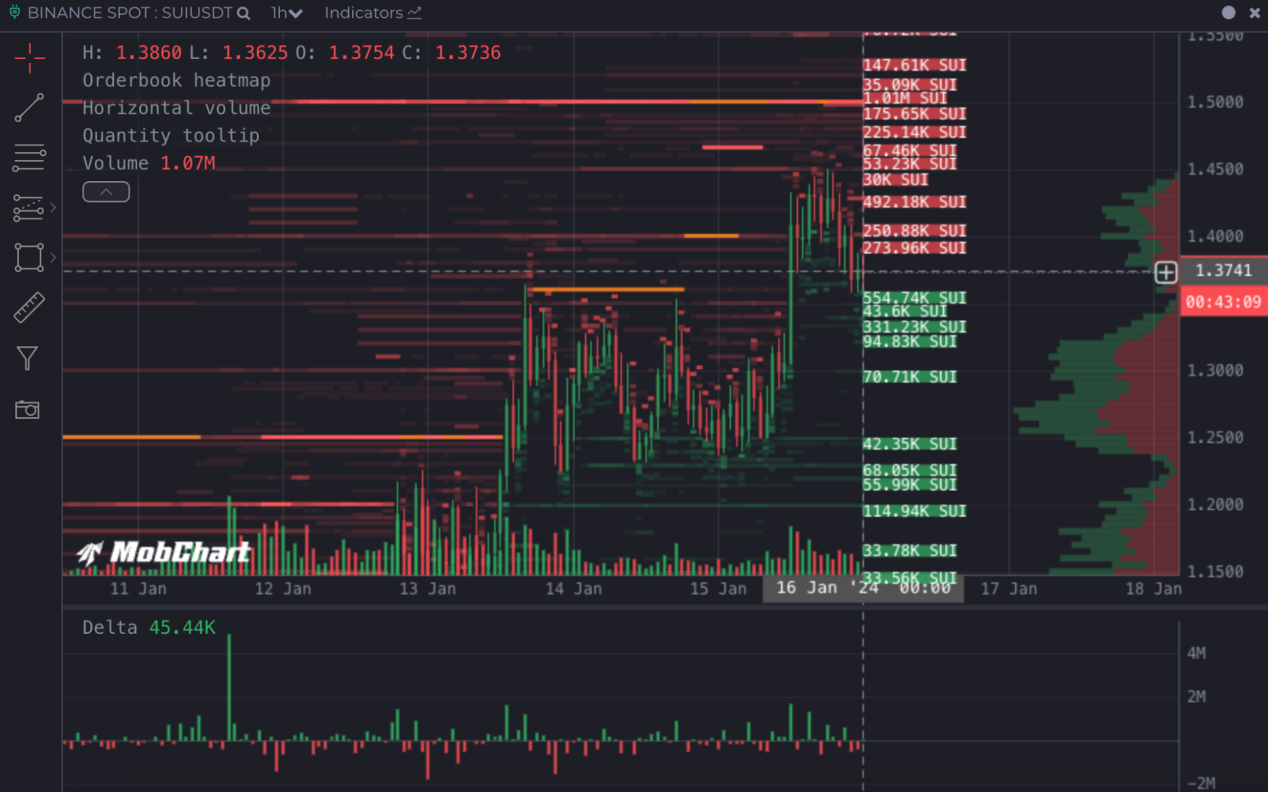
In hourly spot order books, buy orders cluster around $1.35, indicating short-term support, while dense sell walls appear near $1.42 and $1.50.
On the futures side, 30-minute contract open interest has slightly declined from recent highs. The long-to-short ratio among retail traders is 1.06, while large traders hold a long-to-short ratio of 1.33. Active trade counts have increased, though the net buy-sell value difference remains stable—consistent with a consolidation phase building momentum.
IV. Conclusion
1. Sui’s MOVE language offers high scalability, excellent programmability, fast speeds, and low fees. Its ecosystem is thriving, with numerous high-potential projects emerging. The team possesses solid technical capabilities and strong investor backing, laying a robust fundamental foundation.
2. No major token unlocks are scheduled over the next three months; the first significant unlock for investors occurs in May. Compared to other new blockchains, Sui demonstrates competitive advantages in key metrics.
3. The token price has recently returned to its 2023 listing level. Spot and futures trading volumes remain active, with current price action showing consolidation—potentially setting the stage for an upward breakout.
Join TechFlow official community to stay tuned
Telegram:https://t.me/TechFlowDaily
X (Twitter):https://x.com/TechFlowPost
X (Twitter) EN:https://x.com/BlockFlow_News
 Cycle Capital Research






