How One Decision Tanked the NFT Market: A Review of How Flooring Protocol Triggered a Broad Decline in Blue-Chips?
TechFlow Selected TechFlow Selected
How One Decision Tanked the NFT Market: A Review of How Flooring Protocol Triggered a Broad Decline in Blue-Chips?
FLC's positioning is the "index of the NFT world."
 Navigating Web3 tides with focused insights
Text: Joyce
Editor: Jack
Last week, the NFT market saw a broad downturn, with blue-chip NFTs such as BAYC, Azuki, and DeGods all dropping over 10% in a single week. Unexpectedly for the community, the root cause of this widespread decline may lie in a recent mechanism update by Flooring Protocol—an NFT fractionalization protocol—just six months after its launch.
FLC Aims to Be the "Ultimate Index" for NFTs!
On December 31, 2023, the NFT fractionalization protocol Flooring Protocol published its first article on Medium titled “Revolutionizing NFT Trading: Introducing µToken/FLC Pairs into Floor Liquidity Pools.” The article announced that Flooring Protocol would relaunch in January 2024 with a groundbreaking new model linking the price of its governance token FLC to valuations of mainstream NFT collections via µTokens.
µTokens are tokens representing the value of fractionalized NFTs. Users deposit their NFTs into Flooring Protocol and receive corresponding µTokens. Before the mechanism update, users could only trade between ETH and µTokens through Uniswap liquidity pools managed by Flooring Protocol. With the introduction of µToken/FLC trading pairs, trading activity involving FLC now directly impacts µToken prices. When trading on Flooring Protocol, the optimal swap route on Uniswap becomes ETH → FLC → µBAYC.
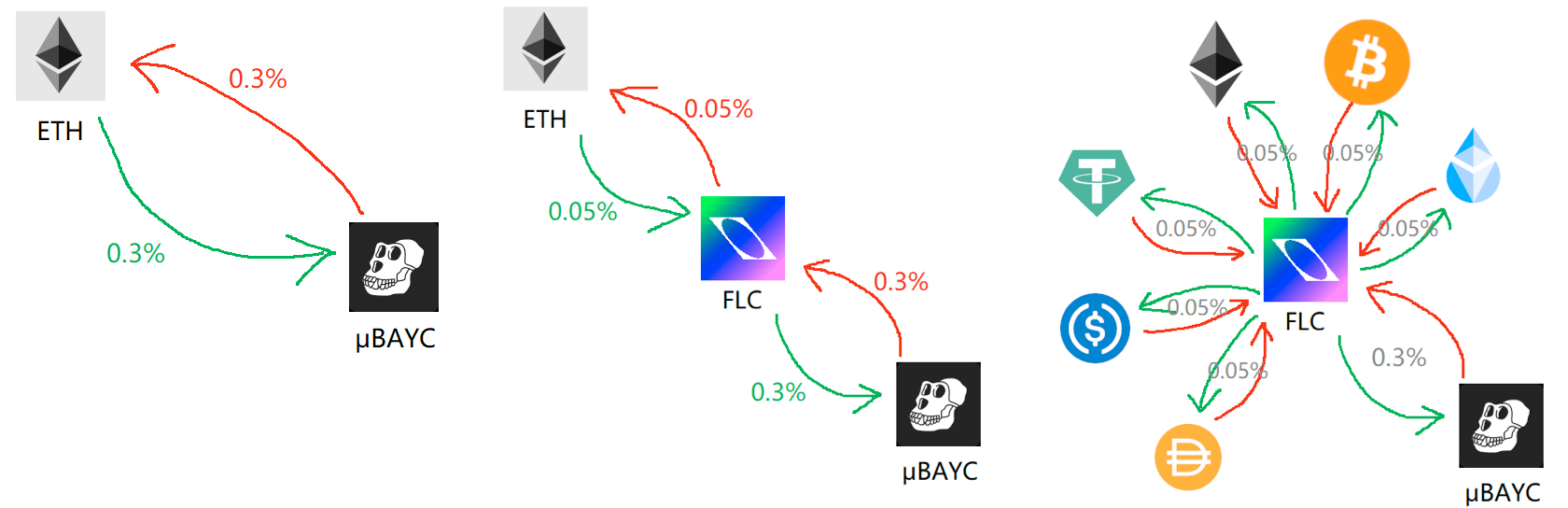
This appears to be a product well-aligned with market demand. In the NFT market, established collections often have relatively certain values but come with high investment thresholds, while newer projects lack clarity regarding future appreciation potential. By incorporating FLC into investment strategies—"choosing FLC equals betting on blue-chip NFTs"—this approach is undoubtedly appealing to investors interested in gaining exposure to the broader NFT market.
FLC Becomes the Trigger for an NFT Market Crash
Empowering FLC was clearly positive news for traders. Starting January 2, demand for FLC surged dramatically. On January 3 alone, the number of buy orders exceeding $10,000 jumped from 7 the previous day to 50. Prior to the mechanism update, large FLC purchases were rare—with fewer than 10 such transactions occurring during the entire preceding week.
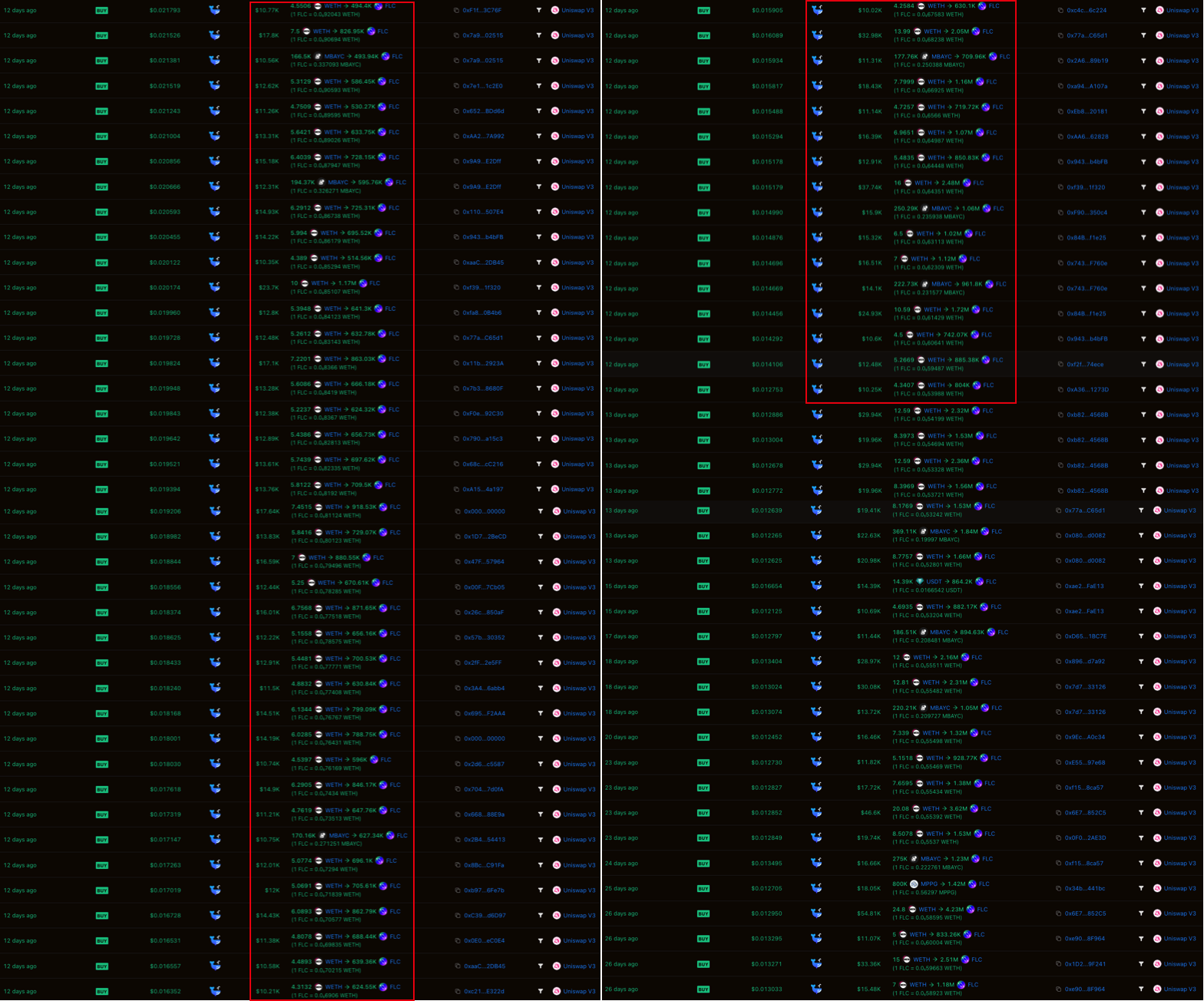
Between December 2023, FLC traded between $0.0075 and $0.012. From January 2 to January 4, however, the price skyrocketed from $0.012 to $0.035 within just two days.
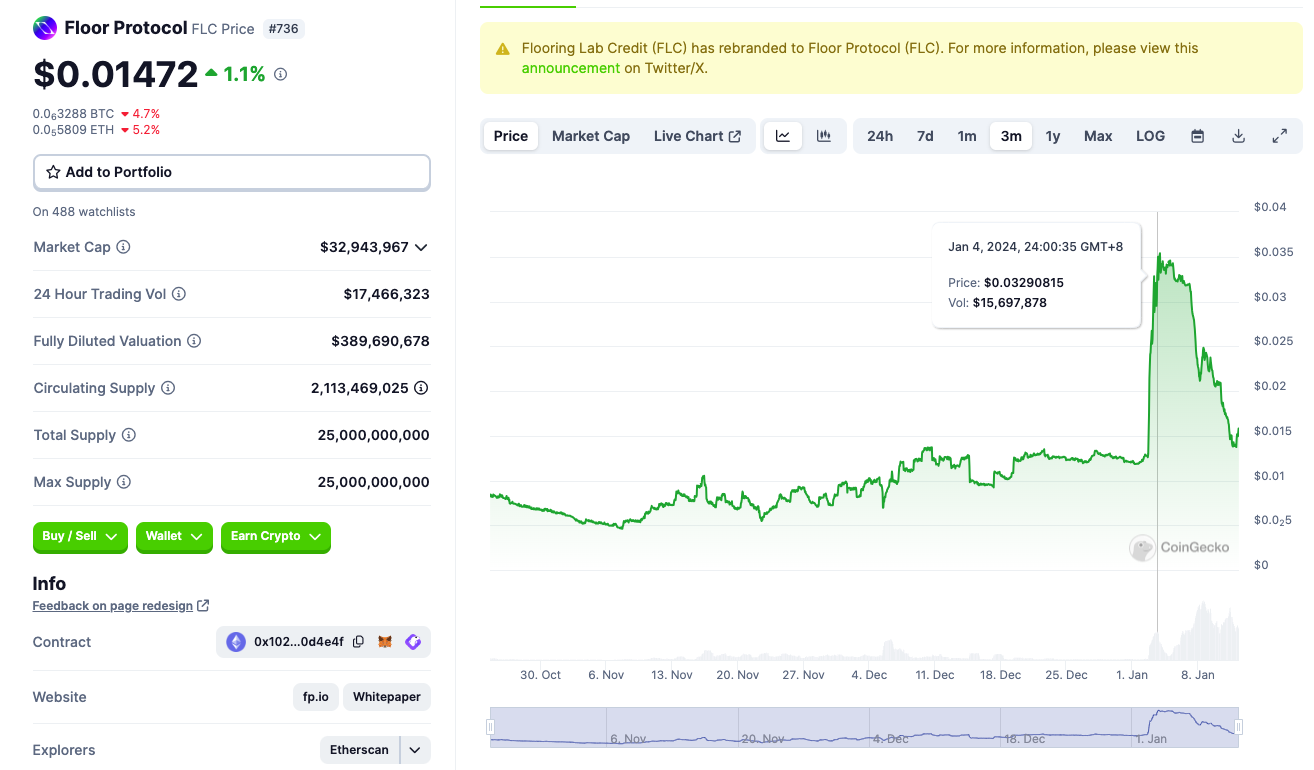
After FLC’s price began fluctuating sharply, Flooring Protocol proceeded to add liquidity pools for FLC and various µTokens without regard for ongoing market volatility, causing FLC’s circulating supply to rapidly increase. By January 4, incoming buy pressure was no longer sufficient to push the price higher, and FLC entered a sideways trend followed by a gradual decline from January 4 to January 7.
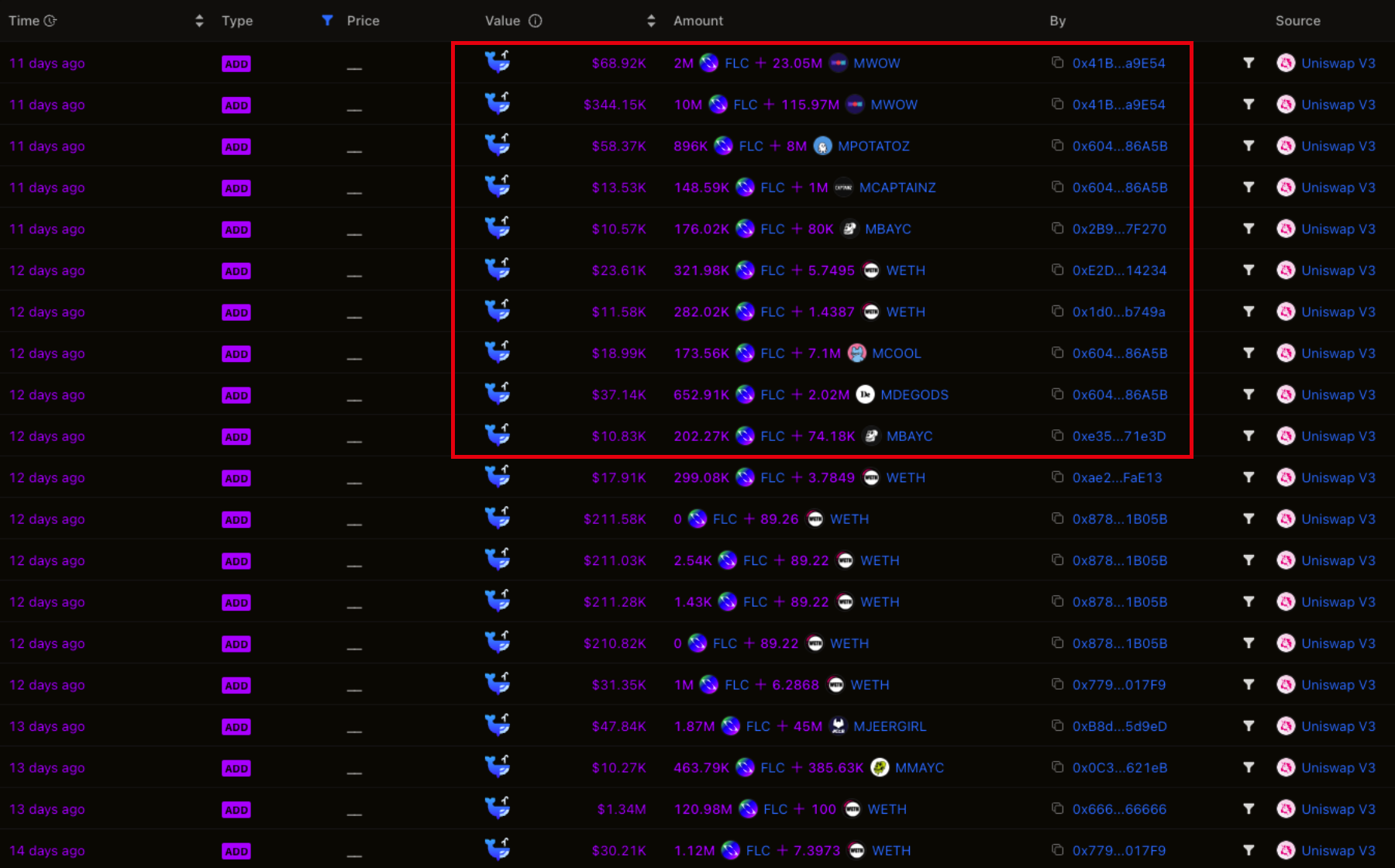
Following the price spike, early holders and those who had bought FLC based on insider knowledge began selling off their FLC or exchanging it for µTokens, then withdrawing blue-chip NFTs from Flooring Protocol and dumping them on Blur.
For example, an address starting with 0xE6 made six large purchases of FLC on January 3, then sold off significant amounts of FLC the same day after the price surge—including one transaction worth over $110,000. The next day, the same address continued buying and selling FLC.
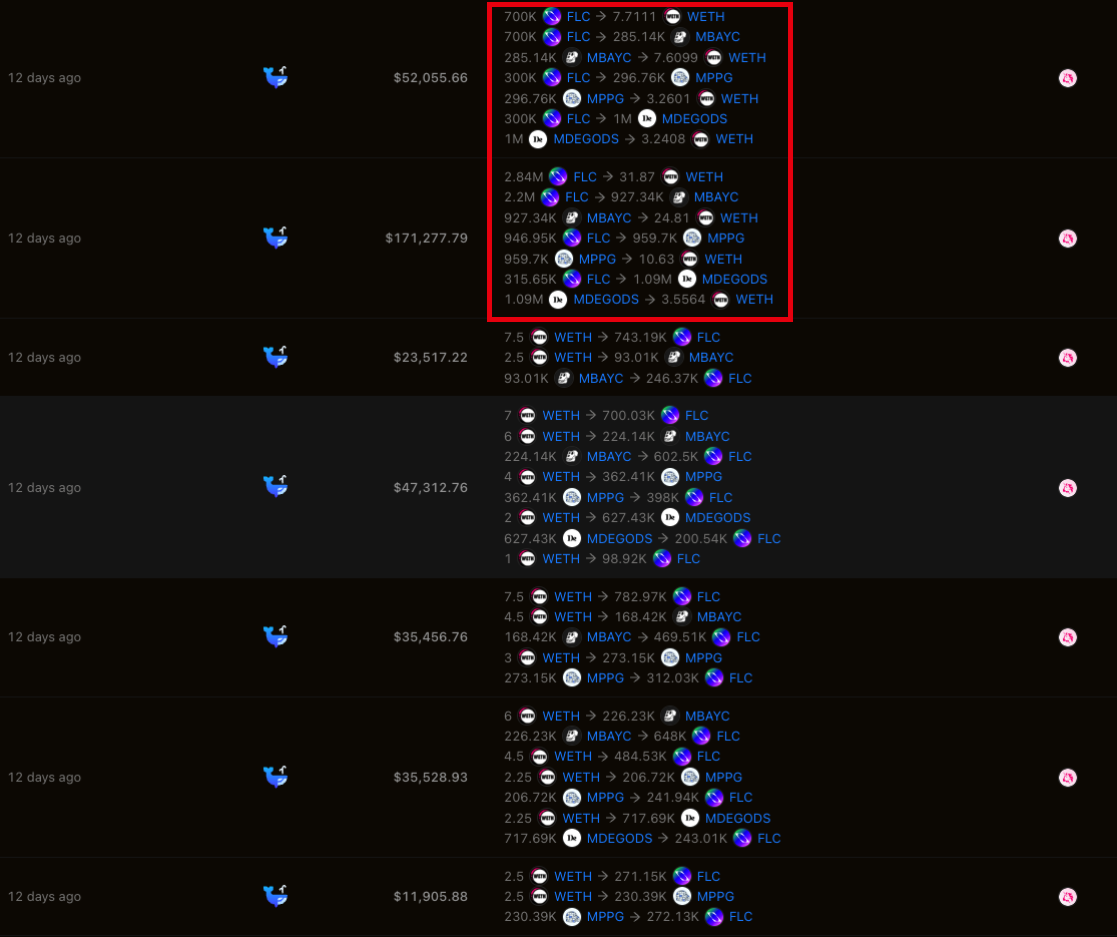
Some liquidity providers, including addresses beginning with 0x27 and 0xF6, started converting their FLC holdings into blue-chip NFTs like BAYC, Azuki, and DeGods from January 5 onward, then listed and sold these NFTs on platforms such as Blur and OpenSea.
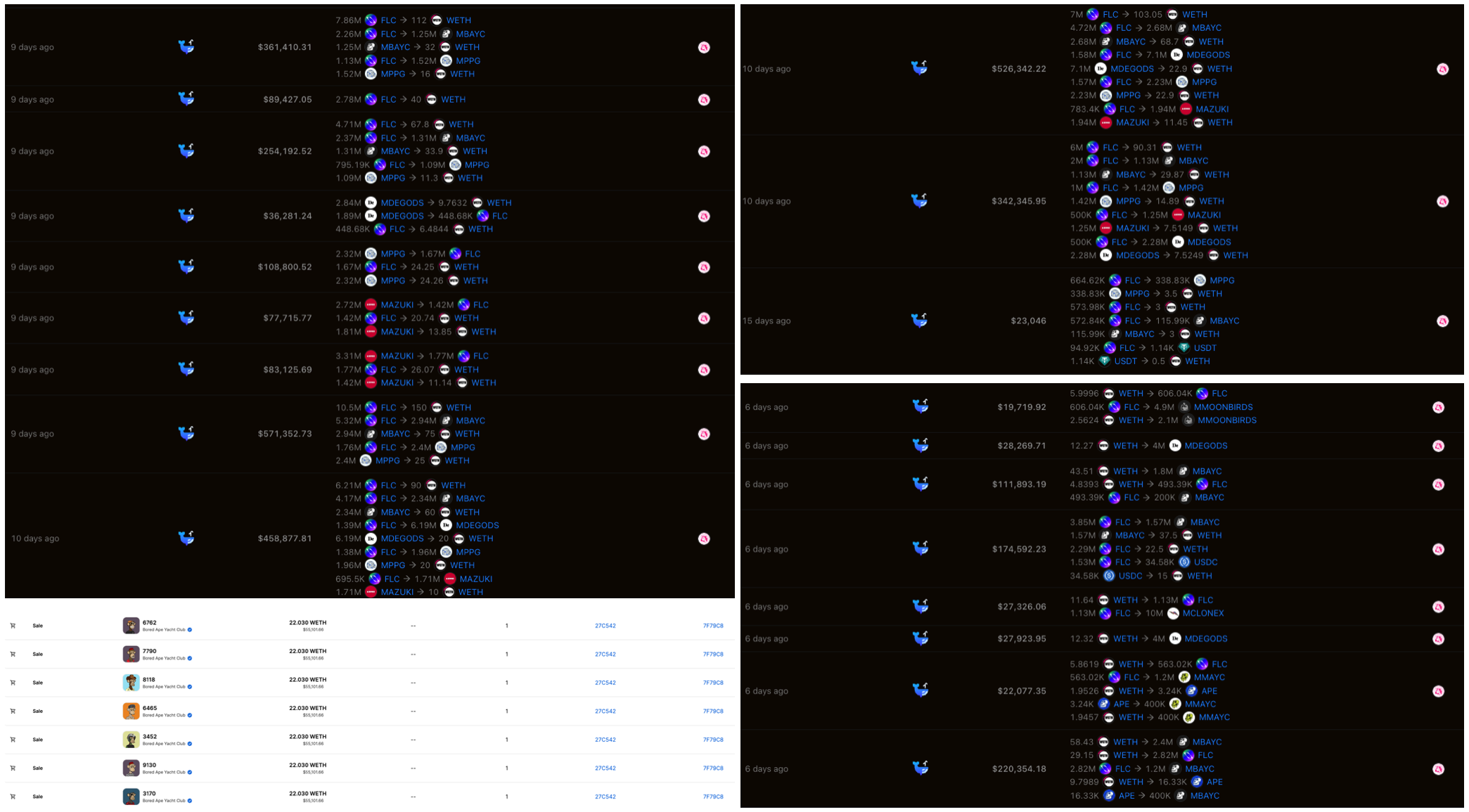
The ripple effects of these trades on Flooring Protocol quickly spread across the entire NFT market. BAYC’s floor price began declining on January 6 and fell 15% by January 13. Besides BAYC, most other blue-chip NFTs also showed downward trends.
DeGods, whose floor price had climbed steadily from 2.60 ETH to 3.63 ETH over half a month, plunged abruptly after January 7, losing 27% of its value in less than a week.

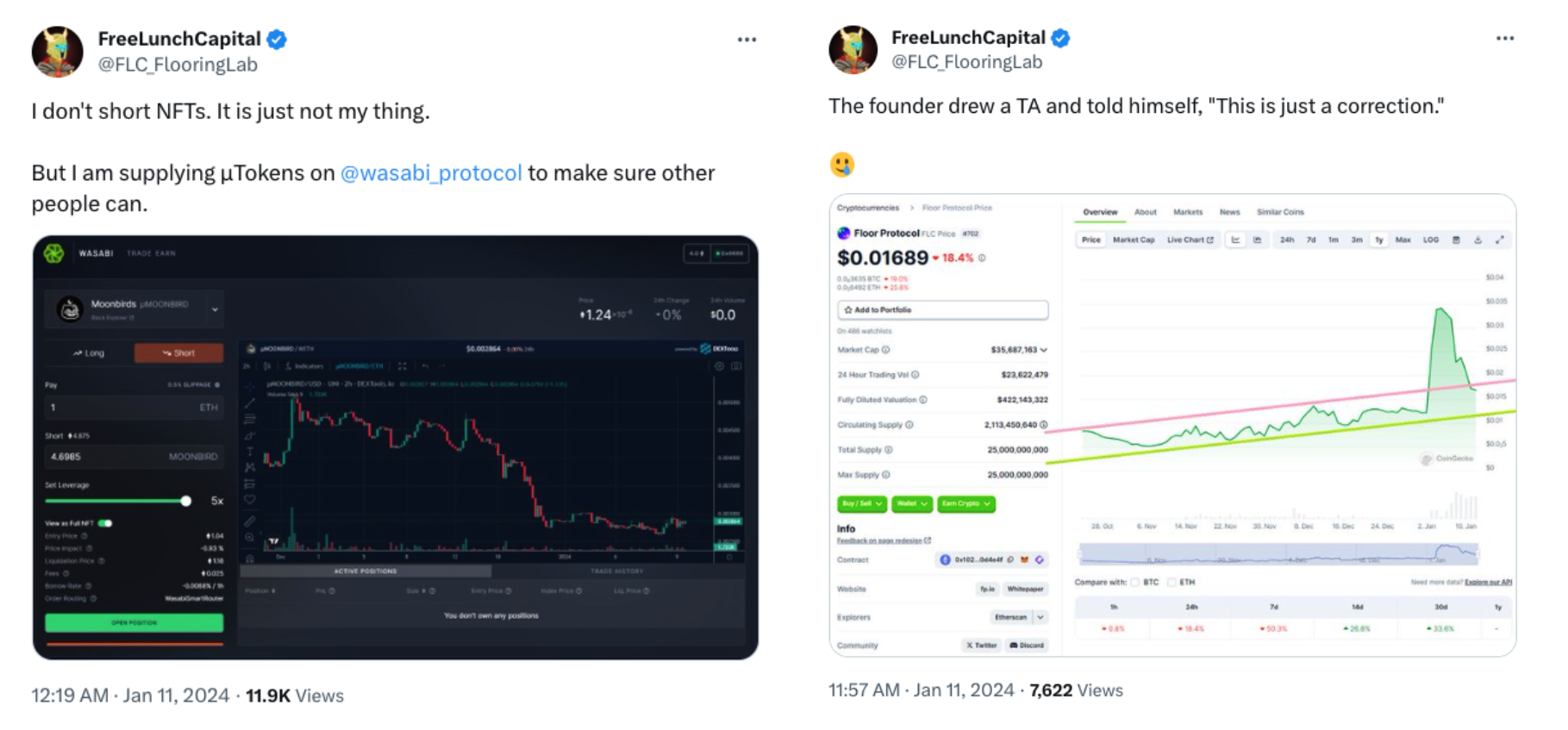
After both FLC and the NFT market crashed, the founder of Flooring Protocol posted two tweets on January 11 addressing the volatility. “I didn’t short NFTs,” the founder claimed, denying responsibility for the downturn, while revealing collaboration with Wasabi Protocol, an NFT options platform: “But I am providing µTokens to Wasabi Protocol—others will use them to short.” Regarding FLC’s sharp rise and fall, the founder adopted a slightly self-mocking tone: “It was just a correction.”
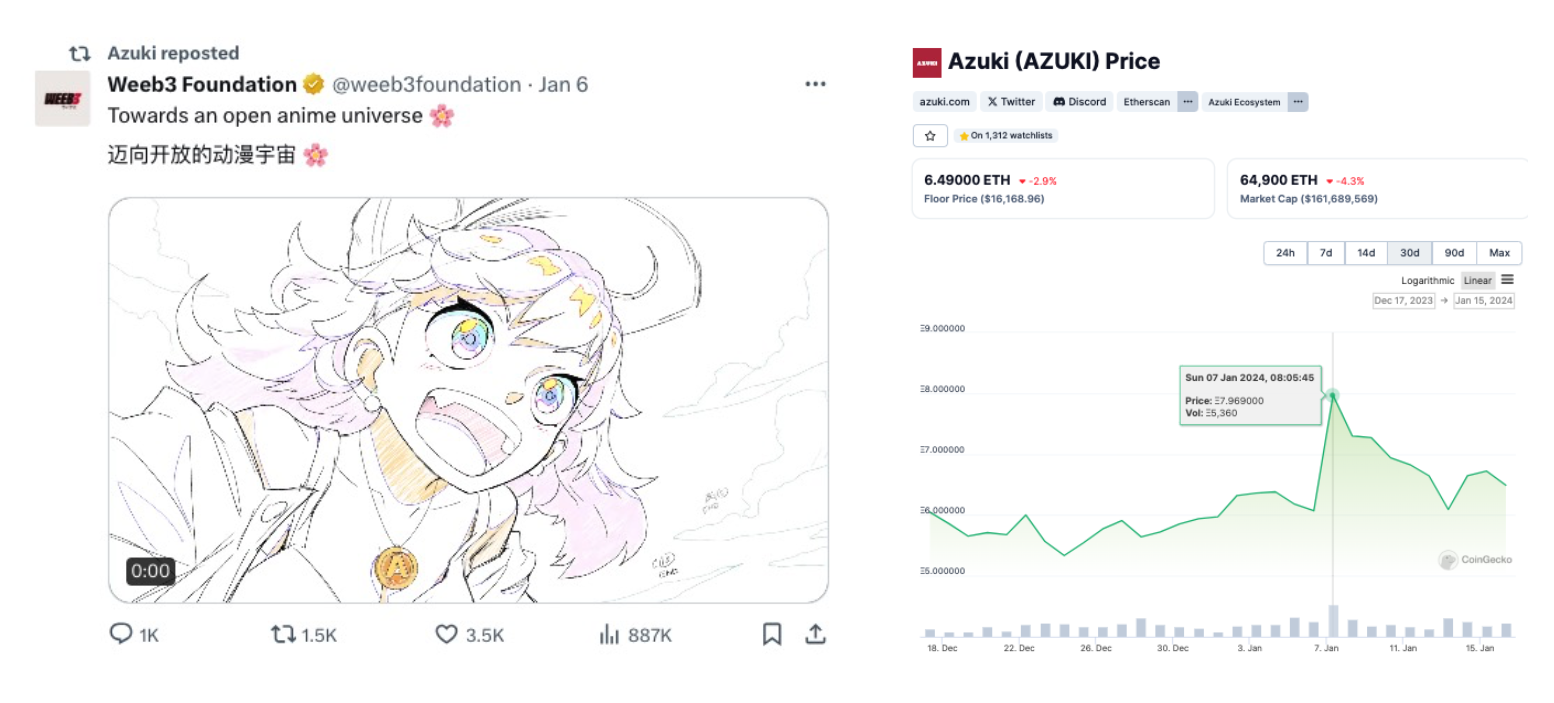
Even NFTs with positive catalysts couldn't escape the impact. On January 5, the official Azuki Twitter account retweeted a post from Weeb3 Foundation, sparking speculation about an upcoming token named ANIME. This drove Azuki’s floor price up over 30% in two days, briefly reaching around 8 ETH. However, Azuki failed to withstand the subsequent wave of sell-offs. After January 7, its floor price began falling and dropped back to 6 ETH by January 13.
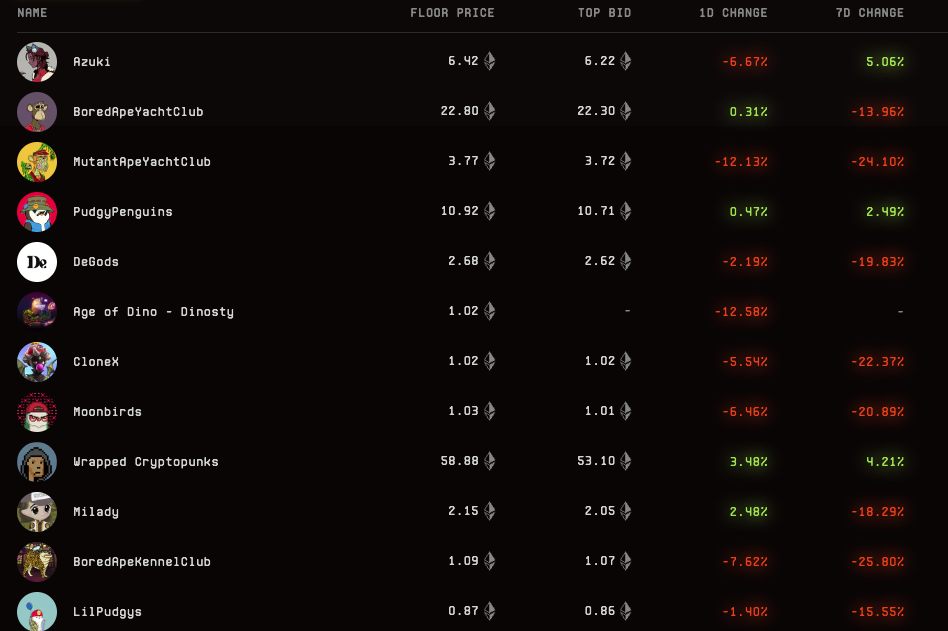
The price swings of blue-chip NFTs dragged down the overall market. According to Blur data, by January 12, many NFT collections had seen weekly declines ranging from 10% to 25%, indicating a broad market-wide selloff.
Is NFTFi Playing with Fire?
In the profit-driven world of crypto, one common criticism of the NFT market is that NFT assets emphasize social attributes over clear paths to appreciation. Yet events like the crisis triggered by Flooring Protocol are not unprecedented in the evolution of the NFT market.
On one hand, solutions aiming to provide liquidity to the NFT market often struggle to survive themselves. During the 2022 NFT market downturn, falling BAYC floor prices triggered liquidation auctions on the NFT lending platform BendDAO, leading to rapid withdrawal of liquidity. The lending pool dropped from over 16,000 ETH to just 0.58 ETH within four days. On the other hand, anchoring NFT value onto fungible tokens (FTs) and introducing DeFi mechanisms may boost liquidity, but at the cost of diluting the cultural significance, brand value, and community loyalty inherent in NFTs—values increasingly sacrificed at the altar of liquidity.
Returning to Flooring Protocol, the concept of fractionalizing NFTs clearly has advantages—it lowers entry barriers and enhances asset liquidity. But when NFT value, originally rooted in community culture, detaches from its artistic form and instead seeks growth through DeFi mechanics and token trading cycles, the foundational consensus underpinning NFTs risks becoming blurred.
The crash reached its conclusion on January 13, with FLC hitting rock bottom and returning to its pre-surge level of $0.012. Since then, both FLC’s price and the floor prices of blue-chip NFTs like BAYC and Azuki have begun to recover. Will we see a repeat performance soon?
Join TechFlow official community to stay tuned
Telegram:https://t.me/TechFlowDaily
X (Twitter):https://x.com/TechFlowPost
X (Twitter) EN:https://x.com/BlockFlow_News
 BlockBeats