








No SEC Approval Needed: Former Citigroup Executive Plans to Launch Bitcoin Depositary Receipts
TechFlow Selected TechFlow Selected
No SEC Approval Needed: Former Citigroup Executive Plans to Launch Bitcoin Depositary Receipts
can be issued without SEC approval, allowing investors to directly own Bitcoin.
 Navigating Web3 tides with focused insights
By Florence
While the market is still speculating when the U.S. Securities and Exchange Commission (SEC) will approve a spot Bitcoin ETF, a group of former Citigroup executives plans to issue Bitcoin depositary receipts to qualified institutional investors. This product does not require registration under the Securities Act of 1933, meaning it can be launched without SEC approval, allowing investors direct exposure to Bitcoin.
What Are ADRs (American Depositary Receipts)?
ADR stands for American Depositary Receipts—certificates issued by U.S. banks representing shares in foreign companies traded on American stock exchanges. One of the most well-known examples is TSMC’s ADR. Since 1997, TSMC has offered its ADR under the ticker TSM, packaging actual shares listed in Taiwan into ADRs so that U.S. investors can easily invest in Taiwanese companies. This also helps international firms raise capital and increase visibility in the U.S. market.
Learn more about ADRs: ARK Invest Bullish on AI Sector, Buys TSMC ADR (TSM)
New Startup Receipts Depositary Corporation Founded by Former Citi Executives
A new company called Receipts Depositary Corporation (RDC), founded by several former Citigroup executives, announced plans to launch the first Bitcoin depositary receipts for qualified institutional investors. The Bitcoin depositary receipt (BTC DR) will allow investors to gain exposure to Bitcoin securities through regulated U.S. market infrastructure, with settlement handled via a custodial trust. Anchorage Digital Bank National Association will serve as the Bitcoin custodian.
RDC has received backing from investors including Franklin Templeton, BTIG, and Broadhaven Ventures.
Bitcoin Depositary Receipts (BTC DR)
According to its press release, RDC expects to issue the first batch of BTC DRs to qualified institutional buyers (QIBs) within the coming weeks. These transactions do not require registration under the Securities Act of 1933. Structured similarly to American Depositary Receipts (ADRs), BTC DRs operate within the U.S.-regulated market infrastructure and are cleared through the Depository Trust Company (DTC). The product has already been assigned CUSIP and ISIN security identifiers.
Ankit Mehta, Co-Founder and CEO of RDC, said:
We’re excited to deliver a secure, regulated digital asset through BTC DRs—the solution qualified institutional buyers have been waiting for.
He added that directly purchasing Bitcoin is not the preferred option for some regulated institutions due to challenges such as security risks and regulatory uncertainty in the crypto market. These issues are similar to those faced when U.S. investors buy shares in foreign companies—a problem that ADRs were designed to solve.
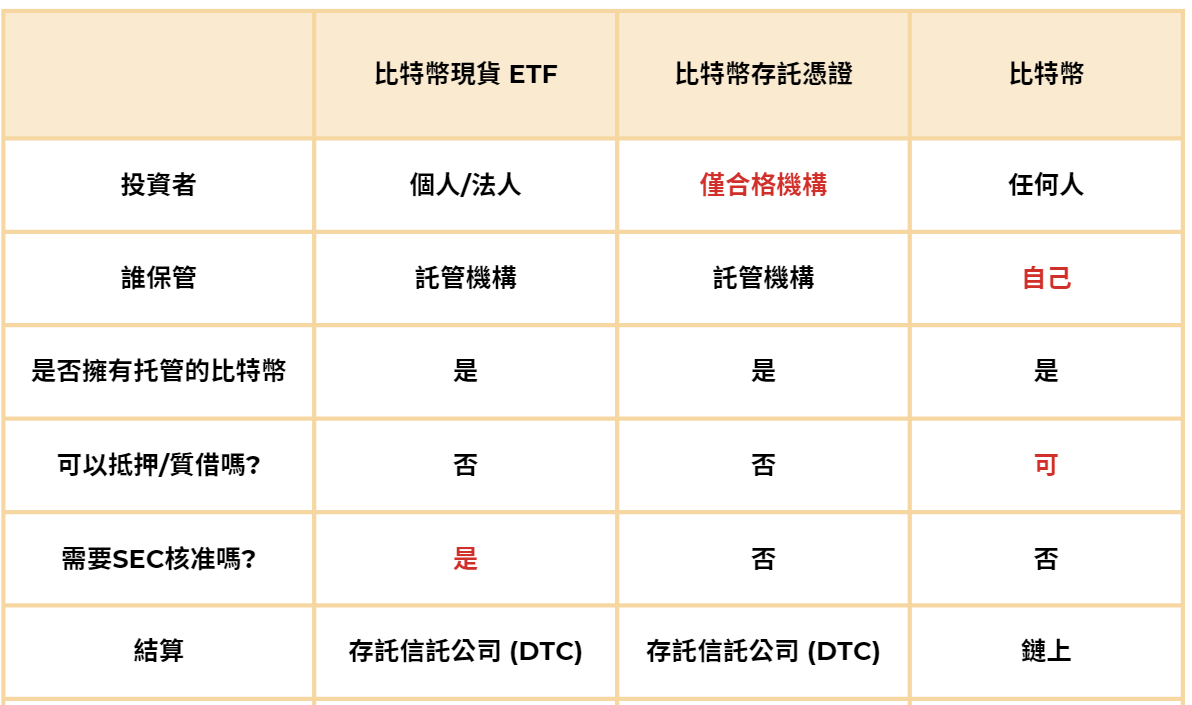
Comparing Bitcoin Depositary Receipts with ETFs and Other Products
RDC's model requires every BTC DR to be 100% backed by custody-held Bitcoin and prohibits lending or staking. BTC DRs represent direct ownership of the underlying asset, are fully fungible, and grant direct claim rights over the custodied Bitcoin. This structure minimizes counterparty credit risk from the issuing depository. BTC DRs leverage existing workflows and the established securities ecosystem to provide robust risk management and asset protection.
TechFlow Post has compiled a comparison table below between Bitcoin depositary receipts, spot Bitcoin ETFs, and direct Bitcoin ownership:
Join TechFlow official community to stay tuned
Telegram:https://t.me/TechFlowDaily
X (Twitter):https://x.com/TechFlowPost
X (Twitter) EN:https://x.com/BlockFlow_News
 @ABMedia_Crypto







