Weekly Podcast Recommendation | Let's Kick Off 2024 with e/acc!
TechFlow Selected TechFlow Selected
Weekly Podcast Recommendation | Let's Kick Off 2024 with e/acc!
Solana is by no means an "Ethereum killer"
 Navigating Web3 tides with focused insights
Compilation: Sunny, TechFlow
1.Lex Fridman: e/acc, the Role of Fear and Memes in Advancing Human Society

Recently, Vitalik published a blog post titled "My Techno-Optimism" (i.e., d/acc) to express his personal views on the internet-fueled trend of "effective accelerationism" (e/acc). In the post, Vitalik cited Twitter influencer "Beff Jezos"' interpretation of e/acc: "At its core, it's a recognition of the immense benefits that technological progress truly brings, and a desire to accelerate this trend to realize those benefits faster."
In effective accelerationism, utopia lies ahead in time, while the danger is the consequence of stagnation.
In Lex Fridman’s latest podcast episode, Fridman discussed e/acc and "Beff Jezos." The e/acc movement advocates rapid technological advancement as humanity's morally optimal path, challenging the cautious view that artificial intelligence is highly unpredictable and potentially dangerous. Underlying e/acc is the belief that fear is a mind-killer and a civilization-killer—preemptively blocking positive futures out of fear means greater loss, according to "Beff Jezos." The term "meme" first appeared in evolutionary biologist Richard Dawkins' book *The Selfish Gene*. Within cultural and internet contexts, Fridman explored how memes influence society and shape public opinion and cultural trends.
🔗:Guillaume Verdon: Beff Jezos, E/acc Movement, Physics, Computation & AGI
2.Bankless: If Ethereum is Earth, L2s are Nations
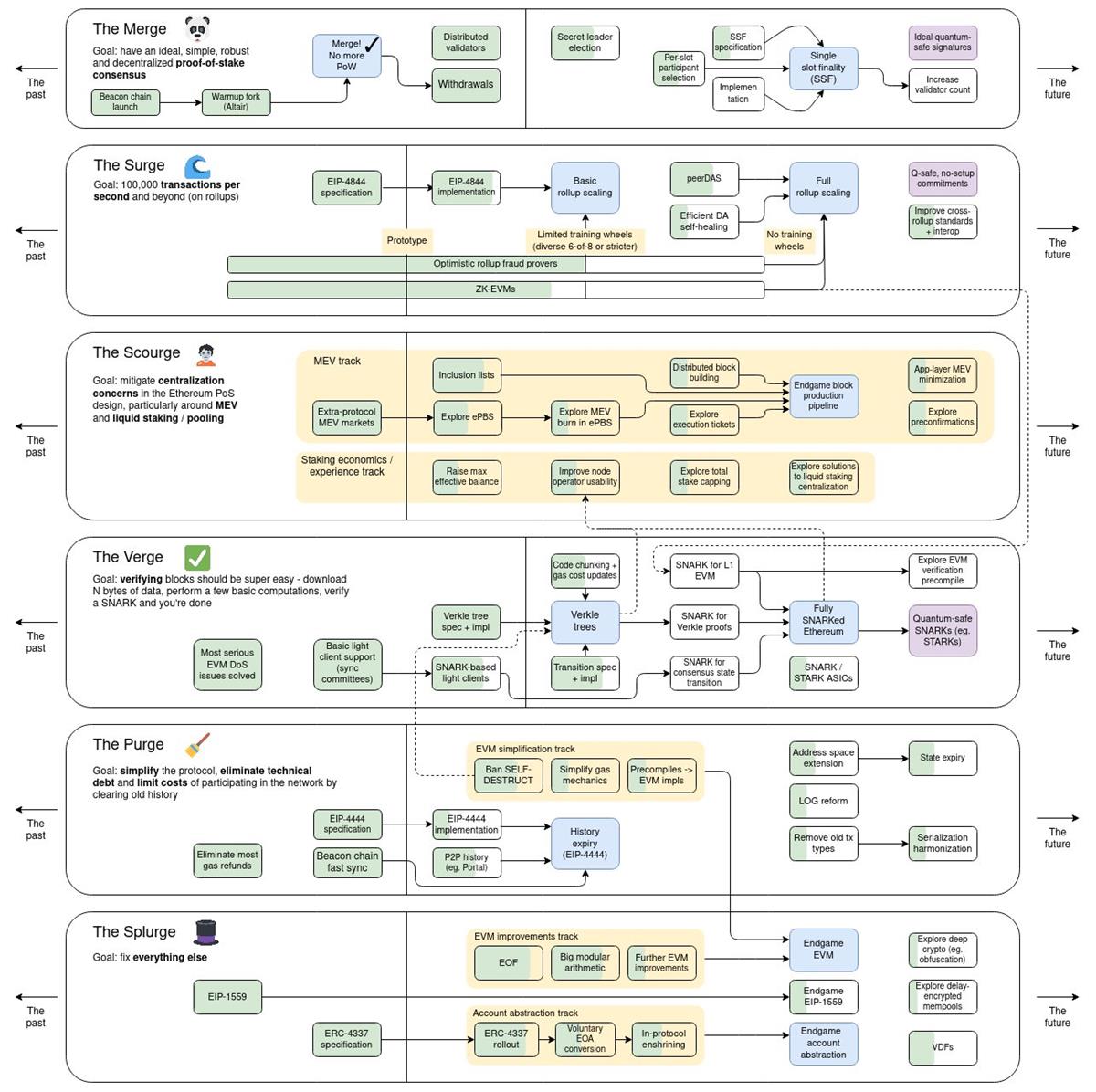
The Layer 2 (L2) ecosystem has significantly strengthened optimism around Ethereum (ETH), enhancing user experience through diverse and interoperable L2 solutions. This evolution could lead to consolidation among major L2s, fostering unique business models and native yields. In 2023, Ethereum emerged as a yield-bearing asset and an "internet bond," challenging traditional financial systems and distinguishing ETH within the crypto market. Despite lackluster price performance in 2023, Ethereum’s development and infrastructure remained robust, focusing on broader internet integration for mass adoption. Future outlook suggests the market will increasingly value Ethereum’s decentralization, potentially leading the crypto space through both bear and bull cycles.
Vitalik’s 2023 Ethereum roadmap (source: link)
3.Bankless: Solana Is Not an 'Ethereum Killer'
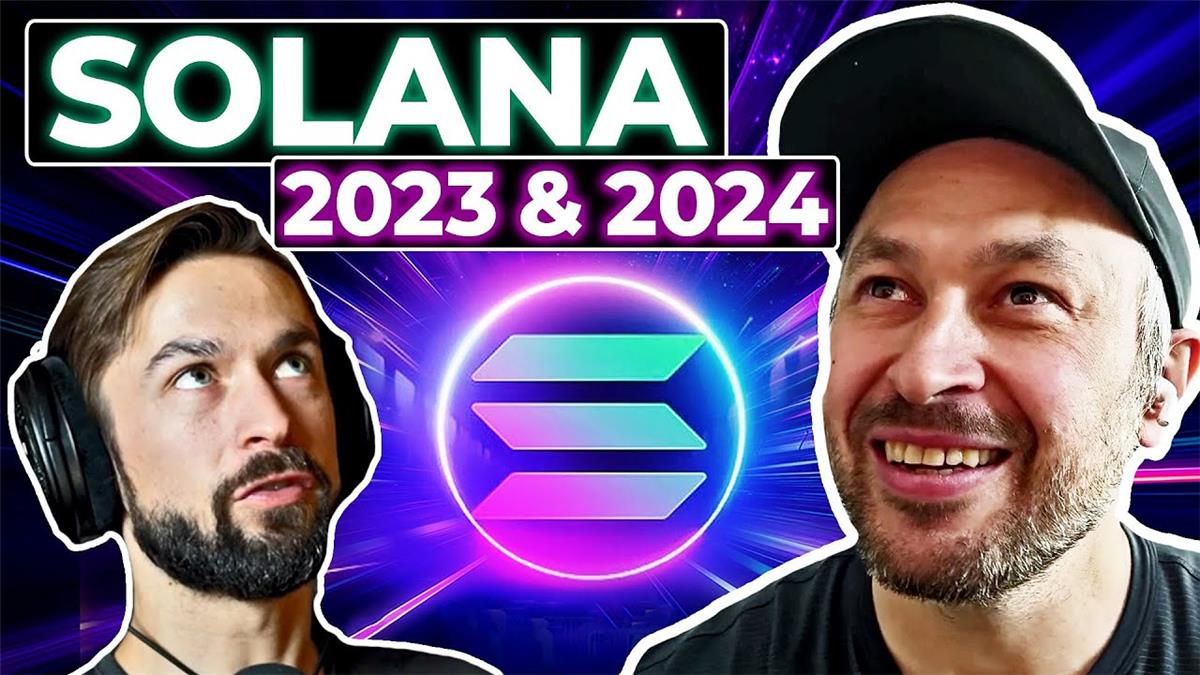
Anatoly Yakovenko, co-founder of Solana Labs, discussed Solana’s development, technology, and future. He analyzed FTX’s impact on Solana, discussed long-term sustainability via the Lindy effect, and explained Solana’s unique fee structure. Internal governance, scalability, and economic incentives were also covered. Anatoly provided a technical comparison between Firedancer and Jump, and contrasted Solana with Ethereum. He clarified common misconceptions about Solana, concluding with an overview of its role within the blockchain ecosystem.
Comparison with Ethereum: There's a common misconception that Solana is merely an "Ethereum killer" without its own unique value proposition. Anatoly could have elaborated further on how Solana complements the broader blockchain ecosystem rather than simply competing with Ethereum.
🔗:Anatoly Reflects on Solana In 2023 & 2024
4.Epicenter: How dlcBTC Could Unlock Bitcoin’s Ecosystem Potential?
dlcBTC, or self-wrapped bitcoin, aims to address certain limitations of Bitcoin (BTC) in smart contracts and decentralized finance (DeFi). Below is why dlcBTC is seen as a parallel to traditional BTC:
Smart Contract Functionality: Bitcoin’s limited scripting language restricts its ability to support complex smart contracts, which are crucial for many DeFi applications. dlcBTC aims to enable these functionalities while remaining connected to the Bitcoin blockchain.
DeFi Interoperability: dlcBTC can serve as a bridge for Bitcoin users to participate in DeFi platforms primarily built on blockchains like Ethereum.
Enhanced Privacy and Security: dlcBTC may offer improved privacy and security by reducing reliance on centralized entities and lowering risks such as censorship or asset seizure.
Increased Liquidity and Accessibility: By integrating Bitcoin into the DeFi ecosystem, dlcBTC could enhance its liquidity and create new financial opportunities for BTC holders.
Innovation and Experimentation: dlcBTC represents ongoing innovation in the crypto space, exploring new ways to leverage Bitcoin’s value in more flexible and programmable environments.
Essentially, dlcBTC is an attempt to expand Bitcoin’s applicability, especially in the growing DeFi domain, while preserving its core security and value attributes.
🔗:Aki Balogh: DLC Link – Self-Wrapped Bitcoin (dlcBTC)
5.LidoDAO Core Contributor: Technical Discussion on LST Staking Decentralization in Ethereum and DeFi
The struggle for decentralization in cryptocurrency and blockchain is becoming increasingly evident, particularly in the shift from centralized exchanges and centralized staking providers toward decentralized protocols. Simple DVT leverages the existing technical framework of the curat operator registry, enabling code reuse and technical consistency—critical for improving operational robustness, reducing technical risk, and mitigating geographic and legal risks for validator operations. Additionally, dual governance acts as a protective mechanism, allowing stakeholders to activate a "hell state" when necessary to prevent malicious behavior.
In decentralized finance, the significance of staking lies in enabling capital to serve multiple purposes simultaneously, maximizing its potential. Staking Ethereum with other protocols not only reduces costs but also alleviates downward pressure on native tokens, while aligning culturally with Ethereum’s ethos. Ethereum’s core philosophy is adaptation to its environment and future; treating protocols running on it similarly is reasonable. The economic and game-theoretic properties of proof-of-stake demonstrate strong resilience, even against small-scale attacks.
🔗:Isidoros Passadis: Lido DAO – Staking Decentralisation for Ethereum and LSTs in DeFi
6.Unchained: Modular and Monolithic Blockchains Will Coexist in the Future
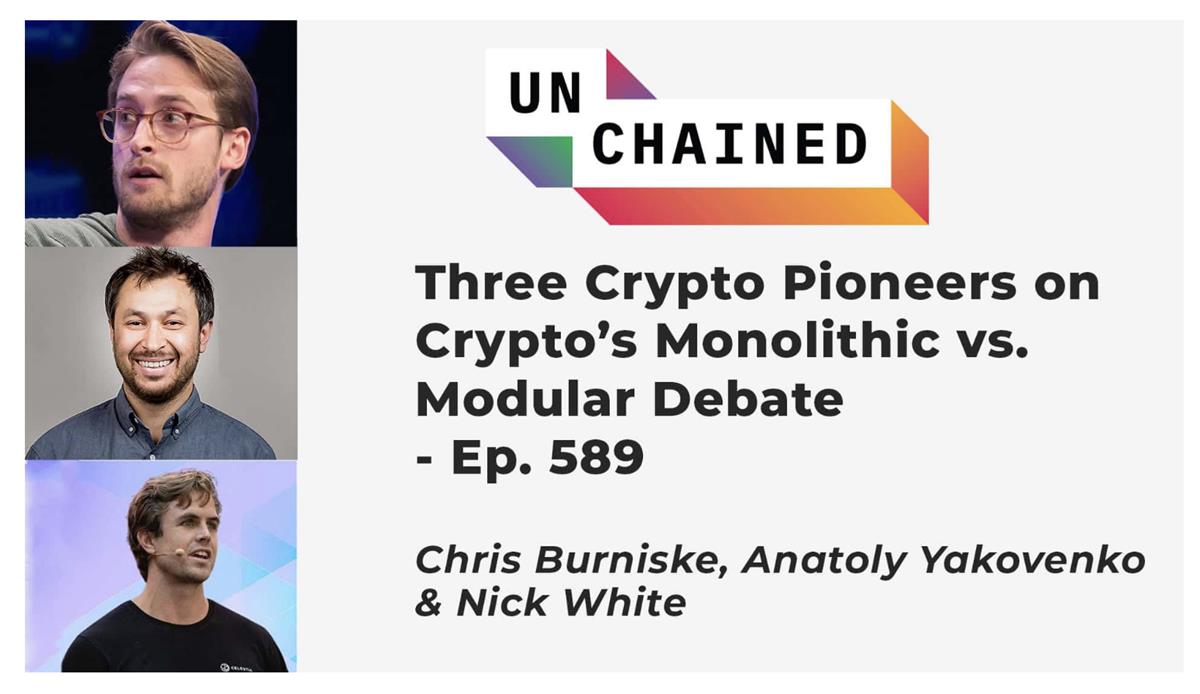
In this episode of Unchained, Solana Labs co-founder Anatoly Yakovenko, Celestia’s COO Nick White, and Placeholder VC partner Chris Burniske discussed the differences between modular and monolithic (or integrated) blockchains—Solana representing the monolithic approach, and Celestia the modular one. They agreed that both approaches have merits and will likely coexist, each suited to specific use cases and developer preferences. They also explored factors that might drive the next crypto bull cycle and shared their best predictions for the industry’s trajectory over the coming years.
🔗:Three Crypto Pioneers on Crypto’s Monolithic vs. Modular Debate
7.Arthur Hayes: “Money Is Energy — Whether USD, Gold, or Bitcoin, It’s All Correct”
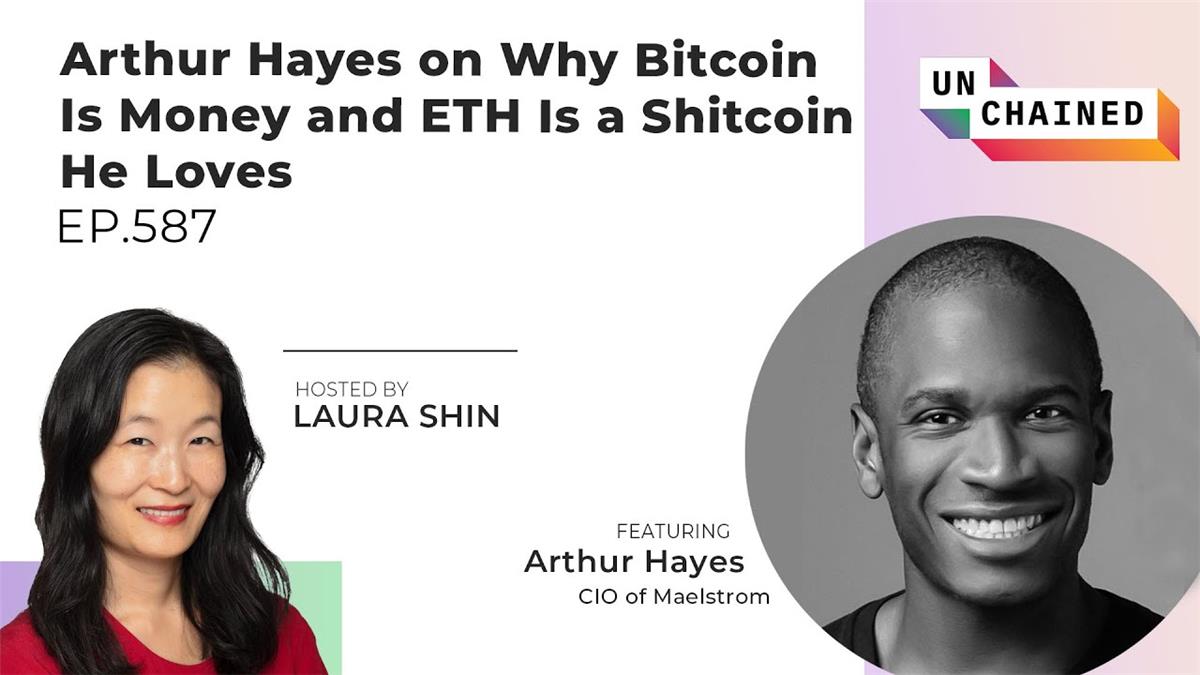
The game-changing direction over the next 5–10 years will be AI challenging economic and political norms, creating a new organism within the human universe. Ethereum is a decentralized computer—it’s the commodity powering this decentralized machine—while Bitcoin is the only true cryptocurrency. “We’re holding these pieces of paper printed in massive quantities by governments and saying we’ll buy these dog coins, and people will get rich off them.” “No one can decide the right or wrong way to put data onto the blockchain. That’s not our job.”
🔗:Arthur Hayes on Why Bitcoin Is Money and ETH Is a Shitcoin He Loves
8.Silicon Valley 101: Blockchain Innovation Happens Outside Big Tech
In the latest episode of *Web3 101*, the host invited guests who previously worked at major tech firms like Meta and Google to share their experiences and insights on the challenges these "big tech" companies face in blockchain projects. Despite abundant resources and top-tier talent, they encounter the "innovator’s dilemma" in blockchain. Half the team hasn’t used blockchain products, technically skilled engineers remain skeptical, and true blockchain believers often leave—resulting in slow progress. Difficulties in technical integration, strict internal compliance and external regulations, and the challenge of embracing blockchain innovation while preserving existing business models become double-edged swords due to their massive legacy and historical burdens.
Yet, being at the center of these tech giants gives them earlier visibility into trends such as AI-blockchain convergence, conflicts between data ownership and centralized censorship, and contributions from elite institutions to blockchain talent and technology. Now transitioning into entrepreneurs, these former blockchain leads from big tech reveal why "the real opportunities in blockchain lie outside the big companies."
🔗:Big Tech’s Blockchain Struggle: The Innovator’s Dilemma
9. Lightspeed: Market Predictions for 2024 from Two Top-Tier Crypto Traders
Solana is poised to outperform Ethereum in 2024
Solana remains undercapitalized relative to its potential in venture investment
The Cosmos ecosystem will deploy more roll-ups than Ethereum
Two chains (L1 or L2) are expected to surpass Ethereum in DEX trading volume
A breakout game will emerge in crypto: bridging Web2 and Web3 users through continuous engagement
🔗:2024 Predictions: Two of Crypto's Top Traders
10. Epicenter: Interview with Animoca Brands’ Yat Siu — “NFT Owners Earn Direct Revenue Share When Their NFTs Are Rented, Creating a New Financial Layer in Gaming”
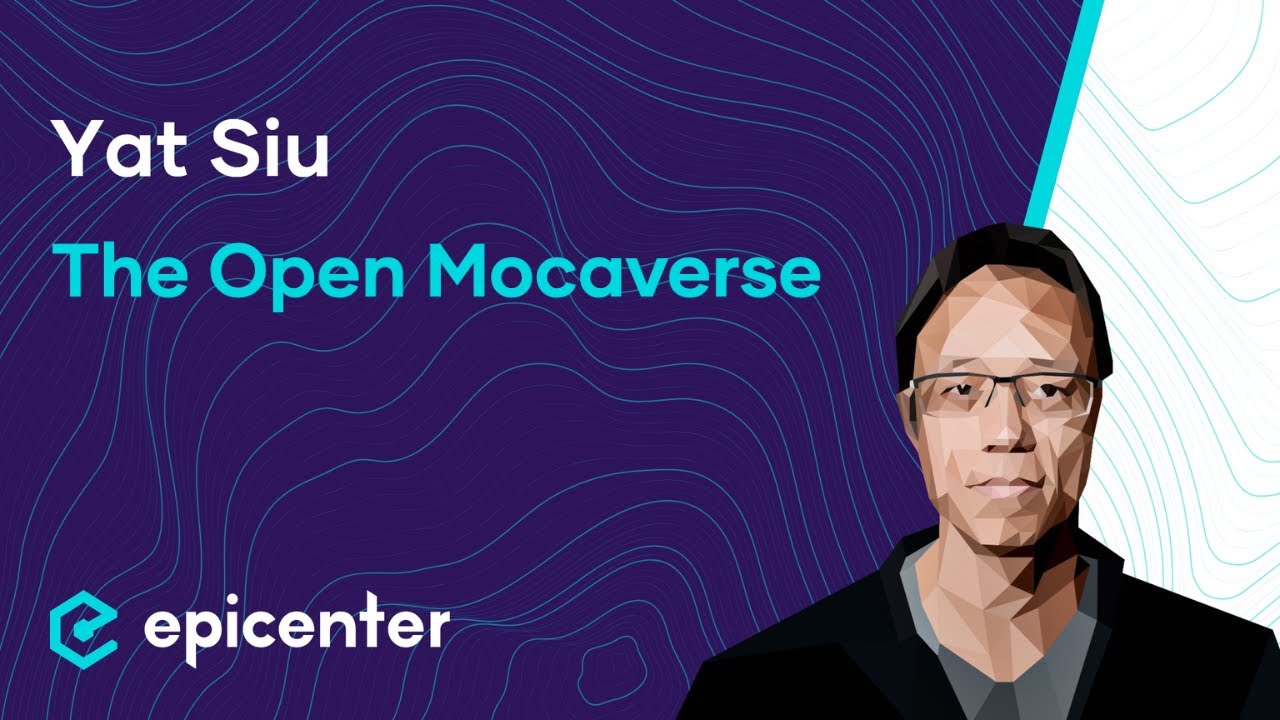
The adoption and impact of NFTs (non-fungible tokens) and blockchain technology in gaming continue to grow significantly. Digital cultural forces, especially gaming culture, have played a pivotal role in bringing NFTs and blockchain into the spotlight. Gamers naturally embrace NFTs and blockchain, making gaming one of the primary domains of on-chain activity. Some investors, such as Animoca Brands, adopt a philosophy different from traditional venture capital, focusing on training and guiding gamers rather than seeking immediate returns.
During bear markets, developers who persistently build become key investment targets. Asia shows strong interest in Web3, tokenization of gaming systems, and the adoption of NFTs and blockchain, reflecting differing perspectives on digital property value. NFT owners earn direct revenue shares when their NFTs are rented, creating a new financial layer within games. Furthermore, the cultural and financial impacts of NFTs are gaining attention, as they redefine concepts of ownership and collective narrative across areas ranging from luxury brands to education. Ultimately, the goal is to grant ownership to everything we do online—including social networks, gaming, and digital environments. This transformation will profoundly affect people’s lives and culture.
🔗:Yat Siu: Animoca Brands – From NFTs & Blockchain Gaming to the Open Metaverse.
Join TechFlow official community to stay tuned
Telegram:https://t.me/TechFlowDaily
X (Twitter):https://x.com/TechFlowPost
X (Twitter) EN:https://x.com/BlockFlow_News
 深潮TechFlow