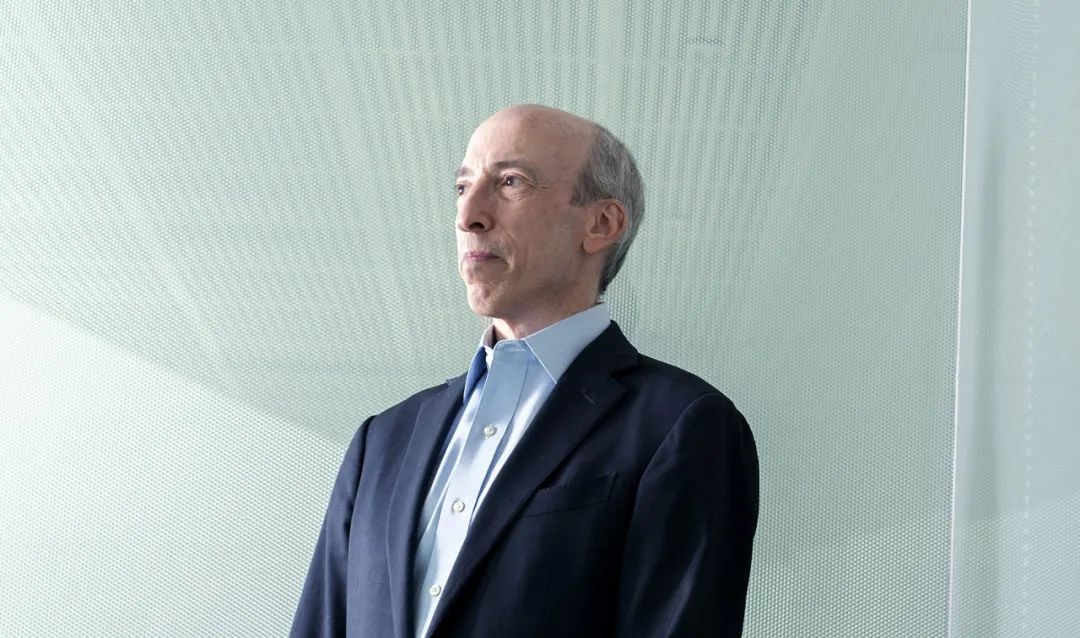
The Architect of Bitcoin Spot ETFs: The U.S. SEC Chair
TechFlow Selected TechFlow Selected
The Architect of Bitcoin Spot ETFs: The U.S. SEC Chair
In 2023, no regulatory agency or law enforcement official had such a significant impact on cryptocurrency.
 Navigating Web3 tides with focused insights
By Nikhilesh De, Coindesk
Translated by Qin Jin, Carbon Value Chain
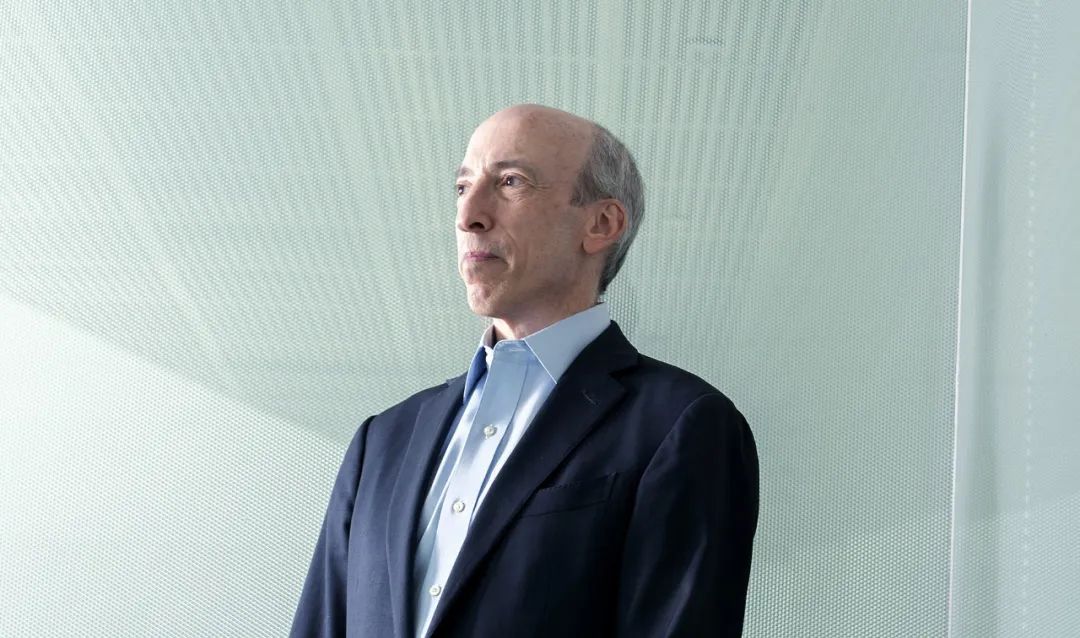
In 2023, no regulator or enforcement official had as much impact on cryptocurrency. But have the criticisms of this SEC chair gone too far?
In a year filled with numerous regulators and enforcement officials influencing or shaping the crypto industry, assessing who was the most influential is a challenging task.
Yet influence isn't measured solely by actions and outcomes. It's also gauged by reactions provoked, responses elicited, and how well we remember what was—and wasn't—said. By that standard, there's only one true winner: Gary Gensler, Chair of the U.S. Securities and Exchange Commission (SEC).
The long-serving banker and academic, tasked with overseeing financial regulation, shoulders one of the toughest jobs in U.S. crypto oversight: leading the SEC, an independent federal market regulator charged with protecting American investors and regulating U.S. capital markets—a domain where the $1 trillion crypto industry represents just a small fraction.
Gensler remains a deeply polarizing figure both within and beyond the crypto community. Politicians who disagree with his views and actions have introduced legislation to cut funding for his agency and reduce his salary.
"He could withdraw the SEC’s lawsuit against Ripple Labs, approve the first U.S. spot bitcoin exchange-traded fund (ETF), and provide clear guidance for firms wanting to launch and trade cryptocurrencies compliant with federal law—without enduring the costly and time-consuming SEC registration process," I wrote in 2021, when Gensler first made CoinDesk’s “Most Influential” list.
In 2023, the SEC achieved a partial victory (or partial defeat, depending on your perspective) in its case against Ripple. For issuers and exchanges, a spot bitcoin ETF remained a dream—though hopes for approval were higher than ever. While the SEC continued issuing guidance (or at least proposed rules) and offering hints about how it enforces securities laws in crypto, it has not fully met industry hopes for a tailored framework that would allow the vast majority of tokens to be traded on U.S. platforms (or be classified as non-securities).
"I think progress has been made; litigation has helped," said an employee at a crypto firm that interacts with the regulator. (Referred to below as Person One.)
This article interviewed several individuals; due to their work with the agency, they were granted anonymity. Two of them noted that while crypto attracts attention, it likely isn’t among the SEC’s larger priorities. In 2023 alone, the SEC issued rules or proposed rules on the Privacy Act, cybersecurity, conflicts of interest, climate disclosures, swap execution facilities, beneficial ownership, and more.
Crypto is just a small part of this broader mandate, the source said. So how do you balance all of this while industry participants and journalists struggle to keep up?
Crypto Enforcement
Setting aside rulemaking, Gensler’s vision for how crypto should be regulated seems crystal clear: If you’re operating a crypto trading platform—or, in industry terms, an exchange—and you’ve listed certain tokens, you must separate broker, clearinghouse, and exchange functions. In the U.S., crypto trading should resemble traditional securities trading. The settlements with Beaxy and Bittrex, along with lawsuits against Coinbase, Binance, and Kraken, all serve this fundamental principle.
As a disclosure-based regulator, the SEC’s mission is investor protection. His enforcement approach has certainly been heavy-handed, the source acknowledged. "I think some criticism of him using enforcement actions as publicity stunts is fair, but that aligns with my view that he’s facing an incredibly difficult job."
One of the industry’s main complaints against the SEC—under both Gensler and his predecessor Jay Clayton—is the use of enforcement actions in place of clear rulemaking or guidance that companies can use as bright-line tests. The idea that crypto exchanges should compartmentalize these different business types in an industry where technical feasibility itself is unclear only further fuels frustration toward federal regulators.
A second crypto attorney told media that the tone from senior levels of the agency “really matters.” Much of the backlash against Gensler stems not just from his substantive positions, but from how he speaks to the industry—often appearing self-satisfied.
"He has a clear policy agenda, which is to his credit—he genuinely cares about this issue," the person said. "But to achieve his goals, he’ll be rougher than other leaders might be."
In crypto, 2023 was turbulent. Just over two months ago, a former industry giant was convicted of fraud and conspiracy related to the FTX collapse. Before his exchange unraveled, Sam Bankman-Fried was active in Washington, D.C., meeting with Gensler, his counterpart at the Commodity Futures Trading Commission (CFTC) Rostin Behnam, and influential lawmakers in Congress.
Two months ago, Binance, the world’s largest exchange, admitted to violating multiple anti-money laundering and related laws across proceedings brought by several agencies—though not the SEC.
Over the past 12 months, decentralized finance (DeFi) platforms and other global crypto projects saw billions of dollars stolen. While SEC regulations may not protect investors using DEXs outside the U.S., some regulators are sounding alarms over hacks and subsequent money laundering.
"If this industry wants to move forward, it needs a mechanism to root out bad actors," said a third individual, another lawyer whose firm works with the SEC.
One Among Many
Some interviewees felt that as head of the SEC, Gensler bears the brunt of public criticism directed at his agency.
"I think he gets blamed for a lot of things that weren’t his doing. The Ripple case didn’t originate with him. And I don’t think the Special Purpose Broker rule was his idea either," said the third lawyer, referring to two controversial actions the SEC has taken in recent years.
"You have someone highly visible, but we forget that without a strong team, no leader succeeds," said the first attorney.
The second person offered a different take: While Clayton, like Gensler, repeatedly stated that “many” cryptocurrencies resemble investment contracts, unlike Gensler, Clayton also suggested a path forward that wouldn’t lull the ecosystem into complacency.
Beyond what the SEC’s enforcement actions have revealed, that path remains highly uncertain.
"As an industry, it’s really important to strike the right balance between raising technically nuanced policy disagreements that policymakers may not grasp, and at the same time, I think we also have a responsibility to help people appreciate this asset class," said Person One.
Join TechFlow official community to stay tuned
Telegram:https://t.me/TechFlowDaily
X (Twitter):https://x.com/TechFlowPost
X (Twitter) EN:https://x.com/BlockFlow_News
 @GagraVentures