AI Fund Year-End Review: Understanding the 2024 AI Trends in One Article
TechFlow Selected TechFlow Selected
AI Fund Year-End Review: Understanding the 2024 AI Trends in One Article
Your first chance to understand 2024.
 Navigating Web3 tides with focused insights
Author: Otter
Editor: Zuri
Coatue — The Best AI Is Yet to Come
Coatue is a New York-based hedge fund known for its consistent focus on the TMT sector. Since its founding in 1999 by Philippe Laffont after leaving Tiger Management, the firm has grown its assets under management from $45 million to $19 billion. In November, Coatue released a research report titled "AI: The Coming Revolution," discussing the revolutionary impact of AI and how AI technologies are transforming our world.
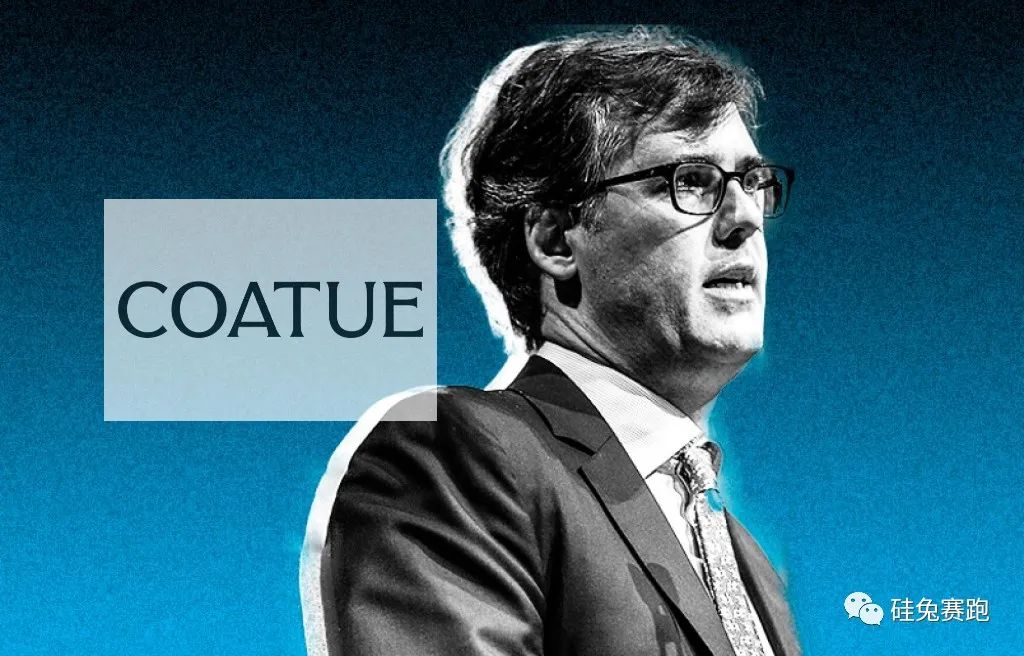
Coatue & Philippe Laffont | Image source: Institutional Investor
Coatue believes the best era of AI has not yet arrived. Future developments will make AI more accessible, scalable, and practical. Below are their key insights and predictions:
The future programming language is undoubtedly English. AI will enable more people to easily learn programming, debugging, and software deployment.
On-device AI will become widely adopted. Powerful AI assistants will reside in everyone’s pocket, turning billions of Apple users into AI users.
Scaling AI models remains an engineering challenge. Since the release of GPT-3, OpenAI has tripled its engineering team.
Multimodal large models represent the frontier of innovation, with new architectural developments emerging. Coatue highlights “Hyena,” a novel architecture proposed by researchers from Stanford University and Mila, which is gaining attention in natural language processing and could disrupt existing attention mechanisms. While many current large models rely heavily on compute-intensive Transformers, architectures requiring less computational power may gradually replace them.
Radical Ventures’ 10 AI Predictions (2024 Edition)
Radical Ventures, founded in 2018, focuses on early-stage investments in AI, robotics, and quantum computing. Its two co-founders launched the Vector Institute for Artificial Intelligence in 2017 alongside Geoffrey Hinton and others. Today, the institute brings together over 1,700 top AI researchers worldwide. Notably, Dr. Fei-Fei Li currently serves as a Scientific Partner at the institute.
Rob Toews, partner at Radical Ventures, maintains a regular column in Forbes. On December 21, he published Radical’s 10 predictions for AI trends:

Radical Ventures & Rob Toews | Image source: TED Talks
NVIDIA will accelerate its entry into cloud computing. As cloud providers develop their own native AI chips, NVIDIA has responded by launching DGX Cloud. Radical predicts that in 2024, relationships between NVIDIA and major cloud providers will become increasingly complex.
Stability AI will shut down. Stability AI has undergone massive layoffs recently. With monthly expenses reaching $8 million and minimal revenue, its estimated $50 million funding will likely run out before the end of 2024. Although the company has begun seeking acquisition offers, interest so far has been limited. Therefore, Radical forecasts Stability AI will cease operations entirely in 2024.
The terms “Large Language Model” and “LLM” will become less common. While early generative AI models like GPT-3 were purely text-based, AI is rapidly becoming multimodal. As such, the terms “Large Language Model” and “LLM” will grow increasingly inaccurate. Radical predicts that in 2024, as models evolve into more multidimensional systems, so too will the terminology used to describe them.
State-of-the-art closed models will continue to lead. Despite high activity in the open-source AI community, most cutting-edge AI model developers (e.g., OpenAI with GPT-4) remain closed-source. Many open-source advocates believe the performance gap between closed and open models is narrowing, but Radical holds the opposite view: the best closed models will continue to significantly outperform the best open-source models in 2024 and beyond.
Fortune 500 companies will create a new executive role — Chief AI Officer. Radical expects large enterprises to appoint a “Chief AI Officer” in 2024 to lead corporate AI strategy. This aligns with President Biden’s recent AI executive order, which explicitly requires each federal agency to designate a Chief AI Officer.
Alternatives to the Transformer architecture will emerge. Introduced in Google’s groundbreaking 2017 paper, the Transformer architecture has become the dominant paradigm in modern AI. However, next-generation architectures like Mamba are beginning to show superior performance across various benchmarks. Radical predicts viable alternatives to Transformers will materialize in 2024.
Strategic investments by cloud providers in AI startups may face regulatory scrutiny. Throughout this year, Microsoft, Alphabet, and NVIDIA have made significant investments in favored AI startups. At least part of the motivation behind these investments is to secure long-term customer relationships with high-growth AI companies—a practice that touches on a gray area in accounting rules. Radical anticipates stricter scrutiny from the U.S. Securities and Exchange Commission in 2024 regarding capital flows tied to such investments, potentially impacting the broader AI investment landscape.
The relationship between Microsoft and OpenAI will begin to fray. Microsoft and OpenAI have different organizational structures and divergent visions for AI’s future. As OpenAI expands its business, it will increasingly compete directly with Microsoft for customers. Meanwhile, Microsoft, pursuing a more diversified strategy, will also collaborate with OpenAI’s competitors.
Venture capital may shift focus toward crypto in 2024. Many prominent AI venture capitalists, entrepreneurs, and technologists showed strong interest in cryptocurrencies during the 2021–2022 bull market. If crypto asset prices rebound in 2024, some investors may redirect their attention and capital toward crypto, leading to reduced investment momentum in AI.
Copyright issues surrounding AI-generated content remain a “sword of Damocles.” Leading generative AI models are trained on vast amounts of copyrighted material—an unresolved legal risk that could trigger major liabilities and reshape the industry. Radical warns it would not be surprising if courts rule that models like GPT-4 and Midjourney infringe copyrights, holding their developers accountable to intellectual property rights holders.
a16z Year-End Report: Disruptive Trends in 2024
On December 6, top-tier U.S. VC firm a16z released its annual trend forecast titled “Big Ideas in Tech for 2024,” covering areas including U.S. society, healthcare, consumer tech, cryptocurrency, fintech, gaming, growth-stage technology, infrastructure, and enterprise services. The report features forward-looking perspectives from a16z partners. Key AI-related predictions include:
Image source: a16z
AI will drive rapid advancement in healthcare. Compared to other industries where non-AI software already enables efficient operations, healthcare still relies on pagers, fax machines, and manual data entry. AI tools will dramatically improve productivity and leapfrog legacy systems, fundamentally transforming health technology.
Consumer technology: Voice-first applications and specialized AI assistants will rise, while AI makes breakthroughs in education and creative arts. By 2024, voice-powered apps will become more widespread, with AI-driven email features integrated into Gmail. Specialized ChatGPT-style AI assistants will expand into vertical domains—such as AI research assistants for scientists, AI writing tools for journalists, and AI rendering platforms for designers. We may also see groundbreaking AI educational tools designed specifically for children. As AIGC reduces the marginal cost of creation to nearly zero, new consumer behaviors will emerge in artistic fields.
AI and blockchain technologies will deeply converge. Currently, only a few tech giants can train and operate large AI models. However, blockchain enables multilateral, global, decentralized markets where anyone can contribute—and get compensated—significantly lowering development costs and accelerating AI innovation.
Fintech: AI will enhance efficiency in financial professional services and transform banking and trading. LLMs can extract insights from data types that traditional financial software struggles to process.
Gaming: AI will create never-ending games. In 2024, we’ll witness the first wave of innovative game systems and mechanics powered by large AI models. AI will revolutionize gaming by generating game worlds dynamically at runtime using neural networks instead of pre-rendering. Large language models will power highly realistic AI companions and new forms of social interaction, creating immersive, endlessly evolving experiences that keep players engaged long-term. Entertainment will shift further from passive to active participation, blurring the boundaries between reality and virtuality.
Enterprise services: AI-driven Customer Relationship Management (CRM) will emerge. Generative AI will directly address core data challenges in enterprise services. Instead of relying solely on sales representatives’ inputs, companies will automatically capture or generate data from real customer interactions—such as meeting transcripts, emails, and call recordings. AI will augment human creativity and problem-solving, reshaping the future of work.
Finally, here’s a summary generated by ChatGPT based on the above content for the new year:
AI will become more widespread and practical. It is expected to unlock new use cases in programming, on-device AI assistants, and private dataset applications.
AI will witness technological innovation. Multimodal large models and new architectures will push the frontier of AI innovation, with next-generation solutions like Hyena and Mamba emerging.
Industry applications and impacts will expand significantly. AI will make substantial impacts across healthcare, consumer tech, fintech, gaming, and enterprise services. Voice applications and specialized AI assistants will shine in education and artistic creation. The integration of AI and blockchain will promote global AI development and adoption.
According to ChatGPT, the common themes among these predictions are:
-
AI technology will deepen its application across multiple sectors, particularly in improving efficiency and creating new user experiences.
-
Technological progress and innovation—including new model architectures and multimodal capabilities—will remain key drivers of AI advancement.
-
AI will drive broadening industry applications and transformative business models.
-
Legal, ethical, and regulatory issues will become increasingly important aspects of AI development.
-
Investment and financing environments may adjust in response to shifting market dynamics and industry trends.
At the end of this article, the editor would also like to thank AI for assisting in drafting this post, greatly enhancing writing productivity.
Looking ahead to 2024, we anticipate that AI will continue making revolutionary contributions to automation and intelligence across both foundational disciplines and real-world applications, driving societal progress.
Join TechFlow official community to stay tuned
Telegram:https://t.me/TechFlowDaily
X (Twitter):https://x.com/TechFlowPost
X (Twitter) EN:https://x.com/BlockFlow_News