Why Are Data Centers So Hated? Tech Giants Should Give Rural Areas a New Story
TechFlow Selected TechFlow Selected
Why Are Data Centers So Hated? Tech Giants Should Give Rural Areas a New Story
Deconstructed the dilemma of the data center narrative.
 Navigating Web3 tides with focused insights
Author: Hip City Reg
Translation: TechFlow
TechFlow Editor's Note: Tech companies are frantically building data centers in rural America, yet encountering **70% community opposition rate** and **over 300 local bans**. Architect Rem Koolhaas's observation reveals the truth: cities have become playgrounds for humans, rural areas have become habitats for machines—yet those "coastal elites" never care about the communities they transform. This article dismantles the predicament of the data center narrative and points out why simply "making the architecture look nicer" cannot save this situation.
Introduction
I have been thinking about the relationship between data centers and the overall American mindset, as well as the mild anti-tech sentiment that I believe we are already in. What I keep returning to is the grand narrative that data centers seem to carry with them—whether from the tech accelerationist side, or from the side of the broader dissatisfied Americans.
I would summarize the accelerationist side's viewpoint like this:
In the Cold War-style race related to AI, data centers are necessary.
Data centers create positive externalities because they create demand for both construction jobs and energy production.
Data centers are the infrastructure bottleneck to cheap intelligence, which will ultimately create huge consumer surplus (curing cancer, new physics, etc.).
"This is necessary for progress."
I would summarize the dissatisfied Americans' side's viewpoint like this:
AI is both stupid and going to steal our jobs, why should I support the infrastructure it relies on to survive.
Losing jobs = Losing the American concept of dignity.
Why do data centers need to be built 'near me' and in my community, instead of being shoved off to anywhere else.
The services they represent point to wealth enrichment in coastal areas—this is a kind of extraction from their communities.
Data centers consume massive amounts of water resources, raising our energy bills.
This is just another form of control by the tech industry.
(I found this investigation by Soon Media on Abilene, Texas very convincing—link.)
Whether these arguments are true does not matter. Whether they are made in good faith does not matter either. The reality is, states are issuing moratoriums on data center construction. Local communities are rallying to express collective opposition to proposed projects. (**70% opposition rate** within their own communities, **over 300 places** have bans or moratoriums.) And the overall sentiment surrounding AI, its leaders, and the future it promises is already terrible.
So what should we do?
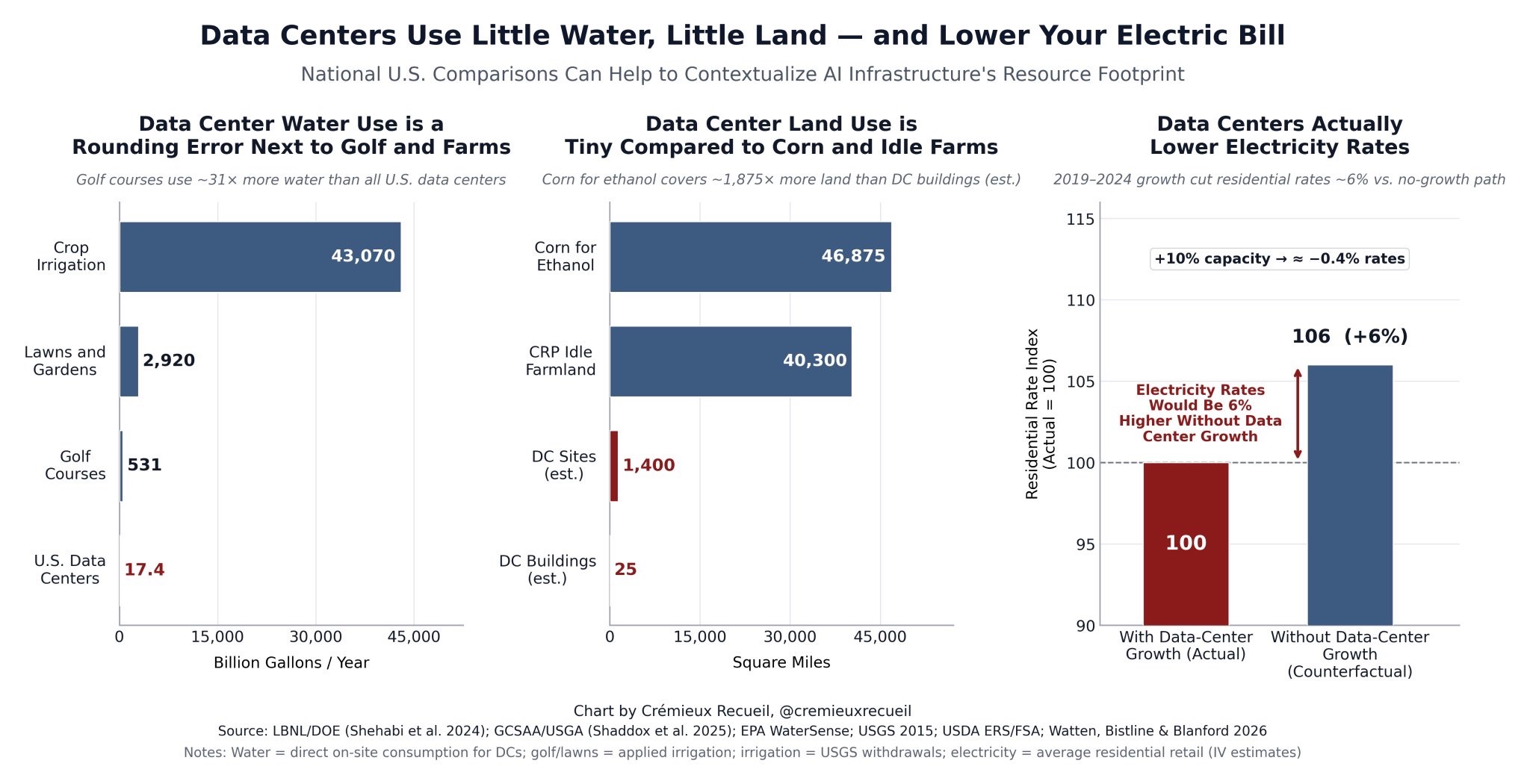
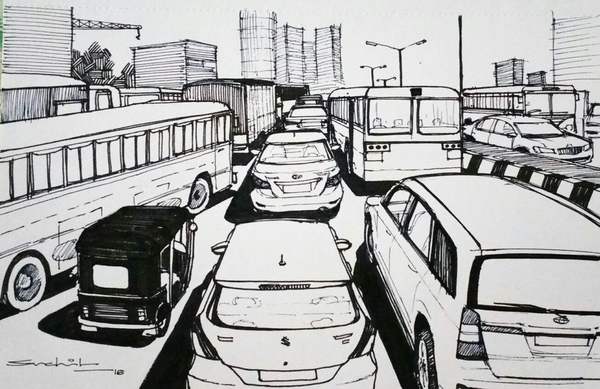
Figure: Comparison of Water, Land, and Electricity Price Impacts of US Data Centers (Source: Hip City Reg / Crémieux Recueil Mapping)
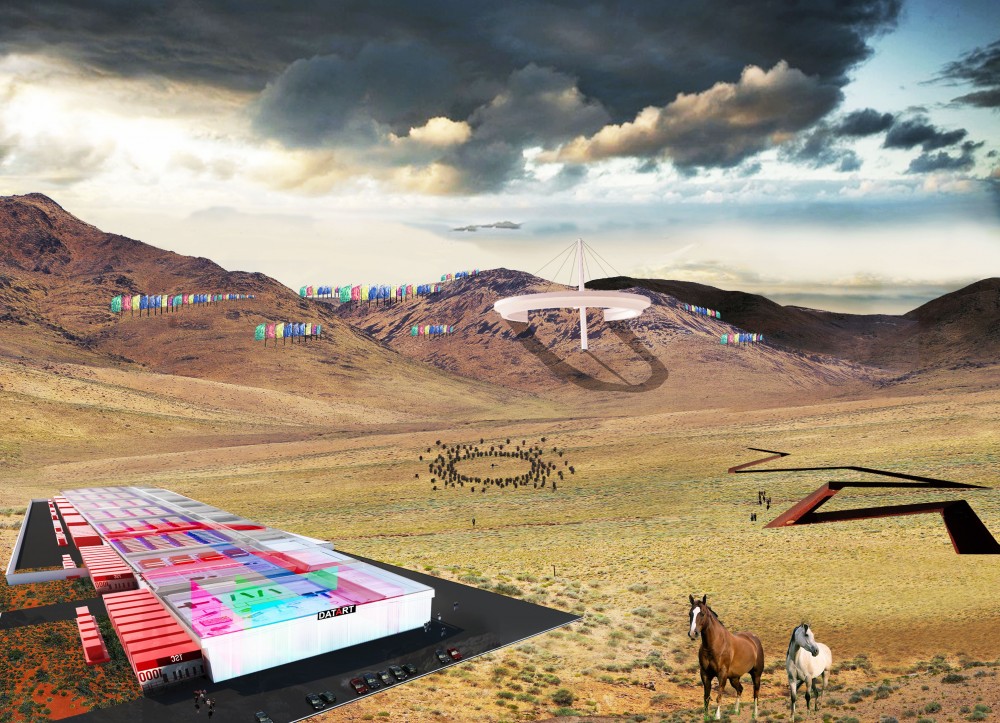
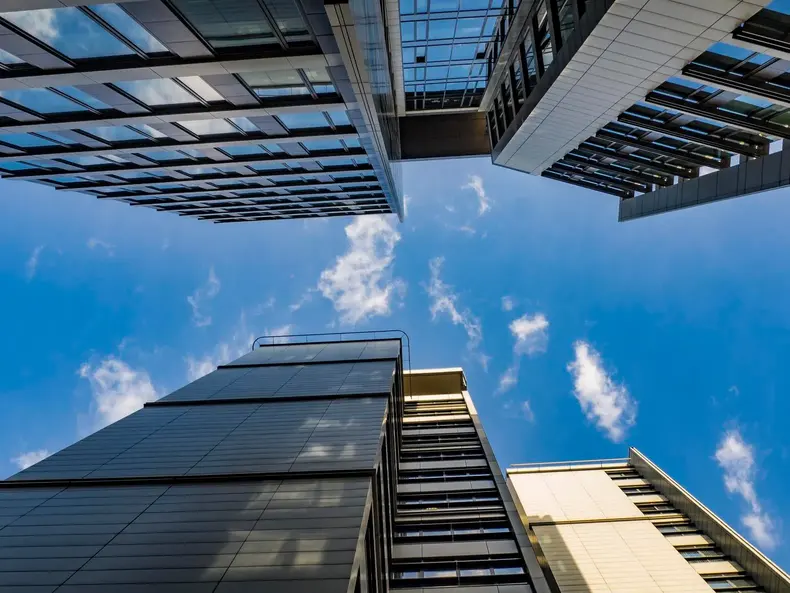
Figure: Imagination of Human-Machine Landscape from Rem Koolhaas's "Countryside" Perspective (Source: Hip City Reg)
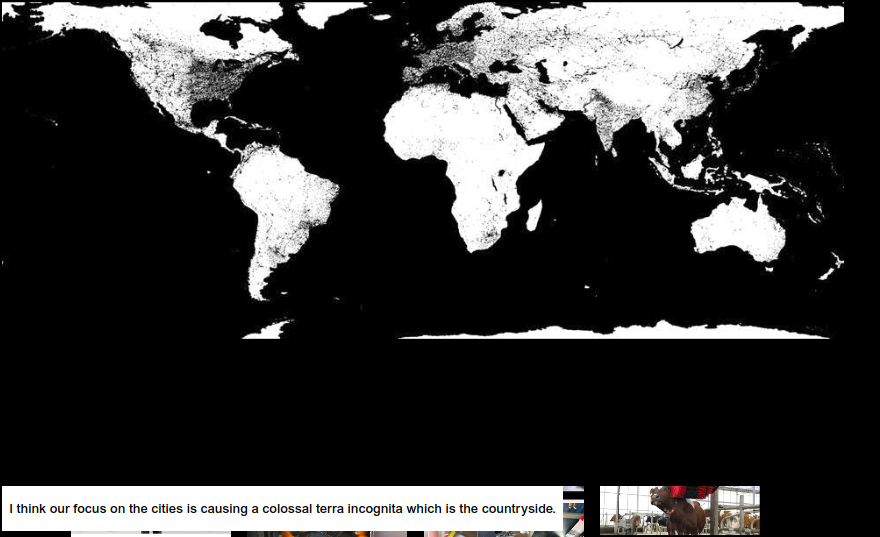
Figure: Rem Koolhaas's Observations on Cities and Countryside (Source: Hip City Reg)
Rem's Countryside
I have quite lost interest in writing general essays, so the content below (like some of my previous personal favorite articles) is just a series of key points. Hope they can outline this idea well enough. The main reference inspiring this line of thought is Rem Koolhaas's work "Countryside".
Rem's career (like many architects) was built on cities. "Delirious New York" (1978), OMA (1975). Then he spent about ten years (2012–2020) arguing that architecture and culture's complete obsession with urbanization had become a kind of blindness.
"Countryside"—his deliberately broad term for rural, remote, desolate, and wild territories, which occupy **98%** of the earth's surface—is not the stable, nostalgic background we imagine. It is where the most radical transformations of our time are truly happening: automation, climate change, immigration, genetic experiments, political radicalization, and the physical infrastructure of the digital economy.
The countryside has always been neglected. And this is an anomaly of the 20th century. For most of history, from Jefferson to Mao, the countryside was the main political project. But urban triumphalism subverted this.
Beyond the American "coastal elite" framework, we have come to view urbanization as the global statistic of progress (and overwhelming image). This not only gives us a statistical claim to belittle the countryside, but also reorients it to serve growing urban centers.
However, ordinary urbanites do not see it this way. Instead, they have a fictional imagination of the countryside.
One is a pastoral, slow, authentic, unchanging leisure economy viewpoint. Rem illustrates this with his own observation of a Swiss village, which lost its original life while expanding in scale.
In his Icon article, he calls the actual condition the "intermediate state": a decorated surface whose appearance has almost nothing to do with what is happening on the land and inside the buildings. He insists that the countryside "is now the frontline of transformation"/"more turbulent than the fastest accelerating cities".
The other is more hostile. Perhaps as Wendell Berry said, "prejudice against country people". I think this is very key to understanding the invisible psychology of data centers. Essentially, it is a belief that "it doesn't matter putting these buildings around those people". Because coastal elites (those building AI and pushing its potential takeover as an engine of progress) usually do not view those people in "flyover states" with a refined love for their culture and community.
Rem believes the countryside is increasingly dominated by Cartesian order. Gridified, mechanized, optimized for maximum production. In "The Cut", he makes this mechanism explicit and gives it causality: because cities have become "machines of mass caprice"—focused on fun, pleasure, and interaction rather than need—we "have to install a hyper-Cartesian organizational infrastructure on territories previously called countryside as a counterweight". Rigorous, abstract, and rational geometry—qualities modernism once promised to cities—have migrated to the land: pivot irrigation circles, greenhouse cities, server farms, logistics centers, robotic agriculture. The frivolity we associate with country life now belongs to the city, while the countryside gets machine logic.
In a conversation with Benjamin Bratton (Strelka, 2017), Koolhaas accepted a striking reformulation: the old model held that cities are where machines live, and the countryside is nature's garden. This has been inverted—**cities are where humans are; the countryside is where machines live**. He proposes that the city/countryside boundary might now be better divided into dense vs. non-dense, or "human occupied or machine occupied". This is the origin of his use of the term "post-human" for new countryside types.
We even see the embodiment of this logic in Nolan's "Interstellar", where farms are completely overwhelmed by automated agricultural equipment, with very few human hands. And the main job of those hands is to repair the machines doing the real farm work.
The most architecturally important buildings of this era—data centers, logistics warehouses, automated greenhouses, the "cluster of boxes" he studied at the Tahoe Reno Industrial Center in Nevada (Walmart next to Amazon next to Tesla next to Google)—are designed by anonymous industrial companies outside academic discourse, whose scale makes human proportion irrelevant.
This observation also contradicts a very common idea on tech Twitter: we just need to make data centers look pretty. I don't think this is a solution, and the companies building these behemoths seem to lack such political will.
Moreover, for whom? For what purpose? Again, these data centers are far beyond human scale. They are not places for public consumption. You cannot rest in the shade they might provide. This notion of "architecturally beautiful data centers" is another top-down fantasy, applied from a distance to appease a culture that technologists actually do not want to engage with.
Understanding the Narrative (This Part is Simple)
Setting any kind of new narrative for data centers is a hard battle, which surprises no one.
Condensing the entire Rem section above → We must stop viewing data centers as the static endpoint of AI development, offloading urban knowledge projects as physical weight onto the countryside, and then pointing to elites in San Francisco.
In the American psychological perception, data centers are completely equivalent to AI. Data centers have nothing to do with the infrastructure for ordinary people writing emails or uploading photos to Instagram. These infrastructures have been categorized as a new "other". **Data centers (especially newly built ones) = AI**.
If Data Centers = AI → Then the narrative burden they carry is almost exactly the same. "Unemployment caused by the elite class, while they claim this is necessary for progress."
A pause is needed here, because "progress" is a heavily weighted word, which the entire Silicon Valley views as its reason for existence. I cannot untie this complex knot here, but if you are still reading, please think about in how many ways Silicon Valley's concept of progress does not match the needs of ordinary Americans.
For me, this is a typical case: when a narrative based on capital and talent escapes control and becomes the only narrative.
In other words, when technology is as important as we insiders believe → the narrative will be communicated to everyone. Unfortunately, the currently popular narrative is built for capital momentum and talent wars, not to win the hearts of those who need to welcome metropolitan-level infrastructure in their own backyards.
New Narrative
The rules for the new narrative should be as follows:
Infrastructure Cannot Be Anonymous—Must Have Clear Ownership
I sincerely believe anonymous infrastructure violates its intended purpose. If I burn down a data center, I hurt the concept of AI, not a specific company. Abstracting data centers into conceptual spaces, rather than company names you know have real humans, is a mistake.
Amazon distribution centers, though flawed, present a clearer employment and service relationship than today's data centers. Distribution centers are hubs requiring massive manpower, far exceeding data centers. For data centers, "showing themselves" as a gesture of broader interdependence is actually more radical, despite their sparser human footprint.
Reciprocity, Treat the Countryside as Host, Not Just a Site
That is: this data center comes with an agreement of reciprocity with the local community. Whether providing quotas for schools and hospitals, or providing equity to the town.
Purpose
Accept that the hosts of these infrastructures must gain new community purpose (and pride?). This directly relates to reciprocity. "Your children will own a part" creates new community interests and future-oriented purpose.
Electricity Prices
I don't know how the data center narrative can move forward without seriously discussing energy issues. Important partnerships need to be established, pairing data center construction with energy suppliers, increasing capacity that truly responds to community concerns.
Architectural Form
Although I don't think "making them beautiful" is a sufficient answer, we also cannot ignore that these things are currently ugly brown boxes. The first team to truly treat data centers as beings will create an interesting moment we can all learn from.
To be clear, presence is not "beauty". Lest I contradict my earlier views on data center design. Presence is authorship, which is the first rule of this list, translated into architectural form. And the current brown boxes are the very image of anonymity.
Theory of Refusal
People will say no. The technologists' reaction cannot be a knee-jerk "these hillbillies are so stupid". Maintaining individual and community dignity means respecting refusal.
None of these are policies. Nor will I deceive myself into thinking it solves all the problems faced by our industry that believes in this technology.
But I firmly hold this belief: **A narrative that cannot withstand "no" is not a narrative**. Some of these projects should not be built. Not because AI is bad, nor because all opponents are right. But because a country where every proposal eventually passes regardless of what the hosts say is run by force. If we can only rely on force, this will truly change our belief about how progress (that tricky word appears again) should happen in the coming decades... Eliminating mechanisms of community consent will further reinforce the belief: only activism can respond to this force. This is a downward spiral.
Rem understands the countryside is never background. I believe we have re-entered a critical moment, where the countryside is determining Silicon Valley's momentum in unexpected ways.
We are building the largest buildings of this century, thousands of miles away from corporate headquarters, yet refuse to sign our names on them. As my mentor Freddy Anzures said, "We are chefs afraid to taste our own food." I would add, we are not even willing to sign the menu.
The window to set a new narrative for the most critical technological moment of our lifetime is now. We cannot let it close simply because we believe we know better.
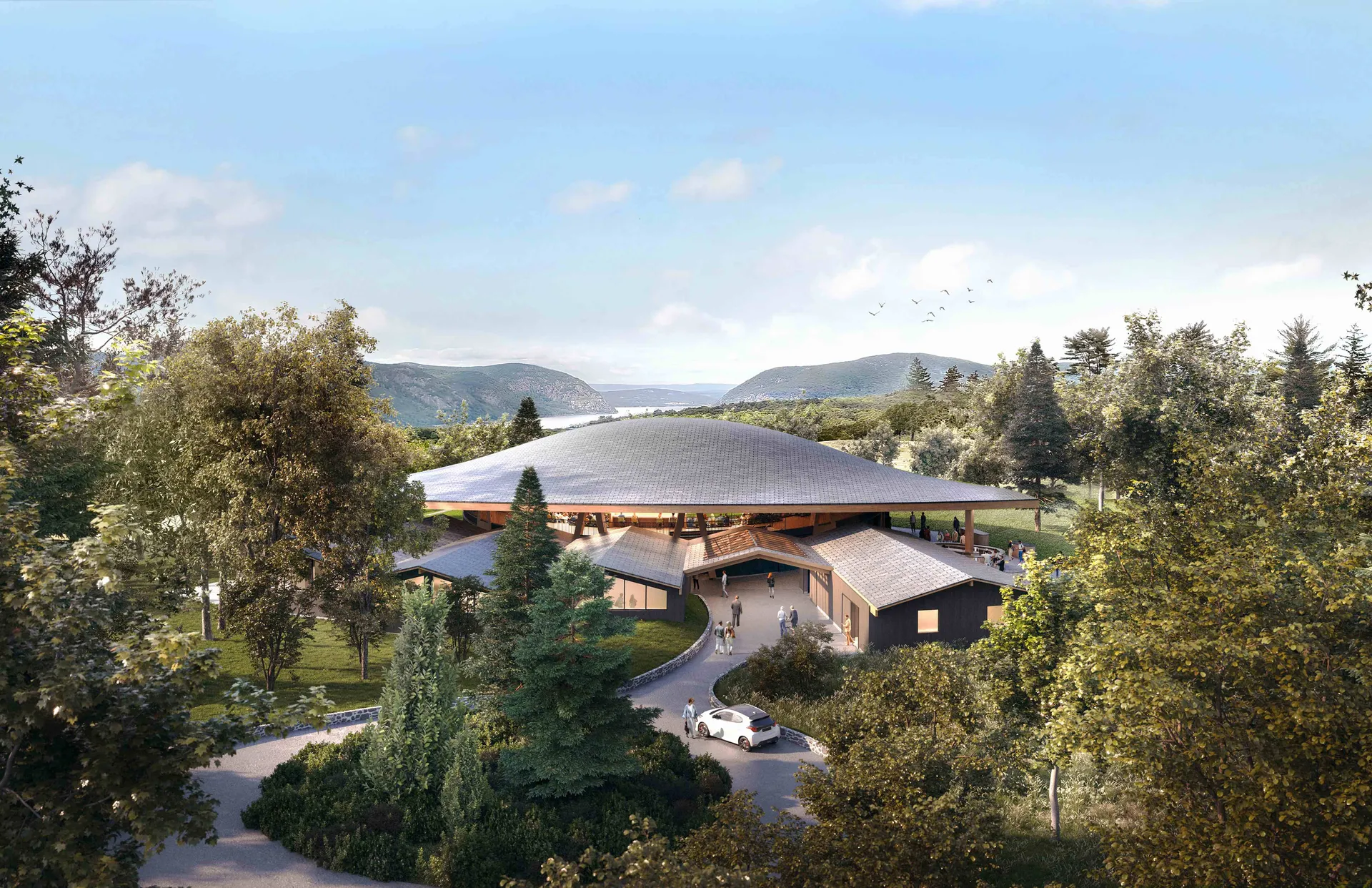
Figure: A Conceptual Architecture of a Data Center Symbiotic with Nature (Source: Hip City Reg)
I don't edit much, so please forgive typos and awkward places.
Thank you very much for your attention. I hope this was worth it, if not... unsubscribing won't hurt my feelings, and will give you back time you truly cannot get back.
Join TechFlow official community to stay tuned
Telegram:https://t.me/TechFlowDaily
X (Twitter):https://x.com/TechFlowPost
X (Twitter) EN:https://x.com/BlockFlow_News