








DePIN Memories: Wang Yiming, JDI, and Helium
TechFlow Selected TechFlow Selected
DePIN Memories: Wang Yiming, JDI, and Helium
History may define this path as DePIN, and the person who could become its representative figure is Wang Yiming, long unknown to the public.
 Navigating Web3 tides with focused insights
Author: Zuo Ye
After China's mining ban on September 4, 2021, Chinese participants essentially lost their pricing power over Bitcoin. On September 15, 2022, Ethereum completed "The Merge," marking the end of Proof-of-Work (PoW) mechanisms for major cryptocurrencies beyond Bitcoin. Since then, ETH issuance has been controlled by overseas exchanges and staking networks such as Lido.
Chinese players have largely been excluded from the two largest cryptocurrencies in the crypto world. Beyond exchanges and overseas expansion, how can Chinese participants survive in this space? This has become an industry-wide challenge. Despite possessing the world’s largest and most active end-user market, they are now forced to cede control to others.
In this historical shift, Chengdu and Shenzhen have suffered the heaviest blows—not Wenzhou, not Shanghai, and certainly not Beijing—because the old model relied on Shenzhen for hardware supply and Chengdu for deployment, with both cities jointly mining in a continuous cycle.
Now it feels like being thrown back to square one overnight—but there is still a way forward.
Looking back, history may define that path as DePIN, and the figure who could represent it is none other than Wang Yiming, long obscure but increasingly pivotal.
Chengdu’s Past: A Cryptocurrency Holy Land Rivaling Shenzhen
If you've visited Chengdu, its high cost of living coupled with relatively low incomes might surprise you. Yet within this context, the crypto industry stands out as one of the few high-income sectors. At its peak, the Bitcoin mining community based in Chengdu controlled the majority of global Bitcoin output.
Abundant small hydropower resources and relatively lenient regulatory policies created the perfect environment for what became one of Bitcoin’s golden eras.
This continued for over a decade—until everything collapsed.
The September 4 ban didn’t just alter the balance of power between East and West in the crypto world—it also accelerated the sector’s shift from tangible infrastructure to purely financialized models. PoS Ethereum devolved into a capital game, while Ethereum forks turned into farces. Today, PoW survives only in Bitcoin and a handful of minor altcoins.
As for DePIN, Helium—the 2021 pioneer pushing the Wi-Fi model—had a brief moment in the spotlight before entering a prolonged downturn. However, two key points remain underappreciated:
-
Why has Helium managed to survive since 2021?
-
What does this have to do with Chengdu?
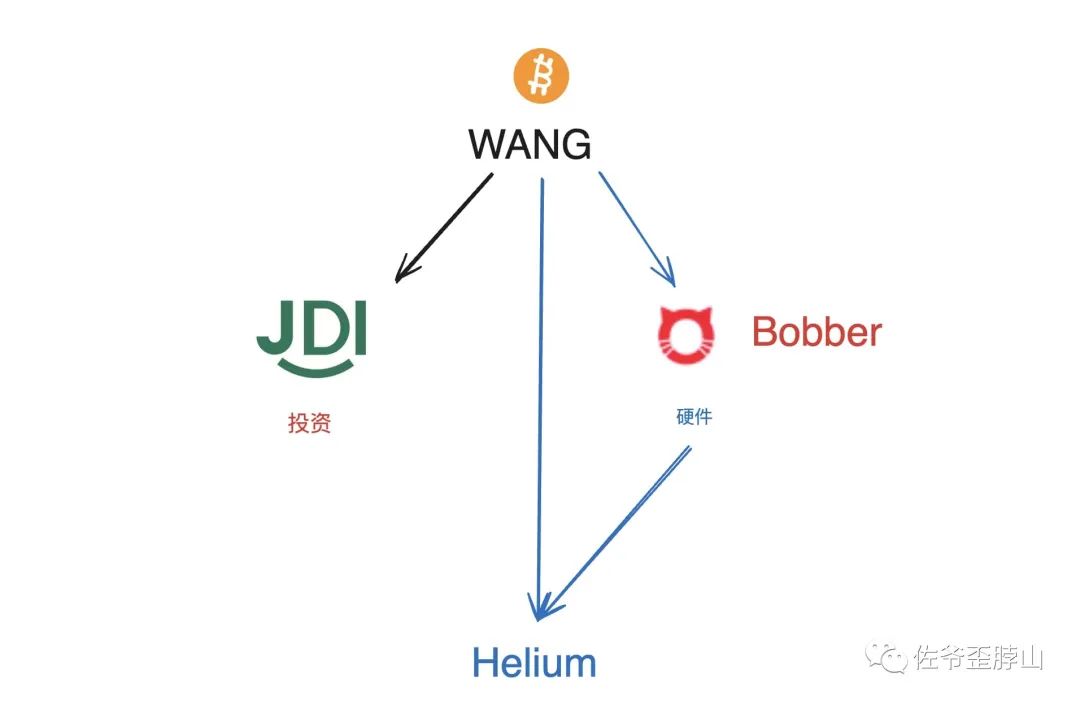
To answer these questions, we must introduce Wang Yiming and his constellation of projects: JDI Labs, Bobber, Helium, DIMO, and more. To put it dramatically, Wang Yiming either built or played a central role in nearly every major project in today’s DePIN ecosystem.
Now let’s revisit those two questions:
-
In 2021, Bobber was Helium’s primary miner supplier, and the strategic decision to fully back Helium came from Wang Yiming. A behind-the-scenes powerhouse, he didn’t even launch his own Twitter (X) account until six years after entering the industry—long after figures like CZ and Sun Yuchen had become household names.
-
Wang Yiming’s JDI Labs (Global)—the suffix doesn't matter—is among the most active investment and manufacturing firms in DePIN, responsible for channeling hardware from Shenzhen’s Huaqiangbei to global markets.
“Shenzhen supplies, Chengdu mines”—mining is mining, whatever the coin. That’s how Chengdu miners saw it. Thus, Chengdu could rival Shenzhen. And through deep commitment to DePIN, Wang Yiming delivered his true industry-defining performance, laying bricks patiently until the building stood tall.
DePIN Chronicles: Wang Yiming, JDI, and Helium
Wang Yiming is exceptionally low-key. Without introduction by Twitter influencer Mark (@shuaibaobaommd), most would still know nothing about him—yet he is truly the man behind the global DePIN movement.
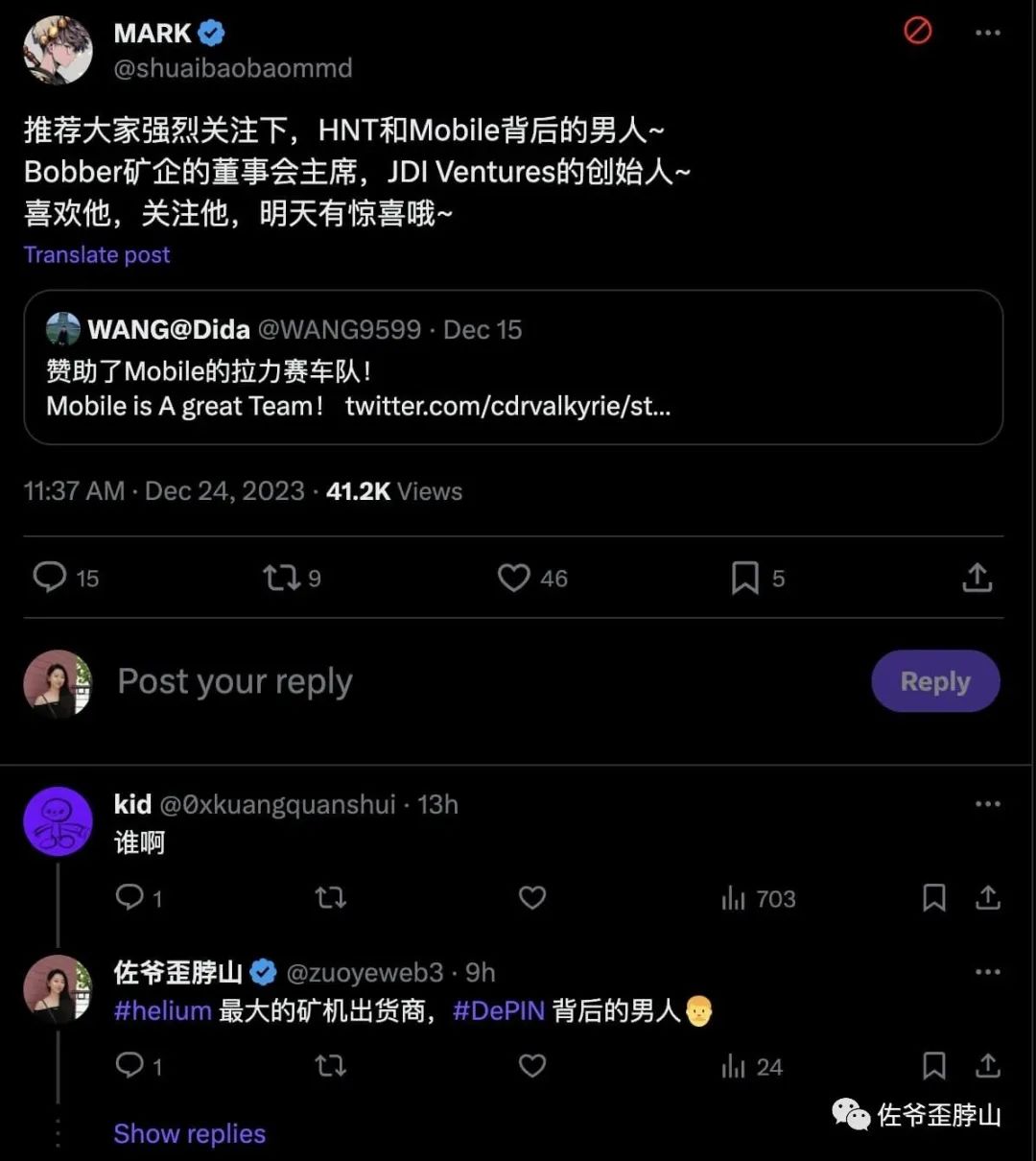
Everyone gets fifteen minutes of fame, but Wang Yiming’s recognition has long been overshadowed by Helium itself. Moreover, JDI has invested in almost every significant DePIN project. If you’re confused about where DePIN is headed, simply follow their portfolio. And if you're a miner, Bobber is unavoidable.
A quick bio: Wang Yiming, male, alumnus of Renmin University alongside OKX founder Xu Mingxing, first entered the crypto space through Du Jun’s Node Capital. Around 2021, he began engaging with DePIN concepts. Helium became his first globally scaled project. Beyond that, he’s involved in DIMO, VPPs (virtual power plants), satellite hardware, and virtually all areas of DePIN. In short, if Chinese entrepreneurs dominate centralized exchanges, Wang Yiming is the quintessential representative of Chinese influence in DePIN.
Unfortunately, this isn’t a promotional piece or a publicity grab—it’s the story of how the elephant in the room learned to hide in plain sight 👀.
JDI and Bobber have comprehensively mapped out DePIN’s investment landscape and hardware targets. To understand where DePIN is heading, tracking their moves is the most effective strategy.
Additionally, Wang Yiming personally favors media and exchange ventures. At heart, crypto businesses are traffic-first operations—only by attracting attention can wealth opportunities be captured. His affinity for exchanges stems from a passion for trading. During Hong Kong’s rise as a financial hub for crypto, Wang Yiming believed in its potential too.
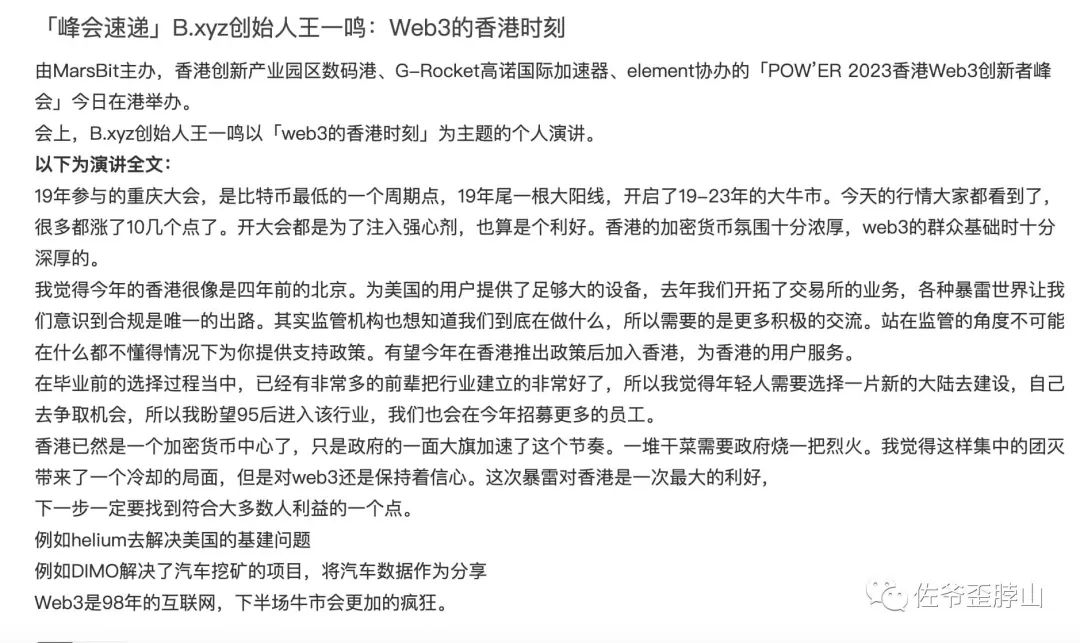
Earlier this year, at Mars Finance’s POW’ER Conference—when Hong Kong-themed projects were hottest—Wang Yiming, stepping briefly from the shadows, highlighted the importance of Helium and DIMO. One wonders how many caught those signals.
Life Is Short—Go All-In
Wang Yiming’s philosophy is total commitment—whether in DePIN or any other direction. Investments, hardware, everything is all-in.
For a long time, DePIN has been seen as a domain reserved for U.S. capital and institutions. Helium, for instance, heavily restricts mainland Chinese nodes. In response, Wang Yiming and his affiliated organizations have rapidly globalized. In March this year, JDI closed a new funding round backed by top-tier investors including Dragonfly and FutureMoney—but that’s only part of the story.
After initial subsidies, Helium Mobile’s earnings will inevitably decline quickly. I sincerely hope Wang Yiming stays active on Twitter so we can see what innovative plays DePIN will come up with next.
As the man behind HNT hardware, winning isn’t optional—it’s the creed.
Join TechFlow official community to stay tuned
Telegram:https://t.me/TechFlowDaily
X (Twitter):https://x.com/TechFlowPost
X (Twitter) EN:https://x.com/BlockFlow_News
 @zuoyeweb3











