OpenSea's Adversity: Exploring the Revival Opportunities for the NFT Marketplace Giant
TechFlow Selected TechFlow Selected
OpenSea's Adversity: Exploring the Revival Opportunities for the NFT Marketplace Giant
It is not certain or easy for OpenSea to regain its previous dominant position.
 Navigating Web3 tides with focused insights
Author: William M. Peaster
Translation: Shenchao TechFlow
Ruthless markets, savvy competitors, and disgruntled creators have weakened this $13.3B startup.
OpenSea, once the undisputed giant of the crypto NFT space, has recently faced some serious challenges.
First, NFT trading volume has significantly declined from its 2021 peak, as has OpenSea's market share. More recently, the platform has faced mass layoffs, steep markdowns by VCs on their stakes, and the resurgence of $BLUR.

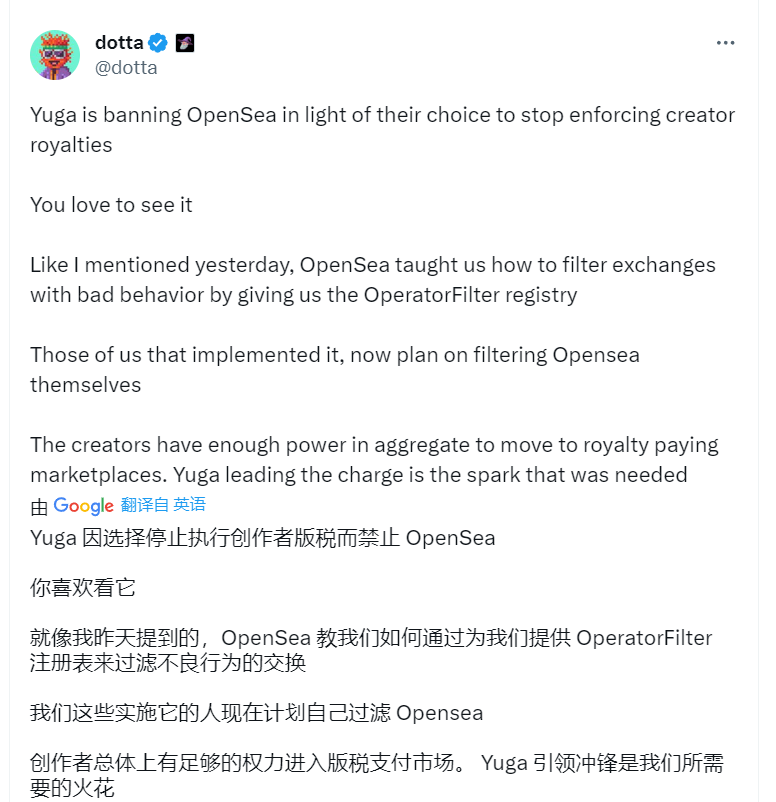
The platform is also dealing with an ongoing royalty controversy, which led to a high-profile split with Yuga Labs, the creators of Bored Ape Yacht Club. This rift prompted Yuga to begin collaborating with emerging OpenSea rival Magic Eden to develop its own marketplace. So clearly, OpenSea is in trouble—but can it recover its former dominant position in the NFT space? It’s possible. That said, OpenSea will need to fully leverage its strengths to achieve lasting revival.
OpenSea: The Humble Giant
OpenSea has many advantages. Despite its recent setbacks, its CEO (Devin Finzer) and other executives remain among the most respected leaders in the industry. OpenSea also enjoys strong brand recognition, and even during recent bear market downturns, its user numbers have surpassed most crypto projects.
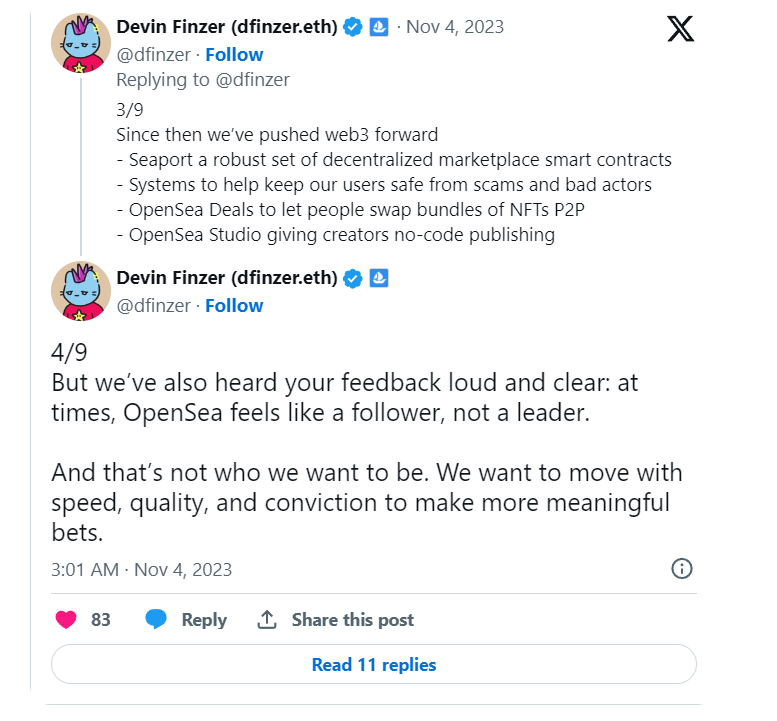
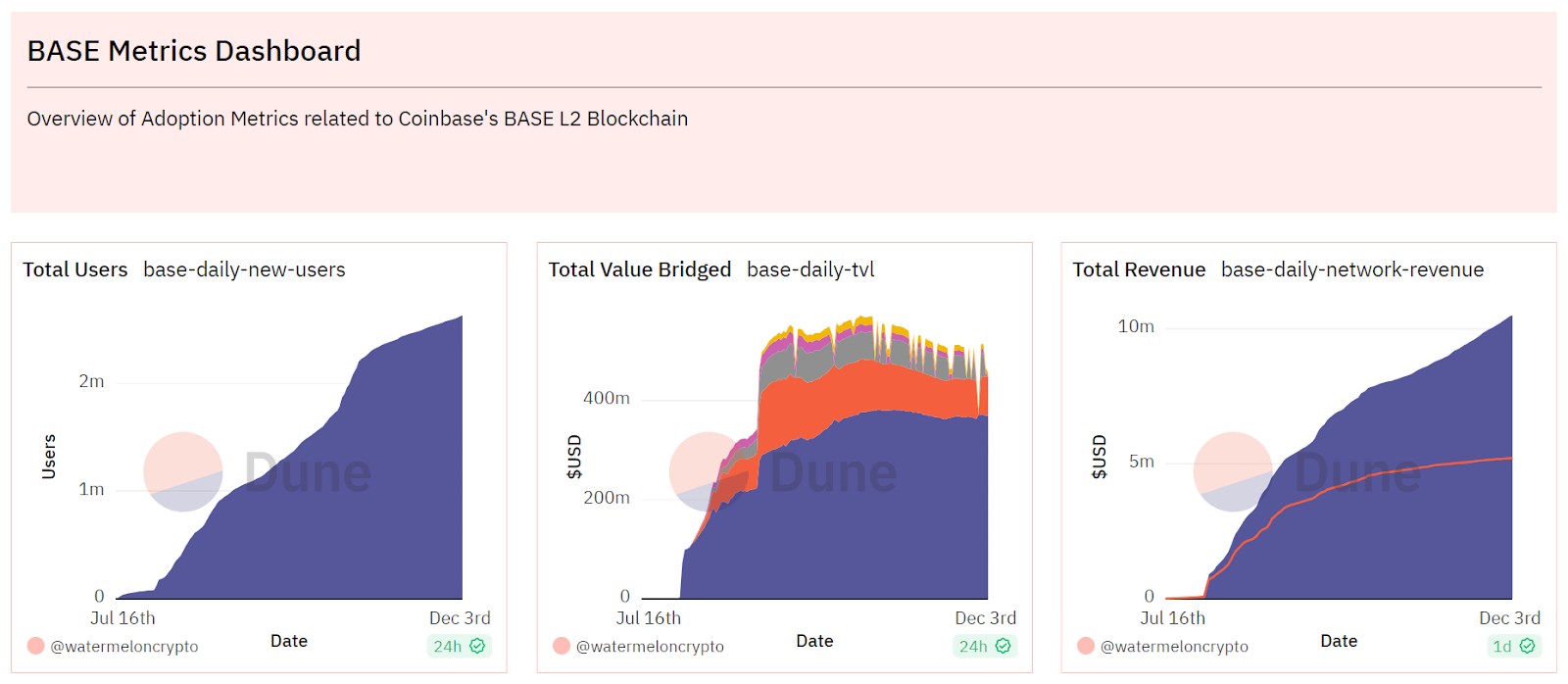
Its marketplace also offers a suite of high-quality services such as Deals, Studio, and OpenSea Pro—the latter still being my favorite NFT marketplace experience to date. Moreover, OpenSea has not yet launched its own token or its own L2, so it still holds two potential trump cards. In my view, launching an OS token would generate far more attention and interest for OpenSea than Blur ever did. It would be a massive move, generating enormous buzz and helping the platform turn things around. OpenSea could launch its own L2 either before or after releasing its token. Base and Zora Network have both been major L2 successes so far, each using only ETH as gas. If OpenSea digs deep here and deploys an NFT-centric L2, it would instantly become a major contender within the Ethereum ecosystem.
Blur and the Betrayal of Values
It’s worth reflecting on how unthinkable the idea of OpenSea losing its leading position seemed just two years ago, when it was riding the peak of the NFT bull market. Ultimately, OpenSea truly began to falter when it started trying to directly compete with the rival NFT marketplace Blur. In fighting off this threat to its market share, the platform betrayed its original creator-first values.

Blur has positioned and marketed itself as a platform for “professional traders,” amplifying financialization, downplaying NFT visuals, and eliminating creator-set secondary royalties. Even if all of OpenSea’s competitive moves attract users, it likely will never again become the ultimate home for creators—the very creators who made OpenSea famous in the first place. By backtracking on secondary royalties, OpenSea alienated many core users, including both independent small artists and large studios like Yuga Labs. I believe OpenSea could have had it both ways. It could have retained creator-set royalties on its main platform while making royalties optional within its premium division, OpenSea Pro, positioning that branch explicitly as a competitor to Blur. Instead, top creators went to war with the core marketplace and turned to other NFT projects aligned with their values. Ultimately, I don’t think most users left OpenSea because of Blur’s lower fees. Rather, most Blur traders are chasing token incentives—specifically, the $BLUR airdrop.
Therefore, if OpenSea reinstates creator royalties, launches a governance token and an “OpenSea Network” L2, and initiates a public rewards system for OpenSea Pro users, I believe they’d be in a much stronger position than today.
In fact, the demand spectrum in the NFT space is much broader than what Blur addresses. If you remove Blur’s key advantage—token rewards—I believe many people would return to OpenSea, all else being equal.
As a dedicated NFT user, I appreciate OpenSea’s more casual UX over Blur’s hyper-financialized atmosphere. NFTs are a new kind of cultural object infused with social magic—a culture I simply don’t feel on Blur, and I suspect many others feel the same way.
So, to restore OpenSea to its former glory and beat its rivals, my advice is: Launch the OS token + L2 to win back enthusiasts, while returning to its values to win back creators and more casual NFT fans through updated royalties and a relaxed UX approach.
The market is about to see OpenSea reveal its vision for OpenSea 2.0, and we’ll find out whether it shares this line of thinking. What I’ll say is that OpenSea regaining its previous level of dominance isn’t certain or easy, especially with rising challengers and fierce competition ahead.
Still, I believe they have the capability to return to the top. But for now, only time will tell.
Join TechFlow official community to stay tuned
Telegram:https://t.me/TechFlowDaily
X (Twitter):https://x.com/TechFlowPost
X (Twitter) EN:https://x.com/BlockFlow_News
 Bankless