True Demand or Just Hype? How Crypto VCs View AI + Web3
TechFlow Selected TechFlow Selected
True Demand or Just Hype? How Crypto VCs View AI + Web3
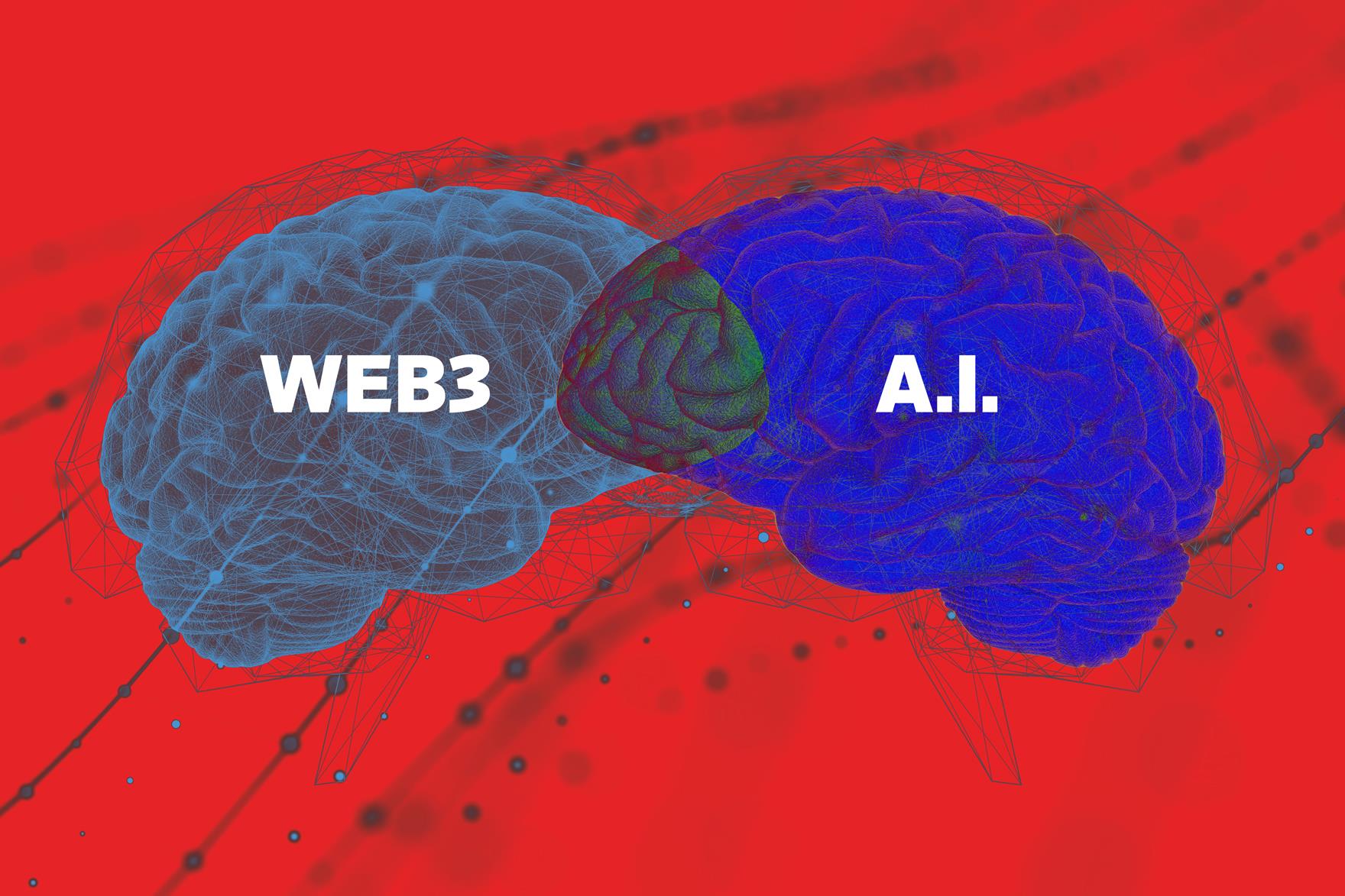
AI + Web3 could become a major breakthrough in future industry convergence and innovation.
 Navigating Web3 tides with focused insights
Author: Wanxiang Blockchain
How should we view the integration of AI and Web3 data? What directions are worth watching?
Hashkey Capital - Harper: I see several ways AI can integrate with Web3 data. First, using LLM models to convert language into SQL queries. For example, Dune and some projects focused on search engines aim to enhance SQL capabilities so developers can correctly retrieve data from databases. Some systems even auto-generate SQL from natural language, allowing developers to copy and use it directly. Second, chat-based interfaces—chat agents built on top of models like ChatGPT. These focus more on conversational UIs rather than optimizing SQL or search. They're more flexible—for instance, asking "Which KOL promoted this token?" or "What impact did this security incident have on the token?" (here, results may come from broad web searches, not optimized database queries). Third, using AI to build appropriate models that combine off-chain and on-chain data to extract deeper insights.
Comparatively, the first approach requires stronger database infrastructure since handling Web3 data is complex; achieving both accuracy and speed remains challenging. The second method is simpler and has a lower barrier to entry.
SevenX Ventures - Yuxing: Data is essentially food for AI. Web3 offers public, verifiable data, while AI suffers from its black-box nature and lack of verifiability. Their combination could create interesting synergies. Currently, I prefer to categorize the AI + Web3 relationship not just as “AI plus Web3 data,” but by asking two questions: how can AI improve Web3, and how can Web3 improve AI?
On one hand, AI can effectively leverage Web3’s open and verifiable data. Any AI system can access Web3 data to extract value—whether for investment advice or risk alerts. AI enhances efficiency in processing and analyzing Web3 data. On the other hand, Web3 can increase AI's credibility, as Web3 itself serves as a new trust mechanism. By storing key information via Web3’s transparent and verifiable methods—especially in fields like journalism or documentary reporting—we can mitigate certain problems inherent in AI.
Among these issues, common ones include AI-generated misinformation and the black-box problem. Some AI algorithms are interpretable, but others—like neural networks or GPT—are extremely difficult to explain. Users often question how answers were derived, due to opaque data sources and algorithms—almost like magic. For example, early facial recognition systems misidentified Black individuals as gorillas because training datasets lacked sufficient images of Black people.
If an AI model uses verifiable data, we can better detect sample bias. Leveraging Web3’s transparency makes the entire AI training pipeline—from source data to output—more traceable. This allows us to assess AI decisions more fairly, understand their origins, and reduce bias and errors.
The black-box issue can be roughly divided into two parts. One is algorithmic opacity—how models are trained and content generated, which lacks transparency at both process and mechanism levels. The other is data opacity—non-public training sets that lead to biased outcomes.
If biases affect factual accuracy, they might be improvable over time. But if they involve ideological issues—such as political or racial discrimination—they become much harder to correct. In such cases, controlling outputs becomes essential. Many national or state-owned AI systems prioritize constraining what cannot be said—a very difficult task, akin to addressing ideological bias.
Qiming Venture Partners - Tang Yi: Regarding AI and Web3 data integration, I personally think there's some hype—more buzz than real utility. From my perspective, crypto data products are still relatively early-stage, with insufficient foundational work done on data infrastructure. Under these conditions, introducing AI or advanced analytics may be premature.
Moreover, from a user standpoint, most crypto projects don’t have strong use cases for AI, or simply don’t need it. The current wave of popular AI models—especially generative models—are built on massive internet-scale data, excelling in areas like language and image generation. While some apply generative AI to improve UX or conversation flow, the added value in most scenarios is limited. Broader applications of AI—such as data analysis or simpler models—might find niche uses, like NFT price estimation or enabling professional trading teams to execute data-driven trades. Overall, I haven't yet seen clear short-term benefits from the current AI wave for the crypto industry.
That said, I’ve seen early-stage projects attempting to enhance data processing or analytical capabilities through AI. For example, some are using AI to interpret smart contract logic or perform classification tasks. These require high precision in crypto contexts due to critical actions like transactions. So, using AI for data preprocessing could be meaningful, though human oversight will likely remain necessary to ensure accuracy. If you want AI to directly trigger trades, beyond professional traders, significant product improvements would still be needed.
Matrix Partners - Zixi: We've looked at many Web3 data projects—like Footprint, which I was an early user of, and Dune. Both primarily serve VCs, developers, and small businesses; average users rarely interact with them directly.
We’ve also examined data analytics firms tied closely to crypto trading or profitability—Nansen, DefiLlama, Token Terminal, DappRadar, along with Dune and Footprint. These are highly useful for VCs and developers, but their monetization potential seems limited. Demand among VCs and devs isn’t large enough, and willingness to pay is weak—especially when free alternatives exist.
We’ve also explored data warehouse-style companies. Tencent and we co-led Chainbase’s financing. It operates as a data platform offering security, transaction, NFT, DeFi, gaming, social, and general data. Developers can mix and match these datasets to generate custom APIs.
During bear markets, we noticed clients of companies like Chainbase, Blocksec, and Footprint were mostly small-to-mid-sized startups. For example, Chainbase retained revenue from major clients, but中小型客户 saw income drop to zero within two or three months—indicating those startups ran out of funds.
Thus, without new developers joining during bear markets, data providers struggle to earn. This reflects the current reality: Web3 data providers rely on developers and small firms who internally integrate data and then monetize it, balancing input and output.
Ultimately, neither ToC nor ToB Web3 data companies currently have clear monetization models, leading to unstable cash flows for data providers. This is especially problematic for中小型entrepreneurs—the biggest weakness in today’s Web3 data sector.
Returning to AI + Web data: we've recently invested in some AI-related data companies. I believe AI data firms face similar sales challenges. You must balance customer cost against output effectiveness. Currently, I'm relatively optimistic about overseas AI data companies’ profitability—but less so for domestic ones.
For purely domestic-focused ventures, I worry outcomes may mirror investing in Web2 SaaS companies—some revenue, limited scale, weak payment intent, need for customization, and low gross margins. Hence, I’m pessimistic about domestic plays but optimistic about international ones.
What value can AI bring to Web3 data infrastructure and data companies? How effective are current AI-powered Web3 data projects? Are there opportunities for business model innovation?
SevenX Ventures: I believe AI’s greatest contribution to Web3 data lies in efficiency.
For example, Dune launched an AI-powered tool for code anomaly detection and indexing, allowing users to query data via natural language, automatically generating and optimizing SQL code—an efficiency boost.
There are also AI-based security alerting projects—after training, AI bots can quickly identify threats. One technique, anomaly detection, outperforms traditional statistical methods in spotting outliers, making AI more effective for security monitoring.
I’ve also seen projects using LLMs to scan broader Web3 news (not just on-chain data), aggregating information and sentiment analysis into AI agents. For instance, users can ask in a chatbox about a token’s sentiment trend over the past 30 or 90 days—bullish vs bearish—and receive scores and curves showing whether discussion volume is peaking, declining, or rising. This helps inform investment decisions—an interesting application.
However, some projects claim their data is an “AI data source” just to ride the AI hype. That feels stretched—any on-chain data can serve as AI input since it’s public, so such claims seem opportunistic.
Matrix Partners - Zixi: Business models remain a core challenge in the data space, hard to solve. In ToC, leveraging Web3 concepts like tokens or decentralization might enable novel AI data business models. But when AI merely powers data tools, there aren’t many breakthroughs yet.
AI can assist in data cleaning and preprocessing, but this is mostly internal—improving product features or UX. Commercially, it doesn’t change much.
AI bots can add competitive edge and help users, but currently it’s not a major differentiator. Core competitiveness still depends on data quality. With rich data sources, users get what they need. The problem arises when commercializing: unless combined outputs can generate revenue, users won’t pay. Right now, poor market conditions mean startups don’t know how to monetize data, and few new entrants emerge.
I find some Web2 companies using Web3 tech more interesting. For example, a synthetic data startup uses large models to generate synthetic data for software testing, analytics, and AI training. They face privacy concerns during data handling and use Oasis blockchain to protect data privacy. They plan to launch a data marketplace, packaging synthetic datasets as NFTs for trade—solving ownership and privacy issues. This is a promising direction—using Web3 to solve Web2 problems, not limited to Web3-native firms. However, the synthetic data market is still small, so early investments carry risks. If downstream demand fails to grow or competition intensifies, it could become awkward.
Have you invested in any promising projects in the AI + Web3 data space? What directions do they represent, and what were the key factors in your decision? What do you see as their core competitive advantages, and does AI strengthen them?
Hashkey Capital - Harper: We invested early in data projects before AI became a major focus—Space and Time, 0xScope, Mind Network, Zettablock, etc. The key factor was their positioning and data quality. Now, all these projects are adding AI plans, typically starting with chat agents. Space and Time partnered with ChainML to build AI agent infrastructure, including a DeFi agent deployed on Space and Time—one way to integrate AI.
SevenX Ventures - Yuxing: I’d be more interested in projects that integrate AI well. A key investment criterion is whether the project has market moats. Many claim AI improves efficiency—e.g., faster data queries. Some allow natural language queries to fetch top active NFTs quickly. Such projects may gain first-mover advantage, but moats may be shallow.
Real moats lie in how AI is applied and how engineers adapt it to specific use cases. Engineers skilled in fine-tuning models often achieve good results. For efficiency-focused projects, the main barrier is data sources—not just on-chain data, but how teams process and interpret it. Take earlier examples: using AI algorithms to rapidly retrieve key data. Yet, model fine-tuning has limits. Sustainable advantage comes from data quality and continuous optimization. That’s why top analytics firms stand out—they offer not only data but also processing and analysis capabilities. Differentiation often lies in team expertise and talent, directly impacting AI integration success.
Additionally, I watch Web3 tech projects that make AI better—given AI’s vast market. If Web3 enhances AI capabilities, applications could be widespread. That’s why ZKML projects attract attention. However, Web3 projects often suffer from over- or under-valuation. Despite hype, ZKML’s ROI hasn’t met expectations, and exit paths are unclear due to difficulties in token issuance. So while innovative and potentially valuable, investors must carefully evaluate timing and returns.
Matrix Partners - Zixi: We invested in an AI + Web3 company called Questlab—a data annotation firm using blockchain for crowdsourced labeling. Traditional data annotation is either in-house or outsourced, struggling to cover diverse knowledge domains.
Traditional annotation falls into three models: in-house, subcontracting, and crowdsourcing. True crowdsourcing is rare. Buyers care about cost, quality, speed, and domain coverage. Basic tasks—like identifying English words or objects—are simple. Even distinguishing cats, dogs, moons, strollers—is manageable. But specialized tasks get complex—e.g., voice bot communities needing dialects: Chinese dialects, English accents, minority languages. Few studios take these on.
A tougher case: legal + AI firms needing vast legal knowledge labeled for model training. Finding annotators who understand law across jurisdictions and specialties—contracts, leases, civil, criminal—is nearly impossible. No data labeling firm covers this fully. Same applies to finance, biology, healthcare, education. These sectors usually rely on internal teams using crowdsourcing to overcome expertise gaps.
We believe blockchain-powered crowdsourcing is a promising path, similar to YGG in GameFi. This is a direction we find compelling.
Also, great opportunities may emerge in open-source model communities. For example, Polychain-backed Hugging Face-like Web3 project solving creator economy challenges for AI models.
Other AI + Web3 integrations: We see potential in ToC models combining token incentives to boost community stickiness, DAU, and emotional engagement. This aids investor exits, though market size remains uncertain. That’s our take. Pure ToB businesses probably don’t need Web3—Web2 approaches work fine.
Qiming Venture Partners - Tang Yi: Some data projects we fund are applying on-chain data in security use cases. I see involvement in basic pattern recognition or feature detection with decent results. However, advanced tasks—feeding massive activity logs into models to identify multiple signals—are still experimental, with unproven efficacy. Similar situations exist across other domains.
A recent example: NFTGo, which uses big data analytics for NFT pricing with reasonable accuracy, aiming to serve as a price oracle. The concept sounds compelling, but product-market fit and user adoption need validation. Even at 85–90% accuracy, users may demand 95–98%, requiring further refinement. So while some projects incorporate basic AI like data analysis or pattern recognition, it’s unclear if this becomes a decisive factor.
Regarding investment appetite, I won’t favor a project just because it touts AI—it’s the actual performance, feasibility, and tangible benefits that matter. If a project uses AI as marketing flair to attract attention, I understand the tactic. But in investment decisions, real-world impact weighs far more.
Take ZKML—a hyped赛道—but with big unanswered questions: what are the real use cases? Uncertainty is high, dominated by grand narratives.
From an industry-wide perspective, what are the potential opportunities or future directions for AI + Web3 data? Could AI fundamentally upgrade data products and introduce new paradigms? Will it boost users’ willingness to pay?
Hashkey Capital - Harper: Definitely potential opportunities. Future directions still lag behind Web2 AI, where creativity is clearly stronger. Most Web3 AI will likely mirror implementations from Web2.
Matrix Partners - Zixi: The recent popularity of Miaoya Camera shows that users are indeed willing to pay for AI products, unlike traditional SaaS or games where users expect free access. Willingness to pay for AI appears strong.
Looking ahead, here’s an idea: in data labeling workflows, a crucial step is pre-labeling—training a model to perform initial annotations. This step is highly valuable, saving significant labor costs. Raw data goes into a pre-trained model for preliminary labeling, followed by semi-automated processing, and finally manual refinement. Pre-labeling dramatically boosts efficiency—work once needing 100 people might now need only 50–70.
Moreover, pre-labeling involves human-AI collaboration. Feedback loops continuously improve the model’s labeling ability, reducing team size over time. As collaboration improves, a 100-person team might shrink to 30. But there’s a floor—even with perfect AI assistance, some manual labeling and review will always be needed.
In other areas, since I’m not a data scientist, I haven’t personally cleaned data or written SQL queries, so I can’t say precisely how much AI helps.
Qiming Venture Partners - Tang Yi: Long-term, I believe Web3 and AI should intersect. Ideologically, Web3’s value system can integrate with AI—ideal as an account or value-transfer framework for bots. Imagine a bot owning its own wallet, earning money through intelligence, and paying for computational resources. These ideas sound sci-fi, but practical implementation has a long way to go.
Second, verifying whether AI outputs stem from specific models, categories, or data sources—and whether they’re trustworthy—could be useful in reliable AI systems. Technically fascinating, but market demand is uncertain.
Another angle: AI makes content creation abundant and cheap. For digital works, authenticity and authorship are hard to verify. Here, a new rights-management system may be needed—including roles for creators and intelligent agents. These issues remain unresolved, and narrative development may take time. In the short term, we should keep focusing on data foundation quality and wait for models to grow stronger.
On commercialization, data products are notoriously hard to monetize. But I don’t believe AI is a near-term solution. Monetization requires deeper productization, not just data capabilities. These projects may need to build complementary products to achieve commercial viability.
Join TechFlow official community to stay tuned
Telegram:https://t.me/TechFlowDaily
X (Twitter):https://x.com/TechFlowPost
X (Twitter) EN:https://x.com/BlockFlow_News