Meson Network In-Depth Research: The Bandwidth Chain Reaction, the Ultimate Weapon Hidden in the Decentralized World
TechFlow Selected TechFlow Selected
Meson Network In-Depth Research: The Bandwidth Chain Reaction, the Ultimate Weapon Hidden in the Decentralized World
Web3 needs decentralization, and even more so, it requires hardware resources (bandwidth) to ensure decentralization.
 Navigating Web3 tides with focused insights
Author: David&ZZ
Recently, signs of market recovery have begun to emerge.
At the beginning of October, Arthur Hayes wrote in his blog that capital is flooding into the AI sector. Given AI's massive demand for computing and storage resources, at the intersection with cryptocurrency, he expressed strong optimism for Filecoin within the decentralized storage space. Arthur’s assessment makes sense—the trend is indeed clear.
But every trend has two sides: one represents the narrative, while the other struggles in reality.
Compared to influential figures advocating for decentralized storage, consider an ordinary user whose NFT image file is stored on IPFS or Filecoin. When the NFT boom peaks, their small image could suffer from slow loading or even crashes due to high concurrent access overwhelming the server.
There is always a gap between ideals and reality. Opportunities are easier to spot within this gap. The speculative potential of $FIL is widely known, but could solving large-scale data access issues in IPFS—or even across Web3—offer greater long-term value?
What if the tiny image stored on Filecoin was cached by someone nearby? If you accessed it using their bandwidth, wouldn’t your experience improve significantly? In fact, beyond just decentralized storage, a silent yet critical guardian underpins many Web3 infrastructures and applications—Meson Network.
Most readers may be unfamiliar with the name, but its products and services are straightforward:
Aggregating vast amounts of idle bandwidth resources worldwide and allocating them to enterprises or projects needing data transmission, access, and retrieval, thereby enhancing their user experience.
Multiple infrastructure projects and applications such as BNB Greenfield, BSC, OpBNB, IPFS, Arweave, and Mask have already partnered with Meson Network to improve data access and synchronization performance in their operations.
Notably, although Meson Network has remained outside the spotlight of popular narratives, over the past three years it has attracted over 100,000 nodes across 150 countries to provide bandwidth services, while establishing a mature and stable revenue model.
Most Web3 projects struggle to sustainably grow their user base and scale through a full bull-bear cycle without marketing or token incentives.
What sets Meson Network apart, enabling such achievements amid widespread hopes for Mass Adoption in the industry?
Due to its foundational nature, average users find it difficult to fully grasp the project’s scope. Meanwhile, there remains a lack of in-depth analysis of Meson Network in today’s market.
In this article, we will begin by discussing Web3’s growing demand for bandwidth, then dive deep into Meson Network’s mission, current product offerings, future roadmap, and explore its value and potential.
A New Era, An Old Problem
When talking about Meson Network’s bandwidth services, most people still associate bandwidth and CDN solely with video streaming acceleration. But the reality goes far beyond that.
Today, various sectors in Web3 collectively crave bandwidth more than ever—though this need is often invisible to regular users.
By contrast, what we can more easily observe is that the entire crypto industry has entered a new era:
It’s no longer the wild west of Bitcoin and Ethereum from five to ten years ago. New progress has emerged across multiple verticals—separation of L1 and L2 functions, symbiosis between NFTs and decentralized storage, and even the convergence of AI and cryptocurrency...
Yet a new era exposes old problems more clearly.
The more fragmented the domains and developed the ecosystems become, the more decentralized projects must confront challenges around data access efficiency and user experience.
-
For L1s, the proliferation of public chains means nodes across different regions require faster synchronization of ledger states. Synchronizing snapshots among globally distributed nodes remains challenging;
-
The rise of more L2s implies increasing volumes of transactions aggregated and submitted to L1. How to verify these data faster and securely cache them for emergencies becomes a key issue;
-
Returning to decentralized storage mentioned earlier, users from different regions should enjoy consistent experiences when retrieving NFT image data—at least without lag or crashes;
-
As for AI, as blockchain-incentivized multi-party computation and model training become feasible, users across regions will demand faster data download and synchronization speeds...
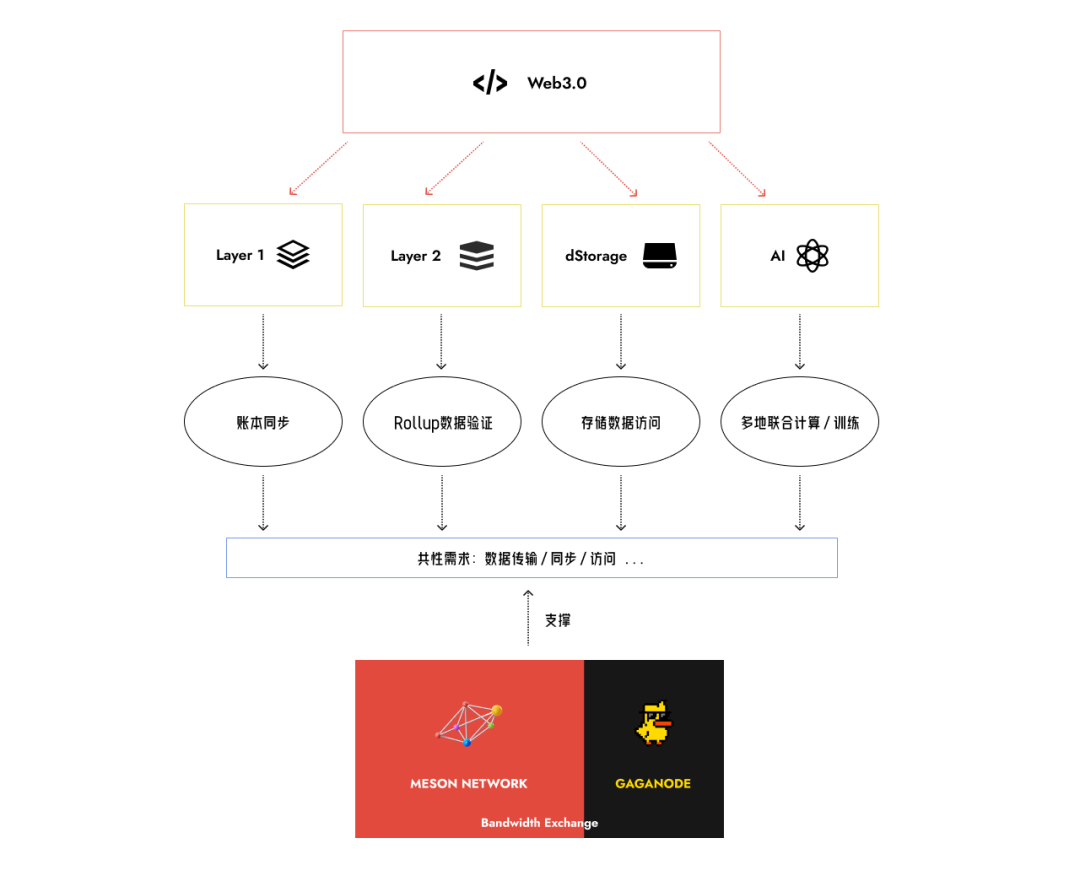
All of this requires fundamental bandwidth support.
People often discuss the benefits of decentralization, but tend to overlook its limitations:
When you say Web3 is decentralized, it inherently means that users and projects around the world inevitably face inconsistent experiences accessing, transferring, or retrieving data due to physical distances;
A Southeast Asian user accessing a small image stored in Europe will likely experience lag, and globally dispersed L1 nodes synchronizing ledger data will naturally vary in speed...
Thus, Web3 projects share a common need—they require adequate and reliable bandwidth resources to ensure usable decentralized data access and usage.
Ultimately, all security and usability in cryptocurrency stem from hardware resources governed by basic economic principles.
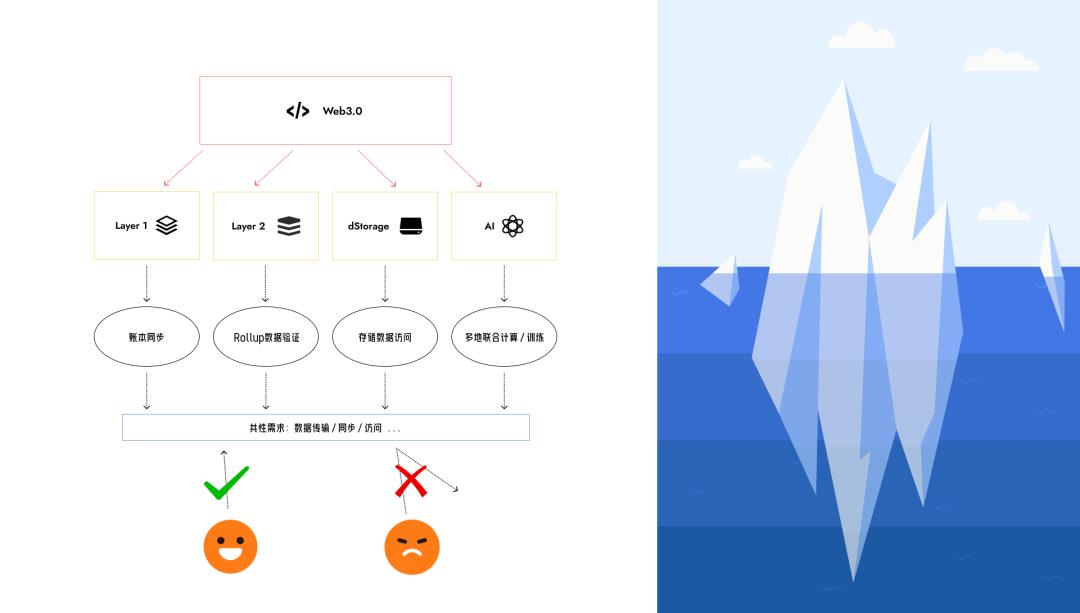
If this still feels abstract, here’s an imperfect but intuitive analogy:
Imagine various short-video apps (Dapps) and content platforms (L1/L2) exist in the market, but cell towers near your home are poorly built or scarce (lack of bandwidth). This would inevitably cause buffering and unavailability during downloads or viewing—making talk of a 4G/5G era meaningless.
Therefore, the industry needs a provider capable of allocating bandwidth based on location-specific demands of different projects and users, ensuring continuous quality in data transmission and access;
This is exactly what Meson Network aims to achieve.
Meson Network: From Silent Growth to Breaking Through
First, where does one source enough bandwidth to serve the entire Web3 world?
Meson Network’s answer is leverage and integration: by tapping into the long-tail market and sharing economy model, aggregating idle bandwidth from individuals worldwide, allocating it according to proximity-based rules to those needing data transfer, forming a decentralized bandwidth resource network;

While the concept of a sharing economy is simple, how does Meson Network actually ensure that nodes with diverse attributes, devices, and conditions worldwide can reliably join and contribute bandwidth?
At the product level, any residential or commercial bandwidth (IDC/data center) globally can now join the network as contributing nodes—even personal smartphones and computers can participate, minimizing entry barriers;
Moreover, Meson Network has quietly adapted to various operating systems and device models, making joining the network, running software, and contributing bandwidth a relatively standardized and simple process.
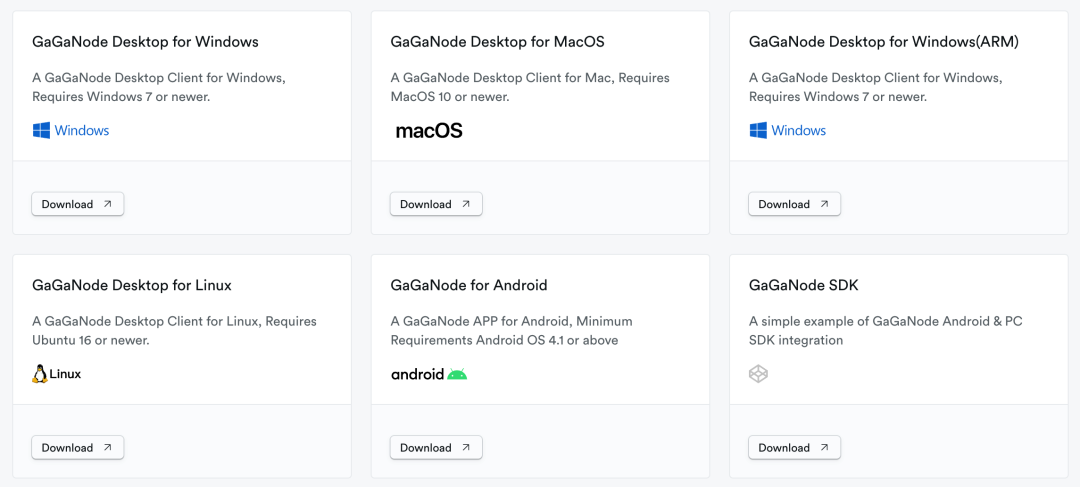
Finally, delving deeper into why these nodes willingly contribute bandwidth brings us back to a classic topic in blockchain: incentives and distribution.
Provided their own bandwidth is idle, contributors earn rewards for sharing it. The specific reward mechanism ties into the project’s economic model and business strategy, which we’ll detail later.
But is this sharing economy model viable in practice? Current operational data may already provide the answer.
According to Meson Network’s official dashboard, after three years of quiet development, the network now includes over 100,000 nodes contributing idle bandwidth globally, spanning five continents and effectively supporting regional bandwidth demands for data access.
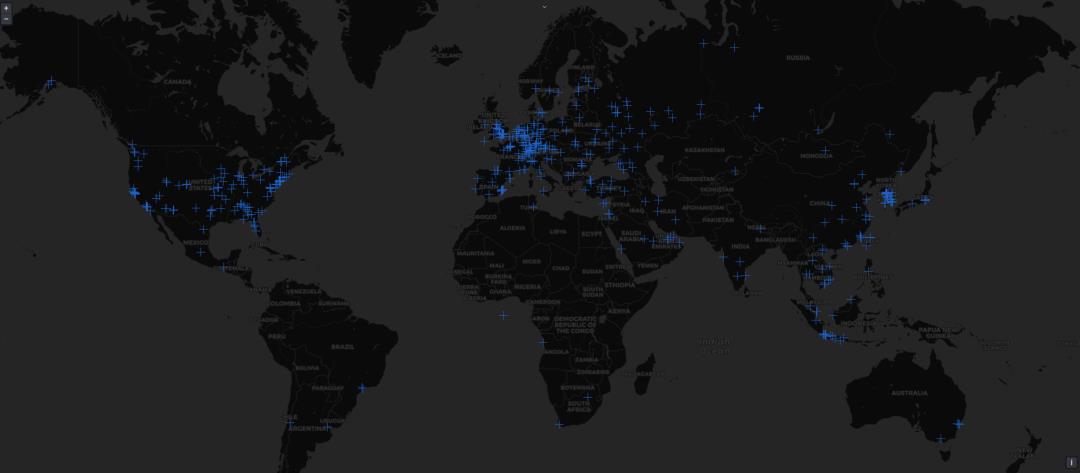
Although individual node uptime and availability windows differ, the sheer scale of the network gives Meson Network ample flexibility in orchestrating bandwidth across regions.
Furthermore, within this scale, we see a “non-traditional path” for Web3 infrastructure development:
In an overlooked niche, without marketing or token airdrops, relying only on low barriers to entry and standardized onboarding, it has amassed a large number of genuine, stable, and useful organic users.
These users aren’t merely consumers—they constitute part of the product’s capability itself.
With sufficient nodes providing bandwidth, Meson Network’s capabilities can better support other Web3 projects.
To illustrate, let’s again use the example of an NFT image stored via decentralized storage.
-
Before Meson, a Singapore-based user wanting to view their NFT image—whose metadata resides on IPFS—might find the actual image hosted on a node in the UK;
-
Direct access would incur latency due to physical distance;
-
With Meson Network, numerous nodes exist globally—including neighboring ones in Malaysia and Thailand close to the Singaporean user;
-
These nearby nodes can proactively cache the image stored on IPFS, allowing the user to access it via local bandwidth instead of connecting to the distant UK node.
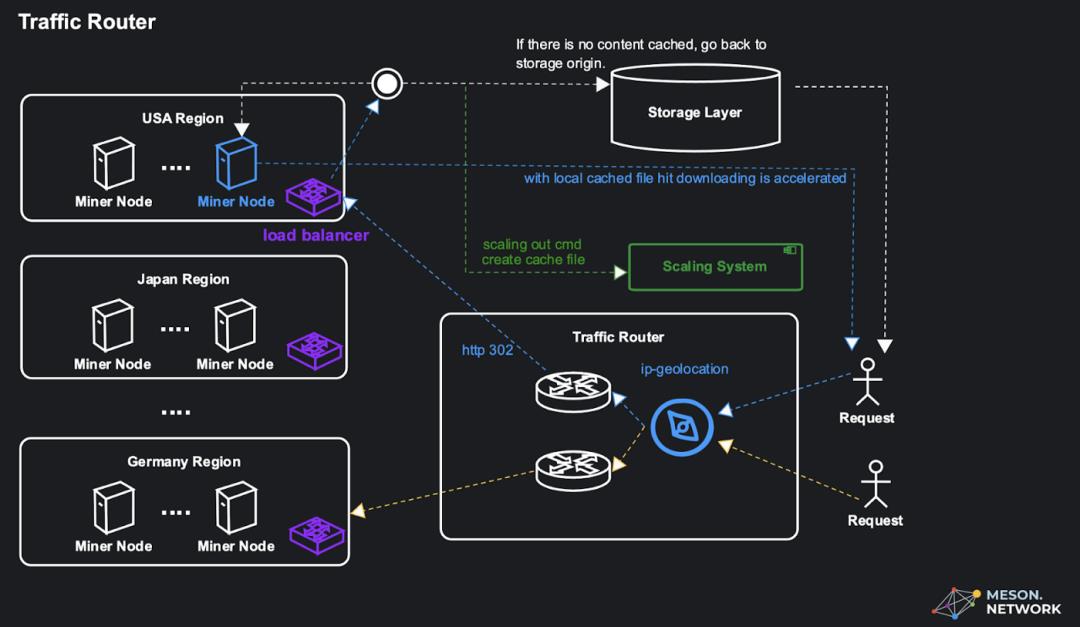
In fact, Meson Network is now the largest decentralized gateway behind IPFS and Arweave, and the improved access experience described above is already happening in real-world use cases.
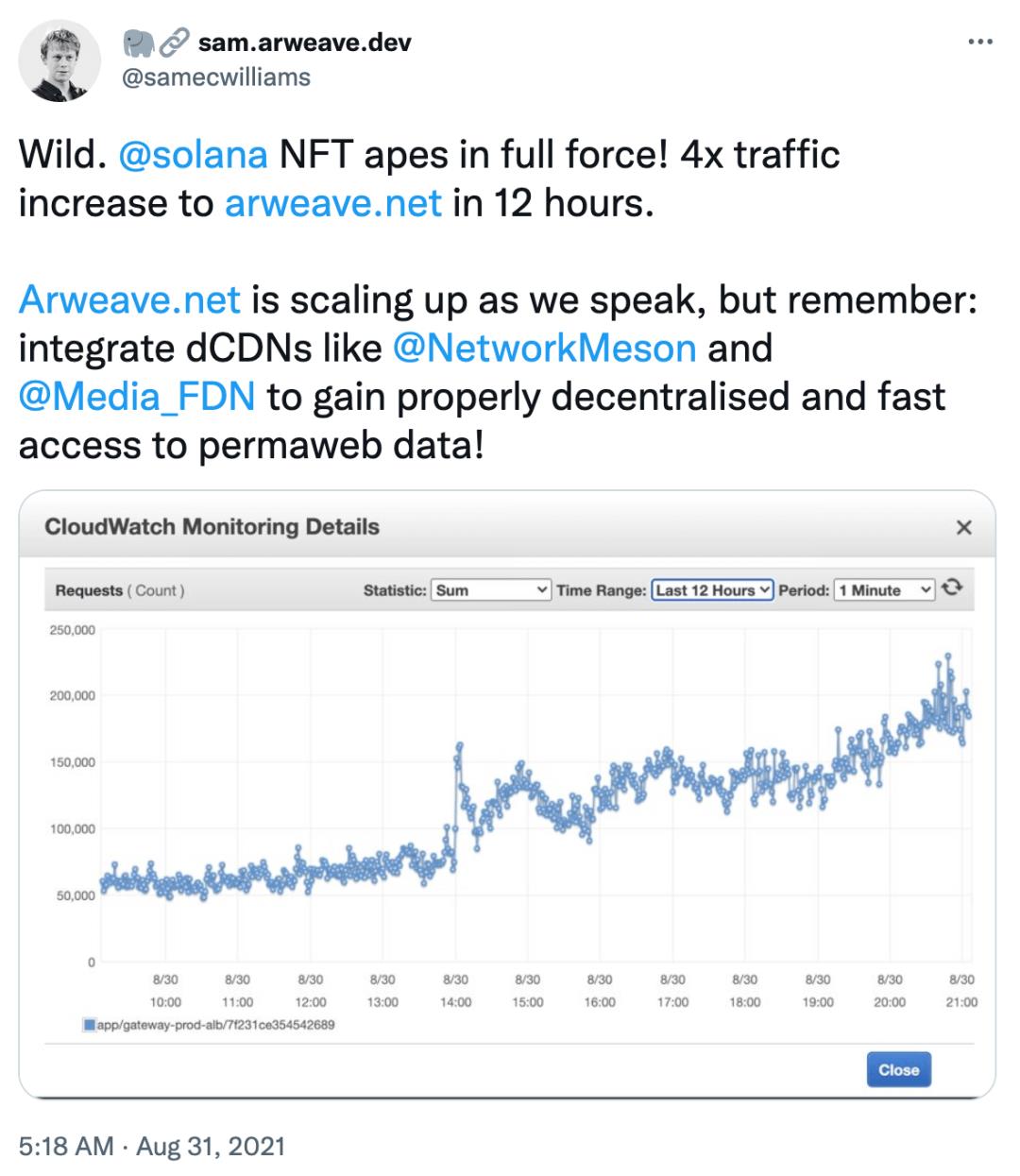
Additionally, a crucial point is that Meson Network’s services are agnostic to the nature of the projects they serve. Whether infrastructure or application, large or small, any system involving cross-regional data transmission, access, or retrieval can benefit from localized bandwidth allocation.
For instance, BNB Chain recently leveraged Meson Network’s globally distributed nodes to shorten state snapshot synchronization times across its network.
Given BNB Chain’s large transaction volume (2.5TB), synchronizing snapshots among nodes previously took about 20 hours, with significant variance due to geographic differences—slower nodes becoming bottlenecks;
After integrating Meson, overall synchronization time dropped to approximately one hour. While end-users don’t perceive this speedup, for chain operations and security, it acts like an "invisible guardian".
From silently building its network to partnering with well-known projects, Meson Network’s broad utility appears validated;
But our next pressing question is: Is its business model sustainable? Can the project maintain healthy profitability while balancing user incentives and payouts?
Funding Contributions Through Monetization
If we think of Meson Network as a bandwidth resource pool, two sides represent supply and demand—one contributes bandwidth, the other consumes it.
Corresponding to this duality, Meson’s product structure features two products collecting idle bandwidth from global nodes, and one product monetizing these aggregated resources.
Digging deeper into its underlying business model reveals that Meson has established a relatively complete and self-consistent commercial loop.
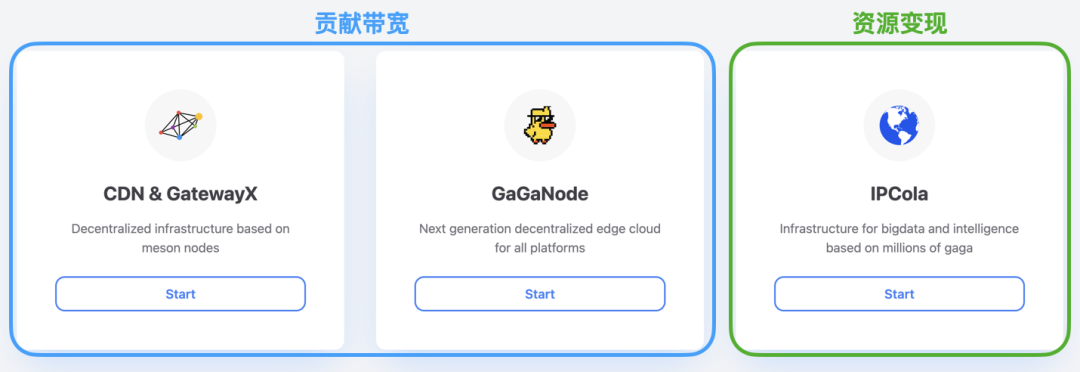
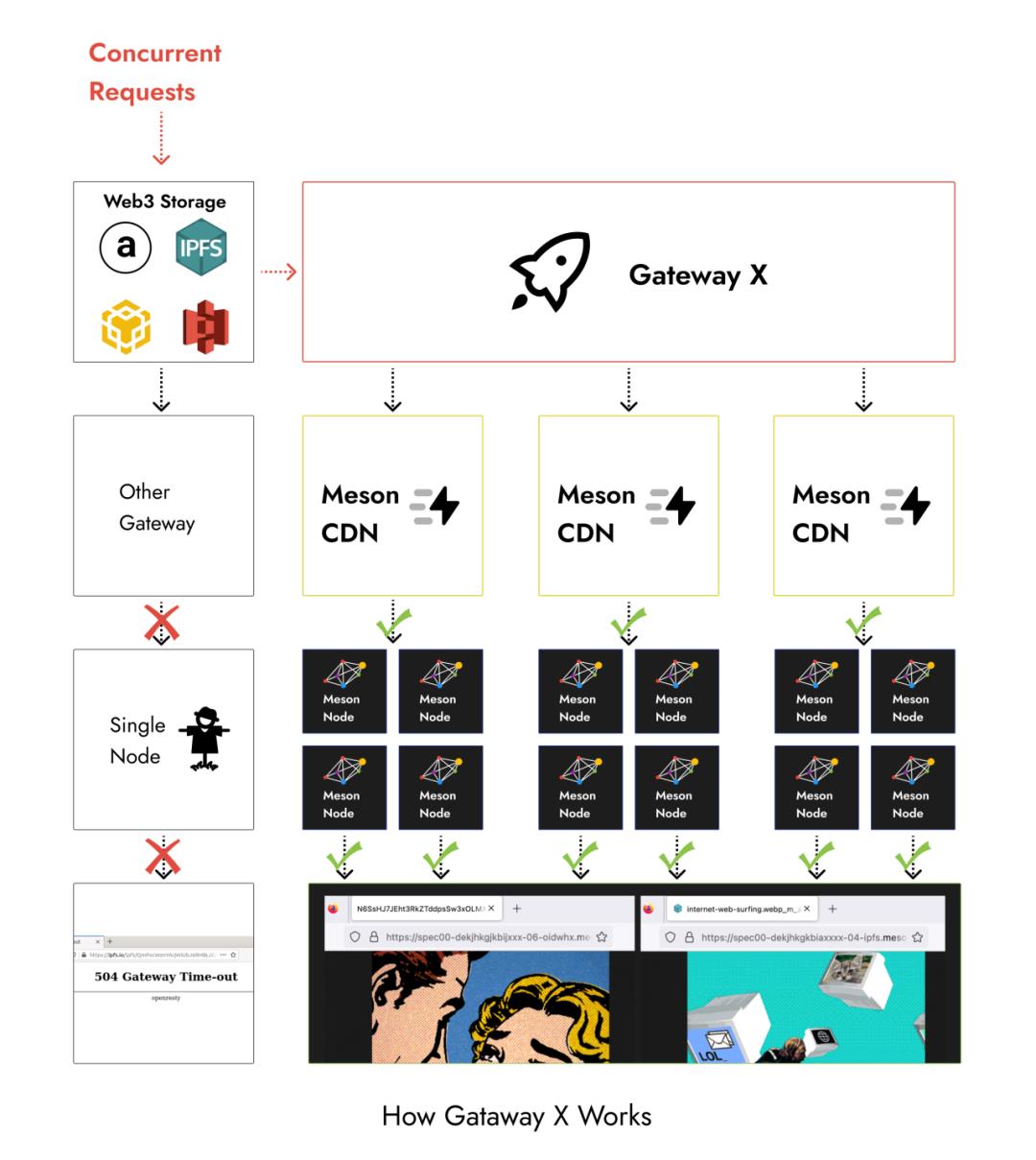
Gateway X: Aggregating Commercial Idle Bandwidth, Delivering CDN Services
This product primarily targets commercial idle bandwidth—such as surplus capacity in enterprise data centers (IDCs), which often sit underutilized during off-peak periods. IDCs can contribute this excess bandwidth to fulfill others’ file transfer needs.
A typical use case is CDN service: caching required files at IDCs close to end-users, enabling fast delivery via local bandwidth.
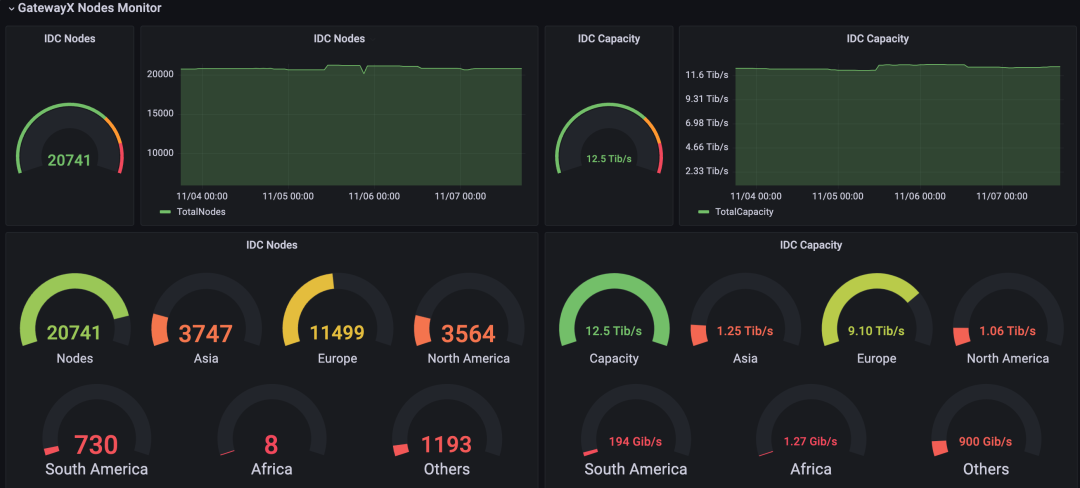
Data from Meson’s dashboard shows over 20,000 IDC nodes integrated globally, delivering a combined data throughput capacity of 12.5Tib/s.
Gaga Node: Integrating Residential and Personal Device Bandwidth, Enabling Edge Computing
This product, mentioned earlier, allows home routers, PCs, and even mobile phones to connect, creating a broader long-tail market.
Interestingly, the product name hints at its function: each little duck makes a "gaga" sound, just as each small device possesses some computing and transmission power.
In effect, this forms a DePIN and IoT network—where countless devices act as edge nodes serving edge computing scenarios. Applications launched directly on these devices yield faster responses, meeting fundamental requirements across industries for real-time operations, intelligent applications, and privacy/security.
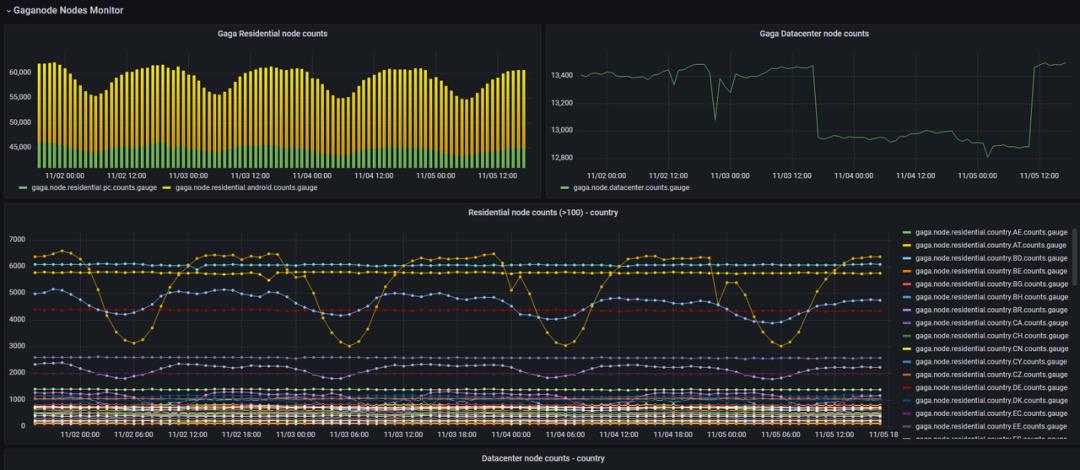
Whether Gateway X or Gaga Node, these contributors of commercial and personal bandwidth aren’t donating altruistically—they expect compensation for sharing idle resources.
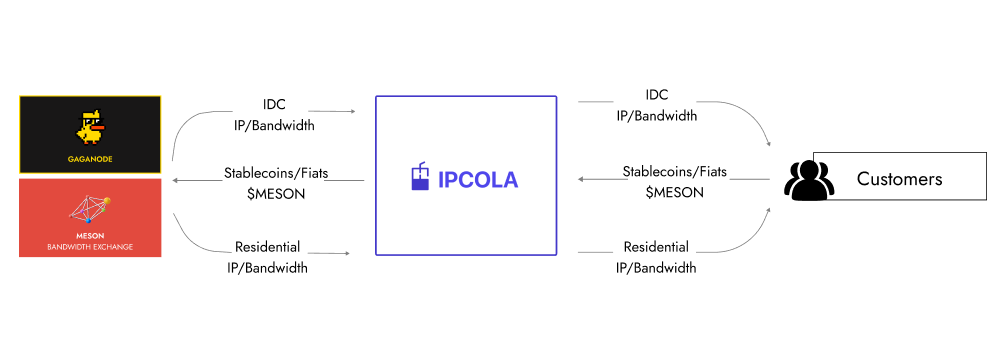
IP Cola: Commercial Monetization via Large-Scale Node Networks
Hence, Meson’s third product, IP Cola, serves the revenue-generating function—using proceeds from service monetization to fund contributors in the first two products.
Thanks to Meson’s vast pool of global data center and residential nodes, it aggregates and redistributes idle IPs and bandwidth via a bandwidth trading marketplace, delivering value in areas like data acceleration/caching, anti-ad fraud, cybersecurity, and web scraping for users worldwide.
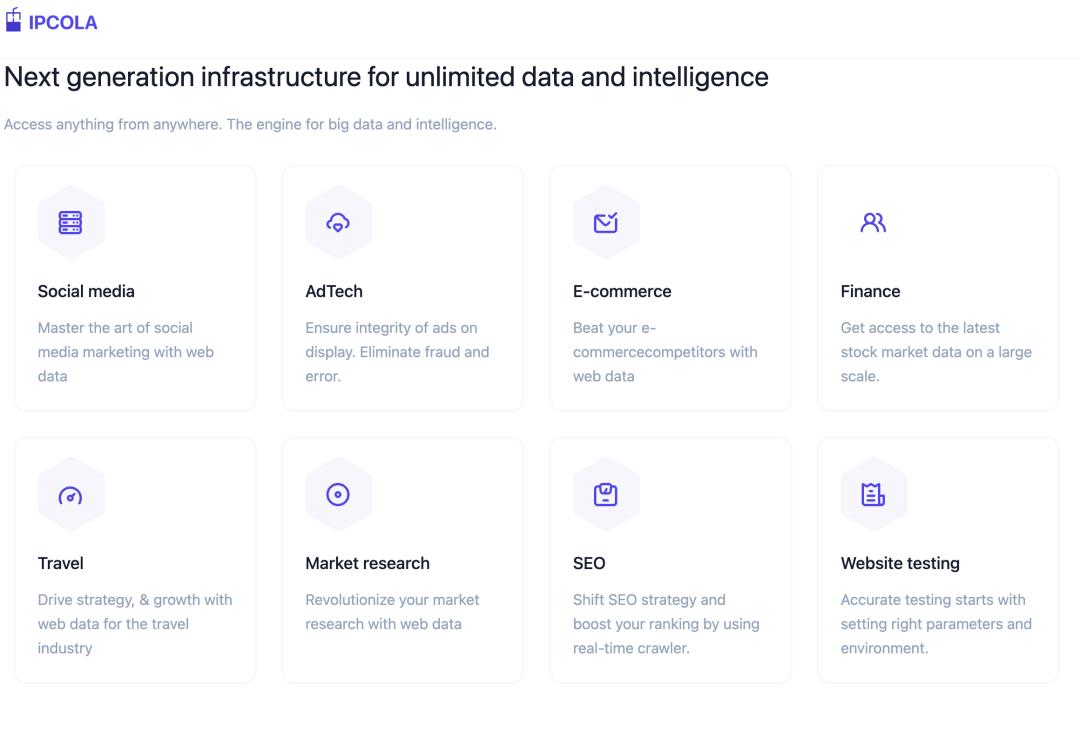
Due to technical complexity involving IP, data, and networking concepts, we won’t delve deeply here.
Simply put: Meson packages aggregated resources into targeted services; users pay per usage, generating Meson’s revenue stream.
According to Meson Network team members speaking to TechFlow, although IP Cola hasn’t reached Bright Data’s annual revenue of over $100 million yet, growth is rapid—generating over $1 million in revenue within six months of launch.
This represents real-world income and signals a sustainable, non-Ponzi, token-independent business model:
-
GatewayX and GagaNode acquire idle bandwidth from B2B and B2C sources, expanding nodes to enhance data delivery for Web3 (and even Web2);
-
IP Cola monetizes geographically distributed nodes via IP leasing, reinvesting profits back into bandwidth contributors.
As a bandwidth platform with clearly defined supply and demand, coupled with a healthy and scalable revenue model, the more participants join, the stronger the network effects become—and the larger the project grows.
The Bandwidth Marketplace: A Grand Vision Beyond Physical Boundaries
Meson Network has achieved initial success with existing products, but still falls short of its ultimate vision.
Don’t forget, Meson currently lacks a token—implying untapped potential from blockchain and token-based incentives.
This current model of bandwidth contribution and allocation could evolve into a blockchain-based, autonomous bandwidth marketplace:
-
Bandwidth providers autonomously join the market, contribute idle resources, and receive $MESON (native token) rewards;
-
Bandwidth consumers search the marketplace for suitable resources and pay using $MESON tokens;
-
Other nodes in the blockchain network can stake tokens to become validators, ensuring authenticity and integrity of bandwidth transaction records.
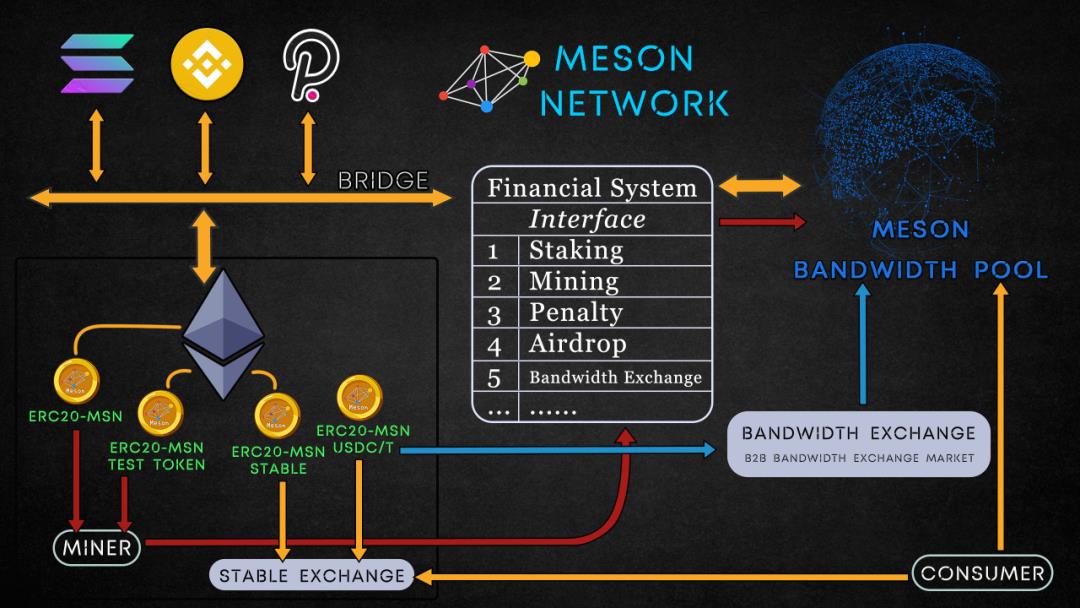
With such a bandwidth marketplace, Web3 projects could overcome physical-distance limitations inherent in decentralization using more crypto-native methods.
Different projects, linked by tokens, gain better data access, transmission, and usability—ensuring data availability through less visible but vital pathways:
-
L1s using Meson Network allow globally distributed nodes to synchronize block states and data more efficiently;
-
L2s using Meson Network can redundantly back up/cache transaction batches sent to L1, upholding the “Don’t Trust, Just Verify” philosophy;
-
Even AI systems could leverage local device/node bandwidth to perform edge computing or collaborative multi-region computations more effectively...
It bears repeating: bandwidth use cases go far beyond simple CDN video acceleration—they’re fundamentally tied to the increasingly discussed concept of “data availability.”
Simultaneously, from an external perspective, the global bandwidth market is a multi-billion-dollar behemoth—if Web3 projects can capture even a sliver of this market, the implications are monumental.
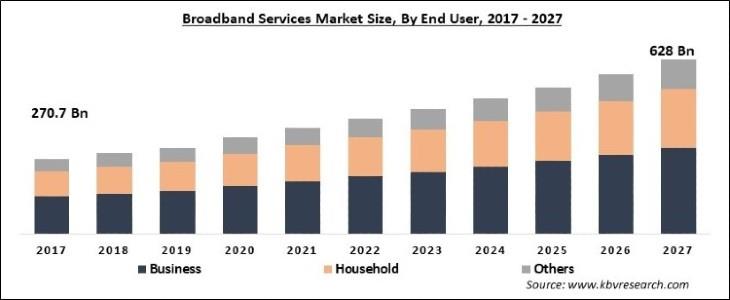
This also suggests another insight: Mass Adoption may not necessarily begin at the application layer.
When there's real demand at the resource layer, economic incentives via tokens, and willing contributors, a healthy business model proves more resilient and enduring than unsustainable short-term narratives.
For ordinary users, speculating on Meson’s $MESON token may be premature. Instead, joining the network as a node contributor and earning rewards—which can later be converted into tokens upon mainnet launch—is a more practical and accessible option.
The Enduring Behind-the-Scenes Hero
Finally, Meson Network’s expansion into the bandwidth market reminds us of the relationship between front-stage and backstage.
Visible Web3 infrastructure and applications take center stage, but putting on the show requires robust backstage support.
Meson Network isn’t a new project, but since announcing funding in 2021, it seems to have grown only more relevant over time.
In the fast-paced, fickle, and profit-driven world of crypto, how many projects survive three years without launching a token and continue building steadily? How many persist in doing unseen backend work? And how many endure through bull and bear cycles?
Being “infrastructure for infrastructure,” playing the role of a behind-the-scenes worker, yields little short-term hype or narrative appeal;
But once scale effects kick in, the business becomes highly replicable and expandable. Becoming a fundamental resource necessity for all projects, the value and returns of being a behind-the-scenes hero are, in fact, immense.
Like faint traces leading far ahead.
Strategic positioning and delayed gratification might just be the true path to lasting success.
Join TechFlow official community to stay tuned
Telegram:https://t.me/TechFlowDaily
X (Twitter):https://x.com/TechFlowPost
X (Twitter) EN:https://x.com/BlockFlow_News
 深潮TechFlow