








Despread Research: Understanding Korean CEX and Investor Behavior Through Data
TechFlow Selected TechFlow Selected
Despread Research: Understanding Korean CEX and Investor Behavior Through Data
Compared to Binance, the combined trading volume of the four major South Korean exchanges this year is approximately 10% of Binance's. Compared to Coinbase during the same period, their trading volume is higher.
 Navigating Web3 tides with focused insights
Author: Bulmat, Do Dive
Compiled by: TechFlow
DeSpread authorizes TechFlow to compile and publish this article.
Introduction
This article focuses on centralized exchanges in South Korea. According to a survey by the Korean Financial Intelligence Unit (KoFIU), the number of cryptocurrency investors in South Korea is expected to reach approximately 6 million in the first half of 2023—an astonishing figure representing over 10% of the country's total population. Most of these investors primarily engage in activities centered around centralized exchanges, giving such platforms significant influence within South Korea’s crypto market.
In the following sections, we will examine data from South Korean centralized exchanges and explore the characteristics and trends of Korean investors. These analyses are primarily based on data from four major exchanges: Upbit, Bithumb, Coinone, and Korbit. Some analyses are based on data from the third week of October (October 14–20).
South Korean Exchanges Gain Market Share Despite Overall Decline in Trading Volume
-
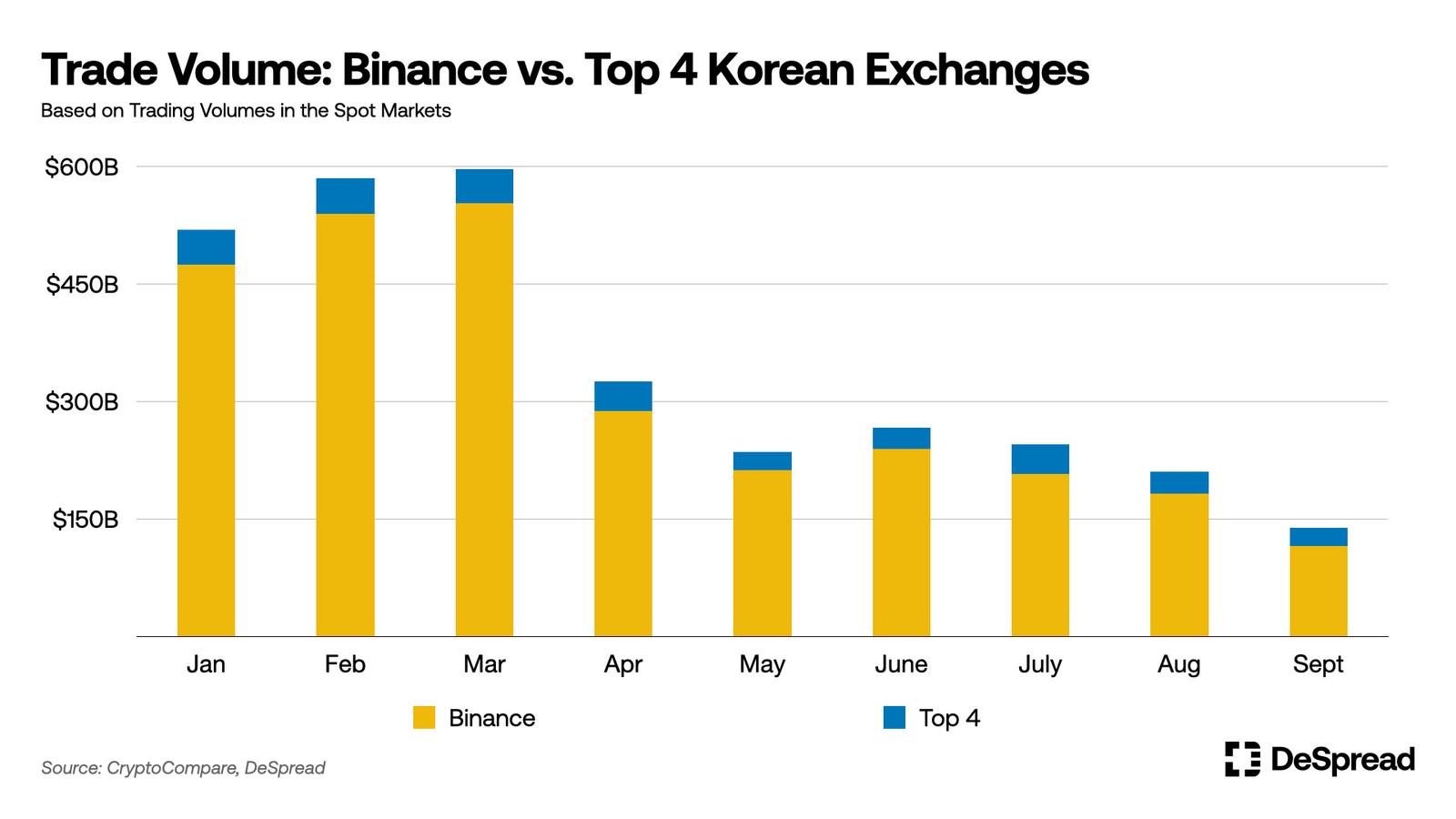
Declining trading volume trend: After peaking in March, trading volume on centralized exchanges (CEX) has generally been on a downward trend. During this period, market volatility also decreased, with Bitcoin’s price remaining relatively stable between $27K and $28K from late March to late September—showing little fluctuation.
-
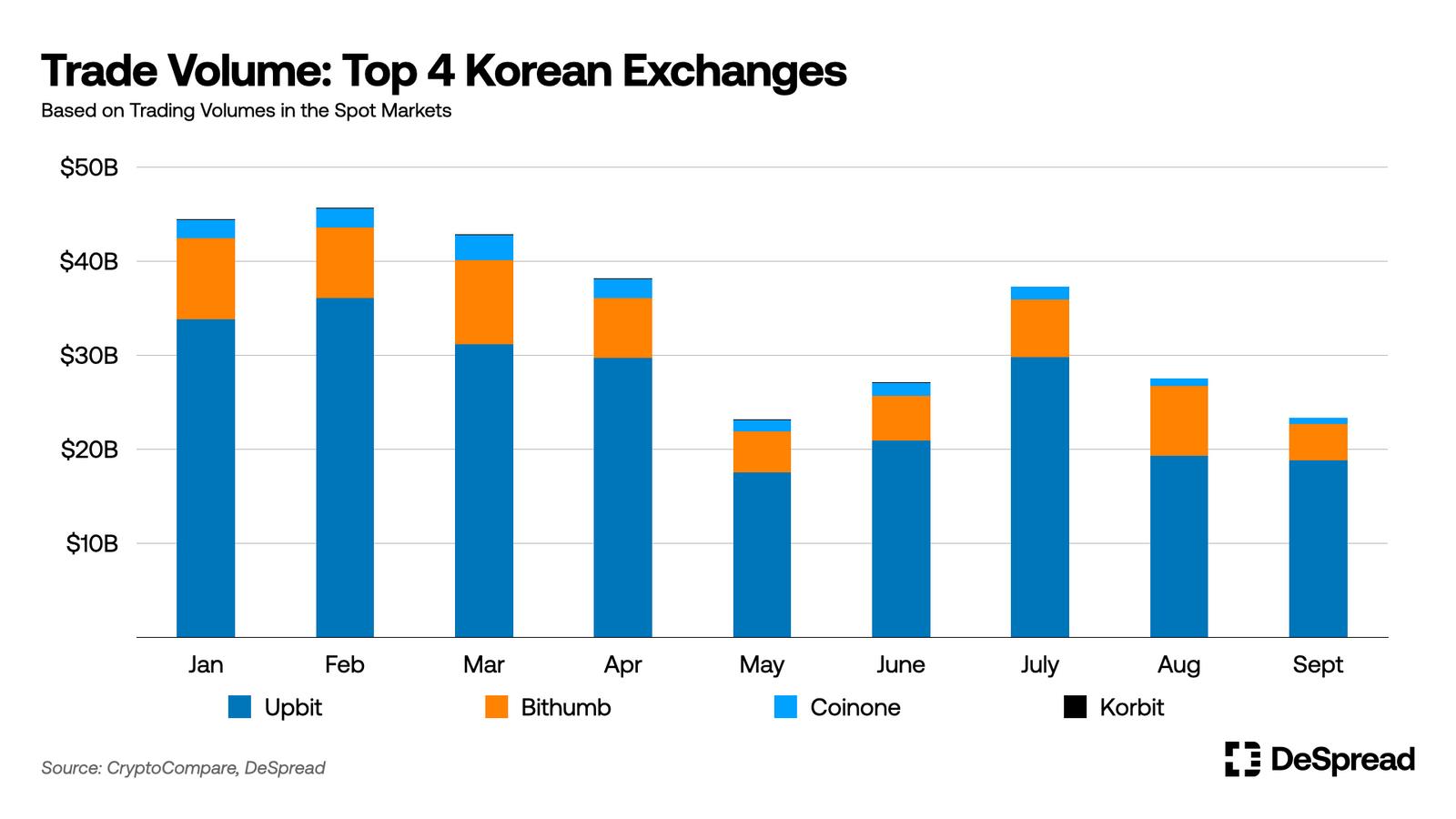
Relative strength of Korean exchanges: Korean exchanges were not immune to this contraction. Trading volume peaked at $45 billion in February, then sharply declined to $23 billion by May. However, it began rising again afterward, reaching $37 billion in July—a larger growth compared to Binance, the world’s largest cryptocurrency exchange.
-
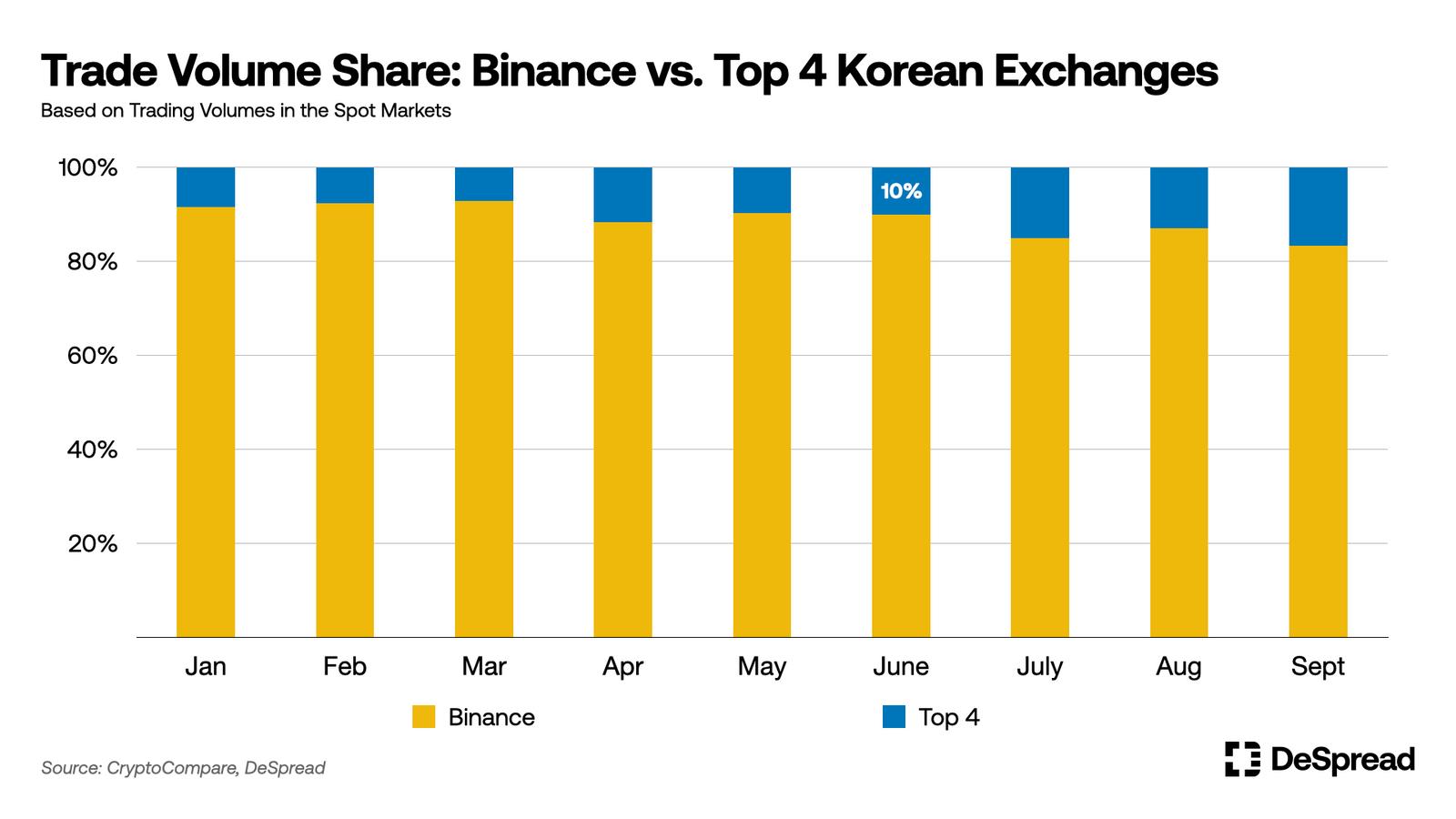
Comparison with international exchanges: Compared to Binance, the combined trading volume of the four major Korean exchanges amounts to about 10% of Binance’s volume this year. When compared to Coinbase during the same period, their trading volume is higher, indicating that Korean exchanges hold an important position in the global market.
-
Growing market share trend: Furthermore, the market share of the four major Korean exchanges has steadily increased. Relative to Binance’s trading volume, it rose from 7% in March to 16% in September. This can be interpreted as a sign of growing domestic exchange influence.
Upbit’s Dominance
-
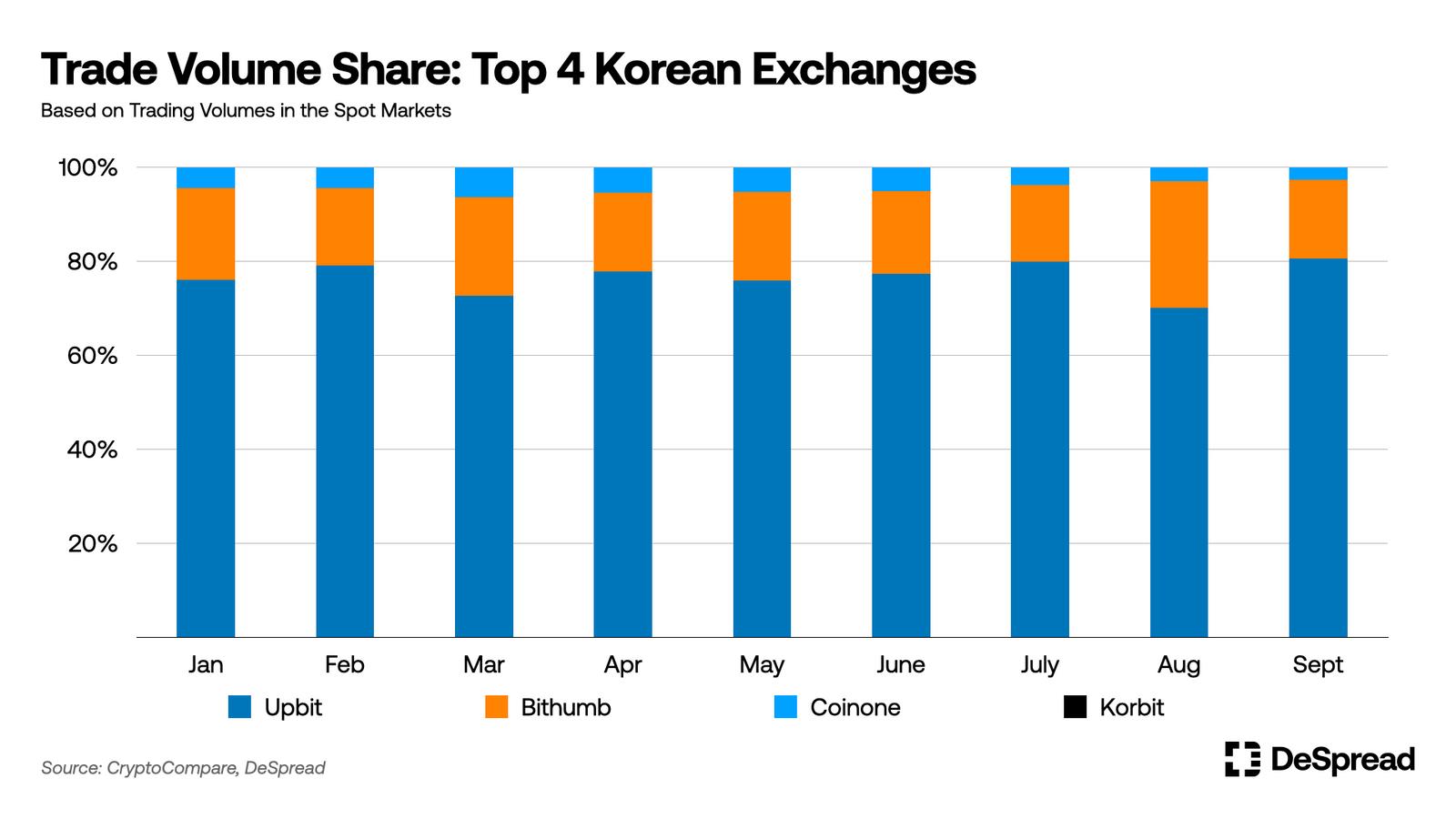
Upbit leads by far: In February, Upbit recorded its highest-ever trading volume of $36 billion, accounting for approximately 80% of South Korea’s cryptocurrency trading market, maintaining its dominant position. Although its market share briefly dropped to 70% in August, it quickly rebounded to 80% the following month and has since stabilized.
-
Market shares of Bithumb, Coinone, and Korbit: Bithumb remains strong as the second-largest player, capturing 15% to 20% of the total trading volume across the four exchanges. In contrast, Coinone holds a market share between 3% and 5%, while Korbit’s share is less than 1%.
-
Strong reaction to Ripple ruling: While Binance showed no significant volatility in trading volume in July compared to the previous month, Korean exchanges reacted explosively to news related to Ripple. The combined trading volume of the four Korean exchanges rose from $27 billion in June to $37 billion in July—an increase of 37%. This surge was primarily driven by the partial victory of Ripple in its lawsuit against the SEC, which led to an 80% jump in XRP’s price on July 13 and a sharp rise in trading volume.
Bithumb’s Zero-Fee Policy
-
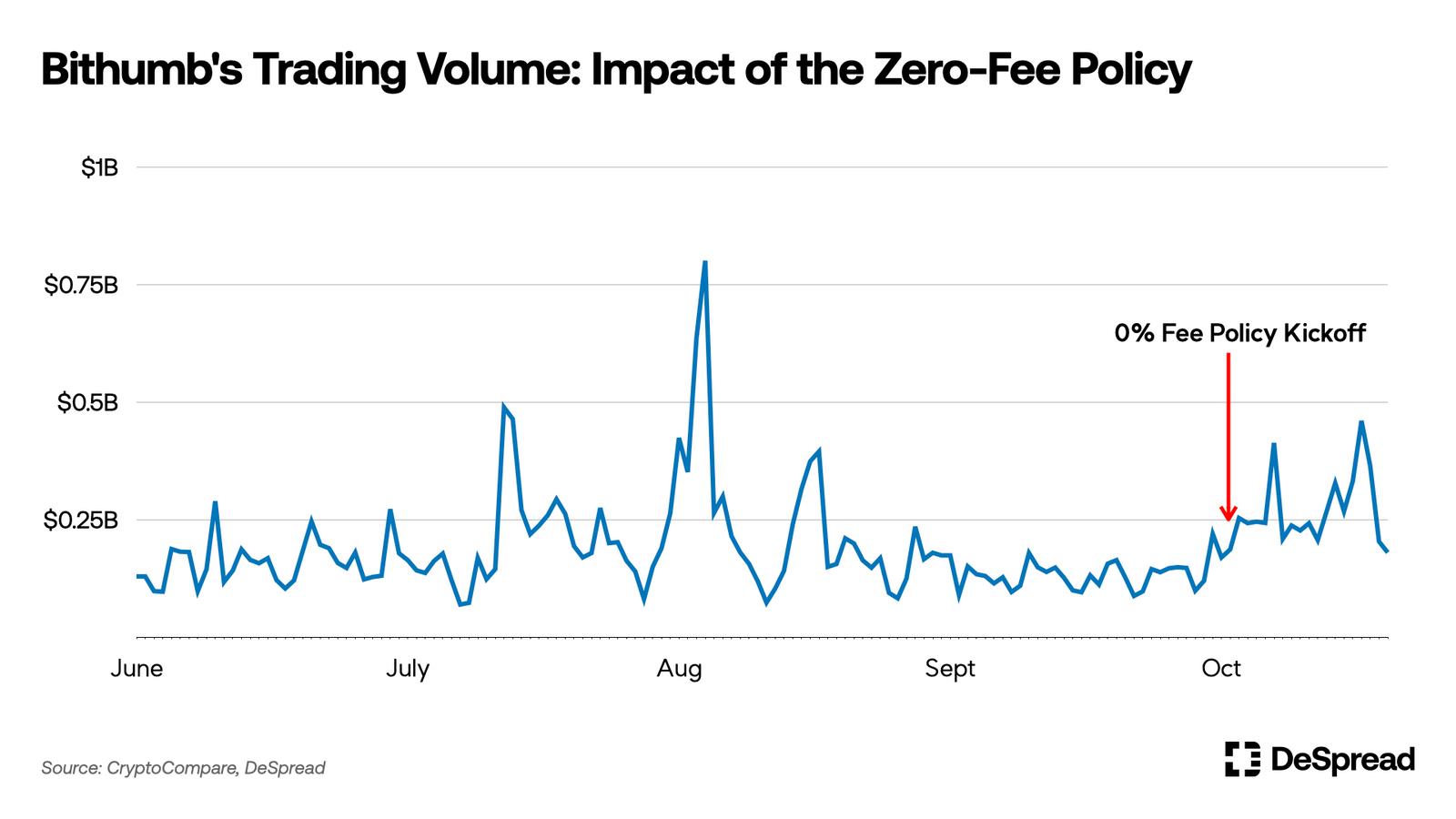
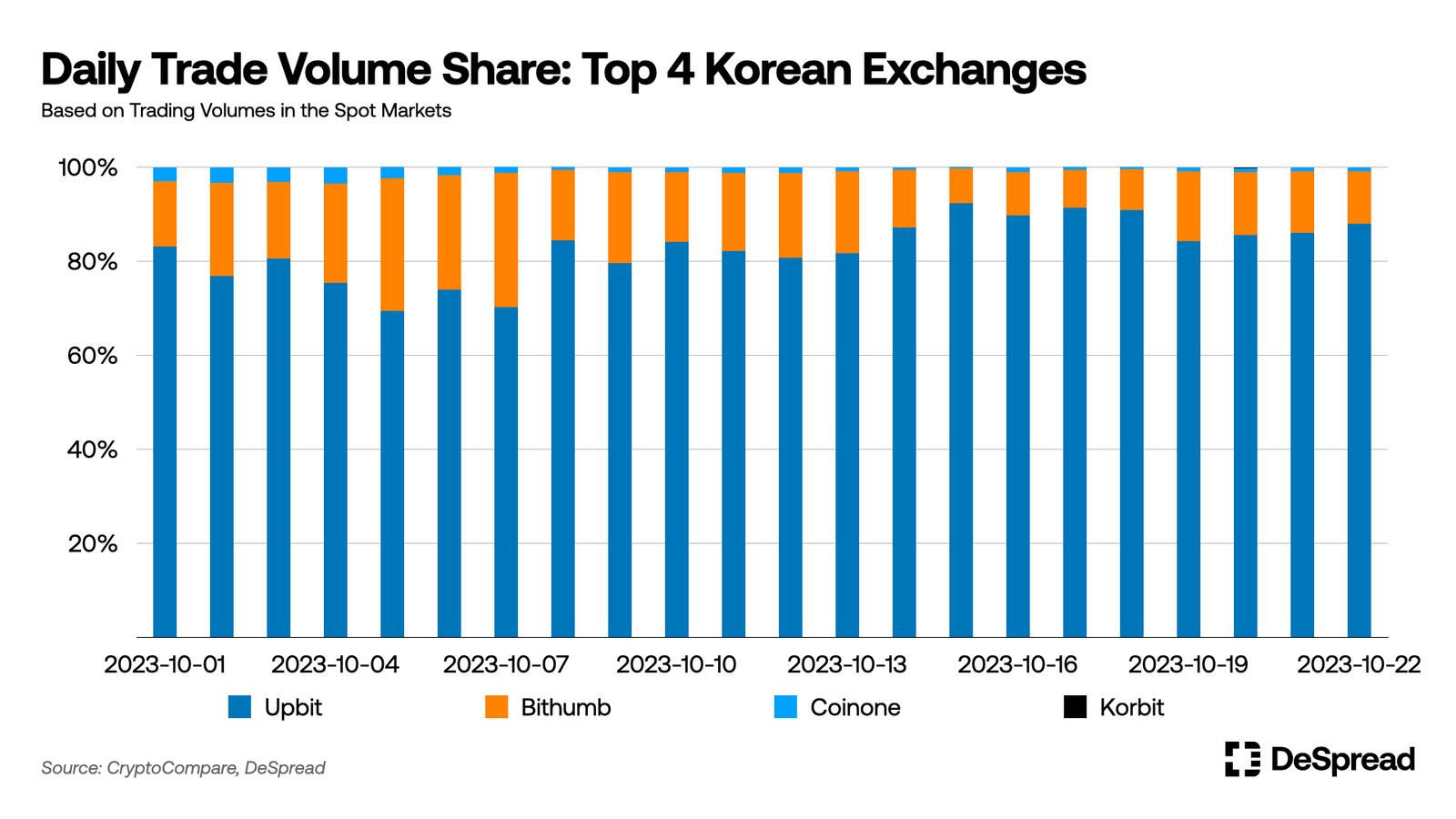
Initial response to zero-fee policy: Bithumb, South Korea’s second-largest exchange, implemented a 0% fee policy on October 4. This policy initially had a positive effect, increasing Bithumb’s trading volume and pushing its market share above 20%.
-
Decline in market share: However, the impact of the free policy did not last long, and Bithumb’s market share eventually declined back to pre-policy levels.
-
Sustainability of zero-fee policy: Although Bithumb’s fee-free policy initially succeeded in boosting market share, whether the exchange can sustain long-term growth remains uncertain. This also suggests that Korean investors do not choose exchanges solely based on the presence or absence of fees. Moreover, concerns have been raised about the sustainability of this model, as it eliminates a primary source of revenue for the exchange.
Coinbase vs. Upbit
-
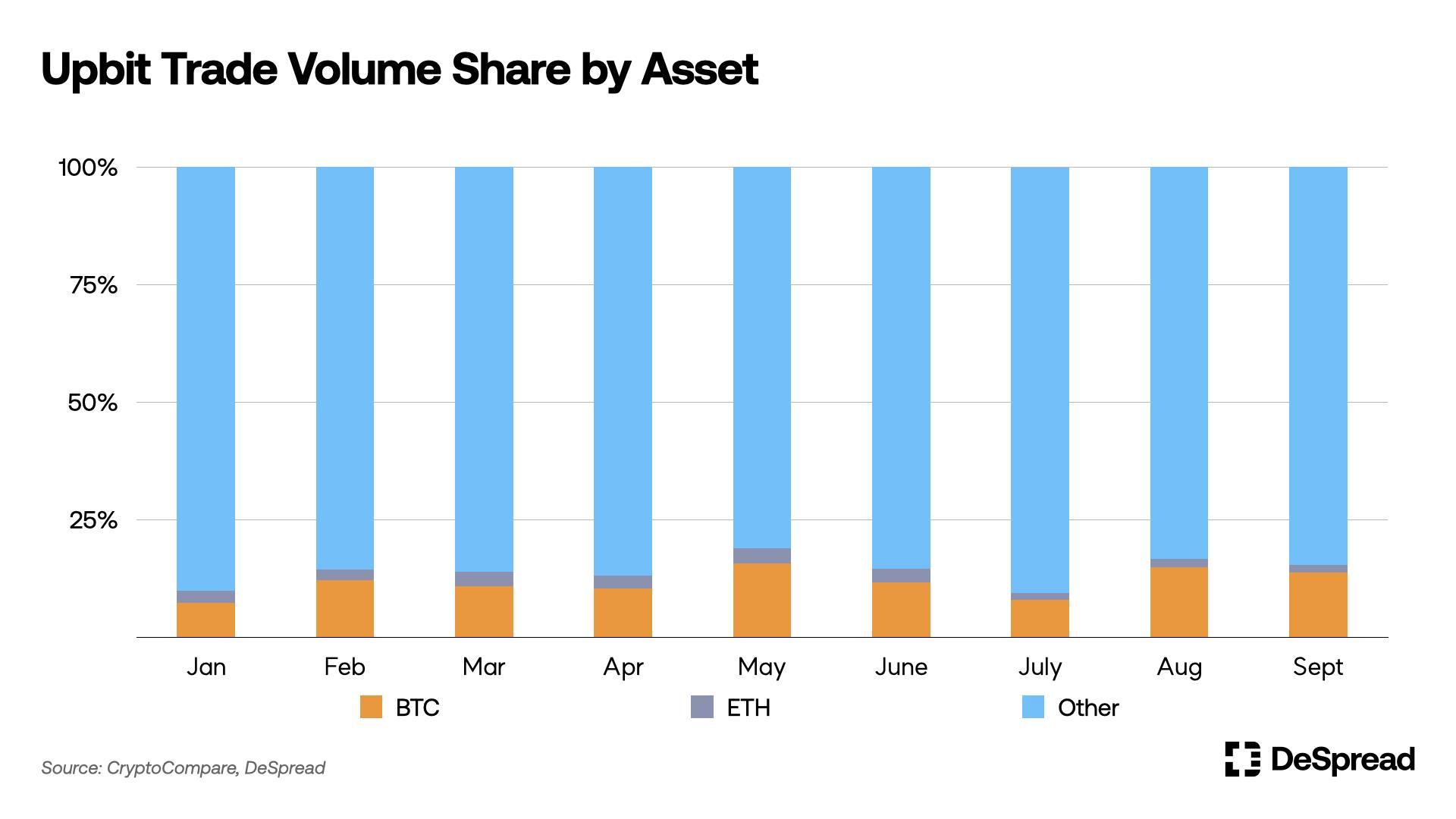
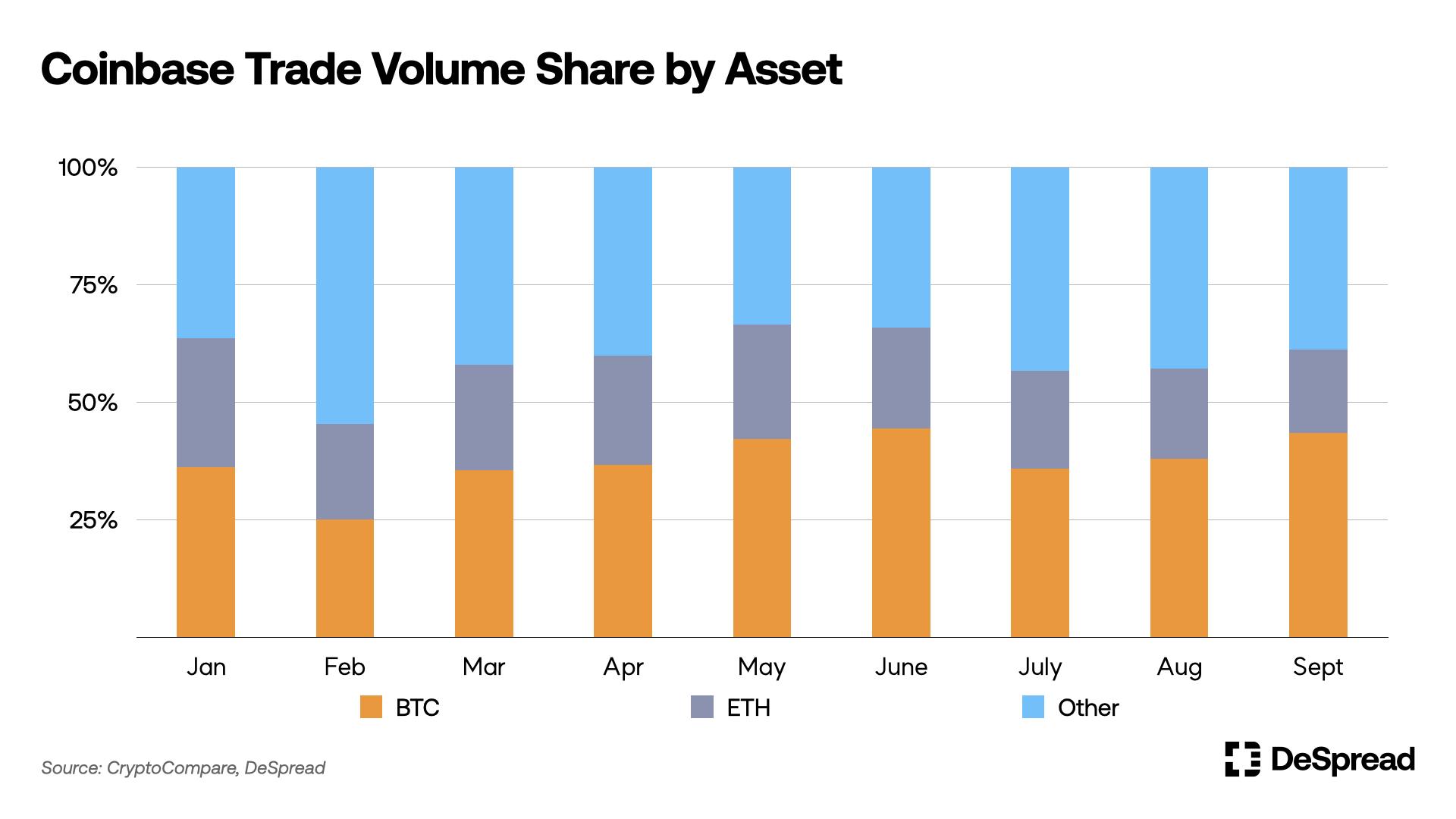
High-risk, high-return investment style: Although BTC and ETH account for only a small portion of total trading volume on Upbit, they represent a large share of trading volume on Coinbase, the representative U.S. cryptocurrency exchange. Individual investors on Upbit show strong interest in smaller-cap cryptocurrencies with high profit potential and tend to accept the associated high risks. This is considered one reason why altcoins have a high trading ratio in the Korean market.
-
Institutional investor-driven trading: Unlike Upbit, Coinbase’s trading volume is largely driven by institutional investors. According to Coinbase’s Q2 shareholder letter, institutional investors account for approximately 85% of its total trading volume. They tend to prioritize portfolio stability, which explains why the highest-market-cap cryptocurrencies—BTC and ETH—dominate trading activity.
Characteristics of the Korean Market
-
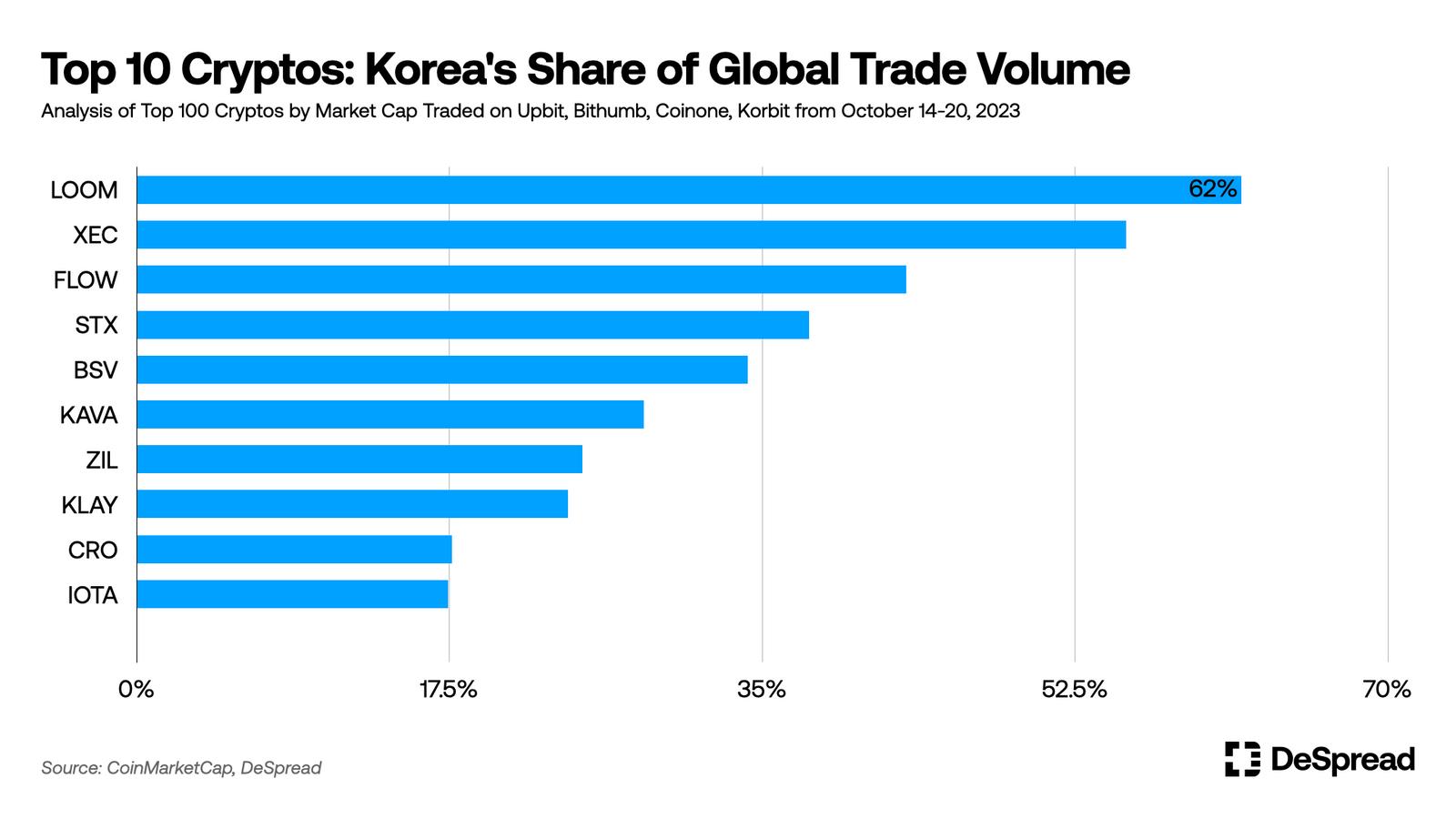
Cryptocurrencies favored by Korean investors: The chart above shows which cryptocurrencies attract the most attention from Korean investors. By analyzing data from the past week on the most actively traded cryptocurrencies in Korea compared to the global market, we found that Loom Network ($LOOM) ranked first with 62% market share, followed by eCash ($XEC) at 55% and Flow ($FLOW) at 43%. Stacks ($STX) and Bitcoin SV ($BSV) also made the list, at 37% and 34% respectively.
-
Surge in $LOOM, mysterious dynamics: During the third week of October, Loom Network ($LOOM) was the most actively traded cryptocurrency in Korea compared to the global market. This means Korean investors were actively trading this asset relative to global peers. Starting on September 15, the token’s price began rising inexplicably and surged nearly tenfold within a month, reaching 686 KRW. However, starting October 15, it began to fall sharply, dropping to around 140 KRW when this report was written. Due to this extreme price volatility, Loom Network briefly entered the top 100 cryptocurrencies by global market cap.
-
Impact of exchange deposit/withdrawal policies: Changes in deposit and withdrawal policies on Korean exchanges can directly affect prices and trading volumes. Specifically, on October 14, when deposits and withdrawals for $FLOW were temporarily suspended, both price and trading volume saw significant increases compared to the previous day. This phenomenon, known as the "Gaduri" effect, occurs when arbitrage opportunities between domestic and overseas exchanges become impossible due to halted deposits and withdrawals.
-
Cryptocurrencies under sustained attention: While some cryptocurrencies like Loom Network and Flow received only temporary attention, others such as Stacks and eCash continue to attract consistent interest on Korean exchanges regardless of short-term events. These cases are worth watching, as they remain actively traded in the Korean market independent of global trends.
In-Depth Analysis of Upbit Investors
-
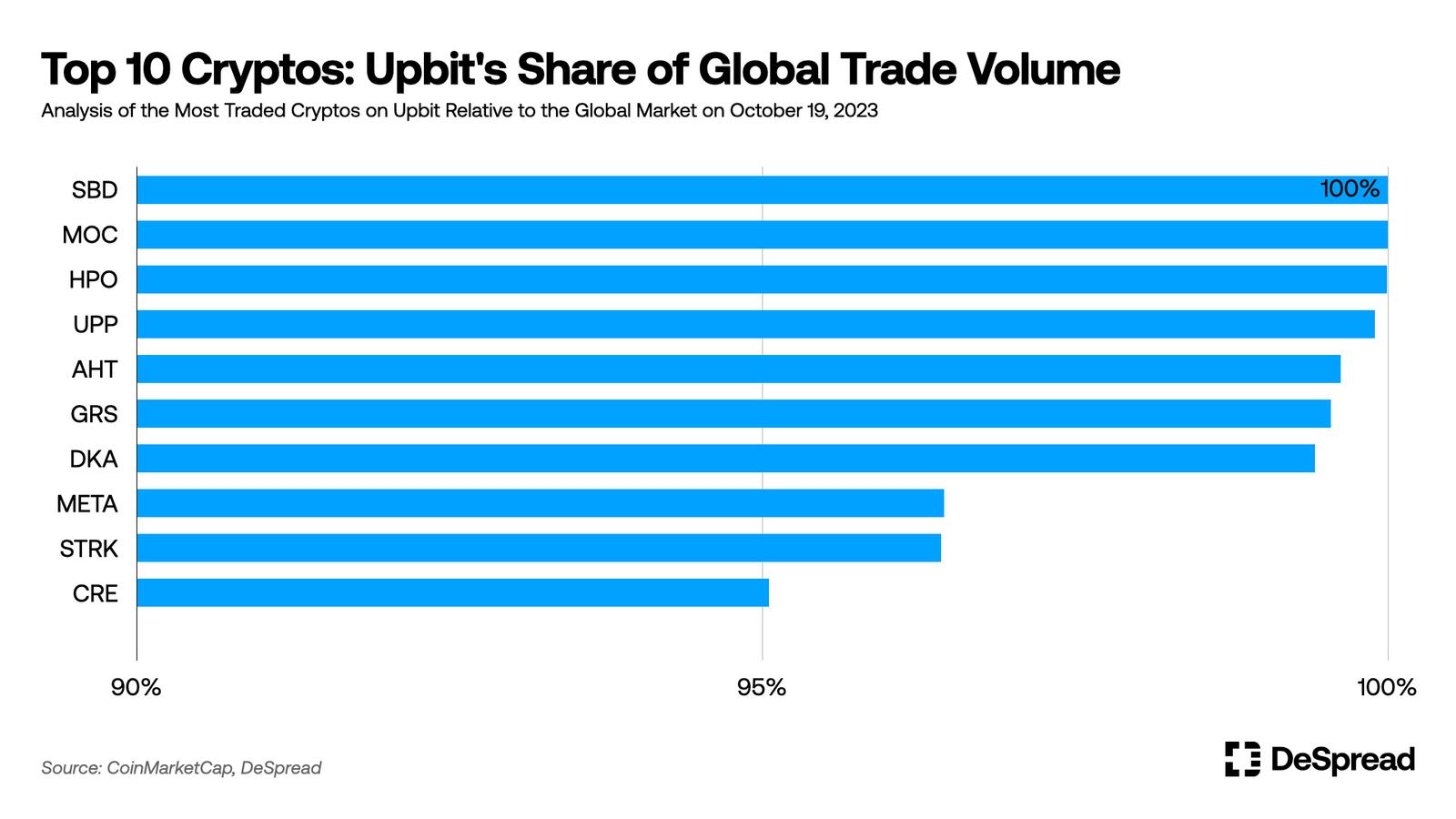
"Kimchi coins" primarily traded on Upbit: Among the cryptocurrencies traded on Upbit, Steem Dollars ($SBD), Moss Coin ($MOC), and Hippocrat ($HPO) have 100% of their trading volume exclusively on Upbit. Additionally, cryptocurrencies like Sentinel Protocol ($UPP), Aha Token ($AHT), and Groestlcoin ($GRS) are predominantly traded on Upbit and are referred to as "kimchi coins" because they receive little attention in global markets. These tokens are mainly traded by Korean investors and have formed their own unique market within the Upbit platform.
-
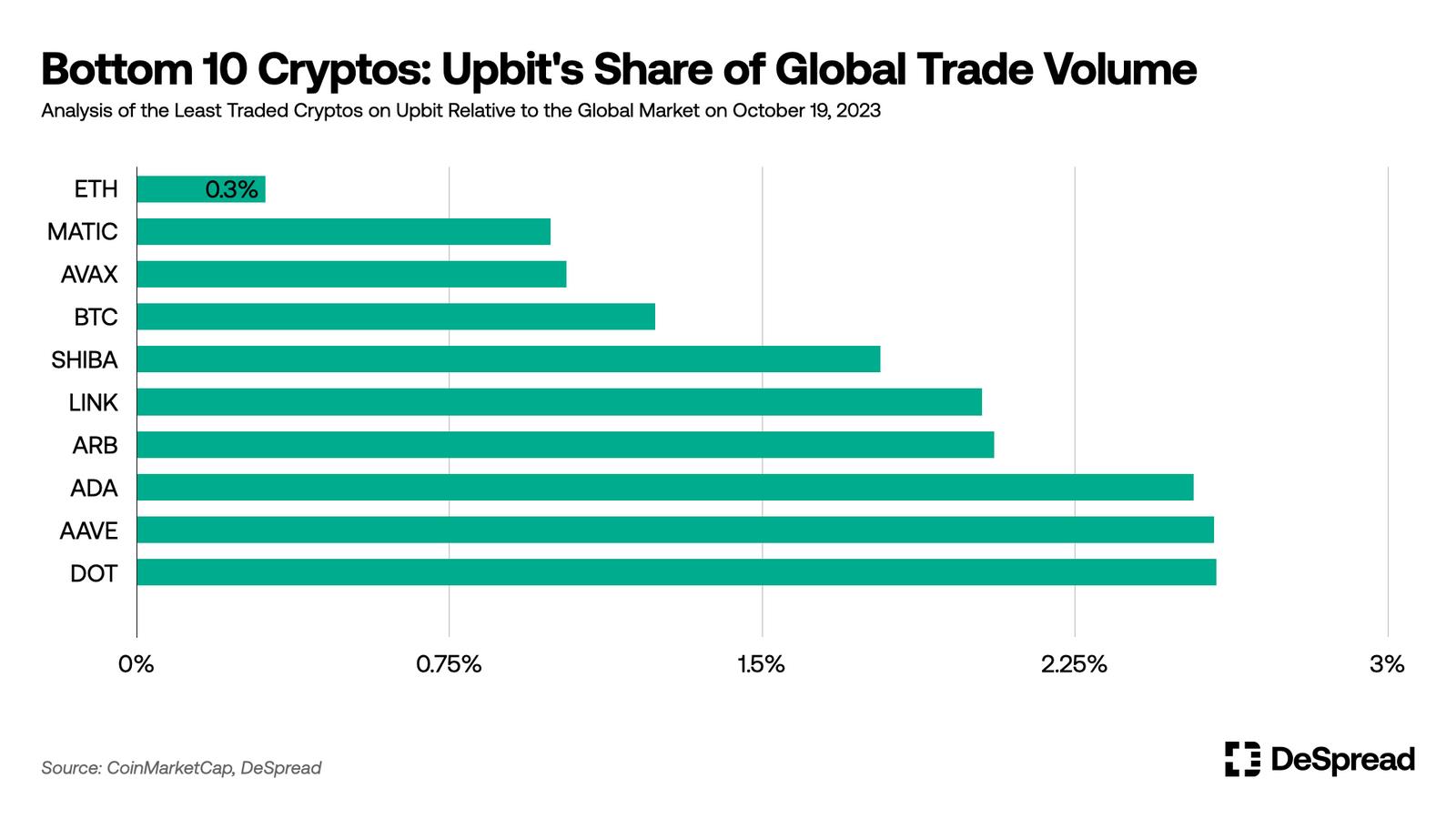
Relatively weak performance of mainstream coins: Cryptocurrencies that dominate globally—such as Bitcoin (BTC), Ethereum (ETH), and Polygon (MATIC)—have substantial trading volumes worldwide. However, within Upbit, their trading volumes are surprisingly low. This indicates that Upbit has distinct characteristics compared to global markets, reflecting regional differences in investor preferences and investment strategies. It should be noted, however, that Upbit’s overall trading volume is relatively low compared to massive global exchanges like Binance, so the lower trading volume of major cryptocurrencies should be considered in context.
-
Diversity between global trends and regional markets: As shown above, the Korean market exhibits unique traits compared to the global market, a pattern likely applicable to other regions as well. This suggests that global cryptocurrency projects need to develop and implement customized go-to-market (GTM) strategies tailored to each region’s specific characteristics.
Analysis of Upbit Deposit and Withdrawal Networks
-
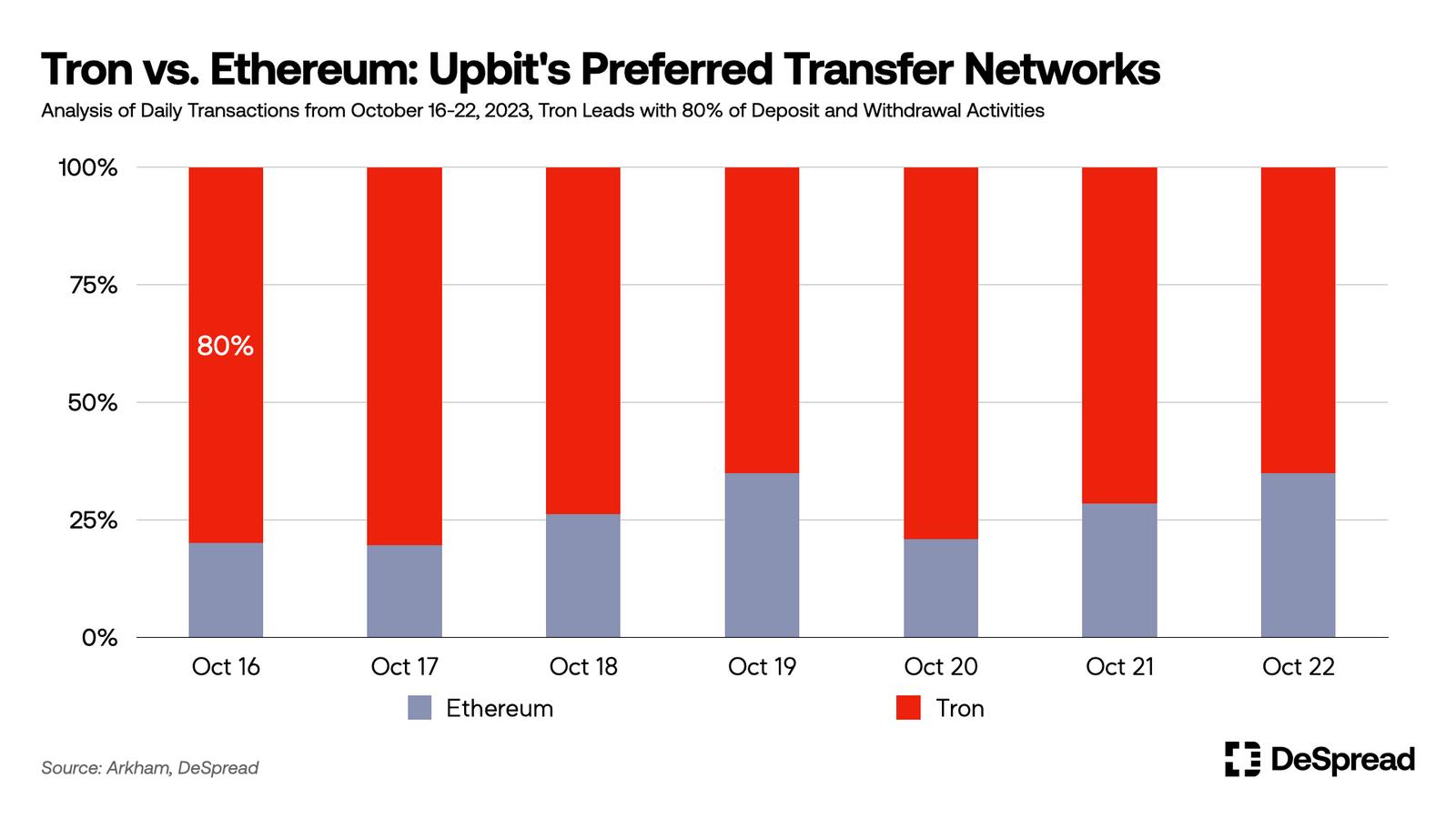
Upbit users prefer the Tron network: The chart above shows the proportion of transactions used by Upbit users for deposits and withdrawals on the Ethereum and Tron networks over the past week. According to the data, the number of transactions on the Tron network is five times higher than on Ethereum.
-
Popularity of low-fee Tron network: Compared to Ethereum, Upbit users actively favor the Tron network for deposits and withdrawals. This is because transaction fees on the Ethereum network are relatively high, while the Tron network offers lower fees and faster transaction processing. According to CoinMetrics data, daily USDT transactions on the Tron network can reach up to 2 million, compared to around 100,000 on Ethereum—highlighting Tron’s clear advantage in simple cross-border fund transfers. This trend is clearly reflected in the deposit and withdrawal behavior of Upbit users and Korean investors.
-
Role as a fiat gateway: Beyond the reasons mentioned above, considering that the Ethereum network hosts the highest TVL and the most on-chain protocols, it can be inferred that Korean investors primarily use deposits and withdrawals to transfer funds between overseas centralized exchanges and Korean exchanges, rather than engaging with on-chain products. Several factors may underlie this investor preference, but two main ones stand out:
-
Driven by characteristics of Korean investors: Upbit users and Korean investors primarily use exchanges for cryptocurrency trading. They leverage crypto deposit and withdrawal services to access products offered by overseas exchanges—such as futures markets and margin trading—that are unavailable on Korean centralized exchanges.
-
Differences in convenience of on-chain deposit/withdrawal services: Users wishing to deposit into or withdraw from on-chain environments may prefer to first send funds to overseas exchanges before withdrawing to on-chain networks, possibly due to insufficient services provided by Korean centralized exchanges—such as lack of USD-denominated stablecoins and limited diversity in withdrawal networks.
Join TechFlow official community to stay tuned
Telegram:https://t.me/TechFlowDaily
X (Twitter):https://x.com/TechFlowPost
X (Twitter) EN:https://x.com/BlockFlow_News
 @DeSpreadTeam


