








100,000 USD to Find NewDegen: Bitget Wallet's Ambition in Trading
TechFlow Selected TechFlow Selected
100,000 USD to Find NewDegen: Bitget Wallet's Ambition in Trading
Bitget Wallet is ready to welcome 1 billion people on their crypto journey.
 Navigating Web3 tides with focused insights
With Vitalik Buterin's enthusiastic endorsement of account abstraction (AA)-based smart contract wallets at EthCC, the wallet sector has once again drawn market attention. After years of slow progress, smart contract wallets are gradually entering a practical phase.
In Satoshi Nakamoto’s view—the creator of Bitcoin—absolute anonymity requires using one-time addresses for every transaction. Bitcoin node software effectively serves as asset management tools, which can also be understood as the earliest form of wallet software.
The emergence of Ethereum changed everything. Although the early Ethereum community explored smart contract accounts, technical limitations led to the adoption of externally owned accounts (EOA). Regardless of account type, however, wallets remain essential as the "container" that holds these accounts.
Similarly, BitKeep Wallet has embraced the inclusivity of on-chain products in its own evolution. Through deeper integration with Bitget Exchange, it has been fully upgraded into Bitget Wallet, jointly focusing on user needs and reducing barriers for mainstream users to access Web3 at scale.
Wallets: The Next Decentralized Gateway
The internet economy is essentially a platform economy—achieving optimal commercial outcomes by providing the most efficient matchmaking between supply and demand, allowing platforms to generate revenue such as Apple’s well-known 30% fee.
Currently, Web3’s main applications remain concentrated in trading. Under increasing regulatory pressure and growing on-chain activity, more users are migrating to decentralized exchanges (DEX) or wallets. Bitget Wallet aims to accelerate this historical shift—your wallet, your DEX—offering users an all-in-one trading experience.
A Brief Future History of Wallets: Evolving Into Mass Trading Hubs
In the wallet space, most projects are still refining their product forms while searching for viable business models. Looking back historically, we can divide their development into the following stages:
-
2009–2013: Single-asset and PC-based wallets. Core functions were limited to address creation, transfers, and receiving payments, primarily used by Bitcoin miners;
-
2014–2018: Multi-chain and mobile wallets emerged. Functionality expanded to support multiple blockchains like Ethereum, offering additional value-added services and trading features, mainly serving Ethereum users;
-
2018–2021: Plugin wallets and feature-rich mobile multi-chain wallets appeared. Key capabilities included interaction with on-chain contracts, dApp integration, and high-value B2B asset management services;
-
2022–present: A wave of innovation围绕 AA wallets has emerged. Most notably, efforts focus on bridging off-chain identities with on-chain smart contracts—such as incorporating email or phone number logins—and unifying on-chain behaviors to overcome the current disconnect between EOA accounts and smart contracts.
Still, wallets continue to face competition and pressure from centralized exchanges (CEX). Currently, there are around 3 million active on-chain addresses, while over 300 million people globally use crypto assets. Even under optimistic estimates, wallet user numbers reached only 84 million in August 2022—less than Binance’s registered user base alone. Moreover, the entire crypto user base remains smaller than PayPal’s 400 million monthly active users.

Exchanges remain the dominant traffic hubs in the crypto market. However, compared to traditional internet user scales, mass adoption is still underway. Wallets, especially smart contract wallets, are gaining strong momentum, with successful products like Bitget Wallet and MetaMask already emerging.
Imagine a future where AA-powered smart contract wallets become mainstream—this could fundamentally disrupt the role of CEX as the sole gateway.
Founded in 2018, BitKeep grew from tens of thousands of users to a super app with 12 million users within five years. Expanding beyond basic wallet functions, it now supports Swap trading, NFT trading, and a full dApp ecosystem, delivering via decentralized means the complete functionality traditionally offered by centralized exchanges.
Building a solid platform is just the first step. With vast liquidity support from numerous DEXs and cross-chain bridges, plus integration of Bitget Futures to complement the trading system, Bitget Wallet is poised to deliver a trading experience even closer to that of centralized exchanges, enhancing the appeal of decentralized protocols to Web2 users.
Bitget Wallet’s strategy centers on improving end-user experience and focusing on Swap functionality. According to Grand View Research, individual users contributed over 62.0% of industry revenue in 2021, with built-in wallet Swap functions alone accounting for 40% of that revenue. Take MetaMask, for example: backed by 30 million active users and charging up to 0.875% in Swap fees, it reportedly generates over $200 million in monthly revenue.
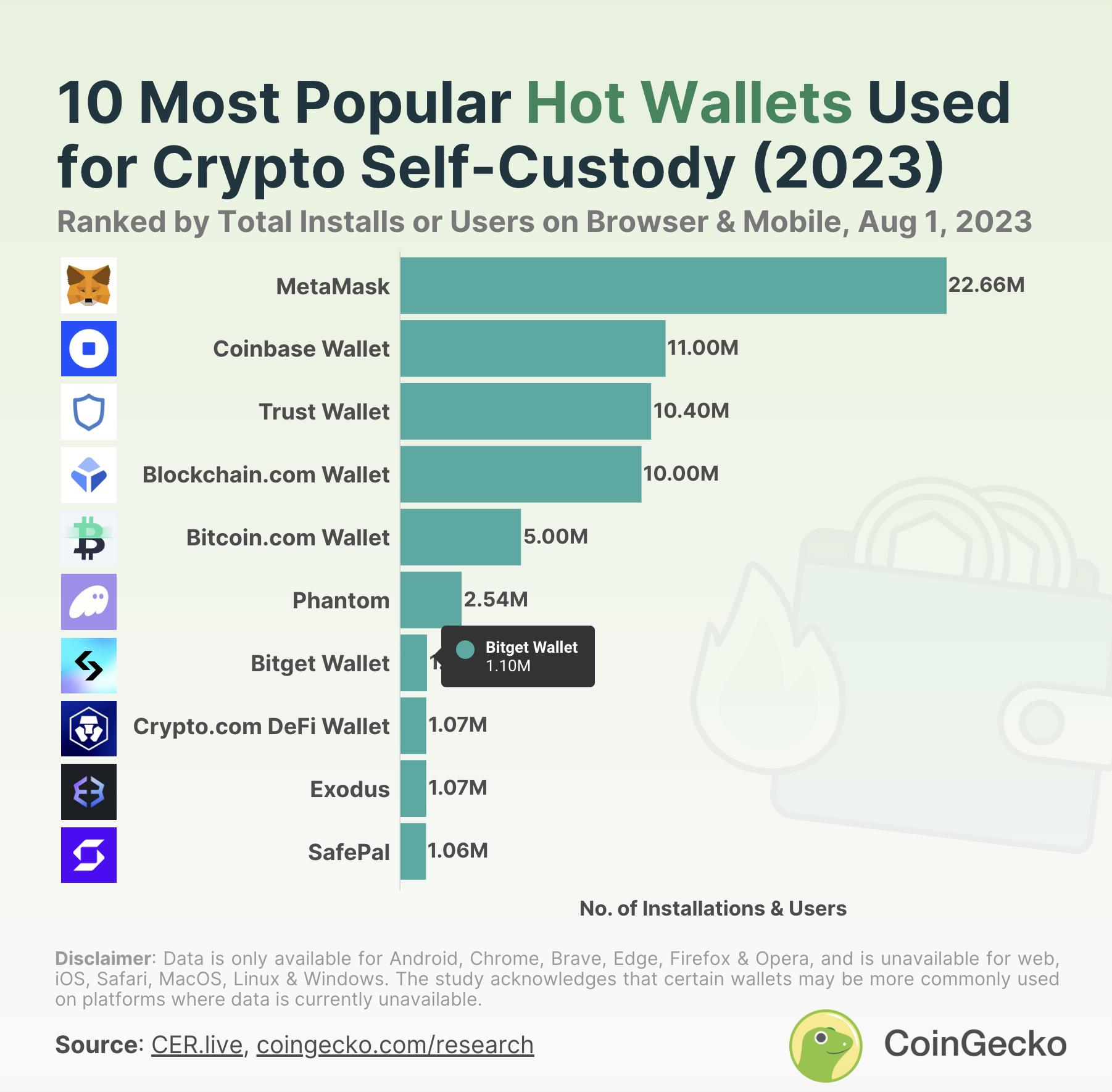
According to the latest data from CoinGecko, Bitget Wallet currently ranks seventh globally. As Bitget Exchange continues to grow its global market share and Bitget Wallet surpasses 12 million users, the number of Swap users on the platform is expected to rise significantly.
It’s clear that integrated Swap functionality represents a proven business model today. But how can decentralized solutions match the depth accumulated by exchanges over decades? DEXs have demonstrated through AMM models that this is possible. Now, wallets aim to integrate the successes of existing on-chain DEXs and offer even better solutions.
Super Swap: Transforming Into a Trading Wallet
How can user traffic be directed toward the more commercially valuable Swap function? Bitget Wallet’s answer is building the “strongest-ever” Super Swap.
-
Liquidity Aggregation
From Bitget Wallet’s perspective, liquidity is critical to any functioning trading platform. It already aggregates liquidity from hundreds of DEXs and cross-chain bridges across chains, leveraging algorithms to optimize routing, deliver best prices, and cover the widest range of token pairs.
The wallet currently supports nearly 100 L1/L2 chains across six major ecosystems and over 250,000 tokens.
Bitget Wallet’s product philosophy is simple: as long as two tokens have fundamental economic value—regardless of whether they’re on the same chain or different chains, L1 or L2—they should be freely exchangeable, almost imperceptibly, without requiring users to understand concepts like cross-chain bridges.
Centralization and decentralization aren’t always strictly binary. Since trading is inherently real-time, the difference between centralized and decentralized execution isn't always significant. Bitget Wallet focuses on acting in users’ best interests, improving their trading experience by balancing security, usability, and convenience.
-
K-Line Market Data
Full-chain DEXs go beyond mere trading—they emphasize user service by providing trade data and market analytics. Users can make informed decisions based on K-line charts rather than blindly selecting trades as on typical DEXs.
Bitget Wallet was among the first globally to support on-chain asset K-line charts and native Swap functionality. In 2021, when it was still called BitKeep, it launched the first Uniswap asset trading leaderboard, driving rapid user growth. Following this path, it later introduced token-level K-line data.
Additionally, Bitget Wallet is developing intelligent market insights—leveraging “smart money” signals and advanced on-chain leaderboards—to help users identify investment opportunities earlier.
-
Pioneered “Gasless Trading” and “Auto Slippage”
Bitget Wallet was the first in the industry to implement gasless trading experiences, enabling transactions without needing gas tokens on nearly 10 chains including BNB Chain, Polygon, and TRON—both within and across chains. Recently, this feature has extended to Ethereum, where users can quickly obtain gas fees during trades. Given Ethereum’s high and volatile gas costs, enabling gas borrowing is technically challenging—making Bitget Wallet’s achievement here particularly significant.
GASU subsidies, another Bitget Wallet innovation, automatically offset various gas fees incurred within apps.
Auto slippage was also first introduced by Bitget Wallet. Considering burn rates common with meme coins, and integrating multiple public chain DEXs and aggregator protocols, Bitget Wallet calculates optimal slippage settings based on both slippage tolerance and token burn rate. This ensures smooth transaction completion while minimizing user input—requiring only a single click—reducing friction and making Bitget Wallet one of the fastest execution wallets available.
-
Quick Buy Service
Beyond peer-to-peer crypto trading, Bitget Wallet offers Quick Buy services for global users, integrating six third-party providers including MoonPay and Alchemy Pay. It also connects with Bitget P2P, offering fast and easy cryptocurrency purchases for users in emerging markets—including Southeast Asia—where credit card penetration is low, helping new users bootstrap into Web3 seamlessly.
Through its non-custodial wallet management model, Bitget Wallet eliminates risks associated with centralized custody. Furthermore, users’ on-chain funds are protected—for instance, through the aforementioned Bitget Wallet User Protection Fund, which shares a $300 million insurance pool with Bitget Exchange.
By continuously advancing its Swap functionality, Bitget aims to provide users with the best asset management and service platform. To further unlock the wallet’s potential, continued exploration will be necessary.
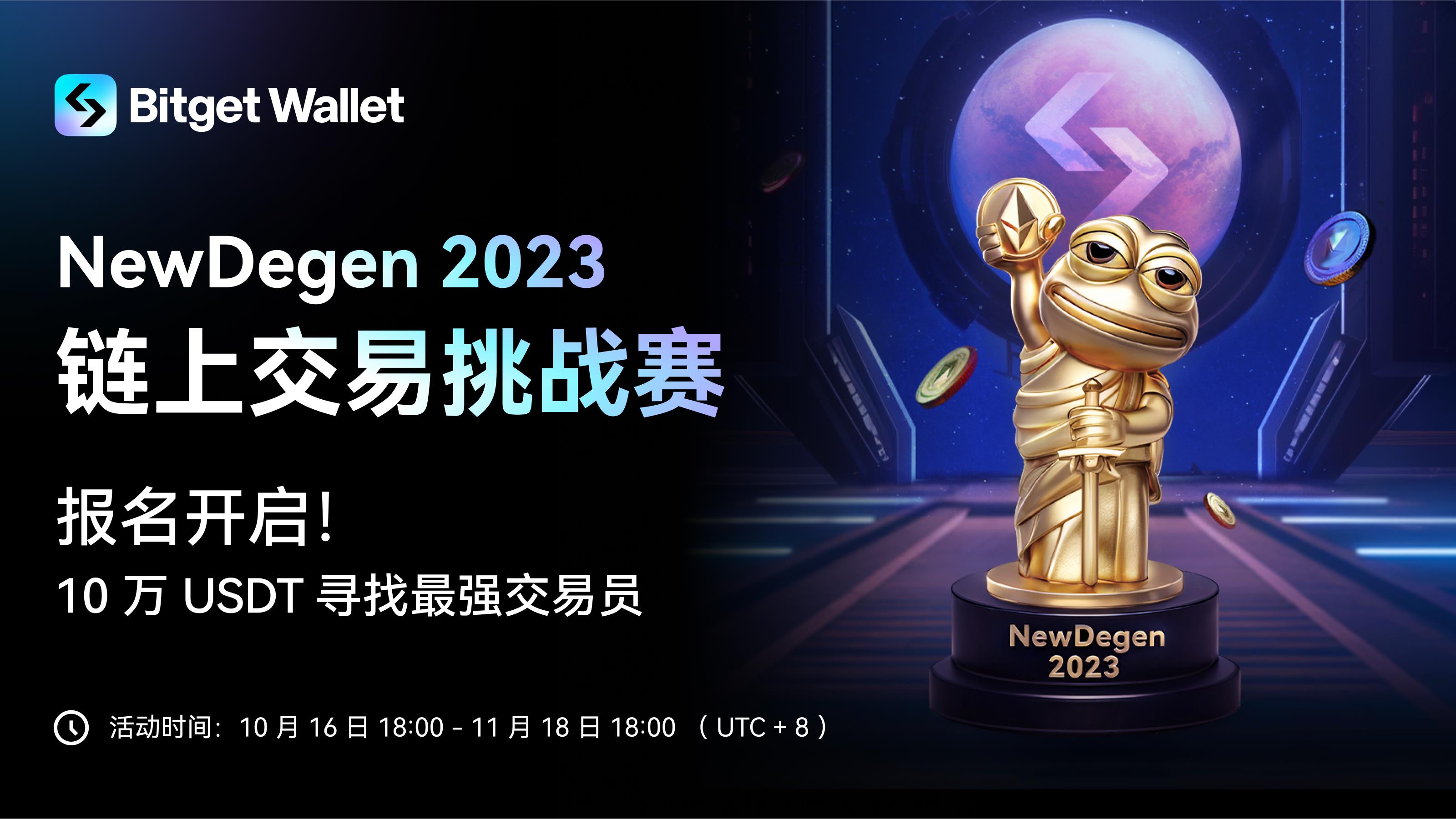
NewDegen 2023 On-Chain Trading Challenge: $100,000 to Find the Best Trader
Compared to the opacity and black-box nature of CeFi, the transparency of on-chain activities presents a key growth driver. Yet on-chain operations remain complex, and most users must carefully take their first steps toward migration.
To address this, Bitget Wallet is hosting the NewDegen 2023 On-Chain Trading Challenge—an initiative encouraging more users to explore the decentralized and DeFi world. Participants can win rewards even during bear markets while experiencing the advantages of Bitget Swap: superior assets, faster trades. More importantly, Bitget Wallet hopes this competition will help transform newcomers into degens, accelerating their learning and growth.
Critically, the NewDegen trading competition offers $100,000 in total prizes and limited-edition SBT honor badges. Any user—new or existing—can participate by holding at least $10 worth of assets in their wallet and clicking the event page within Bitget Wallet to register.
Super Portal: Entering the Native On-Chain World
Internet platforms derive value from super apps serving as traffic gateways—like Tencent’s WeChat and QQ, or Google Search. Similarly, wallets are becoming the actual entry points for users exploring the on-chain world—best described as decentralized super portals.
Beyond Trading: Experience Is King
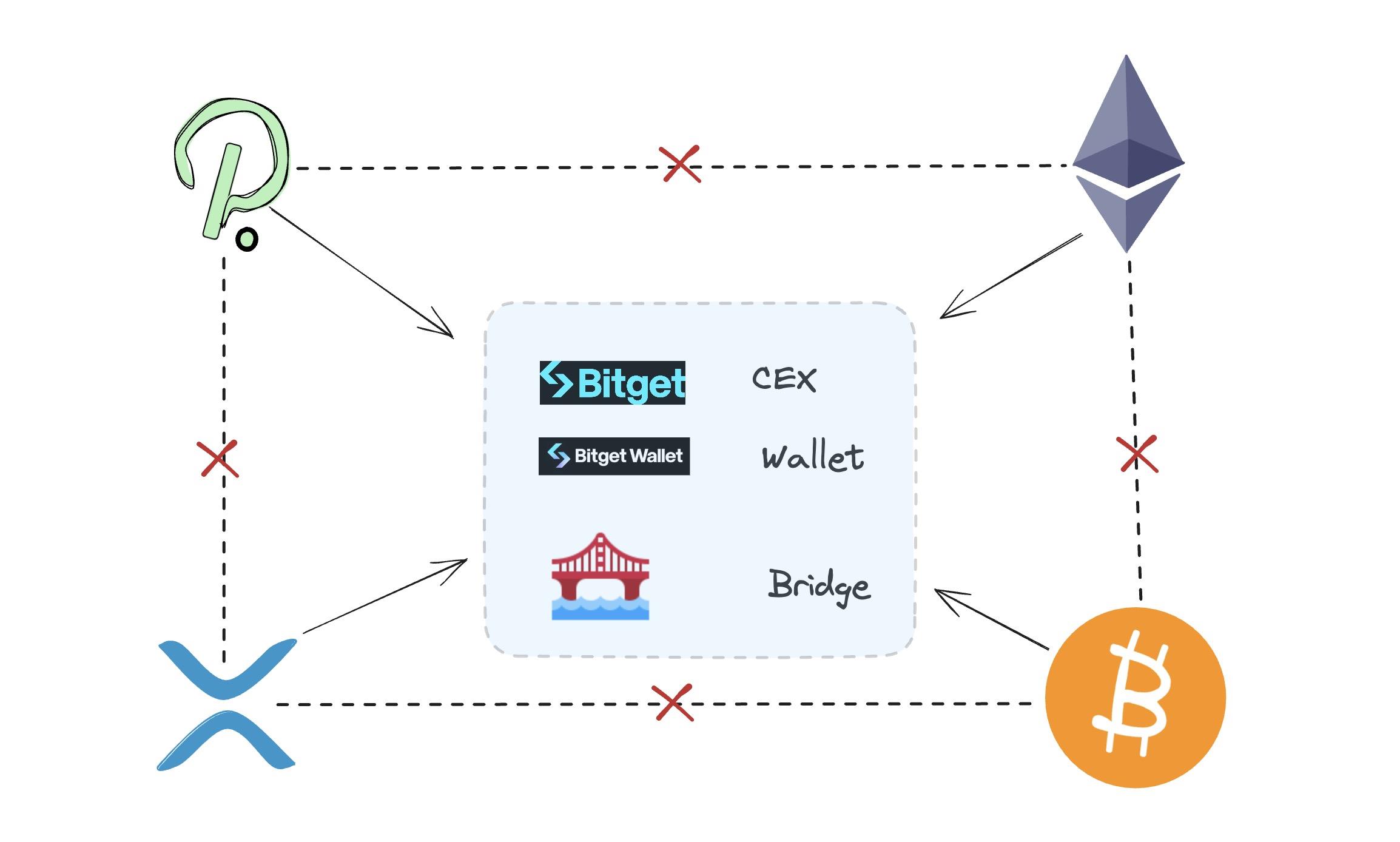
Wallets do more than store assets—they serve as connectors of user identity. Bitget Wallet supports direct display of ENS domains and allows them to be used directly for transfers and trading. Additionally, its built-in cross-chain bridge enables seamless movement of assets across any public blockchain.
Achieving this requires sustained effort in optimizing and unlocking asset liquidity. From a rational economic standpoint, most wallet projects spend only 20% of resources to meet 80% of user needs. Creating a true multi-chain, multi-token super wallet would mean spending 80% of effort to serve just 20% of use cases—an approach that may seem economically inefficient.
Yet sometimes, Web3 builders must commit to long-term efforts. The benefits of multi-chain compatibility aren’t immediate but long-lasting; they don’t just cater to mainstream demands but also serve even the smallest 1% of user needs.
Take the first half of 2023 as an example—Bitget Wallet closely followed every trend:
-
After the rise of BRC20 assets, Bitget Wallet quickly launched a Bitcoin NFT asset viewer and management center, along with a BRC20 leaderboard;
-
When Telegram Bot token prices surged in July, Bitget Wallet swiftly created a dedicated Bot zone;
-
It established a Meme coin section, allowing tokens that don’t meet exchange listing criteria to be deployed directly within the wallet for user access. For example, after Twitter’s rebranding to X, users could instantly find relevant meme tokens via the swap and market pages.
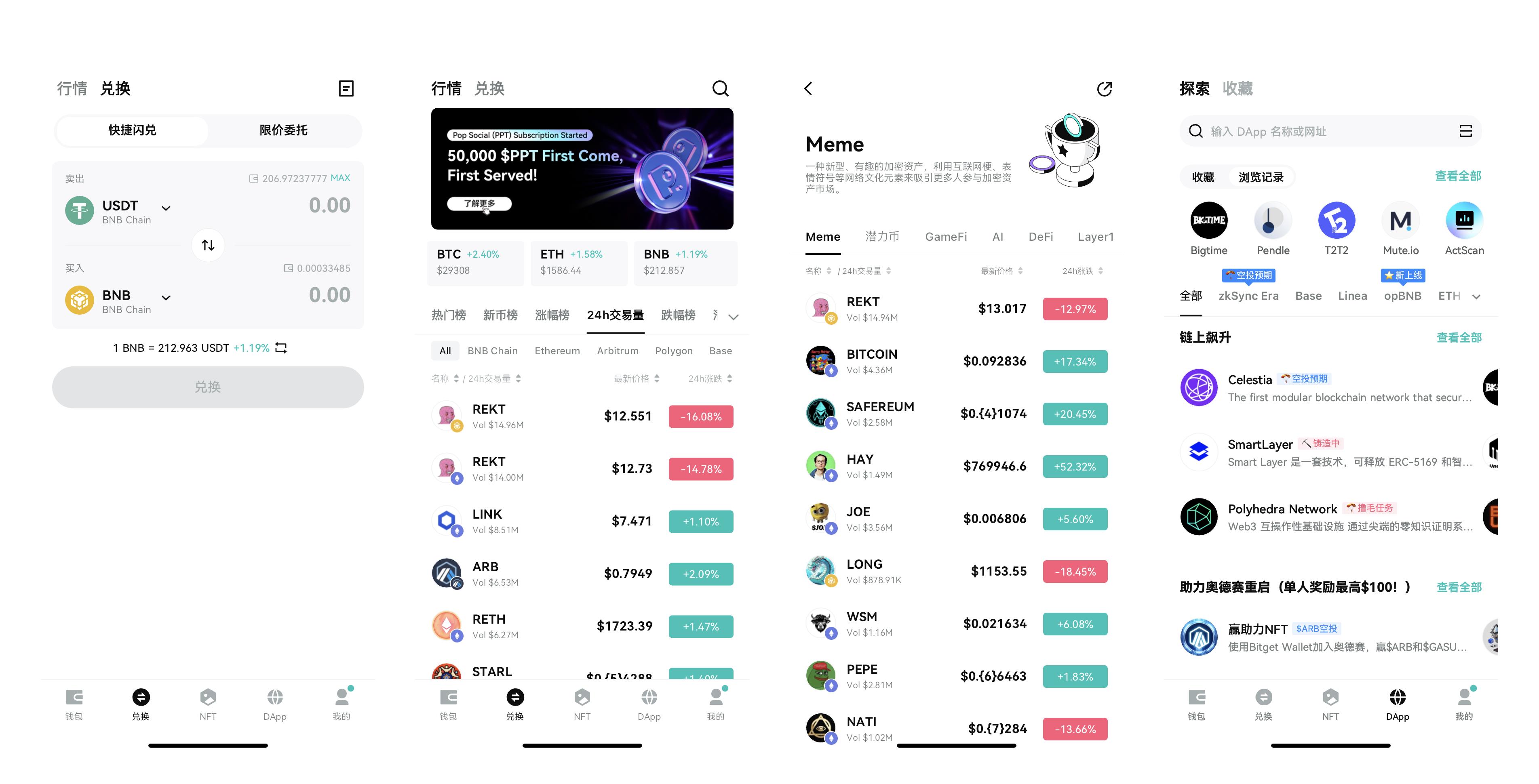
Put simply, anyone using Bitget Wallet throughout 2023 wouldn’t just notice the brand evolution—they’d stay perfectly in sync with every market rhythm, as Bitget Wallet captures and delivers each new trend to users.
Begin With the End in Mind: Autumn Brings Geese Home
User behavior within wallets varies widely. No wallet can fully satisfy all user needs—it’s more important to find the right development path suited to one’s vision.
In 2023’s crypto landscape, the native on-chain world still falls short. Whether due to complex DeFi protocols or cumbersome wallet interfaces, beginners often feel intimidated, while even seasoned users remain vulnerable.
But from day one, Bitget Wallet has remained committed to building an easy-to-use wallet. For example, when Dragonfly led BitKeep’s Series A round, BitKeep didn’t resort to flashy tech demos. Instead, it delivered a powerful under-one-minute demonstration—using assets on TRON to directly purchase tokens on BSC—showcasing how decentralized methods can rival centralized exchange UX.
Since its founding in 2018 with a $2 million investment, Bitget Wallet rode the wave of DeFi Summer in 2020. In 2021, it launched its killer app—BitKeep Swap and a cross-chain bridge—reaching 5 million transactions within a year, with daily trading volume stabilizing at $20 million, steadily establishing its competitive edge.
Bitget Swap has focused on perfecting its Swap functionality, and will inevitably expand support for smart contract account features in the future.
Bitget Wallet believes that onboarding the next billion users into Web3 hinges on product functionality and user experience. Building an intuitive, convenient, and barrier-free wallet—one where users can seamlessly switch between any assets, any public chains, and any actions—might be seen as creating a free, open network without language barriers, cultural divides, or firewalls, equally accessible to every individual.
Just like today’s Bitget Swap: users simply open the wallet, use facial recognition login, search to add tokens or chain info, and engage in straightforward swaps. It truly ensures that the broadest audience—especially mainstream Web2 users—can intuitively navigate Web3 without needing to grasp any complex concepts.
Bitget Wallet and Bitget Swap are already highly usable—but not enough. Mainstream users are not accustomed to migrating from Web2 to Web3. Bitget Wallet’s solution? Let “Web3 products understand Web2 users.”
BitKeep has completed its first five-year journey—from zero to one. Now, as the era of billion-user adoption approaches, Bitget Wallet steps forward, ready to welcome the next 1 billion into the world of crypto.
Join TechFlow official community to stay tuned
Telegram:https://t.me/TechFlowDaily
X (Twitter):https://x.com/TechFlowPost
X (Twitter) EN:https://x.com/BlockFlow_News
 深潮TechFlow


