








Stanford Blockchain Research: An NFT Market Premium Evaluation Model—Can It Better Calculate NFT Prices?
TechFlow Selected TechFlow Selected
Stanford Blockchain Research: An NFT Market Premium Evaluation Model—Can It Better Calculate NFT Prices?
This article introduces a new "premium evaluation model," aiming to create a valuation framework that takes into account market infrastructure and fundamental principles.
 Navigating Web3 tides with focused insights
Authors: Yusen Zhan, Black, Zi'ang (Tony) Ling
Translated by: TechFlow
Note: This article is sourced from the Stanford Blockchain Review. TechFlow is an official partner of the Stanford Blockchain Review and has been granted exclusive authorization to translate and republish this content.

Introduction
In the evolving field of non-fungible tokens (NFTs), effective pricing models must strike a balance between complexity and interpretability. A common example is the "floor price" metric frequently used in NFT trading. While the floor price often serves as a rough starting point and baseline indicator, it typically fails to accurately reflect the intrinsic value or unique characteristics of an NFT.
Historically, many NFT pricing models have relied on Gradient Boosting Decision Trees (GBDT). Although these models offer reliable predictions, they are highly complex and difficult to interpret. In this article, we introduce a new "premium valuation model" designed to create a valuation framework grounded in market fundamentals and core principles. By capturing more nuanced features of NFTs, we aim to help creators, traders, and collectors better understand the complexities of NFT pricing.
Baseline: Gradient-Boosted Decision Tree Models
Currently, a common technical approach for NFT pricing is Gradient Boosting Decision Trees (GBDT). This ensemble learning method builds upon the foundational concept of decision trees, where individual trees make decisions based on predefined criteria. However, GBDT's uniqueness lies in its sequential construction of multiple trees. Each new tree attempts to correct the errors of the previous one, gradually improving the overall accuracy of the ensemble. This systematic, iterative process enables GBDT models to identify and integrate complex data patterns and subtle distinctions effectively.
Advantages of GBDT Models
-
Robustness: GBDT is resistant to outliers in datasets, making it suitable for diverse data scenarios.
-
Handling Mixed Data: GBDT seamlessly manages datasets containing both categorical and numerical features.
-
Automatic Feature Selection: The model inherently prioritizes relevant features, often reducing the need for extensive feature engineering.
-
Reduced Overfitting: Due to its ensemble nature and iterative error correction, GBDT generally exhibits less overfitting compared to individual decision trees.
Challenges and Limitations of GBDT Models
-
Complexity: As an ensemble of multiple decision trees, understanding the internal workings of GBDT or tracing specific decision paths can be highly complex.
-
Training Time: Due to its iterative nature, GBDT typically requires longer training times than simpler models.
-
Memory Intensive: Storing multiple decision trees demands significant memory, which may pose limitations in resource-constrained environments.
Complexity and Lack of Transparency: The Core Issue
In the context of NFT pricing, the primary challenge with GBDT is its lack of transparency. While the model may produce a price or valuation, it operates as a "black box," offering no straightforward explanation for how that price was derived.
A key strength of GBDT—its ability to capture subtle data patterns across multiple decision trees—becomes a double-edged sword when stakeholders require justification or interpretation of a pricing decision. This lack of clear explainability makes pricing metrics difficult for various NFT stakeholders to comprehend. Therefore, there is a strong need for a pricing model that is both accurate and interpretable.
Overview of the Premium Model
As discussed above, we propose a premium-based NFT pricing model that balances accuracy and interpretability by aligning prices with the fundamental principles and characteristics of these digital assets.
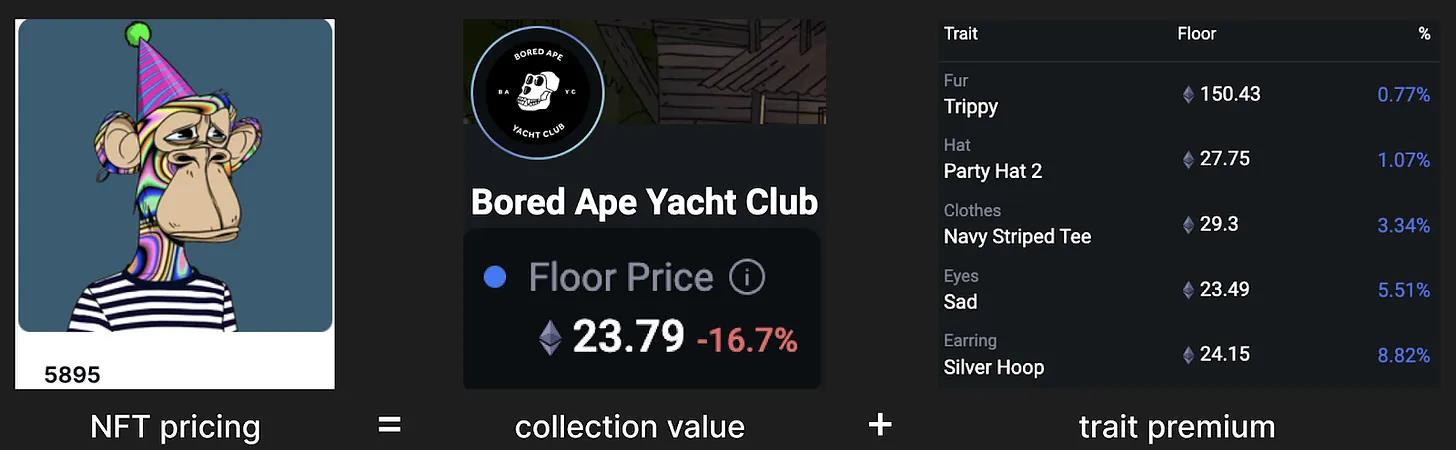
NFT pricing consists of collection-based value and characteristic premiums. The core formula of the premium model is as follows:

-
Valuation: The predicted value of the NFT.
-
Floor Price: The current lowest listed sale price for NFTs within a specific collection or category in the market.
-
Intercept: A base adjustment to the floor price, accounting for intrinsic factors that may uniformly shift values up or down.
-
Feature Weights: Coefficients assigned to each feature, determining how much that feature influences the NFT’s price. Each feature affects the estimated price proportionally relative to the floor price.
-
Feature Premium: Additional value assigned to specific, desirable attributes of an NFT. It is calculated as the product of the floor price and the corresponding feature weight.
-
Collection-Based Value: Represents the baseline value of the NFT within its collection, derived from the floor price and potentially adjusted by the intercept to reflect general market conditions or other factors unrelated to specific features.

Derivation of the Premium Valuation Model
In the premium model, we use linear regression to analyze how specific features influence the estimated price of an NFT. By leveraging feature weights and the floor price as variables, the linear regression model can effectively predict an NFT’s price based on its intrinsic characteristics and the current market baseline.
According to our premium model, we have:

After simple transformation, we obtain:

Renaming the left side as y and expressing the right side in standard linear regression form, we get:
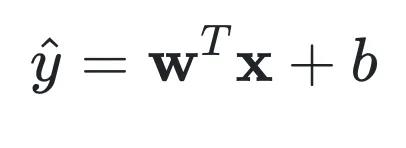
Where:
-
y is the predicted output.
-
x is a one-hot encoded vector representing the NFT’s features. Each position in the vector corresponds to a specific feature, with “hot” positions (set to 1) indicating the presence of that feature, and others set to 0.
-
w is a weight vector, where each element represents the importance of a specific feature in determining the NFT’s price.
-
b is the intercept, adjusting the prediction independently of any specific feature.
The term wT * x is computed as the dot product of the two vectors:

In practice, suppose you have three features (A, B, C). An NFT with features B and C would be represented by a one-hot vector x = [0, 1, 1]. The linear regression model predicts the NFT’s price based on learned feature weights and the intercept, allowing us to rewrite the sum of feature premiums as wTx. We can implement the linear regression model using open-source machine learning libraries to construct our premium model as described above.
Evaluation Demonstration
We can apply our advanced pricing model to value the rare Bored Ape Yacht Club #7403. Below is the basic information associated with this token:
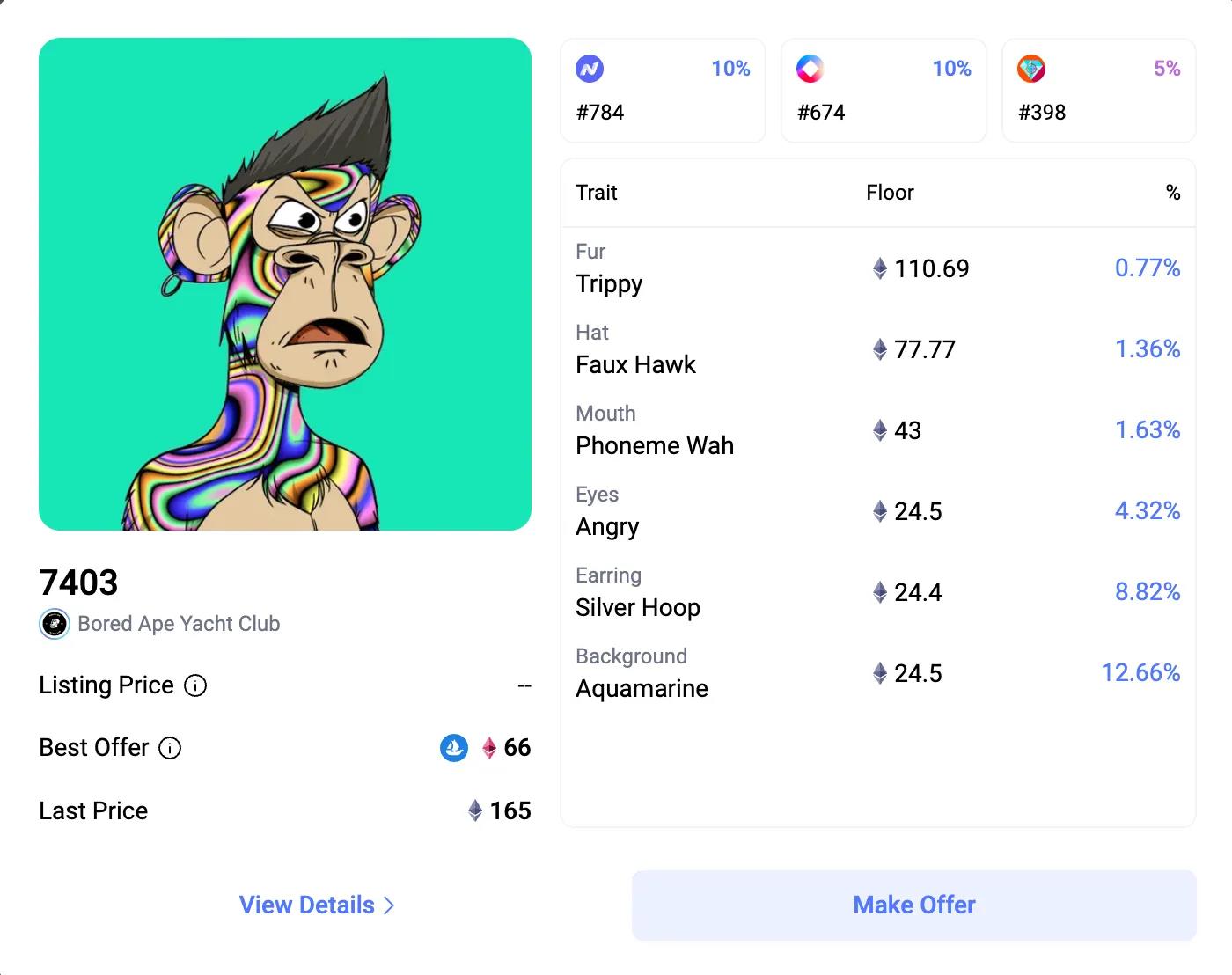
This NFT possesses several traits, including Trippy Fur, Faux Hawk Hat, Angry Eyes, Aquamarine Background, Silver Hoop Earring, and Phoneme Mouth. Among these, Trippy Fur is considered the rarest attribute. According to our GoPricing API, the valuation result for #7403 is as follows:
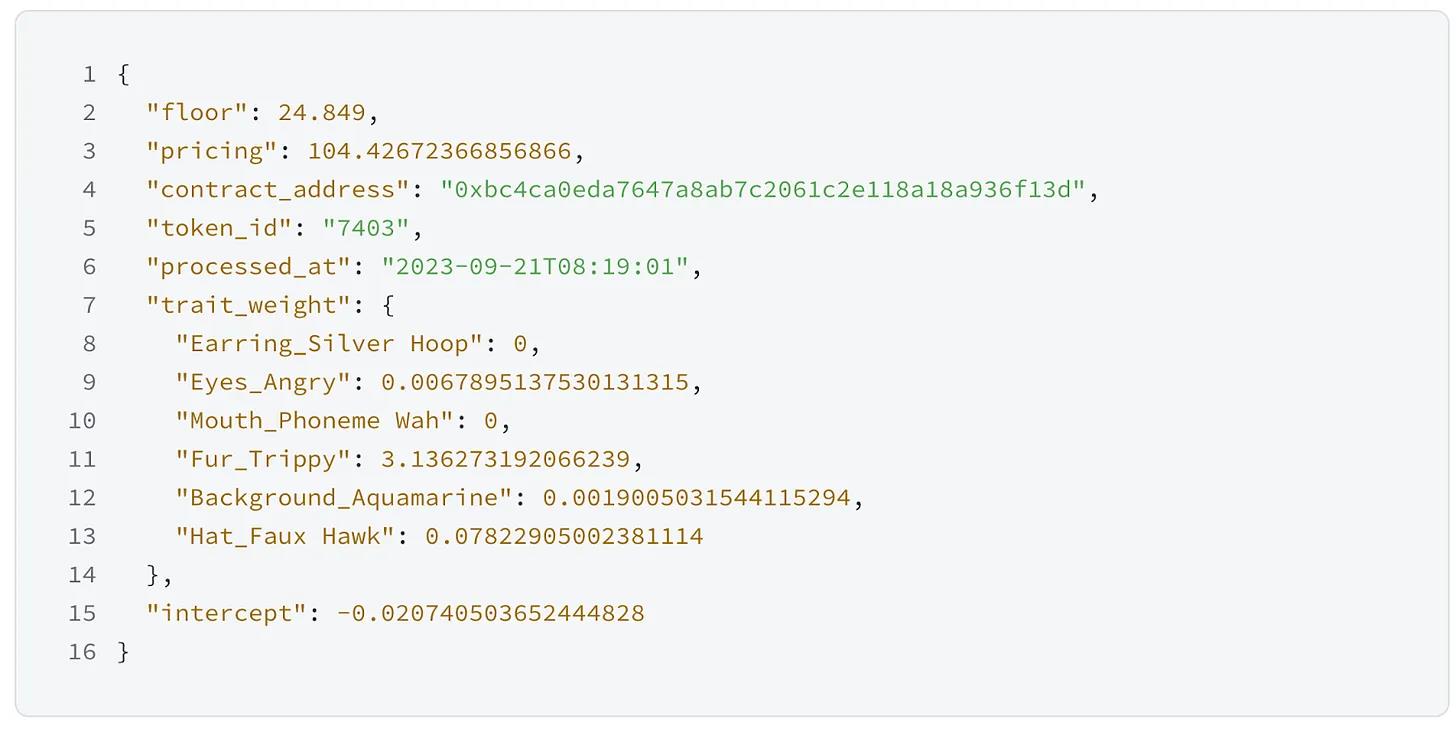
"pricing" represents the estimated price of token #7403, which is 104.42672366856866 ETH, while "floor" refers to the floor price at the time of request. Our estimated price can be decomposed as follows:
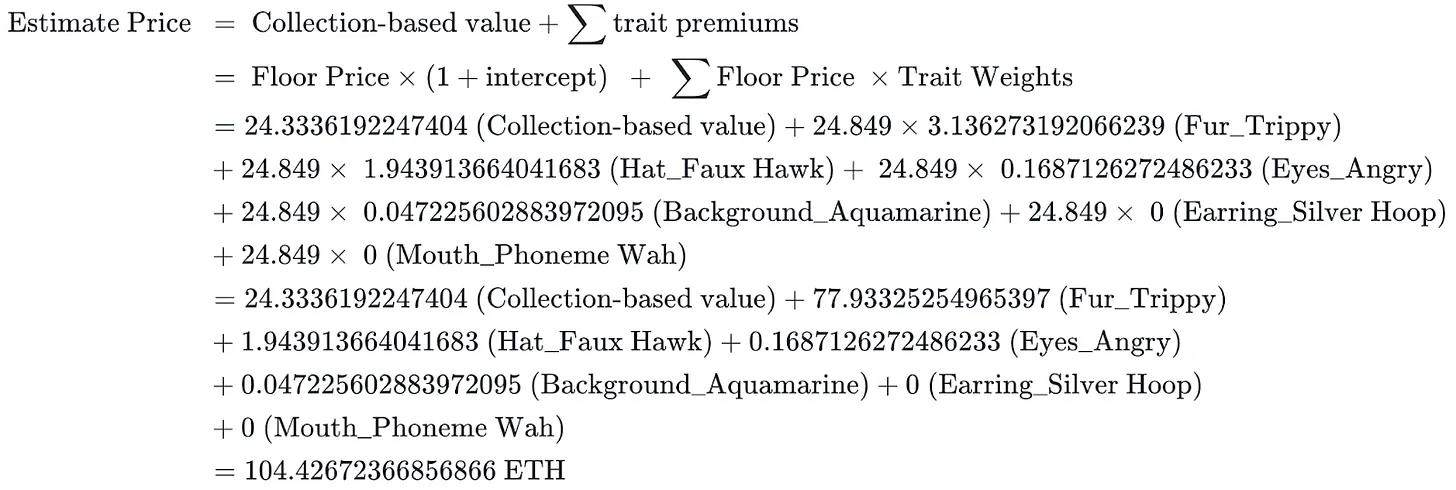
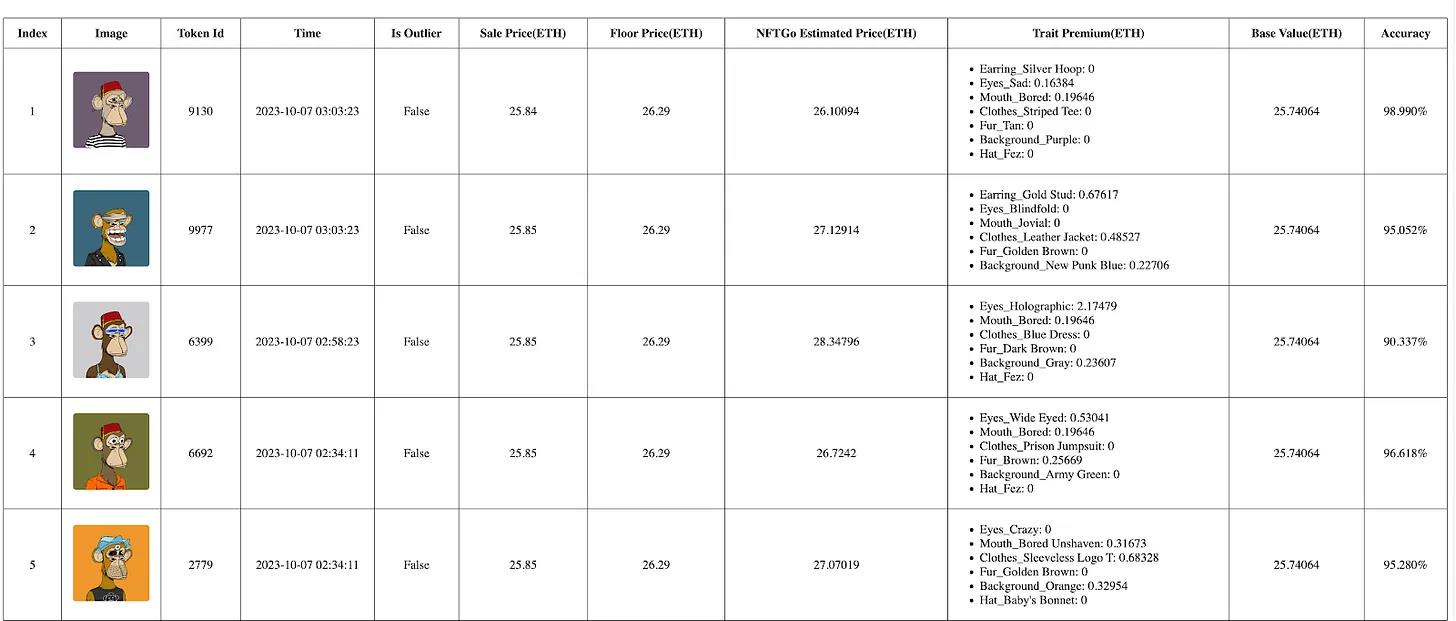
From the example above, we only need to compute the premiums rather than the weights, and present the final estimated result to users, as demonstrated below:
Advantages of the Premium Valuation Model
Given the theoretical derivation and practical demonstration of the above evaluation model, we see how it provides a practical and market-aligned pricing strategy framework. This enables a pragmatic, adaptive, and transparent valuation approach. We can summarize the key features and advantages of the premium valuation model as follows:
-
Linearity: The premium model maintains a linear relationship with the floor price, preserving consistent price ratios among NFTs and their features according to a defined set of weights.
-
Transparency: A standout feature is the model’s inherent transparency—parameters are not only easy to verify but also provide clear visibility into the valuation process.
-
Real-Time Responsiveness: The model is dynamic; NFT prices reflect changes in the floor price, ensuring valuations remain synchronized with current market dynamics.
-
Reliable Neutrality: Avoids third-party biases such as perceived rarity or emotional value. Parameters are derived through linear averaging, strictly based on transaction history, using only sale prices and floor prices as inputs during training.
-
Interpretability:
-
Clear parameters: Both weights and intercept carry real-world meaning, clarifying the importance of features and the baseline collection value within the NFT ecosystem.
-
Shared feature weights: Similar to how traits permeate across different NFTs, feature weights are consistently shared across various NFT valuations, ensuring a unified and coherent valuation methodology.
Thus, the premium model balances simplicity and complexity while ensuring transparency. By emphasizing clarity, adaptability, and fairness, it provides a solid foundation for accurate and efficient NFT valuation.
Conclusion
In the fast-evolving NFT market, pricing models play a crucial role, particularly where transparency is highly valued. While tree-based models like GBDT have been popular, their complexity presents challenges. To address this, there is a growing shift toward more transparent linear premium models.
Looking ahead, we anticipate integrating the premium model with NFT pricing oracles, lending protocols, and automated market makers (AMMs). For instance, within NFT pricing oracles like Chainlink, the premium model could refine pricing inputs, ensuring more stable and accurate price feeds. In NFT lending protocols such as BendDAO, advanced pricing models could facilitate secure NFT-backed loans, opening new pathways for NFTs in DeFi.
Furthermore, in NFT AMMs like Uniswap v4, advanced pricing models could enhance swapping algorithms, aligning incentives with NFT value and rarity. Beyond this, the premium model could guide fractional NFT ownership, shape NFT indices, and drive the evolution of synthetic NFTs, all while maintaining robust, transparent, and user-friendly pricing mechanisms across NFT platforms and financial applications.
Join TechFlow official community to stay tuned
Telegram:https://t.me/TechFlowDaily
X (Twitter):https://x.com/TechFlowPost
X (Twitter) EN:https://x.com/BlockFlow_News
 Stanford Blockchain Club






