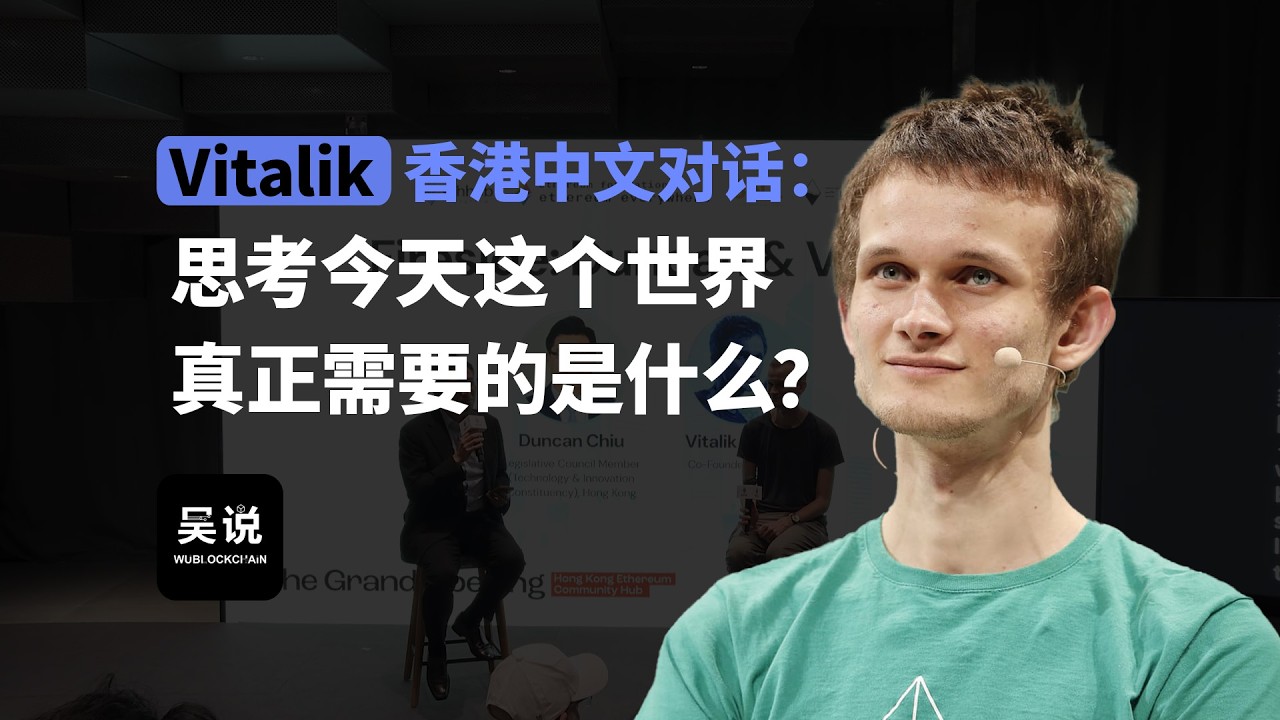
ETH HK Live Notes: What Did Vitalik Say About Ethereum's Challenges and Future?
TechFlow Selected TechFlow Selected
ETH HK Live Notes: What Did Vitalik Say About Ethereum's Challenges and Future?
It is essential for Ethereum to become "user-friendly" for ordinary users, but it must not lose the benefits brought by decentralization in this process.
 Navigating Web3 tides with focused insights
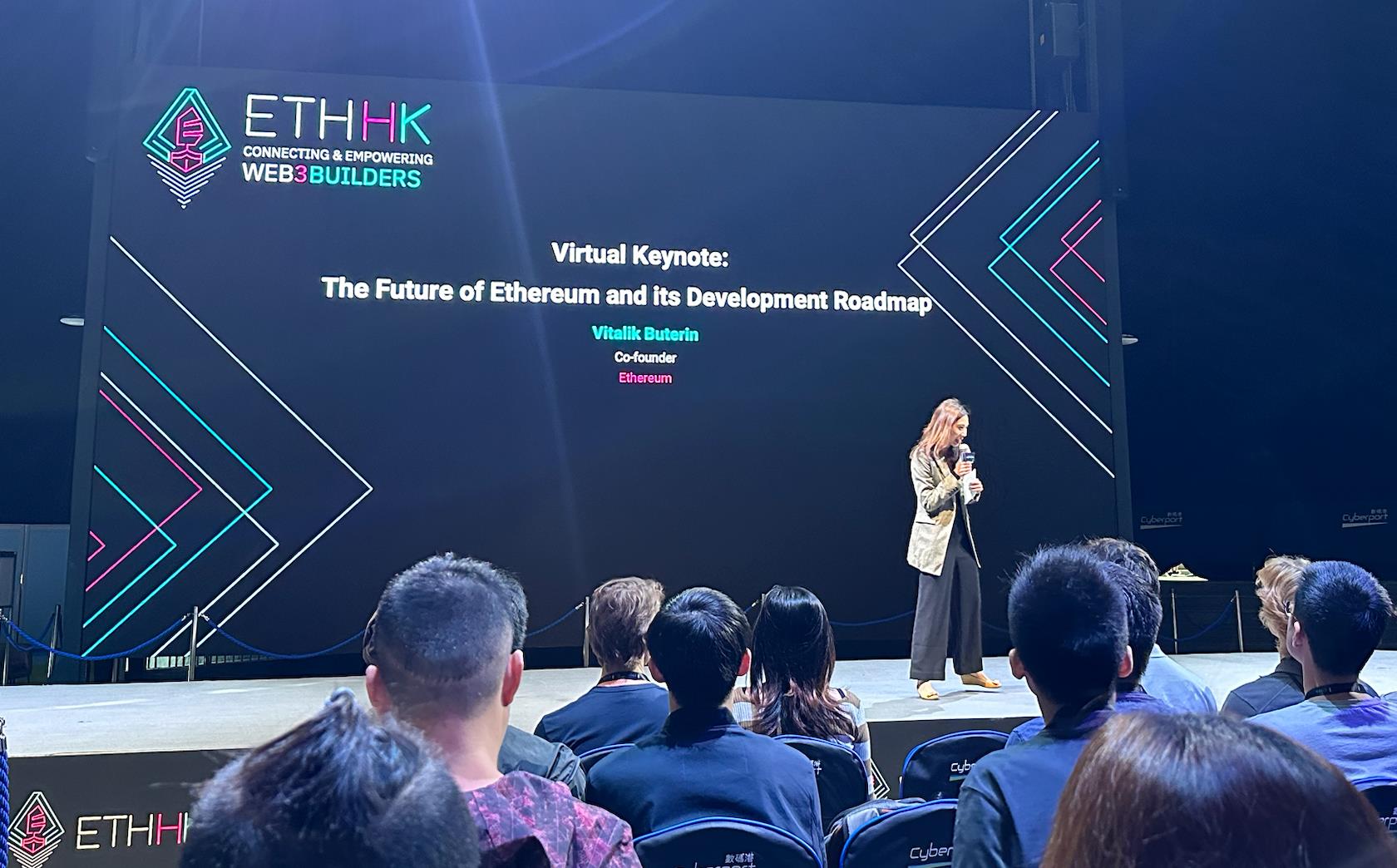
ETH HK took place in Hong Kong on October 23 as scheduled.
Moving through the main conference halls, hackathon workshops, and project showcase areas with the crowd, you hardly feel like you're in a bear market. Instead, developers from various countries and regions remain highly enthusiastic and actively engaged in building projects.
Among these events, the most anticipated was undoubtedly Vitalik’s online keynote speech.
In his 20-minute presentation titled "The Future of Ethereum and its Development Roadmap", Vitalik discussed new opportunities and challenges facing Ethereum, including account abstraction, social recovery, scalability, Layer 2 solutions, and shared his personal insights on the current state and future direction of the industry.
TechFlow reporters took live notes of Vitalik's speech on site and have compiled the following summary.
Achievements and Challenges After Ethereum’s Transition
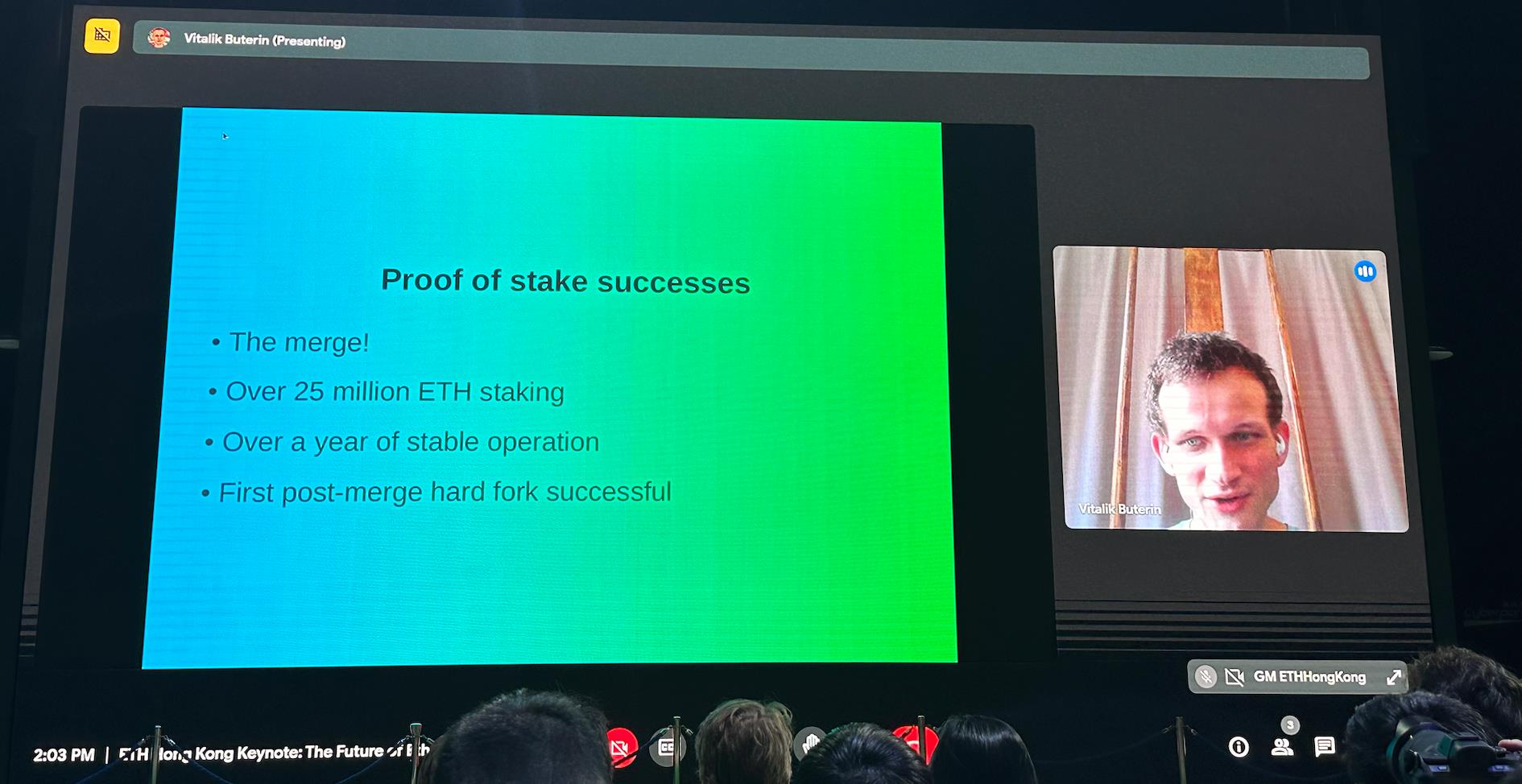
Vitalik first reviewed some key achievements since Ethereum’s Merge upgrade last year, which transitioned its consensus mechanism from PoW to PoS:
-
Successful execution of the first hard fork after the Merge.
-
Over 25 million ETH are now staked under the proof-of-stake system.
-
After switching consensus mechanisms, Ethereum has operated stably for over a year without major incidents.
However, Vitalik also directly pointed out the current challenges faced by the PoS consensus mechanism:
-
Centralization of staking: Since staking has become an essential part of Ethereum’s daily operations, staking service providers help users participate, but this inevitably leads to centralization in staking.
-
Transaction processing efficiency: For optimal performance, the ETH network may aim to process no more than approximately 10,000 transaction signatures per time slot.
TechFlow Note: A time slot is a predetermined time interval—typically a few seconds—used for proposing and validating blocks. Each slot has a pre-selected validator responsible for proposing a new block during that period. To ensure efficient network operation and prevent potential spam attacks or congestion, there may be limits set on the number of signatures or transactions processed per slot.
Account Abstraction and Social Recovery
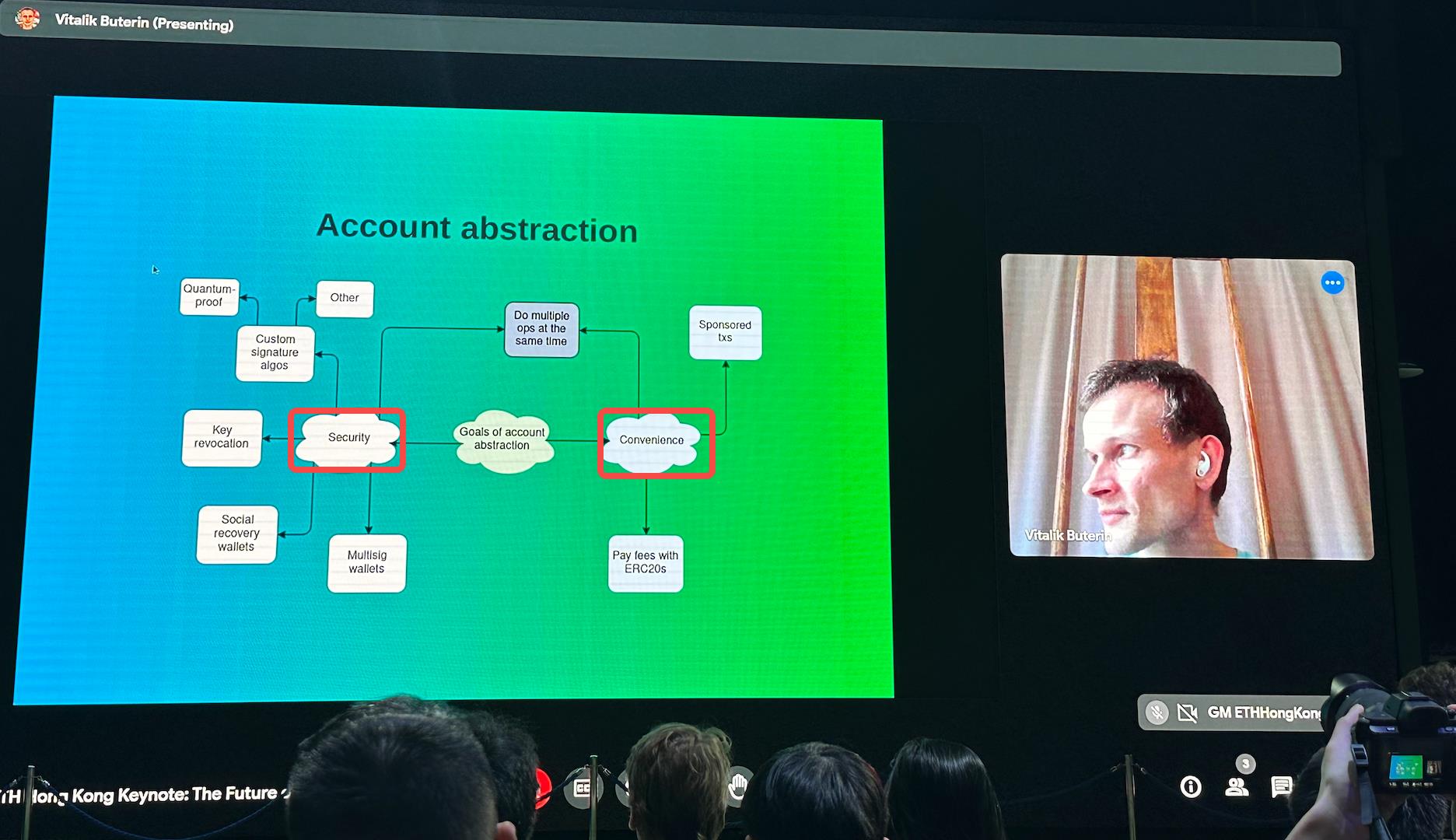
Vitalik emphasized the importance and necessity of account abstraction multiple times. He advocates for pushing forward account abstraction for two main reasons:
-
Usability considerations: Users can pay gas fees using any ERC-20 token and execute multiple operations (signing, authorization, verification, etc.) within a single transaction;
-
Security considerations: After speaking with several multisig wallet and MPC wallet teams, Vitalik believes seed phrase-based solutions are still not ideal—loss of seed phrases or private keys results in irreversible asset loss.
Meanwhile, Vitalik remains a strong proponent of social recovery. The primary reason is rooted in ordinary users’ habits and experience—they may not understand private keys, or they might lose their seed phrases.
In such cases, having "guardians" who can help recover your assets becomes crucial. Given that users might forget or lose access, friends or secondary devices could serve as guardians when needed. On a basis of trust, even institutions offering crypto services could take on this guardian role.
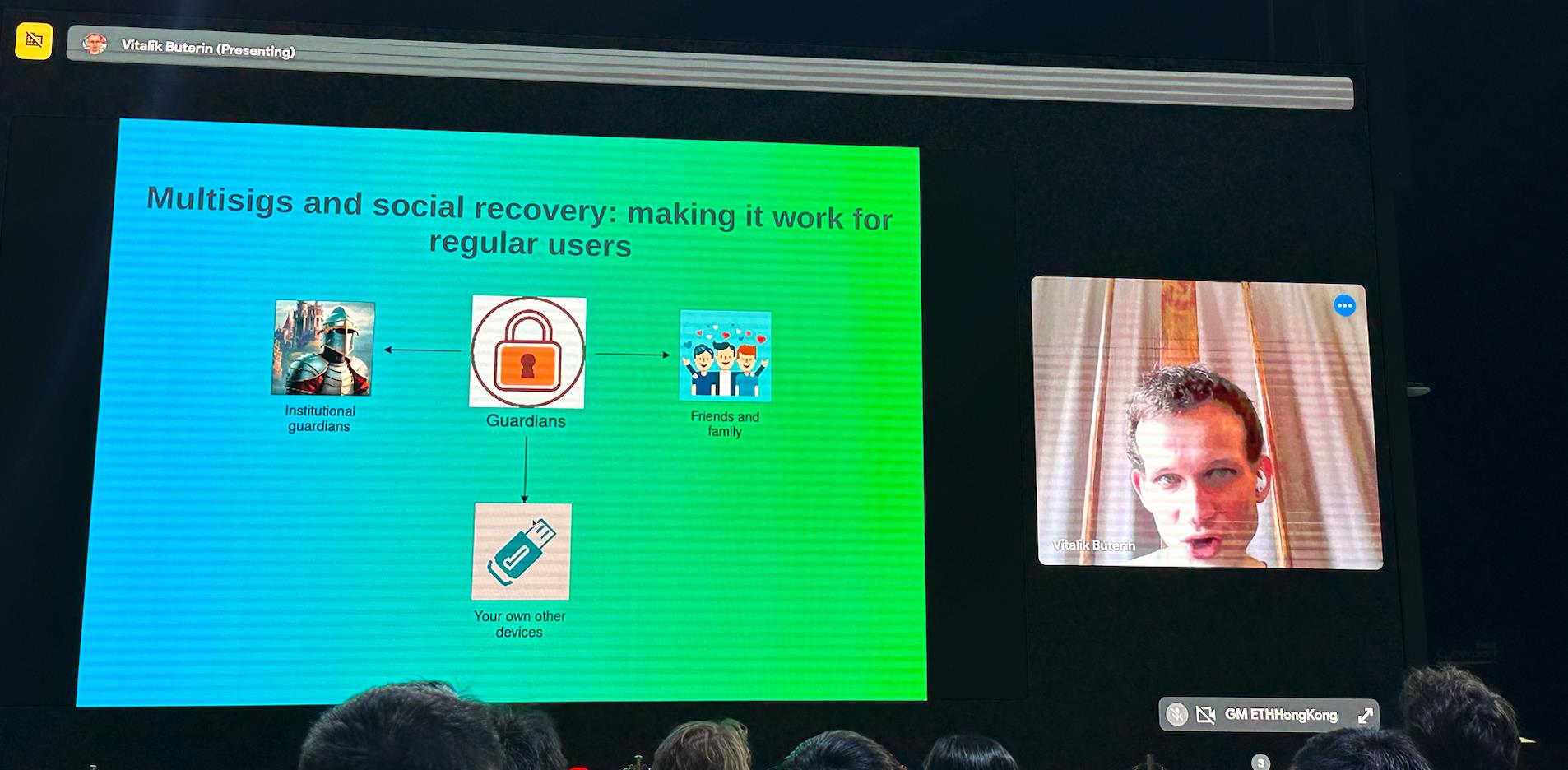
Additionally, account abstraction itself faces challenges. These are not isolated technical issues but involve the entire crypto ecosystem.
For existing wallets, applications, and development tools, adopting account abstraction to enhance user or developer experience necessarily involves technical adjustments and adaptations. While account abstraction is a technical concept, it will inevitably encounter practical implementation hurdles.
Moreover, with the emergence of more L2s, whether and how different L2s support account abstraction presents another challenge—users may find that one L2 supports it while another does not.
Privacy infrastructure is one newly introduced aspect closely tied to account abstraction. This means ensuring privacy in transactions and operations so that different authentication methods and account types can function without exposing user data.
While advancing broader adoption of account abstraction, addressing MEV (Maximal Extractable Value) will likely also be necessary to ensure fairness, security, and healthy development of the system.
Therefore, Vitalik overall believes that promoting and popularizing account abstraction requires collaborative efforts across the entire ecosystem. The ultimate goal is to make on-chain experiences match those of centralized services.
Scalability, L2, and Privacy
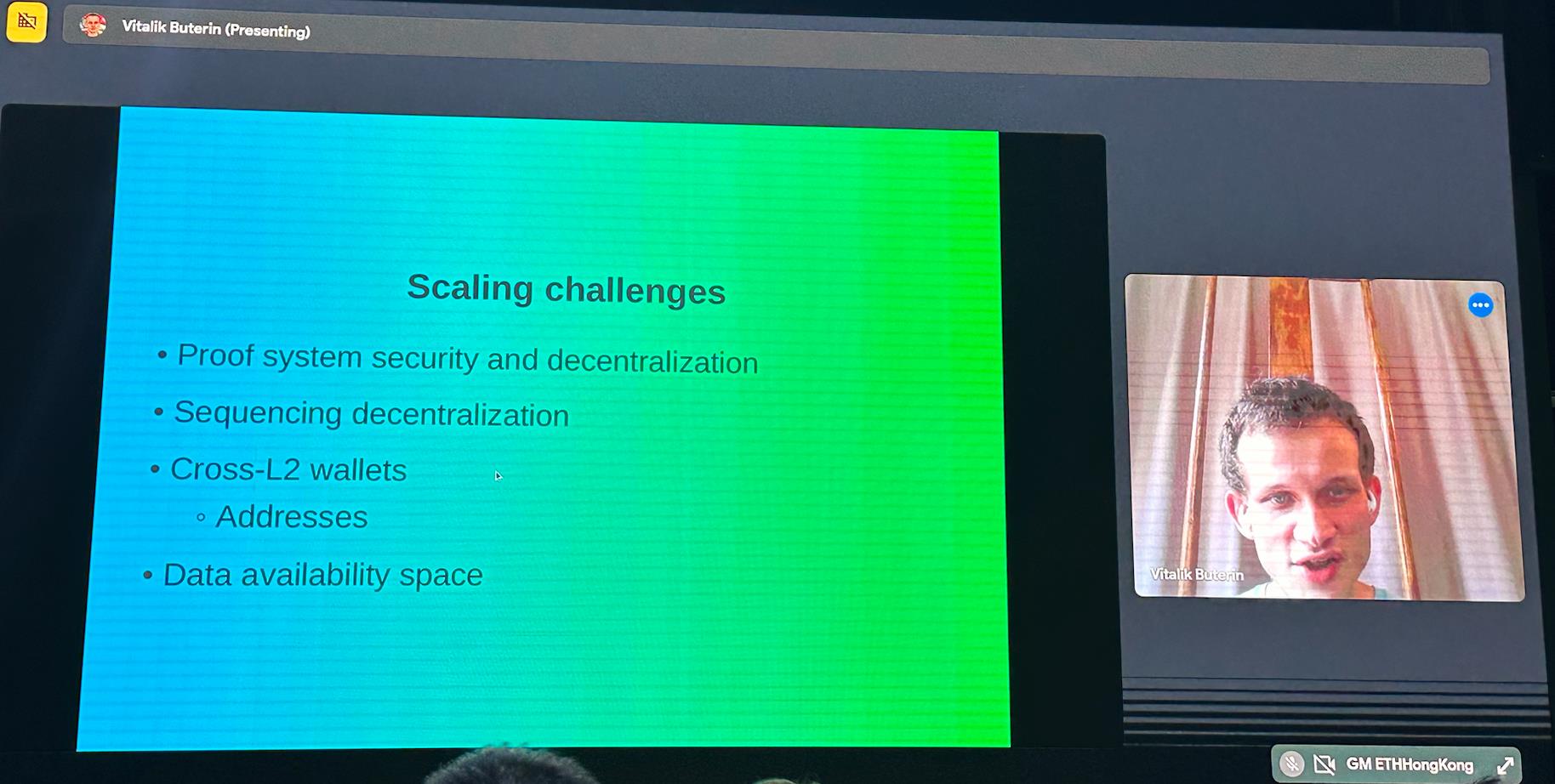
With the rise of L2s and ongoing technical advancements in Ethereum, scalability has been partially addressed. However, Vitalik believes the following challenges remain:
-
When L2s submit validity proofs of transactions back to L1, how can we ensure the security and decentralization of this proof system?
-
Most sequencing components in L2 architectures are currently centralized, posing potential risks.
-
Given the diverse technical choices and development directions among L2s, how do we build cross-L2 wallets and addresses to provide better user experiences?
-
Transaction-related data requires storage space—how should data availability be handled?
Due to time constraints, Vitalik did not offer detailed solutions to these issues but instead highlighted all the current challenges in scaling.
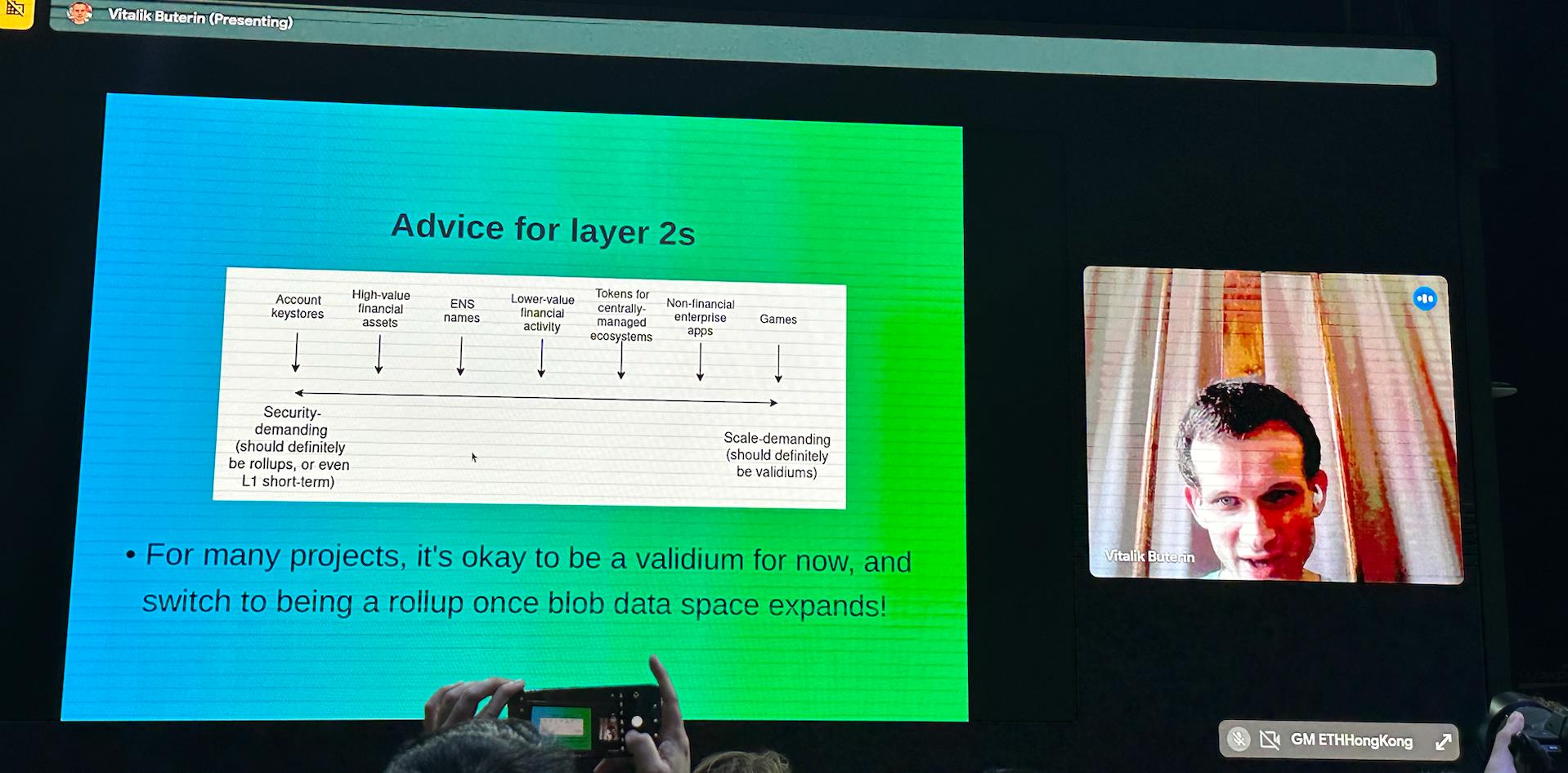
Interestingly, Vitalik candidly admitted that there are currently too many L2s in the market, and not every scalability solution needs to be a rollup.
He offered several personal suggestions:
-
Projects should clearly define their requirements for security and scalability—determine the required level—and then decide whether to adopt a Rollup.
For example, scenarios involving account key storage or high-value financial assets demand extremely high security, whereas games or non-financial applications may prioritize scalability.
-
Clearly distinguish between Validium and Rollup, and choose accordingly.
Validium is a Layer 2 scaling solution that stores data off-chain but performs validation on-chain. This allows it to process large volumes of transactions but at the cost of some decentralization and security—particularly suitable for gaming use cases.
Unlike Validium, Rollup (especially zk-Rollup) keeps data on-chain, which might be less favorable in terms of privacy or efficiency. But if reliability and higher security are priorities, zk-Rollup would be the preferred choice.
According to the chart Vitalik presented, for many projects, choosing Validium today may be a reasonable option, as it offers a way to ensure transaction validity while achieving off-chain data availability.
However, as blob-carrying space (used to compress large amounts of data into smaller “blobs” for more efficient storage on Ethereum) expands, projects can gradually shift toward Rollups, which offer greater security and reliability by maintaining on-chain data availability.
Finally, Vitalik mentioned three types of privacy issues currently facing the Ethereum ecosystem:
-
Coin transfers: Privacy concerns during cryptocurrency transfers. Although many blockchain transactions are public and transparent, there is ongoing demand and technological effort to make them more private to protect users' financial data.
-
Guardians: As previously discussed in social recovery, guardians are authorized by users to make decisions or perform actions. Their privacy relates to identity, controlled assets, or executed operations.
-
Identity/reputation and similar apps: On blockchains, identity and reputation systems help verify authenticity and credibility of users or entities. However, these systems may raise privacy concerns due to the collection and display of sensitive personal information.
Conclusion
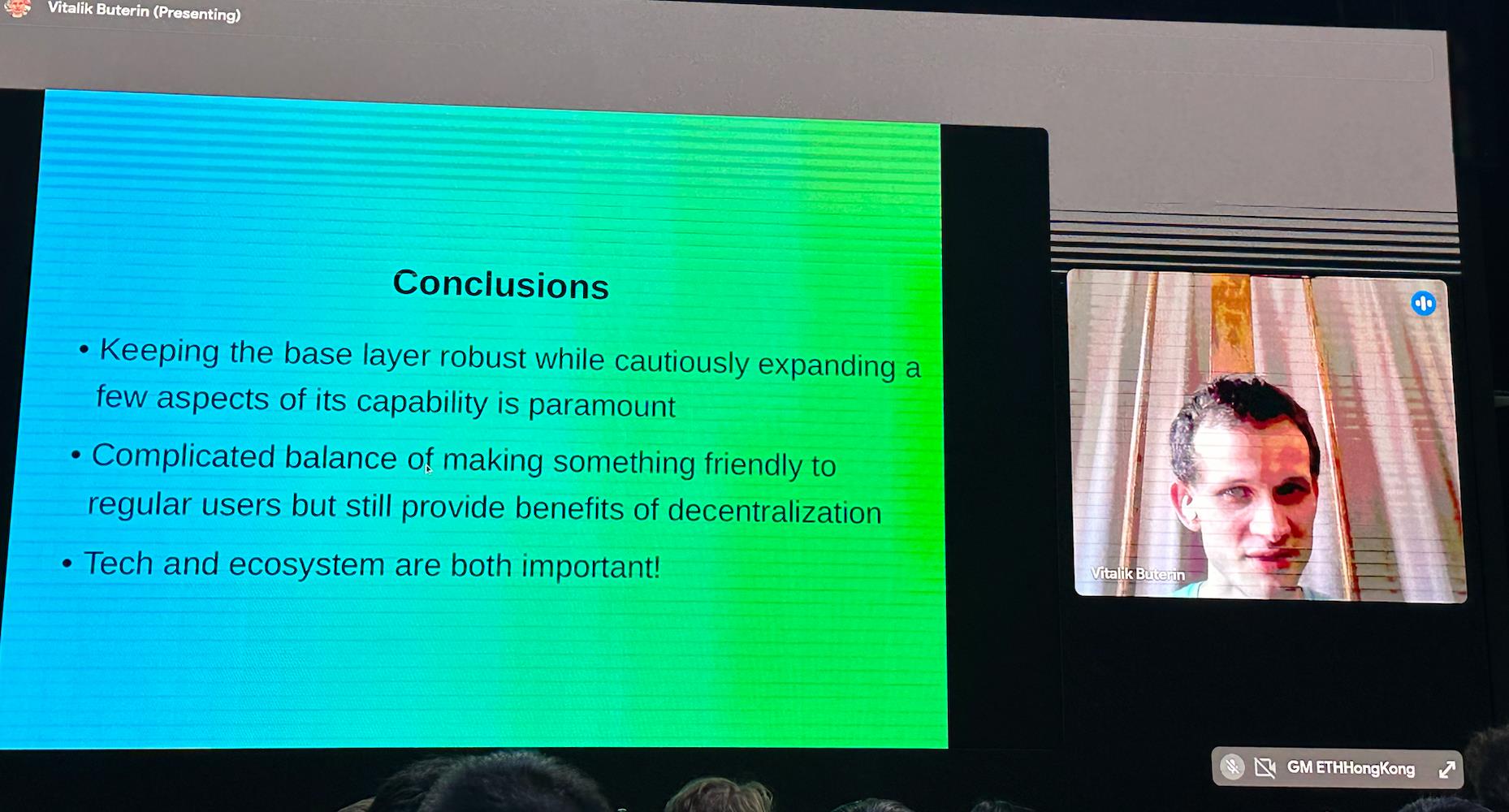
At the end of his talk, Vitalik summarized his overarching thoughts on Ethereum’s future development:
-
Maintain robustness and proceed cautiously: Ensuring the resilience of Ethereum’s base layer is paramount. Only upon this foundation can we carefully expand capabilities in areas like scalability, user experience, and privacy.
-
Balancing user experience and decentralization: It is essential for Ethereum to become user-friendly for ordinary users, but this must not come at the expense of losing the benefits brought by decentralization.
-
Technology and ecosystem are equally important: Technological progress sets the direction, but real-world adoption and promotion require collective effort across the entire ecosystem.
Join TechFlow official community to stay tuned
Telegram:https://t.me/TechFlowDaily
X (Twitter):https://x.com/TechFlowPost
X (Twitter) EN:https://x.com/BlockFlow_News
 深潮TechFlow