








Ethereum's Development and Upgrade Path from a GameFi Perspective
TechFlow Selected TechFlow Selected
Ethereum's Development and Upgrade Path from a GameFi Perspective
As a pioneer of blockchain gaming, Ethereum has consistently led the development of the GameFi sector.
 Navigating Web3 tides with focused insights
Introduction
Recently, Guatian has frequently received inquiries from project teams asking which public chain they should deploy on, the performance differences among various chains, their ecosystem layouts, platform traffic, and how these factors will impact projects in both the short and long term. This year especially has seen several high-profile public chain projects launch tokens, including Arbitrum, Sui, and the long-anticipated zkSync, fueling strong demand for foundational knowledge and analysis of public chains. As such, we've established a dedicated public chain research team to conduct a comprehensive review of the most active and widely followed blockchains in today’s market.
We will analyze these blockchains from the perspective of GameFi projects and users, evaluating their performance, user-friendliness, and support levels for GameFi initiatives.
Preface
In the wave of the digital era, Ethereum shines as a brilliant star atop the blockchain world. Since its inception, Ethereum has been at the forefront of blockchain and smart contract technology, continuously creating new chapters in history. As the pioneer of blockchain gaming, Ethereum has led the development of the GameFi sector. Guatian will guide you through Ethereum's evolution and upgrade roadmap, exploring how this ecosystem transformed from a startup project into the world’s most important public chain network.
Leading the advancement of the GameFi sector, Guatian will take you through Ethereum’s developmental journey and upgrades, uncovering how this ecosystem evolved from an initial startup into the world’s most significant public chain ecosystem.
I. The Origins and Development History of Ethereum
From day one, Ethereum's birth has been a story filled with excitement, challenges, innovation, and perseverance.
In late 2013, Vitalik Buterin released the Ethereum whitepaper, building upon certain Bitcoin design principles while simultaneously opening a new chapter in blockchain development. Then in 2014, Ethereum launched its ICO, raising approximately $18 million worth of Bitcoin within 42 days—an event that shocked the entire blockchain community.
On July 30, 2015, Ethereum successfully launched its first version, Frontier, and by year-end introduced ERC20—a standard that would profoundly influence the industry.
However, 2016 soon became Ethereum’s most turbulent year. In March 2016, Ethereum rolled out the Homestead upgrade—a major network enhancement aimed at improving stability and security, marking Ethereum’s transition into a more mature phase. The Homestead upgrade improved Ethereum’s virtual machine, smart contract development tools, and network protocols, attracting more developers and enterprises. But this prosperity was short-lived. Between May and June 2016, the Ethereum community faced a major crisis known as The DAO incident. The DAO, a decentralized autonomous organization, had vulnerabilities in its smart contract that allowed attackers to steal large amounts of Ether. This triggered a split within the community—some advocated a hard fork to recover the stolen funds, while others insisted on preserving blockchain immutability. Ultimately, a hard fork occurred, splitting Ethereum into two separate blockchains: Ethereum (ETH) and Ethereum Classic (ETC). Ethereum Classic upheld the principle of non-interference with code, maintaining the original genesis block unchanged.
If 2016 marked Ethereum’s evolution from a startup into a more mature and complex platform, then 2017 was its true moment of prosperity. Early in 2017, the Ethereum Enterprise Alliance (EEA) was formed to promote Ethereum’s adoption in the enterprise sector. It attracted major companies like Microsoft, IBM, and Intel to jointly research and develop Ethereum technology.

In October 2017, Ethereum completed the first phase of the Metropolis upgrade, called "Metropolis Byzantium." This introduced several improvements, including enhanced privacy protection, increased smart contract security, and reduced transaction costs. Metropolis Byzantium further strengthened Ethereum’s functionality and laid the groundwork for future development.
Alongside mainnet upgrades, the Initial Coin Offering (ICO) boom swept across the blockchain world. In 2017, Ethereum’s smart contract platform became the go-to choice for many new projects, with numerous cryptocurrencies and blockchain ventures raising capital via ICOs. This surge caused Ethereum’s price to skyrocket—from just a few dollars at the start of the year to hundreds by year-end—drawing global attention and propelling Ethereum to become the second-largest cryptocurrency by market cap. However, the flip side was severe network congestion and high gas fees due to the explosion in transactions and smart contracts. These issues prompted the Ethereum community to focus on scalability and performance enhancements, setting the stage for continued upgrades.
By 2018, Ethereum faced serious challenges. At the beginning of the year, Ethereum and other cryptocurrencies experienced a massive price crash, causing ETH’s value to plummet sharply. This volatility raised concerns among investors and highlighted the instability of the crypto market. Yet, even during this "crypto winter," Ethereum’s development did not stall. Significant progress was made toward Ethereum 2.0, establishing a clear roadmap to transition from Proof-of-Work (PoW) to Proof-of-Stake (PoS) to improve scalability and energy efficiency. Meanwhile, increasing transaction volumes continued to strain the network with congestion and high fees, intensifying discussions around performance and scalability.
In 2018, regulators worldwide began imposing stricter oversight on cryptocurrencies and ICOs. Some ICO projects were investigated or penalized, prompting the industry to pay closer attention to legal compliance. Despite market fluctuations, 2018 witnessed the rise of the decentralized finance (DeFi) ecosystem. DeFi projects rapidly emerged on Ethereum, including decentralized exchanges, lending platforms, and stablecoins, bringing new opportunities and innovations to the ecosystem.

2019 was Ethereum’s year of innovation. The Ethereum 2.0 project achieved key milestones, including the launch of the Beacon Chain, signaling Ethereum’s gradual shift toward a more scalable and energy-efficient network. 2019 also saw an explosion in the DeFi ecosystem, with a surge of DeFi applications on Ethereum—lending platforms, DEXs, stablecoins—drawing billions of dollars in capital and driving financial innovation through decentralization.
With DeFi’s growth, regulators started scrutinizing Ethereum and other blockchain projects for compliance. Some projects were required to adjust operations to meet regulations, sparking debate over balancing decentralization with regulatory adherence. Stablecoins on Ethereum, such as USDT, DAI, and USDC, became vital assets in the crypto world, providing stability and liquidity. 2019 also marked the emergence of blockchain games, with several Ethereum-based games gaining traction. These games often used NFTs (non-fungible tokens) to grant players true ownership and interoperability.

From its inception to maturity and peak, Ethereum has undergone constant transformation and overcome numerous challenges, fully demonstrating its immense potential as a smart contract platform. From early Homestead upgrades and hard forks, through the frenzy of ICOs and tightening regulations, to the initial rise of DeFi and blockchain gaming, the Ethereum community has persistently driven technological progress, opening endless possibilities for the future of blockchain. Next, we’ll dive deeper into the history of blockchain gaming on Ethereum.
II. The Rise of Blockchain Games on Ethereum
To trace the history of blockchain gaming, we must begin with the Ethereum ecosystem. From 2017 to today, Ethereum has hosted a diverse array of breakout blockchain games. We’ve selected several representative projects to explore their histories and the challenges they encountered.
When discussing the origins of blockchain games, most point to CryptoKitties in 2017. While not technically the first blockchain game, it was certainly the first viral phenomenon on Ethereum. A collectible and breeding game featuring digital cats, CryptoKitties was the first application of ERC-721, becoming one of the earliest NFT projects—each digital cat a unique NFT. The adoption, breeding, and trading of these cats ignited FOMO across the crypto community, with some kitties selling for hundreds of thousands of dollars, astonishing average users. CryptoKitties’ success sparked widespread interest in NFTs among players and developers alike. However, its popularity also exposed Ethereum’s scalability limitations, as transaction congestion and high fees became commonplace.

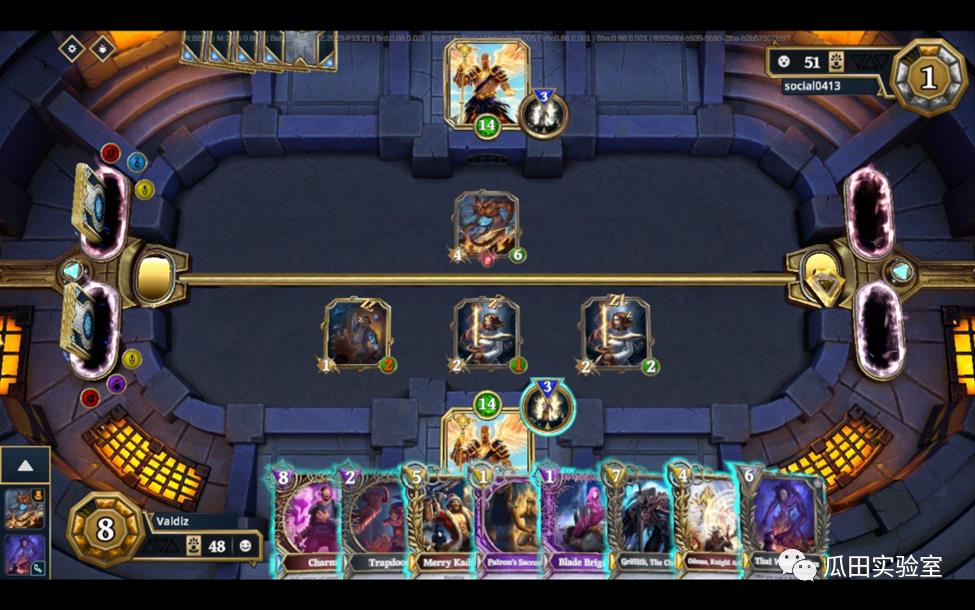
In 2018, Gods Unchained entered the spotlight. A Hearthstone-style card game built on Ethereum, players could collect, trade, and battle with cards of varying attributes. By using NFTs on Ethereum, the game ensured card security, ushering in a golden age for blockchain card games and launching the era where anything could be “Fi”-enabled. However, due to Ethereum’s network constraints, the game still suffered from transaction delays and high fees during peak usage.
The project that truly brought blockchain gaming to its peak was Axie Infinity. A collection and combat game based on Ethereum, players earned tokens by collecting, breeding, and battling virtual creatures called Axies. Launched in 2018 during a deep bear market, it remained relatively obscure until the bull run of 2021 propelled it to fame. Its engaging gameplay and player enthusiasm fueled a surge in “Play-to-Earn” (P2E) blockchain games, giving rise to numerous gaming guilds and farming studios. At its peak, Axie Infinity generated over $300 million in monthly revenue—surpassing titles like Honor of Kings to become the world’s highest-earning game. The rise of P2E marked the true arrival of the GameFi era, leveraging DeFi + NFT models to advance blockchain-based game asset development and trading. Beyond Axie Infinity, similar models emerged in games like Alien Worlds, Cryptoblades, Sorare, and Zed Run. However, Ethereum’s network congestion and high transaction fees created high entry barriers and transaction costs, limiting participation for many players.

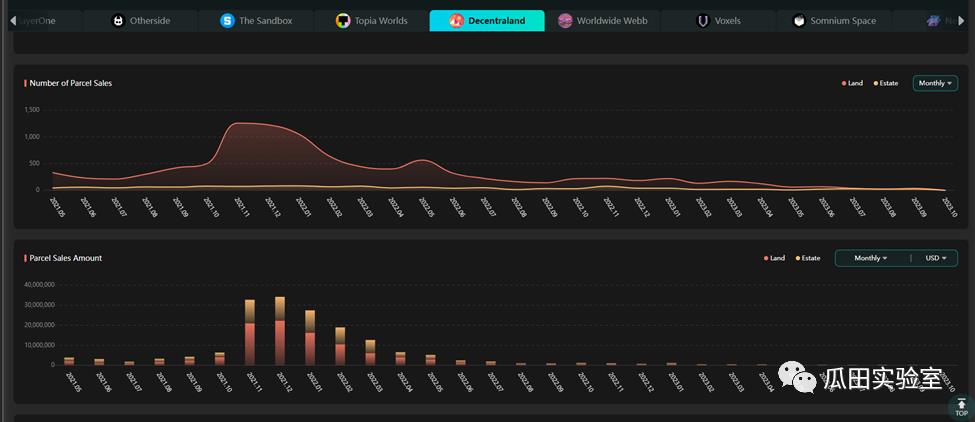
Another major branch of blockchain gaming is the so-called “metaverse” faction, represented by Sandbox and Decentraland—games centered around metaverse elements and land sales as their core economic model. Take Decentraland, for example: a virtual marketplace built on Ethereum where users can buy, collect, and trade virtual land and assets. Decentraland uses NFTs to ensure genuine ownership of virtual assets. However, poor optimization, subpar user experience, and Ethereum’s performance bottlenecks hindered further growth. As shown in the chart below, Decentraland’s land transaction volume and value peaked at around $34 million in late 2021 but have since declined steadily, now amounting to less than 1% of its peak.
01 Innovations of Ethereum-Based Blockchain Games:
-
Ownership and Scarcity:
Blockchain technology grants true ownership and scarcity to in-game virtual assets. Players genuinely own and control their digital items, which are limited in supply, thereby enhancing their value and tradability.
-
Economic Ecosystem:
Blockchain games on Ethereum have created real economic ecosystems. Players can earn virtual assets through effort and investment, then trade, sell, or rent them to others. This economic model offers players opportunities to generate real-world value and provides stronger incentives for game development.
02 Challenges Facing Ethereum-Based Blockchain Games:
Ethereum’s biggest issue remains scalability. Architectural limitations restrict expansion capabilities, resulting in slow transaction speeds. Limited throughput leads to high gas fees, especially during concentrated NFT and token launches, often triggering "gas wars" that paralyze the network and spike transaction costs—greatly degrading user experience.

III. Ethereum 2.0 Upgrade
In April 2020, Ethereum launched the ETH2.0 testnet, and after six months of testing, officially deployed its 2.0 mainnet in December—marking the dawn of the Ethereum 2.0 era. Ethereum 2.0 represents a major overhaul of the 1.0 mainnet, aiming to enhance performance, scalability, security, and sustainability, accelerating Ethereum’s usability and application adoption.
Why Upgrade to 2.0?
01 Ethereum’s High Fees and Congestion Issues
As previously mentioned, high gas fees, slow confirmation times, and low efficiency in gaming-related transactions have long been criticized by users. Although teams have developed external solutions (e.g., Flashbots) to partially optimize transaction efficiency and reduce costs, these efforts remain insufficient against rising transaction demands. To fundamentally resolve these issues, changes must occur within Ethereum’s internal architecture—only a structural upgrade can deliver transformative performance gains.
02 The Rise of Competing Public Chains
While Ethereum still dominates the public chain market, newer entrants have continuously innovated in performance and architecture, gradually eroding Ethereum’s market share. Below is a comparison of key public chains prior to 2020 (before Ethereum 2.0), where Ethereum lagged across metrics such as TPS, transaction fees, and block production efficiency. If left unaddressed, Ethereum risked being overtaken in both market share and market cap in the near future.
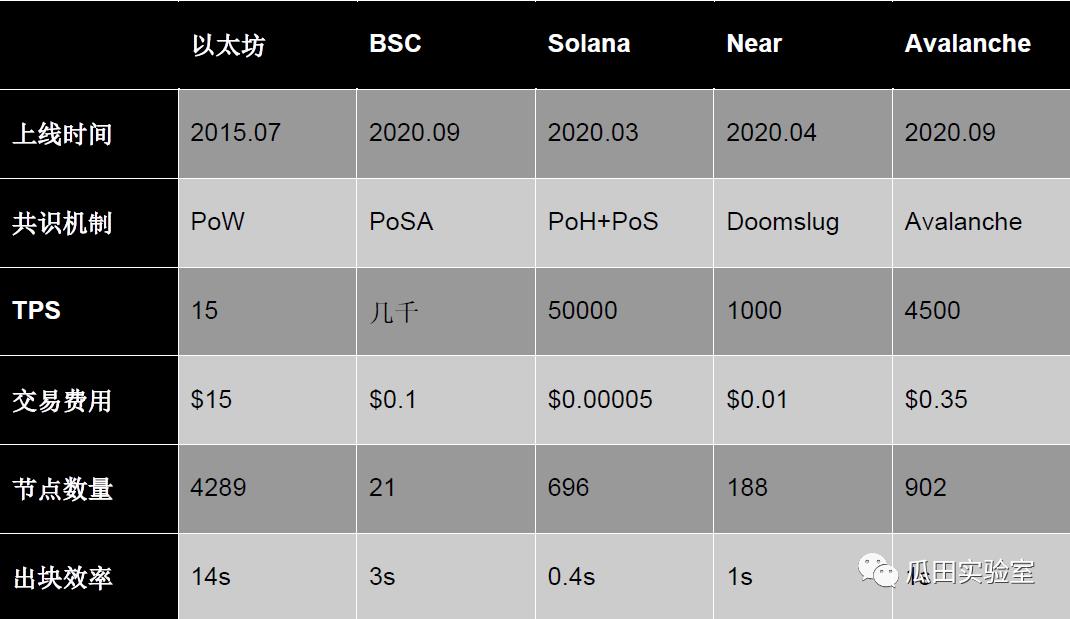
Public chains like BSC and Solana not only support Ethereum’s EVM but also benefit from robust ecosystems and backing from giants like Binance and FTX, giving them natural advantages in user base and capital, enabling rapid growth and siphoning traffic from Ethereum. Ethereum’s own congestion and high fees provided fertile ground for these competitors, pressuring Ethereum to upgrade quickly to maintain its leadership position.
03 Evolving User Demands for Security and Privacy
Since its founding, Ethereum has seen transaction volume grow thousandfold—from mere thousands daily to consistently millions. Rapid growth brought massive capital inflows into crypto, along with more sophisticated applications and larger user bases. Consequently, user expectations for blockchain security and privacy protection have risen significantly.
In financial applications, users demand greater address privacy. Yet, excessive transparency in blockchain poses a critical constraint on development. Balancing strong security with effective privacy protection remains one of Ethereum’s key future challenges.
Main Upgrades
You may have heard of blockchain’s trilemma: decentralization, security, and scalability. Ethereum 2.0 addresses all three aspects, forming the core pillars of this upgrade.

01 Shard Chains – Addressing Scalability
Shard chains are an architectural mechanism designed to dramatically boost Ethereum’s transaction efficiency and scalability. In Ethereum’s latest sharding proposal (Sharding 2.0), network resources are divided into distinct shards. Each shard functions like a new chain, connected to the Beacon Chain (hub chain). Nodes no longer need to process every transaction—only those within their assigned shard—and store minimal data, greatly improving efficiency and alleviating Ethereum’s scalability issues.

The Sharding 2.0 design is tailored for Rollup solutions (which we’ll detail in later articles), with Rollups serving as an extension of sharding. With Rollups, execution occurs off-chain, while Ethereum stores only final transaction data. Combining data sharding with Rollups theoretically enables Ethereum to handle over 100,000 transactions per second. Rollups are currently considered the most promising scaling solution.
02 Proof-of-Stake (PoS) – Enhancing Decentralization
Another key component of Ethereum 2.0 is the introduction of the Proof-of-Stake (PoS) consensus mechanism. Ethereum originally operated on Proof-of-Work (PoW), requiring massive computational power and energy consumption. Transitioning to PoS reduces Ethereum’s energy use by over 99%.
Under Ethereum 1.0’s PoW model, miners earned ETH by solving cryptographic puzzles. In Ethereum 2.0’s PoS system, users stake ETH to become validators and receive staking rewards. Under PoW, becoming a validator required expensive mining hardware and high computational power. PoS drastically lowers the barrier: any user who stakes 32 ETH can join the validator committee. The Beacon Chain’s random algorithm selects block proposers and validators. Proposers package transactions into new blocks, while other validators verify them, collectively completing block production. Lower entry requirements lead to more participants, making the network more distributed and decentralized.
03 Beacon Chain and Casper Mechanism – Strengthening Security
While sharding and PoS solve scalability and decentralization, they introduce new security risks: 51% attacks due to sharding, cross-shard double-spending, and PoS-specific threats like nothing-at-stake attacks, long-range attacks, and simple attacks. Ethereum mitigates these risks through the Beacon Chain and the Casper consensus protocol.
To prevent 51% attacks, the Beacon Chain introduces randomness in validator selection, reshuffling committees after each task to deter collusion and enhance security. It also enables cross-shard communication and records shard states to prevent double-spending.
Casper is Ethereum 2.0’s core consensus protocol, managing node behavior through rewards and penalties. Validators must stake ETH and register via the Beacon Chain. Failure to fulfill duties risks losing staked tokens or expulsion from the validator pool. This incentivizes honest behavior and adherence to consensus rules, effectively countering nothing-at-stake attacks.
Long-range attacks involve creating a longer chain from the genesis block to overwrite transaction history. Simple attacks occur when a forked chain produces blocks faster than the main chain. Post-upgrade Ethereum sets the first slot of each epoch as a checkpoint, achieving finality through voting—making blocks irreversible and eliminating such threats.
Ethereum 2.0 Roadmap
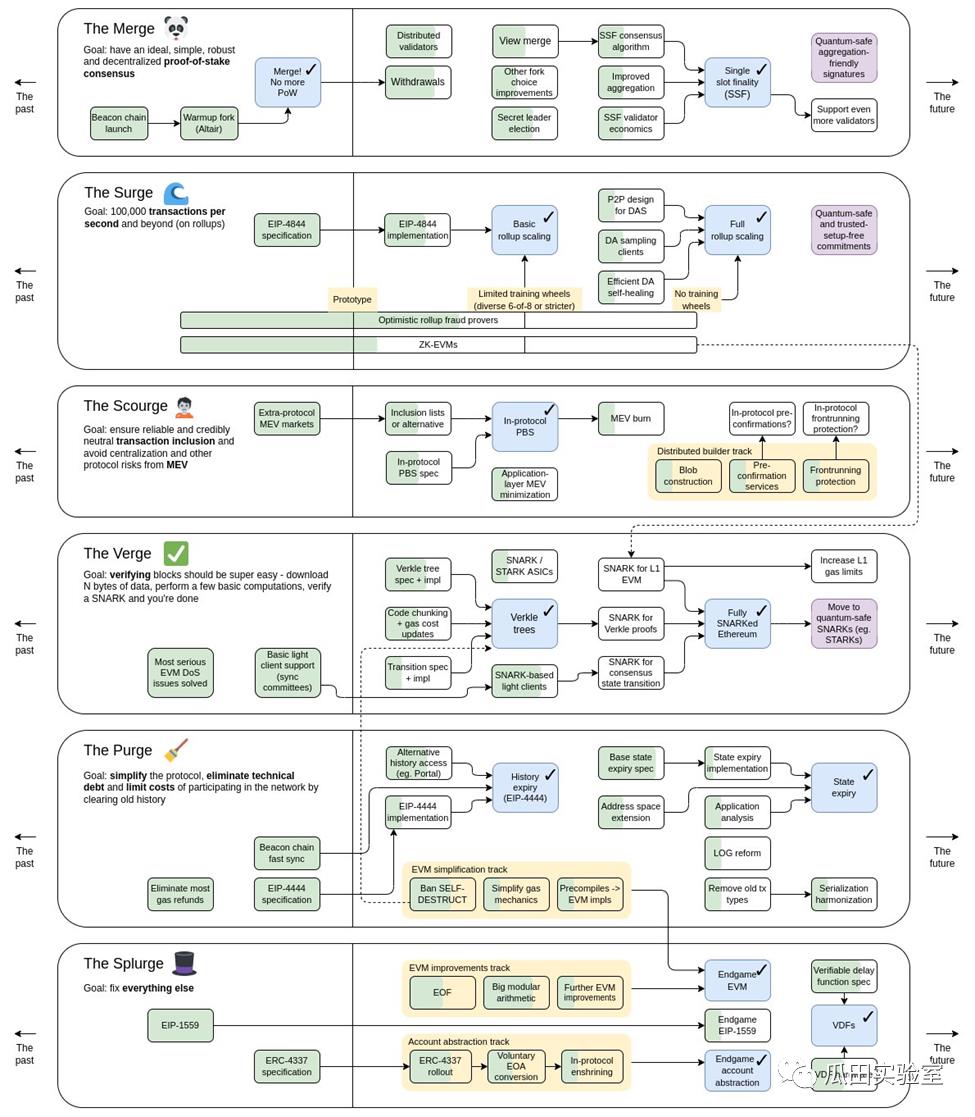
Ethereum co-founder Vitalik Buterin outlined six concise phases for Ethereum 2.0’s evolution: The Merge, The Surge, The Scourge, The Verge, The Purge, and The Splurge—each focusing on specific functional upgrades.
01 The Merge
The Merge marks Ethereum’s transition to a PoS system, representing a crucial step toward a highly decentralized, scalable, secure, and sustainable network. It unfolded through two key upgrades—Bellatrix and Paris (EIP-3675 and EIP-4399)—merging Ethereum’s original execution layer with the newly established PoS consensus layer (Beacon Chain), completed in October 2022.
One major change post-Merge is that full nodes must now run both execution and consensus clients. Previously, a single client handled all tasks related to transactions and blocks. After the Merge, the consensus client manages block propagation, attestations, and penalties, while the execution client continues handling transaction execution and state maintenance.
A key upgrade under The Merge is Single Slot Finality (SSF), aiming to finalize blocks within one slot instead of the current 64–95 slots (~15 minutes). Achieving SSF requires overcoming three challenges: precise consensus algorithms, optimized signature aggregation, and optimal economic mechanisms for validator participation. While solutions exist, implementation will take time. Interested readers can refer to Vitalik’s writings on these topics.
Secret Leader Election establishes a confidential mechanism for selecting proposers using randomness and shuffling, ensuring unpredictability, fairness, and uniqueness—reducing attack risks.
02 The Surge
The Surge is another critical upgrade, targeting Ethereum’s long-standing scalability challenge—the same bottleneck that has plagued blockchain since inception. The goal is to achieve up to 100,000 TPS, rivaling traditional electronic payment systems like Visa. This will be realized through Danksharding (“DS,” i.e., sharding).
Proto-Danksharding (EIP-4844) is the first step toward Danksharding and a key component of the Deneb-Cancun (Cancun) upgrade—a pivotal move toward implementing sharding and completing Ethereum’s scalability roadmap. It significantly reduces Layer 2 Rollup transaction and operational costs. By embedding each shard block directly into the Beacon Chain, shard blocks no longer contain executed transactions but only large data blobs. Actual transaction processing is delegated to Layer 2 rollup protocols.
Once Layer 2 raw transaction data is submitted to the Layer 1 mainnet, different verification approaches give rise to two types of rollups: Optimistic Rollups and ZK Rollups.

1) Optimistic Rollups
Optimistic Rollups rely on fraud proofs or challenge mechanisms, operating under the assumption that data is valid unless contested. If no one disputes the data within a set period (e.g., one week), it is deemed legitimate.
However, if a challenge arises alleging fraudulent activity, Optimistic Rollups must simulate the transaction within an L1 smart contract to verify legitimacy, penalize fraudsters, and reward challengers. Unlike standard Optimistic Rollups, Arbitrum uses a different approach—engaging challengers in multi-round interactions with the contract to narrow down problematic instructions before verifying them individually.
2) ZK Rollups
ZK Rollups leverage zero-knowledge proof technology, essentially outsourcing transaction computation to Layer 2 while allowing Layer 1 to verify correct execution—a hallmark of zero-knowledge proofs. Additionally, since transaction signatures are already verified during L2 execution, submission to L1 doesn’t require re-including signatures, saving data space. Immediate transaction validation and smaller data footprints make ZK Rollups a preferred direction for Layer 2’s future. However, designing a universal circuit system (zkEVM) compatible with all applications remains a major technical hurdle.
03 The Scourge
Scourge encompasses a series of upgrades aimed at reducing MEV (Maximal Extractable Value)-driven centralization while preserving fair and transparent transaction inclusion. MEV measures extra profits validators or miners can extract beyond block rewards and fees by strategically ordering, excluding, or including transactions. Ordinary validators running standard clients cannot capture MEV, while large players using optimized software gain unfair advantages—pushing the network toward centralization.
The solution is Proposer-Builder Separation (PBS), where the proposer remains responsible for publishing blocks, but delegates block construction to specialized builders. In a competitive market, builders bid close to the full MEV value they can extract, enabling decentralized validators to capture most MEV rewards. Thus, PBS effectively counters MEV-driven centralization.
Another benefit of PBS is higher censorship resistance. Blockchain values oppose centralized censorship. Under PBS, builders aim to include as many transactions as possible due to competitive pricing. If a builder excludes a censored transaction, its bid may fall below competitors’, losing the auction. To win while censoring, it must pay a premium—raising censorship costs.
04 The Verge
The Verge aims to enable ultra-lightweight block validation—requiring only minimal data download and basic computation. Achieving this requires upgrading Ethereum’s current Merkle Patricia Trie (MPT) to Verkle Trie.
Currently, Ethereum uses MPT for state management. Validating correctness requires full MPT proofs and layered hashing. Every full node maintains the complete state tree, enabling independent validation—but at the cost of inefficiency. Verkle Trie proofs do not require sibling nodes, support wider trees with shallow depth, and offer 5–10x higher verification efficiency.
05 The Purge
The Purge focuses on simplification—removing historical data burdens to create lighter protocols and nodes. In Ethereum 1.0, every node stored all historical blocks. Post-2.0, with finality and checkpoints introduced, Beacon Chain synchronization no longer starts from genesis, greatly speeding up data sync. EIP-4444 proposes clients stop storing data older than one year. Expired data will be archived, accessible via dedicated read/write rules.
06 The Splurge
The Splurge signifies brilliance—a culmination of miscellaneous upgrades, including account abstraction, multi-dimensional EIP-1559, and verifiable delay functions. Account abstraction will dramatically lower wallet usage barriers by unifying all accounts into one type: contract accounts. Wallets can evolve into smart contract wallets, creating personalized contracts to manage assets and on-chain interactions. These wallets can define advanced logic—spending limits, multi-sig, gas fee sponsorship—and come with customizable templates for easier setup.
Future Impact and Outlook
The Ethereum 2.0 upgrade brings positive impacts. First, it enhances transaction performance and scalability. Through sharding and improved consensus mechanisms, network throughput and confirmation speeds will increase significantly, boosting usability and competitiveness, attracting more developers and enterprises to the ecosystem. Second, Ethereum 2.0 strengthens security and stability. The Beacon Chain and Casper mechanism, combined with staking, reduce energy dependence while improving network security and resilience. Third, the upgrade unlocks new innovations. Adjusted reward structures, reduced node burdens, lower entry thresholds, and sharding will empower Ethereum to support more complex smart contracts and dApps. Coupled with Layer 2 integration, Ethereum will handle vastly more transaction data, better meeting market needs and offering developers and businesses greater opportunities to build valuable applications and services.
However, the Ethereum 2.0 rollout also faces risks and challenges. Major network changes may cause version fragmentation, leading to incompatibilities or failure to upgrade. The upgrade’s impact on existing applications introduces uncertainty, potentially causing compatibility issues. Lastly, the timeline remains fluid—technical hurdles and delays could affect progress.
Ethereum’s transition from 1.0 to 2.0 is a milestone in its evolution—but development never stops. With a clear roadmap, the team continues rolling out module upgrades to unlock Ethereum’s full potential and realize the vision of a truly decentralized network. In the near future, we anticipate a stronger, more efficient Ethereum ecosystem. The flourishing Layer 2 landscape will inject continuous momentum, driving more applications—including games—and data onto the blockchain. In upcoming articles, we’ll dive deep into Optimistic Rollups and ZK Rollups, analyzing leading Layer 2 public chain projects—stay tuned!
Join TechFlow official community to stay tuned
Telegram:https://t.me/TechFlowDaily
X (Twitter):https://x.com/TechFlowPost
X (Twitter) EN:https://x.com/BlockFlow_News
 瓜田实验室W Labs






