








What are the legal risks of the "Battle Royale" gameplay in the blockchain game Dragon Island?
TechFlow Selected TechFlow Selected
What are the legal risks of the "Battle Royale" gameplay in the blockchain game Dragon Island?
The process of gambling involves participants investing legal tender, engaging in certain activities/games, and ultimately receiving varying amounts of legal tender, creating a closed loop from money to money.
 Navigating Web3 tides with focused insights
Authors: Shao Shiwei, Xu Xiaohui
Introduction
With the development of technologies such as 5G, blockchain, and VR, the gaming industry is continuously exploring and advancing from Web2 to Web3. Dao of Dragon (Dragon Island), one of China's earliest metaverse game projects, is a dragon-themed metaverse dragon-raising game operating on the BSN blockchain. Since its launch, the platform has maintained high popularity and delivered solid returns to users, with many of its gameplay mechanics being emulated by other projects. However, are there any legal risks associated with this platform’s gameplay?
This article provides an analysis.
Platform Overview
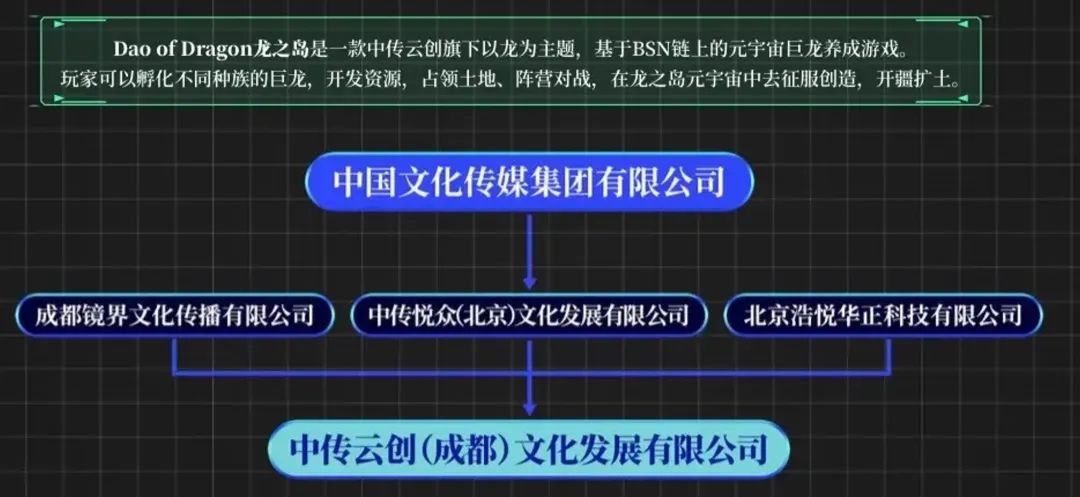
According to its official WeChat account, the creation of Dragon Island originated from Zhongchuan Yunchuang's full-scale effort to address pain points in digital collectibles—by adopting a "metaverse + digital collectibles + gaming" model, it aims to become a user-driven metaverse digital collectible platform where all users collectively shape its development and creative direction.
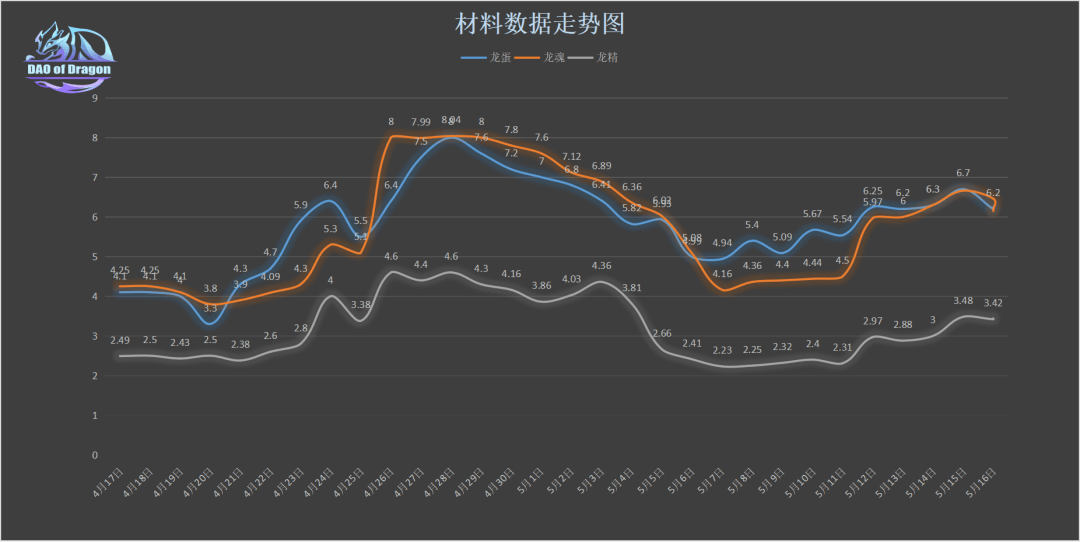
Within the Dragon Island ecosystem, there are three main islands: Chaos Island, Holy Realm Island, and Star Realm Island. While each island has slightly different functions and attributes, the core gameplay remains consistent: "Start with one dragon; dragons produce materials; trading dragons also allows trading of materials, leading to gradual gains." Based on this principle, we will focus on the typical example of the Star Realm Island system. The Star Realm Island features three primary materials: [Dragon Egg], [Dragon Essence], and [Dragon Soul]. These materials are produced by three types of dragons—[Giant Dragon], [Holy Dragon], and [Demon Dragon]—and can be purchased through the app's [Market].
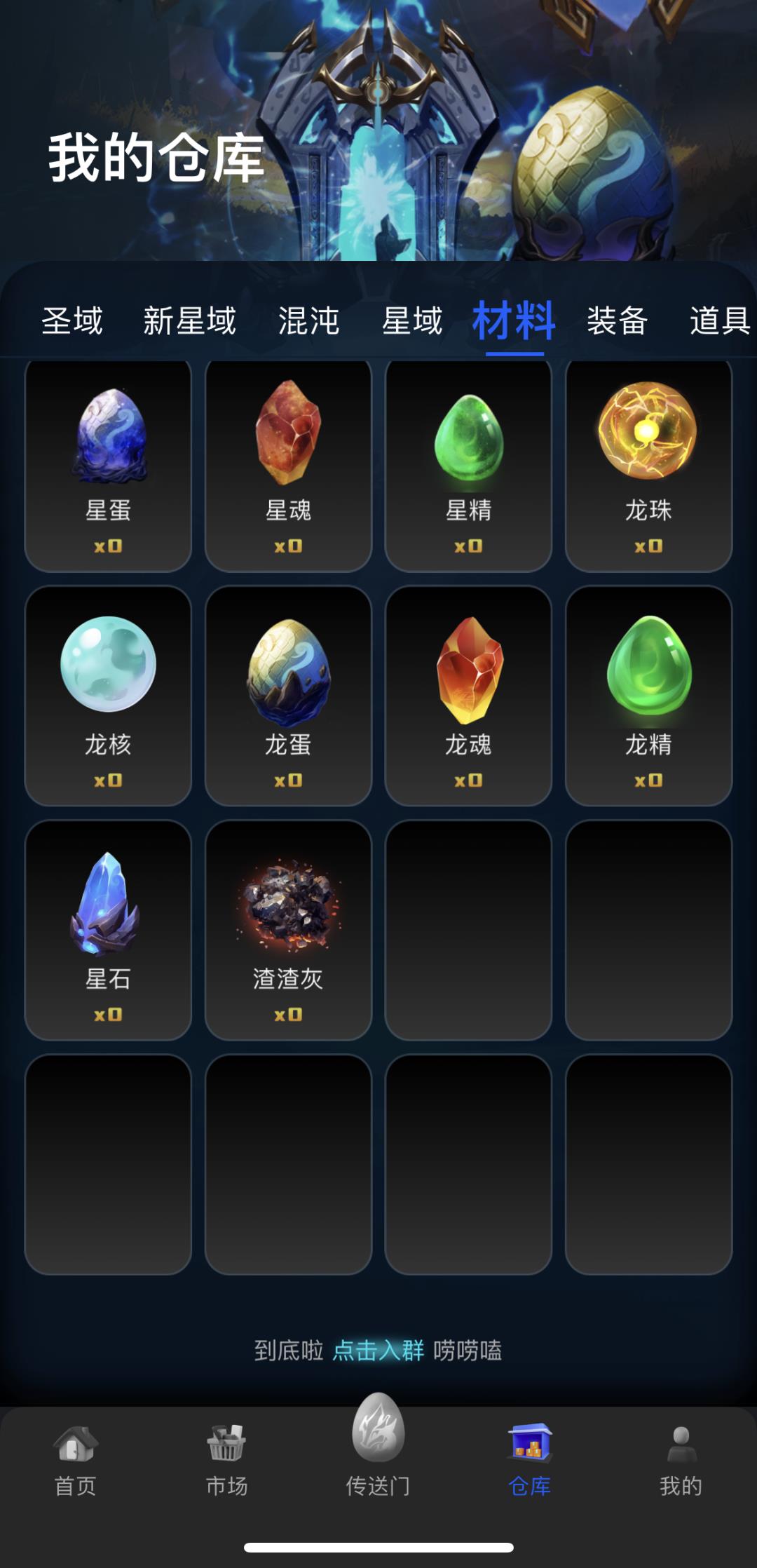
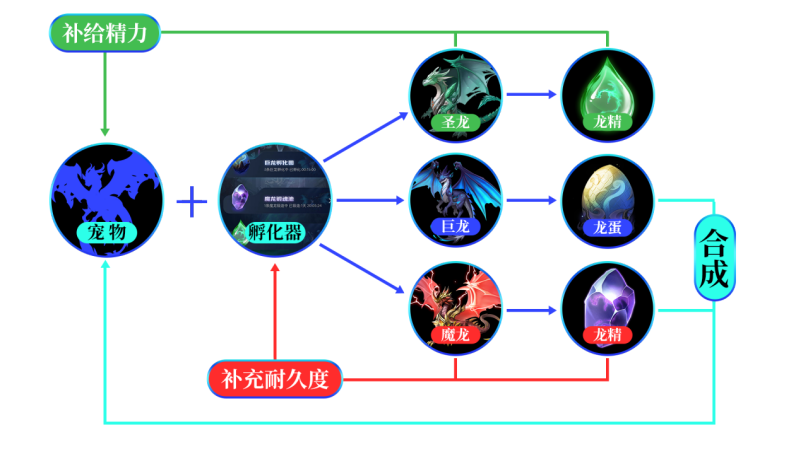
Different ratios of [Dragon Egg] and [Dragon Soul] can be combined to synthesize dragons of varying attributes and levels. Dragons must be placed in corresponding incubators to generate materials. During production, incubators consume durability, which can only be restored using [Dragon Soul]. Once durability is depleted, the incubator stops functioning. Similarly, dragons consume energy during material production, which must be replenished using [Energy Potion]. [Dragon Essence] is the sole ingredient for synthesizing [Energy Potion]; once a dragon's energy is exhausted, it ceases production.
The key strategy in Dragon Island lies in optimizing material combinations to maximize returns.
Platform Game Mechanics and Activities
The platform regularly launches various popular events. Here, we take the widely enjoyed mini-game "Demon Dragon Cave" as an example.
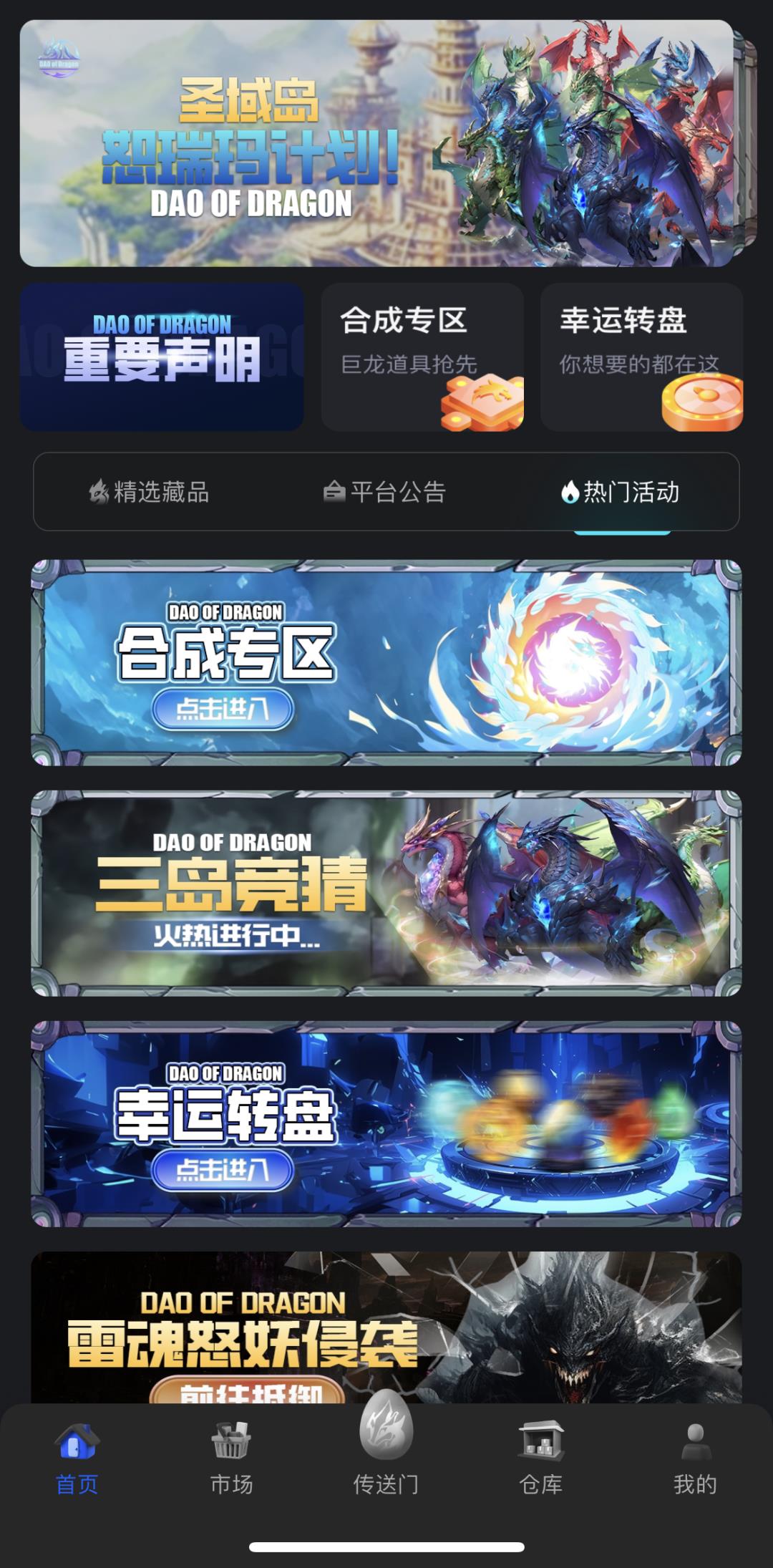
The rules of "Demon Dragon Cave" are as follows:
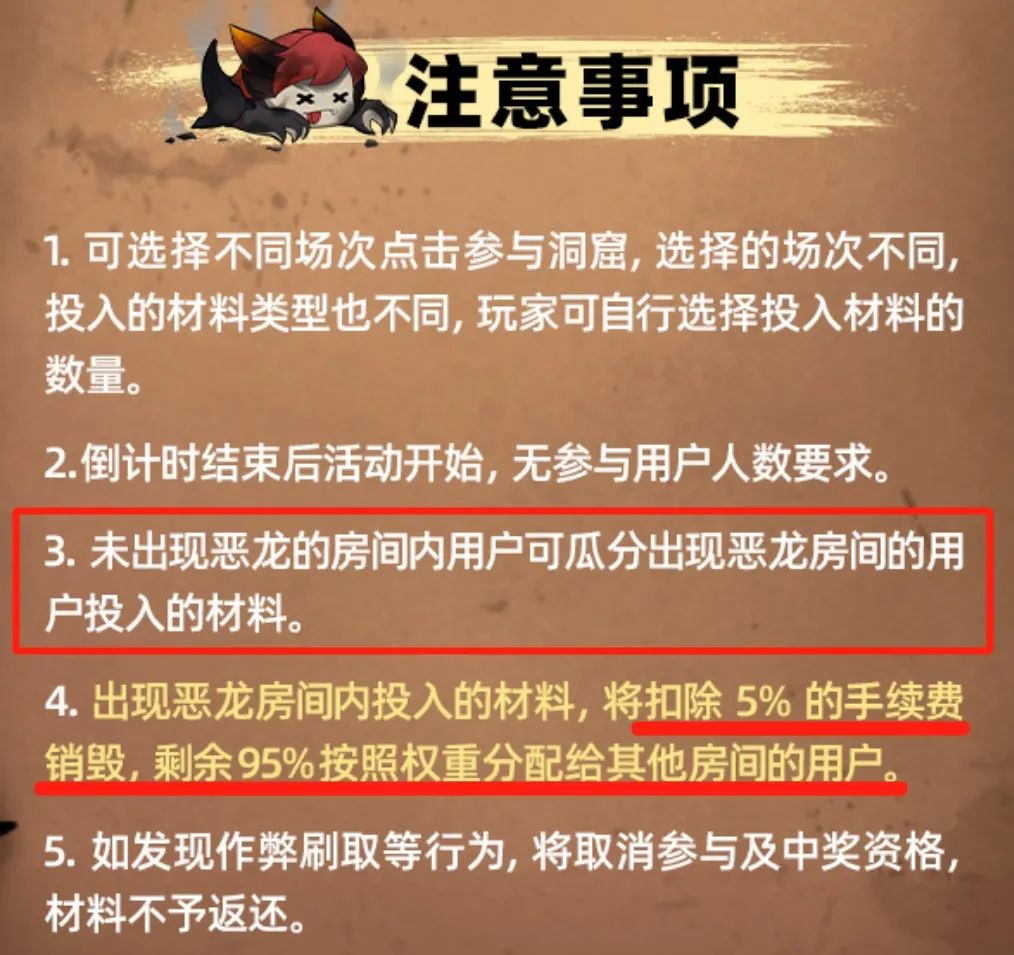
Users select a cave to explore and place their game materials into one of five rooms. After a countdown, a demon dragon appears in one room. Users who selected that room lose, while the remaining four winners share the materials contributed by the losers. Within the app, the platform displays the following notice:
In the platform, the sources of materials can be summarized as follows:
Ways to obtain dragons: synthesis, market purchase, or participation in activities.
Uses of Dragon Egg, Dragon Essence, and Dragon Soul: All can be listed for sale on the market or used in activities such as lucky spin wheels.
Sources of Dragon Egg, Dragon Essence, and Dragon Soul: Market purchases, Dragon Eggs via hatching, Dragon Souls via forging with Demon Dragons, and Dragon Essence via blessings from Holy Dragons.
That is, all materials can be monetized through buying and reselling on the market.
Potential Legal Risks
This gameplay carries certain gambling-related risks. Gambling typically involves participants investing legal currency and ultimately receiving variable amounts of legal currency through certain activities or games, forming a closed loop from money to money.
Based on current regulatory standards and practical case law in China, the risk of online gambling is no longer limited to gambling websites or card and board games—it is increasingly spreading across various types of games. When speculative gameplay forms a cycle involving depositing funds, placing bets, and cashing out, it may constitute the crime of operating a gambling establishment.
To summarize according to the "Guidelines for Regulation and Law Enforcement on Virtual Currency in Online Games" issued by the former Ministry of Culture in 2010:
Generally speaking, if an activity or game simultaneously meets the following three criteria, it may carry gambling-related risks:
① Paid entry: Payment includes cash, virtual currency purchased with real money, or game items obtained through virtual currency—all direct or indirect forms of payment;
② Random gameplay: If the value received (minimum or maximum) significantly exceeds the amount invested, the mechanism exhibits characteristics of "small stakes, big wins";
③ Cash/physical payout: The relevant feature or gameplay directly or indirectly yields cash.
Taking prohibitions against gambling in the gaming industry as an example:
According to the "Guidelines for Regulation and Law Enforcement on Virtual Currency in Online Games" issued by the former Ministry of Culture in 2010, online games promoting gambling content mainly manifest in the following three forms:
Online game operators allow users, under the premise of directly or indirectly investing legal currency or virtual currency, to obtain game items or virtual currency through random methods such as lotteries, betting, or random draws;
Online game operators provide games containing content or formats recognized as gambling by laws and relevant authorities;
Under the premise of users directly or indirectly investing legal currency or virtual currency, online game operators grant积分 (points) to users and allow them to use these points in random methods such as drawing lots or betting to obtain game items or virtual currency.
The joint notice issued by the Ministry of Public Security, the Ministry of Information Industry, the Ministry of Culture, and the General Administration of Press and Publication titled "Notice on Standardizing Online Game Operations and Prohibiting Gambling Using Online Games" stipulates:
Operators shall not collect or indirectly collect commissions related to game outcomes in the form of "virtual currency";
For games that involve betting game积分 on win/loss outcomes or predictions, limits must be set on the amount of积分 that users can win or lose per round or per day. Services allowing the trading, redemption, or indirect conversion of game积分 into cash or physical goods via "virtual currency" must not be provided. Additionally, transfer services enabling gifting or transferring of game积分 between users must not be offered. Strict management is required to prevent providing convenient conditions for online gambling activities.
Therefore, based on the above regulations, the mechanics of the "Demon Dragon Cave" event may potentially be classified as gambling. A detailed analysis is as follows:
(1) Paid entry: To participate in the game, users must possess materials such as Giant Dragons, Dragon Eggs, Dragon Essence, and Dragon Souls. These materials can be acquired through market purchases or through longer processes like participating in events, hatching, or synthesis. However, considering relevant regulatory guidelines and intent, this behavior may be substantively deemed as paid entry by users;
(2) Random gameplay: Users invest materials and bet on which room the demon dragon will appear in. Winners split the materials invested by losers. In terms of consequences tied to wins and losses, the activity exhibits clear “small stake, big win” characteristics;
(3) Cash/physical payout: Materials won by users can be sold on the market for cash. The app’s consignment marketplace provides a channel for users to convert materials into legal currency.
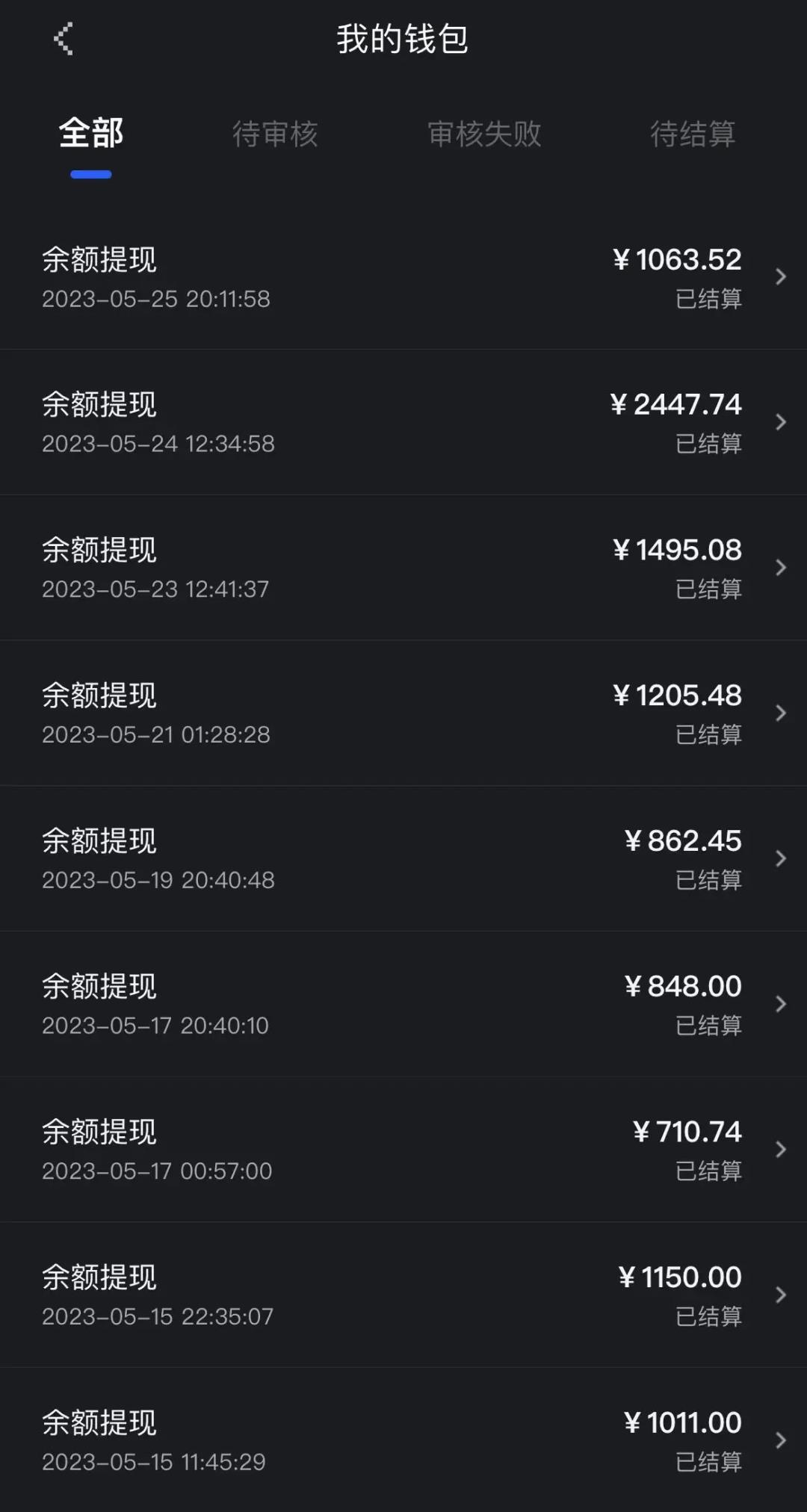
(Image source: Screenshot shared by a netizen showing cash-out proceeds)
Given the current judicial environment, from a substantive perspective, using fiat currency-purchased game items or fragments/materials to participate in activities is not materially different from direct monetary investment. As long as an activity satisfies the pattern of "paid entry → random gameplay → cash/physical payout," it may meet the behavioral elements constituting the crime of operating a gambling establishment.
Compliance Recommendations from ManQin Lawyers
Beyond the "Demon Dragon Cave" game, other games within the platform such as [Lucky Spin Wheel] and [Hela Racing] are also probability-based games that similarly carry gambling-related risks. The platform needs to adjust its event mechanisms to break the chain of "paid entry → random gameplay → cash/physical payout" in order to significantly reduce legal exposure.
Additionally, if the platform shifts toward game types emphasizing intellectual competition or physical effort, avoiding the "randomness" of outcomes, it could further mitigate gambling-related risks.
Since the launch of Dragon Island 1.0 in early 2023, driven by community consensus and hype, pet values surged tenfold in a short period. However, less than half a year later, due to inherent flaws in the game mechanics and economic model, pet values sharply declined.
Nevertheless, it is undeniable that Dragon Island leverages blockchain technology to represent dragons as digital collectibles, giving them scarcity and collectible value. The platform's diverse gameplay—including dragon hatching and faction battles—greatly enhances the playability of blockchain games, enabling deeper user engagement. How to establish a more sustainable economic model to retain users steadily on the platform, rather than repeating the pattern seen last year with some digital collectible platforms—where "early adopters cash out and leave, leaving new users as victims"—is a challenge the platform must continually address.
Join TechFlow official community to stay tuned
Telegram:https://t.me/TechFlowDaily
X (Twitter):https://x.com/TechFlowPost
X (Twitter) EN:https://x.com/BlockFlow_News












