








Stanford Blockchain Research: Exploring the Future of NFTs and Digital Scarcity
TechFlow Selected TechFlow Selected
Stanford Blockchain Research: Exploring the Future of NFTs and Digital Scarcity
The emergence of NFTs reveals a collective gap in our understanding of digital ownership and value.
 Navigating Web3 tides with focused insights
Written by: Matt Stephenson
Translated by: TechFlow
Note: This article comes from the Stanford Blockchain Review. TechFlow is an official partner of the Stanford Blockchain Review and has been exclusively authorized to translate and republish this content.
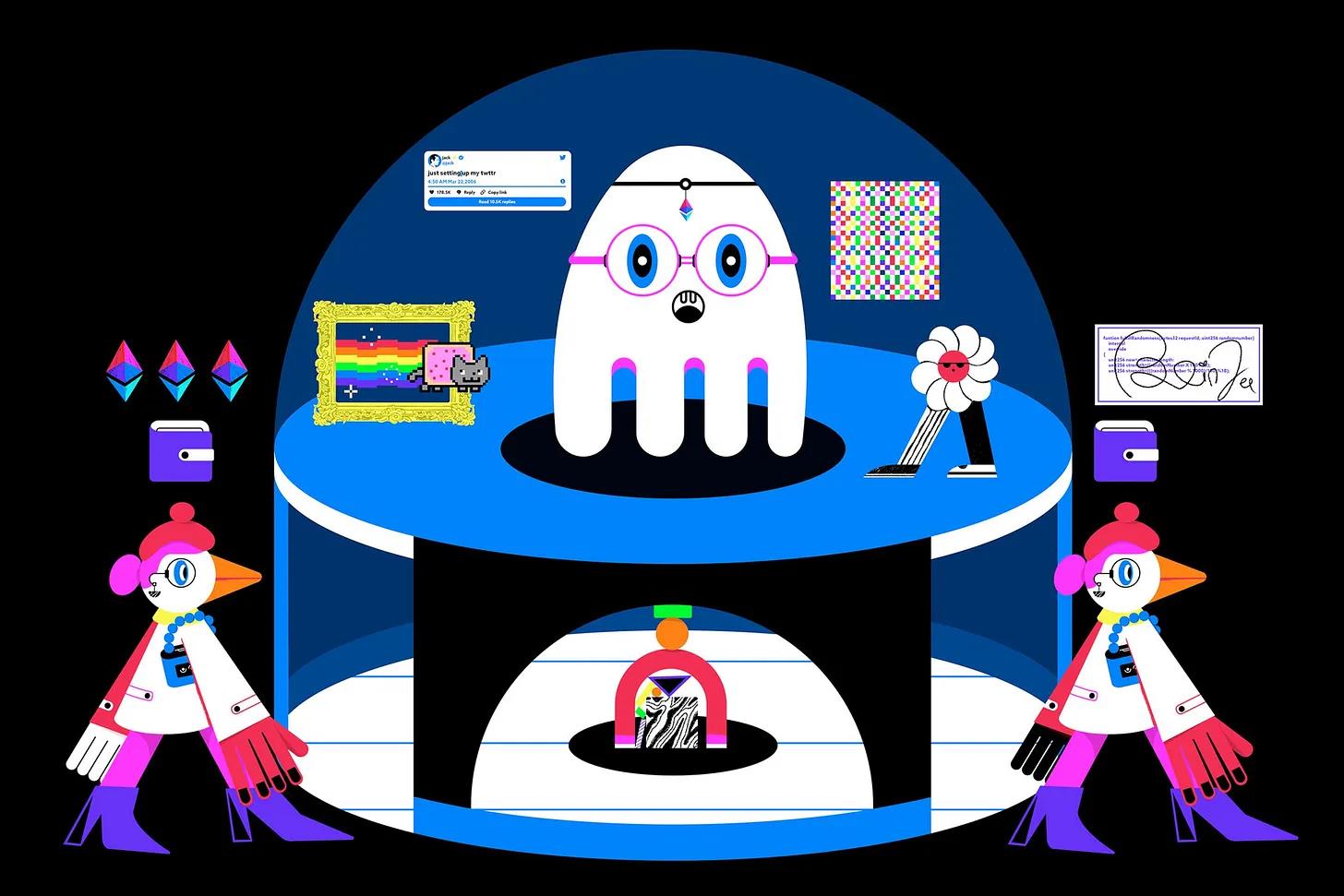
When the NFT boom emerged in 2021, the NFT research community failed to effectively explain what they truly were to the public. One issue was that only a few of us conducted substantive research. It's also fair to say we became overly complacent in our understanding of the concept of "fungibility."
As a result, we missed crucial opportunities to interpret this phenomenon. In March 2021, when NFTs were just starting to attract media attention, I was interviewed by Vox—but much of my time was spent rambling about "biographical indexicality." The following month, The Atlantic published a long piece titled "What Critics Don’t Get About NFTs," which seemed poised to offer a sympathetic explanation—and was authored by two Harvard scholars!
Unfortunately, the article lacked exploratory depth, portraying NFTs merely as an incomprehensible "frenzy," interesting only insofar as it reminded us that people often buy things "not for their intrinsic value," but because they "expect others will value them in the future." This view of NFTs, combined with now largely obsolete discussions about climate impact, has become the dominant—and essentially sole—critical narrative surrounding NFTs to date.
There’s something peculiar about these critiques. They rightly point out the evident and ongoing speculative behavior around NFTs—I expressed similar views during my interviews. But critics seem intent on emphasizing not just that there’s an NFT bubble, but that NFTs themselves are entirely devoid of value. That’s a strange claim. It’s like reading an article about the housing bubble that insists no one actually likes houses. Or a history book on tulip mania that keeps arguing all tulips are ugly.
All this means these articles make a valid and commendable point—that NFTs formed a speculative bubble—but then add an extraordinary assertion: that this bubble formed out of absolute nothingness. Nobody likes these things.
Mainstream Narratives and the Missing Link
Mainstream media narratives have polarized perceptions and understanding of NFTs. Outside of crypto circles, people are led to believe NFTs are outright scams, supposedly because no one believes in or enjoys them.
Of course, not everyone outside crypto holds such disdain. Ezra Klein offered a clear and compelling case during an interview, stating: “The ability to own verifiably scarce digital goods… is a feature the internet needed. We have it in the real world; now it’s coming online.” Stephen Wolfram enjoys NFTs and even wants to launch his own collection. Yet the overarching message that “NFTs are a scam” continues to grow louder.
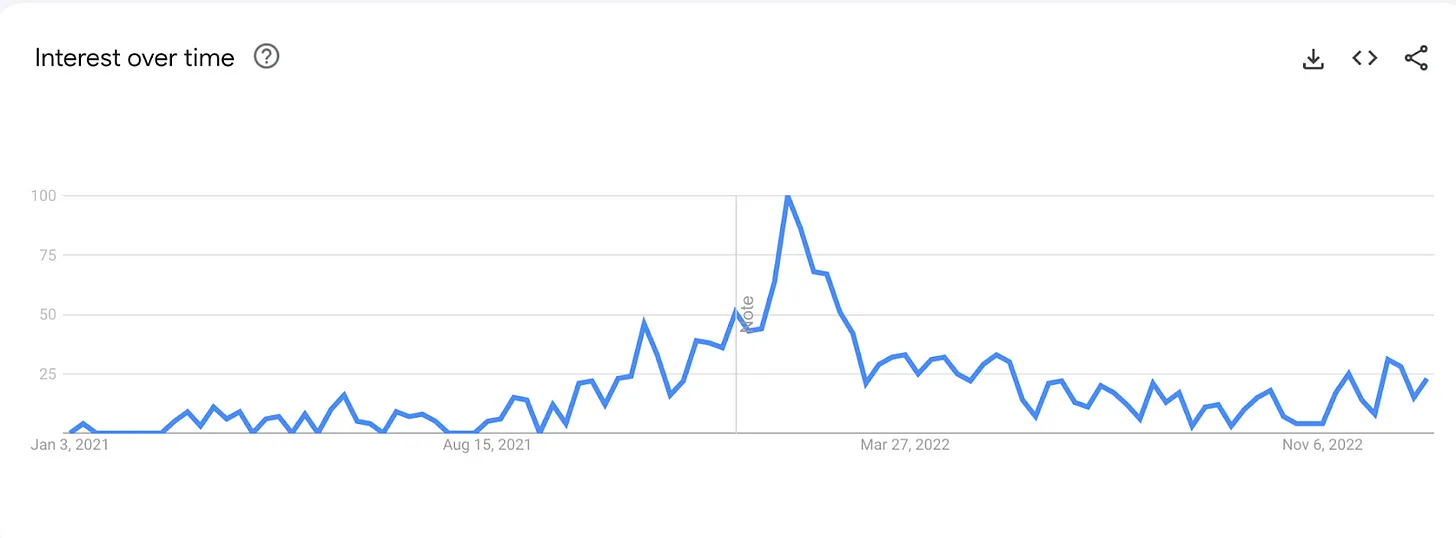
Even within the crypto space, the loudest voices initially appeared confused. One reason is that NFTs are genuinely grassroots phenomena. To this day, they remain the only major application on Ethereum not anticipated in the original Ethereum white paper. Although NFTs weren’t new in 2021, they had previously been popular only within a small, dedicated community of artists, creators, and enthusiasts.
These early NFT enthusiasts weren’t particularly prominent as thought leaders, so most traditional crypto influencers were starting from scratch. An unfortunate consequence of this information vacuum was a surge of interest in “utility NFTs,” as if cryptographic ownership were best implemented through gas-inefficient tokens with trivial aesthetic metadata. Using utility NFTs for access control is like making movie tickets into T-shirts or posters. It might make sense (and has been done!), but only if people actually like T-shirts or posters—otherwise you’re just creating an expensive ticket where a paper one (or an ERC-20 token) would suffice.
Moreover, early discourse often sidestepped the fundamental question of whether people actually liked NFTs themselves. Instead, NFTs were framed as “receipts,” “signatures,” or tokens granting special “access to the artist.” In every case, the value of an NFT seemed always to reside elsewhere—in intellectual property, or some other valuable thing that the NFT merely signed, recorded, or granted access to.
Regardless of what we think of these theories today, it seems no one really took the time to investigate them. Are people collecting floating artist signatures? Are they buying artist attention in some odd way? Are they trading receipts? Honestly, these ideas are quite fascinating.
Clearly, these theories did little to make NFTs more understandable or appealing to outsiders. Compounding the issue, even well-known thinkers who understood NFTs didn’t always write clearly. For example, in a 2022 paper, Glen Weyl, Puja Ohlhaver, and Vitalik Buterin noted that “blockchains provide traceability of transactions, preventing someone from right-clicking and copying a valuable NFT (and conducting a Sybil attack against the original owner).” This is entirely correct—but deeply confusing to outsiders. Technology doesn’t “prevent” anyone from copying image files. Their point only makes sense if “NFT” is understood as something like a “digital object uniquely tied to certain events.”
By 2022, it seemed obvious that NFTs were being distinguished and valued based on their unique histories rather than, say, their aesthetic qualities—so Buterin et al. offered no citations for their claims. But suppose they wanted to cite sources—what could they reference? No research had been conducted.
A Personal Journey into NFT Research
My research into NFTs has primarily been historical—I became interested in NFTs during my PhD studies, though they seemed far removed from my academic focus. As far as I know, valuing objects based on their unique histories is utterly commonplace in the physical world, yet completely novel in the digital realm until the advent of NFTs.
This phenomenon is both novel and significant in the history of digital life. Just as privacy—being able to close a door and be alone for a moment—was taken for granted in the real world, so too was uniqueness. If privacy is already scarce in our digital lives, uniqueness was almost entirely unheard of.
So, as a side project, I looked into markets for goods that resembled NFTs. Art markets are oddly anomalous, so I turned to the more humble market for memorabilia. One striking example I found was James Naismith’s original typed rules of basketball, auctioned by Sotheby’s for $4.4 million. Naismith’s two-page manuscript is now proudly displayed at the University of Kansas.
The Naismith case fascinated me because the document is typewritten and aesthetically unremarkable. That is, if bidders simply wanted text printed from a 1890s typewriter, they could save millions by purchasing a replica of Naismith’s typewriter model for a few hundred dollars.
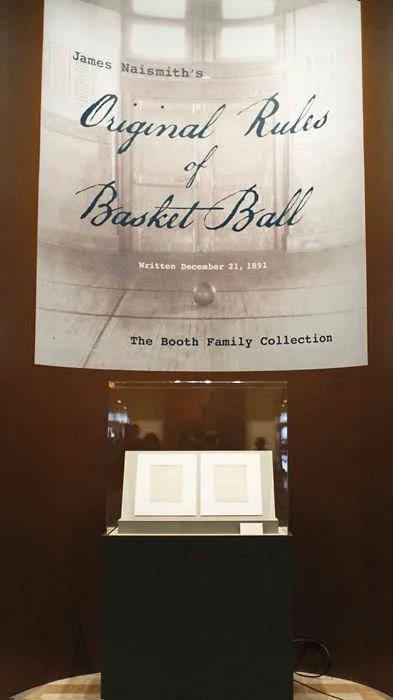
Sotheby’s promotional material for the Naismith auction emphasized that the document “was typed by Naismith on the morning he introduced his new sport to the world.” This suggests the appeal lies in a notion of continuity. The argument for continuity is precisely why blockchains are significant for NFTs. We can’t ask which MP3 file is the “real” one because, in any meaningful sense, MP3 files lack continuous histories. Now, however, we can ask which artwork is the “authentic” one, because blockchains enable the conceptualization of such continuity.
The Theory of Continuity in NFTs
The Ship of Theseus paradox is a famous example of conflicting intuitions about identity. Theseus’s ship is repaired by replacing every wooden part, and in Thomas Hobbes’ version, the discarded “original” parts are later reassembled into another identical ship. The former ship—with replaced parts—maintains continuity with the original, while the latter—with original parts—is now compositionally identical to the original. This paradox reveals the tension in our intuitions about which object is the “true” one: continuity versus composition.
However, note that the compositional argument also relies on continuity. In Hobbes’ version of the paradox, someone “preserved the old planks as they were removed, and later reassembled them in the same order to build another ship.” That is, the reassembled Ship of Theseus possesses a continuous identity traceable back to the original. Without this, if the planks were new, we’d merely call it a replica.
Continuity appears to be a core feature of identity. Indeed, Elizabeth Spelke’s research on infant cognition suggests continuity is the “central” concept of identity, requiring an object to trace a “single continuous path” through space and time. This is exactly what the ERC-721 standard provides—and hints at why unique digital objects emerged with NFTs.
For instance, digital cognition studies could adapt some of Spelke’s experiments to test whether continuity affects how people perceive digital objects, using experimental designs like those illustrated below.
The experimental design below contrasts (1) the UTXO identity model, (2) the ERC-721 model, (3) non-blockchain OSI models, and sidechain (NFT) models. In each panel, an object A begins in period 1 and undergoes some change in period 2. Then in period 3 (on the right of each panel), we ask whether we can determine which object is A.
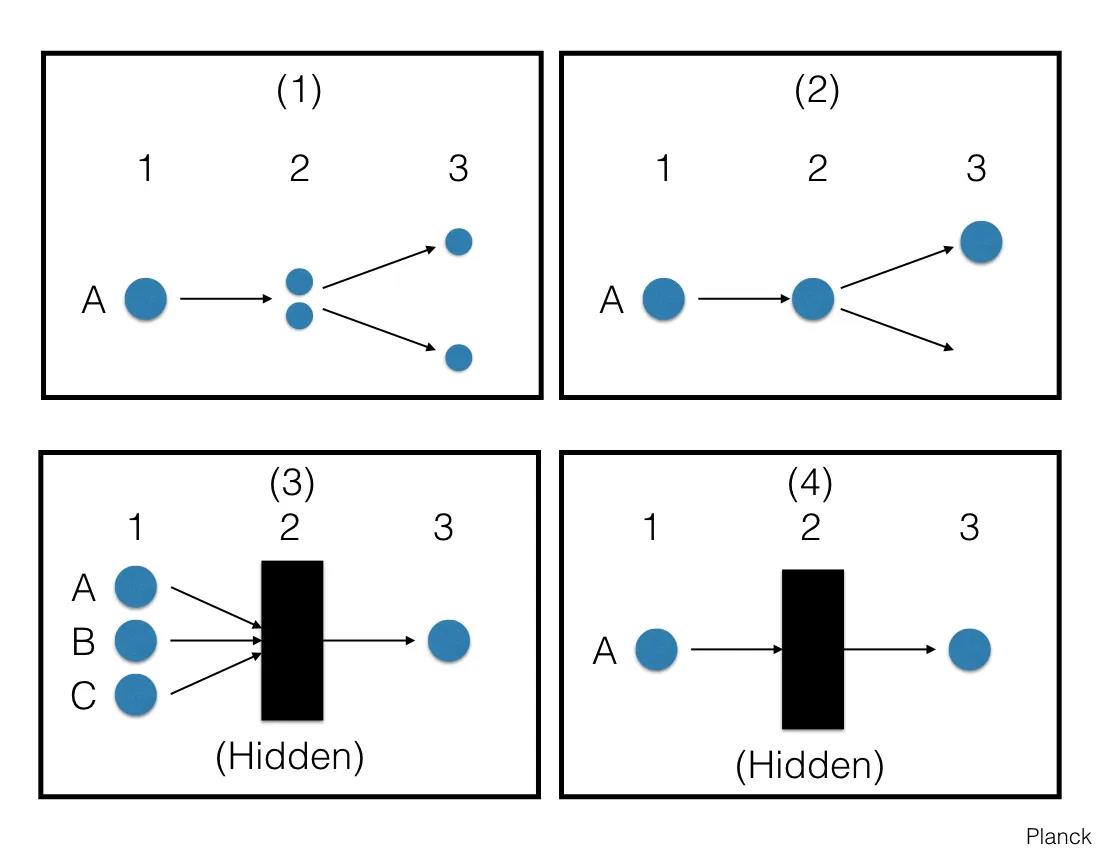
The continuity theory of NFTs gains support from the rise of Ordinals/Inscriptions on the Bitcoin blockchain. As shown in quadrant (1) above, Bitcoin’s UTXO model cannot natively support continuous identity because transactions split the “object” and make its parts indistinguishable. However, Ordinals introduce a “first-in, first-out” interpretation of UTXO transactions, providing continuity to some extent. With Ordinals and the concept of continuity, people began valuing native Bitcoin NFTs.
Open Research Directions and Questions
But this is just a theory—and certainly an incomplete one. So I’ll conclude by outlining several other potentially fruitful research avenues.
-
Which technical aspects of NFTs serve to distinguish them, and how/why?
This research could be market-driven—for example, assessing whether “on-chain NFTs,” whose metadata can be fully regenerated from the contract and token itself, matter for demand. Or whether media referenced in metadata stored on IPFS or other hash-based systems affects value.
It could also be experimental or psychological, abstracting these technical features into the guarantees or signals they provide. Ideally, a “minimal viable” theory of NFTs could be developed, identifying the essential qualities an NFT should possess.
-
Do NFTs have “chain allegiance”? Why are cross-chain NFTs like those in Emblem Vault considered “real”?
Cross-chain NFTs—originating on one chain but owned, traded, and sold on another—represent a fascinating case. While Ethereum-native NFTs dominate the market, applications like Emblem Vault have “bridged” many valuable and historically significant NFTs from other blockchains. Emblem Vault alone has seen nearly $1 billion in transaction volume for these bridged assets.
Does blockchain architecture create this interoperability? Or, similarly, can we predict which assets cannot be bridged? Do bridged NFTs feel elevated in quality? For example, are NFTs perceived as more authentic or durable when held on a larger (or more decentralized) blockchain?
-
What is the essence of an “NFT”?
A notable feature of the NFT world is that many NFTs are sold as “collections” of aesthetically and/or conceptually similar items. One reason may be tradition, since the first prominent avatar image (“PFP”) collection, CryptoPunks, consisted of 10,000 editions. However, the market for selling 10,000 CryptoPunks back then was far smaller than today’s market for 10,000 Azuki PFPs. Is tradition really that powerful? Or does this number hold other significance?
One possibility is that, in certain contexts, NFTs create a “minimal group,” thereby fostering greater cooperation. Are there parallels to this behavior in art, fashion, or other markets?
-
NFTs and Digital Property Rights
In property rights theory, ownership consists of holding certain rights over a resource, especially (1) the right to exclude others from using it (“exclusivity”), and (2) the right to sell or transfer ownership (“transferability”). These rights can be enforced by third parties—such as police acting on court orders—or may emerge through non-legal cooperative actions.
NFTs are a prominent example of non-legal, cooperative enforcement via blockchain, clearly defining exclusivity and transferability. This makes them ideal for studying non-legal property rights. There’s further overlap with recent developments in property theory concerning the public domain. Take, for example, Stephenson 2022 (adapted from Yoram Barzel): “Suppose you own a sandwich, and I take a bite without permission. In this case, I violate your property right. But if I merely look at the sandwich, or even take a photo and hang it on my wall, I likely don’t violate your property right. Thus, the visual attributes of the displayed sandwich belong to the public domain. Similarly, NFT owners appear content to publicly display the aesthetic qualities of their NFTs, allowing anyone to freely view, download, etc.” We might then ask: what constitutes “taking a bite” of an NFT?
Blockchain-based NFTs are particularly well-suited for research in property theory. They represent not only a novel example of large-scale, non-governmental enforcement of property rights, but also define the private domain very simply: essentially only the NFT’s token ID and contract address are exclusive and transferable.
-
NFTs and the Metaverse
Metaverse pioneers envisioned a vast virtual world where we could all play and build together. It was originally imagined as a shared infrastructure owned by a single organization—the “Computer Consortium”—a political-economic structure that raises concerns. Elsewhere, I’ve argued that NFTs, as shared virtual objects, realize the metaverse from an “object-first” rather than “infrastructure-first” perspective.
Existing NFTs have already colonized fragmented “metaverse” spaces across the modern internet, such as profile picture (PFP) slots allowed on most social media platforms. But what other spaces exist? Do these spaces shape how NFTs are used, consumed, and valued?
Additionally, there is growing interest in displaying NFTs on digital screens like Samsung Frame. What norms are emerging around such displays—does display imply ownership? In other words, is showing an NFT you don’t own more like displaying an art print (non-deceptive), or wearing a counterfeit jacket from a popular brand (potentially deceptive in certain contexts)?
Conclusion
Researchers have vast opportunities to explore the technological, psychological, and sociological dimensions of NFTs. Their economic relationship with evolving concepts of digital property, their role in the broader metaverse, and their implications for digital display and authenticity are all fertile areas for inquiry. Each of these domains promises not only deeper insights into the mechanics and nuances of NFTs, but also reflection on our evolving digital culture and the interplay between technology and societal values.
The emergence of NFTs reveals a collective gap in our understanding of digital ownership and value. Discussions often polarize, swinging between dismissal and hype. In such times, we need research capable of dissecting and explaining the essence of the NFT phenomenon. NFTs are certainly not what their most fervent advocates claim—but they are also likely far more significant than critics imagine.
Join TechFlow official community to stay tuned
Telegram:https://t.me/TechFlowDaily
X (Twitter):https://x.com/TechFlowPost
X (Twitter) EN:https://x.com/BlockFlow_News
 Stanford Blockchain Club






