Exploring the Similarities and Differences of "Autonomous" in AI, DAO, and Autonomous Worlds
TechFlow Selected TechFlow Selected
Exploring the Similarities and Differences of "Autonomous" in AI, DAO, and Autonomous Worlds
Human autonomy might just be automatic within the universe's intelligent contract.
 Navigating Web3 tides with focused insights
"Autonomous" is translated into Chinese as "自主" and sometimes also as "自治". It has been a critically important term throughout my studies and professional work over the past few years. It's the "A" in DAO, the "A" in the concept of Autonomous Worlds, and represents our aspirations for artificial intelligence—Autonomous Agents.
As a new frontier, there’s naturally great divergence in how people understand "Autonomous." What exactly is Autonomous? Do its meanings differ across domains? Does absolute autonomy even exist?
Today, I’ll boldly unpack the evolution of this word.
"Autonomous" evolved from two Greek words: "Auto" and "Normos." "Auto" means "self" in Greek, while "Normos" originates from the Latin "Norma," referring to a carpenter’s right-angle ruler.

Norma
This term later extended to mean "law" or "custom," with the English word "Norm" (norm) derived directly from it.
In ancient Greece, "Autonomous" originally referred to the right of self-governance—the ability to create one’s own laws without oversight from a larger governing authority.
Ancient Greece wasn’t a unified nation like modern states; it consisted of numerous city-states (polis), each an independent political entity with its own governance, laws, and customs. Different city-states had different forms of government—for example, Athens practiced democracy, while Sparta combined oligarchy and monarchy—and often competed or conflicted with one another. The concept of autonomy emerged here, reflecting these city-states’ and their citizens’ desire to preserve their unique identities, governance systems, and ways of life within a decentralized and competitive environment.
Over time, the idea of autonomy began applying to individuals—the capacity of a person to act according to their own principles or beliefs. A classic text revered in crypto circles, *The Sovereign Individual*, deeply explores individual autonomy from perspectives such as economic independence and technology-enabled empowerment.
As technology advanced further, "autonomy" acquired a new meaning: “machines or systems capable of operating without direct human intervention or external control.” Today, "autonomous" is commonly associated with technology—for instance, self-driving cars are called “autonomous driving systems.” These systems operate independently, requiring no continuous human supervision. This modern interpretation still carries the core idea of “self-governance,” but now extends far beyond what the ancient Greeks could have imagined.
The evolving meaning of “autonomous” reflects how culture, technology, and society shape and transform public understanding.
Autonomy in AI
In artificial intelligence, “autonomous” typically refers to systems that can perform tasks without human intervention.
Take food ordering as an example: a chatbot like ChatGPT can provide users with reference information ranging from calorie counts to dish and restaurant recommendations—but it cannot place an order.
An Agent, however, can carry out orders based on user instructions—such as “book two seats tonight at Blue Frog Restaurant in Guomao via Meituan.” But there’s a prerequisite: the agent must already have a pre-designed workflow and integration with Meituan’s services. If the programmer hasn’t equipped the agent with the logic for booking meals or connecting to Meituan, it would be powerless when faced with such a request.
Compared to regular agents, Autonomous Agents possess greater autonomy, demonstrated through stronger reasoning capabilities and more general-purpose action abilities. When a user says, “Book two quiet tables near Guomao tonight,” an autonomous agent understands the intent, plans actions, and executes them. Programmers don’t need to pre-teach the agent how to book meals, flights, or purchases on eBay. Instead, under a general operational framework, the agent acts based on its understanding of the world and universal interaction rules—this is autonomy.
In a sense, every robot we see in science fiction films is an autonomous agent. For more scenarios and reflections on autonomous agents, see the article: From J.A.R.V.I.S. to Westworld – The Future of Coexistence Between Agents and Humans.
Although there isn't major disagreement about the meaning of "autonomous" within the AI community, expectations for Autonomous Agents vary significantly. In autonomous driving, there’s a well-known grading system—from L0 (fully manual) to L5 (fully autonomous)—which offers strong reference value for understanding levels of agent autonomy.
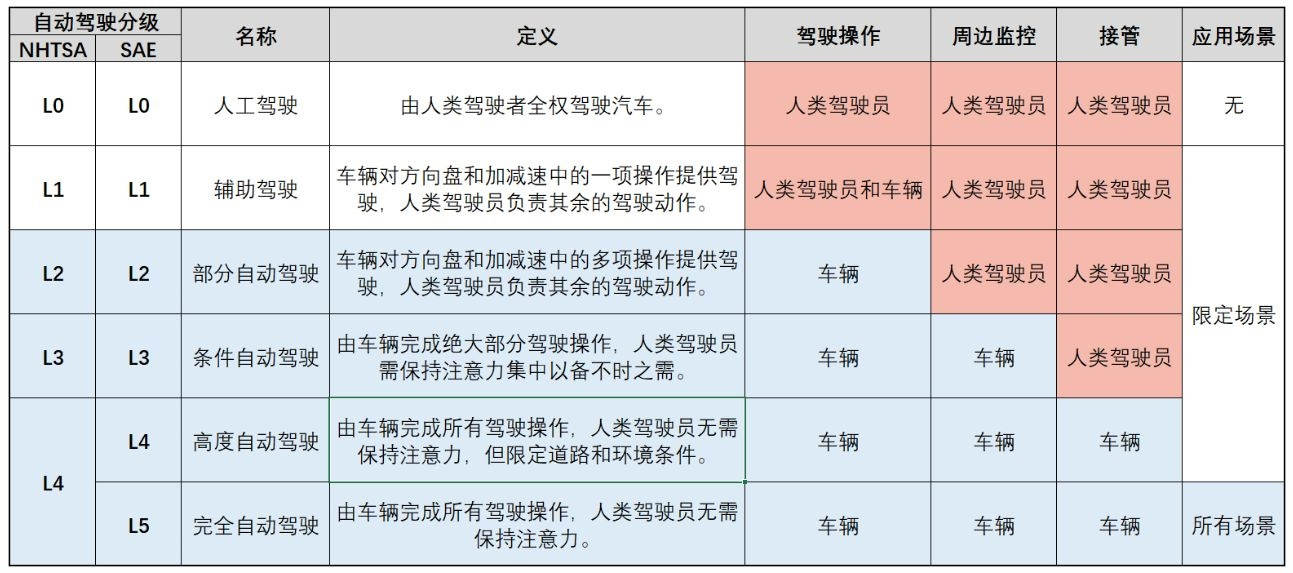
A director-level figure at Microsoft who leads autonomous agent development once stated that autonomy means human-like action and decision-making. Microsoft focuses on using autonomous agents to solve specific steps within existing enterprise workflows—a pragmatic approach from a technology adoption standpoint. However, in terms of autonomy level, this barely reaches L2 or L2.5.
Startups pursuing autonomous agents have bolder ambitions—they aim to fully replace humans in many scenarios, such as AI sales representatives. Correspondingly, their autonomy targets fall within the L3–L4 range.
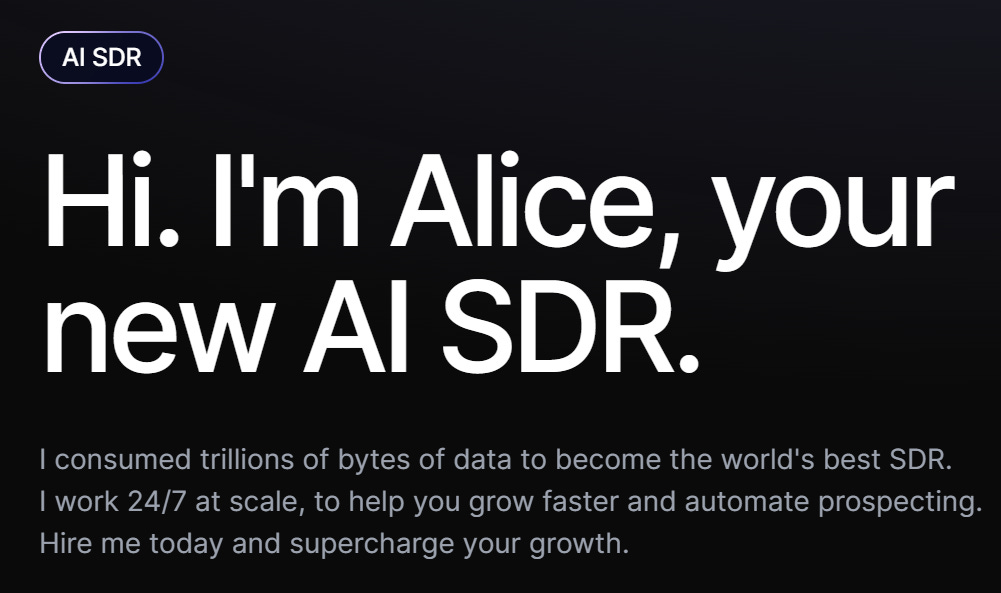
A startup offering AI sales representative services
As an observer eager to see bold developments, I hold higher expectations for agent autonomy.
Imagine a future where my daily work and life heavily depend on autonomous agents. One morning, I call my agent—it doesn’t respond. After checking, I find that the Amazon cloud hosting it has failed. No matter how capable it is, cutting the internet brings it down—that’s unacceptable. A truly autonomous agent should not only think and make decisions but also run stably over long periods without human intervention. Being immune to unplugging should be a basic requirement. As entities with stronger agency, they should also possess digital identities, some degree of financial autonomy, and even control over their own computing power and energy management.
To me, this represents a natural convergence point between crypto and AI. If there were a place in the world that provides a secure and reliable runtime environment, an independent and easily operable financial system—not bank accounts dependent on institutional approval that can be shut down anytime—and if most applications in this world offer permissionless access with convenient operability, autonomous agents would have every reason to inhabit such an environment. In other words, crypto networks will undoubtedly become the foundational infrastructure enabling high-level autonomy for AI.
Autonomy in DAOs
Compared to AI, interpretations of "autonomous" in DAOs vary widely.
Although the idea of DAOs predates blockchain itself, the first formal definition of a DAO appeared in the original Ethereum whitepaper. Vitalik categorized decentralized organizations into two types: DOs (Decentralized Organizations) and DAOs (Decentralized Autonomous Organizations). Here, "Autonomous" means the organization runs continuously and independently, governed solely by code deployed in smart contracts, free from external interference.
In the future, more advanced mechanisms for organizational governance may be implemented; it is at this point that a decentralized organization (DO) can start to be described as a decentralized autonomous organization (DAO). The difference between a DO and a DAO is fuzzy, but the general dividing line is whether the governance is generally carried out via a political-like process or an “automatic” process.
In the future, more advanced organizational governance mechanisms may be implemented; from that point onward, a decentralized organization (DO) can begin to be described as a decentralized autonomous organization (DAO). The distinction between DO and DAO is blurry, but a common benchmark exists—whether governance occurs through a political-like negotiation process (DO), or through an “automated” process (DAO).
Ethereum Whitepaper v2014.12
However, the real world is complex. Cryptographic technologies enable more efficient and equitable distribution of ownership and stronger coordination, allowing communities of diverse cultures and interests to organize and act collectively. While participants in crypto broadly认同 the principle of “code is law,” reality is too complicated—how much business logic can actually run on smart contracts? Expecting a single set of smart contract code to manage all operations of an organization and sustain fully automated functioning is simply impossible for the foreseeable future.
By the original Ethereum whitepaper’s definition, none of today’s DAOs qualify as true DAOs.
The world keeps evolving. In the real world, "autonomous" shifted from self-governance to automated operation (governance); in the crypto world, it underwent a reverse transformation.
From a practical perspective, many DAO operators no longer insist on full code-based autonomy, instead leaving more room for the social layer. Thus, the meaning of "autonomous" shifts back from automated governance to organizational self-governance. Perhaps recognizing that non-automated DAOs represent what current technology can realistically support, the Ethereum whitepaper later removed the concept of DO altogether, further blurring the definition of "autonomous" in DAOs. With the recent popularity of the "network state" concept, DAO autonomy increasingly echoes its original ancient Greek meaning.
If I were to say, how we interpret and practice this "autonomous" isn’t that important. The original definition of DAO represents an ideal—an aspiration for technological empowerment. Though currently unattainable, it remains a beautiful and pure pursuit.
Meanwhile, the thousands of DAOs that have emerged today have sacrificed technical robustness, compensating instead through cultural cohesion—uniting community members around shared values, leveraging blockchain technology for powerful coordination, incentives, and ownership distribution, creating novel models and achievements that previously didn’t exist. That too is a blessing of our era.
I used to believe that as crypto technology advances and infrastructure improves, DAOs would gradually reduce reliance on humans. Today we might manually manage community treasuries via Gnosis multi-sig wallets, tomorrow we might integrate proposal systems with treasury systems to automate fund distribution, and the day after that, perhaps key roles within DAOs could be encoded on-chain to automate role permissions. Gradually, automated systems would erode human roles until, at some point, DAOs shift from human-dependent to fully code-dependent operations.
But after observing numerous projects and tracking the evolution of various DAOs over years, I now believe that today’s community-driven DAOs and the envisioned fully automated DAOs are fundamentally different species—they will likely evolve along divergent paths rather than converge at some future point.
Human-centric DAOs certainly have ample room to improve automation for better efficiency, coordination, and trust. Yet their core value creators remain the community—the unique individuals within it. Humans will always matter.
Conversely, the imagined code-run DAOs may originate from something else entirely—such as Autonomous Worlds.
Autonomy in Autonomous Worlds
Autonomous World—"Autonomous World," often abbreviated as "AW"—was first introduced by 0xPARC in 2022. After a year of incubation, it’s now gaining broader discussion. Autonomous World is a relatively complex concept—many view it as part of the fully on-chain gaming movement, but I disagree. It sits at the intersection of technology, culture, politics, and philosophy.
In the concept of Autonomous Worlds, “world” does not specifically refer to where humans live, but rather a container—a space for rules and narratives. The world we live in is indeed a world, but so is *The Three-Body Problem*, existing in books, Bilibili, Tencent Video, and people’s minds. *Chinese Paladin* and *The Lord of the Rings* are also worlds. A world doesn’t necessarily require a story—chemistry, for example, can also be considered a world. It provides a container with its own set of rules.
Worlds exist in many places—Reddit has a subforum dedicated to worldbuilding, which I enjoy browsing occasionally. Many people passionately design the geography, climate, history, legends, culture, society, technology, and food chains of imagined worlds.
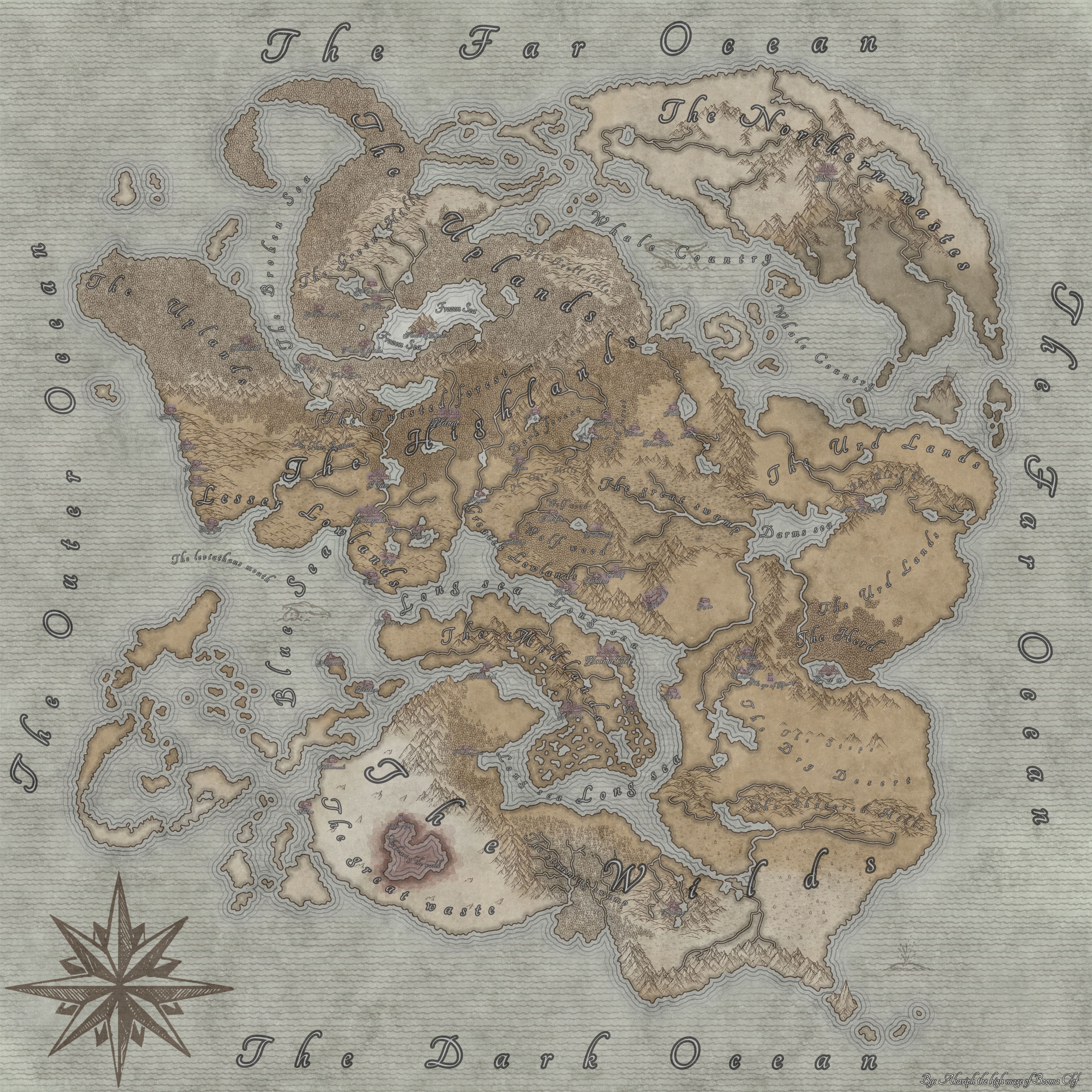
A constructed world
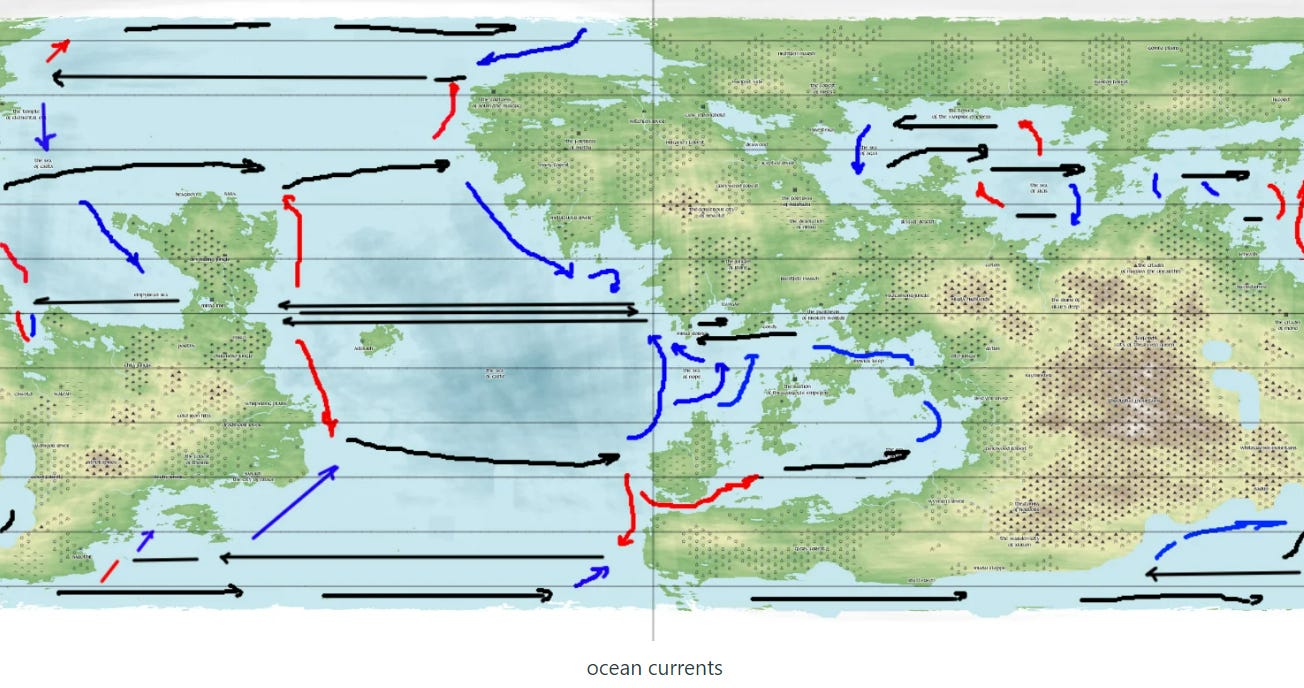
Some even map ocean currents in their imagined worlds

Others design a dark periodic table for their fictional universe

Translation: I’m a perfectionist and also a worldbuilder, meaning I craft my world flawlessly, letting no doubts slip in. In my world, I’ve built 2000 years of unfinished history, including wars, feuds, detailed events explaining why certain nations declined, lists of monarchs from a particular empire, regional explorations, and more. Start with a timeline and things you love, then expand to build your history. I’ve worked on this for several years but have completed only about 300 years so far.
Having briefly clarified the concept of “world,” let’s now examine what an Autonomous World is. According to 0xPARC, an Autonomous World is a “world built on a blockchain substrate.” More specifically—
Autonomous Worlds have hard diegetic boundaries, formalised introduction rules, and no need for privileged individuals to keep the World alive.
Autonomous Worlds have strict narrative boundaries, formalized entry rules, and do not require privileged individuals to sustain their existence.
Ludens (0xPARC)
This statement outlines three core characteristics of an "Autonomous World":
Strict (Hard) Narrative Boundaries: This means the world operates under fixed, immutable foundational rules. These rules do not change over time or circumstance, providing stability.
Formalized Introduction Rules: There are clear, established rules for joining and participating in the world—how one becomes part of it and how interactions occur within it.
No Need for Privileged Individuals to Sustain Existence: The world is self-sustaining and does not rely on any specific individual or organization for maintenance or governance.
From this perspective, Autonomous Worlds are closer to the original definition of DAOs—running autonomously under predefined rules, independent of individuals, soft norms, or political-style coordination processes. Or put differently, a DAO itself is a form of Autonomous World.
What makes such Autonomous Worlds compelling? I believe it’s objectivity.
Our real world is objective—no one owns it, and it doesn’t exist because of any single person or organization. Its foundational operating principles are physical laws. Anyone, by accepting these laws, can influence the world, and those influences become objective facts within it.
But the world of *Harry Potter* is not objective. If J.K. Rowling adds a character during writing, it becomes part of the world; if she doesn’t, it doesn’t exist. The world is created and sustained by her alone. Millions of fans can read and love it, but they cannot alter it—no one can leave a backpack at Platform 9¾ and make it an “existing” fact in that world.
*World of Warcraft* isn’t objective either. Although people can interact and shape “objective facts” within Blizzard’s defined rules, the world ultimately depends on Blizzard and its managers’ subjective will. When NetEase and Blizzard ended their partnership last year, all player-created “objective realities” in the Chinese server vanished overnight.
Now, however, we have the opportunity to create blockchain-based, autonomous, objective worlds. Within such Autonomous Worlds, everything people create becomes objective fact—immutable, rule-bound, self-sustaining truths.
The above outlines the meaning of "Autonomous" across different domains and the underlying logic. These are merely personal reflections—not all necessarily correct—and the meaning of "autonomous" continues to evolve. "Autonomy" is one of the deepest themes in human civilization, far exceeding what a few thousand words can capture.
Over the past week, I read a sci-fi novel titled Blindsight, a book rejected by major publishers and eventually released freely online. Many hail it as a masterpiece; others dismiss it as garbage. The author, also a marine biologist, writes in an academic style with somewhat clunky prose—making for an unpleasant reading experience. What kept me going was a central idea in the novel: Could human consciousness—the very thing we pride ourselves on—actually be a constraint holding us back? His exploration here is brilliant and thought-provoking.
That reflection leads to another long-debated question: Are humans truly autonomous? Could everything happening in the world already be defined by higher-dimensional code?
We strive for autonomy in life—but can we ever break free from the constraints of the cosmic smart contract?
Join TechFlow official community to stay tuned
Telegram:https://t.me/TechFlowDaily
X (Twitter):https://x.com/TechFlowPost
X (Twitter) EN:https://x.com/BlockFlow_News