








July DeFi On-Chain Activity Report: Derivatives Protocols Dominate Trading Volume
TechFlow Selected TechFlow Selected
July DeFi On-Chain Activity Report: Derivatives Protocols Dominate Trading Volume
July data showed a slight recovery compared to June, with derivatives protocols maintaining their position as the clear leaders in trading volume and activity within DeFi.
 Navigating Web3 tides with focused insights
On-chain metrics have always been a key reference in various analytical studies. As foundational DeFi infrastructure, oracles not only provide data to numerous DeFi applications but may also offer us direct insights into the current state of DeFi and user activity levels through their first-party data.
Therefore, TechFlow will collaborate monthly with Pyth Network to publish on-chain DeFi data reports, aiming to provide the industry with more neutral third-party data and analysis.
Pyth Network is an oracle built specifically for DeFi and holds a leading position in the high-throughput DeFi landscape. Key users include Synthetix, Venus, Ribbon Finance, Arbitrum, Cap Finance, Solend, Zeta, Wombat, and OpenBB. Pyth employs a Pull Mode pricing model, where individual protocols pull price data as needed—this approach better reflects real-time on-chain conditions.
Currently, Pyth supports over 300 low-latency price feeds for digital assets, equities, ETFs, forex pairs, and commodities. It is the largest first-party financial oracle network, delivering secure and transparent real-time market data across more than 30 blockchains.
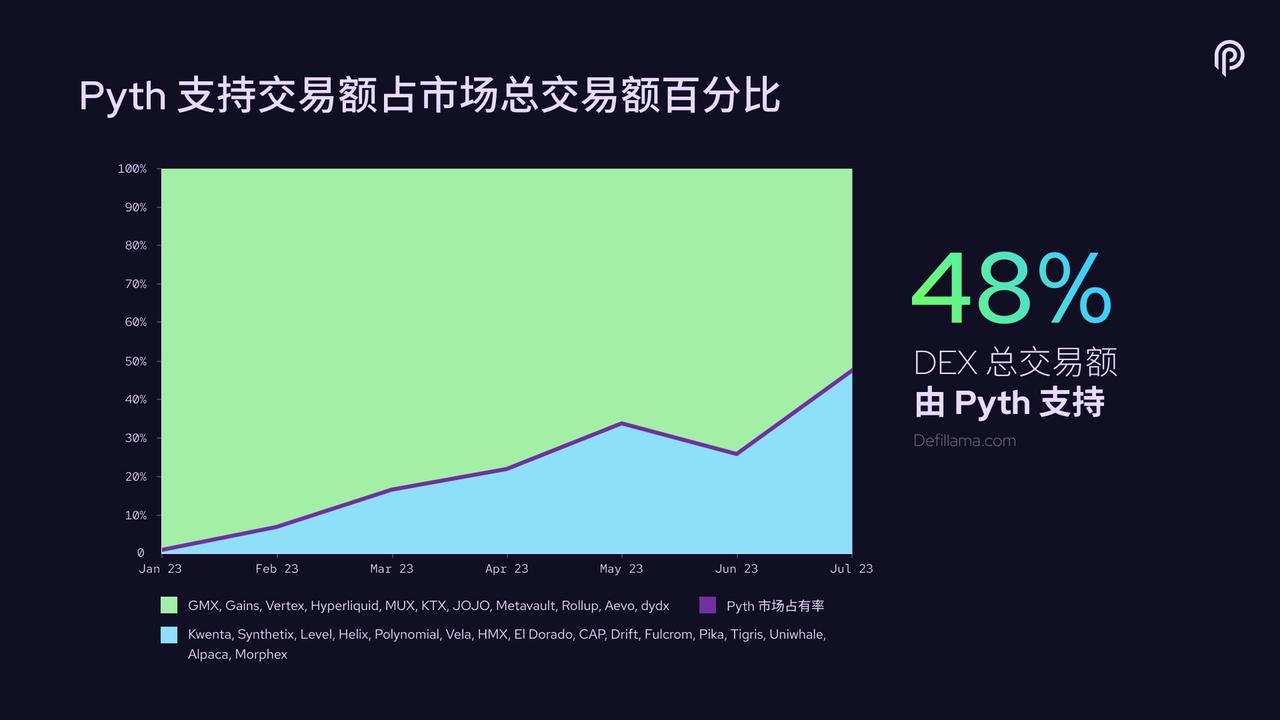
Trading volume share supported by Pyth (excluding dYdX)
It should be noted that the data in this report primarily comes from Pyth, which ranks second in terms of the number of supported protocols within the oracle market. Additionally, some major platforms like Curve use proprietary oracles, meaning they are not reflected in the data. Therefore, conclusions drawn here may deviate slightly from the complete market picture. The purpose of this report is to offer readers an additional dimension and a direct data source.
1. DAU – Daily Average Updates
DAU, or Daily Average Updates, measures the average number of daily price updates delivered by Pyth across various blockchains during the month. This metric indirectly reflects the on-chain activity level of #PoweredByPyth applications. A higher DAU indicates more frequent on-chain contract interactions—and thus more transactions—occurring within DeFi protocols on that chain.
Below is an overview of price update activity across chains in July:
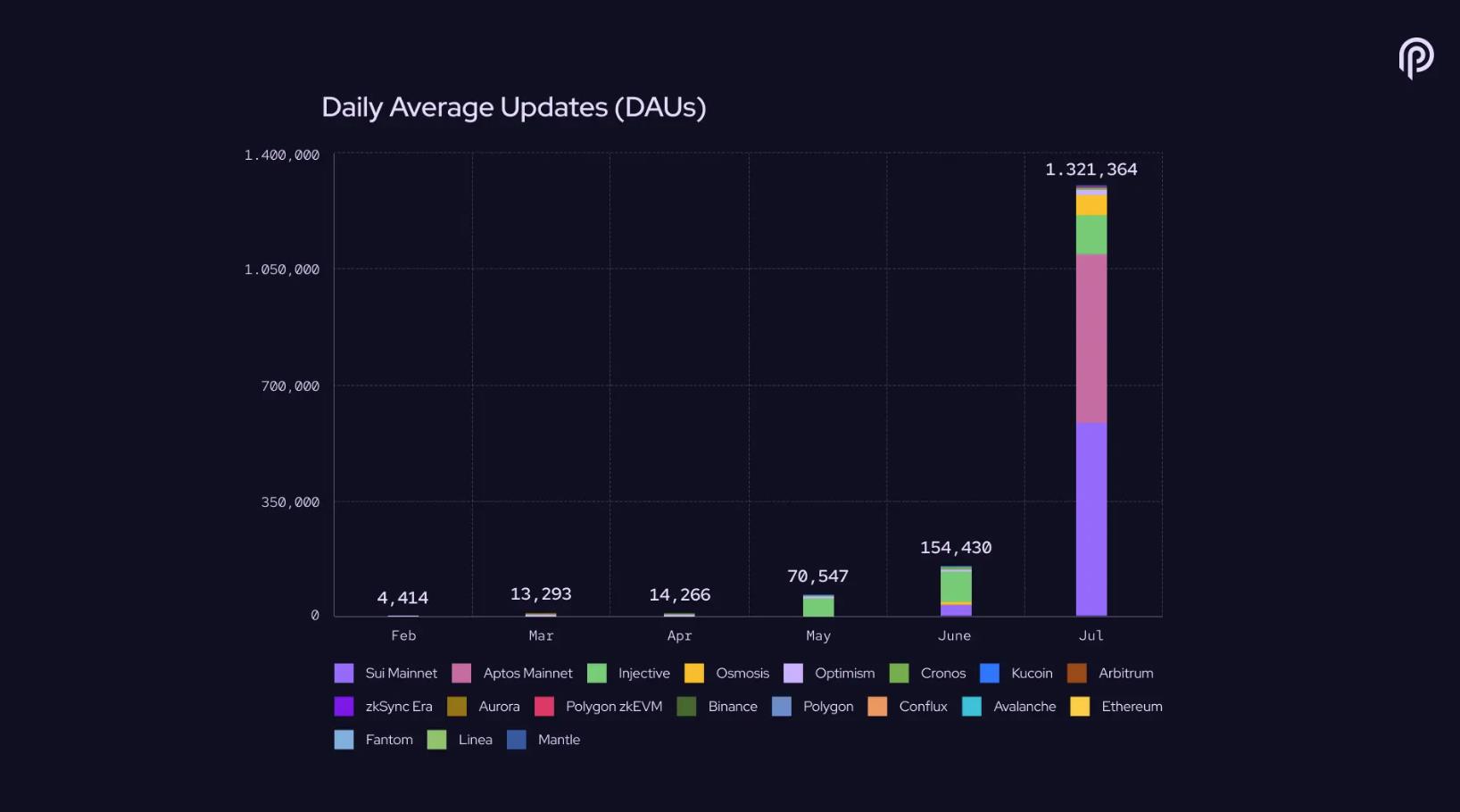
In July, Pyth added support for Sui and Aptos, which explains the unusually high data points. Excluding these, the most active chains were Injective, Osmosis, and Cronos.
Injective runs a continuous automated price updater on its own chain, resulting in constant rather than on-demand updates, hence inflating its numbers. Cronos shows elevated activity due to Fulcrom, while Osmosis benefits from high update volumes from Mars Protocol and Levana.

2. TVS – Total Value Secured
TVS, or Total Value Secured, is one of the most important performance metrics for oracles. TVS represents the total value locked (TVL) generated by dApps using the oracle—in other words, the "total TVL of oracle-powered ecosystem applications." This metric directly reflects the oracle's market scale and adoption rate.
Below is the aggregated TVS data as of July:
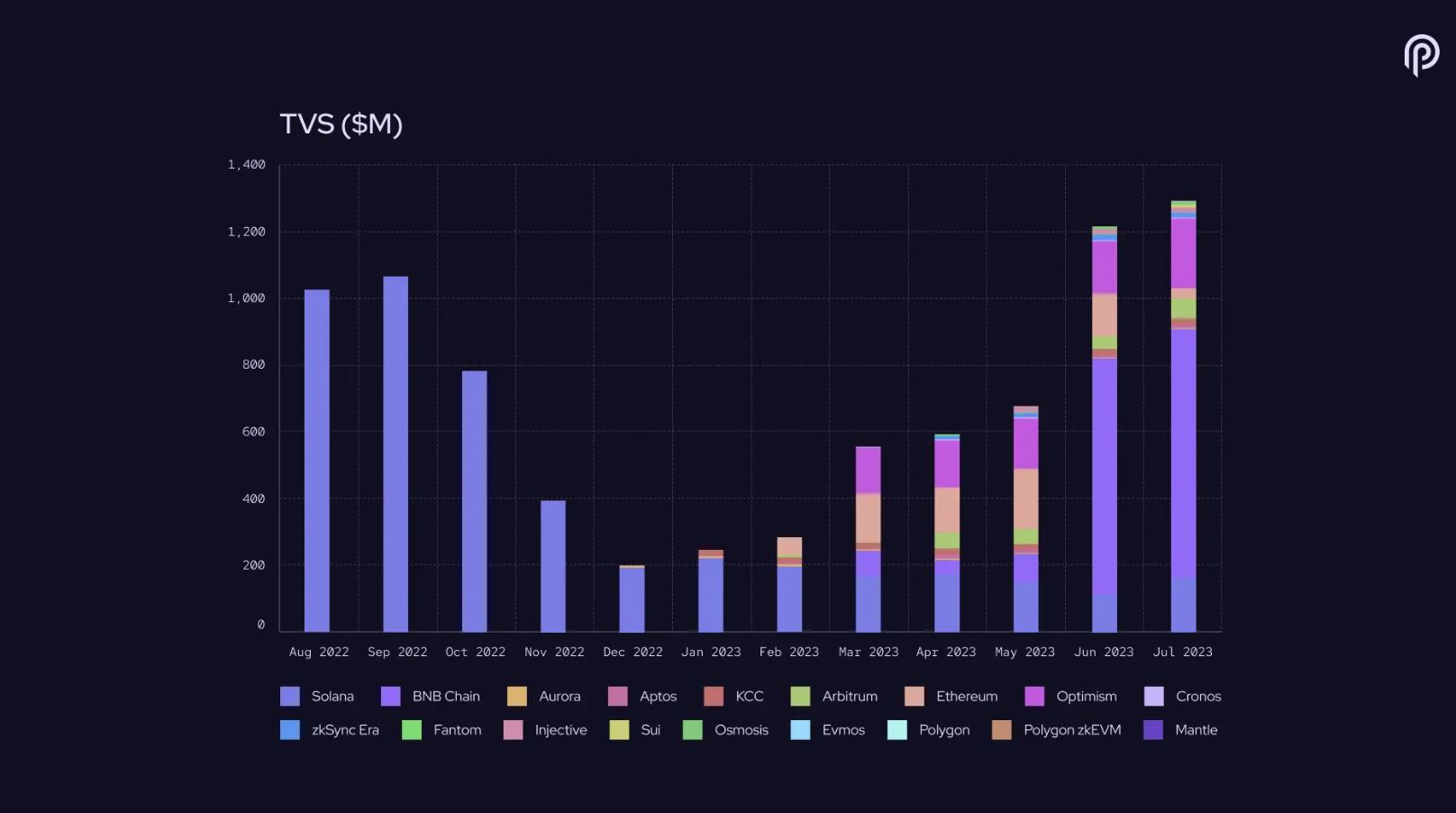
BNB Chain and Optimism show the highest oracle adoption and TVL, followed by Solana and Arbitrum. It’s important to note that top Ethereum DeFi protocols such as Curve and Aave use their own internal oracles, so their data isn’t reflected here. If included, Ethereum would undoubtedly rank first in both oracle adoption and secured value.
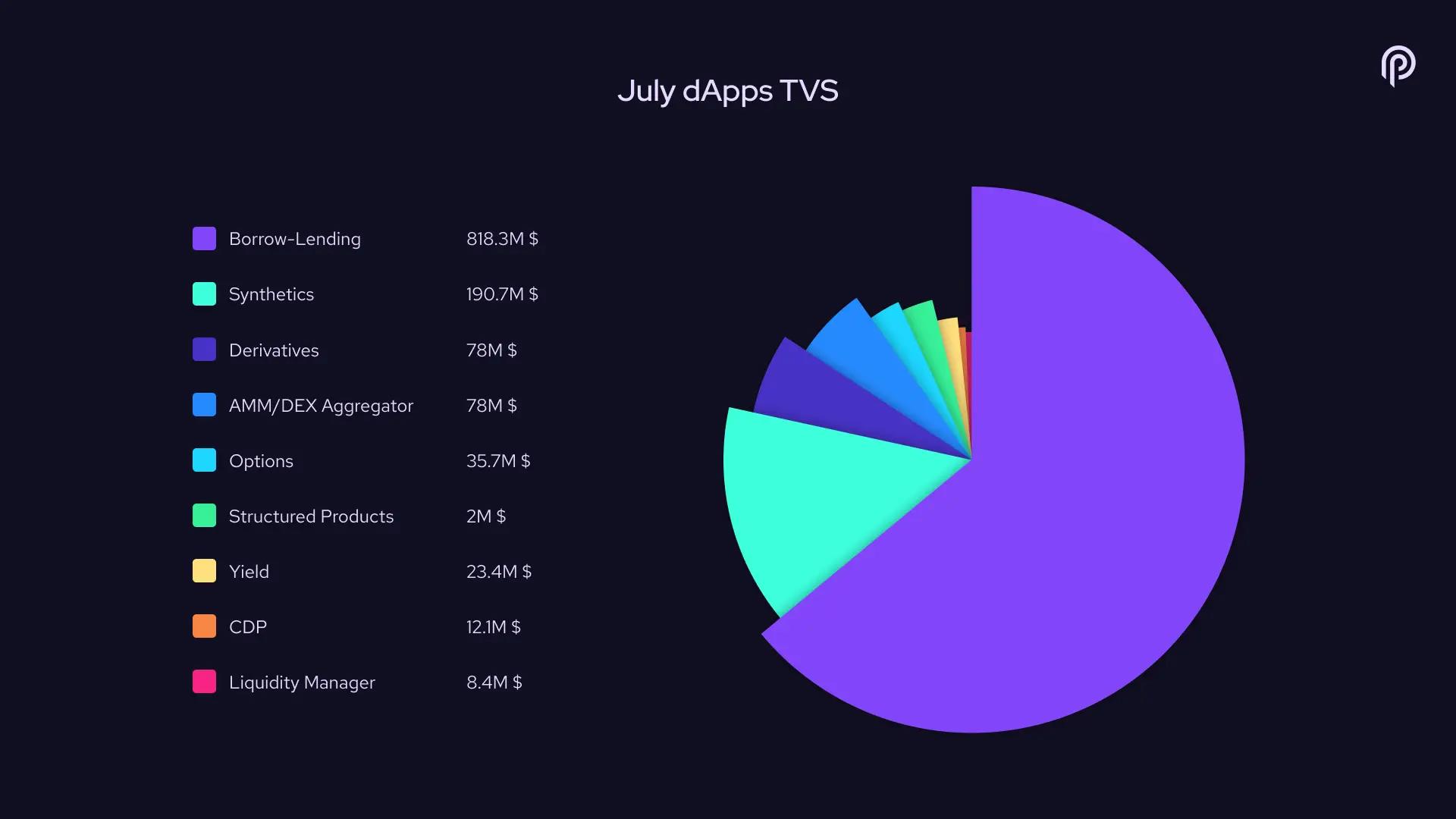
When analyzing by specific dApp categories, the majority of TVS comes from lending protocols, synthetic asset platforms, and derivatives protocols. AMMs/DEXs rank fourth.
3. TVL – Total Traded Value
TVL, or Total Traded Value, is a common industry metric referring to the trading volume on chains supported by Pyth.
Below is the data as of July:
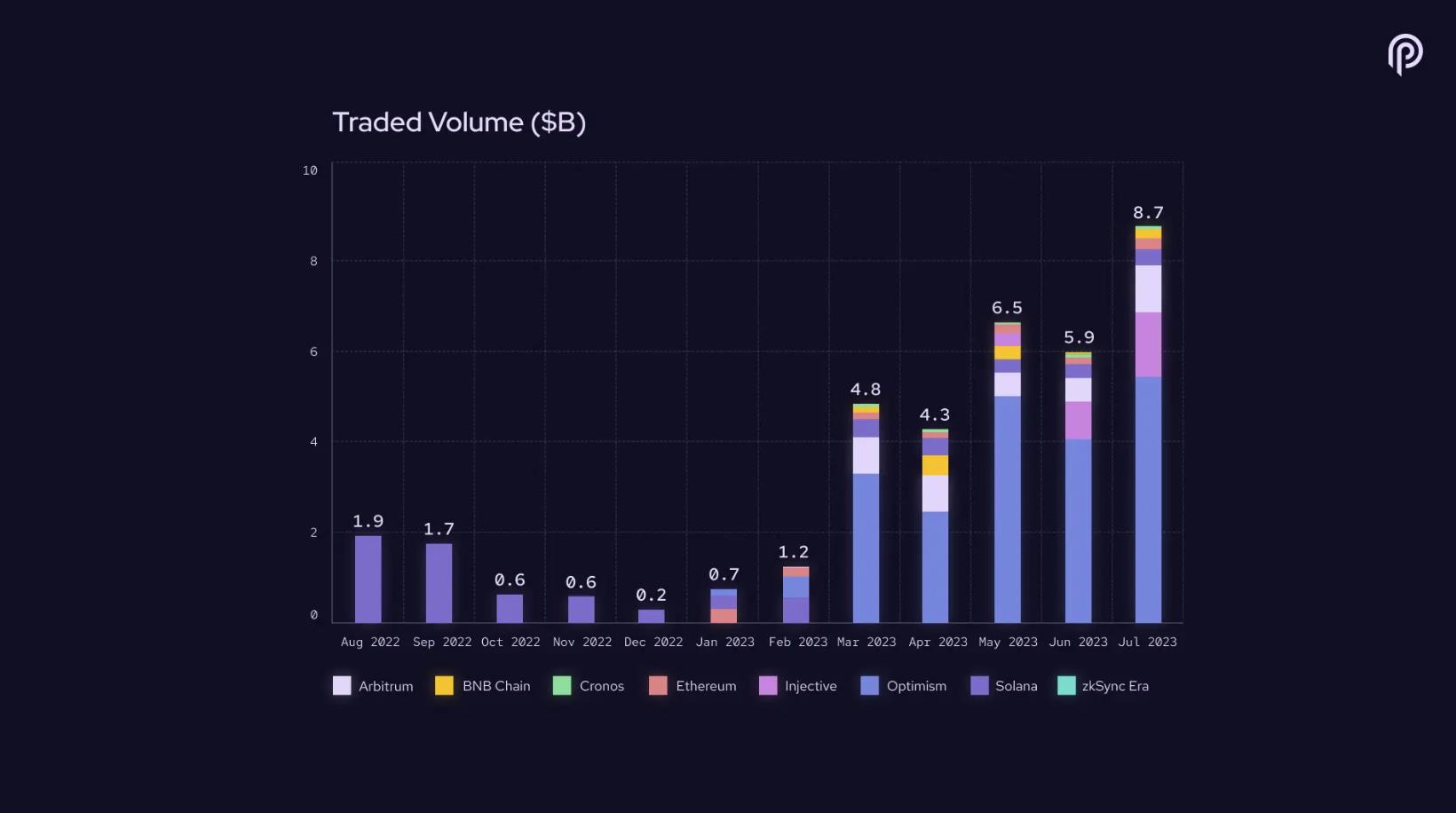
Trading volume in July showed recovery compared to the previous two months, driven by signs of market回暖 and sustained momentum on Optimism.
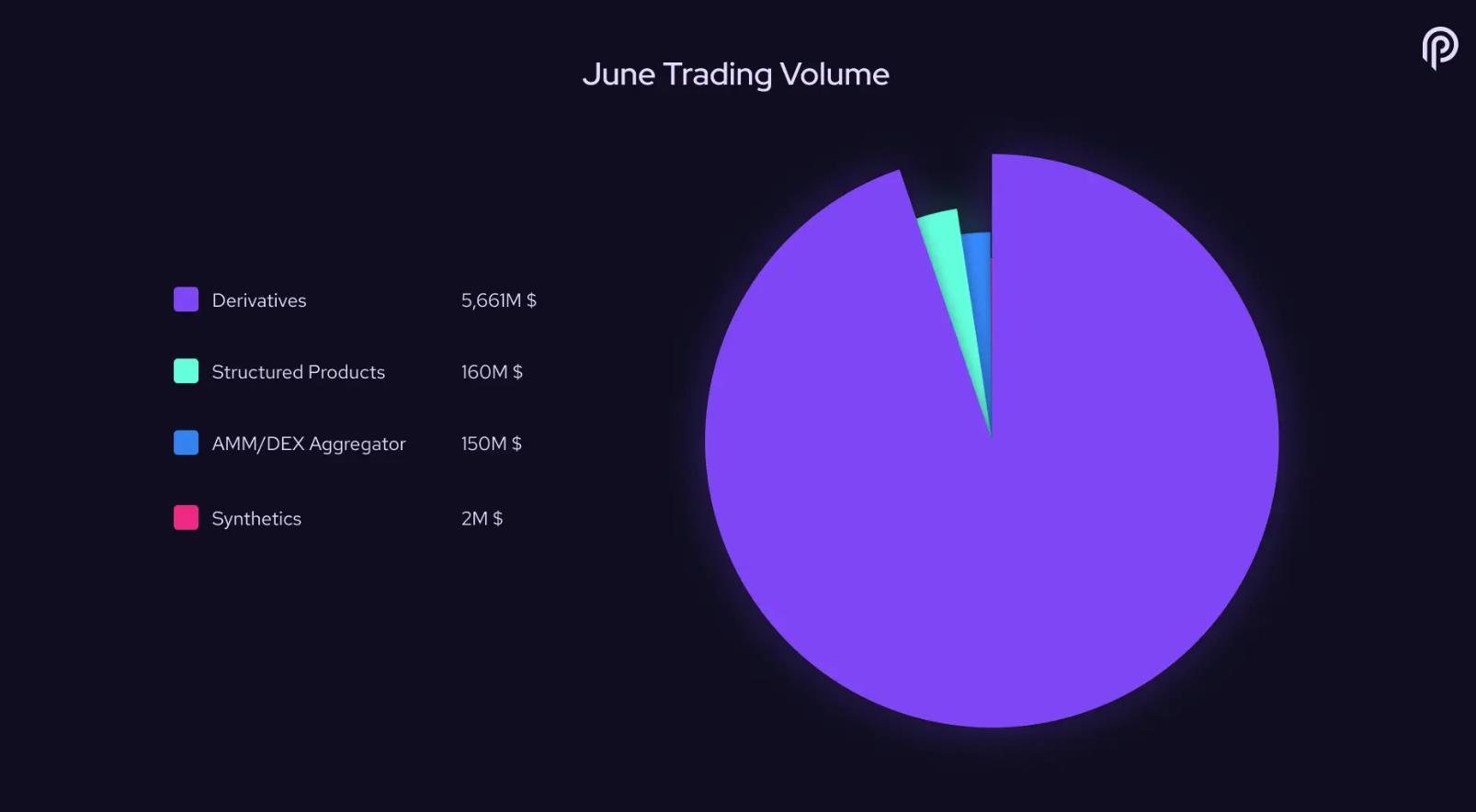
Current breakdowns of trading volume are primarily based on June data. From June’s protocol distribution, derivatives accounted for approximately 95% of total trading volume, while structured products and AMM/DEXs each contributed around 2.5%.
The above presents first-party data and brief analysis provided by Pyth. Overall, July saw a modest rebound compared to June, closely tied to easing market sentiment. Furthermore, oracle data consistently highlights derivatives protocols as the dominant force in DeFi in terms of trading volume and activity.
Join TechFlow official community to stay tuned
Telegram:https://t.me/TechFlowDaily
X (Twitter):https://x.com/TechFlowPost
X (Twitter) EN:https://x.com/BlockFlow_News
 @PythNetwork






