Interpreting Binance Research Report: The State of L2 Sequencers and the Trend Toward Decentralization
TechFlow Selected TechFlow Selected
Interpreting Binance Research Report: The State of L2 Sequencers and the Trend Toward Decentralization
Currently, which projects are working on decentralized sequencers, and what are their specific situations?
 Navigating Web3 tides with focused insights
Introduction
While benefiting from the low fees and relatively high efficiency provided by L2s, we rarely delve into potential underlying issues.
Ethereum's L2 rollup ecosystem is gaining increasing popularity, yet one frequently overlooked component is sequencers—the transaction orderers. Though not intuitively visible at the transaction or UI level, their development is strongly tied to the health of the entire L2 ecosystem.
Sequencers are responsible for transaction ordering, offering lower fees and faster confirmations to improve user experience. However, all major Ethereum L2 rollups currently operate their own centralized sequencers—a practice that carries certain risks and may contradict crypto principles.
Indeed, most rollups mention in their roadmaps plans to eventually decentralize their sequencers, but there remains no clear consensus on how this should be achieved.
Therefore, this report will deeply explore the role of sequencers, the current state of the Ethereum rollup landscape, why L2s lack incentives to decentralize sequencing, and projects actively researching decentralized sequencing solutions.
Given the report’s length, DeepTide Research has refined and distilled its content into a Q&A format for easier reader comprehension.
Key Takeaways
-
Necessity of Sequencers: Sequencers handle transaction ordering, but rollups aren’t required to run their own. Their existence is primarily a design choice aimed at improving user experience.
-
Centralization Issues: Most L2 rollup projects currently operate centralized sequencers, which could lead to transaction censorship and other problems.
-
MEV Concerns: Sequencers have the ability to extract Maximum Extractable Value (MEV), potentially harming users.
-
Lack of Incentive for Improvement: Self-operated sequencers serve as a significant revenue stream for L2s. In a competitive market, relinquishing control through decentralization is commercially unattractive.
-
Solutions: Shared, decentralized sequencers represent the current solution path—aiming to enhance decentralization and cross-rollup composability.
-
Relevant Projects: Espresso, Astria, and Radius are leading efforts in this space, each with distinct technical approaches.
Understanding the Current State of L2 Sequencers: Principles, Necessity, and Market Landscape
1. What are sequencers, and what do they do?
-
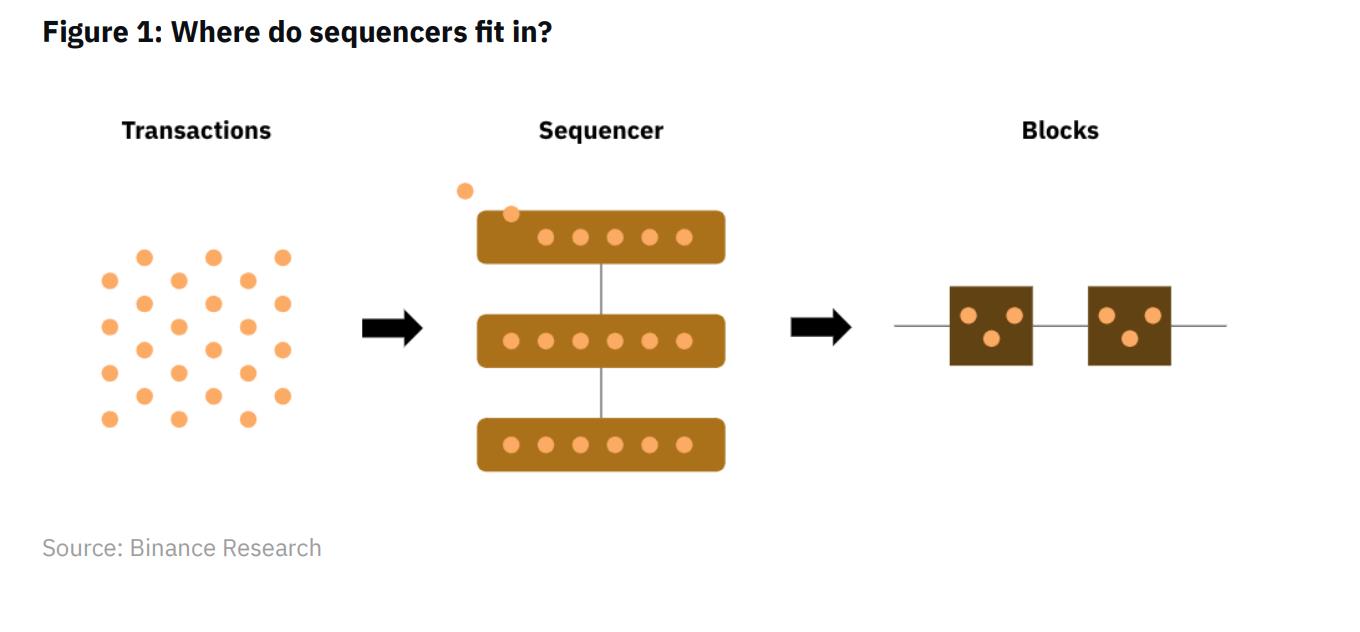
Sequencers are entities responsible for ordering transactions.
-
They receive unordered transactions, organize them into blocks, and generate ordered batches of transactions.
2. Is an L2 required to have a sequencer? What forms do current sequencers take?
-
Rollups use Ethereum’s base layer for data availability and could also use it for transaction ordering.
-
However, Ethereum’s base layer may be relatively inefficient and expensive, making centralized sequencers more convenient, cheaper, and user-friendly.
-
Sequencers receive unordered user transactions off-chain, process them into groups, and generate ordered transaction batches. These batches are then packed into blocks and submitted to the parent L1.
-
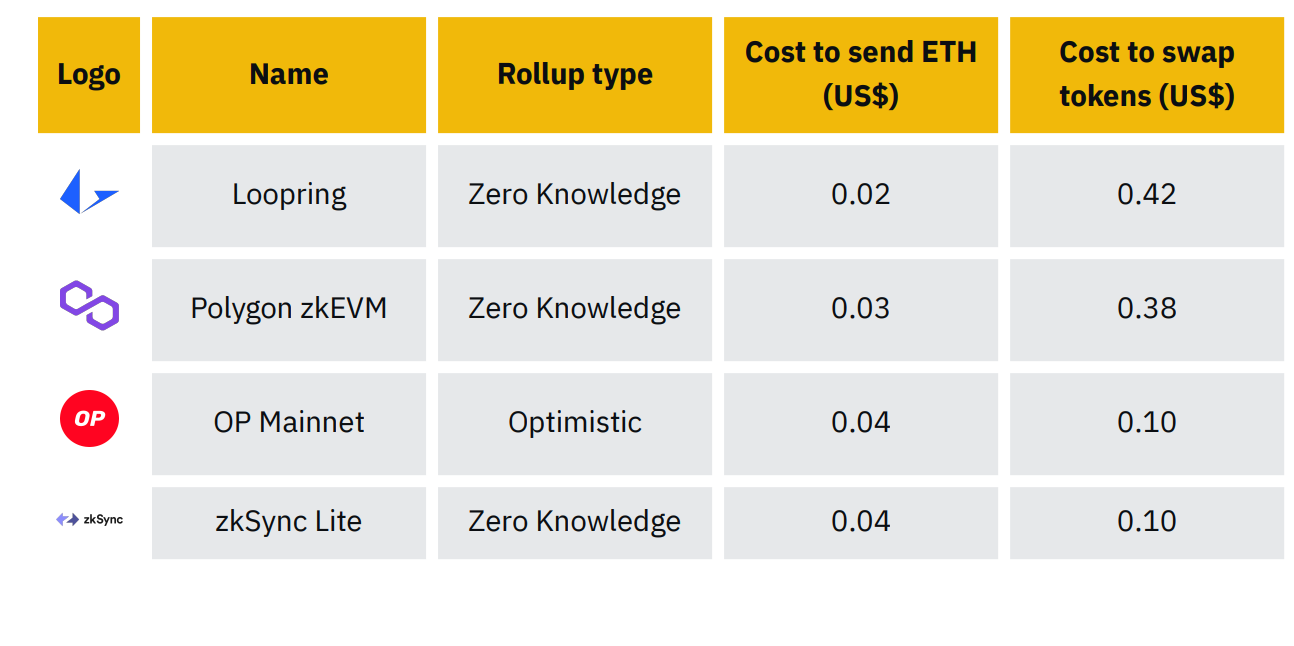
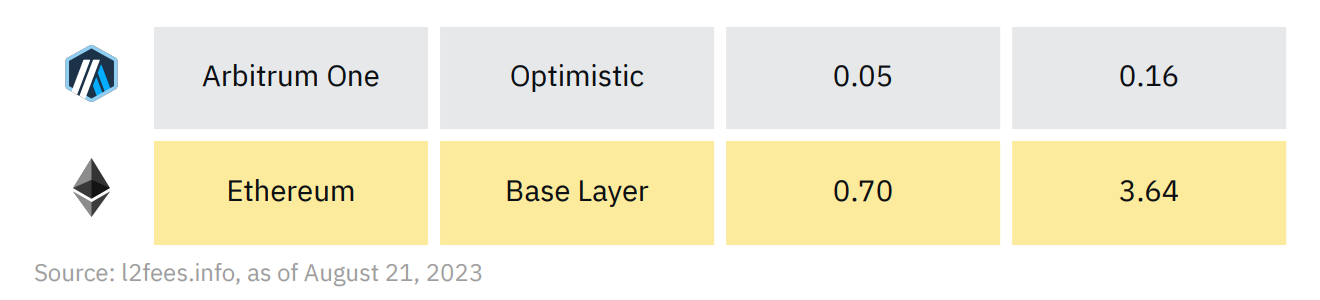
Due to batch compression and bundling, fees are significantly reduced. Transactions on L2 can be considered "soft confirmed" immediately after packaging, greatly reducing perceived confirmation time. See the chart below for specific data.
-
Thus, the answer is “not necessarily.” It is a design choice made for better user experience.
3. What are the potential problems and risks associated with centralized sequencers?
-
Transaction Censorship: Since sequencers control transaction ordering, they may exclude user transactions.
-
MEV Extraction: Sequencers can extract Maximum Extractable Value (MEV), potentially disadvantaging users.
-
Liveness Risks: If a sequencer fails, the entire rollup can be affected.
4. Why do most L2 rollups say they want decentralized sequencers in their roadmap, yet show little actual motivation to implement them?
-
Economic Incentives: Maintaining a centralized sequencer may be the most economically rational choice. Monetizing the sequencer is a crucial revenue source for all major rollups and a core part of their business model.
-
Simplicity: Continuing to operate a centralized sequencer is the simplest option. Developing and maintaining a decentralized alternative could be far more complex and resource-intensive.
Decentralized Sequencers: In-Depth Look at Key Projects
What is the general approach to decentralizing current L2 sequencers?
-
Core Idea: The emerging solution is decentralized, shared sequencers.
-
"Shared" meaning: Multiple different rollups can utilize the same network, where transactions from various rollups are aggregated in a shared mempool before ordering. This helps reduce MEV extraction and censorship risks.
-
"Decentralized" meaning: Refers to leader rotation—instead of a single participant always ordering transactions, a leader is selected from a decentralized set of participants. This enhances resistance to censorship and ensures liveness.
-
Similarity to L1s: This resembles leader rotation mechanisms used by many L1 blockchains. Building a decentralized sequencing layer is akin to building a decentralized L1—you need to establish a validator set.
Which projects are currently working on decentralized sequencers, and what are their specifics?
-
Espresso
-
Project Overview
-
Espresso Systems is a company focused on building tools to bring Web3 to the mainstream, particularly targeting L2 rollups and the Ethereum ecosystem.
-
The Espresso Sequencer is a decentralized, shared sequencing network designed to decentralize rollups while providing secure, high-throughput, low-latency transaction ordering and data availability.
-
It functions as a middleware network between rollups and the underlying L1, handling decentralized transaction ordering and data availability for rollups.
-
The Espresso Sequencer is designed to be compatible with non-EVM systems and usable for both zk-VMs and optimistic VMs.
-
-
Operating Mechanism
-
At the core of the sequencer lies HotShot, a consensus protocol based on HotStuff, incorporating recent advances such as Pacemakers and Verifiable Information Dispersal (VID).
-
HotShot is open, permissionless, and enables decentralized participation in the sequencing network, delivering high throughput and fast finality while maintaining security and liveness guarantees.
-
-
Tiramisu Data Availability
-
Purpose: Most rollups rely on L1 blockchains (e.g., Ethereum) for data availability, but ETH block space is scarce and extremely expensive. Espresso uses the Tiramisu data availability solution to address this.
-
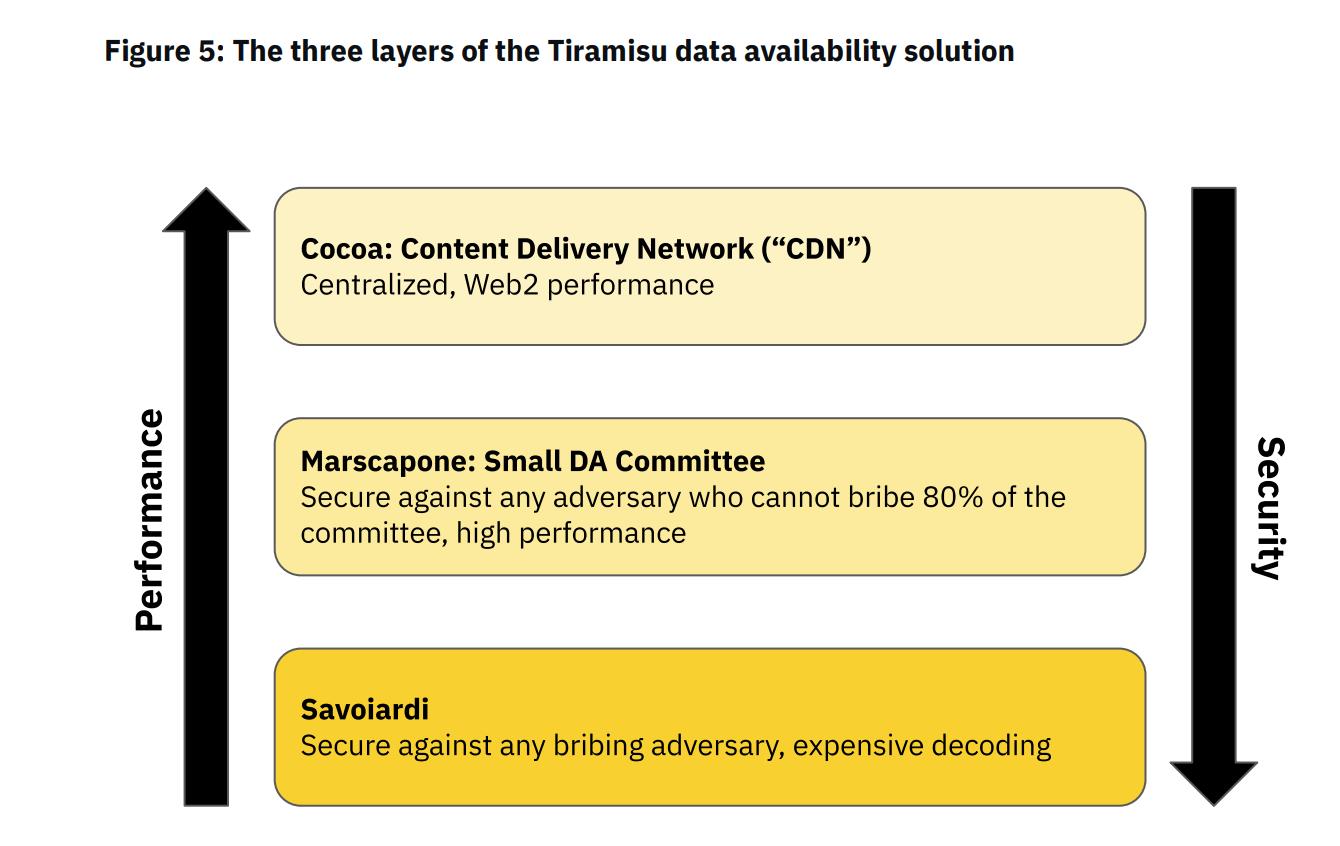
Tiramisu introduces three novel layers that collectively ensure data accessibility for all required parties.
-
Savoiardi: An anti-bribery layer (similar to Ethereum’s danksharding proposal), providing the highest level of security.
-
Mascarpone: A middle layer that guarantees valid data recovery by electing a small DA committee.
-
Cocoa: Enhances Tiramisu with a content delivery network to deliver "Web2-level" performance, accelerating data propagation. As this layer is inherently centralized, it is fully optional.
-
-
Notable Partnerships
-
Espresso Systems has partnered with EigenLayer, Polygon zkEVM, Injective, among others.
-
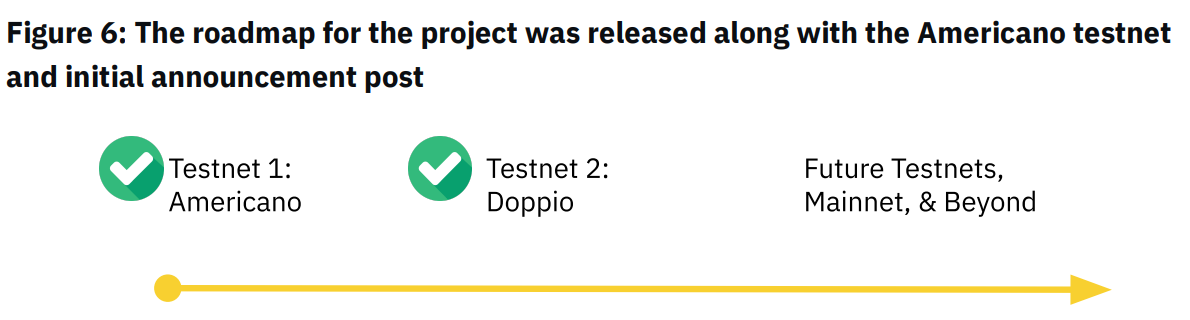
Alongside the Doppio testnet announcement, Espresso revealed a collaboration with Polygon zkEVM—marking the first end-to-end integration of the Espresso Sequencer with a fully functional zk-rollup (a fork of Polygon zkEVM).
-
-
Current Progress
-
In November 2022, Espresso began sharing details about its Espresso Sequencer work.
-
On July 20, 2023, Doppio became the second major milestone and testnet for HotShot and the Espresso Sequencer. Espresso Systems also released the project’s whitepaper.
-
-
Astria
-
Project Overview
-
Astria is building a shared sequencing network and is one of the key companies driving the transition away from centralized sequencers.
-
They are also developing Astria EVM—the first rollup powered by their shared sequencing network. This rollup will benefit from fast, censorship-resistant transaction ordering via their network and leverage Celestia for data availability.
-
-
Operating Mechanism
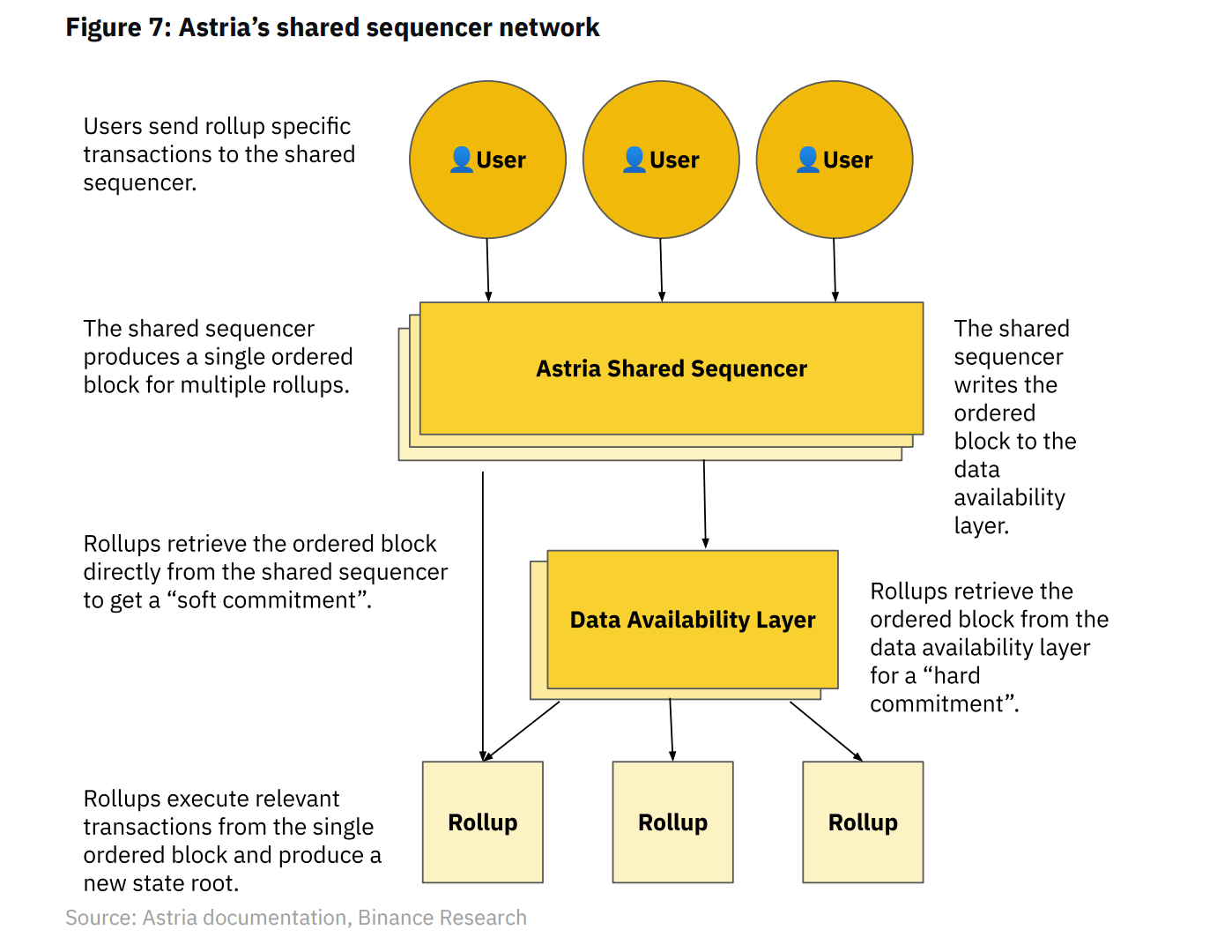
-
Astria’s shared sequencing network allows multiple rollups to share a single, permissionless, decentralized sequencing infrastructure.
-
The network itself is a middleware blockchain using CometBFT (a fork of Tendermint Core) to reach consensus on ordered transaction sets. It accepts transactions from multiple rollups, orders them into a single block, and writes them to the DA layer.
-
-
Astria EVM
-
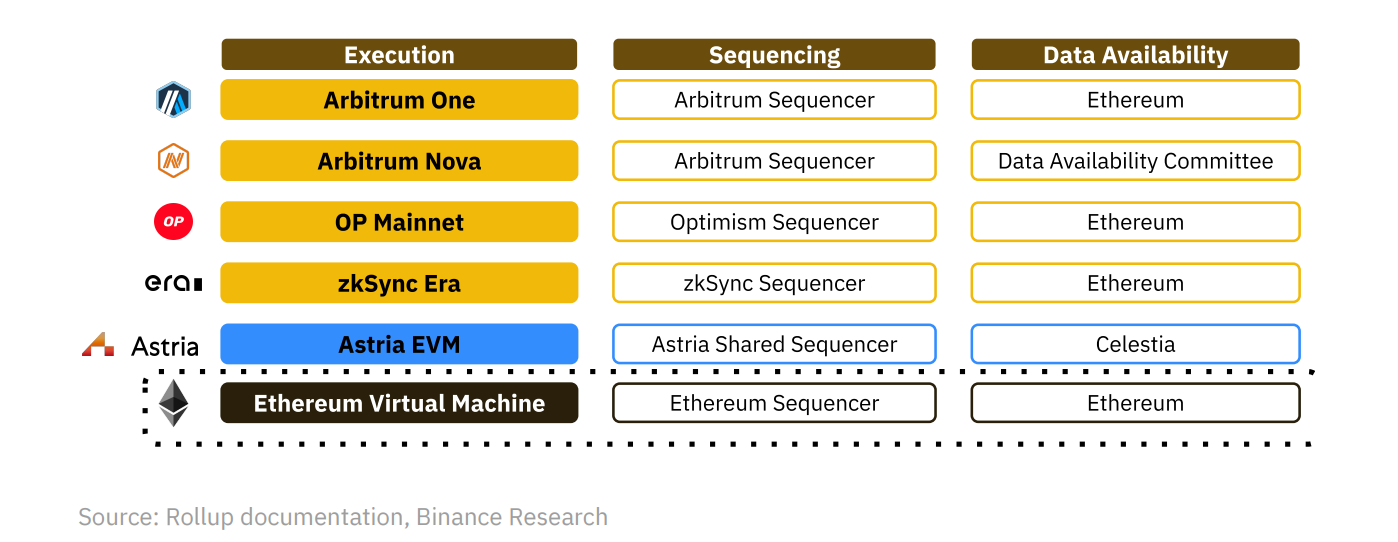
Astria EVM will be the first rollup driven by Astria’s shared sequencing network.
-
Most current rollups handle execution and ordering independently, relying on Ethereum for data availability. Astria EVM will focus solely on execution, using Astria’s shared sequencer for ordering and Celestia for data availability.
-
-
Astria Development Cluster
-
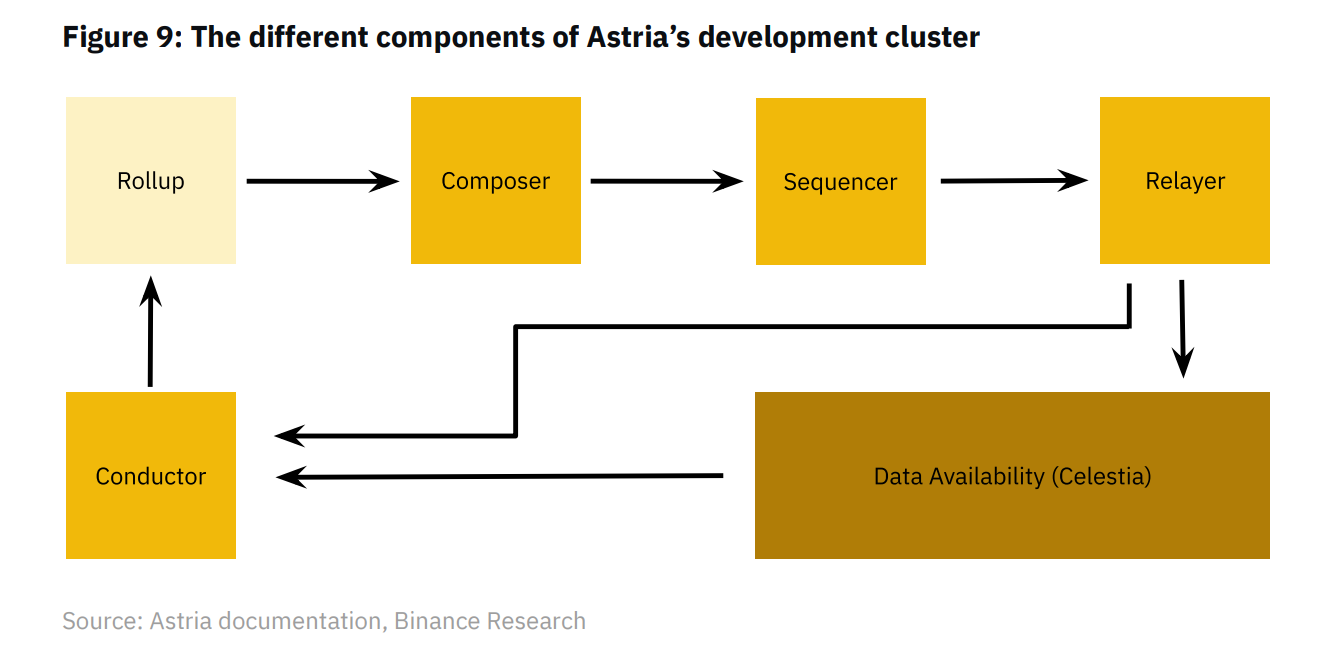
On August 16, 2023, Astria launched its development cluster, containing all components needed to deploy a rollup on Astria’s shared sequencing network. The goal is to simplify development, testing, and integration with Astria. Components include:
-
Astria sequencer: Block-producing node for transaction ordering. The dev cluster relies on a single node; mainnet will use a decentralized set.
-
Data availability layer: A local Celestia network providing hard finality.
-
Rollup: Geth-based rollup node for execution and state storage.
-
Composer: Retrieves pending transactions from the rollup’s mempool and submits them to Astria’s CometBFT mempool.
-
Conductor: After receiving blocks, filters them per individual rollup. Filtered blocks are then passed to the respective rollup for execution.
-
Relayer: Sends ordered blocks to the conductor and the DA layer (Celestia).
-
-
Current Progress
-
In April 2023, Astria announced a $5.5 million seed funding round.
-
In August 2023, the team released the development cluster.
-
The team is currently developing a Devnet, expected to launch in the coming weeks.
-
Their code is open-source, with further documentation available on the official GitHub page.
-
-
Radius
-
Project Overview
-
Radius is building a trust-minimized shared sequencing layer using cryptographic techniques to decentralize sequencers, prevent censorship, and minimize harmful MEV. Their solution is blockchain-agnostic and applicable to various rollup types.
-
-
Operating Mechanism
-
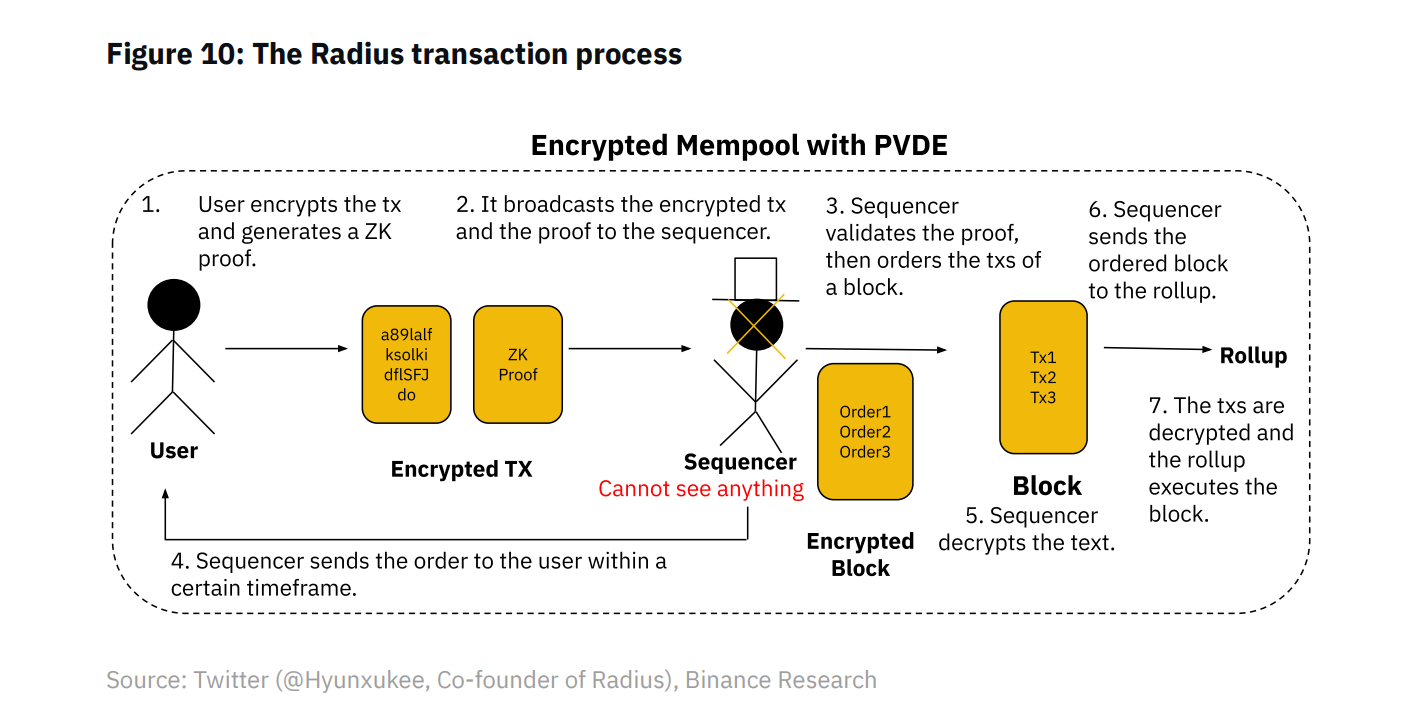
Encrypted mempool: Radius employs an encrypted mempool to achieve its goals. Each user-submitted transaction is encrypted upon submission. Sequencers order encrypted transaction bundles without knowing their contents, preventing MEV extraction and censorship.
-
Practical Verifiable Delay Encryption (PVDE): Radius leverages a zk-based PVDE scheme to create its encrypted mempool. User transactions are temporarily encrypted using time-lock puzzles. Sequencers must solve these puzzles to obtain decryption keys, requiring time and computation, thus preventing premature decryption.
-
MEV Market: Radius also proposes an optimized blockspace design, creating an auction-based market where traders can submit cross-rollup MEV transaction bundles. The highest bidder gets priority inclusion by the sequencer.
-
-
Differences from Other Solutions
-
Radius’s solution can mitigate MEV and censorship even with a single sequencer.
-
Because transaction contents remain encrypted, even a single sequencer cannot act maliciously. This eliminates the need for consensus mechanisms, offering advantages in speed and scalability.
-
This contrasts with Astria and Espresso, which rely on consensus protocols for transaction ordering.
-
-
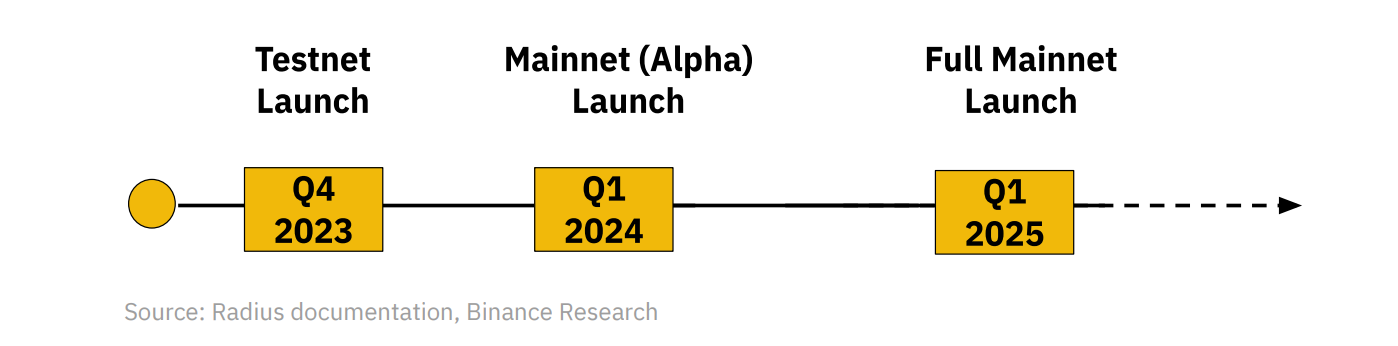
Current Progress
-
In June 2023, Radius announced a $1.7 million pre-seed funding round.
-
Mainnet launch planned for 2025.
-
-
Others
The report briefly mentions NodeKit and AltLayer as alternative solutions, though without detailed elaboration.
Future Outlook
-
What are the current status and choices facing L2s regarding sequencers?
-
Existing L2 rollups face a choice: either maintain the status quo with a single, centralized sequencer;
-
Or begin integrating with third-party shared sequencing networks or develop their own internal solutions.
-
What are the implications of continuing to use centralized sequencers?
-
This is the simplest and likely most economically rational path. As noted, sequencer monetization is a major revenue stream for all key rollups.
-
Beyond risks like censorship, MEV extraction, and single points of failure, maintaining centralized sequencers contradicts core crypto principles.
-
How should rollups weigh integration with third-party sequencing networks?
-
Compared to the risks of centralization or the effort and cost of building internal solutions, outsourcing sequencing to specialists may be a smart move for many rollups.
-
One of the most important considerations is rollup interoperability. This could be the clearest advantage of running on a shared sequencer versus operating in a proprietary, isolated environment.
-
What future developments can we expect?
-
Some rollups may choose to integrate with third-party sequencing networks like Espresso and Astria, while others may opt to build their own internal solutions. Particularly larger rollups that have already issued native tokens might see value in developing proprietary solutions to maximize profits and enhance token utility.
-
This will remain a topic of growing interest in the coming months, and we are confident more players will enter the space—both within the rollup ecosystem and the shared sequencing domain.
Join TechFlow official community to stay tuned
Telegram:https://t.me/TechFlowDaily
X (Twitter):https://x.com/TechFlowPost
X (Twitter) EN:https://x.com/BlockFlow_News
 深潮TechFlow