








Bankless: How Crypto Protocols Affect Our Psychology
TechFlow Selected TechFlow Selected
Bankless: How Crypto Protocols Affect Our Psychology
The "thing" that can hold a private key can be anything! That's the power of smart contracts.
 Navigating Web3 tides with focused insights
Author: David Hoffman
Compiled by: TechFlow
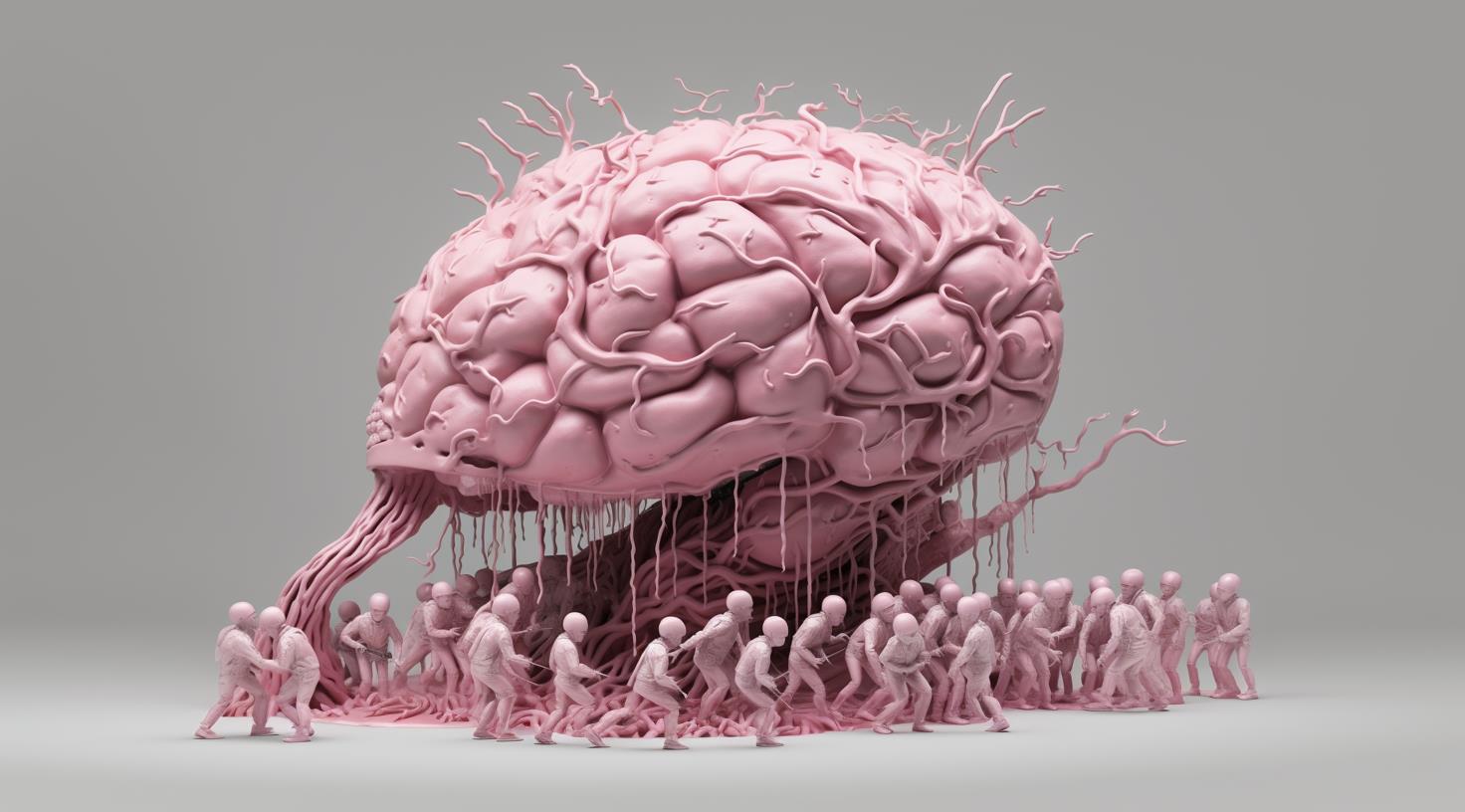
The most famous saying in cryptocurrency is "come for the money, stay for the tech."
This means that the lure of wealth may draw you into the crypto rabbit hole, but what truly captivates you is the depth of the technology.
Take a moment to reflect on how you've changed since encountering cryptocurrency: Have you grown? Has your worldview shifted? What do you now consider important—things you never thought about before? How are you different today?
One of the more magical things about cryptocurrency is that it gives us a new lens through which to observe the world. Let's explore this worldview further and examine what cryptocurrency offers individuals—and what it demands from them:
Web3 Psychology
There exists a trichotomy between technology, society, and the individual: society nurtures individuals, individuals create technology, technology enables individuals to express ideas, and ideas transform society. This is the trajectory of history.
Now, technology holds a special role in this trichotomy. Societies adapt and change; individuals die. But once a technology is discovered, it becomes locked in place—a genie that cannot be put back in the bottle. Foundational structures like the internet can never be undone.
Technology progresses incrementally, and society adapts to the most revolutionary edge technologies pioneered by individuals of each era. Perhaps this is why Twitter feels like such a unique space—where fringe social movements can become mainstream discourse.
Web2 represents the "current trend" of social structure. Technologies like Facebook, Instagram, and Twitter define large parts of society. They serve as platforms for opinions and thus become conduits for spreading ideas.
Together with nation-states, Web2 represents a core mechanism of societal operation. When an individual wants to act, express an opinion, or effect change in the world, they must go through these intermediaries. If they wish to change rules, they must push their views through legislative processes within nation-states. If they seek help, they must share their views via Web2 platforms.
In Bankless and across the broader cryptocurrency space, we often criticize Web2 and nation-states. We focus on their flaws and oppressive aspects. We are merely subjects under national laws and tax systems—but... these are also the best systems humanity has devised so far. Thanks to Web2, our voices can reach wider audiences; thanks to constitutions, many freedoms are protected.
But these are only the metadata of current socio-technical systems—and metadata changes!
Technologies are adopted solely because they offer better service than their predecessors. If they didn't, they wouldn't be adopted, we wouldn't be discussing them, and they'd remain forgotten ideas that never gained traction.
That said, Web3 has arrived. It is both a technology and a mindset, and the Web3 genie has violently burst out of the bottle. As I mentioned at the beginning, cryptocurrency is a lens for observing the world. It allows you to see the naked emperor... the people behind the curtain... the manipulators and their strings.
Web3 makes individuals stronger.
Web3 delivers powerful tools: new decentralized financial infrastructure, direct ownership, the ability to be your own bank, the power to create financial assets. All of these are revolutionary, and each will shape the future of society in its own way.
But cryptocurrency is an exceptionally deep technology. It penetrates all other technologies and reaches directly into the core of human existence. We are fortunate to be alive during the maturation of a technology with such profound implications. Nation-states must confront it. The internet will adapt to it. Web2 must respond to it.
But what about you—the individual? How will you change when the ground beneath you shifts? What kind of person will you become when the protocols you operate on grow more powerful?
Cryptography is an asymmetric technology that transfers power to individuals.
Using cryptography is trivial, but breaking it is extremely difficult. It grants individuals the same power as banks and nation-states. No tanks, planes, or steel can separate you from your assets—every worldly authority must ask for your permission.
The Responsibility of Web3
With the above context, we finally arrive at the central point of this article.
Cryptographic protocols impose responsibility upon us.
Being our own bank, holding our own assets, voting on our own protocols—these are powers individuals have never had before. Previous technologies did not make this possible. We had representative democracy, where we entrusted our voice to representatives we had to trust. We had banks we trusted to safeguard our money, custodians we trusted to hold our assets, brokers we trusted to fairly execute our trades.
While relinquishing individual responsibility may seem insignificant, small acts of deflection accumulate and merge into singular, massive problems—ultimately becoming society’s darkest clouds. These forced choices become the entrenched incumbents that define the status quo.
Private keys are carriers of responsibility.
The definition of the word "responsibility" is something I believe every Web3 practitioner would appreciate.
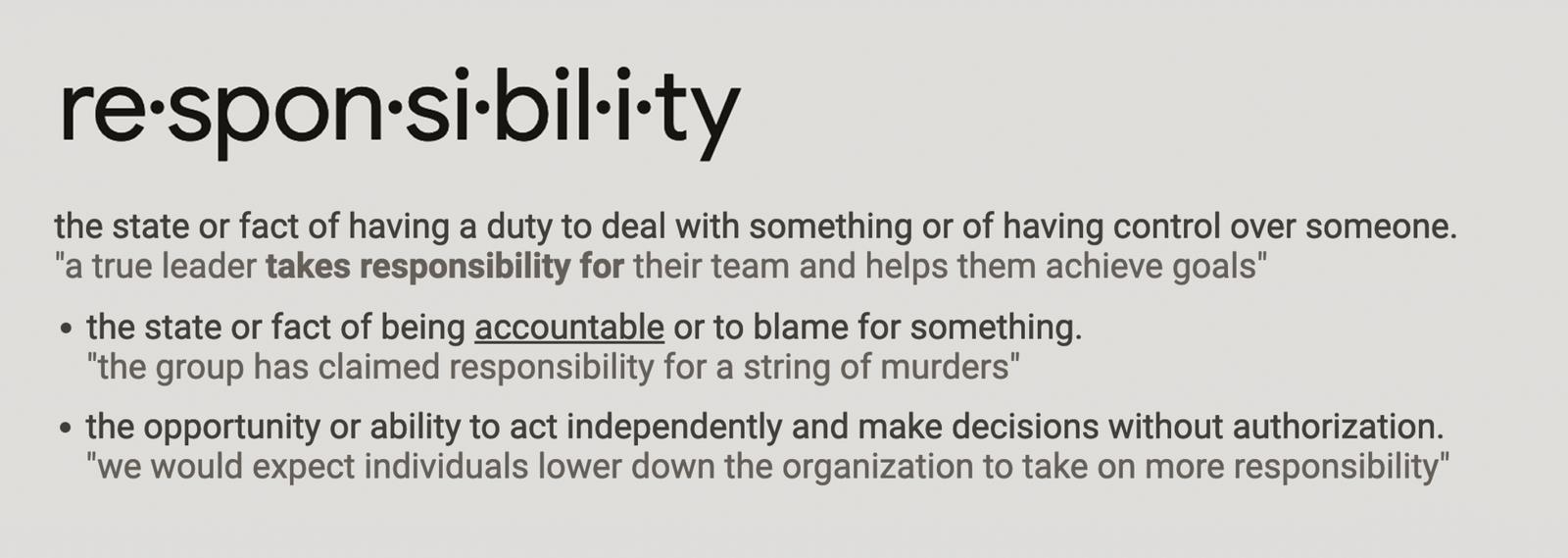
The phrase "the opportunity or ability to act independently and make decisions without authorization" resonates deeply—that’s permissionlessness! That’s exactly what cryptocurrency enables! And that’s precisely what today’s society lacks.
Anything contained within our private keys becomes our responsibility. The "things" that can reside in a private key can be anything! This is the power of smart contracts—anything imaginable can be coded, deployed, and transformed into an asset in our wallet. If it holds value, it can be encoded into an asset we are responsible for.
Through cryptographic private keys, we gain direct control over our lives—not just by being our own bank and self-custodying our assets, but also by participating in governance and shaping the behavior of our protocols! In Web2, we were given products we couldn’t influence. In Web3, our protocols respond to our choices.
For the first time, we bear direct responsibility for the protocols that govern our lives. Never before have we had tools that allow us to assume so much responsibility so easily. So I ask you, reader—echoing our initial question—with full control now in your hands... who will you become?
When your fingers touch the power of private keys, and armies of developers stand ready to open doors for you... which door will you choose? When the power of private keys permeates all of society, how will society react? What fundamental new ideas will individuals create to alter the course of humanity? After the pendulum of responsibility swings from the few to the many, what will humanity become? These are profound questions, and only time will tell.
We have already seen cryptocurrency give rise to immense good and evil. One thing is certain: every individual now wields cryptographic power. While this has brought great chaos to the crypto world, I choose to believe that this is not chaotic evil, but chaotic good.
Join TechFlow official community to stay tuned
Telegram:https://t.me/TechFlowDaily
X (Twitter):https://x.com/TechFlowPost
X (Twitter) EN:https://x.com/BlockFlow_News
 Bankless











