PayPal USD cannot threaten USDT
TechFlow Selected TechFlow Selected
PayPal USD cannot threaten USDT
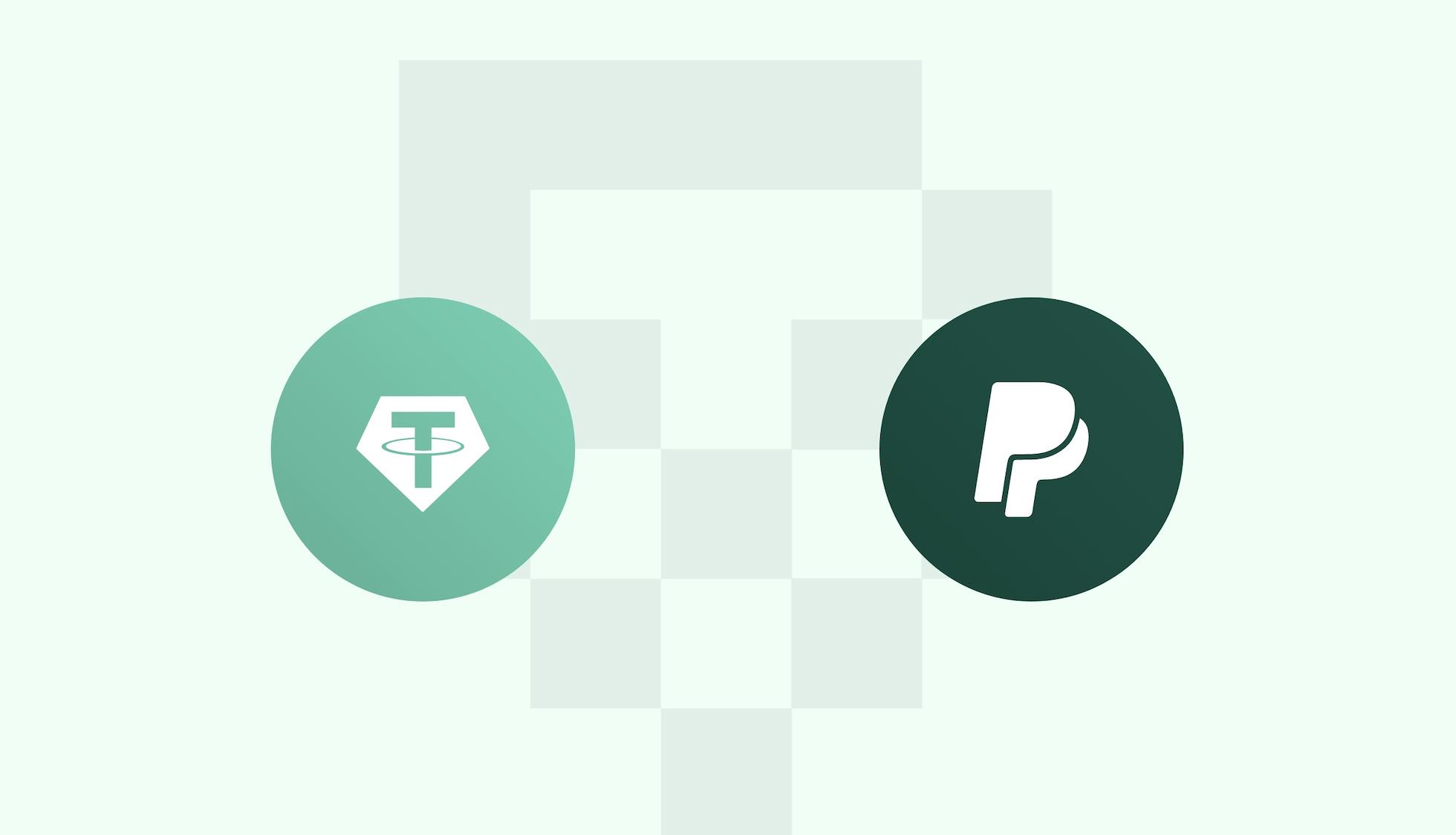
PYUSD to the left, USDT to the right, each exploring their own path.
 Navigating Web3 tides with focused insights
Author: Chef at TechFlow
In 2021, PayPal announced support for payments using Bitcoin, Ethereum, and other cryptocurrencies in the United States, adding fuel to the bull market at the time—though little was heard about it afterward.
In 2023, PayPal announced the launch of its U.S. dollar-backed stablecoin, PayPal USD (PYUSD), issued by financial technology firm Paxos. The stablecoin will gradually roll out to PayPal users in the U.S., be redeemable for U.S. dollars at any time, and can be used to buy or sell other cryptocurrencies—including Bitcoin—offered on PayPal’s platform.
So, can this new entrant PYUSD leverage PayPal’s global influence and vast payment network to challenge established stablecoins like USDT?
Our answer is: no.
This question has also been raised with Tether.
Paolo Ardoino, CTO of Tether, stated, “We don’t expect any impact on USDT because PYUSD’s primary market is domestic—the United States—and Tether does not serve U.S. users.”
When asked about the possibility of “PYUSD expanding into international markets in the future,” Paolo Ardoino responded that such a development would be positive for the overall cryptocurrency industry.
“It will get interesting. Another U.S. stablecoin (referring to PYUSD) could erode payment revenues from Mastercard and Visa. It will also promote the development of the crypto industry and help drive sensible regulatory policies.”
On the contrary, Paolo Ardoino believes PYUSD benefits USDT by reducing regulatory pressure: “It may mean that competitive pressure concentrated in the U.S. market will be somewhat reduced.” He implied that USDC, rather than USDT, would be the primary target affected by PYUSD, while USDT can focus more on emerging markets and developing countries.
Recall that back in 2018, when GUSD and PAX—two regulated stablecoins—launched, there was widespread skepticism about USDT’s future. After all, these were two stablecoins approved by the NYDFS, fully backed 1:1 by U.S. dollars, and touted for greater transparency and compliance, whereas USDT faced accusations of “inadequate reserves” and “lack of transparency.”
Yet, those compliant stablecoins ultimately posed no threat to USDT whatsoever.
As for why, here's a more academic explanation: For stablecoins, transparency doesn't matter—liquidity matters most.
Mikko, a scholar in monetary studies, once said that transparency could destroy a stablecoin system.
Bengt Holmstrom, the 2016 Nobel Laureate in Economics, once wrote: There is a fundamental difference between stock markets and money or debt markets. In stock markets, people demand transparency—investors want full clarity on the financial condition of the companies they invest in. The more transparent a company, the higher its valuation might be. But money markets are different.
The more transparent a monetary operation is, the more susceptible it becomes to bank runs. Why? The reason is actually well understood. Because the control over those so-called collateral assets and reserves is no longer in the hands of the original asset owners. As long as there is “redemption” or “exchange,” there exists a counterparty, and with counterparties come credit risks. If everything were fully transparent—if you knew the U.S. dollars backing USDT were held in a troubled bank, and you could see that the bank’s balance sheet is loaded with potentially defaulting bad loans—would you still hold USDT? No… In other words, the more transparent such an institution is, the more likely it is to collapse.
For USDT, its greatest advantage lies in liquidity.
On one hand, in the crypto market—whether centralized exchanges or DeFi—USDT is widely adopted as the base settlement currency and serves as the bridge between the fiat and crypto worlds.
On the other hand, USDT has gone further mainstream than many realize. It has expanded beyond cryptocurrency circles into cross-border trade settlements, gambling, gaming, and illicit activities—these diverse use cases underpin USDT’s strong global liquidity, especially across the Asia-Pacific region. Indeed, USDT’s penetration into illicit sectors has become an open secret.
Note: For more on USDT’s links to illicit activities, revisit TechFlow’s 2020 investigative report: "Behind 'No Reserve': Investigating USDT’s Gray Economy—Drugs, Online Gambling, Money Laundering"
Perhaps precisely for these reasons, Tether CTO Paolo Ardoino is entirely unbothered by the prospect of PYUSD posing a threat.
PYUSD, meanwhile, will likely take a different, differentiated path. At present, its greatest value to the industry may lie in serving as a compliant fiat on/off ramp for U.S. dollars, and leveraging PayPal’s massive user base to bring fresh capital inflows into the crypto market during bull cycles.
In short, PYUSD turns left, USDT turns right—each exploring their own path.
Finally, just one thought: After years of exploration in the crypto market, following Bitcoin and Ethereum, perhaps the only true killer innovation has been—one single thing—stablecoins. Long live stablecoins!
Join TechFlow official community to stay tuned
Telegram:https://t.me/TechFlowDaily
X (Twitter):https://x.com/TechFlowPost
X (Twitter) EN:https://x.com/BlockFlow_News
 深潮TechFlow