








Podcast Notes | Interview with Polygon Co-founder: From Matic to POL, Polygon 2.0's Endgame
TechFlow Selected TechFlow Selected
Podcast Notes | Interview with Polygon Co-founder: From Matic to POL, Polygon 2.0's Endgame
Sandeep Nailwal said their goal is to end the infrastructure era of Web3, making applications rather than infrastructure the main protagonist of the ecosystem.
 Navigating Web3 tides with focused insights
Compiled & Translated by TechFlow
Polygon is one of the most widely used blockchains in crypto, and its various initiatives to expand beyond the crypto-native world are achievements in themselves. However, Polygon has previously faced criticism for being perceived as "just a sidechain" and not fully "aligned with Ethereum."
But with the launch of Polygon 2.0, these criticisms may soon fade. On topics including Polygon’s endgame, the rebranding of the MATIC token, ZKSupernets, and future development strategies, co-founders Sandeep Nailwal and Mihailo Bjelic shared their perspectives.
Their goal is to “end the era of Web3 infrastructure, enabling applications—not infrastructure—to become the main actors within the ecosystem.”
Spend 5 minutes reading TechFlow's podcast summary instead of 70 minutes watching the original video.
Below is the full transcript of the discussion, compiled and translated by TechFlow:
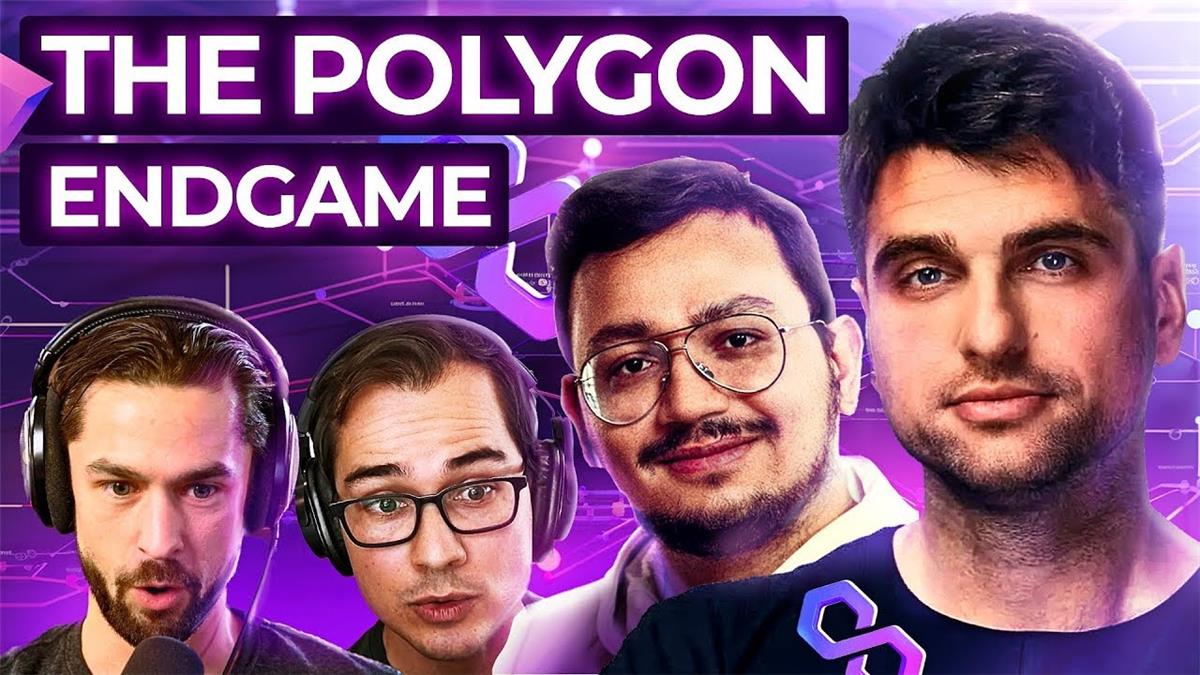
Host: David, Bankless
Guests: Sandeep Nailwal (@sandeepnailwal) & Mihailo Bjelic (@MihailoBjelic), Co-founders of Polygon
Content Source: Bankless Podcast
Episode: Link
Release Date: July 26
Design of Polygon 2.0
-
Design Philosophy of Polygon 2.0: Sandeep Nailwal emphasized that the design philosophy behind Polygon 2.0 draws inspiration from Web 2.0 internet architecture, particularly two key features: infinite scalability and unified liquidity.
-
He explained that if Web3 aims to reach the scale of today’s Web 2.0 internet, it must possess these two characteristics. Infinite scalability means the network can continue growing as more applications and software are built. Unified liquidity ensures information and value can flow seamlessly across the network.
-
Technical Architecture of Polygon 2.0: Sandeep and Mihailo discussed in detail the technical architecture of Polygon 2.0. They introduced a concept called the "Aggregation Layer", which recursively combines zero-knowledge (ZK) proofs and submits a single proof on Ethereum. This allows transactions on one chain to be verified on another, enabling cross-chain interoperability.
-
Evolution of Polygon: Mihailo Bjelic reflected on Polygon’s journey—encouraging experimentation, developing multiple clients, launching several ZK projects, and even testing data availability solutions. Through this process, they learned extensively and gradually converged toward a specific architecture. He stressed that this evolution spanned nearly two years, and now they have strong confidence in the current design.
-
Future Plans for Polygon: They also touched upon future plans, such as transitioning Polygon POS (Proof-of-Stake) to ZK-based technology, expressing high confidence in this new architecture. This framework emerged from two years of collaboration with multiple ZK teams, and they are highly satisfied and confident in its capabilities.
Role of ZK and PoS Upgrade
-
Application of Zero-Knowledge Proofs (ZK) in Polygon 2.0: Sandeep explained how ZK proofs enhance blockchain scalability. To verify transaction validity on a blockchain, you don’t need to submit all transaction data—only a ZK proof confirming validity. This significantly improves network scalability.
-
Advantages of ZK: Sandeep highlighted the benefits of ZK, especially its validity and security. Since ZK proofs are validity proofs, once submitted on Ethereum, the transaction is immediately confirmed—no 7-day withdrawal period is required.
-
Moreover, due to the low computational cost of generating ZK proofs, a large number of them can be submitted on Ethereum, enabling massive scalability.
-
Upgrade of the Polygon POS Chain: Sandeep and Mihailo discussed the upgrade plan for the POS chain. They emphasized that they do not want the Polygon POS chain to be left behind in the vision of Polygon 2.0. Therefore, they plan to upgrade it using ZK-EVM technology.
-
This upgrade will yield two major outcomes: first, the Polygon POS chain will become one of the most widely used chains; second, it will offer enhanced security and consistency.
-
Future Plans for ZK: Sandeep and Mihailo also shared their roadmap, including further optimization of ZK proof performance, reducing ZK proof costs, and advancing the development of Polygon 2.0. They expressed strong confidence in the Polygon 2.0 vision and look forward to seeing more applications and software built on it.
What Users Need to Do and When to Upgrade?
-
For end users, the upgrade process for the Polygon POS chain will be seamless.
-
No special actions are required from users, as the upgrade primarily involves validators and developers. Validators will need to perform client upgrades—similar to regular hard forks or updates they already manage. Additionally, since assets on the Polygon POS chain will require bridging via new interoperability mechanisms, the Polygon community will need to participate through voting and governance processes.
-
The Polygon POS chain will be upgraded to a solution known as "validium." In validium, consensus is achieved on Ethereum, while data availability is handled off-chain.
-
This approach enables higher throughput and lower transaction fees. The timing of the upgrade depends on community feedback and governance decisions.
-
They plan to release an official Polygon Improvement Proposal (PIP) for community discussion within a few weeks.
-
After publishing the PIP, it may take one to two months to gather sufficient community consensus. Implementation will then proceed in multiple phases.
-
Sandeep and Mihailo are excited about this upgrade, as it will make the Polygon POS chain the first decentralized Layer 2 network within the Ethereum ecosystem.
$MATIC and $POL, Concept of Super-Productive Tokens
-
The Matic token will be upgraded to the POL token on a one-to-one basis. This upgrade is necessary because the token itself needs to evolve and gain new functionalities.
-
In practical terms, due to the non-upgradable nature of the original Matic ERC-20 contract, a new ERC-20 contract—namely, the POL token—must be deployed.
-
Super-Productive Token: Sandeep Nailwal explained why they consider the Matic token a third-generation token. The first generation was Bitcoin, where the token serves only as a network asset without utility for holders. The second generation was Ethereum, where ETH holders can participate directly in the mainnet and help secure the network through staking—but only within Ethereum itself.
-
In contrast, with Polygon, a single token can be used to validate across hundreds of chains, playing multiple roles such as validator, sequencer, or data availability provider. This embodies the concept of a "Work Token"—a token that enables users to perform valuable work across a broader network.
-
Why Name It POL?: Host David asked why the new token is named "POL" rather than "POLY," which might better align with the Polygon brand.
-
Sandeep Nailwal responded that they did consider naming it "Poly," but discovered that a token called "Polymath" already existed—an ICO project launched in 2017.
-
To avoid confusion with that project, they chose "POL." They wanted to maintain a high-quality, three-character ticker symbol, similar to Bitcoin. Thus, the name "POL" was chosen primarily to prevent confusion with existing tokens and to preserve a clean, premium token designation.
-
Additionally, based on the new token, they have introduced a new governance framework consisting of three components: protocol governance, system smart contract governance, and community treasury governance. This framework was developed collaboratively with the community, and they are pleased with the positive feedback received.
Polygon’s Endgame and ZKSupernets
-
Sandeep Nailwal stated that their ultimate long-term vision has always been to build an infinitely scalable network where all chains operate as Ethereum Layer 2s and interoperate seamlessly via ZK proofs.
-
He believes this architecture enables infinite scalability and frictionless interoperability—key ingredients for achieving mass adoption.
-
Sandeep Nailwal and Mihailo Bjelic introduced the concept of "zkSupernets." In this model, multiple chains function as Ethereum Layer 2s and interoperate via zero-knowledge proofs. Each chain operates independently while maintaining seamless interaction with others.
-
Sandeep explained their zkSupernet initiative: upgrading the existing Polygon network into zkSupernets, enabling infinite scalability and seamless interoperability. Numerous projects are already building or have deployed zkSupernets, and they expect many more to join.
-
Mihailo Bjelic also emphasized the importance of zkSupernets. He anticipates that as Web3 evolves, there will be increasing demand for specialized chains—akin to dedicated servers in Web2. All these specialized chains will be secured via ZK proofs and connected to a common liquidity pool, enabling seamless interoperability.
-
Sandeep Nailwal further elaborated that their ultimate aim is to end the era of Web3 infrastructure, so that applications—not infrastructure—become the central focus of the ecosystem. He believes this goal can only be realized when the underlying infrastructure is robust enough to support Web3 scaling to hundreds of millions of users.
Join TechFlow official community to stay tuned
Telegram:https://t.me/TechFlowDaily
X (Twitter):https://x.com/TechFlowPost
X (Twitter) EN:https://x.com/BlockFlow_News
 深潮TechFlow






