In these countries, Web3.0 is a tool that enables them to climb upward regardless of the rules of the battlefield.
TechFlow Selected TechFlow Selected
In these countries, Web3.0 is a tool that enables them to climb upward regardless of the rules of the battlefield.
In poorer countries where development emerges from the bottom up, an upward pathway is needed.
 Navigating Web3 tides with focused insights
Author: Wu Tianyi, The Paper
"In poorer countries developing from the bottom up, there needs to be an upward channel. If young people try traditional businesses, they simply have no opportunity. Some of them engage in investment and trading, while others change their lives by learning Web3.0 technology."
"What does Web3.0 and blockchain mean to me? In the future, humans will definitely spend over 90% of their time in virtual worlds. Within such an environment, there must be rule-based designs. Web3.0 and blockchain will undoubtedly form the most important economic system."
"WAGMI" is a piece of "slang" in the Web3.0 community, short for "We All Gonna Make It." Originally expressing members' recognition of a project, it has now become a catchphrase among Web3.0 practitioners. This phrase is also what Wu Xiao, founder of Pure White Matrix, firmly believes in.
When Wu Xiao entered the Web3.0 field, the industry was largely dismissed. Yet, believing in decentralization, he spent several years traveling across multiple countries and regions, connecting with local developer ecosystems. Compared to economically stable and technologically advanced Western nations, smaller countries in Asia and Africa left a deeper impression on him. In these places, Web3.0 has become a bank for deposits and withdrawals, a company providing jobs, or even a stock market, while cryptocurrencies have turned into daily necessities. Recently, Wu Xiao shared with TechFlow (www.thepaper.cn) his stories of exploring Web3.0 applications in Turkey, Nigeria, Egypt, and other countries.
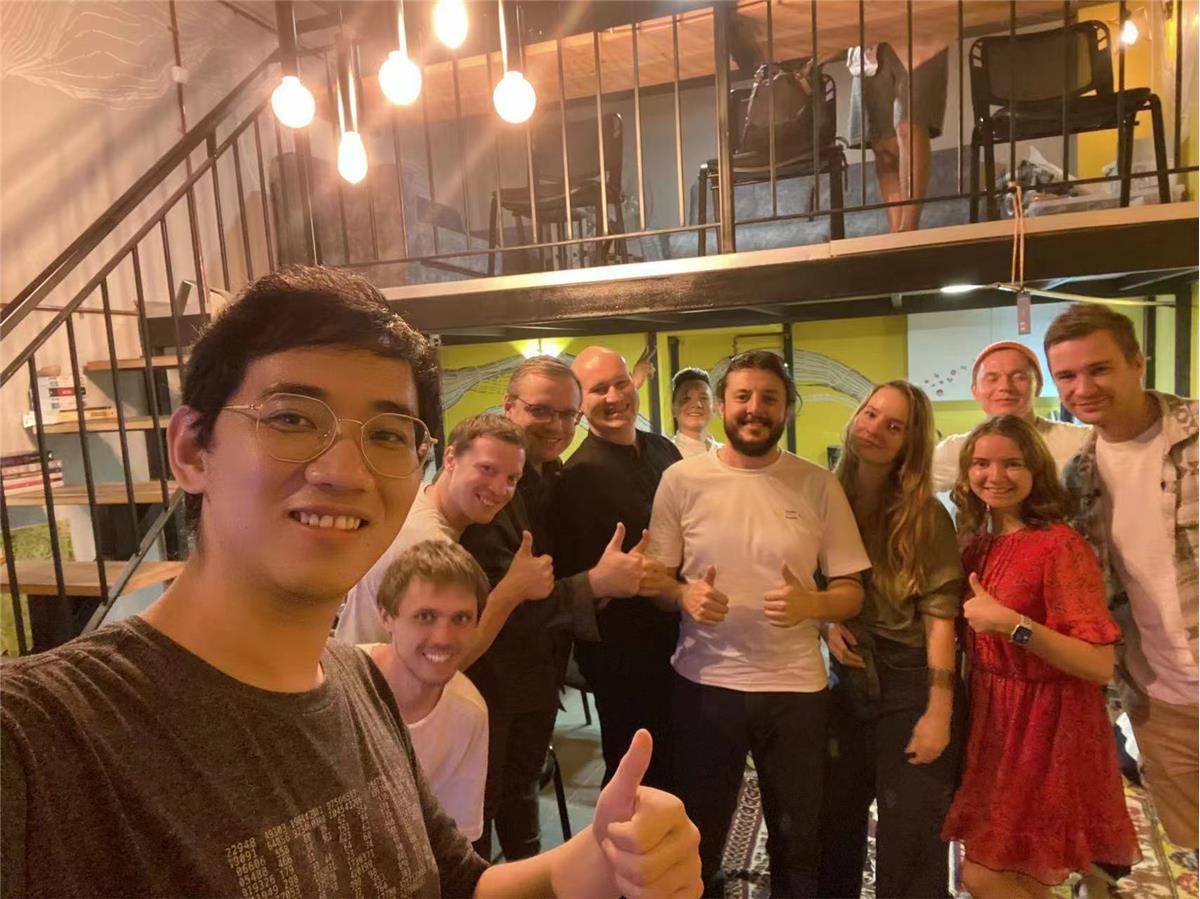
Wu Xiao, founder of Pure White Matrix, attending a Web3.0 offline event in Turkey.
"Blockchain Should Not Become a Tool Controlled by Big Corporations"
TechFlow: Why did you join the Web3.0 space and travel around the world?
Wu Xiao: I entered the Web3.0 industry at the end of 2017. Back then, I came across Ethereum's CryptoKitties game and discovered for the first time that distributed ledgers could run programs—like how Ethereum supports Turing-complete programming. At that time, various DApps (decentralized applications) emerged on Ethereum, including crypto-celebrities, crypto-nations, and all sorts of strange crypto-related games, which I started playing. When we Chinese first played these crypto games, most couldn't understand smart contracts; they just followed rules like 'the earlier you buy, the lower the price,' leading many Chinese players to lose money immediately.
Later, some tech-savvy players emerged who were both willing and able to play, creating a phenomenon: some monitored smart contract addresses, others watched front-end and back-end addresses, and then groups of Chinese users would buy together—this was essentially our first counterattack against foreign players, what we called 'taking down the foreigners,' somewhat like an expeditionary force.
After that, I began coding myself. Once inside the industry, I found it fresh and fascinating, with new technologies emerging every day—giving us tech-savvy folks a real advantage. Early on, we developed blockchain games like Cell Evolution and The Last Journey. Since blockchain gaming wasn't very popular then, we naturally transitioned into broader Web3.0 development.
I think one reason I joined Web3.0 was market opportunity, but also because I received positive feedback. Even during the last cycle when Web3.0 wasn't hot, I finally found something I could do well. Our blockchain games won awards from Google, Facebook, and others, earning roughly four to five million in prize money—that positive reinforcement became our driving force.
As early as 2019, when the entire industry was in a bear market, we had already started reaching out internationally. We attended GDC (Game Developers Conference) in San Francisco to exchange ideas with global developers, went to InfoComm in the U.S., engaged with scientists at top computer science conferences, and connected with overseas projects. We were quite lost then, just wanting to see how things worked abroad. After going overseas, we realized conditions weren't much better—the global outlook was also pessimistic. Still, we persisted in external exchanges because there remained a group overseas who believed in blockchain’s native power, insisting that writing various programs on blockchain was right—and that we shouldn’t isolate tokens, remove incentive layers, and ultimately let governments or big corporations control it.
Over time, Web3.0 gradually entered this new cycle—not only has the market returned, but numerous commercial applications have been implemented abroad. Whether NFTs (non-fungible tokens), DeFi (decentralized finance), or Compound (a blockchain-based bank), applications on Ethereum continue to grow, revitalizing the entire market. Fellow enthusiasts who once seemed hopeless are now growing stronger. In this cycle, we’re even more motivated to go global, hoping to connect with more developers and understand what different countries’ developers are building and focusing on.
"Even Fish Sellers Know About Web3.0"
TechFlow: Why do you say Web3.0 has become a tool for survival in certain countries?
Wu Xiao: Beyond being a developer, I’ve traveled extensively. I conducted field research and governance studies on Web3.0 in the Middle East and North Africa—regions relatively underdeveloped compared to advanced Western countries.
This statement stems from our earlier work in blockchain education, where we first traversed African countries with Web3.0 ecosystems online. One thing that struck me was during a lecture when a Nigerian developer told me that although Nigeria’s central bank declared purchasing cryptocurrency illegal, their government currency had depreciated by as much as 40%.

Wu Xiao observes a Turkish driver constantly monitoring cryptocurrency "candlestick charts."
He also said they trusted Binance (the crypto exchange) because many U.S. exchanges refused service to Africans, whereas Binance was expanding its Binance Chain and paying significant attention to Africa. Thus, many Nigerians bought cryptocurrencies amid 40% currency depreciation, drastically changing their lives. In Africa, cryptocurrency might literally be tomorrow’s bread. If someone teaches them coding so they can start businesses, once equipped with technical skills, they can build applications and sell them to international buyers.
This sparked my curiosity, so we later connected with developers across Southeast Asia—including Indonesia and Vietnam—and found each country unique, with developers pursuing different paths. In Pakistan, locals had little concept of Web3.0. When we first taught NFTs there, we noticed everyone was eager to learn new knowledge. Meanwhile, in wealthy places like Abu Dhabi and Dubai, they requested structured courses and forums for locals. With abundant oil reserves, these rich Gulf states want to convert natural resource advantages into technological strengths, knowing oil won’t last forever.
At Istanbul Airport, our pickup driver was watching cryptocurrency candlestick charts—a shocking sight. I sensed a strong Web3.0 atmosphere throughout Istanbul, seeing numerous NFT marketplaces in streets and alleys, and locals buying large amounts of crypto.
Youth unemployment is high in Turkey. Like apprentices, many young people willingly work free for 8–12 months if provided transport or food, trapped in a paradox where lack of experience prevents job access—leaving many with no way out.
I met local university Web3.0 student groups who shared housing—even before graduation. When I asked why they weren’t studying, they said school curricula were too outdated to keep pace. They formed a developer studio, dividing two rooms for Web3.0 work—just like in the TV series *Silicon Valley*: one room packed with workers, the other serving as a living space.
These students introduced me to a small southern village, tiny yet thick with Web3.0 culture—even fish sellers knew about Web3.0. I asked a fish seller what Web3.0 meant, and he said there was a physical Web3.0 building there hosting daily events. Sometimes, it felt like a “Web3.0 utopia.” While hosting one event per week in Dubai or UAE was impressive, here they held events every single day.
Locals were so immersed that wedding dowries were paid directly in Bitcoin. Many people there had lost hope—no jobs, no opportunities—so some chose to grow alongside Web3.0. Overall, Web3.0 brings a mixed state of both opportunity and risk, yet this group uses it as a ladder to climb forward amid uncertainty.
Jordanians aren’t highly familiar with blockchain overall, but they know blockchain gaming well. Jordan produces nearly all mobile games for the Middle East—except those exported from China, the region’s biggest mobile games come from local Jordanian developers who integrate blockchain into gaming. Some universities, like Jordan University of Science and Technology, even offer game design majors—a rarity elsewhere.
During my travels, I also met Filipino and South Korean tourists buying crypto, proving Web3.0’s broad-scale adoption—it’s already deeply penetrating nations, communities, and populations worldwide.
Egyptians are also building Web3.0-related projects. Aside from China, Egypt is the only country actively developing consortium chains, implementing them in education and logistics. However, since Egyptian law explicitly bans using or establishing blockchain exchanges, a massive black market has emerged.
The black market disguises itself as regular shops. But upon entering a small dark room and handing local currency to someone, they transfer Bitcoin or Ethereum to your account within 24 hours. This underground system has operated for over three years and even attracts local companies investing abroad to purchase Bitcoin through these backroom deals—something I never expected.
In short, any economy needs entry and exit points. In some regions, that entry point might be digital pets in blockchain games—for example, wealthy women who love virtual pets hire Filipinos or Vietnamese to play for them, allowing these workers to make a living. Traditional banks don’t reach impoverished areas. In China, everyone takes depositing and withdrawing money for granted, but in some foreign regions, people can’t even open bank accounts.
In one documentary, an elderly Southeast Asian couple earned cryptocurrency through “gold farming” (playing games to earn crypto), exchanging it for bread and medicine. They had no visas, no green cards, not even bank accounts. There are many such countries—40% of Thai youth have bought cryptocurrency, and over 51% of Latin Americans have used Mastercard to buy crypto. These ratios keep rising. So many grassroots enterprises and developers gathered together, generating new applications, business models, products, services, along with forward-thinking regulators pushing progress—will form a powerful synergy. This synergy requires political support.
"Everyone Is Equal Before Web3.0"
TechFlow: What memorable scenes stood out during your global journey?
Wu Xiao: In Khost, many Russian programmers and engineers gathered tightly in a small room to listen to our Web3.0 and blockchain sharing session—I found it truly震撼 (impactful). Their eyes sparkled, hearts burned with passion. Born from humble beginnings, they wanted to change their fate through learning and relentless effort—an incredibly powerful energy.
Meanwhile, at events in Dubai and UAE, leaders in white robes publicly announced their embrace of Web3.0. Suddenly, it felt like Web3.0 had undergone a revolutionary transformation. Politicians and officials have become highly welcoming toward Web3.0—completely different from the past when it was universally rejected.
At the Middle East’s largest tech expo, without prior contact, Alibaba invited me to speak the next day after seeing our Web3.0 developer tools. Not just Alibaba—Microsoft, Google, Facebook, Huawei—all major tech giants are now actively embracing Web3.0. This is entirely different from the past when we struggled to afford even a booth, looked down upon by everyone. Now, we feel an immense sense of achievement.
TechFlow: Are there aspects worth learning from these countries?
Wu Xiao: Definitely. I believe domestic enthusiasts, especially given Hong Kong’s increasingly open policies, should actively explore Web3.0 opportunities—not just for investment, but for building Web3.0 itself.
Today, Web3.0 offers vast blue oceans with countless possibilities—this is the perfect moment to stake your claim, find your niche. In three to five years, as the industry matures, it may age and stiffen. If you don’t act now, once it fully matures, opportunities will vanish.
Consider how even in countries with weak tech development, non-professionals dare to enter the space. Our own aspiring enthusiasts should likewise step in and push forward. Today’s Web3.0 is a world truly worth building.
TechFlow: What is the significance of Web3.0 and blockchain to you? What might its ultimate form look like in the future?
Wu Xiao: Everyone is equal before Web3.0. Poorer countries developing from the ground up need an upward channel. Web3.0 is a tool that allows climbing regardless of existing battlefield rules—the reason these places depend on Web3.0. In traditional businesses, young people simply have no chance. Some turn to investment and trading, while others transform their lives by mastering Web3.0 technology.
This upward channel changes destinies and, to some extent, transcends economic status—because it doesn’t require banks. As long as you have an internet connection, even those from the lowest backgrounds get opportunities. Previously, even if someone understood the internet and wanted to work for Americans, without a visa they couldn’t open a bank account—dollars couldn’t be transferred. But on blockchain, any cryptocurrency can be sent anywhere in seconds.
What does Web3.0 and blockchain mean to me? In the future, humans will certainly spend over 90% of their time in virtual worlds. In such an environment, rule-based designs will inevitably emerge. Web3.0 and blockchain will surely form the most important economic system. You can’t expect such a world to rely solely on dollars or euros—even game currencies would have to be blockchain-based.
Therefore, Web3.0 is first the infrastructure of the economy, and second, possibly the infrastructure of laws and rules. Who does what inside, what consequences follow—all these rules must be transparent and automatically enforced. This makes blockchain—the already globally consensus-driven base layer—perfect for notarization, using smart contracts to encode rules. Since everyone develops and uses this chain, they implicitly agree to abide by its rules. The chain has no bias—these rules suit blockchain best, and can only truly be formed via blockchain.
Join TechFlow official community to stay tuned
Telegram:https://t.me/TechFlowDaily
X (Twitter):https://x.com/TechFlowPost
X (Twitter) EN:https://x.com/BlockFlow_News
 @thepapercn