The darkest hour for NFTs has not yet come, but neither will they die.
TechFlow Selected TechFlow Selected
The darkest hour for NFTs has not yet come, but neither will they die.
I don't believe there will be a divide between Web3 and Web2 in the future, nor do I think NFTs will forever be an endless Ponzi scheme.
 Navigating Web3 tides with focused insights
First, let me crowdsource some Twitter alternatives. Elon Musk’s recent shadow-banning moves are making life tough for us Web3 folks who live on Twitter every day. If anyone has a better platform experience, perhaps we could collectively migrate!
Back to the main topic.
I won’t rehash recent events—my views on certain teams have already been shared privately with many friends, so no need to pile on here. Nor do I need to summarize market conditions for you all. The purpose of this article is simply to share, from the perspective of an ordinary practitioner, my hopes and understanding of NFTs—and if possible, to encourage you not to lose hope in the industry.
How Should We Categorize NFTs?
Let me start by venting about something I’ve long wanted to critique.
Online, people often divide NFTs into two categories: PFPs and utility-based NFTs. But as someone working in the space, I urge you to think critically—should they really be classified this way? This distinction once made me reluctant to call Little Ghost a PFP NFT at all.
Classification only makes sense when categories exist at the same level. You wouldn’t classify music genres as “Black music” versus “rap,” just as you shouldn't split NFTs into “PFP” and “utility.”
At the end of the day, imagery is just a form of expression. Just because something is a profile picture doesn’t mean it can only be a speculative token, nor does having utility require it to become a boring, uniform card.
Utility comes from the act of “holding an NFT,” and whether or what kind of utility is provided depends entirely on the team behind it. Little Ghost is a PFP, yet delivers whitelist access, alpha information, music festival tickets, and physical product discounts to holders. Meanwhile, I’ve seen many so-called “utility NFT” projects (non-PFP) that offer nothing more than basic whitelists. (P.S. I’ll always hype Little Ghost—it’s my project, after all, haha—but I try not to step on others.)
What Exactly Is a PFP?
Lately, many say “the PFP narrative is over.” So what exactly is a PFP?
Here’s my take: A PFP is a financial product capable of building cultural consensus. It may one day evolve into a consumer product, but under current Web3 conditions, it cannot yet be treated like one.
I used to avoid discussing the financial aspects of NFTs, but everything has two sides. When used wisely, financial attributes aren’t necessarily bad. Bored Ape became perceived not as a project doomed by Meebits, but as the leading IP in Web3, thanks to strategic price pumping. Azuki survived its first crisis largely due to rapid price appreciation. Here’s a real-world example: when Little Ghost was trading at 0.1+ ETH floor, brand collabs were hard to pitch; once it reached 0.3–0.5 ETH, things got much easier.
Consensus based on finance (floor price) forms quickly, but cultural consensus is trickier. Culture requires depth, yet people often equate financially-driven cultural momentum with deeply rooted culture. In my view, consensus built purely on price lacks lasting vitality—much like how many young people today sarcastically call Jack Ma “Dad” while enduring the “blessings” of 996 work culture.
Since PFPs are financial products that foster cultural consensus, pre-launch community-building (“gathering the crew”) becomes critical. Honestly, we didn’t focus on this during Little Ghost’s launch—we didn’t line up whales or market makers beforehand. As a result, our price didn’t skyrocket like other projects at the time. But we now see this as a blessing: avoiding financial leverage during unstable early days helped protect us through the bear market.
Here’s another thought: if the Azuki project pumps again, will you still be “convinced by price”? Will you still pour your heart into community building?
Why Has Building IP Become a Sin for NFTs?
Another common argument lately: NFTs shouldn’t go down the IP path—they need a new “narrative.”
True, the IP route carries high uncertainty. Building an IP takes time—a luxury in the fast-paced crypto world, where time equals risk and cost. Yet compared to countless unproven, quickly debunked “narratives,” the IP path is a proven model. And the world always needs new IPs.
However, Web3 IP differs greatly from traditional Web2 IP. Most Web2 IPs first capture fans through content, then monetize via merchandise. Web3 IPs, at least currently, lack strong content creation capabilities. “But didn’t Hasbro sell Transformers toys before making the cartoon?” Fair point—but Hasbro had the ability to make toys. That doesn’t mean the赛道 is flawed; it means team capability is lacking.
I understand skepticism toward NFT IP development—we’ve gone through full product design, manufacturing, and logistics ourselves, and it’s exhausting. But we shouldn’t dismiss the entire赛道. Pudgy Penguins set a great example. Beyond that, I’ve recently spoken with the Karafuru team, which earns solid revenue in Southeast Asia’s Web2 space—enough to cover their operational costs.
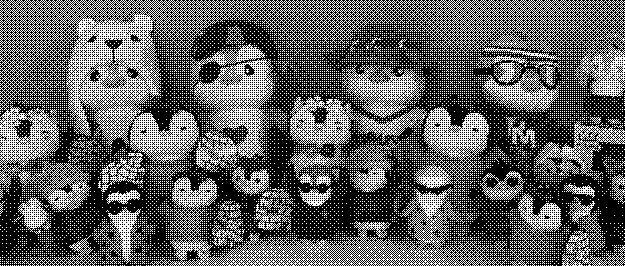
Building NFT IPs may not be as hard as many assume—it just doesn’t look as explosive as typical crypto launches.
But another challenge arises: after earning money in Web2, how do you fairly reward OG NFT holders? Since Web2 operations involve legal compliance, profit-sharing (or rewards) under regulation remains a complex issue.
Beyond commercial sustainability, growing an IP means attracting more users. Poor handling risks diluting value for early holders—one major factor in the recent controversy. Yet Web3’s user base is small. Relying solely on internal users to scale isn’t realistic. As mentioned earlier, most teams lack content creation and distribution skills. Without these, going mainstream is impossible. To grow, teams may resort to minting more NFTs—but since few treat NFTs as consumer goods, constant issuance risks inflating and bursting a bubble.
Are We Web3 People Overestimating Web3?
I admit this headline is a bit clickbaity, haha—but it’s something I’ve wanted to discuss.
What exactly do I believe in about Web3? It’s definitely not the technology—I don’t code or program. In fact, AI impresses me far more viscerally. What I believe Web3 can truly change is the mindset it brings to the world. Everyone feels the impact of productivity advances—that’s natural. But shifts in production relationships? You have to participate to truly feel them.
Pop Mart earned 4.62 billion RMB in revenue in 2022, with 570 million in net profit. What can Web3 offer them? Minting Molly NFTs to make money? Unnecessary—the Web3 crowd is too small. From a productivity standpoint, Web3 offers limited upside. But what if we flip the script? Pop Mart builds most of its IPs through acquisition, requiring heavy upfront investment—both capital and faith in future popularity. Web3 could help Pop Mart build a new original IP from scratch and rapidly gather early adopters. Why haven’t they done it yet? Probably because they fear mismanaging the financial component and facing disproportionate risks.
Recently, I spoke with a friend in fashion who wants to “empower” Web3 IPs by helping teams create physical goods they can’t make themselves. But after discussions with investors, they concluded it wasn’t viable—most Web3 IPs have short lifespans, while physical product development takes time.
After spending too long in the Web3 bubble, we need to lift our heads and look around. For a while, I’d point at Mondrian’s geometric paintings and say, “Looks just like Art Blocks,” or compare Keith Haring’s art to “that dumb NFT.” Web3 is interdisciplinary—we must keep drawing inspiration and knowledge from the wider world. At the end of the day, Web3 is still a tiny circle, yet every honest builder dreams of changing the world. And you can’t change the world by keeping your head down.
The Darkest Hour Hasn’t Come—But NFTs Won’t Die
Some say, “Our community was born with Ponzi blood.”
Ponzi implies both danger and opportunity. Let’s be honest: burst bubbles are called Ponzi schemes; unburst ones are called finance. Building Web3 IPs means constantly navigating between culture and finance, seeking balance.
Frankly, I believe the darkest hour for NFTs hasn’t arrived yet. Beyond the 20k ETH liquidity drain, Blur’s points farming is getting increasingly toxic, and flawed mechanisms are harming the ecosystem. NFT prices may continue falling for some time.
Beyond prices, I see massive harm done to NFT players. Many may never engage in community building as passionately again; many might stick to trading only. This loss of vitality is, to me, far scarier.
But as a practitioner, I won’t condemn the entire industry because of one project’s failure. I’ve seen how it changed my life. I’ve seen Little Ghost—an IP—build momentum in just over a year that rivals Web2 IPs cultivated for years. I see that momentum growing stronger. I remain forever bullish.
I don’t believe a permanent gap will exist between Web3 and Web2, nor that NFTs will forever be endless Ponzi bubbles. Even if surrounded by gamblers “born with Ponzi blood,” I still look forward to more Martin Luther Kings emerging.
Join TechFlow official community to stay tuned
Telegram:https://t.me/TechFlowDaily
X (Twitter):https://x.com/TechFlowPost
X (Twitter) EN:https://x.com/BlockFlow_News
 @sleepy0x13