
Reflections after Black Mountain EDCON 2023: Infrastructure and Application Trends Outlook
TechFlow Selected TechFlow Selected
Reflections after Black Mountain EDCON 2023: Infrastructure and Application Trends Outlook
The current phase marks the technological maturity of ZK, account abstraction, and L2s. The convergence of these three forces will enhance Ethereum's User Experience (UX) and User Security (US).
 Navigating Web3 tides with focused insights
Author: Jessica Shen
In 2013, Vitalik Buterin wrote the Ethereum whitepaper. Ten years later in 2023, the Ethereum developer conference EDCON (Community Ethereum Development Conference) was held in Podgorica, the capital of Montenegro. There were no grand celebrations or formalistic fanfare onsite. What I felt instead was a global community of developers striving to solve blockchain's "impossible trilemma"—enhancing decentralization, privacy protection, and scalability within their respective domains—exchanging ideas, resources, and seeking collaborative opportunities through open dialogue.
Although no new “wealth-generating secrets” or groundbreaking innovations emerged at the conference—making some discussions feel like reiterations of Ethereum’s established roadmap—I deeply sensed how AI-driven transformation is gradually influencing blockchain. The annual EDCON serves to realign ecosystem developers with Ethereum’s strategic direction, review progress on implementation plans, identify pressing challenges, and foster technical breakthroughs across specialized fields. These include improving privacy and scalability, enhancing security and stability, and creating better user experiences (UX) and user security (US) for future application explosions. By exchanging innovative insights, attendees gain a global perspective on how technological and cultural shifts impact Ethereum’s future.
During my time in Montenegro, I attended EDCON2023 and a series of side events including EDCON’s Community Day sessions, Super Demo, World Supercomputer Summit 2023, DAO Montenegro Conference, and Antalpha Labs’ Account Abstraction HackerHouse. Due to scheduling constraints, I missed several other notable events such as ZK Community Breakfast and Zuzalu. To make up for these missed opportunities, I interviewed friends who participated in them, gathering their insights and reflections. This article compiles my own observations along with those from fellow participants to share a comprehensive overview.
Key Takeaways
-
EDCON2023 focused on infrastructure solutions tackling the impossible trilemma of privacy, scalability, and decentralization. We are currently witnessing the maturation of ZK, account abstraction, and Layer 2 technologies, whose advancements lay fertile ground for application-level innovation.
-
Zero-knowledge proofs (ZKP) were widely discussed, including zkEVM, ZKML (Zero-Knowledge Machine Learning), and composable use cases enabled by programmable cryptography.
-
Topics such as on-chain gaming, account abstraction, and LSD received significant attention, though application-layer innovation remains pending.
-
ZKML stands on the brink of an explosion; AI empowered by ZK technology could inject fresh vitality into blockchain, and its open-source community holds great promise.
-
The account abstraction (AA) space is crowded, hot, and flat—an area full of enthusiasm but facing serious value capture challenges.
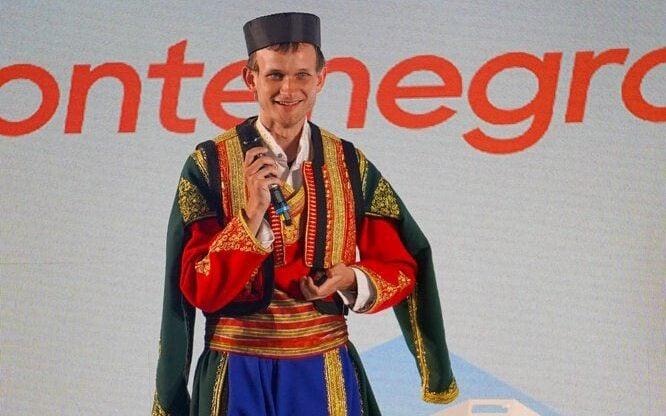
Vitalik Buterin speaking at EDCON2023 Source: UZMANCOIN.COM
Major Topics at EDCON2023
The main themes of EDCON2023 revolved around solving blockchain’s impossible trilemma—privacy, scalability, and decentralization. Vitalik Buterin’s concept of The Scalability Trilemma has effectively charted the course for Ethereum’s long-term technical evolution. Over the past decade, Ethereum has seen continuous improvements in infrastructure and a steady stream of application innovations. Yet, we remain far from achieving the ideal vision—each aspect of the “trilemma” still demands further breakthroughs.

The Scalability Trilemma
I’ve summarized key takeaways from industry trends, dividing them into infrastructure and application layers. In infrastructure, zero-knowledge proofs (ZKP) and Layer 2 (L2) networks drew the most attention among speakers and attendees—one of the most frequently discussed topics. On the DApp front, major conversations centered on on-chain gaming, account abstraction (AA), and LSD (Liquid Staking Derivatives).
Notably, in the ZKP domain, EDCON2023 and surrounding events revealed many emerging “ZK+” composability trends. As a tool for privacy preservation and scaling, ZK is being explored across both on-chain and off-chain applications. While cryptography has traditionally been highly customized, there’s growing demand for general-purpose, programmable cryptography (“Programmable Cryptography”), which was repeatedly emphasized during discussions. In the application layer, developers showed heightened concern for UX and US. Enhancing UX via account abstraction to accelerate blockchain mass adoption has become a shared goal—and prerequisite—for both infrastructure and app developers.
Technological development follows the spiral progression between infrastructure and applications. EDCON2023 offered a timely reflection on Ethereum’s current state and sectoral trends—developers advancing infrastructure upgrades while collectively awaiting the next wave of application breakthroughs.
1. Infrastructure
On the infrastructure side, ZK technology’s applications both on and off-chain—including zkEVM (Layer 2 scaling), ZKML (Zero-Knowledge Machine Learning), and Programmable Cryptography—dominated conversations throughout Montenegro and associated side events. Vitalik Buterin’s statement during his talk—that “ZK-SNARKs are going to be as important as blockchains in the next 10 years”—emerged as a key takeaway.

Vitalik Buterin’s presentation slides at EDCON2023
1.1 zkEVM sees new entrants, maintaining high competitive intensity
In the first half of 2023, multiple zkEVM projects launched their mainnets, including Polygon zkEVM, zkSync Era, and Starknet. From late 2023 into 2024, we may see more zkEVM projects go live, such as Scroll, Linea, and Taiko—all currently in testnet phases collecting developer feedback. All these zkEVM projects enjoyed strong visibility and engagement at EDCON2023, frequently mentioned in talks by Vitalik Buterin and others, including newer initiatives. Developers behind zkEVM projects expressed great passion, sharing recent milestones and future goals, demonstrating clear excitement about technical and product advancements—the healthy competition within this space is evident. For the next 1–2 years, zkEVM-based Layer 2 networks will remain center stage in the Ethereum ecosystem.
Jordi Baylina, Technical Lead at Polygon zkEVM, shared updates on the project’s progress, including enhancements to PIL2 (Polynomial Identity Language 2), data compression schemes addressing data availability, and reaffirmed support for account abstraction via ERC-4337. He also shared his views on the evolving Layer 2 landscape.
I noted that Jordi highlighted how both Polygon zkEVM’s data compression techniques and the formal adoption of EIP-4844 will significantly reduce costs. Together, they greatly enhance data availability on Polygon. Looking ahead, he envisions a growing number of Layer 2 networks, with composability among Polygon’s L2 chains achieved through Proof Aggregation—a mechanism enabling all Polygon L2s to generate a single unified proof, thereby strengthening interoperability across the ecosystem.
The zkEVM project Kakarot also attracted considerable attention during and after the event. Kakarot is a zkEVM built on Starknet using the Cairo language, recently announcing funding that sparked interest—notably because Vitalik Buterin was among the investors, alongside co-founders of Starknet and Starkware.
Elias Tazartes, Kakarot’s co-founder, delivered a public talk at EDCON2023, presenting the project’s mission and vision, and was referenced in Vitalik Buterin’s speech. The highlight? Kakarot brings EVM compatibility to the Cairo-based Starknet, allowing Solidity developers to deploy apps directly onto Starknet without rewriting code in Cairo. It essentially creates an EVM-compatible platform on Starknet, enabling top-tier EVM projects to migrate quickly and reducing the burden of maintaining dual-language codebases.
While Kakarot could theoretically serve as a Layer 3 on Starknet, the team is initially focusing on launching Rollup-as-a-Service by Q4 2023. In an interview with BlockBeats, Elias indicated that Layer 2 competition will intensify. As a zkEVM platform, Kakarot aims to actively collaborate with Starknet, Polygon, and Linea, welcoming Chinese developers fluent in Solidity and Cairo to join and contribute.
1.2 Demand for Programmable Cryptography reinforced
Beyond zkEVM, ZK technology is finding increasing use across diverse scenarios, making the need for Programmable Cryptography increasingly apparent. This concept was formally introduced by 0xPARC. With the emergence and refinement of zk-SNARKs and other cryptographic tools, more generalized cryptography enables developers to rapidly implement encryption (e.g., digital identity, reputation systems) without having to master complex privacy-preserving techniques from scratch.
With more programmable crypto development tools available, privacy-preserving encryption could scale widely across blockchain applications and even off-chain computing models. In Jason Morton’s talk “What Is Unlocked by Practical Zero-Knowledge Proofs?”, he stated, “ZKP is becoming more programmable.” During the ZK panel discussion, guests including Vitalik Buterin repeatedly brought up Programmable Cryptography, expressing strong anticipation for broader, general-purpose cryptographic applications.
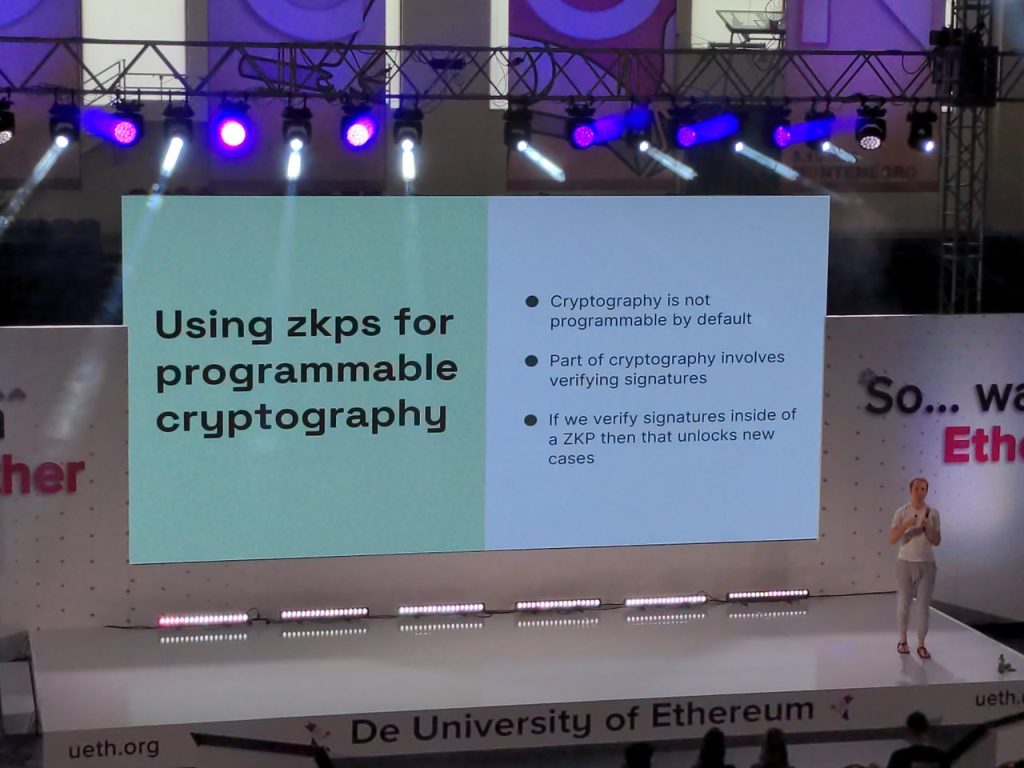
Barry Whitehat speaking at EDCON2023

ZK Panel discussion at EDCON2023
1.3 ZKML early-stage but highly promising
ZKML refers to the integration of zero-knowledge proofs (ZK) with machine learning (ML). It’s well known that ML models face trust issues: confidentiality vs. transparency of input/output data, algorithms, and model parameters. Such trust barriers hinder wider adoption of ML. For instance, when personal user data is used for training, it must be encrypted; similarly, model parameters often represent core competitive advantages that require protection. ZK technology can provide verifiable proofs not only for smart contracts but also for complex AI models—even those with millions of parameters—thereby enhancing security and privacy and helping overcome various trust challenges in ML. Moreover, since ML models demand heavy computation, integrating them into on-chain applications via ZK-SNARKs allows efficient proof generation, alleviating computational burdens and enabling smoother integration of AI into blockchain. As AI and ML continue reshaping our lives this year, ZKML is gaining broader recognition.
At EDCON2023 and numerous other blockchain conferences this year, it’s clear that many blockchain developers have entered the ZKML space. Readers unfamiliar with the concept can refer to WorldCoin’s introductory article on ZKML. As early as late 2022, WorldCoin partnered with teams in the ZKML field to launch the ZKML community, introducing the concept, benefits, and potential at various public forums including ETH Denver 2023.
At the inaugural World Supercomputer Summit 2023 in Montenegro, most speakers were working on ZKML-related projects. Cathie So (@drCathieSo_eth), a core member of PSE, presented EIP-7007 for AIGC NFTs, illustrating sparks of innovation from combining ZK and ML, and envisioning how a future world supercomputer architecture could empower ZKML. The PSE team is committed to better integrating ZKP with the Ethereum ecosystem and actively contributes to ZKML research and development.
Other speakers included Hyper Oracle (zkOracle on Ethereum), Poseidon ZKP (ZK aggregation infrastructure), Modulus Labs (on-chain AI development), and WorldCoin’s DCBuilder. Among them, Modulus Labs, a pioneer in ZKML, has conducted extensive experiments—such as DeFi’s Rockerfeller Bot (the first fully on-chain AI trading bot), GameFi’s Leela vs the World (the first fully on-chain AI game), and NFT initiatives.
At EDCON2023, Jason Morton, a ZKML developer, shared how FLOPS (Floating-point Operations Per Second) in ZKP have rapidly improved over recent years, yet Proof per Chain Transaction remains at the tens of thousands level. He predicts breakthroughs within the next three years. When this metric reaches hundreds of millions or even billions, entirely new application scenarios could emerge in areas like on-chain gaming, supply chains, and payments.
Many speakers emphasized that ZKML remains in its early stages. Despite its youth, the ZKML community organized by WorldCoin has already attracted numerous builders and contributors.
As more products become AI-driven and innovation stems from advances in AI and ML, ZK can act as a dual enabler—protecting privacy and accelerating computation—to empower an AI-driven society. While this demand isn’t yet obvious today, if we foresee a world saturated with AI, then model/data encryption and faster computation will inevitably become essential. An increasing number of programming tools now allow developers to create ZK proofs for AI models without mastering all underlying cryptographic knowledge—opening vast markets for ZKP-powered DApps.
Blockchain’s significance to AI/ML operates on multiple levels. Its tamper-proof, decentralized ledger provides trustworthy records, while cryptocurrency itself could evolve into a borderless monetary system in a future where humans and AI coexist.
[Note]: FLOPS (floating-point operations per second), also known as peak performance, measures the number of floating-point calculations a computer performs per second—commonly used to gauge computing speed or estimate system performance.
2. Application DApps
At EDCON2023, most discussions focused on foundational technologies, with fewer dedicated to DApp applications. Among those, on-chain gaming, account abstraction, and LSD dominated the conversation.
2.1 On-Chain Gaming shows signs of AI integration
There remains high expectation for applications, particularly on-chain gaming. When asked about promising on-chain applications, many zkEVM project representatives cited on-chain games. At EDCON, Danilo Kim shared his experience living at Zuzalu, mentioning two AI-driven on-chain gaming projects born there: Zuland and Zuzuland. Also attracting attention during Zuzalu and EDCON2023 was Small Brain Games’ AI-powered fully on-chain game Network State, inspired by Slobbovia’s tabletop role-playing TRPG format. Clearly, on-chain gaming is trending toward AI integration.
Why is on-chain gaming receiving so much attention now? Not because it already commands massive traffic—but because the market lacks fresh narratives. After DeFi Summer, DEXs engaged in fierce horizontal and vertical competition, solidifying market leaders. However, leading DeFi protocols failed to spark new interest for public chains. Simply repeating past successes won’t drive the next wave of adoption. The NFT boom originated on Ethereum, but even there, NFT innovation stalled during the bear market. IP-focused NFTs require intensive marketing efforts; GameFi- and metaverse-themed NFTs demand lengthy development cycles; utility- and membership-type NFTs depend on traditional enterprises building internal tech teams and conducting long-term user education. In contrast, on-chain gaming has gained traction this year due to increased AI/ML integration, enriching gameplay flexibility and depth. Innovations like ZKML-enabled autonomous NPCs or AI-controlled deities offer fresh inspiration. Coupled with ZK’s popularity, on-chain gaming naturally draws higher expectations. Yet, every application category faces greater hurdles in generating compelling narratives and attracting large-scale traffic during a bear market. Thus, while hopes run high, no clear path forward has emerged.
2.2 Account Abstraction: fierce competition, value capture remains challenging
The idea of account abstraction (AA) emerged shortly after Ethereum’s inception. Recent protocol-level developments—especially the official deployment of ERC-4337 in March 2023—have reignited industry interest, sparking a surge in entrepreneurial and investment activity. However, the reality is that the AA space is already extremely crowded and fiercely competitive, with participants struggling to establish viable business models and achieve sustainable value capture.
During EDCON2023, Antalpha Labs hosted a HackerHouse event focused on account abstraction, inviting developers, investors, and researchers from the field—including Compass DAO, Candide Wallet, Account Labs (formed by merging Unipass and Keystone), Mantle Network (an L2 supporting AA), Mirana Ventures’ research team, and others.
Over the week-long HackerHouse, I attended multiple sessions and gained valuable insights, deepening my understanding of the current state of the sector. I’m grateful to Antalpha Labs for organizing this open and engaging event, fostering meaningful exchanges in a relaxed environment.
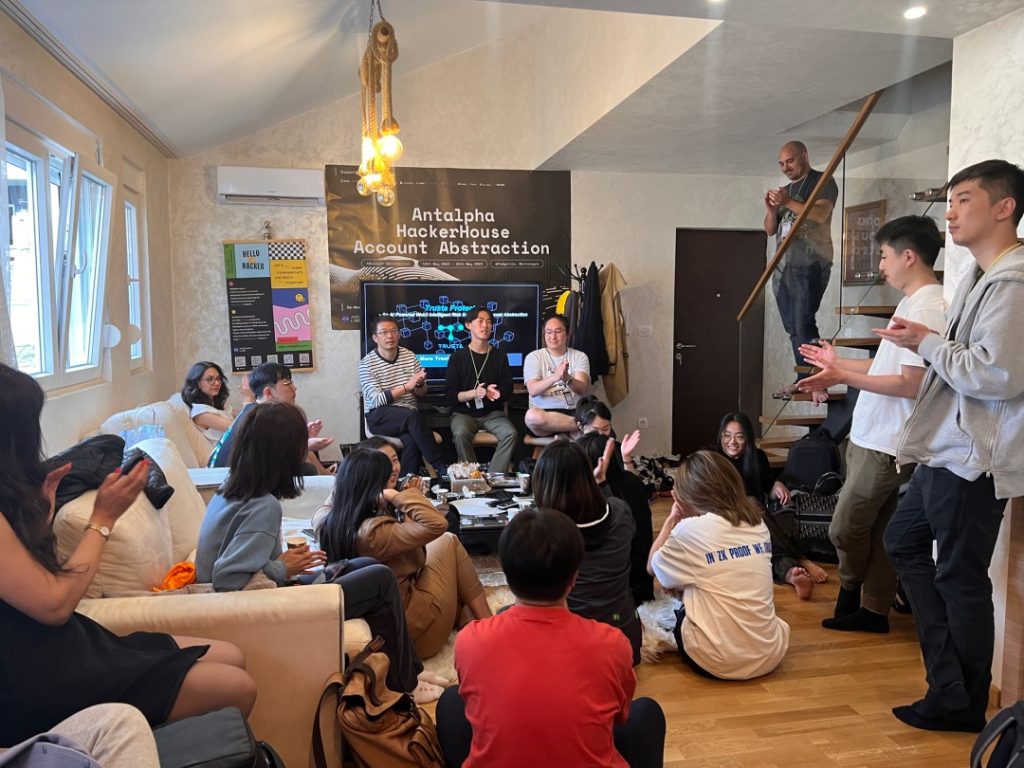
Account Abstraction HackerHouse by Antalpha Labs
Currently, many wallet projects, base-layer blockchains, and startups are actively implementing account abstraction. Participating in EDCON2023’s Community Day and Antalpha Labs’ HackerHouse, I observed that the AA space feels “flat, hot, and crowded.” “Flat” because SDKs and wallets show little differentiation in technical capability or features—no dominant leader has emerged. “Hot” reflects high investor and founder enthusiasm, with consensus growing that AA is inevitable: more smart contracts will adopt AA SDKs, wallets will natively support AA, and chains like Starknet and zkSync are moving toward native support. “Crowded” describes the sheer number of participants, intensifying competition.

SevenX’s compilation of account abstraction projects
Multiple wallet teams have developed excellent products, with no single project pulling far ahead technologically or development-wise—all competitors remain neck-and-neck. On the SDK front, providers like Gnosis Safe, Biconomy, Alchemy, Web3Auth, and Etherspot already exist. Nearly all new wallet projects build on ERC-4337 and prioritize B2B2C models, emphasizing developer (B-side) and end-user (C-side) experience.
Functionally, social recovery, censorship resistance, seedless setup, privacy, and multi-chain support are now standard. Beyond SDK provision, wallet teams are exploring novel AA applications. The logic is simple: only by capturing C-side traffic through widely adopted smart contracts (B-side) can wallets achieve value capture—this necessity drives vertical expansion under the B2B2C model.
Besides creating usage scenarios, some wallet projects are building infrastructure like SDKs to attract users. But monetization remains difficult—many SDKs function as public goods, hard to monetize directly. Wallet-as-a-Service charging per use limits scalability. MEV revenue faces stiff competition. Even leading wallets are still exploring sustainable value capture strategies.
With ERC-4337 now live, account abstraction is gradually being implemented. Protocol adoption is crucial for improving UX and US and will be instrumental in driving mass adoption. While competition in the AA space is intense, both SDK providers and application builders are exploring ways to reach more users. The B2B2C model is taking shape, but effective economic value capture mechanisms remain elusive.
2.3 Long-term investment in LSD offers relative certainty
If on-chain gaming was the most publicly discussed application at EDCON, LSD and LSD-Fi were the topics most frequently debated informally afterward. Speakers often discussed “decentralized validators,” exploring ways to strengthen PoS decentralization, node stability, and security. In conversations with investors attending the event, crypto funds expressed confidence in the LSD sector—possibly because, amid the bear market’s deflation of bubbles, POS-based LSD represents a relatively stable and predictable domain. For deeper insights into LSD, readers can refer to Mint Ventures’ recent research reports:
Personal Reflections
1. ZKML on the verge of breakout—more ML applications expected to adopt ZK encryption
This year, we’ve seen increasing numbers of AI-driven products transform how we live and work. Machine learning (ML), a key subset of AI, is already widely used off-chain. On-chain exploration faces challenges in computation cost, speed, model trust, and privacy. ZK encryption enables ML models to generate proofs off-chain, empowering on-chain smart contracts to become smarter and more flexible. Integrating ML into blockchain opens vast possibilities for the industry.
In recent years, ZK technology has matured in both software and hardware, offering solutions to ML’s computational, trust, and privacy issues. ZKML is one of the key areas championed by Sam Altman’s crypto project WorldCoin, which, together with other research teams and projects, has formed the ZKML community to advance the technology and its applications.

SevenX’s mapping of the ZKML ecosystem
Current ZKML applications are still nascent—examples include on-chain AI trading bots and AI games. Others involve using off-chain ML models to suggest parameter adjustments for DeFi protocols. WorldCoin’s ongoing project resembles zk-DID, using ZKML to protect biometric data privacy while ensuring future upgradability of Iris Code. Going forward, we can expect more ML models entering blockchain, accelerated by ZK technology.
Additionally, I excerpt a slide from Daniel, founder of Modulus Labs, presented at WSC: “(ZKML applies) when AI is a powerful tool but faces ‘trust’ challenges.” I believe this captures the fundamental rationale behind combining ZK with AI/ML. As both concepts grow popular, we’ll see many pseudo-ZKML projects emerge. But staying grounded in this core principle helps avoid getting lost in hype and bubbles.
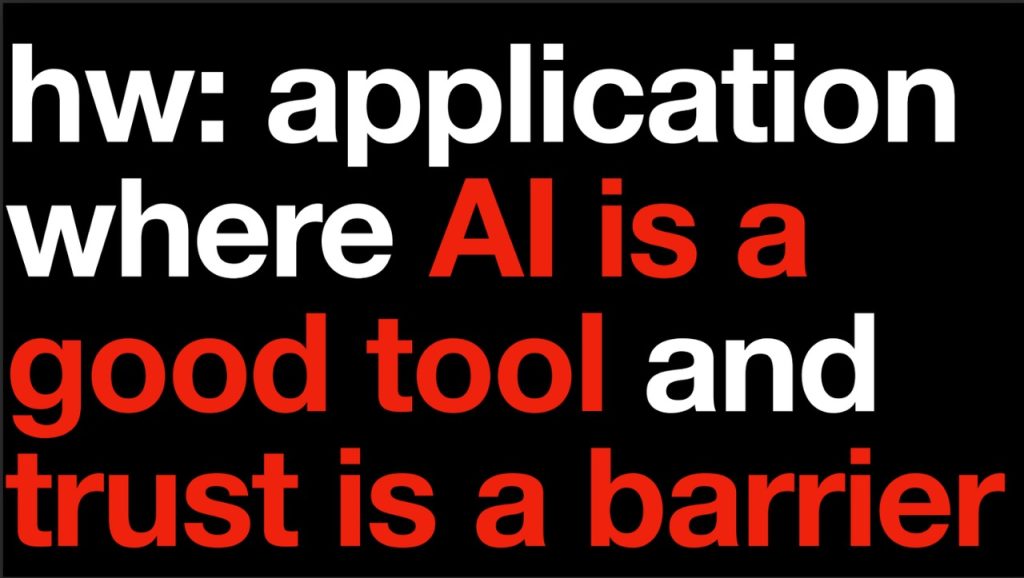
Modulus Labs’ presentation at World Supercomputer Summit 2023
2. Account Abstraction space feels “flat, hot, and crowded”
As previously noted, from EDCON2023, post-event interviews, and daily interactions, I sense that account abstraction is gradually moving from concept to practice. The space is packed—with many wallet projects aiming for full-stack control to optimize the B2B2C model. Yet the deeper challenge lies in establishing a sustainable value capture framework.
As mentioned earlier, intense competition risks turning AA SDKs into public goods. B-side services in smart contracts struggle with scalability and margins. C-side user traffic remains controlled by DApps, posing value capture challenges for wallet projects. Nonetheless, Ethereum continues pushing broader adoption of ERC-4337 to deliver superior UX and US. I believe that in the next cycle, account abstraction won’t be a buzzword—it’ll be an invisible, seamless experience embedded in high-traffic applications. That’s something worth looking forward to.
3. Public Goods’ critical role in blockchain repeatedly emphasized
At EDCON2023 side events, Buidler DAO, SeeDAO, and Mask Network jointly hosted the DAO Montenegro Conference, discussing topics including public goods. Gitcoin founder Scott Moore also spoke about Public Goods, stressing the importance of “coordination” in helping blockchain protocols address societal network problems. (Gitcoin, an open-source funding platform, aims to build and fund digital public goods.) Coincidentally, I discussed public goods with Shumo, founder of Manta Network and Poseidon ZKP, during the conference.
“The endgame of blockchain infrastructure is public goods,” Shumo said. My interpretation: blockchain infrastructure resembles “quasi-public goods” like highways—limited non-rivalry and excludability—and should be broadly adopted to improve financial systems, lifestyles, and productivity. Most blockchain infrastructure code is open source, shaped by a culture of openness and the egalitarian, win-win ethos of Web3. This makes it hard for any project to maintain a moat, as new open-source projects continually bring free positive externalities to the ecosystem.
From conversations with other attendees, I sensed that many Ethereum developers are driven less by profit and more by solving real ecosystem problems. Their resulting products are typically open-sourced for universal access and improvement. Much of blockchain’s foundational infrastructure consists of open-source public goods—part of why the crypto industry evolves so rapidly.
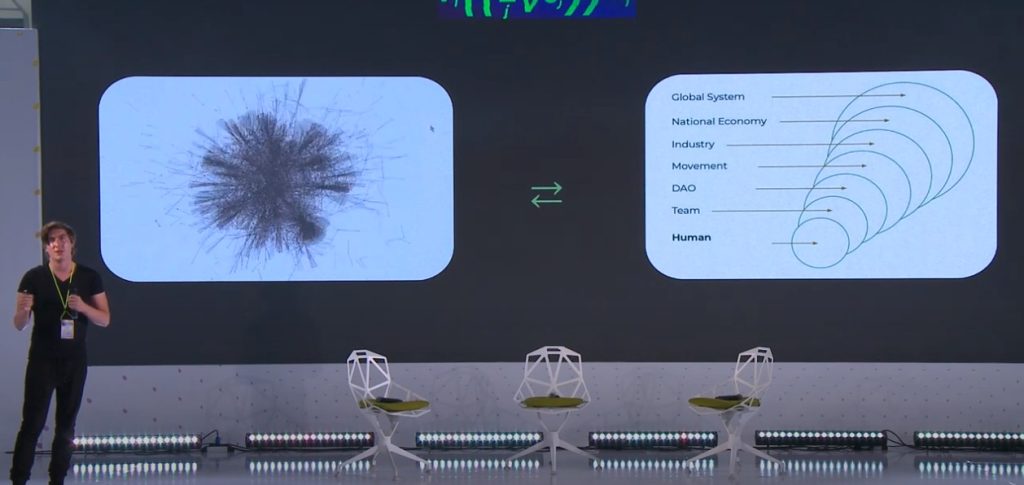
Gitcoin founder Scott Moore speaking at EDCON2023
Conclusion
Andy Guzman of the PSE Foundation, in his talk “Harnessing ZK and Existing Infrastructure for Ethereum’s Mass Adoption,” noted that we’re now at a convergence point where ZK, account abstraction, and Layer 2 technologies are maturing. Together, they will elevate Ethereum’s User Experience (UX) and User Security (US). In this envisioned future, we can expect faster, safer, and more stable Layer 2 environments, where ZK-empowered AI/ML enables more dynamic DApps, and account abstraction eases new users into crypto with secure, convenient, low-cost account management. EDCON2023 brought global developers and industry peers together once again—to assess Ethereum’s progress, exchange insights on latest trends, and spark innovation through collaborative dialogue.
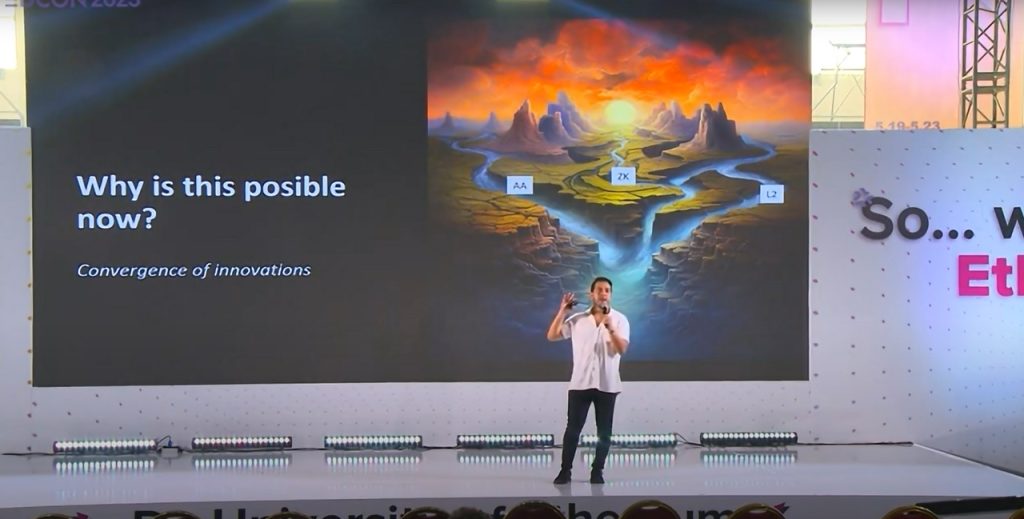
Andy Guzman speaking at EDCON2023
Join TechFlow official community to stay tuned
Telegram:https://t.me/TechFlowDaily
X (Twitter):https://x.com/TechFlowPost
X (Twitter) EN:https://x.com/BlockFlow_News
 Mint Ventures