








Will Playbux, invested by Binance Labs, be the end point of X-to-earn?
TechFlow Selected TechFlow Selected
Will Playbux, invested by Binance Labs, be the end point of X-to-earn?
In the next wave of "X-to-earn," whoever achieves a stable closed loop and creates sustainable revenue will have the potential to become the undisputed leader in this sector.
 Navigating Web3 tides with focused insights
1. Why Are More and More Traditional Games Choosing X-to-Earn?
In traditional gaming companies, game developers must first raise funds from investors, then spend heavily to attract users, and finally distribute revenue earned from users back to investors, completing a closed-loop transaction.
However, this model has obvious flaws. First, the cost of fundraising is extremely high because traditional equity financing involves complex procedures and high trust barriers, making it accessible only to a few institutional investors. Second, distribution costs are exorbitant. Game publishers and players could have a mutually beneficial, co-constructive relationship, but users cannot benefit directly from the games, forcing publishers to rely on aggressive spending to attract user traffic.
So, is there a solution where all users could “crowdfund” the creation of a game ecosystem and then share in its generated revenues?
The emergence of blockchain makes this vision possible. Game publishers can initially issue NFTs to encourage user participation in building the ecosystem, then later allow users to share in the game’s success through token dividends and appreciation. Clearly, this represents a more optimized business model.
In fact, Web3 builders have been actively exploring this model, and every breakthrough exploration brings significant wealth effects. Therefore, we should remain highly attentive to each innovative project in this space.
2. X-to-Earn 1.0 – Breaking Into the Mainstream
When discussing "X-to-earn," we must mention the first groundbreaking project: Axie Infinity.
Born in Vietnam, Axie Infinity introduced an innovative dual-token model, offering players worldwide a new Play-to-Earn experience. It provided early Southeast Asian players with monthly incomes exceeding $10,000, quickly gaining global popularity.
By August 2021, Axie Infinity had surpassed one million users, accumulated over $2 billion in total revenue, and seen its AXS token surge from around $0.1 at the beginning of the year to $160, generating massive wealth effects.
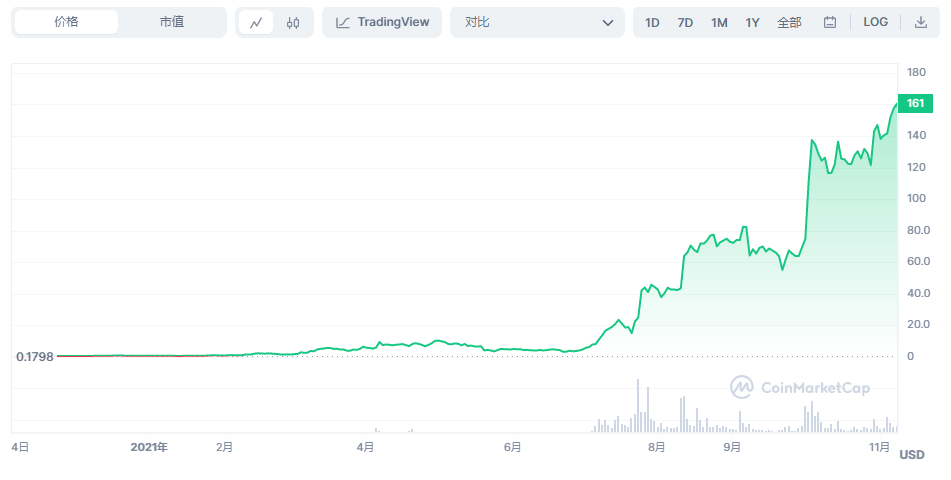
However, due to Axie Infinity's extremely simplistic graphics and low gameplay appeal, very few players were willing to pay for the game. By early 2022, as project revenue fell far below the bonuses paid to players, users began leaving, and the project spiraled into decline.
Afterward, several projects imitated Axie Infinity’s business model. However, markets typically reward pioneers, and as the public gradually recognized Axie Infinity's unsustainability, later clones failed to gain traction—until the next major innovation emerged.
3. X-to-Earn 2.0 – Expanding Use Cases
In early 2022, Stepn emerged as the second-generation leader after Axie Infinity. Building upon Axie Infinity, Stepn introduced significant innovations:
-
Unlike Axie Infinity, which offered niche mini-games with limited playability and audience reach, Stepn chose the broader, real-life-connected domain of fitness running. It enhanced engagement by adding upgradeable items, shoe crafting, and other gameplay mechanics.
-
To address the issue in Axie Infinity where reward tokens (SLP) were quickly dumped, causing negative spirals, Stepn created numerous consumption mechanisms for reward tokens—for example, using GST tokens to upgrade shoes or enhance attributes. This design encouraged users to reinvest their earnings back into the game, effectively reducing sell pressure and extending the project’s lifespan.
During the bear market of early 2022, Stepn’s GMT token rose逆势, surging from $0.13 to nearly $4, bringing substantial profits to early adopters.
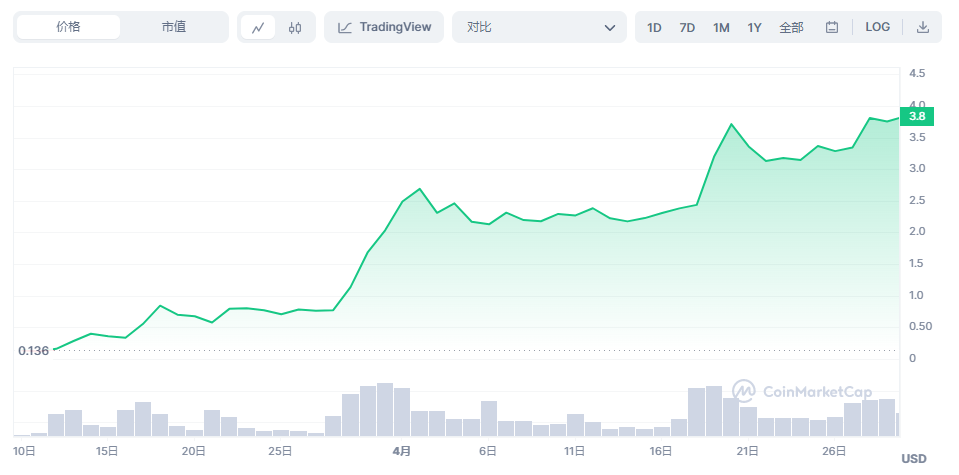
Stepn’s decline stemmed from multiple factors: narrow business scope, disconnection from real-world commerce, macro market conditions, dumping of GMT tokens, declining monthly active users, exit from mainland Chinese users, and deviation from metaverse aspirations. At its core, Stepn ultimately failed to resolve the fundamental imbalance between income and expenditure. Early users profited from later entrants’ investments; as new user inflows slowed, Stepn rapidly entered a death spiral.
It is foreseeable that in the next wave of "X-to-earn," whoever achieves a stable closed-loop economy with sustainable revenue will likely become the dominant leader in this sector.
4. X-to-Earn 3.0 – Closing the Business Loop – Playbux
By observing current X-to-Earn projects in the market, Playbux has come into our spotlight.
Playbux is one of the 14 projects selected for Binance Incubator’s Q4 program and has also received investment from Binance Labs.
We focus on and believe in it for two core reasons:
First, it solves the revenue problem that plagues previous "X-to-earn" projects by establishing a sustainable business model, thereby avoiding Stepn’s fate of a death spiral;
Second, Playbux is not just another single-purpose "X-to-earn" project—it has a much grander vision, greater potential, and a higher ceiling. Its goal is to become the “world’s first integrated X-to-earn comprehensive metaverse.”
So what exactly does “integrated X-to-earn” mean, and how does it achieve a closed business loop? Below is a basic introduction to help you understand.
1. Project Overview
1.1 Scope of Operations
Playbux envisions becoming the world’s most accessible metaverse, available across all devices, aiming to let everyone enjoy fun, participate fully, and earn money. Playbux is the world’s first truly integrated x-to-earn Web3 platform, offering services such as shop-to-earn, play-to-earn, walk-to-earn, trade-to-earn, watch-to-earn, and many other x-to-earn activities. Playbux is partnering with numerous leading Web2 and Web3 wallets, telecom operators globally, and the world’s largest online streaming platforms. It has also signed agreements with the world’s largest fintech company to develop financial products for mass Web3 adoption.
Official website: http://playbux.co/
Twitter: https://twitter.com/playbuxco
1.2 Project History and Roadmap
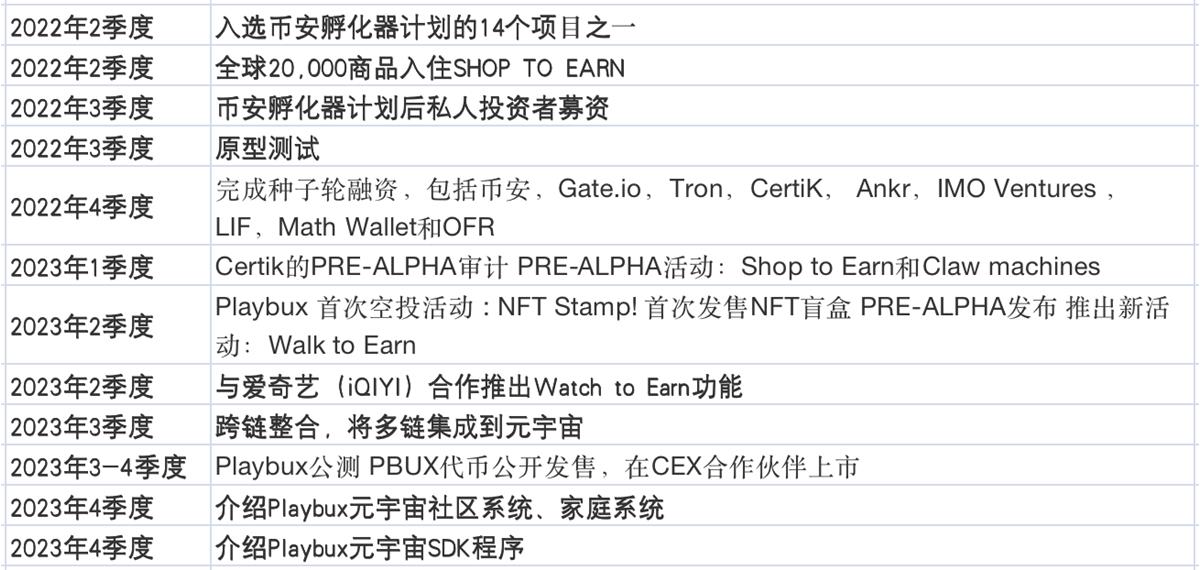
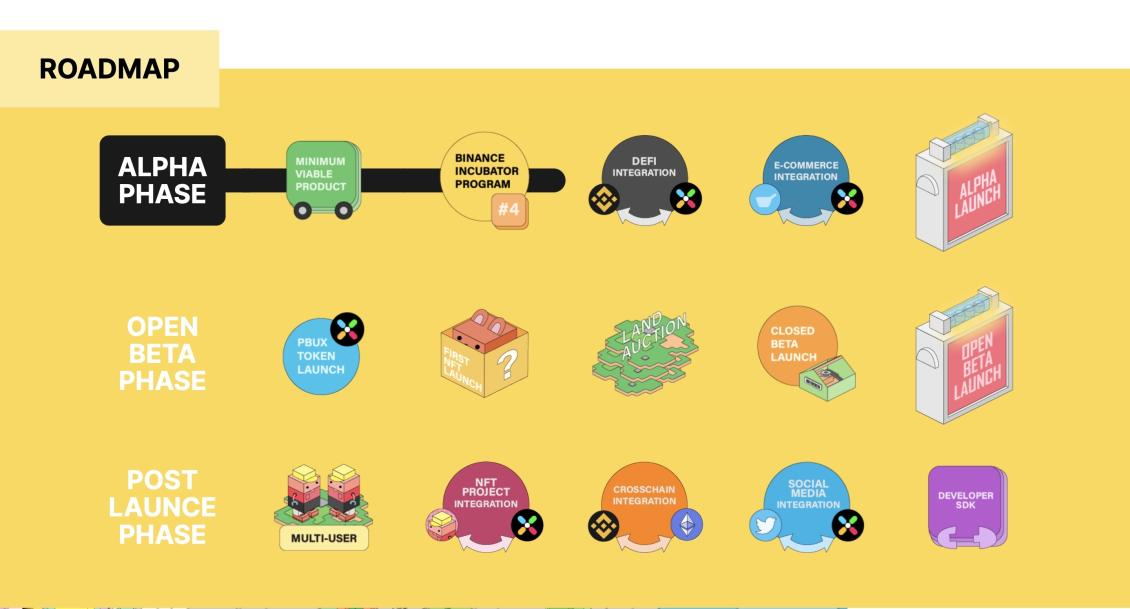
1.3 Operational Details
Shop to Earn
Playbux is the first metaverse with a shop-to-earn system.
Since most Web2 users may not understand concepts like cryptocurrency, purchasing crypto can be difficult. Playbux leverages a cashback business model, allowing users to buy real-world goods from any e-commerce site they’re already members of and receive cashback in cryptocurrency—helping them test Web3 and the metaverse and understand how they work.
Cryptocurrency cashback isn’t created out of thin air. The core principle is that the platform earns commissions from partnered e-commerce sites for customer referrals, then returns these as cash credits to users’ accounts. Users can freely choose to withdraw these as BUSD or use them within Playbux to purchase BRK or blind boxes and participate in platform activities.
Through Playbux’s shop-to-earn system, users can shop at over 20,000 merchants worldwide and receive cashback, with stores customized based on their location. Typically, cashback amounts are small and take long to process. Playbux offers a one-day cashback system—users receive their cashback within one day of approval—and can use it to join entertainment events organized by Playbux, earning more money and rewards such as NFTs.
Additionally, Playbux plans to fund future new activities through revenue from referrals, affiliate programs, advertising systems, service fees, and user distribution charges. Most importantly, users only receive tokens when the platform generates actual revenue—solving the historical issue of many platforms failing due to lack of genuine income.
Play to Earn
Within the Playbux metaverse, one way to spend BRICK is through the Game Center. The Playbux Game Center offers thousands of regularly updated games, resembling a true retro gaming console. It also features exciting mechanics like mystery boxes, NFT claw machines, and NFT integration upgrades, with rich prizes including BRK, limited NFTs, cash rewards, BUSD, and jackpots up to 10,000 BUSD!
Playbux is about to release an SDK, enabling game developers worldwide to create their own games using the Playbux environment and list them in the Game Center. Playbux and game creators will share profits from the games they build. With this concept, users become creators, and Playbux becomes a platform for showcasing ideas and creativity.
Walk to Earn
The Playbux mobile app debuted on May 26 with its first mobile event: “Walk to Earn.” Anyone can join by downloading the app and logging into a Pre-Alpha event account. Participants have chances to win various prizes, including BUSD, BRK, cashback, and new NFTs!
Each week, the “Walk to Earn” event resets. A participant’s total weekly BRK contribution accumulates into a weekly score. Weekly scores are then distributed among the top 300 walkers based on walking distance.
Watch to Earn
On June 16, the e-commerce metaverse platform Playbux announced a partnership with global streaming giant iQIYI to launch its “Watch to Earn” feature. Users entering the Playbux platform can access the “iQIYI Building” to watch eligible iQIYI content. After meeting required viewing durations, they can enter raffles to win rewards such as BUSD, BRK, and NFTs.
In the future, Playbux will offer more “x-to-earn” activities, delivering fairer, more transparent, and valuable gaming experiences, allowing players to enjoy greater fun and rewards.
1.4 Team Background
According to LinkedIn data from RootData, Playbux’s two co-founders previously founded the myCashback brand project and played key roles in its establishment and growth.

Tay Sitthisaktanakul
Tay Sitthisaktanakul is a co-founder of Playbux. Previously, she served as Head of Business Development at myCashback and held executive positions at multiple companies, bringing extensive business and management experience. Tay graduated from Bangkok University with a degree in International Studies.

Sarun Vichayabhai
Sarun Vichayabhai is a co-founder of Playbux and the founder of mycashback.co. He is also a seasoned technology expert with years of software development experience.
1.5 Investment Backing
Playbux is supported by the world’s largest Web3 funding groups and organizations, including Binance Labs, Gate.io, Tron, CertiK, Ankr, IMO Ventures, LIF, Math Wallet, and OFR. In 2022, Playbux raised $2 million.
1.6 Partnerships
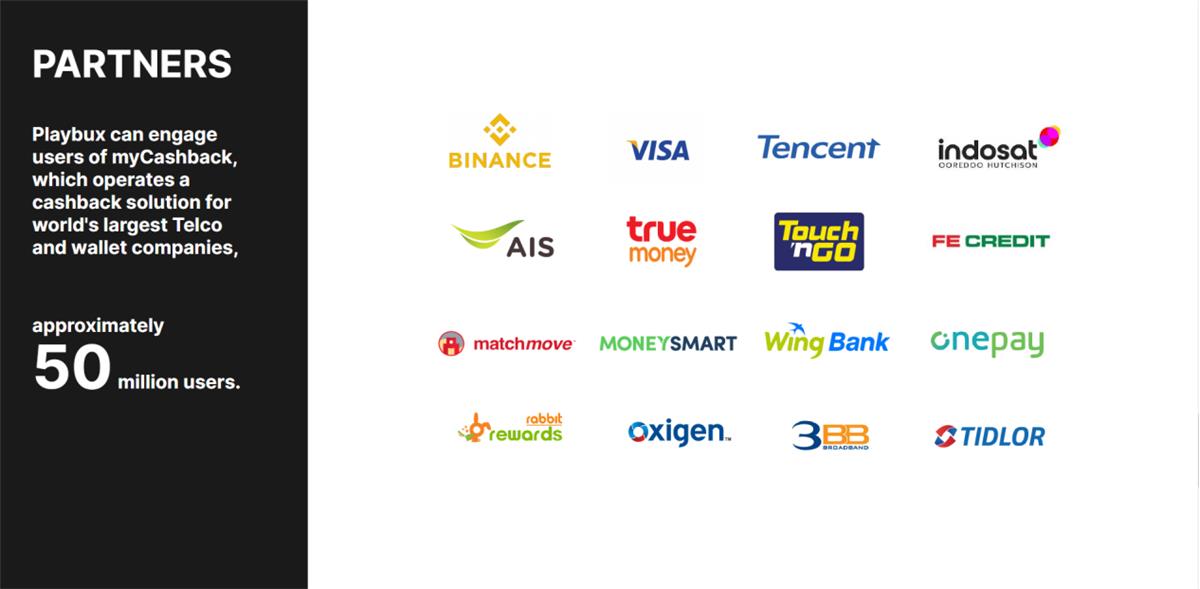
Playbux has numerous partners, and its ecosystem is already taking shape.
1.7 Fundamental Summary
Based on the above fundamental analysis of Playbux, the project operates in the high-ceiling metaverse sector, backed by top-tier investors, offers diverse gameplay, and avoids the death spiral plaguing traditional "X-to-earn" projects—a solid 9 out of 10.
Beyond fundamentals, let’s now examine its tokenomics.
2. Token Analysis
2.1 Token Structure
The project uses a dual-token structure. The main token PBUX is used for governance and controlling system direction. The other token, Brick Point (BRK), functions like in-game currency, used to purchase decorations, cosmetics, and games—but cannot be withdrawn or used for redeemable items like NFTs.
2.2 Total Supply
The Playbux token (PBUX) is the governance token used for voting and system control. It can be used to purchase NFTs or anything exchangeable between blockchain and games. Total supply is capped at 400 million tokens.
2.3 Token Distribution and Early Unlock Schedule
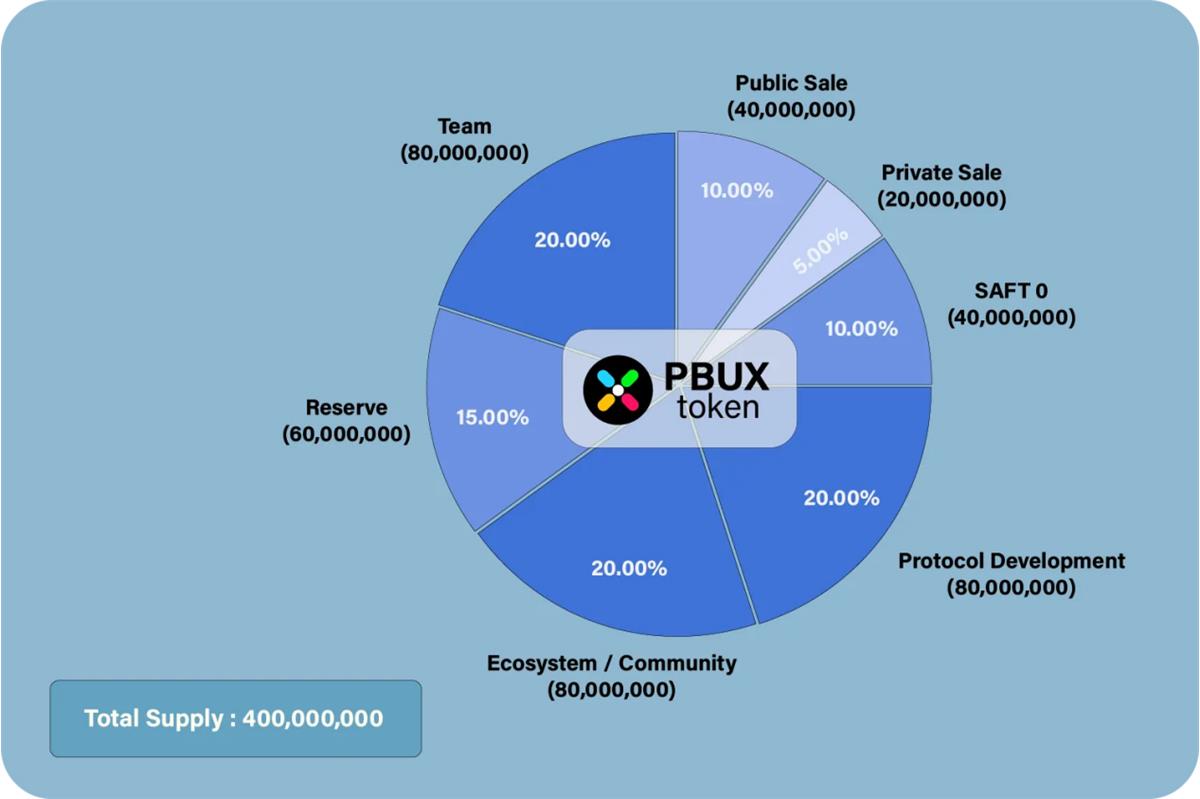
PBUX distribution includes:
- SAFT 0 (10%): 10% allocated to Binance, the first investor. Over five years, 40 million tokens will be released. After a 6-month lock-up, 10% (4 million tokens) is unlocked, followed by 10% every six months.
- Private Sale (5%): 20 million tokens total. After a 3-month lock-up, 5% (1 million tokens) is unlocked, followed by 5% every three months.
- Protocol Development Fund (20%): Used to recruit teams or fund external game development groups. 10% released initially, then 10% every three months. Not used for team profit. Unused tokens will be frozen.
- Ecosystem and Community (20%): For acquiring new supporters or paying shopping rewards. If cashback needs faster processing, tokens will be bought from the open market. Unused tokens will be frozen.
- Reserve (15%): For emergencies or supporting newly planned features. Locked for one year. If unused, these tokens will be frozen.
- Team (20%): For team incentives. Locked for 6 months, then 10% released every 6 months over 5 years.
- Public Sale (10%): Conducted on partner launch platforms. Sale dates will be announced on official channels before token release.
2.4 Token Model Summary
Unlike other cryptocurrencies, Playbux’s model requires users to purchase BRK to participate, and the cash revenue from BRK sales funds prize pools distributed to users. This means PBUX tokens are backed by real cash flow, eliminating the risk of a death spiral.
Moreover, PBUX’s distribution is highly favorable: holders benefit from team and reserve allocations. Meanwhile, ecosystem and community tokens will increase PBUX usage and circulation, enhancing token value.
Overall, the token model scores 8 out of 10.
3. Preliminary Valuation
3.1 Valuation & Potential ROI
As an integrated Web3 and Web2 “X-to-earn” comprehensive metaverse platform, Playbux’s foundation lies in “X-to-earn” services. Its growth potential could challenge leaders like Axie and Stepn, while also benefiting from the expansive metaverse narrative—giving it a very high valuation ceiling. Its floor is supported by tangible “X-to-earn” services.
The team demonstrates strong business insight, choosing a “X-to-earn” market with long-term value that’s currently stabilizing. The ability to rise strongly during a bear market reflects solid development and operational resilience, making a zero-out scenario unlikely.
The medium- to long-term investment thesis is clear: aiming to become the world’s most accessible metaverse platform, offering diverse “X-to-earn” activities like shopping, gaming, walking, trading, and watching. Compared to traditional institutions, its services offer distinct advantages and will likely benefit long-term from growing demand for decentralization, transparency, fairness, and low-cost transactions.
At the top of the X-to-earn market stand Axie Infinity and Stepn. Playbux’s positioning, vision, growth potential, and investment backing are comparable. Given its current momentum, Playbux has a strong chance of claiming the 2023 “X-to-earn throne.”
Playbux not only learns from Axie and Stepn’s mistakes by optimizing token economics—such as increasing token consumption and premium spending via various “X-to-earn” activities—but also uses Web3 principles to solve the long-standing “death spiral” problem: users only earn tokens when the platform earns revenue, addressing past failures caused by lack of real income.
Playbux’s mechanism draws inspiration from Axie. Can reviewing Axie and Stepn’s data help predict Playbux’s trajectory and determine its current lifecycle stage?
Here, we attempt to use Axie Infinity and Stepn’s business metrics and market caps as valuation anchors for comparison.
Playbux plans a public beta in Q3–Q4 2023, coinciding with PBUX’s public sale. Currently, Playbux has 157k Twitter followers, expected to peak by launch. We’ll use 200k Twitter followers as a benchmark and compare Axie and Stepn’s performance at similar stages:
Stepn: April 8, 2022 — Twitter followers surpassed 200k (as of June 18, 2023: ~560k)
Axie: July 15, 2021 — Twitter followers surpassed 200k (as of June 18, 2023: ~870k)
Using 200k Twitter followers as a milestone, we compare Stepn’s data from April 8, 2022, and Axie’s from July 15, 2021, analyzing circulating market cap, IEO returns, and other metrics.
Axie: On July 15, 2021, Axie’s circulating market cap reached $1.4 billion (total market cap: $6.2 billion). Token price: $23. Axie’s Binance Launchpad hard cap was ~$3 million, with an IEO price of $0.1, yielding a 23,000% return.
Stepn: On April 8, 2022, Stepn’s circulating market cap was $1.3 billion (total: $13.2 billion). Token price: $2.2. Hard cap on Binance Launchpad: $4.2 million, IEO price: $0.01, yielding a 22,000% return.
If market conditions improve in the second half (with BTC halving approaching), and if Playbux launches on Binance Launchpool/Launchpad (backed by Binance Labs), as the “world’s first integrated X-to-earn metaverse platform,” its circulating market cap could reach $1 billion, fully diluted valuation ~$4.4 billion, token price ~$11—potentially delivering thousand-fold returns.
3.2 How to Participate & Expected Returns
Besides direct trading on secondary markets, the currently safer recommendation is participating in airdrops.
Current participation methods include:
- Shop to Earn: As a core Playbux feature, if you already plan to shop, consider buying through Playbux’s partner merchants to get 2% cashback—saving money.
- Stamp to Earn: A stamp-based airdrop. Daily check-ins earn BRK or allow purchasing BRK. Obtain NFTs via the Game Center or secondary markets like OpenSea, then stamp to earn PBUX tokens.
- Walk to Earn: Spend BRK weekly to join Walk-to-Earn events and win rewards like BUSD, NFTs, and tokens. The logic: players spend BRK to compete for rankings, injecting funds into the game, which are then redistributed to winners. This model is decoupled from tokenomics, avoiding death spirals and enabling long-term sustainability.
- Watch to Earn: Watch iQIYI content on Playbux.co to earn rewards including BUSD, BRK, and NFTs.
- The team occasionally hosts quizzes and upcoming “Bet to Earn” events to earn various rewards.
- Tokens are expected to launch in Q3. Follow official Twitter for upcoming IDO opportunities.
From personal experience, the ongoing Stamp-to-Earn campaign allows purchasing a basic NFT set on OpenSea for under $40, with an expected post-campaign yield of over 400 PBUX tokens—cost per PBUX under $0.1. If the token lists on Binance, total returns could exceed hundreds or even thousands of times.
3.3 Valuation Summary
The team demonstrates strong business insight, selecting a “X-to-earn” market with enduring value. Positioned as the “world’s first integrated metaverse platform,” Playbux holds several advantages over other “X-to-earn” projects:
- More sustainable business model with strong cash flow support; users only earn tokens when the platform generates revenue, solving past issues of unsustainable earning due to lack of real income.
- Richer “X-to-earn” offerings: the platform provides shop-to-earn, play-to-earn, walk-to-earn, trade-to-earn, watch-to-earn, and many other x-to-earn activities.
- First to introduce shop-to--earn to Web3, letting users buy real-world goods from existing e-commerce memberships and receive crypto cashback.
- Upcoming SDK release will enable global game developers to build games on Playbux. Users become creators, and Playbux becomes a showcase platform for ideas and creativity.
Overall, Playbux boasts an ambitious vision, sits on a deep and wide foundational赛道, and possesses immense potential as a Web3 platform—making it worthy of long-term observation and anticipation.
Especially compelling: you can participate at near-zero cost today, betting on potentially hundredfold returns. Why not?
5. References
Research Reports & Articles
Data Report | 10,000-Word Summary of the 2022 GameFi Sector
Project Information
Website: http://playbux.co/
Telegram: http://t.me/playbuxchannel
Discord: https://discord.gg/rj7fCdAk7Q
Youtube:
https://www.youtube.com/channel/UCIB7f6qcvGz1Qp3j1wH1xCg
Facebook:
https://www.facebook.com/playbux.co
Twitter: https://twitter.com/playbuxco
Join TechFlow official community to stay tuned
Telegram:https://t.me/TechFlowDaily
X (Twitter):https://x.com/TechFlowPost
X (Twitter) EN:https://x.com/BlockFlow_News






