The Future of NFTs: Exploring Possibilities Beyond Art and Collectibles
TechFlow Selected TechFlow Selected
The Future of NFTs: Exploring Possibilities Beyond Art and Collectibles
In this article, we will explore five of the most promising new use cases for NFTs beyond art and collectibles.
 Navigating Web3 tides with focused insights
Written by: cr1st0f
Translated by: TechFlow
From CryptoPunks and Rare Pepes to Fidenzas, the most famous and successful NFTs have belonged to the art and collectibles category.
While some generative art collections are beginning to attract attention from the mainstream art world, most NFTs remain a highly niche, crypto-native market, largely unseen by mainstream media as culturally significant.
Despite the current limitations in popular NFT types, several emerging use cases aim to extend the benefits of decentralized ownership—composability, transparency, and security—to new asset classes. In this article, we will explore five of the most promising new NFT use cases beyond art and collectibles.

Currently, we are in an NFT bear market, with declining interest across all categories compared to months ago, except for art, which remains relatively strong. Nevertheless, recent research reports predict substantial growth in the NFT market over the next decade. According to forecasts by SkyQuest Technology, Verified Market Research, and FactMR, the NFT market could reach $120 billion to $320 billion within 5–10 years—driven not only by art but more likely by broader tokenized assets. Below, we examine the main categories of these NFT-based assets.
The five major categories that have recently emerged are: membership tokens, financial NFTs, legal documents, real-world assets, event tickets, and media.
Much of the development behind these new use cases emerged during and shortly after the 2021 NFT bull run, when they received significant attention and funding. If any of these use cases prove viable, we may see massive adoption in the next cycle.
Membership Tokens
Beyond collectibles, the first NFT use case was as membership tokens. As early as 2017, HAIRPEPE Rare Pepe cards granted holders access to a Telegram group called The Salon. Since then, we’ve seen several NFT-gated membership clubs. While many target only NFT collectors—such as Proof Collective, MetaverseHQ, and Grailers DAO—others are pushing the boundaries further, like Crypto Packaged Goods, which functions more like a business club and startup incubator.

One example combining NFT-gated online communities with decentralized governance is Nouns DAO. With a treasury exceeding 27,000 ETH, it operates as a DAO focused on managing its funds and ultimately creating value for Nouns holders. Each Noun equals one vote and grants access to private chats for discussing proposals and coordinating treasury usage.
As better tools and user experiences are developed, enabling users to interact with NFTs without needing to understand wallets or self-custody, we can expect an increase in NFT-gated membership clubs. As technology advances and becomes more accessible, we may see diverse new use cases and broader industry adoption of this membership and governance model.
A closely related application to membership tokens is brand loyalty rewards. While several existing brands—including Reddit, Nike, and Adidas—have explored NFT and Web3 applications, one of the most interesting comes from Starbucks.
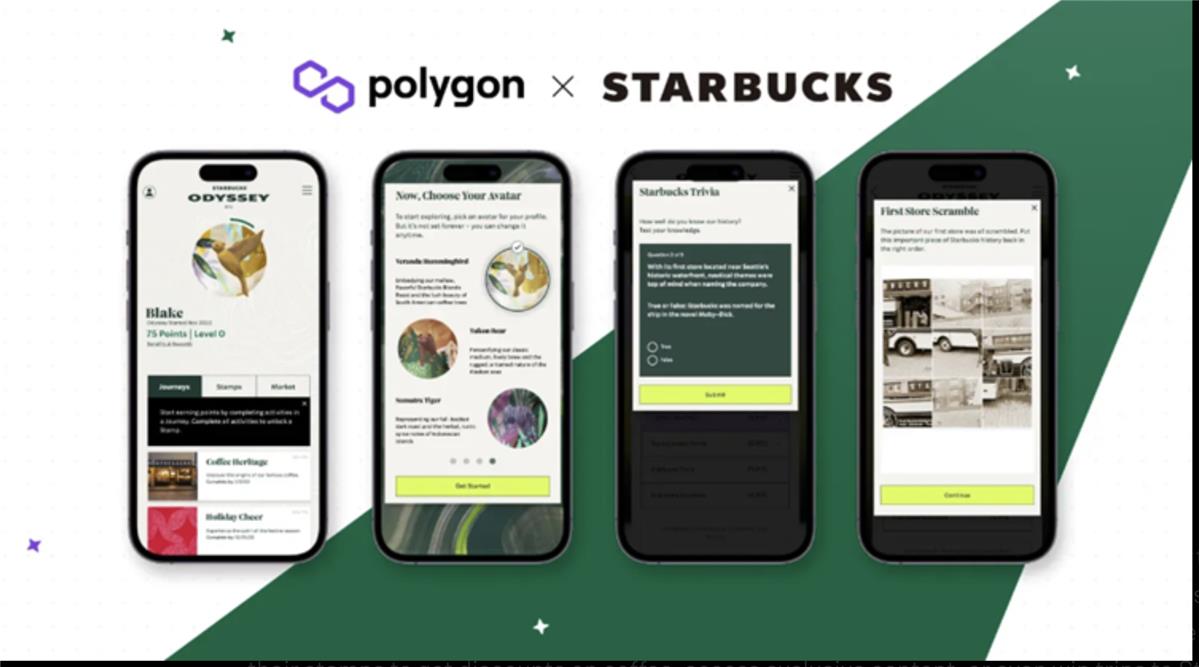
In December 2022, Starbucks launched a new loyalty program called “Starbucks Odyssey,” allowing members to earn and purchase digital collectibles called “Journey Stamps.” These stamps unlock new benefits and immersive coffee experiences. For example, members can use stamps to get discounts on coffee, access exclusive content, or even win trips to Starbucks coffee farms.
Starbucks’ Odyssey program is still in its early stages, but it has the potential to transform how brands engage with customers. By using NFTs, brands can create more personalized and immersive experiences—and crucially, if customers no longer want their rewards, they can sell them.
Financial NFTs
Starting with Uniswap V3 positions, financial NFTs entered the mainstream consciousness of DeFi. Using NFTs as receipts for users’ positions in DeFi protocols allows richer metadata encoding compared to simple ERC-20 tokens representing holdings.

For instance, in Uniswap V3, NFTs act as receipts storing LP position details: the LP pair, minimum and maximum ticks for concentrated liquidity, LP position size, and crucially, accumulated rewards. Because rewards accrue directly to the NFT itself, this opens up further possibilities for DeFi applications built around NFTs—though we haven’t seen many such applications yet.
Other examples of financial NFTs include Liquity Chicken Bonds, Superfluid streaming payments, NFTfi promissory notes, BendDAO’s bNFT, and Solidly’s innovative veNFT. Chicken Bonds, recently launched by Liquity, use NFTs as deposit receipts for bond positions. With this feature, Liquity also expressed interest in experimenting with the visual design of bond NFTs, some of which have already sold above face value due to their collectible appeal.

Superfluid enables streaming payments and recently turned these payment streams into NFTs, enhancing transparency and composability. While these flow-NFTs are currently just for display, they may become transferable in the future.
Legal Documents
Traditional legal documents are typically paper-based, difficult to manage and verify, while NFTs offer a unique opportunity to create secure, immutable, and verifiable digital documents.
One of the first examples I saw was from Wrappr, a company focused on transparency that allows NFT-based corporate registration, enabling fast U.S. company formation. These NFTs facilitate secure record-keeping, rapid registration, and easy document retrieval. By leveraging blockchain’s security and transparency, Wrappr creates a more efficient and secure process for forming and managing crypto-native companies and legal structures.

Another interesting example is RBB Labs, which airdropped NFT court summonses to defendants in copyright infringement cases. According to a Cointelegraph article, RBB Labs used NFTs to create verifiable digital documents that could be easily distributed—even when only a wallet address identifies the defendant, whose real identity remains unknown.
The trend of using NFTs as legal documents aligns with the broader movement toward blockchain-enabled transparency and on-chain identity, particularly for legal entities. By leveraging blockchain’s security and transparency, NFTs provide a unique opportunity to create secure, verifiable digital documents that are easy to manage and distribute.
Real-World Assets
Consulting firm BCG estimates that tokenization of illiquid real-world assets could unlock $16 trillion in business opportunities by 2030. Some of these tokenized assets will be ERC-20 tokens, but others will be ERC-721s or NFTs. Currently, the range of assets tokenized via NFTs is limited, primarily luxury goods such as high-end watches, physical collectibles, and real estate.

While NFTs have historically been used merely to represent ownership of real-world assets, Silta is a good example where more data is involved. In this case, NFTs store and update critical information about infrastructure projects funded through the platform. Structural, financial, technical, and sustainability data are stored in the NFT, making data easily accessible while ensuring it cannot be modified or tampered with without a trace.
4K offers the ability to tokenize any physical object, which is stored securely by their partners, allowing NFT owners to redeem the NFT for the physical item at any time. One of the most popular tokenized items is high-end watches, with several tokenized Rolexes already used as loan collateral. Collectible sports cards have also been tokenized by 4K. As their user base grows, the range of tokenized objects is expected to expand beyond jewelry and collectibles.

Perhaps the largest and most obvious asset is real estate. The global real estate market was valued at $326 trillion in 2020, so bringing it on-chain would represent a massive opportunity. Several high-profile real estate transactions have already taken place on-chain, aiming to make this a reality.
As this use case proves viable and legal uncertainties are resolved, it could become one of the largest applications for NFTs backed by physical assets. Real estate transactions are legally expensive and time-consuming, meaning both buyers and sellers have strong incentives to explore this path. We might first see this happen in commercial real estate, where complex stakeholders can agree on systems that make transactions legally enforceable. However, the greatest benefits will emerge when complexity is abstracted and ordinary people can eliminate intermediaries from these transactions.
Event Tickets
Issuing event tickets as NFTs offers several compelling advantages. They provide exceptional security, making counterfeiting nearly impossible—a crucial benefit for organizers trying to reduce fraud and scalping. NFTs also enable seamless transfers between buyers and sellers, significantly simplifying the ticket purchasing and resale process.
Perhaps most interestingly, these tokens can offer fans more personalized and immersive experiences. Event organizers can use NFTs to deliver exclusive content or perks, enhancing engagement and strengthening relationships between fans and organizers.

Several companies are already using NFTs in their ticketing systems. For example, YellowHeart has partnered with artists like Kings of Leon and Grimes to sell NFT-based tickets. In 2021, Grimes used NFT tickets for a performance at Art Basel, allowing fans to customize their tickets with personal photos or artwork. In 2022, Kings of Leon used NFT tickets during their tour, granting fans access to exclusive content such as backstage videos and photos. Similarly, Live Nation has partnered with Ticketmaster to develop an NFT ticketing platform.
Using NFTs for event tickets is still in its early stages, but it holds immense potential. By leveraging NFTs, event organizers can offer fans a safer, more efficient, and personalized experience.
The Future of Non-Art and Non-Collectible NFTs
In the previous sections, we examined several emerging applications beyond collectibles. But what’s the point of tokenizing things that already exist? Certainly, some financial NFTs introduce entirely new functionalities that didn’t exist before DeFi—but why turn event tickets into NFTs, or tokenize your Starbucks rewards or your house? Many critics argue that putting existing things on the blockchain is just a waste of time. Here, we discuss the benefits and potential opportunities for NFTs beyond art and collectibles.
Overall, new NFT use cases fall into two broad categories. The first includes valuable items such as real-world assets, event tickets, membership tokens, and even brand loyalty rewards. The second includes information and documentation—such as corporate incorporation papers, procedural documents (like subpoenas), and use cases like Silta’s project metrics delivered via NFT.
For the first category—“valuable things”—financialization of NFTs and their integration into the broader DeFi ecosystem appear to be the primary drivers behind asset tokenization. Currently, five core financial primitives for NFTs are widely applied: collateralized lending, where NFTs can secure loans and provide liquidity without selling the asset; fractionalization, where NFTs can be split into smaller parts, enabling broader investor participation; derivatives, where NFTs serve as underlying assets for options or futures contracts; renting, where NFTs can be leased for fees; and liquidity pools, where NFTs can provide liquidity in automated market makers (AMMs) and earn trading fees. The NFT financial ecosystem brings numerous benefits: easier trading, removal of intermediaries, capital efficiency, and transparency. It also enables entirely new financial products previously impossible in traditional finance.
In more general scenarios of NFT financial applications, imagine a world where markets for a wide range of goods and services become far more efficient. Removing intermediaries and their associated transaction costs is beneficial in itself—and perhaps sufficient justification for widespread asset tokenization. If smart contracts could execute legally binding transactions for houses, commercial properties, or aircraft, this could save substantial fees paid to lawyers and brokers.
Consider the transparency benefits these systems could bring—imagine if NFT-based real estate ownership and debt had been widely adopted during the subprime crisis. Lack of transparency and accurate data regarding underlying mortgage assets in mortgage-backed securities (MBS) and collateralized debt obligations (CDOs) was a key factor in that crisis. If NFTs had been used to record ownership and debt for these financial products, anyone could have inspected the underlying mortgages and conducted better risk assessments on MBS and CDOs—potentially revealing systemic risks before their collapse.
When considering the benefits of decentralized ownership and self-custody, imagine renting out your Starbucks rewards or a membership you rarely use. Or being able to quickly obtain competitive loans by pledging almost anything you own—your home, car, watch, set of sports cards, or physical artwork on your wall.
Several common DeFi products could also become attractive when applied to new NFT assets. Options based on individual properties could allow speculation on home prices within specific communities—or even single houses. They could also allow homeowners to hedge against price declines by buying put options. Covered Call Vaults, like those offered by Ribbon, have already become popular in DeFi.
While this may not be very appealing to individuals, for large institutional landlords, it could be a way to generate additional yield. Overall, we can envision a world where many native DeFi products are applied to real-world assets, creating truly novel financial instruments previously unimaginable before blockchain technology.
Conclusion
NFTs demonstrate tremendous potential beyond traditional art and collectibles. The most promising applications involve representing assets as NFTs to unlock previously illiquid value, improve transparency and auditability, offer customers more personalized and customizable services, or reduce transaction and intermediary costs.
However, challenges remain, including legal and regulatory clarity around NFT representations of assets and the technical complexity for end users. Addressing these challenges will help realize the full transformative potential of NFTs and revolutionize industries such as real estate, legal documentation, and financial assets. Moreover, continued evolution of the NFT ecosystem is essential, with NFT finance being a particularly important area for unlocking the value proposition of new asset classes.
With ongoing innovation and collaboration, we can expect NFTs to play an increasingly significant role beyond art and collectibles, transforming industries and creating new opportunities.
Join TechFlow official community to stay tuned
Telegram:https://t.me/TechFlowDaily
X (Twitter):https://x.com/TechFlowPost
X (Twitter) EN:https://x.com/BlockFlow_News
 Frogs Anon