








A Brief Analysis of Sui's Ecosystem Development Status and Token Release
TechFlow Selected TechFlow Selected
A Brief Analysis of Sui's Ecosystem Development Status and Token Release
How is Sui's ecosystem development progressing? What are the recent token releases and demand like?
 Navigating Web3 tides with focused insights
Author: duoduo, LD Capital Research
Since its launch on May 3, Sui has now been live for over 40 days. As one of the representative projects in the Move-based blockchain ecosystem, Sui represents a development path distinct from Ethereum Layer 2 solutions. Since going live, the project has sparked considerable controversy, particularly regarding its token distribution mechanism and release model. Some believe it may follow in the footsteps of ICP, while others compare it to the new public chains that emerged in 2021.
Currently, how is Sui's ecosystem developing? What are the recent trends in token unlocks and demand?
1. On-Chain Data
1. TVL
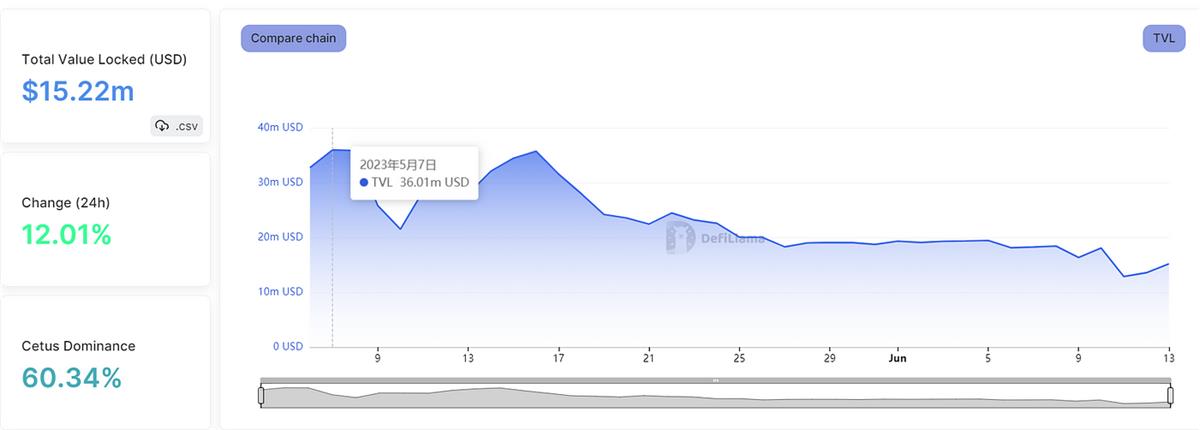
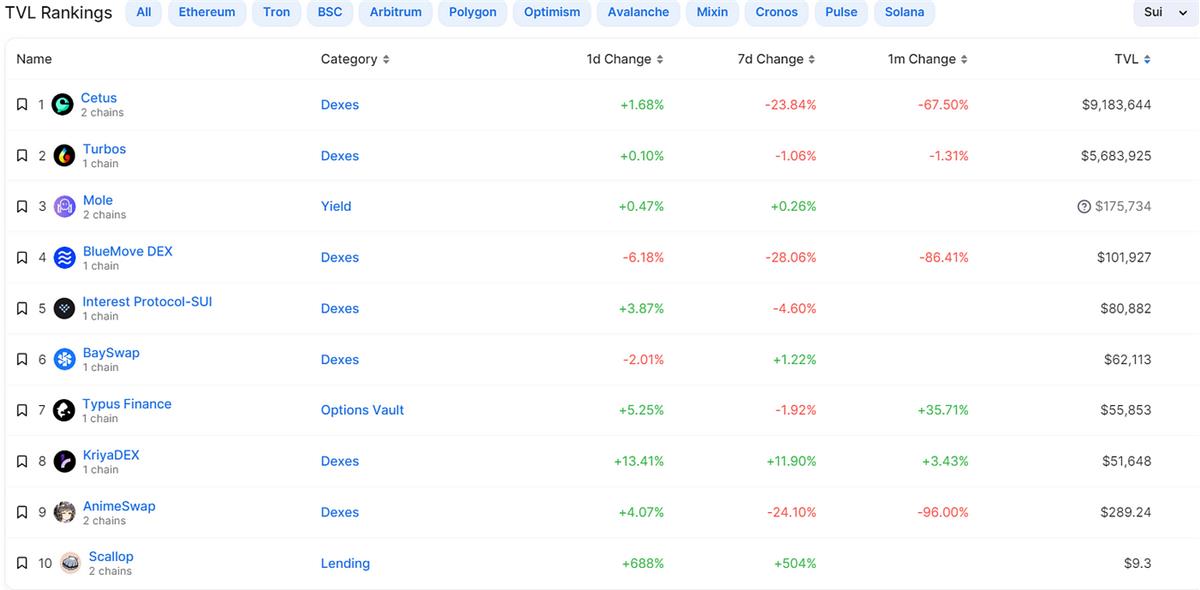
As of June 13, Sui’s total value locked (TVL) stands at $15.22 million, with DEX Cetus accounting for over 60% of this amount. Among all public blockchains and Layer 2 networks, Sui ranks 54th in TVL. Its peak TVL reached $36.01 million, indicating a decline of more than 50%.
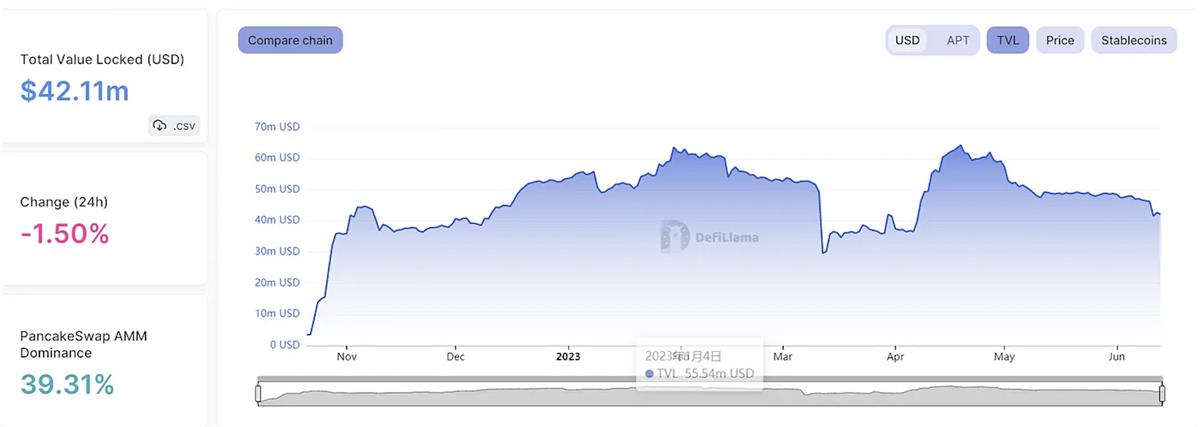
Comparing with another representative Move-based project, Aptos: Aptos currently has a TVL of $42.11 million, peaking at around $65 million since launch, ranking 34th in TVL across chains.
2. Trading Volume
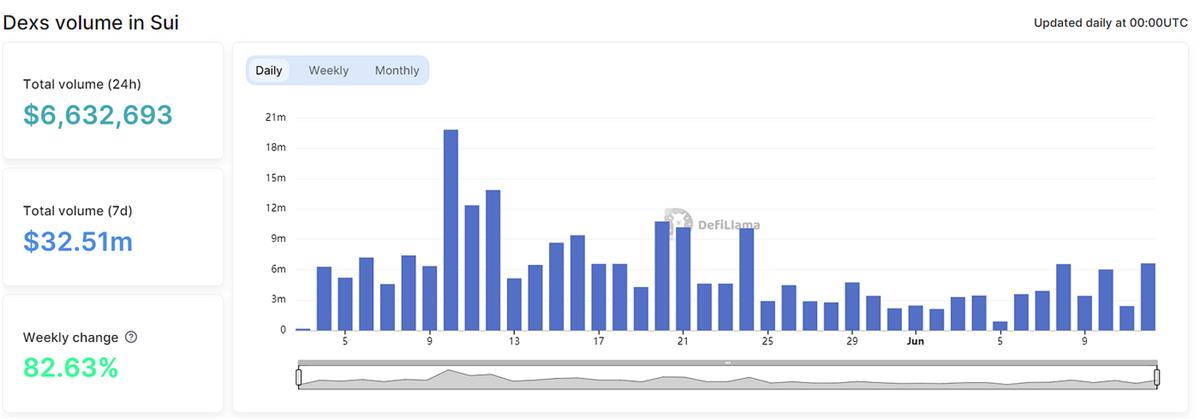
Sui’s highest daily trading volume on DEXs occurred on May 10, exceeding $19 million, after which it declined. Since June, daily trading volumes have mostly ranged between $3 million and $6 million, remaining relatively low.
3. Activity
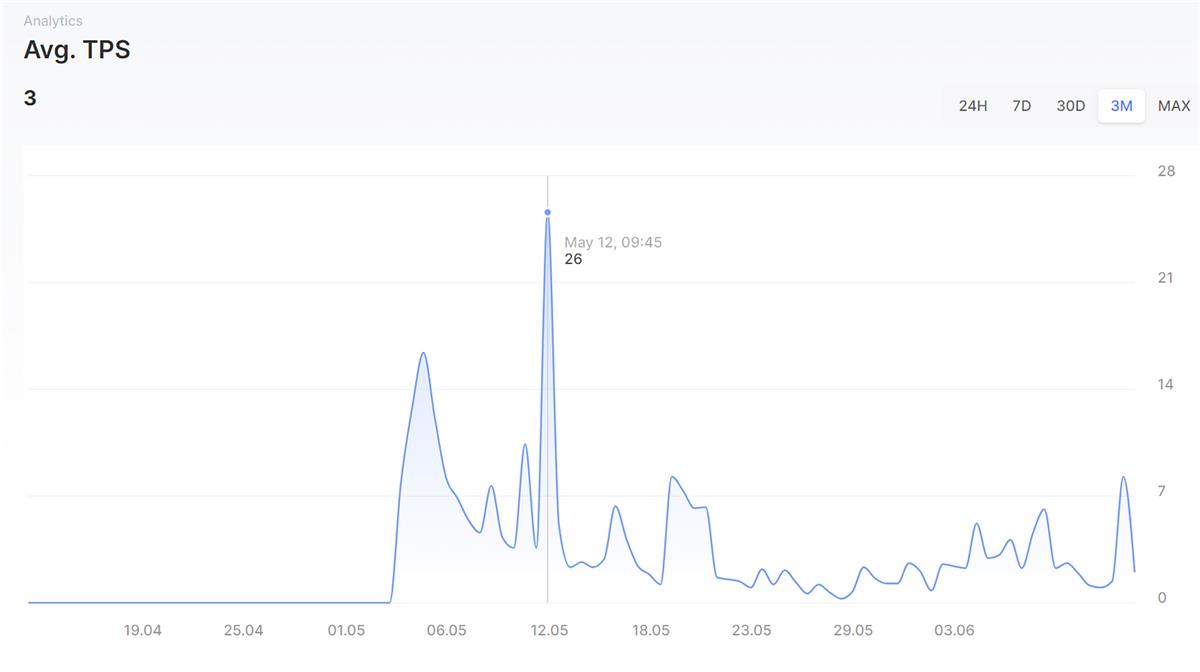
Since launch, Sui has recorded a total of 16.53 million transactions, with an average TPS* of 3, 850,000 total active addresses, and 104 active nodes. According to the chart below, the highest TPS reached 26 on May 12, coinciding with the Turbos IDO event.
*Note: The TPS here refers to actual operational TPS, not theoretical maximum TPS.
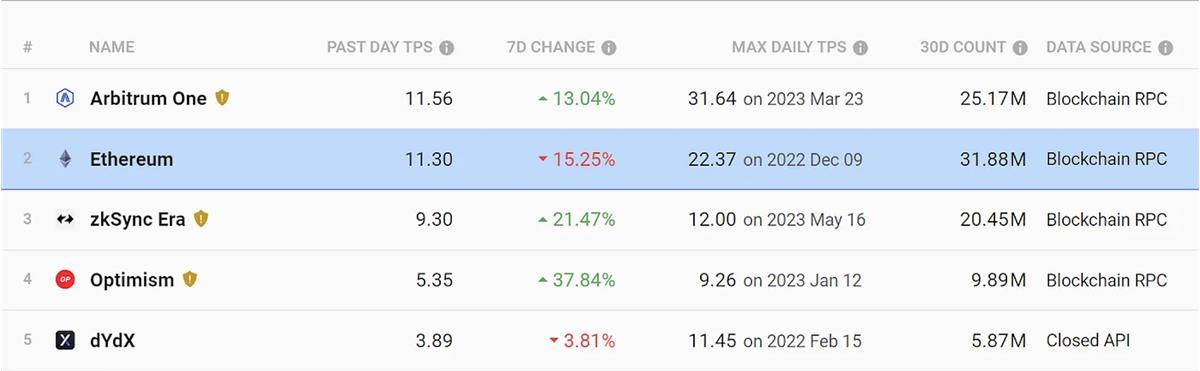
Compared to Ethereum L2s, Sui’s current actual TPS remains very low.
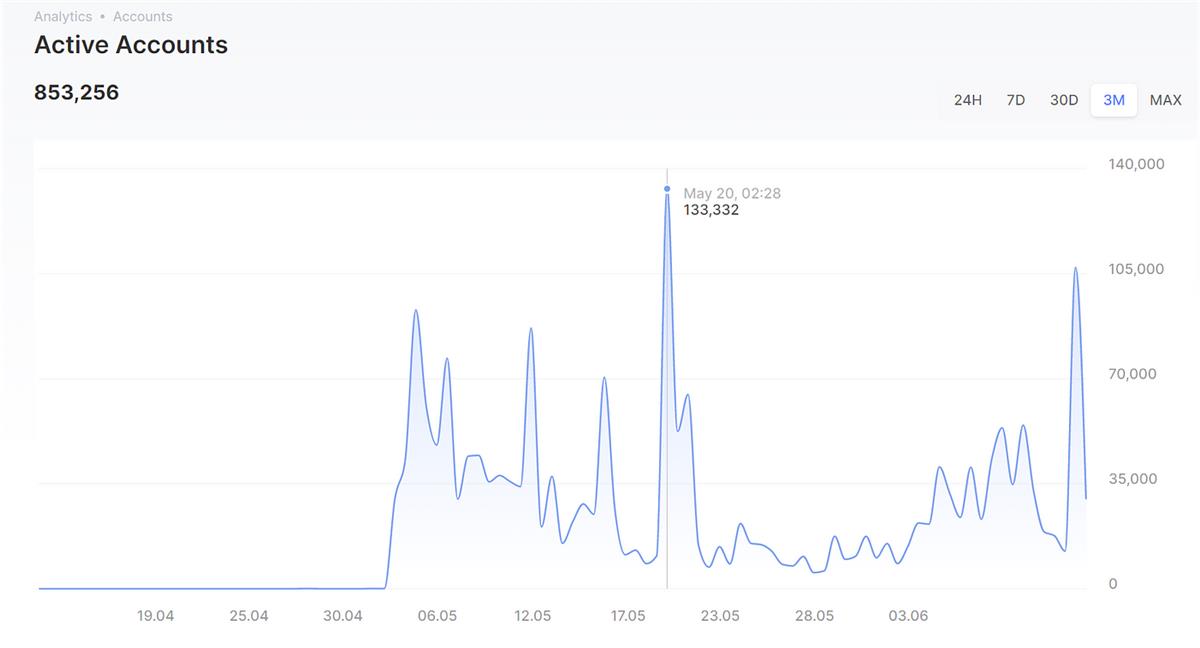
In terms of daily active addresses, the highest count was 130,000 on May 20, primarily due to Cetus opening permissionless pools on May 19, enabling meme projects to conduct network-wide airdrops. Under normal conditions, daily active addresses remain below 10,000.
4. Cross-Chain Bridges
Currently, three cross-chain bridges allow funds to be transferred to Sui: Wormhole, kriya.finance, and WELLDONE. However, these bridges do not provide dashboards showing specific transfer amounts, making it impossible to track exact figures.
2. Ecosystem Projects
As of June 14, Sui’s official website directory lists 66 projects. These projects self-report their information, and many are still in testing and have not officially launched.
Below is a brief overview of the projects that have already launched and issued tokens:
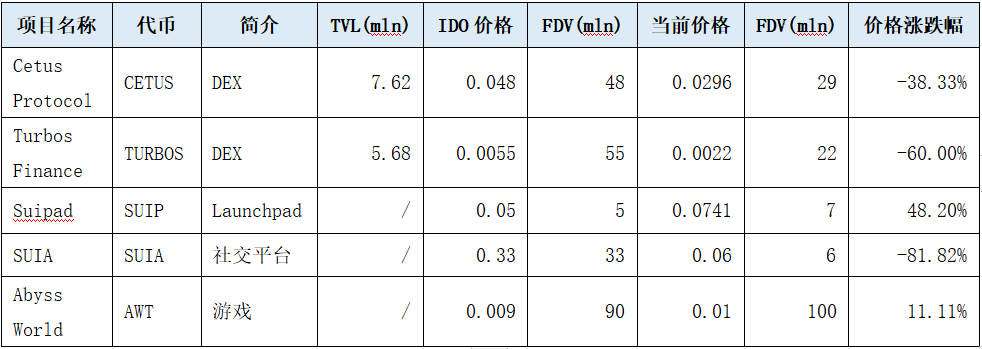
Source: CoinGecko, DefiLlama, LD Capital
It is evident that most ecosystem projects on Sui have performed poorly post-launch. Both leading DEX projects have broken below their initial offering prices. The social platform SUIA has dropped nearly 81.82%. Suipad has fared relatively better, mainly because its IDO price was set quite low, with an FDV of only $5 million.
Given the limited user base and capital on Sui, Abyss World chose Polygon instead of Sui as the network for its IDO held from June 1 to 4.
3. Token Unlocks and Demand
The community is most concerned about Sui’s token unlock schedule. The diagram above shows the token allocation and unlocking schedule based on data from Binance-related reports via token.unlocks. The total token supply is 1 billion, with an initial circulating supply of 528 million, representing 5.28% circulation.
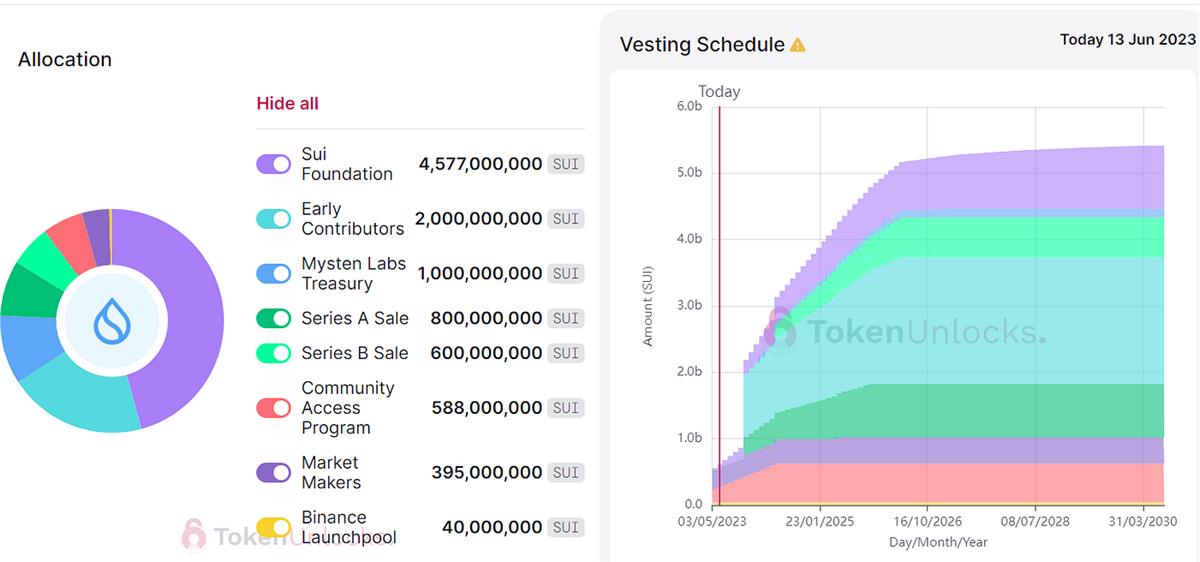
From May to October 2023, Sui has two types of token releases: one stemming from exchange IEO participants, and the other from staking node incentives.
The IEO price was $0.1 per SUI, with a total of 450 million tokens involved. At public sale, 1/13 was unlocked immediately, followed by monthly unlocks of 1/13 over 12 months. Thus, approximately 34.61 million tokens are released each month.
SUI staking rewards allocate 1 billion tokens for node staking incentives.
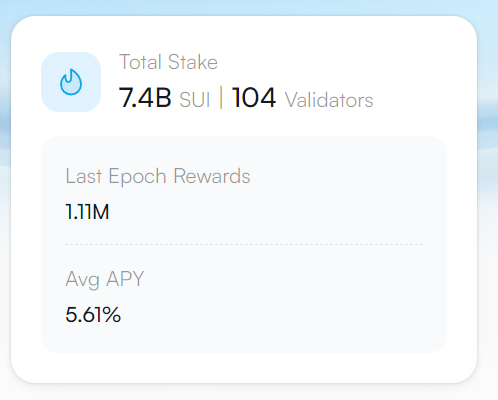
During the first 90 epochs (1 epoch = 1 day), 1.11 million SUI tokens are rewarded daily. After every subsequent 90 epochs, the reward decreases by 10%. Currently, about 7.4 billion SUI tokens are staked in the system, with an average APY of 5.61%. Based on this, the circulating supply from staking increases by approximately 33.3 million tokens per month during the first three months post-launch, and by 30 million tokens per month from months 4 to 6.
Therefore, combining IEO and staking incentive releases, the total monthly unlock is 67.94 million tokens (0.67% of total supply), equivalent to roughly $47.55 million in market value for the first three months; from months 4 to 6, it drops slightly to 64.61 million tokens (0.64% of total supply), valued at approximately $45.22 million.
Source: Suivision
In November 2023—six months after Sui’s launch—a major unlock will occur, releasing over 1 billion tokens in a single day, effectively doubling the circulating supply.
On the demand side, based on the aforementioned on-chain data and ecosystem analysis, trading activity remains sluggish, users are scarce, and there is no significant short-term demand for the SUI token.
4. Comparison with Aptos Token Release Model
Let’s compare Sui with Aptos, another Move-based chain, to examine similarities and differences in their token release models.
Aptos has a total token supply (excluding staking incentives) of 1 billion, with an initial circulating supply of 130 million (13%). In the first year after launch, community and foundation-held tokens unlock 4.54 million per month, accounting for 0.45% of total supply, or approximately $28 million in market value.
Starting in the second year, core contributors and investors begin unlocking their allocations. From months 13 to 18, 20 million tokens are released monthly (2% of total supply); from months 19 to 50, 6.75 million tokens are released monthly (0.67% of total supply).
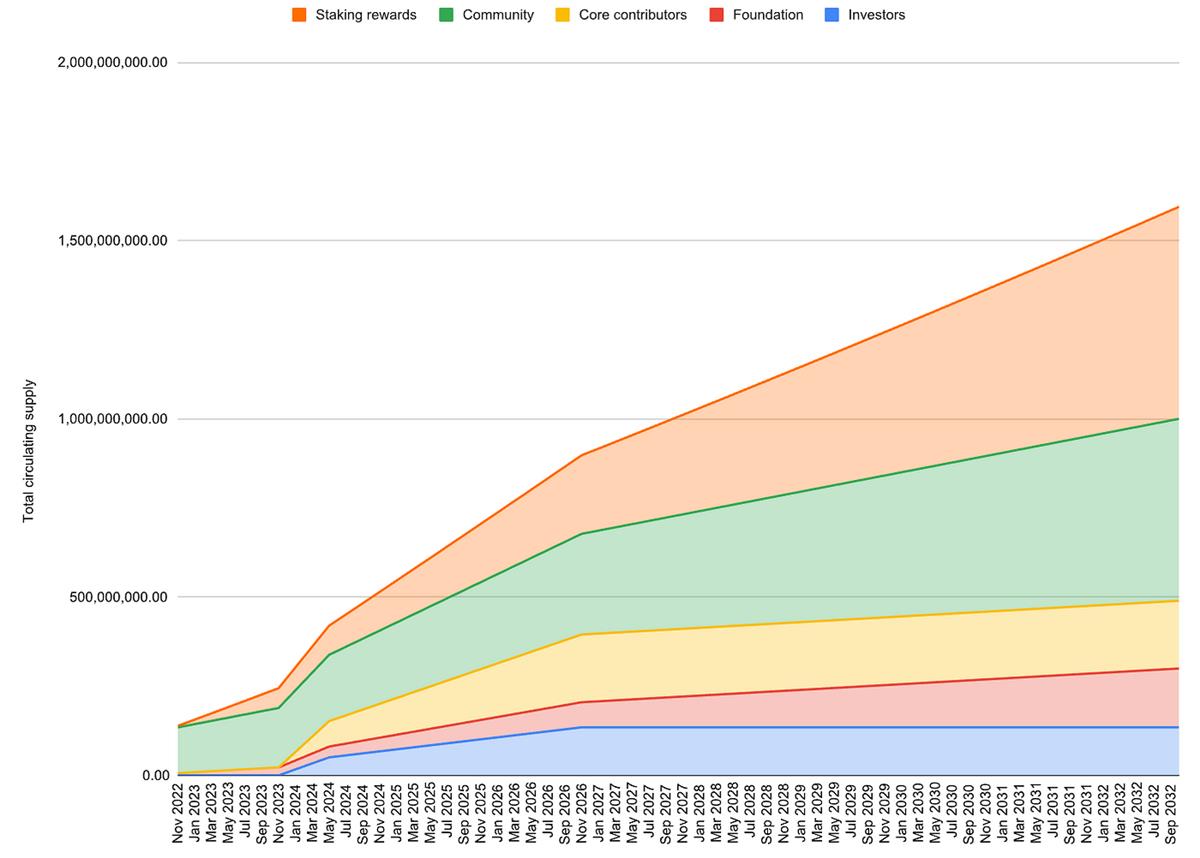
Additionally, Aptos offers staking rewards, sourced from outside the initial 1 billion token supply. The current maximum network staking APY is 7%, decreasing annually by 1.5% until it reaches 3.25%.
Currently, 860 million APT tokens are staked (~86% of supply). The total token supply is actually 1.039 billion, with the additional 39.5 million tokens coming from staking emissions. Approximately eight months post-launch, monthly staking rewards amount to about 4.9 million tokens, or 0.49% of total supply.

In summary, both Sui and Aptos feature low initial circulation and high inflationary pressures. However, SUI’s initial circulation is half that of APT; monthly unlocks in the first six months are 50% higher than APT’s. Sui’s first large-scale unlock occurs six months after launch, whereas Aptos’ happens at 12 months; Sui’s unlock is instantaneous, flooding the market on a single day, while Aptos spreads unlocks monthly, providing a buffer period.
Overall, SUI faces greater token supply pressure in the first year compared to APT, whose major supply surge comes in the second year.
5. Conclusion
Based on on-chain metrics and ecosystem developments, Sui currently suffers from insufficient users and low transaction volume, still in the early cold-start phase, requiring continuous initiatives and development to attract users and capital.
However, considering Sui’s current operations, the team appears to prioritize technical development—hosting hackathons and developer events worldwide—while user incentive programs have yet to be launched.
Meanwhile, in the current bear market, capital and users are risk-averse. Additionally, Ethereum Layer 2 solutions continue advancing, offering existing Ethereum users a smoother and safer migration path, thus attracting substantial on-chain capital. Compared to this, Sui faces increased difficulty in drawing in funds and users.
From a tokenomics perspective, compared to fellow Move-chain Aptos, Sui faces concentrated token release pressure in its first year. With weak demand, such a large token supply creates significant downward pressure on the SUI token.
Join TechFlow official community to stay tuned
Telegram:https://t.me/TechFlowDaily
X (Twitter):https://x.com/TechFlowPost
X (Twitter) EN:https://x.com/BlockFlow_News
 Cycle Capital Research






