Clever CEO: How Should Startups Sell and Build a Sales Team?
TechFlow Selected TechFlow Selected
Clever CEO: How Should Startups Sell and Build a Sales Team?
Many people consider sales to be a mysterious and不可思议 art, but in reality, it's not that difficult to master.
 Navigating Web3 tides with focused insights
Compiled by: TechFlow
Note: This article is part of the TechFlow series "YC Startup School Chinese Notes" (updated daily), dedicated to collecting and organizing Chinese translations of YC courses. This eleventh installment features Tyler Bosmeny, CEO of U.S. edtech company Clever, and his online course titled "How to Sell."

Introduction
Hi everyone, I'm Tyler Bosmeny, CEO of a company called Clever. Today, I want to talk about one of the most fundamental and essential skills founders need to master: sales.
Before diving into what I've learned, I think it might help early-stage startup salespeople to hear about my own journey in sales. I was originally a math major who later earned a graduate degree in statistics. I never imagined I’d become a salesperson—but while working for my college newspaper, I got involved in ad sales and gradually fell in love with the craft. I worked hard selling ads to local businesses so we could afford to print and distribute the paper. A few years later, we broke records by successfully selling massive amounts of advertising space for The Crimson magazine.
Later, a friend invited me to join his startup to build a sales team that sold products to newspapers across the country. Although this market was extremely difficult to penetrate, we still achieved impressive results. Six years ago, I joined Clever as a co-founder. Our platform is now used by more than half of all schools in the United States, which means we’ve had to solve sales challenges in diverse environments.
The Founder’s Unique Advantage
When doing sales at a startup, many people treat sales as some mysterious, almost magical art—but it's actually not that mysterious or elusive. Because we mythologize sales too much, many founders say: “Well, we’re just building the product—we’ll hire salespeople once it’s done.”
But talking to users and understanding their needs is a core responsibility of founders—and that’s a critical part of sales.
Even if many founders lack formal sales experience, they have two unique advantages: passion and industry expertise.
Founders are more passionate about their product than anyone else, making them highly effective in sales.
Additionally, they understand their industry better than anyone else—they know why this product needs to exist and have deeper insight into the problem.
In the early days of a startup, co-founders should designate one person to take ownership of sales—it's crucial for the company’s success. So early on, consider who truly has real sales ability—whether it's one founder or eventually full-time hires.
How Does Sales Work?
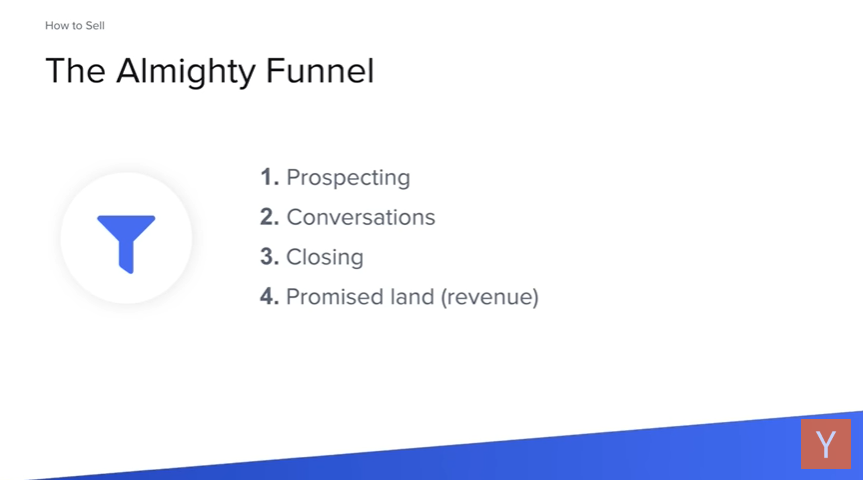
I view sales as a funnel model.
-
First is prospecting—finding potential customers who may be interested in your product and willing to talk to you. That’s where the conversation begins.
-
Second is having conversations. But simply identifying interest isn’t enough—you need many conversations to determine whether your product is right for them.
-
Finally, closing. If you discover they genuinely want to buy, you must ensure you don’t miss the opportunity to close the deal.
Once you complete all these steps, you earn revenue and make your first sale.
Next, I'll walk through each stage and share practical advice I’ve learned throughout my career.
1. Prospecting
At the exploration stage, your job is to figure out who will answer your call. One helpful tool for me has been Everett Rogers’ Technology Adoption Curve from the 1960s.
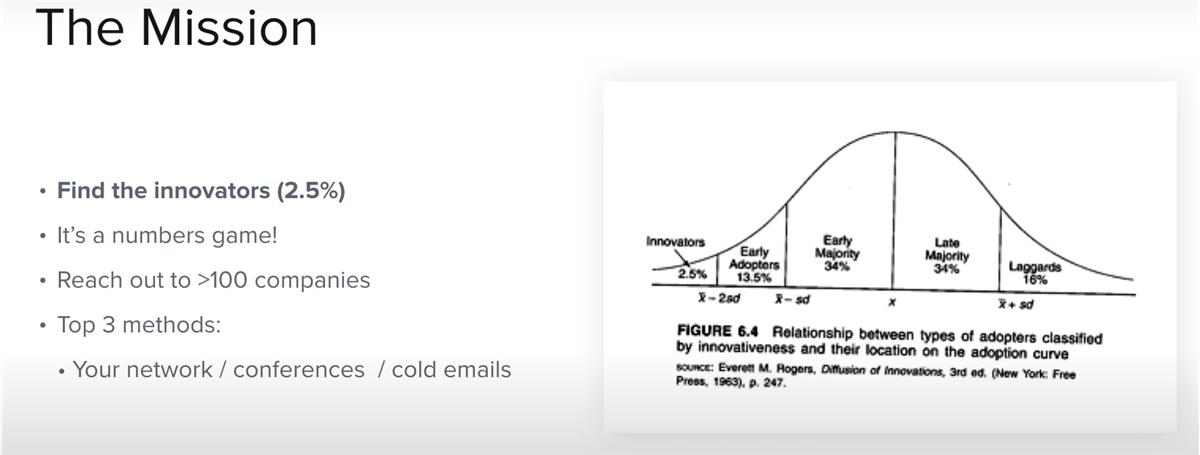
This framework starts on the left with innovators, early adopters of new technology, early majority, late majority, and laggards.
Innovators make up only 2.5% of the population, meaning only a tiny fraction of companies would even consider buying from an unproven startup with no revenue. It’s a numbers game—you may need to contact 100 companies just to find 2.5 potential buyers.
So expect that early sales aren’t about reaching 10 companies. Prospecting and selling is messy and takes significant effort to achieve desired outcomes.
Ways to Find Customers
a. Network
Of course, the most effective way to find innovators is leveraging your network. You might think your network is small, but chances are you know someone who knows someone. Spend time thinking through your connections—you might uncover incredible sales opportunities, and those are often the best ones.
b. Conferences
When it comes to conferences, I want to challenge common assumptions.
Typically, these events involve groups of managers holed up in hotel rooms for several days in places like Milwaukee or Kansas. Yet, conferences are among the most powerful ways to reach users. You need to go where your users are—if you're selling to enterprises or corporate buyers, that’s where they gather, attend events, meet peers, and learn.
Here’s how I approach conferences:
-
First, identify large industry-specific conferences relevant to your product and startup. There may be not just one, but ten. Ask insiders: “Which conferences do you attend? Which ones are valuable?” While answers vary, this helps you understand the market landscape.
-
Second, pick a few key conferences to attend and buy tickets. Tickets can cost thousands of dollars—or sometimes you don’t even need one, depending on the event. But you must plan ahead, scheduling weeks or months in advance.
-
Third, get the attendee list. This is one of the most valuable aspects of attending. Figure out who’s coming—contact organizers, sponsors, or check websites. Knowing who will be there in advance is critical.
But don’t just attend hoping to network randomly. Of course, do that when possible—but once you have the list, proactively schedule face-to-face meetings with as many potential buyers or prospects as possible. Send emails: “Hey, I’m attending this event and noticed you’ll be there—can we grab time to chat?” Don’t limit yourself to a few people; maximize every opportunity.
My goal when attending a conference—or when any smart person from our team attends—is to fill every 30-minute slot. Because we put in so much prep work lining up meetings beforehand, these become some of our most productive days of the year. We kick off all conversations, engage all prospects—even on the first night after a long day, exhausted yet energized. Nothing beats meeting clients or prospects in person, hearing their needs and intentions firsthand.
In short, I cannot overstate how important conferences are for any company doing sales. I strongly recommend you try this approach.
c. Email
In business, connecting with prospects is vital. Phone calls are no longer optimal—cold emailing has become a more common alternative.
However, many don’t know how to write effective cold emails or initiate productive outreach. When writing cold emails, keep these points in mind:
First, keep emails short and clear—avoid rambling. Second, personalization is key—make the recipient feel you understand their background and needs, sparking genuine interest. Third, ensure relevance and usefulness. If your email offers nothing valuable, they won’t bother replying. Finally, stay authentic—never exaggerate or lie.
Cold emailing can be highly effective, but requires care. Make sure your message is interesting, personalized, and truthful. Remember: all you’re trying to do is start a conversation.
2. Conversations
In sales, building rapport with prospects is crucial. They may be ready to buy—that golden opportunity you’ve been waiting for. But when you call them, remember: shut up and listen.
When asked, “What’s your number one sales tip?” or “As a new salesperson, what should I focus on first?” my answer is always the same: selling is listening.
I once had the rare chance to speak with some of the world’s top salespeople—extremely successful individuals. What struck me was their calm demeanor and exceptional listening skills. That’s the heart of great selling.
Many assume sales is about persuading someone into buying, but that doesn’t work. The effective approach is building relationships, understanding their problems and needs, then seeing if you can help solve them. Listening is non-negotiable.
During sales calls, many founders are so excited they immediately jump in to showcase their meticulously built product. But this kills the sale. Top salespeople spend 70% of the time listening before offering solutions.
Of course, there are many steps in the process—calls, emails, pricing discussions, reference checks. Follow-up is critical and challenging. If rejected, don’t despair—it means redirecting energy toward better opportunities. Stay persistent, following up respectfully and appropriately.
Lastly, remember: successful sales take patience and relentless effort. Nothing goes smoothly—perseverance is essential. Sometimes rejection is good; it reveals the next promising opportunity.
3. Closing
Sometimes sales expand into international markets, creating challenges for startups in prospecting. Getting contracts signed is harder than it sounds. This is where many deals fail—so entrepreneurs must be determined and resilient to overcome obstacles and succeed.
Here are lessons I’ve learned. First, if drafting an enterprise contract, propose an agreement and send it to the company. They may request changes—a process known as “redlining.” Their legal team returns a revised version, requiring back-and-forth edits. So step one is proposing an initial agreement.
You must understand the local business environment and cultural context, study regional business models and regulations, and tailor your sales strategy accordingly. Second, building relationships with local professionals and institutions helps you grasp market demand and gain vital support and advice for smoother operations.
Second issue: when approaching your first customer, they might ask for extra features before committing. Avoid this trap—it leads to endless revisions and delays.
Third issue: free trials. In early stages, you need commitment, validation, and revenue—free trials don’t deliver that. Invest time finding the right-fit customers and refining your product. Then discuss annual agreements, addressing mutual concerns within the contract.
To summarize: succeeding internationally requires understanding local culture and business norms, building local connections, and crafting tailored strategies. Avoid feature creep and free trial pitfalls. Focus on ideal customers and negotiate fair contracts. Building a business is a long game demanding time and effort—but with determination, resilience, and smart tactics, international success is achievable.
Five Sales Models Founders Must Consider
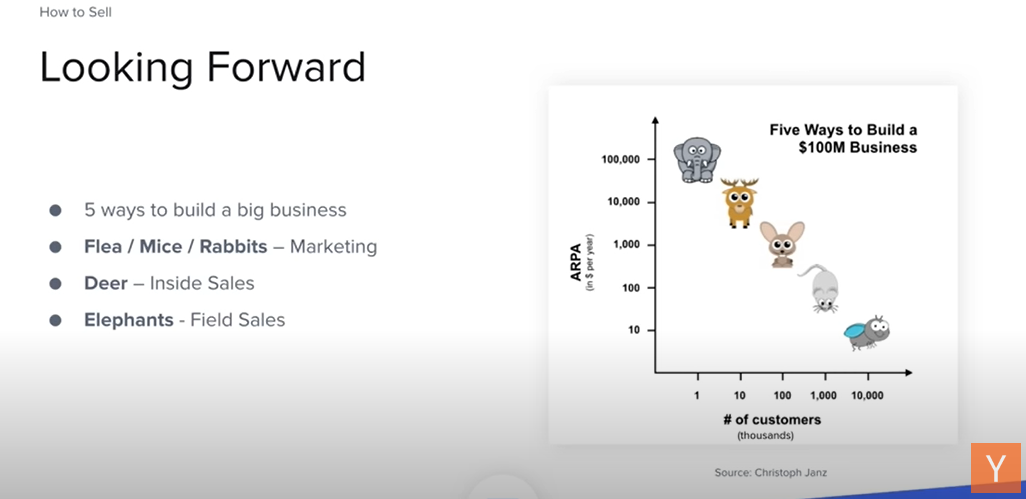
I’ll describe the sales journey from $0 to $100M—an exact process we’ve used multiple times, and it works.
But not every company is the same. I encourage founders to think early about their company type—especially long-term, what kind of sales motion they’ll need.
Christoph Janz, a venture capitalist (Partner at Point Nine Capital), wrote a memorable blog post outlining five paths to building a $100M business from a sales perspective:
-
1,000 enterprise customers paying you over $100,000 per year;
-
10,000 mid-market companies paying over $10,000 annually;
-
100,000 small businesses paying over $1,000 per year;
-
1 million consumers or “prosumers” each paying over $100 per year (or for e-commerce, generating over $100 in gross margin per customer annually);
-
10 million active users, monetized via advertising at over $10 per user per year.
When planning your sales strategy, ask: “How much does my customer pay? How many interactions do I need, and what sales model is sustainable for my business?” Because if today you sell by flying around, meeting people at conferences—doing high-touch everything—
That high-touch, high-energy model won’t scale if your average customer pays only $10, $100, or $1,000. Repeating that 10 million times is impossible and too costly.
On the other hand, if you build a low-touch sales model, you can scale—perhaps selling to millions of small businesses, or enabling self-service signups. Then you operate efficiently. You can charge less, but your pricing and sales motion must align.
It took me time to realize this, but I believe this chart really helps clarify how much you can charge—and how much customers are willing to pay—will fundamentally shape your sales philosophy. These are lessons learned building both companies and sales teams.
How to Follow Up on Customer Emails Appropriately?
When sending follow-up emails, do you feel like you’re nagging the customer? Actually, as long as they haven’t told you to stop, you have the right to follow up—within reasonable frequency. For example, if you’ve emailed someone eight times with no reply, take the hint and move on.
But if you previously had a conversation and they showed interest yet haven’t responded, don’t give up easily. Assume they’re busy—other priorities exist, and you’re not their top concern.
During follow-ups, personalize and add thoughtfulness. If your email feels robotic and generic, the customer may get annoyed. But if it’s thoughtful and tailored, they’ll feel respected and cared for.
So never skip personalization. If you reuse templates week after week, customers may think you’re not truly focused on their needs—and question your professionalism.
How to Properly Understand Product-Market Fit?
I believe to understand product-market fit, you need to look for the real answer in “No.” People often give various reasons to reject you. But a “Yes” is the most important signal.
In early sales conversations, getting a “Yes” is a good sign you may have found product-market fit. But how do you distinguish between early adopters and real market demand?
I think only by accumulating multiple “Yes” responses can you confirm true market demand. Consistent “No” replies don’t necessarily mean your product is bad—just that people have their own reasons for declining. Similarly, when VCs reject you, don’t fully trust their stated reasons—many aim to be polite rather than hurt feelings.
Therefore, when entering the market and assessing demand, focus on the “Yes” responses. A “Yes” is the strongest signal that your product meets market needs. Persistent “No” replies suggest either further product refinement or a need to reevaluate your market positioning.
How to Quickly Find Potential Customers?
Reference customers play a big role in prioritizing large vs. small companies. Sometimes founders chase big brands, even though they require more work than smaller ones. Using them as pilot customers or case studies can yield fast momentum due to their reputation.
So apply YC’s advice to investors: do breadth-first search—talk to both big and small companies, find those able to act quickly, and optimize for speed.
Any customer is better than no customer—seek validation and early customers early. Note: big companies aren’t always great references, so prioritize customers who most need your product and can move fast.
As for case studies and branding materials, these aren’t critical early on—don’t stress too much. Focus on securing first commitments, getting signed contracts, and building relationships to drive growth.
How to Set Pricing?
Pricing is highly specific to each company, so there’s no one-size-fits-all answer. But when setting pricing at our company, we adopted smart practices.
First, we guessed a reasonable price and tried selling. Then we gathered market feedback and iterated early to continuously improve our pricing model.
Though it’s hard to predict what customers will pay, startup experience shows founders often undervalue their product. A solid strategy is starting with a reasonable number and gradually increasing price after each successful sale.
For example, our first deal was priced at $100,000—a guess based on limited data. But once we received feedback, we began adjusting and refining our pricing model.
Ultimately, you must boldly experiment and believe your product has a fair price. Be open to repeating and iterating when you receive market feedback, constantly improving and optimizing your pricing.
How to Guide Sales Operations?
In the early days, if you’re selling a $50 product, don’t invest heavily in marketing functions. Since you need as many customers as possible, such a low price point doesn’t justify heavy spending. Instead, to achieve scalability or raise prices to support real sales, focus on demand generation, email campaigns, self-service signup flows, referral codes, etc. This is my approach—but beyond product, these are essential elements.
Sometimes founders worry their website lacks enough case studies, fearing it impacts purchase decisions. They may think no amount of resources will convince buyers.
But that’s not true—users care most about whether the product solves their problem. Even in 2012, clever.com started with no case studies or customer reviews—just a product description page—and it was enough for those who needed it.
They only cared whether the product could solve their issue—not what others said about it.
So even without case studies, as long as your product solves user problems, you can build trust and drive purchases.
How to Find the Right Sales Rep?
Don’t hire sales reps until you’ve done extensive selling yourself. Otherwise, you won’t know what kind of person to hire or what core skills they need—like frequent travel, high call volume, or writing quality emails. After doing sales for a while, you’ll clearly understand who can help you succeed. Typically, I personally sell for three, six, nine, or even twelve months to establish repeatability.
Unlike coin-operated sales—which emphasize automation and self-service—Renaissance sales reps value thinking and innovation. They need less scripting and direction, excelling at solving problems independently. So when hiring your first sales rep, look for someone truly passionate about learning, full of energy, with a Renaissance mindset. They may lack industry experience, but if they have these traits and can master required skills, they’ll match your sales approach and succeed.
*TechFlow note: "Coin-operated sales" refers to automated, transactional selling focused on convenience and self-service, while "Renaissance sales rep" describes a relational, consultative approach emphasizing connection, deep customer understanding, and personalized solutions.
Join TechFlow official community to stay tuned
Telegram:https://t.me/TechFlowDaily
X (Twitter):https://x.com/TechFlowPost
X (Twitter) EN:https://x.com/BlockFlow_News
 深潮TechFlow